Table of Contents
- 1. What Is Sri Guru Charana Padma?
- 2. Sri Guru Charana Padma — Full Lyrics, Transliteration,Translation & Significance
- Sri Guru Charana Padma
- 3. 10 Transformational Benefits of Singing Guru Vandana Daily
- 4. FAQs — Sri Guru Charana Padma & ISKCON Guru Vandana
Introduction
What Is Sri Guru Charana Padma?
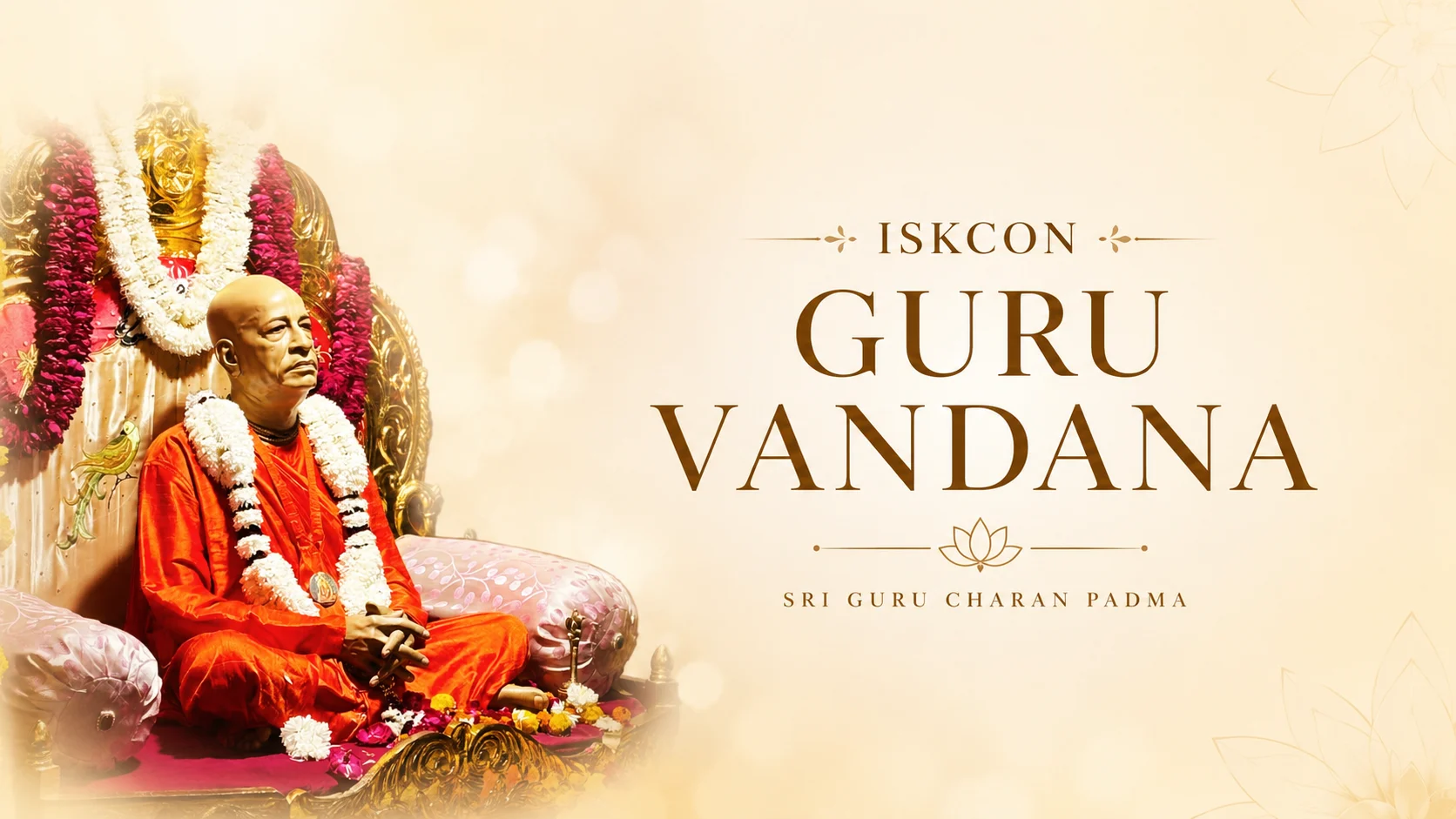
Sri Guru Charana Padma — literally meaning "the lotus feet of the revered spiritual master" — is a sacred Vaishnava bhajan (devotional song) composed by the sixteenth-century saint Srila Narottama Dasa Thakura. It stands as the most widely sung Guru Vandana (prayer glorifying the guru) in ISKCON temples across the world.
In the Gaudiya Vaishnava tradition — the devotional school founded by Sri Caitanya Mahaprabhu and carried forward globally by Srila A. C. Bhaktivedanta Swami Prabhupada — the spiritual master (guru) occupies the supreme position of guide, protector, and representative of God. Without the blessings and guidance of the guru, the devotee cannot advance a single step on the path of bhakti. Sri Guru Charana Padma is the bhajan that expresses this profound truth through luminous Bengali poetry.
Sacred Text
Sri Guru Charana Padma — Full Lyrics, Transliteration,Translation & Significance
Below is the complete, authoritative text of Sri Guru Charana Padma as sung in ISKCON, presented in three layers: the original Bengali script, romanised transliteration for pronunciation, and the full English translation. This is the exact version used in ISKCON temples, sourced from the Vaishnava Song Book as compiled under the direction of Srila Prabhupada.
Sri Guru Charana Padma
bando mui sāvadhāna mate
jāhāra prasāde bhāi, e bhava toriyā jāi,
kṛṣṇa-prāpti hoy jāhā ha`te
Translation:The lotus feet of our spiritual master are the only way by which we can attain pure devotional service. I bow to his lotus feet with great awe and reverence. By his grace one can cross the ocean of material suffering and obtain the mercy of Krishna.
ara na koriha mane asa.
sri-guru-carane rati, ei se uttama gati,
je prasāde pūre sarva āśā
Translation: My only wish is to have my consciousness purified by the words emanating from his lotus mouth. Attachment to his lotus feet is the perfection that fulfills all desires.
divya jñān hṛde prakāśito
prema-bhakti jāhā hoite, avidyā vināśa jāte,
vede gāy jāhāra carito
Translation: He opens my darkened eyes and fills my heart with transcendental knowledge. He is my Lord birth after birth. From him ecstatic prema emanates; by him ignorance is destroyed. The Vedic scriptures sing of his character..
lokanatha lokera jivana.
ha ha prabhu koro daya, deho more pada-chaya,
ebe jaśa ghuṣuk tribhuvana
Translation: Our spiritual master is the ocean of mercy, the friend of the poor, and the lord and master of the devotees. O master! Be merciful unto me. Give me the shade of your lotus feet. Your fame is spread all over the three worlds. We take shelter of your lotus feet.
"The first business of a disciple is to always think of the spiritual master's lotus feet. Sri Guru Charana Padma teaches us that the guru's feet are our only shelter in this ocean of material existence."
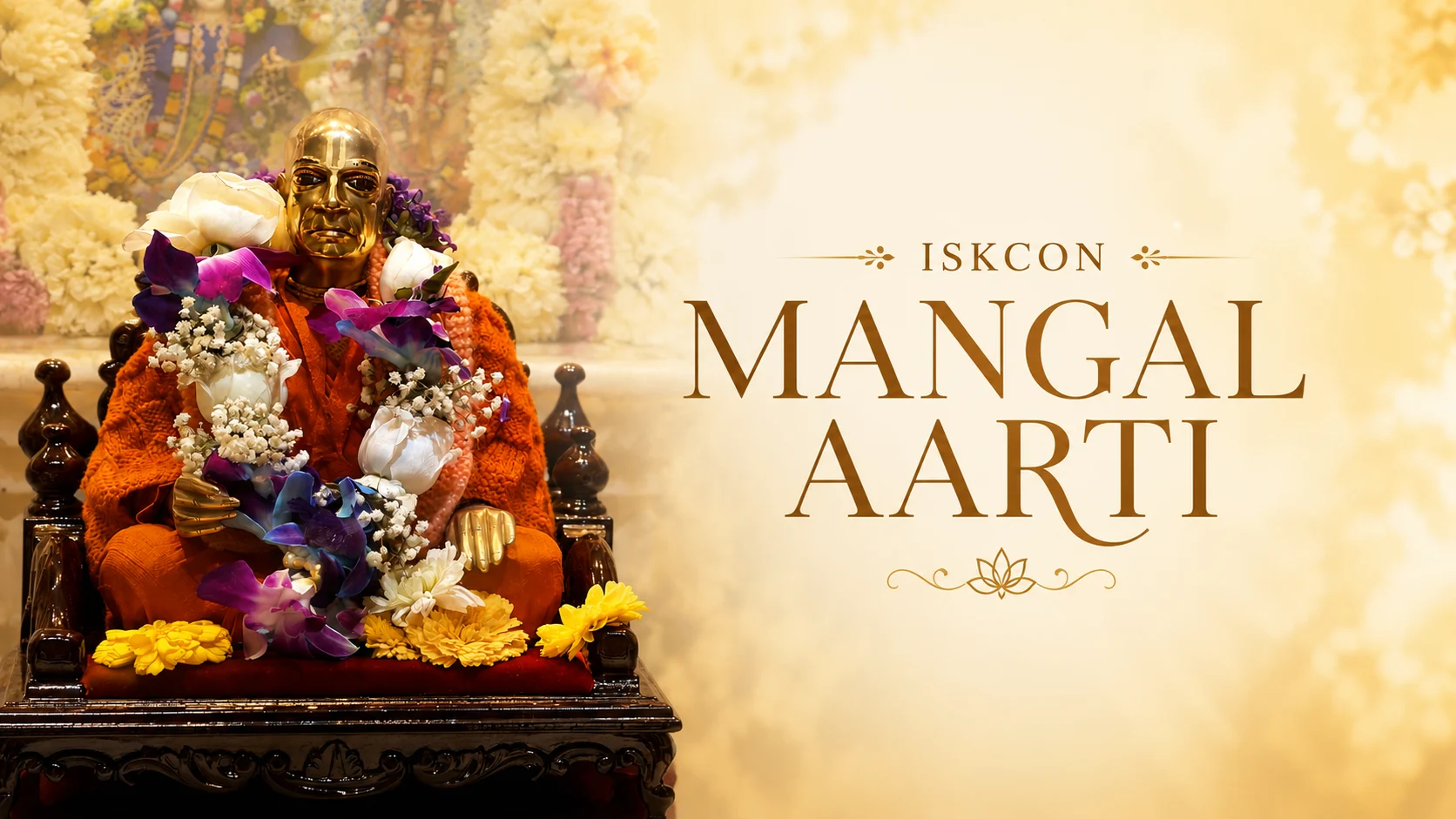
— Srila Prabhupada, Lecture on Guru-TattvaEvery morning in ISKCON, after the Mangal Aarti and Tulasi Puja, the assembled devotees gather for the Guru Puja ceremony, during which this bhajan is sung with great devotion while the pujari (priest) performs the ceremonial worship of the Founder-Acharya Srila Prabhupada's vyasasana (seat) and murti (form). The entire congregation dances, claps, and chants in unison — filling the temple hall with the sound of this transcendental prayer.
Why It Matters
10 Transformational Benefits of Singing Guru Vandana Daily
The daily singing of Sri Guru Charana Padma during ISKCON's Guru Puja is not merely a cultural ritual. It produces concrete, measurable changes in the spiritual and psychological condition of the devotee. Here are ten benefits substantiated by Vedic scripture and the testimony of practising devotees:
-
01Cultivates the Mood of Surrender (Saranagati) Daily singing of the Guru Vandana conditions the mind to remember its natural position of dependence on the guru and on Krishna. Over time, this dissolves false pride and material ego — the biggest obstacles on the spiritual path.
-
02Connects to Guru-Parampara (Disciplic Succession) By glorifying the guru each morning, the devotee plugs into the chain of transcendental sound that stretches from Brahma to Narada to Vyasa to Prabhupada. This connection is the source of all authentic spiritual power.
-
03Purifies the Heart of Anarthas (Unwanted Desires) The bhajan specifically prays to abandon "atma-ghati kama" — self-destructive desires. Regular, sincere singing gradually weakens the grip of lust, anger, greed, pride, illusion, and envy on the devotee's heart.
-
04Deepens Gratitude and Humility Recognising the guru as "divya-jnana" bestower and "karuna-sindhu" (ocean of mercy) naturally produces the two most essential spiritual qualities: humility (dainata) and gratitude (krtajnata).
-
05Strengthens Guru-Disciple Relationship Whether one's guru is living or has departed from this world, daily Guru Puja with this song maintains and deepens the spiritual bond between disciple and master — a bond that transcends time, space, and even death.
-
06Generates Spiritual Merit (Sukriti) The Vedic scriptures affirm that glorification of a Vaishnava saint — especially one's own guru — generates immense spiritual merit that gradually opens the heart to Krishna consciousness.
-
07Sets an Auspicious Tone for the Entire Day Beginning the morning with the Guru Puja and Sri Guru Charana Padma ensures that Krishna is remembered first — before the demands of family, work, or the material world claim the mind. This creates a current of consciousness that sustains bhakti throughout the day.
-
08Community and Collective Devotion (Sangha) Singing together during Guru Puja builds the ISKCON sangha — the community of devotees. Collective worship amplifies individual devotion manifold, as Sri Caitanya Mahaprabhu confirmed when He said that kirtan is the yuga-dharma (the practice most suited to this age).
-
09Maintains the Living Presence of Srila Prabhupada In ISKCON, the daily Guru Puja ensures that Srila Prabhupada's presence, teachings, and mission remain alive in the hearts of each new generation of devotees — a living transmission from founder to follower, renewed each morning.
-
10Awakens Prema-Bhakti (Pure Devotional Love) The ultimate benefit — and the ultimate goal. As verse 3 teaches, from the guru's mercy flows prema-bhakti. Every sincere repetition of this prayer is a step closer to the highest attainment: pure, unconditional love for Sri Sri Radha-Krishna.
Common Questions
FAQs — Sri Guru Charana Padma & ISKCON Guru Vandana
Sri Guru Charana Padma translates word-for-word as: Sri (auspicious/holy) + Guru (spiritual master) + Charana (feet) + Padma (lotus). Together: "The auspicious lotus feet of the spiritual master." In Vaishnava tradition, "lotus feet" is not merely a poetic metaphor — the feet of a pure devotee are genuinely considered sacred and are a source of transcendental blessings.
Sri Guru Charana Padma was composed by Srila Narottama Dasa Thakura (c. 1531–1587 CE), one of the greatest poet-saints of the Gaudiya Vaishnava tradition. The song appears in his masterwork Prarthana (Prayer) — a collection of deeply personal devotional poems addressed to the guru and to Sri Caitanya Mahaprabhu.
In ISKCON, Sri Guru Charana Padma IS the Guru Vandana — the two terms are used interchangeably to refer to this specific bhajan sung during morning Guru Puja. More broadly, "Guru Vandana" is a general term meaning "glorification of the spiritual master," and different Vaishnava sampradayas may use different songs for this purpose. ISKCON specifically uses Sri Guru Charana Padma.
Narottama Dasa Thakura wrote primarily in Bengali because it was the spoken language of the people of Bengal in his time (16th century). Sri Caitanya Mahaprabhu himself encouraged devotional expression in regional languages so that ordinary people — not just Sanskrit scholars — could understand and participate. Bengali was particularly suited for devotional poetry (padavali kirtan) because of its soft, melodious quality and its rich tradition of emotional expression.
The song was composed centuries before Srila Prabhupada's appearance, so it does not refer to him personally by name. However, in the ISKCON context, when devotees sing Sri Guru Charana Padma during Guru Puja, they are specifically meditating on Srila Prabhupada as their Founder-Acharya and the current link in the disciplic chain. The song's universal language of devotion to the guru allows it to express the disciple's relationship with any bona fide spiritual master in the Gaudiya Vaishnava tradition.
The complete composition has four verses. In ISKCON temples, all four verses are typically sung during the morning Guru Puja. Some temples, depending on time constraints, may sing two or three verses. The first verse ("sri-guru-carana-padma, kevala-bhakati-sadma...") is the most famous and is sometimes sung alone as a standalone invocation to the guru at the beginning of events or programmes.