Table of Contents
- Tulsi Pradakshina Mantra
- Tulasi Pranama Mantra
- 1. Who is Tulasi Devi? The Sacred Significance
- 2. What is Tulsi Aarti in ISKCON?
- Why We Perform Tulsi Ji Ki Aarti?
- 3. Benefits of Performing Tulsi Aarti Daily
- 4. How to Perform Tulsi Aarti at Home
- 5. Frequently Asked Questions about Tulsi Aarti ISKCON
Verse 1
namo namaḥ tulasī kṛṣṇa-preyasi namo namaḥ
rādhā-kṛṣṇa-sevā pābo ei abilāṣī
namo namaḥ — bowing again and again | tulasī — O Tulasī | kṛṣṇa-preyasī — O beloved of Kṛṣṇa
rādhā-kṛṣṇa-sevā — the service of Śrī Śrī Rādhā and Kṛṣṇa | pābo — I will obtain
ei — this | abhilāṣī — I am desirous of
Translation : "O Tulasī, beloved of Kṛṣṇa, I bow before you again and again. My only desire is to obtain the service of Śrī Śrī Rādhā and Kṛṣṇa."
This opening verse sets the entire mood of the aarti. The devotee does not ask for wealth, health, or even liberation. The one and only wish — stated from the very first line — is seva, devotional service. This is the essence of Vaishnava philosophy: pure, selfless love expressed through service.
Verse 2
ye tomāra śaraṇa loy, tara vāñchā pūrṇa hoy
kṛpā kori' koro tāre vṛndāvana-vāsi
ye — whoever | tomāra śaraṇa loy — takes shelter of you
tāra vāñchā pūrṇa hoy — his desires are fulfilled | kṛpā kori' — being merciful
koro tāre — you make him | vṛndāvana-vāsī — a resident of Vṛndāvana
Translation :"Whoever takes shelter of you has all their wishes fulfilled. Bestowing your mercy upon them, you make them a resident of Vṛndāvana."
For a Vaishnava, becoming a vrndavana-vasi — a resident of Vrindavana — is the highest possible destination. Not heaven, not moksha. Vrindavana, where Radha and Krishna's eternal pastimes never cease. Tulasi Devi is said to have the power to grant this to whoever sincerely seeks her shelter.
Verse 3
mora ei abhilāṣa, vilāsa kuñje dio vāsa
nayana heribo sadā yugala-rūpa-rāśi
mora ei abhilāṣ — my desire | vilāsa kuñje — in the pleasure groves | dio vāsa — please give a residence
nayane heribo — I will behold with my eyes | sadā — always
yugala-rūpa-rāśī — the waves of the Divine Couple's beauty
Translation :"My desire is that you give me a residence in the pleasure groves of Śrī Vṛndāvana-dhāma, so that my eyes may always behold the beautiful form and pastimes of Rādhā and Kṛṣṇa."
The prayer deepens. The devotee now asks to live within the intimate kunjas — the garden groves — where Radha and Krishna perform their most tender pastimes. The image of yugala-rupa-rasi, "waves of the Divine Couple's beauty," is strikingly poetic. Not a glimpse — always, forever, an ocean of beauty to witness.
Verse 4
ei nivedana dhara, sakhīra anugata koro
sevā-adhikāra diye koro nīja dāsī
ei nivedana dharo — please accept this humble request
sakhīra anugata koro — make me a follower of the cowherd damsels
sevā-adhikāra — the privilege of devotional service | diye — bestowing | nija dāsī — your own maidservant
Translation :"Please accept this prayer and make me a follower of the cowherd damsels of Vraja. Bestow upon me the privilege of devotional service and accept me as your own maidservant."
In Gaudiya Vaishnava theology, the sakhis — the cowherd damsels of Vraja — represent the highest perfection of selfless service. The devotee does not ask to be a leader or a scholar. They ask only to follow — to serve in the shadow of those who already serve perfectly. This humility is the very heart of bhakti.
Verse 5
dīna kṛṣṇa-dāse koy, ei yena mora hoy
śrī-rādhā-govinda-preme sadā yena bhāsi
dīna kṛṣṇa-dāse koy — the fallen and lowly servant of Kṛṣṇa prays
ei yena mora hoy — may all of this be mine
śrī-rādhā-govinda-preme — in ecstatic love for Śrī Rādhā and Govinda | sadā yena bhāsi — may I always swim
Translation :"This fallen and lowly servant of Kṛṣṇa — Kṛṣṇadāsa — prays: 'May all of this be mine. May I always swim in the love of Śrī Śrī Rādhā and Govinda.'"
Krishnadasa closes with his signature of humility — dina, fallen and lowly. The final image is breathtaking in its simplicity: not standing at the edge of divine love, not dipping a toe in — but swimming in it. Always. This is the Tulsi Aarti's final, soaring aspiration.
"The Tulsi Aarti is five verses long and takes three minutes to sing. It contains an entire philosophy of devotion."
Tulsi Pradakshina Mantra
After singing the Tulsi Aarti, devotees perform Tulsi Pradakshina — the act of walking clockwise around the Tulasi plant. This ancient practice of circumambulation (parikrama) is found across all Hindu traditions as a form of deep reverence. As you walk, the following Sanskrit mantra is chanted:
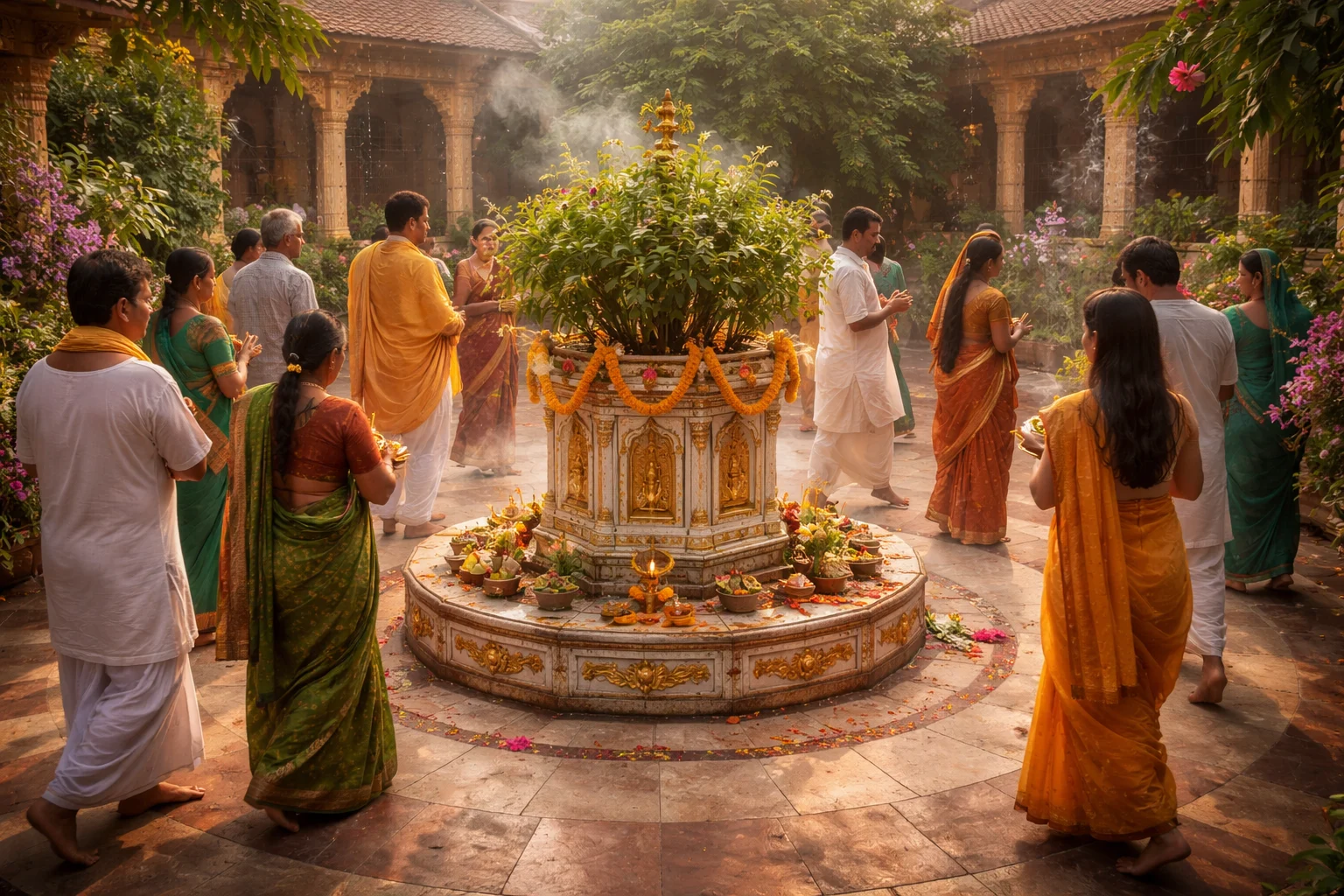
yāni kāni ca pāpāni
brahma-hatyādikāni ca
tāni tāni praṇaśyanti
pradakṣiṇaḥ pade pade
yāni kāni ca — whatever | pāpāni — sins
brahma-hatya ādikāni ca — including even the killing of a brāhmaṇa
tāni tāni praṇaśyanti — all of them are completely destroyed
pradakṣiṇaḥ pade pade — at every step of circumambulation
Translation :"Whatever sins one has accumulated — even the gravest — are completely destroyed at every single step taken in circumambulation of Śrīmatī Tulasī Devī."
The reference to brahma-hatya (the killing of a brahmana) is a classical Vedic idiom for the most serious imaginable transgression. If even the heaviest sin is washed away by each step around Tulasi Devi, then there is no ordinary failure or shortcoming that her grace cannot remove.
Tulasi Pranama Mantra
The Tulasi Pranama mantra is the formal Sanskrit obeisance offered to Tulasi Devi. It is recited three times at the beginning of the aarti while bowing before the plant. In four precise lines, it names Tulasi Devi completely — her divine name, her relationship to Krishna, her gift to devotees, and her essential nature.
vṛndāyai tulasī-devyai
priyāyai keśavasya ca
viṣṇu-bhakti-prade devi
satyavatyai namo namaḥ
vṛndāyai — unto Vṛndā | tulasī-devyai — unto Tulasī Devī
priyāyai keśavasya ca — who is most dear to Lord Keśava (Kṛṣṇa)
viṣṇu-bhakti-prade — who bestows devotional service to Lord Viṣṇu
devi — O goddess | satyavatyai — unto Satyavatī, she who holds the highest truth
namaḥ namaḥ — I offer my repeated obeisances
Translation :"I offer my repeated obeisances unto Vṛndā, Śrīmatī Tulasī Devī, who is most dear to Lord Keśava. O goddess, you bestow devotional service to Kṛṣṇa upon all who worship you, and you embody the highest truth."
Who is Tulasi Devi? The Sacred Significance
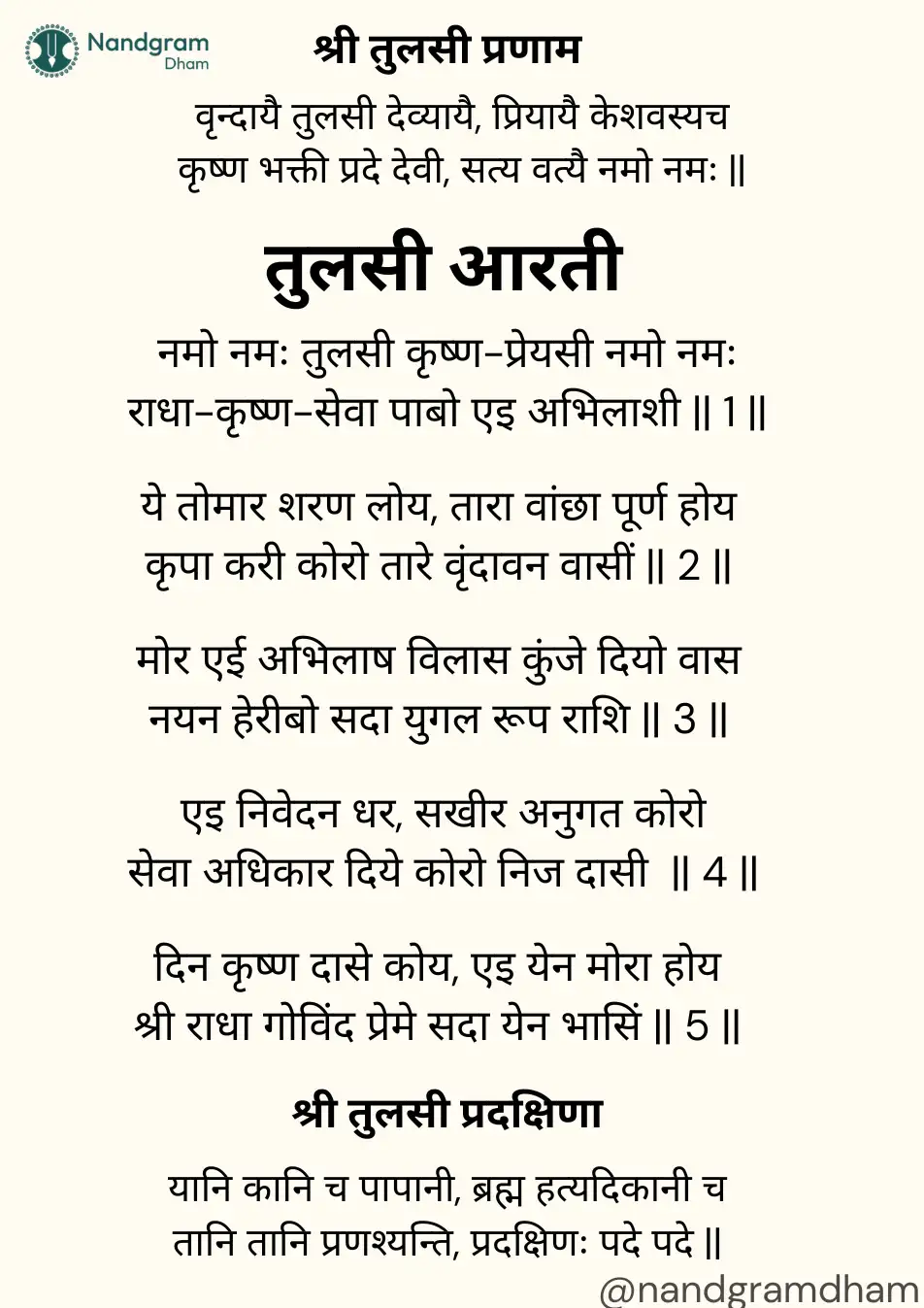
Before reciting the Tulsi Ki Aarti, it helps to understand who Tulsi Devi actually is—this is not simply a prayer to a plant. In Vaishnava scripture, she is a divine personality named Vrinda.
What is Tulsi Aarti in ISKCON?
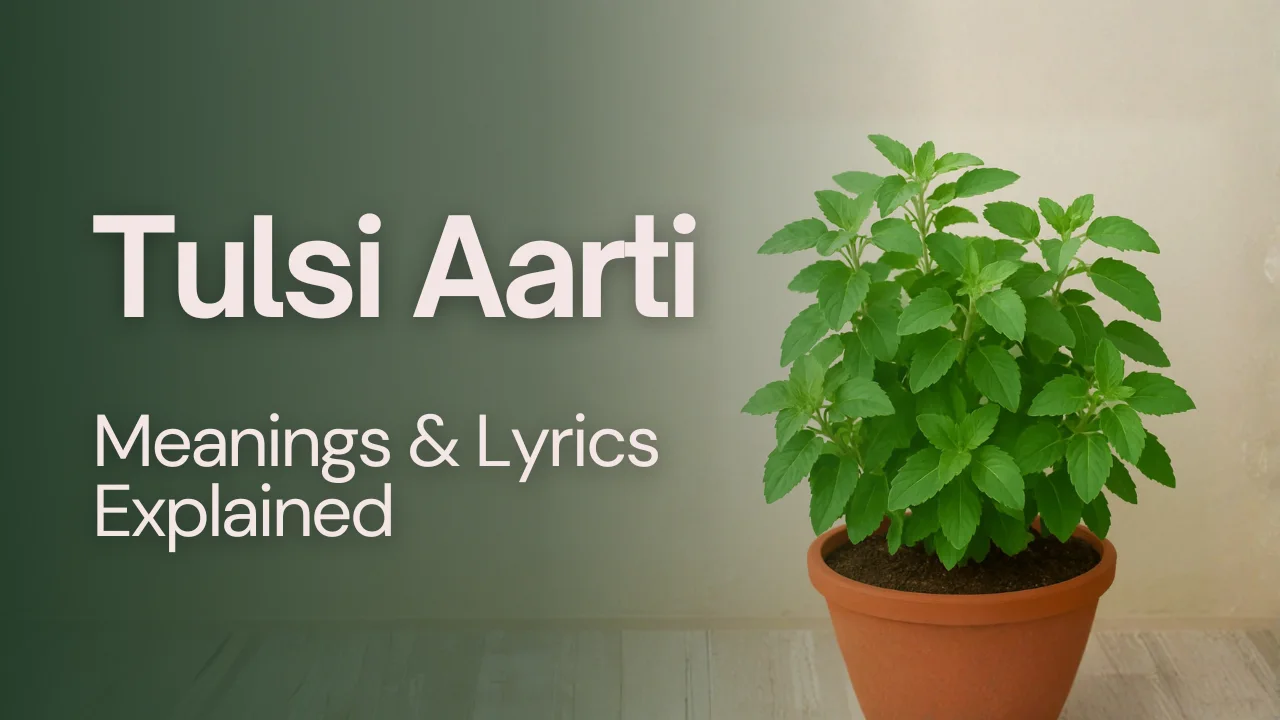
Tulsi Aarti ISKCON is one of the most cherished daily rituals in the Vaishnava tradition. Performed twice every day — once during the early morning Mangala Aarti programme and again at sunset — this prayer is sung in honour of Tulsi Devi, the sacred basil plant revered as a divine goddess in Vaishnava philosophy.
The aarti is formally known as Sri Tulasi Kirtana. It was composed in Bengali by the great Vaishnava poet-devotee Krishnadasa Kaviraja Goswami, and its five heartfelt verses carry a single, unified message: a devotee's longing to serve Shri Shri Radha and Krishna through the grace of Tulsi Devi.
Quick Facts
Sung at: ISKCON temples worldwide, Vaishnava homes
Timing: 5:00–5:15 AM (after Mangala Aarti) & sunset
Composed by: Krishna Dasa (Bengali Vaishnava poet)
Language: Bengali (transliterated) + Sanskrit mantras
Verses: 5 verses + Pradakshina Mantra + Pranama
Why We Perform Tulsi Ji Ki Aarti?
The divine land of Vrindavana takes its name directly from her. She is described as krishna-preyasi: the most beloved of Lord Krishna. No offering of food to Lord Vishnu is accepted without a Tulsi leaf. This is why Tulsi Mata Aarti is performed with such deep devotion; she is the bestower of Vishnu-bhakti.
"Whoever worships Tulasi Devi with a sincere heart is said to receive what no amount of tapasya or penance can grant — the mercy of Radha and Krishna."
She is also known as Satyavati — she who embodies the highest truth — and as a bestower of Vishnu bhakti: devotional service to God.
This is why ISKCON temples worship her every single day without exception.
Benefits of Performing Tulsi Aarti Daily
Devotees who practice the Tulsi Aarti daily — whether at an ISKCON temple or at home realises of both spiritual and practical changes in their lives. According to Vaishnava scripture and the practical experience of practitioners, regular Tulsi Aarti is said to:
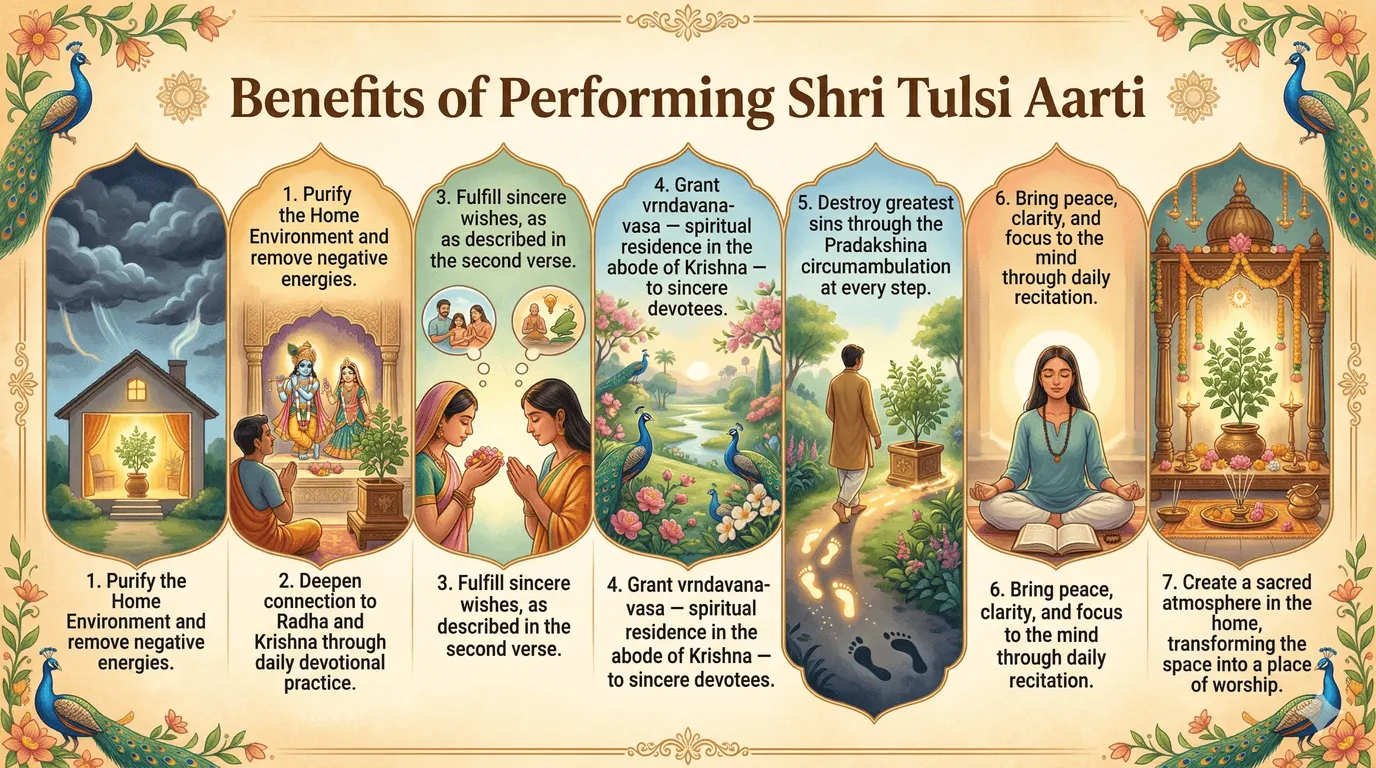
• Purify the home environment and remove negative energies from the household
• Deepen one's connection to Radha and Krishna through daily devotional practice
• Fulfill sincere wishes, as described directly in the second verse of the aarti itself
• Grant vrndavana-vasa — spiritual residence in the abode of Krishna — to sincere devotees
• Destroy greatest sins through the Pradakshina circumambulation at every step
• Bring peace, clarity, and focus to the mind through the daily resitation of prayer
• Create a sacred atmosphere in the home, transforming the space into a place of worship
Beyond the spiritual benefits, keeping a Tulsi plant and honouring it daily also has well-documented environmental and health benefits. Tulsi (Holy Basil) is one of the most medicinal plants known, releasing oxygen nearly 24 hours a day and purifying indoor air naturally.
How to Perform Tulsi Aarti at Home
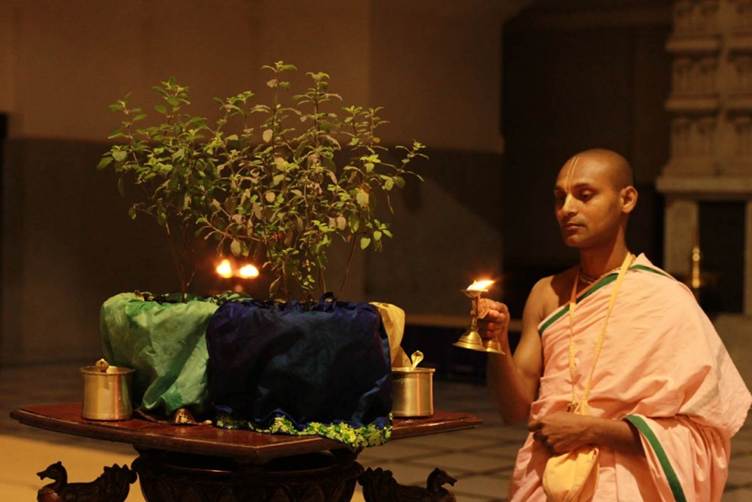
You do not need to be in an ISKCON temple to offer Tulsi Aarti. This is a practice that belongs in the home — on the veranda, in the courtyard, on a balcony. Here is a simple, step-by-step guide:
1. Clean the area around the Tulasi plant. Offer a little fresh water at her roots. This caring is itself a form of worship.
2. Light a ghee lamp (diya) or an incense stick. The warmth of the flame represents the devotee's sincere offering of heart and attention.
3. Begin with the Tulasi Pranama mantra — recite it three times while bowing before the plant.
4. Sing or recite the Tulsi Aarti — all five verses. If you know the melody used in ISKCON, sing it. If not, reading the words with understanding and sincerity is equally powerful.
5. Perform Tulsi Pradakshina — walk clockwise around the Tulasi plant at least three times while chanting the Pradakshina mantra.
Best times: Early morning before sunrise (Brahma Muhurta) and at sunset. The month of Kartika (October–November) is especially auspicious for Tulasi worship, as is the occasion of Tulasi Vivah.
Frequently Asked Questions about Tulsi Aarti ISKCON