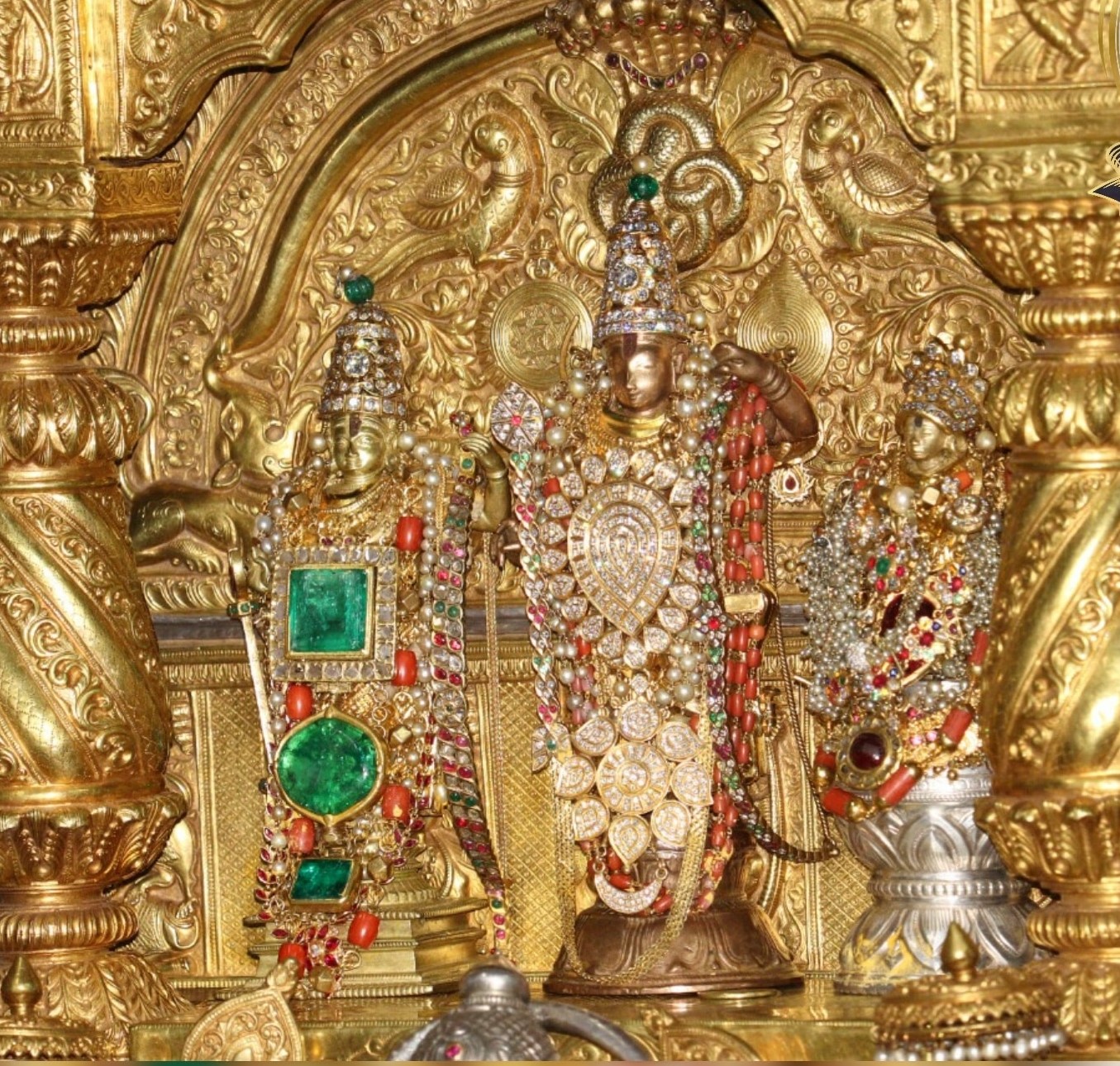
Uttaradi Matha's own historical materials remember Madhava Tirtha's time as pontiff as the period when the matha obtained one of its most treasured deities: Sri Vamsha Rama. This deity is still worshipped today alongside the matha's other sacred images, Sri Digvijaya Rama, Sri Moola Rama and Sri Moola Sita. The story below is told exactly as that living tradition holds it. It is a devotional account, not an independently verified historical record.
According to the account, Madhava Tirtha was one day engaged in the daily worship of the matha's deities when those present saw something unusual. In the middle of the puja he rose from his seat and bowed down with deep reverence before what looked, to everyone else, like empty space. When the worship was finished, he received teertha (water made sacred through worship) with visible humility from that same unseen presence. The assembled devotees, astonished, asked him what they had just seen.
Madhava Tirtha's answer, as the tradition keeps it, was that Madhvacharya himself had come. He said the founder of the sampradaya had appeared, worshipped the newly obtained Vamsha Rama deity himself, taken the sanctified water offered in worship, and then given that same teertha back to him as a blessing. This tradition already holds that Madhvacharya remains spiritually present in the line of pontiffs he established. For that reason, the tradition sees the story as showing two things: the holiness of the Vamsha Rama deity, and Madhava Tirtha's own place in that line.
No independent source outside the devotional tradition confirms this specific incident. That is true of most such stories about pontiffs from this period, and it does not by itself make the account false. In fairness, it is like much of what survives about Madhava Tirtha's inner life. His own tradition has preserved it, and his own institution treasures it. But it cannot be checked by outside historical methods, the way his dates or the founding of his matha can.
