Table of Contents
- 1. The 9 Mysteries of Jagannath Temple Explained
- 2. How Does the Gaudiya Vaishnava Tradition View These Mysteries?
- 3. A Note on These Mysteries: Belief, Scepticism, and Honesty
- 4. Final Thoughts
- Frequently Asked Questions
Imagine standing in the heart of Puri, Odisha, before a magnificent temple that has inspired faith for more than 800 years. The Jagannath Temple is not only one of India's four Char Dham pilgrimage sites but also one of the most sacred temples dedicated to Lord Jagannath. Every year, millions of devotees and visitors come here to seek blessings and experience its unique spiritual atmosphere.
But beyond its rich history and the world-famous Rath Yatra, the temple is also known for a series of fascinating mysteries that continue to spark curiosity. Visitors, priests, historians, and researchers have observed several unusual phenomena associated with the temple for generations. Some have been studied from scientific and architectural perspectives, while others remain the subject of ongoing discussion and debate. Although various explanations have been proposed, there is no single, universally accepted answer for many of these occurrences.
In this article, we'll explore 9 fascinating mysteries of the Jagannath Temple. For each one, we'll look at what people observe, the scientific or historical explanations that have been suggested, and why these mysteries continue to intrigue devotees, travelers, and researchers alike.
The 9 Mysteries of Jagannath Temple Explained
This is the most famous and most observed of all the Jagannath Temple mysteries. At the very top of the 65-metre Vimana, a sacred flag called the Patitapavana Bana flies from a mast. Every piece of cloth follows the wind.
But the flag at Jagannath Temple always flutters in the direction opposite to the wind. No matter which way the wind is blowing. Thousands of visitors observe this every day. Meteorologists have studied it, and there is no scientific explanation for this.
There is an additional layer to it. The flag must be changed every single evening at sunset. A priest climbs the 65-metre temple spire barefoot, with no ropes, no harness, and no safety equipment whatsoever. He changes the flag and climbs back down. This ritual is performed every day without a single break. It is said that if even one day is missed, the temple must then remain closed for 18 years. In over eight centuries, it has never been missed.
The main Vimana of the Jagannath Temple is 65 metres tall and built from solid stone. Every solid object on earth casts a shadow when light falls on it. The angle of the sun changes throughout the day, and shadows change accordingly, but they never disappear.
At the Jagannath Temple, the main dome does not cast a visible shadow on the ground at any time, in any season, or in any weather. Morning, noon, or evening, look around the base of the temple, and you will not find a shadow.
This has been observed and documented by countless visitors and researchers. It is not a matter of belief; people simply look, and there is no shadow.
Some architects have suggested that the specific geometry of the Rekha Deula (the curvilinear tower style of Kalinga architecture) might redirect light so that the shadow falls on the temple itself rather than on the ground. Others suggest that the elevated platform on which the temple sits, combined with the inward-sloping curvature of the walls, might conceal the shadow from view at ground level. But no architectural study has been able to define a model or recreate this effect.
Puri is a coastal city. The Bay of Bengal is just a few hundred metres from the Jagannath Temple. Standing anywhere near the Singhadwara, the main Lion Gate, you can clearly hear the waves crashing. It is a loud, constant sound, as you would expect from the ocean.
The moment you step through the Singhadwara into the temple complex, the sound of the ocean stops completely. As if someone pressed mute on the sea. You cannot hear the waves at all from inside.
And then the strangest part: the moment you step back out through the gate, the sound returns instantly. One step in, silence. One step out, the ocean again.
Everywhere on earth near a coastline, wind follows a predictable pattern. During the day, cooler air from the sea moves toward the warmer land; this is called a sea breeze. At night, the land cools faster than the sea, so the wind reverses and blows from the land toward the sea. This is basic coastal meteorology.
Near the shores of Puri around the Jagannath Temple, this pattern is reversed. During the day, the wind blows from the land toward the sea. At night, it blows from the sea toward the land. The exact opposite of what it should do.
This is not a one-day anomaly. It occurs daily, consistently, in the opposite direction to what coastal geography predicts.
At the very top of the Jagannath Temple, above even the flag, sits the Sudarshan Chakra, a large disc-shaped structure made from an alloy of eight metals, weighing over a tonne and standing about 3.5 metres tall. It represents Lord Vishnu's divine discus, the weapon of protection.
Here is the mystery: no matter where you stand in the Puri- north, south, east, west, near the temple, or far away- the Sudarshan Chakra appears to face you. It does not matter which angle you view it from. It always seems to be looking at you.
Engineers and optical scientists have studied this, but none have conclusively explained or recreated the effect. The Chakra was placed on top of the temple centuries ago, long before modern engineering tools existed. How it was lifted to the top of a 65-metre spire without cranes is itself an unanswered question.
Look at any large temple, monument, or building in India: birds perch on the walls, pigeons fly overhead, eagles circle high above. But, at the Jagannath Temple, it does not happen.
No birds fly above the main dome of the Jagannath Temple. Not pigeons, not eagles, not any species. They fly around the temple; they land on the compound walls, but they do not fly over the top of the Vimana. This has been observed consistently for centuries, long before there were any legal regulations involved.
Today, the government has also declared the airspace above the temple a restricted no-fly zone. But the restriction on aircraft came after centuries of natural avoidance by birds, and the absence of birds has never been explained by the no-fly rule, since birds do not follow government regulations.
The temple kitchen is one of the largest in the world. Every day, food is prepared for anywhere between 2,000 and 200,000 devotees, depending on the day. This food is called Mahaprasad and is sacred. It has been offered to Lord Jagannath before distribution to devotees.
The traditional cooking method stacks seven clay pots one above another over a single wood fire. The heat source is at the bottom. By ordinary thermodynamics, the bottom pot should cook first.
But, at Jagannath Temple, it works the other way. The pot at the very top cooks first. Then the one below it cooks. Then the next one, working downward, until the bottom pot is the last to finish.
The food also never falls short, no matter how many people arrive, and not a single grain goes to waste at the end of the day. Every day. Without exception.
This mystery is different from the others; it involves human experience rather than a physical phenomenon. The rule at Jagannath Temple is strict: after the final rituals of the evening, the inner sanctum doors are closed, and no one is permitted to remain inside the temple overnight. No priest, no guard, no devotee, no one.
This is presented as a rule, but behind it is something stranger. Over the centuries, accounts have accumulated of people who tried to stay inside, either accidentally or deliberately, and experienced extreme discomfort, panic, or psychological distress. These experiences have reportedly been consistent enough that the tradition is maintained with great seriousness. After the final aarti, the inner sanctum belongs only to the Lord.
A related tradition claims that late in the evening the sound of anklets is heard within the closed sanctum, as if someone were walking inside the locked temple. No one has been able to explain or confirm the source of this sound.
Every 8, 12, or 19 years, depending on a specific astrological occurrence, the wooden idols of Lord Jagannath, Lord Balabhadra, and Devi Subhadra are replaced in a ceremony called Nabakalevara (meaning "new body"). New idols are carved from sacred Neem trees that meet specific criteria. The old idols are buried with full funeral honours inside the temple complex.
The most mysterious part of this ritual is the transfer of what is called the Brahma Padartha, the divine essence that resides within each idol. This transfer is performed in complete darkness, by blindfolded priests, in absolute silence, in the middle of the night. The priests who perform it are not permitted to describe what they feel or what they encounter during the process. Many have reported that the experience is overwhelming and deeply affecting. Some have reportedly fainted.
There is a consistent report that the Brahma Padartha cannot be seen with the eyes, cannot be weighed, has no definable physical form, and yet is palpable enough that the priests handling it can feel it and know when it has been successfully transferred. After the ritual, a period of mourning is observed as the old idols are buried.
How Does the Gaudiya Vaishnava Tradition View These Mysteries?
The Gaudiya Vaishnava tradition approaches the mysteries of the Jagannath Temple differently from historians or scientists. Rather than seeing them as puzzles that need to be solved, devotees understand them as expressions of Lord Jagannath's inconceivable divine energy (acintya-śakti). At the same time, the tradition does not encourage people to base their faith solely on miraculous events.
According to Gaudiya philosophy, Lord Jagannath is Sri Krishna Himself, the Supreme Personality of Godhead.
mayādhyakṣeṇa prakṛtiḥ sūyate sacarācaram
— BG 9.10
As Krishna explains in the Bhagavad Gita (9.10), material nature works under His direction. From this perspective, the Lord is never limited by the laws of nature, because those laws exist and function by His will. Therefore, if extraordinary phenomena are associated with His temple, devotees naturally see them as manifestations of His divine power.
However, the Gaudiya tradition places much greater importance on devotion (bhakti) than on miracles. Great Gaudiya acharyas, including Sri Chaitanya Mahaprabhu and Srila A. C. Bhaktivedanta Swami Prabhupada, taught that genuine faith is built upon guru (the spiritual master), sadhu (saintly devotees), and shastra (Vedic scriptures), not on unexplained phenomena. While mysteries may inspire curiosity, they are not considered proof of God's existence or the foundation of spiritual life.
For Gaudiya Vaishnavas, the greatest miracle of Lord Jagannath is His unlimited mercy. Every year during the Jagannath Rath Yatra, the Lord leaves His temple and comes out among the people, allowing everyone to receive His darshan, regardless of caste, nationality, or social background. This act of compassion is regarded as far more significant than any physical mystery associated with the temple.
Ultimately, whether science explains these phenomena in the future or not does not change the temple's spiritual significance. For devotees, the true wonder of the Jagannath Temple is not that certain events appear mysterious, but that the Supreme Lord personally resides there, accepts the loving service of His devotees, and offers His mercy to anyone who approaches Him with sincerity.
A Note on These Mysteries: Belief, Scepticism, and Honesty
Many of the mysteries of the Jagannath Temple have inspired scientific theories, but none have been universally accepted. As a result, these phenomena continue to spark curiosity among devotees, historians, and researchers alike.
For believers, these mysteries are a reflection of Lord Jagannath's divine presence and the temple's sacred power. For others, they are fascinating observations that may one day find scientific explanations.
Whatever your perspective, the Jagannath Temple remains one of India's most extraordinary spiritual landmarks. Its rich history, timeless traditions, and enduring mysteries continue to attract millions of pilgrims and travellers to Puri every year, making every visit a memorable experience.
Read: 10 Lessons To Be Learnt From Bhagavad Gita
Final Thoughts
The Jagannath Temple mysteries are not legends from a distant past. They happen today, every single day, in full view of thousands of visitors. The flag flew opposite the wind. The temple cast no shadow at noon. The ocean will fall silent again when the next pilgrim steps through the Lion Gate this evening.
Whether these phenomena are miracles of faith, feats of ancient engineering that we no longer understand, or natural events with causes we haven't identified, they are real. They happen. And after 800 years, no one has been able to explain them away.
Perhaps, as the temple's own tradition suggests, some things are not meant to be explained. They are meant to be witnessed.
Hare Krishna!Frequently Asked Questions
Q1. Why does the sound of the sea stop inside the Jagannath Temple?
The sound of the Bay of Bengal is clearly audible outside the Lion Gate (Singhadwara), but the moment you step inside the gate, the sound stops completely. The sound returns instantly the moment you step out. According to researchers, it can be due to thick stone walls and the narrow gate opening that might reduce sound transmission. However, the total and instantaneous nature of the effect has not been satisfactorily explained.
Q2. What is the Nabakalevara ritual?
Nabakalevara means "new body" and refers to the periodic replacement of the wooden idols of Lord Jagannath, Lord Balabhadra, and Devi Subhadra. This occurs every 8 to 19 years based on astrological cycles. The old idols are buried inside the temple complex, and a divine essence called the Brahma Padartha is transferred from the old idols to the new ones by blindfolded priests working in complete darkness and silence. The nature of the Brahma Padartha has never been scientifically studied or defined.
Q3. Is it true that no one can sleep inside the Jagannath Temple?
Yes. After the final rituals of the evening, the inner sanctum is closed, and no one- no priest, guard, or devotee- is permitted to remain inside overnight. Over centuries, people have reportedly experienced discomfort or distress when remaining inside. Alongside this tradition, it has been reported that the sound of anklets can be heard from within the closed sanctum in the late evening, as if someone is walking inside. The source of this sound has never been identified.
Q4. Why do the idols of Lord Jagannath look unfinished and different from other Hindu deities?
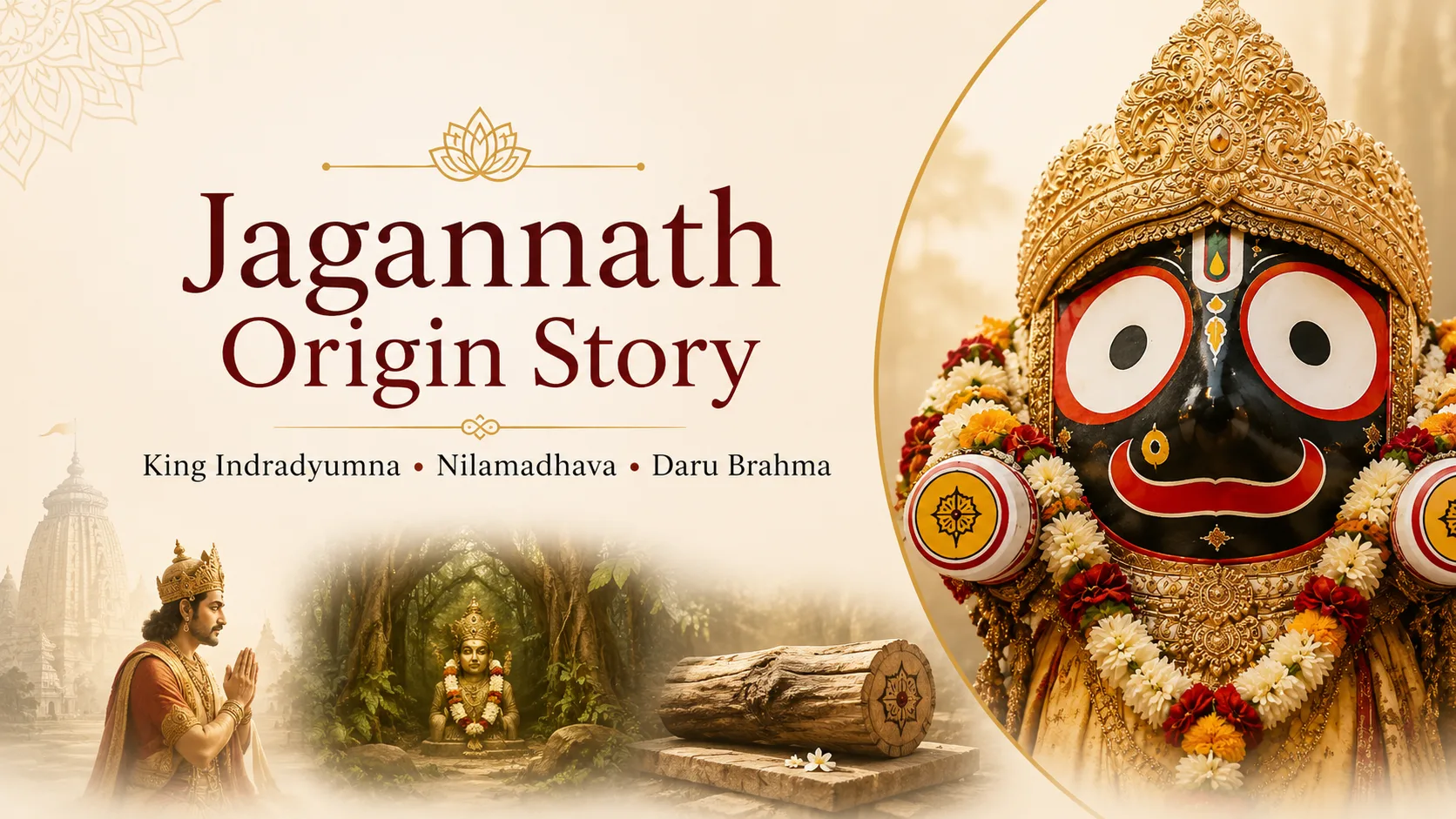
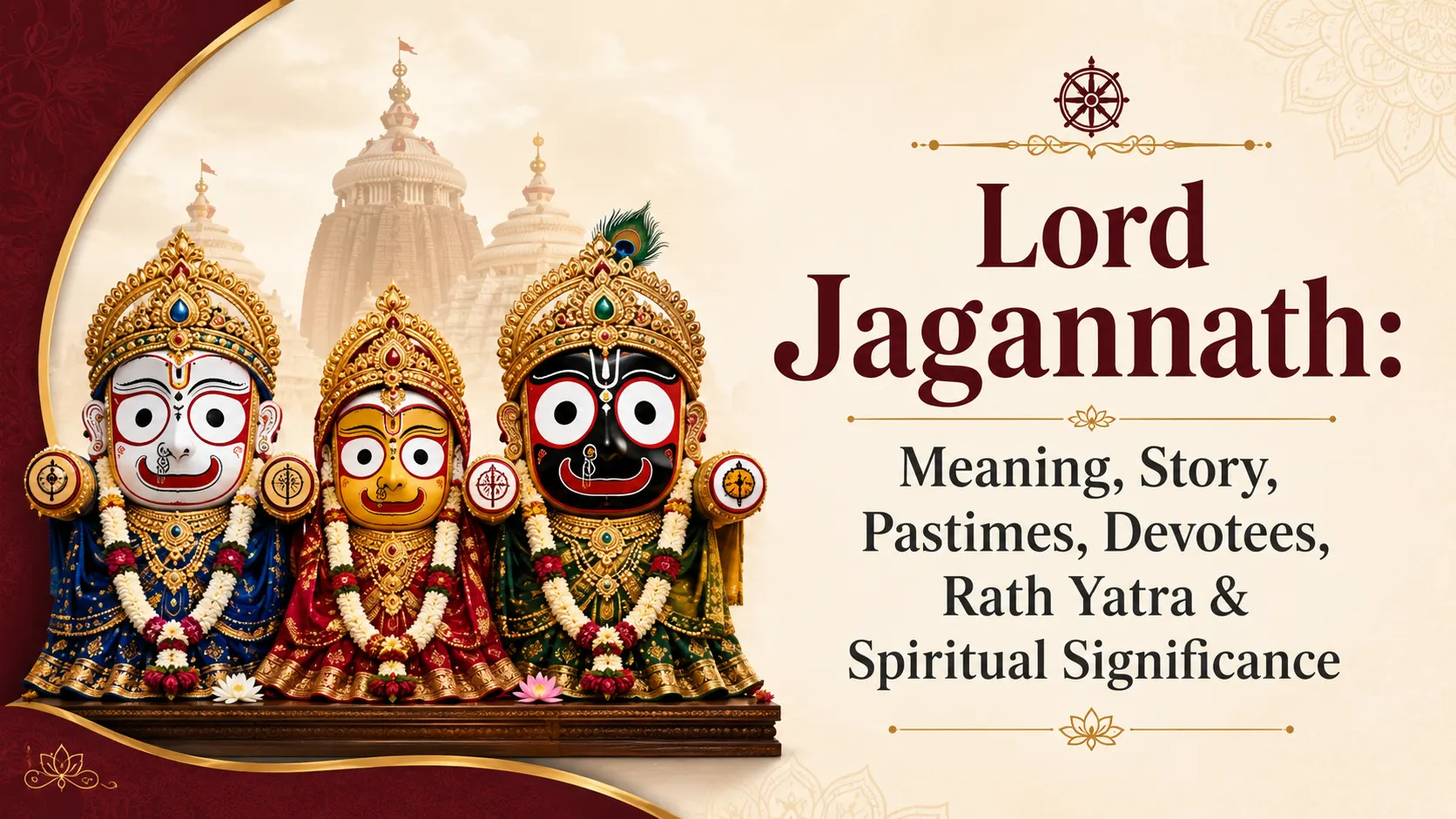
The idols are incomplete and abstract in form, with large eyes and no fully formed limbs. The story is tied to the legend of Vishwakarma, the divine architect, who agreed to carve the deities under the condition that he would not be disturbed. But before the work was complete, King Indradyumna grew anxious and opened the door. As a result, Vishwakarma left, and the idols remained unfinished. In the Gaudiya Vaishnava interpretation, the large round eyes represent the Lord's omnipresent gaze, a form of Mahabhava, the highest state of divine ecstasy, frozen in the deity's form.