Table of Contents
- 1. When is Jagannath Rath Yatra 2026?
- 2. What is Jagannath Rath Yatra?
- 3. The Story Behind Jagannath Rath Yatra
- The Journey to Gundicha Temple
- The Vrindavan Connection
- 4. The Three Sacred Chariots of Rath Yatra
- 5. What Happens During Rath Yatra?
- 6. Significance of Jagannath Rath Yatra
- 7. ISKCON Understanding of Jagannath Rath Yatra
- Sarva-loka-mahesvaram
- Cleansing the Heart
- Universal Brotherhood
- Chanting is for Everyone
- 8. Where is Rath Yatra Celebrated?
- 9. Final Thoughts
- 10. Frequently Asked Questions (FAQs)
- References
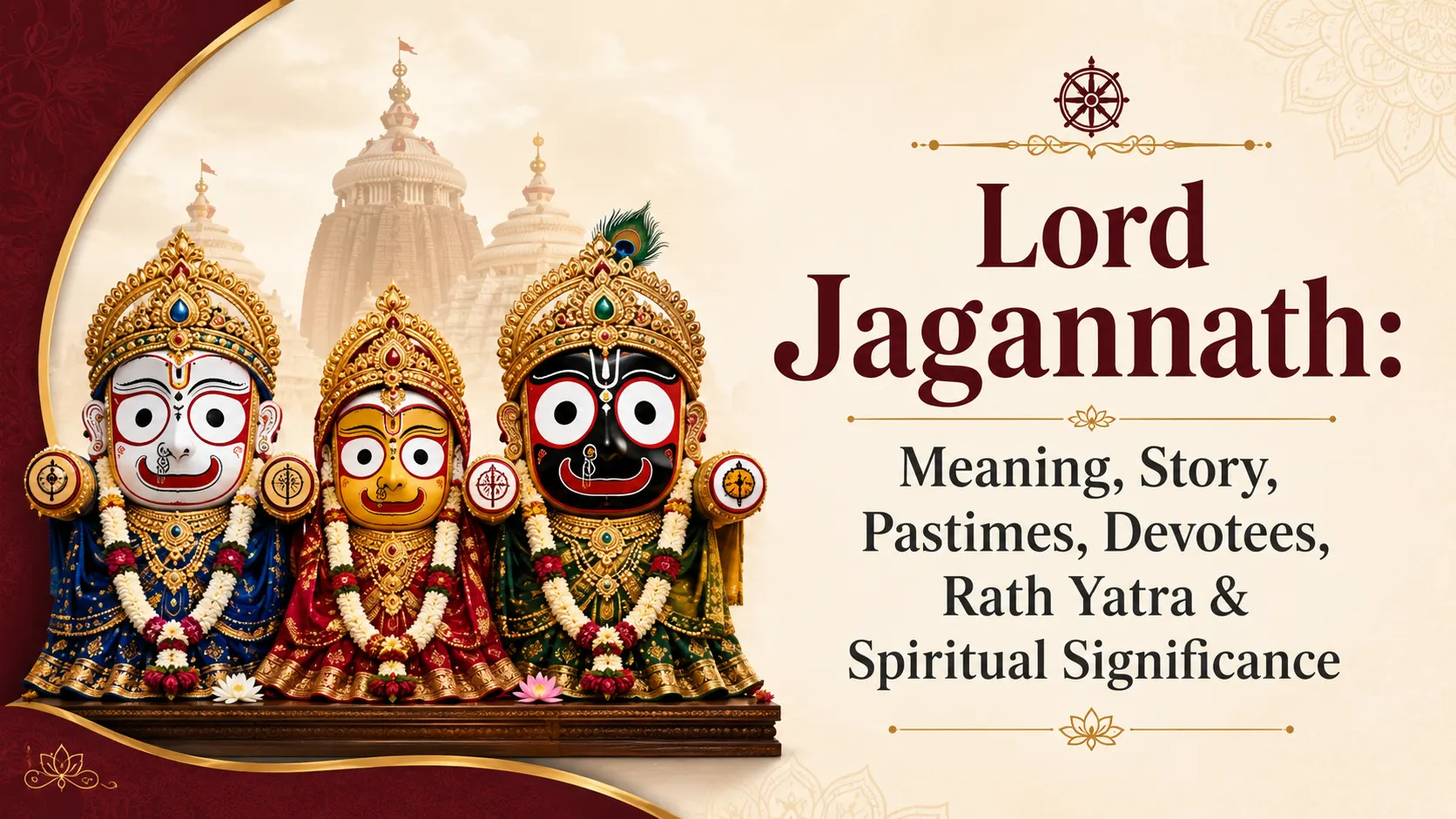
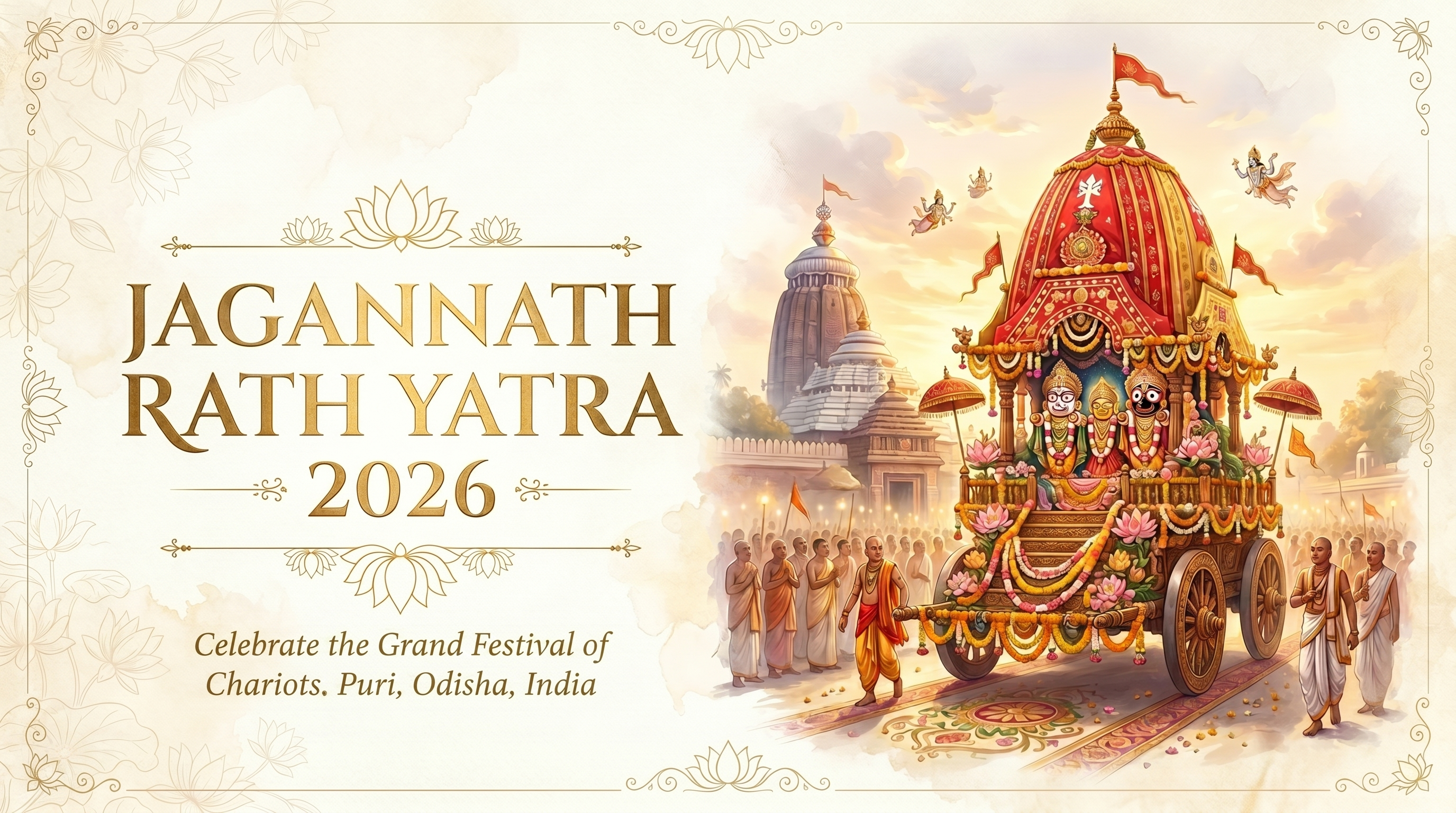
Every year, millions of devotees turn their eyes towards one small coastal town in India, Puri, Odisha. For nine days, the streets come alive with chants of "Jai Jagannath!" as three massive wooden chariots roll down the Grand Road, pulled by the bare hands of ordinary people. This is the Jagannath Rath Yatra, also known as Puri Rath Yatra, one of the oldest, largest, and most spiritually significant festivals in the world.
When is Jagannath Rath Yatra 2026?
Jagannath Rath Yatra 2026 falls on Thursday, July 16, 2026.
The festival is celebrated every year on Dwitiya Tithi (2nd day) of Shukla Paksha in the Hindu month of Ashadha, which usually falls in June or July in the English calendar.
Events & Dates — 2026
| Ashadha Shukla Dwitiya (Tithi) Begins | July 15, 2026 — around 11:50 AM |
| Ashadha Shukla Dwitiya (Tithi) Ends | July 16, 2026 — around 8:52 AM |
| Snan Yatra (Sacred Bath Festival) | June 29, 2026 |
| Anasara Begins (15-day Period of Sacred Seclusion) | June 30, 2026 |
| Gundhica Marjan (Temple Cleaning) | July 15, 2026 |
| Netrotsava / Nabajouban Darshan | July 15, 2026 |
| Main Rath Yatra (Chariot Procession) | Thursday, July 16, 2026 |
| Deities stay at Gundicha Temple | July 16 – July 23, 2026 (7 days) |
| Hera Panchami | July 20, 2026 |
| Bahuda Yatra (Return Journey) | Friday, July 24, 2026 |
| Suna Besha (Golden Attire) | July 25, 2026 |
| Adhara Pana | July 26, 2026 |
| Niladri Bije (Deities return to sanctum) | July 27, 2026 |
What is Jagannath Rath Yatra?
Jagannath Rath Yatra, also called Puri Rath Yatra, Gundicha Yatra, Navadina Yatra, or simply the "Festival of Chariots", is an annual Hindu festival celebrated in Puri, Odisha. It marks the symbolic journey of Lord Jagannath (a form of Lord Krishna/Vishnu), along with his elder brother Lord Balabhadra and younger sister Devi Subhadra, from the main Jagannath Temple to the Gundicha Temple, about 3 kilometres away.
During the festival, the deities are taken out of the temple's inner sanctum. This sacred festival happens only once a year, and is placed on three giant, hand-built wooden chariots. Thousands of devotees then pull these chariots through the streets using thick ropes, an act believed to cleanse the soul and bring divine blessings.
Jagannath Rath Yatra is considered the oldest and largest chariot festival in the world, with historical records going back over a thousand years. It is also one of the few Hindu festivals where the deities literally step outside the temple to meet their devotees. Instead of devotees going to the deity, the Lord comes to the people.
The Story Behind Jagannath Rath Yatra
The origins of Jagannath Rath Yatra are rooted in several sacred traditions and legends associated with Lord Jagannath, Lord Balabhadra, and Devi Subhadra. The most widely accepted story explains why the three deities travel from the Jagannath Temple to the Gundicha Temple every year.
The Journey to Gundicha Temple
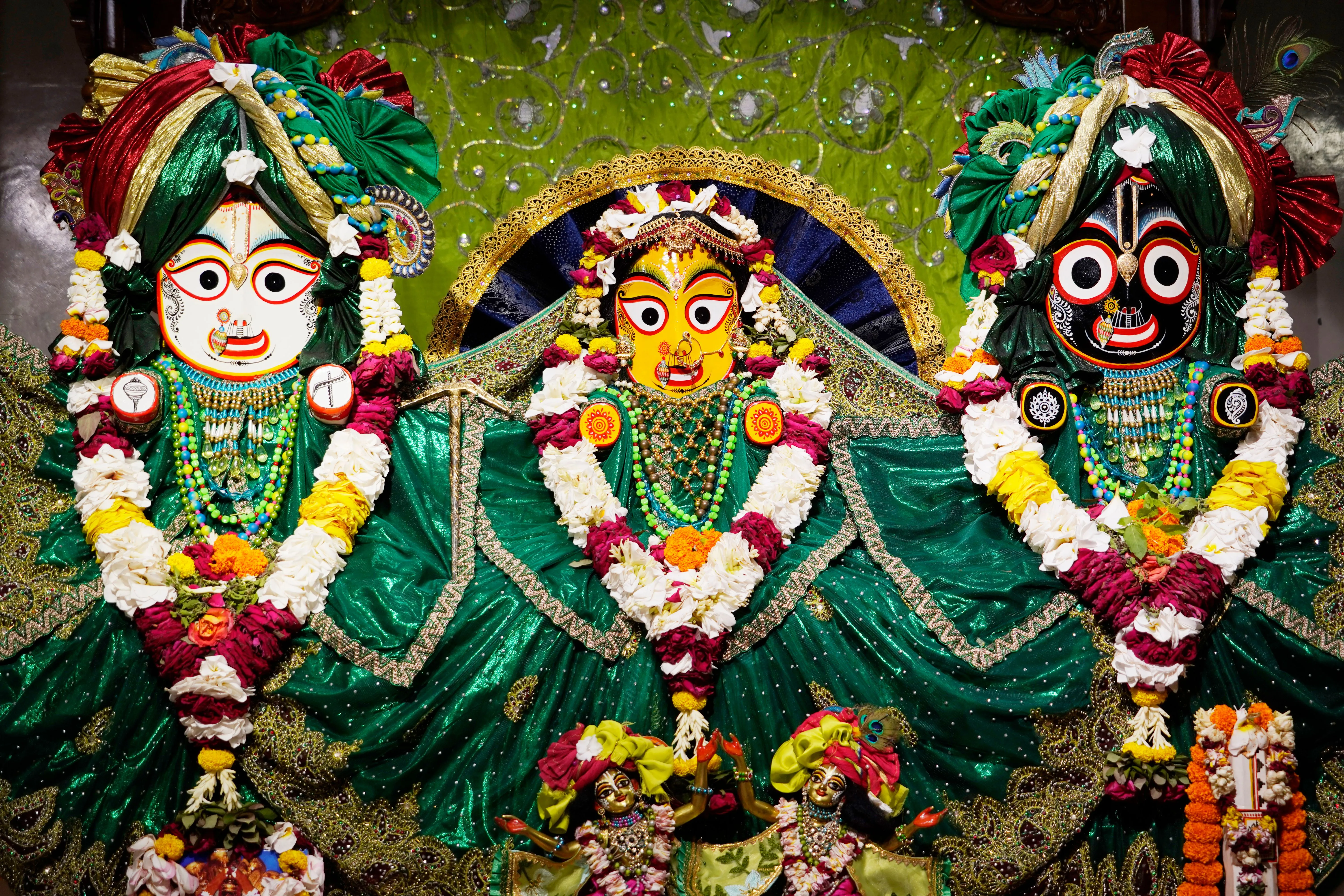
According to tradition, Devi Subhadra once expressed a desire to visit the beautiful Gundicha Temple, the home of her aunt. To fulfill her wish, her brothers, Lord Jagannath and Lord Balabhadra, accompanied her on a grand journey by chariot.
Since then, this divine journey has been commemorated annually through the Rath Yatra, where the three deities travel from the Jagannath Temple to the Gundicha Temple and return after a week-long stay.
The Vrindavan Connection
Another popular interpretation of Rath Yatra comes from the Gaudiya Vaishnava tradition.
According to this, many years after Lord Krishna left Vrindavan, a solar eclipse brought people from all over India to Kurukshetra. The gopis of Vrindavan also came there and finally met Krishna again after a long separation.
Although they were overjoyed to see Him, their hearts were not fully satisfied. They did not want to meet Krishna as a royal king in Kurukshetra. They longed to be with him in the simple and loving atmosphere of Vrindavan, where they had shared their deepest memories with him.
It is said that, out of their intense love, the gopis wanted to bring Krishna back to Vrindavan. Symbolically, they placed him on a chariot and pulled him with the strength of their devotion. In this way, Rath Yatra represents the loving desire of the devotees to bring Krishna from Kurukshetra back to Vrindavan.
For Gaudiya Vaishnavas and ISKCON followers, the festival is a celebration of this divine reunion and the pure love that the residents of Vrindavan had for Lord Krishna.
The Three Sacred Chariots of Rath Yatra
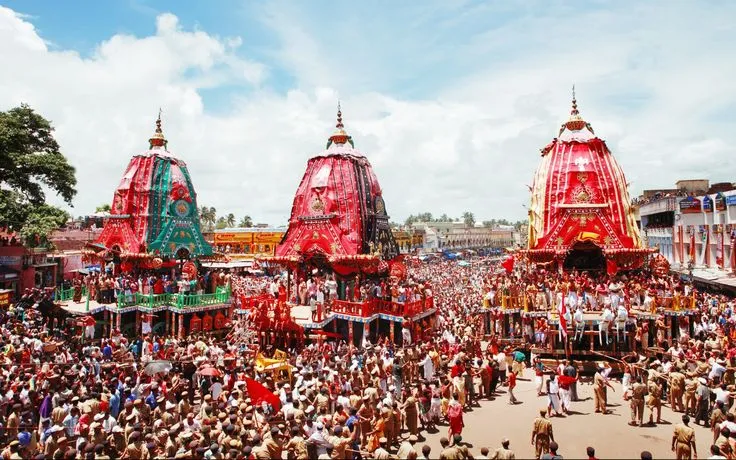
Every year, three massive chariots are freshly built from scratch, using traditional wood-joinery techniques, with woods of specific trees like phassi, or dhausa. These traditional wood-joinery techniques were passed down for generations.
16 wheels
Red and yellow
14 wheels
Red and blue/green
12 wheels
Red and black
Some interesting facts about the chariots:
- Construction of chariots begins on Akshaya Tritiya, a highly auspicious day. It takes about 2 months to construct the chariots from the beginning.
- The wood comes from specific sacred trees like Phassi and Dhausa, sourced from the Dasapalla forests of Odisha.
- A specialised group of hereditary carpenters, with exclusive rights passed down through generations, builds the chariots every single year.
- Each chariot is tied with 4 wooden horse idols at the front before the procession begins.
- The Yatra begins only after The King of Puri sweeps the road with a golden broom.
- In the Rath Yatra procession, Lord Balabhadra’s chariot Taladhwaja generally moves first, followed by Devi Subhadra’s Darpadalana, and finally Lord Jagannath’s Nandighosa..
What Happens During Rath Yatra?
Akshaya Tritiya Chariot Construction Begins
The construction of Chariot begins on Akshaya Tritiya, around 2 months before the festival begins.
The Holy Bath
On the full moon day of the month of Jyeshtha, the deities are brought out and bathed with 108 pots of sacred water in a ritual called Snana Purnima.
The Resting Period
According to belief, after the elaborate bath, the deities "catch a cold" and need rest. They are taken into a private chamber for about 15 days, a period called Anasara, where only temple priests can see them. Once they recover and are freshly repainted, they are brought out for the grand Rath Yatra.
The Ceremonial Procession
On the day of Rath Yatra, the deities are carried from the temple sanctum to their chariots in a rhythmic, swaying procession called Pahandi, accompanied by drums, conches, and chanting.
The Sweeping Ritual
Before the chariots move, the Gajapati King of Puri arrives and sweeps the chariot platforms with a golden broom, symbolising that everyone, including royalty, is equal before God. This process is known as chhera pahara.
The Chariot Pulling
Ratha tana is the heart of the festival. Thousands of devotees pull the massive ropes attached to each chariot, moving them along the 3-kilometre Bada Danda (Grand Road) towards the Gundicha Temple, amid chants of "Jai Jagannath!"
Seven-Day Stay at Gundicha Temple
The deities stay at the Gundicha Temple, which is symbolically their "garden house" or aunt's home, for about a week, where various rituals continue daily.
Hera Panchami
On the fifth day, a unique ritual takes place where Goddess Lakshmi, upset at being left behind, is said to visit the Gundicha Temple to "scold" Lord Jagannath, a playful and symbolic ritual enjoyed by devotees.
Bahuda Yatra The Return Journey
After nine days, the chariots make their journey back (bahuda Yatra) to the main temple. On the way, they pause at the Mausi Maa Temple, where the deities are offered Poda Pitha, a traditional baked pancake said to be Lord Jagannath's favourite.
The Golden Attire
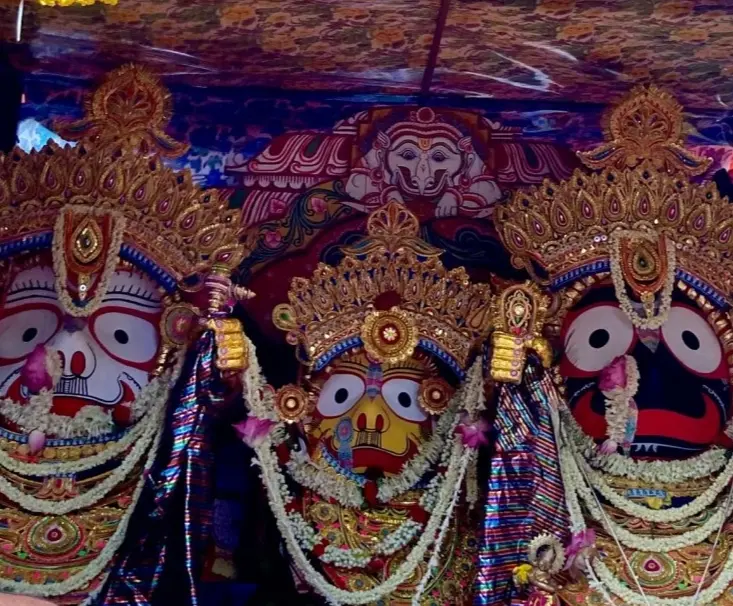
Once back, the deities are adorned in gold ornaments weighing close to 208 kg, in a dazzling ritual called Suna Besha.
Return to the Sanctum
The festival concludes as the deities are ceremonially taken back into the temple's inner sanctum, marking the end of the Rath Yatra cycle for the year.
Read Also: Jagannath Temple Mysteries Explained: 9 Unsolved Secrets
Significance of Jagannath Rath Yatra
In Bhagavad Gita, Lord Krishna said,
janma karma ca me divyam evaṁ yo vetti tattvataḥ tyaktvā dehaṁ punar janma naiti mām eti so 'rjuna
— BG 4.9
Means, one who knows the transcendental nature of My appearance and activities does not, upon leaving the body, take his birth again in this material world, but attains My eternal abode, O Arjuna.
The Bhagavad Gita teaches that understanding Krishna's divine nature frees a soul from rebirth. The Jagannath Ratha Yatra transforms this philosophy into a physical reality. By pulling the chariot ropes, devotees actively join in His divine pastime, making the Gita's path to the eternal abode accessible to everyone.
"Rathe ca vāmanaṁ dṛṣṭvā punar janma na vidyate."
— Skanda Purāṇa
According to Skanda Purāṇa, simply by seeing the Lord on the chariot, one makes advancement toward ending repeated birth and death.
The Rath Yatra is a highly sacred event and holds religious importance. According to the Skanda Purana, merely witnessing the Rath Yatra, hearing about it, or pulling the chariot ropes, is said to believe in clearing past sins and granting spiritual merit (punya).
Here in the festival The King of Puri sweeps the chariots with his own hands. This act signifies that no one regardless of status is above devotion.
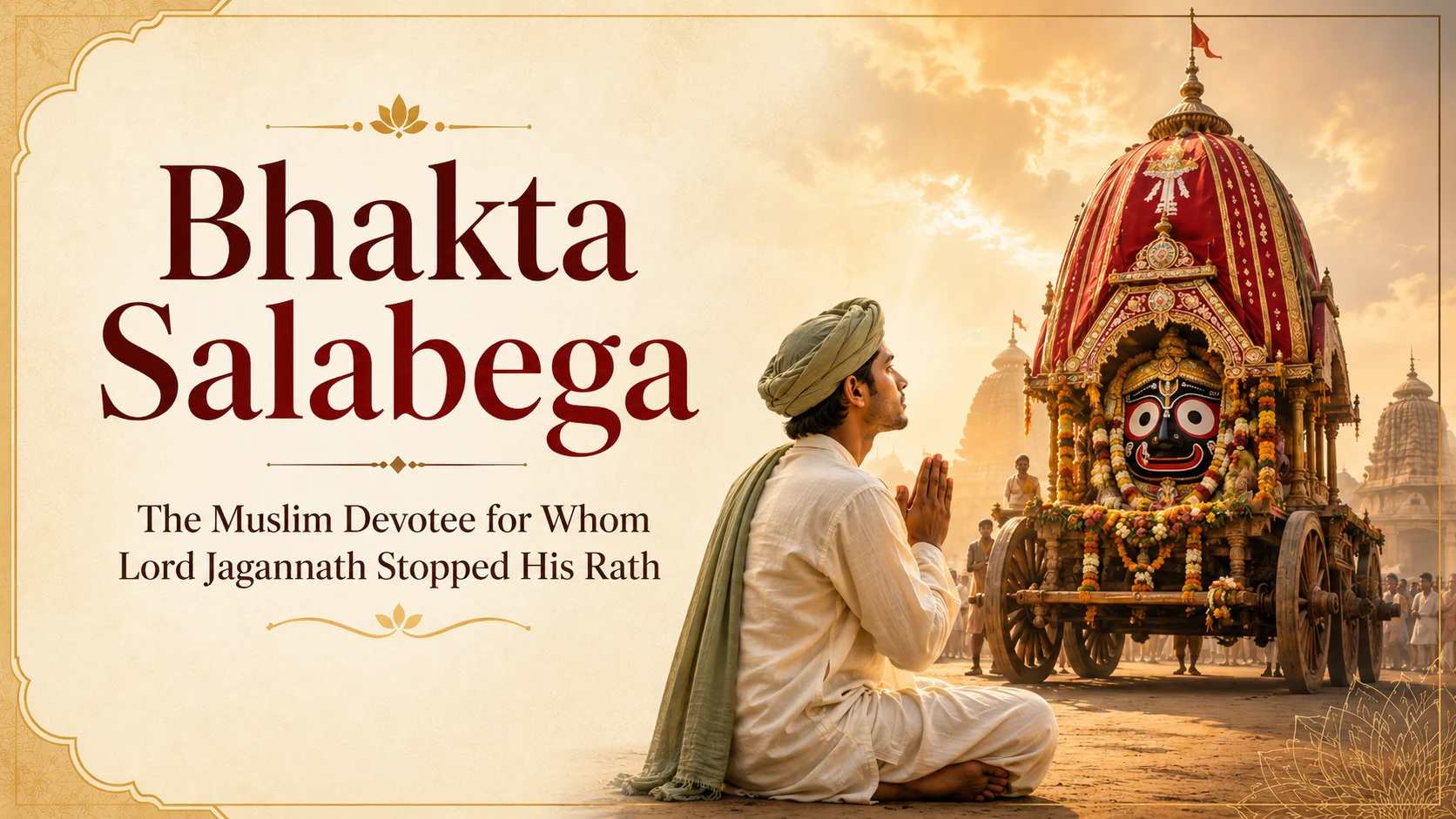
Unlike the inner sanctum of the Jagannath Temple (which is restricted to Hindus), the outdoor chariot procession on Grand Road is open to people of all religions and nationalities. This makes Rath Yatra one of the most inclusive festivals in the world.
ISKCON Understanding of Jagannath Rath Yatra
Srila Prabhupada emphasizes that Jagannath Rath Yatra transforms an ancient ritual into a universal, deeply psychological, and accessible spiritual science. His philosophy focuses on the following key principles:
Sarva-loka-mahesvaram
As the name suggests, Lord Jagannath does not belong to a specific region but the whole universe. Because conditional souls may not visit the temple, the Lord compassionately comes out to meet them. Simply seeing the Lord on His chariot can grant specific spiritual benefits and triggers a path towards liberation.
Cleansing the Heart
The physical pulling of a chariot is an internal meditation and is similar to pulling Krishna back to our hearts. Participating in the Yatra, chanting, and dancing cleanses this internal home, making it a suitable place for God to reveal Himself.
Universal Brotherhood
The Jagannath Rath Yatra promotes universal brotherhood. By gathering people of all races, religions, and castes to pull the same rope, the Rath Yatra serves as a practical blueprint for universal peace and promotes true, spiritual brotherhood under the shelter of the Lord.
Chanting is for Everyone
Chanting the holy names of Krishna during Rath Yatra awakens dormant love of God within the heart.
Where is Rath Yatra Celebrated?
Jagannath Rath Yatra is hosted in Puri, Odisha. This is the largest Rath Yatra festival celebrated around the world. However, few other places in India celebrate it. Places such as Ahmedabad, Kolkata, Mahesh, Vrindavan too celebrate it.
Rath Yatra is celebrated globally through ISKCON, with celebrations in London, New York, Sydney, Toronto, and many more cities, since the movement popularised Rath Yatra worldwide from the late 1960s onwards.
Read Also: Nirjala Ekadashi 2026Final Thoughts
Jagannath Rath Yatra is far more than a religious procession, it's a once-a-year moment when the divine steps out into the streets to be among ordinary people. There are no barriers of caste, class, religion, or status on Grand Road. Everyone pulls the same ropes, chants the same name, and shares the same moment of devotion.
Whether you're planning to travel to Puri, attending a local Rath Yatra in your city, or simply learning about this incredible festival. The spirit of Jagannath Rath Yatra is the same everywhere, faith, unity, and the joy of bringing the Lord closer to his people.
Frequently Asked Questions (FAQs)
Q1. What does Lord Jagannath mean?
Lord Jagannath, meaning "Lord of the Universe," is a beloved form of Lord Sri Krishna. The name combines Jagat (universe) and Natha (lord). Through the Rath Yatra festival, Lord Jagannath comes out among the people to shower His mercy and blessings upon everyone.
Q2. Why is Jagannath Rath Yatra Celebrated?
Jagannath Rath Yatra is celebrated to commemorate Lord Jagannath's annual journey from the Jagannath Temple to the Gundicha Temple in Puri. The festival symbolizes God's desire to come out and bless all devotees regardless of caste, nationality, or social status.
Q3. When is Jagannath Rath Yatra 2026?
Jagannath Rath Yatra 2026 falls on Thursday, July 16, 2026, on Ashadha Shukla Dwitiya as per the Hindu lunar calendar. The return journey, Bahuda Yatra, takes place on Friday, July 24, 2026.
Q4. Why is Rath Yatra celebrated?
Rath Yatra is celebrated to mark Lord Jagannath's annual journey, along with Balabhadra and Subhadra, from the Jagannath Temple to the Gundicha Temple.
Q5. Where is Jagannath Puri Rath Yatra held?
The main and largest Rath Yatra is held in Puri, Odisha, at the historic Jagannath Temple. The chariots travel along the Bada Danda (Grand Road), a roughly 3-kilometre stretch, to the Gundicha Temple.
Q6. How many days does Rath Yatra last?
The complete Rath Yatra festival spans 9 to 10 days. It begins with the outbound chariot procession, followed by a 7-day stay at the Gundicha Temple, and concludes with the Bahuda Yatra (return journey) and the Niladri Bije ritual.
Q7. Can non-Hindus attend or participate in Rath Yatra?
Yes. The outdoor chariot procession on Puri's Grand Road is open to people of all religions and nationalities. Anyone can watch the procession or join in pulling the ropes. However, entry into the inner sanctum of the Jagannath Temple is restricted to Hindus only.
Q8. Why do devotees pull the chariot ropes?
Devotees believe that pulling the ropes of the chariots, or even touching them, helps cleanse the soul and frees a person from the cycle of birth and death. This is considered one of the most meritorious acts a devotee can perform, which is why millions travel to Puri specifically to take part in this act.