Table of Contents
- 1. Nirjala Ekadashi 2026: Date and Timings
- 2. What is Nirjala Ekadashi?
- 3. The Story Behind Nirjala Ekadashi: Vrat Katha
- The Story of Bhima and Sage Vyasa
- What Lord Krishna Said About This Fast
- 4. What is the Significance of Nirjala Ekadashi?
- 1. Merit of All 24 Ekadashis in One Fast
- 2. Destroys Past Sins
- 3. Entry to Vaikuntha
- 4. Removes Sorrow and Suffering
- 5. Grants Long Life, Health, and Prosperity
- 6. Purifies the Mind and Body
- 5. How to Observe Nirjala Ekadashi: Puja Vidhi (Step-by-Step)
- Preparation of Nirjala Ekadashi
- On the Day of the Fast (Ekadashi, June 25, 2026)
- 6. How to Break the Fast: Parana Vidhi
- Step-by-Step Parana Process
- 7. Nirjala Ekadashi Fasting Rules: Do's and Don'ts
- DO's
- DON'Ts
- 8. Who Should Not Observe Nirjala Ekadashi?
- 9. Practical ISKCON Understanding
- 10. The Real Goal
- 11. Final Thoughts
- 12. Frequently Asked Questions (FAQs)
Every year, millions of Hindus observe Ekadashi, the 11th lunar day, as a day of fasting and devotion to Lord Vishnu. There are 24 Ekadashis in a year, and each one carries its own significance. But this one stands apart from all the rest.
Nirjala Ekadashi is considered the most difficult, the most powerful, and the most rewarding Ekadashi of the entire year. It falls during the peak of summer, in the month of Jyeshtha, and it demands something no other Ekadashi does: complete abstinence from both food and water.
According to the Brahma-vaivarta Purana, observing just this one Ekadashi with sincere devotion gives the combined spiritual merit of all 24 Ekadashis of the year. That is why it is often called the "King of all Ekadashis."
This guide covers the 2026 date and parana times for Kota, the story behind the fast, step-by-step puja vidhi, fasting rules, what to do and avoid, and how ISKCON devotees keep the day.
Nirjala Ekadashi 2026: Date and Timings
Nirjala Ekadashi 2026 falls on Thursday, June 25, 2026. This year the ISKCON (Vaishnava) calendar and the general panchang agree on the fasting day; only the parana window differs.
| Detail | Information (Kota, Rajasthan) |
| Nirjala Ekadashi date (ISKCON and general calendars) | 25 June 2026 (Thursday) |
| Parana time, ISKCON calendar | 26 June 2026, 5:39 AM - 10:13 AM |
| Parana time, general (Smarta) panchang | 26 June 2026, 5:39 AM - 8:23 AM |
Panchang Details
| Detail | Date & Time |
| Ekadashi tithi begins | 24 June 2026, 6:12 PM |
| Ekadashi tithi ends | 25 June 2026, 8:09 PM |
| Sunrise in Kota | 25 June, 5:38 AM · 26 June, 5:39 AM |
| Dvadashi tithi ends | 26 June 2026, 10:22 PM |
* Timings are IST for Kota, Rajasthan, from Drik Panchang (ISKCON calendar and general calendar). Tithi times are the same across India; sunrise and parana times differ by city. In New Delhi, for example, parana began at 5:25 AM.
The waterless fast runs from sunrise on Ekadashi to sunrise on Dvadashi, about 24 hours (in Kota, 5:38 AM on 25 June to 5:39 AM on 26 June), and it is then broken within the parana window. Counted from the last meal on the evening of 24 June, the time without food is closer to 35 hours.
Why two parana windows? Both start at sunrise on Dvadashi. ISKCON's calendar allows the fast to be broken until 10:13 AM, roughly the first third of the daylight hours; the general panchang asks that it be done in the early morning (pratah-kala), until 8:23 AM in Kota. Follow the calendar of your own tradition.
Note for Vaishnava devotees: In some years the ISKCON fasting day moves to the next day. Srila Prabhupada explained it in a letter: "When there is an important Dvadasi, the Ekadasi fasting is transferred on the Dvadasi, and this is called Mahadvadasi" (letter to Pradyumna, 29 April 1970). That happened in 2025: the general calendar kept Nirjala Ekadashi on Friday, 6 June, while ISKCON calendars kept Pandava Nirjala Ekadashi on Saturday, 7 June, a Vyanjuli Mahadvadashi, and broke the fast on 8 June (5:36 to 7:17 AM in Kota). In 2026 there is no such shift. Always check the ISKCON calendar for your city.
What is Nirjala Ekadashi?
Nirjala Ekadashi falls on the Ekadashi (11th day) of the Shukla Paksha (bright fortnight) of the month of Jyeshtha in the Hindu lunar calendar, which corresponds to May or June in the English calendar.
The name comes from two Sanskrit words: nir (without) and jala (water). So Nirjala means "without water." On other Ekadashis many devotees take fruit, milk or at least water; on this one the vow is to take nothing at all. The Purana allows only the few drops used for achamana, the ritual sip of water for purification.
It is also known by several other names, each pointing to a different aspect of this Ekadashi:
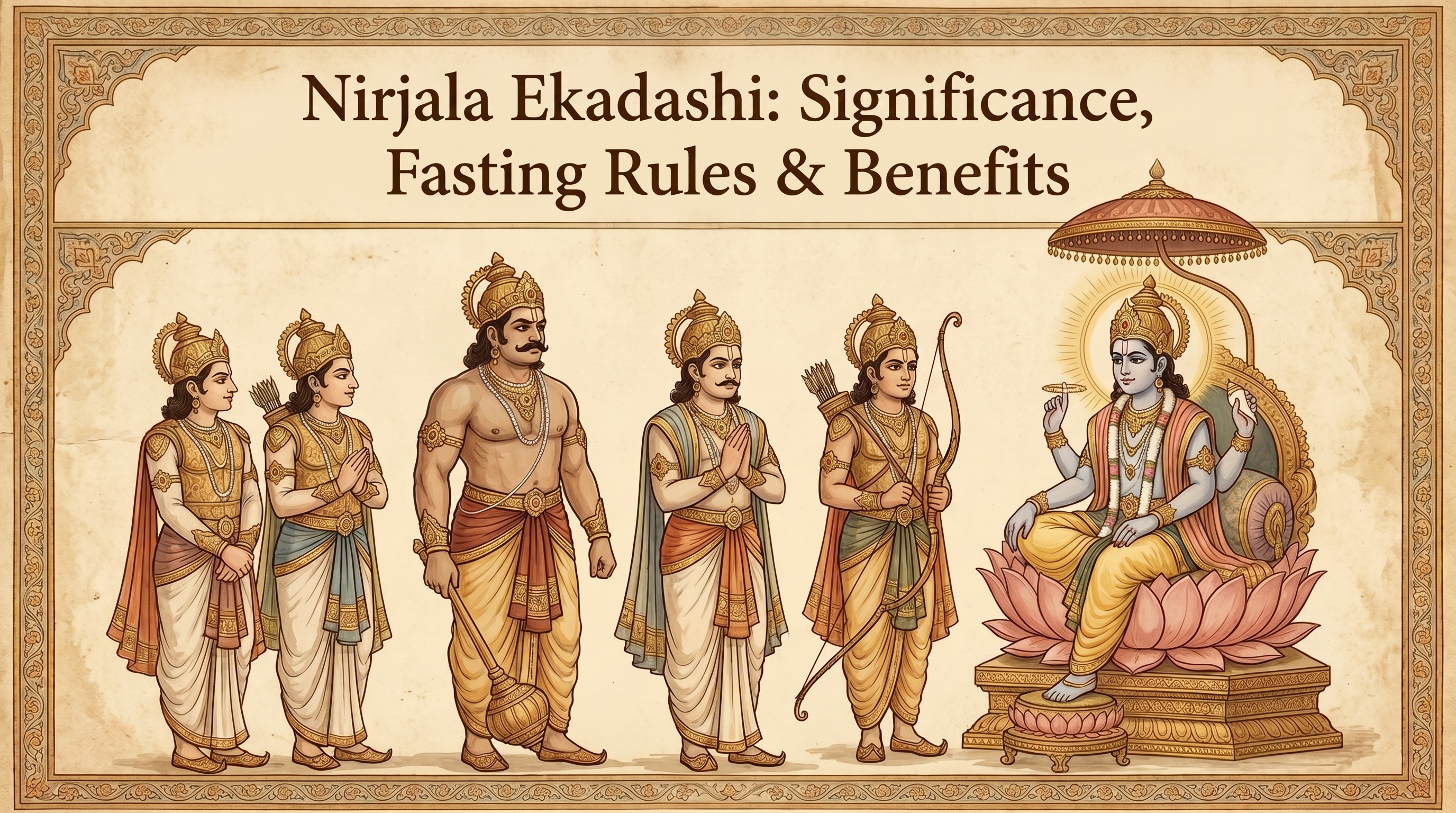
- Bhima Ekadashi / Bhimaseni Ekadashi: named after the Pandava hero Bhima, who kept this fast on the advice of Srila Vyasadeva.
- Pandava Nirjala Ekadashi: because, after hearing what Vyasa told Bhima, all the Pandavas kept it. This is the name used in ISKCON calendars.
- Jyeshtha Shukla Ekadashi: named after the Hindu month it falls in.
This Ekadashi falls in the hottest part of the year. Going without water in summer heat is an extreme test of discipline and devotion, which is exactly what makes this fast so powerful.
The Story Behind Nirjala Ekadashi: Vrat Katha
The Story of Bhima and Sage Vyasa
The story is told in the Brahma-vaivarta Purana, in its glorification (mahatmya) of the Ekadashis. Among the five Pandava brothers, Bhima was famous for two things: his extraordinary physical strength and his enormous appetite. He said that a fire called Vrika, the fire of digestion, burned in his stomach, so that he could hardly go without food even for a single meal. (His well-known epithet Vrikodara, "wolf-bellied," refers to the same appetite.)
His mother Kunti, his brothers Yudhishthira, Arjuna, Nakula and Sahadeva, and Queen Draupadi all observed the Ekadashi fasts regularly throughout the year. Bhima tried, but he simply could not go without eating.
Troubled by this, Bhima approached his grandfather, the sage Srila Vyasadeva (compiler of the Vedas and Puranas), and honestly confessed his problem. In substance he asked: he knew that Ekadashi was a great act of devotion, but he could not live without eating; was there one single Ekadashi he could fast on that would give him the merit of all the Ekadashis of the year?
Vyasa understood Bhima's genuine helplessness. He told him that the Ekadashi of the bright fortnight of Jyeshtha is called Nirjala Ekadashi, and that if Bhima kept it without food or water, from sunrise to sunrise the next day, he would receive the merit of all 24 Ekadashis of the year.
Bhima accepted this wholeheartedly. Despite the blazing summer heat, he observed the full Nirjala fast, no food and no water, with complete dedication. When the other Pandavas heard the glories of this day, they kept it too.
This is why Nirjala Ekadashi is also called Bhima Ekadashi. It is believed that anyone who observes this fast with the same sincerity receives the same blessings.
What Lord Krishna Said About This Fast
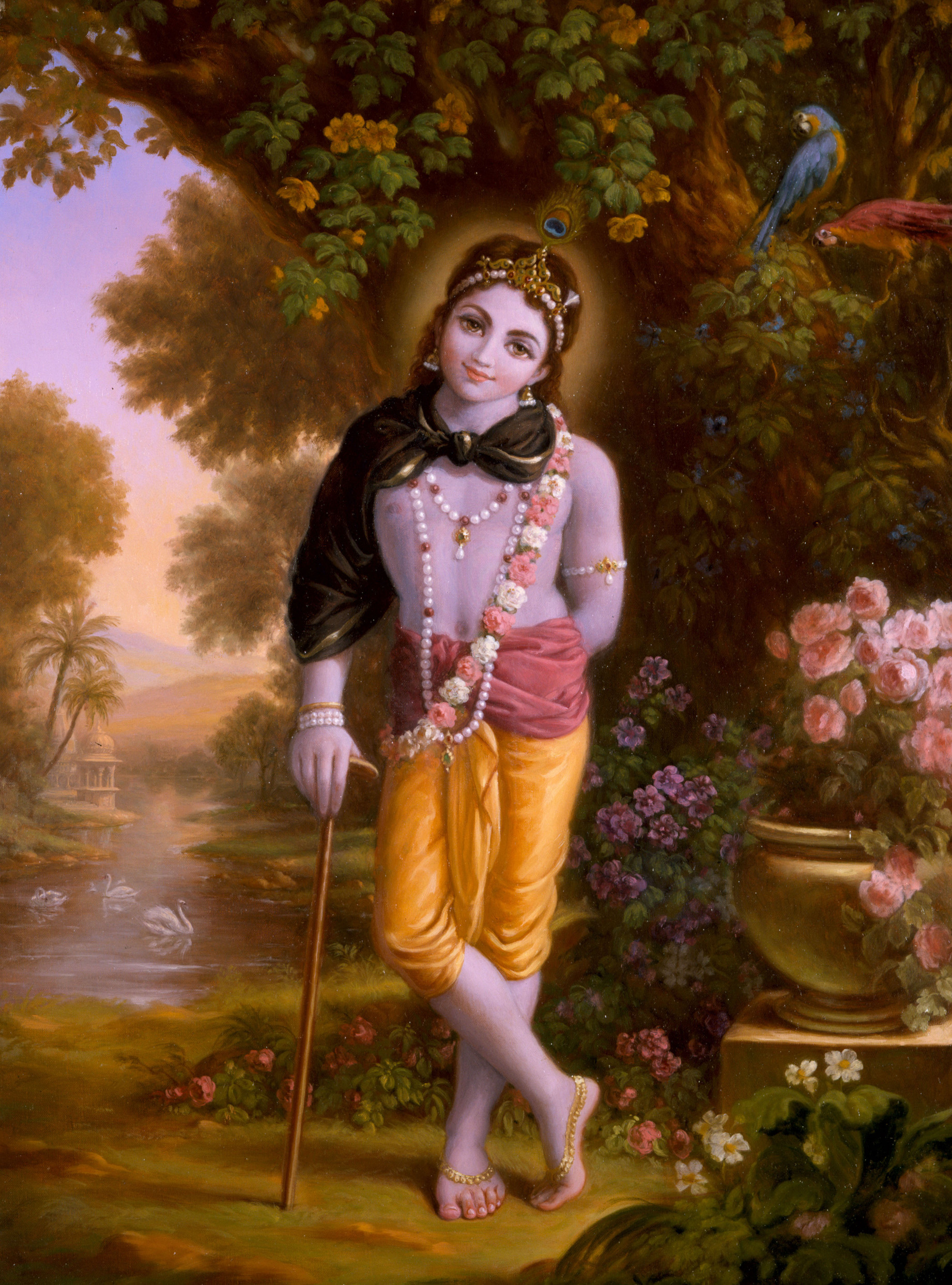
In the same Purana, Vyasadeva tells Bhima what he had heard from the Lord Himself. Lord Keshava (Krishna), who holds the conch, disc, club and lotus, told him that whoever keeps this fast without food or water is freed from sinful reactions and receives the result of all the other Ekadashis. The Purana adds that this one fast brings the merit of bathing at every holy place and of giving every kind of charity.
This gives us a sense of just how much spiritual weight this one day carries.
What is the Significance of Nirjala Ekadashi?
The benefits below are the ones the Brahma-vaivarta Purana describes in Vyasa's words to Bhima.
1. Merit of All 24 Ekadashis in One Fast
If you have missed observing Ekadashis during the year, due to illness, travel, or other reasons, Nirjala Ekadashi gives you a chance to make up for it. The Purana says that observing this one fast is equal to fasting on all 24 Ekadashis of the year.
2. Destroys Past Sins
Sincere fasting and worship on this day is believed to wash away the accumulated sins of a lifetime. The Purana says that even a mountain of past sins is burned away by this fast.
3. Entry to Vaikuntha
According to the Brahma-vaivarta Purana, the Yamadutas, servants of Yamaraja, do not come near a person who keeps this fast with faith. At death the Vishnudutas, the messengers of Lord Vishnu, take that soul to Vaikuntha, the eternal abode of Lord Vishnu. These are the same Vishnudutas who rescued Ajamila in the Srimad-Bhagavatam, Canto 6, chapter 1.
4. Removes Sorrow and Suffering
Bathing, donating, and worshipping Lord Vishnu on this day is believed to remove suffering, difficulties, and sorrows from a devotee's life.
5. Grants Long Life, Health, and Prosperity
The Purana says that one who fasts on this day gains wealth, grains, strength and health. Families of the devotee are also said to receive prosperity and well-being.
6. Purifies the Mind and Body
Fasting helps develop discipline, self-control, and spiritual focus.
How to Observe Nirjala Ekadashi: Puja Vidhi (Step-by-Step)
Preparation of Nirjala Ekadashi
- On the day before Ekadashi, eat one simple, light, sattvic meal before sunset. Keep it clean and easy to digest.
- Avoid meat, onion, garlic, and any heavy or tamasic food (some traditions also avoid rice on this day).
- Sleep early. Keep your mind calm and focused on tomorrow's fast.
On the Day of the Fast (Ekadashi, June 25, 2026)
Step 1: Wake Up in Brahma Muhurta
In Kota on 25 June 2026, brahma-muhurta was from 4:16 AM to 4:57 AM, and sunrise at 5:38 AM. This time before sunrise is considered the most auspicious for prayer and spiritual practice.
Step 2: Take a Holy Bath
Bathe with clean water. If available, add a few tulasi leaves or a few drops of Ganga jal. Wear fresh, clean clothes: yellow or white are considered ideal for Lord Vishnu's worship.
Step 3: Take the Sankalpa (Sacred Vow)
Sit before the Deity or picture of Lord Krishna (Vishnu) and take your formal vow (sankalpa) to observe the fast. You can say it in your own words, for example:
"Om Namo Bhagavate Vasudevaya. I take this vow to observe Nirjala Ekadashi with full devotion, without food or water, seeking the grace of the Lord."
Step 4: Puja of the Lord
- Offer fresh flowers, tulasi leaves, fruits, and sweets before the Lord.
- Light a diya (lamp) and incense sticks (dhoop).
- Yellow flowers and tulasi are especially dear to Lord Vishnu; prioritise these.
The day of Pandava Nirjala Ekadashi should be spent in devotional activities, especially by continuously chanting the holy names of Lord Krishna, particularly the Hare Krishna Mahamantra, and by reciting or hearing sacred scriptures.
Step 5: Read or Listen to the Nirjala Ekadashi Vrat Katha
Reading or listening to the vrat katha is an essential part of the observance. You can do this in the morning after puja or in the evening. The katha of Bhima and Sage Vyasa is the primary story for this Ekadashi.
Step 6: Spend the Day in Devotion
- Chant the Hare Krishna Maha Mantra throughout the day as much as you can.
- Read scriptures: Bhagavad-gita, Srimad-Bhagavatam.
- Listen to Vaishnava songs, such as Srila Vrindavana Dasa Thakura's Sri Hari-vasare about Lord Caitanya's kirtana on Ekadashi, and join harinama-sankirtana.
- Visit temples of Lord Krishna.
- Spend the full day engaged in devotional service.
In a morning walk in Chicago in 1975, a disciple recalled Srila Prabhupada's instruction that his initiated disciples chant twenty-five rounds on Ekadashi, and Srila Prabhupada confirmed it: "Ekādaśī, simply you should chant. No other business." He added that this was not meant for devotees busy with preaching (morning walk, 5 July 1975).
Step 7: Evening Aarti
Perform the evening aarti with a lamp. Sing devotional songs and offer final prayers for the day. This is a peaceful moment to reflect on the purpose of the fast.
Step 8: Night Vigil (Jagran)
If you are physically able, stay awake through the night in prayer and chanting. This is called jagran, and it greatly increases the spiritual merit of the fast. Srila Prabhupada described the devotees who keep the strict fast: "Whole day and night they fast and observe ekādaśī-vrata. And the night is called harivāsara. Harivāsara means the whole night they would chant Hare Kṛṣṇa" (lecture on SB 1.5.1-8, New Vrindavan, 23 May 1969). Many temples hold kirtan late into the night on this Ekadashi.
Step 9: Charity and Donations
Giving charity on Pandava Nirjala Ekadashi is considered highly auspicious and helps deepen one's spirit of service and compassion.
- Water (jal daan): the most significant gift, given the summer heat
- Food and grains
- Clothes and footwear
- Umbrellas or hand fans
- Feeding cows is also highly meritorious
Devotees may support devotional projects and charitable initiatives as an offering to Lord Krishna.
Those who wish to contribute can donate towards the Gaushala Nirmaan Seva at Nandgram Dham.
How to Break the Fast: Parana Vidhi
The parana (breaking of the fast) is just as sacred as the fast itself. Doing it correctly completes the observance.
Parana time for Nirjala Ekadashi 2026 in Kota: Friday, June 26, 2026, 5:39 AM to 10:13 AM by the ISKCON calendar (5:39 AM to 8:23 AM by the general panchang).
Break the fast within this window on Dvadashi morning. The Srimad-Bhagavatam shows how seriously this is taken. When Durvasa Muni was late for the meal and the time of Dvadashi was running out, Maharaja Ambarisha said that "if one does not observe the breaking of the fast within the time of Dvādaśī, there is a flaw in one's observance of the vow," and he broke his fast by drinking a little water (SB 9.4.39-40).
Step-by-Step Parana Process
- Wake up early on Dvadashi morning and take a bath.
- Offer final prayers and aarti to the Lord.
- Donate food, water, or dakshina to a brahmana or needy person first.
- Offer the food you will eat to Lord Krishna first, and break the fast with His prasadam.
- Begin with water, preferably tulasi water, lemon water, or Gangajal.
- After 20–30 minutes, have panakam (water with jaggery, lemon, and black pepper); this gently prepares the stomach.
- After another 30 minutes, have fresh fruit juice or juicy fruits like watermelon.
- One hour later, eat a light sattvic meal: khichdi, boiled rice, or simple dal-roti.
- Avoid oily, spicy, or heavy food immediately after the fast. Your digestive system needs time to wake up.
Nirjala Ekadashi Fasting Rules: Do's and Don'ts
DO's
Everything in the steps above: the early bath and sankalpa, chanting, reading the Bhagavad-gita or the vrat katha, charity, a temple visit, jagran if health permits, and parana within the window on Dvadashi.
DON'Ts
- Do not eat or drink anything, not even water
- Do not consume meat, fish, alcohol, onion, or garlic
- Avoid all grains: rice, wheat and pulses are prohibited
- Do not lie, gossip, use harsh words, or argue
- Avoid anger, greed, and negative emotions throughout the day
- Do not cut hair or nails or shave on this day
- Do not sleep during the daytime on Ekadashi
- Do not break the fast before sunrise or outside the parana window
Who Should Not Observe Nirjala Ekadashi?
Because this fast is completely waterless and falls in peak summer, it is not meant for everyone. The spirit of the fast is devotion, not suffering.
People who should modify or avoid the strict fast:
- Elderly people with health conditions
- Pregnant women
- Children
- People with diabetes, high blood pressure, or heart conditions
- Anyone on daily medication (medicines often cannot be taken on a completely empty stomach)
If you fall into any of these categories, it is perfectly acceptable, and actually advised, to observe a partial fast with water, fruits, and milk. Lord Vishnu values the sincerity of your heart, not the severity of your suffering.
Practical ISKCON Understanding
- Nirjala Ekādaśī is traditionally observed without food and water.
- Devotees should follow according to their health, service, and capacity.
- For most devotees, observing Ekādaśī by avoiding grains and beans, increasing chanting, hearing, and devotional service is the essential principle.
Srila Prabhupada explained both sides, the strict waterless fast and the allowance for water:
"Nirjala means there are many devotees who does not take even water. Water, drinking water, according to śāstra, it is taking food. It is drinking of food or no food. We can take both ways. So sometimes drinking of water is excused as upavāsa also."
Srila Prabhupada, lecture on SB 1.5.1-8, New Vrindavan, 23 May 1969
In the same lecture he asked devotees not to take advantage of such concessions, but to be "very steady and strong in our conviction and perform devotional service strictly."
The Real Goal
Śrīla Prabhupāda repeatedly taught that fasting is not the goal; advancing in Kṛṣṇa consciousness is the goal. Spending the day in:
- Extra japa,
- Reading Bhagavad-gītā and Śrīmad-Bhāgavatam,
- Kīrtana,
- Service to Kṛṣṇa,
is more important than simply undergoing physical austerity.
Final Thoughts
Nirjala Ekadashi is not just a religious formality; it is a genuine test of inner strength. Bhima, the most powerful warrior in the Mahabharata, who could not skip a single meal, chose to go without food or water in the scorching summer heat, and he succeeded through devotion.
The lesson of this day is simple: when devotion is real, every limitation can be overcome.
Whether you observe the complete Nirjala fast, a partial fast, or simply spend the day in prayer and service to others, what matters most is the sincerity of your heart.
In 2026, Nirjala Ekadashi falls on Thursday, June 25. Mark the date, prepare in advance, and let this day bring peace, purity, and grace into your life and home.
Read Also: Benefits of Chanting Hare Krishna · All Ekadashi dates in 2026
Frequently Asked Questions (FAQs)
When is Nirjala Ekadashi in 2026, and when is parana in Kota?
Nirjala Ekadashi 2026 falls on Thursday, June 25, 2026, in both the ISKCON and general calendars. The Ekadashi tithi begins on June 24 at 6:12 PM and ends on June 25 at 8:09 PM (IST). In Kota, break the fast on Friday, June 26, between 5:39 AM and 10:13 AM by the ISKCON calendar, or by 8:23 AM by the general panchang.
Is staying awake all night (Jagran) compulsory?
No, jagran is not mandatory, but it increases the spiritual merit of the fast. If you are unable to stay awake, sleep peacefully while chanting the Lord's name. The intention and devotion matter most.
Can I drink water or take medicine if I cannot keep the full fast?
Yes. Pregnant women, the sick, the elderly and anyone on daily medication should not keep the strict waterless fast. Take essential medicine as prescribed and keep a lighter fast with water, fruit or milk. Srila Prabhupada said that "sometimes drinking of water is excused as upavāsa also." In serious medical conditions, avoid fasting altogether.
Why do ISKCON calendars sometimes give a different date?
When the following Dvadashi is a special one (a Mahadvadashi), the Vaishnava calendar moves the fast from Ekadashi to Dvadashi. In 2025, for example, ISKCON kept Pandava Nirjala Ekadashi on Saturday, 7 June, one day after the general calendar. In 2026 both calendars agree on Thursday, 25 June.
On this auspicious occasion of Ekadashi, you may also support Ekadashi Seva and receive the blessings of Lord Krishna.
Ekadashi Seva Link: https://nandgramdham.org/donate/ekadashi/
Hare Krishna
References:
- Drik Panchang, ISKCON Pandava Nirjala Ekadashi 2026, Kota and Nirjala Ekadashi 2026, Kota
- ISKCON Bangalore, Pandava Nirjala Ekadashi (the Brahma-vaivarta Purana narration in English)
- ISKCON Desire Tree, Pandava Nirjala Ekadasi
- Srimad-Bhagavatam 9.4.39-40, vedabase.io
- Srila Prabhupada: lecture, 23 May 1969; morning walk, 5 July 1975; letter, 29 April 1970