Table of Contents
- 1. Balarama Purnima 2026: Date and Timings
- 2. Who is Lord Balarama?
- 3. Name of Lord Balaram and Their Meaning
- 4. How was Lord Balram born?
- Kansa's Threat
- The Miraculous Transfer
- Childhood in Vrindavan
- His Role in the Mahabharata
- 5. Significance of Balarama Purnima
- 6. How to Observe Balarama Jayanti: Puja Vidhi
- The Night Before (August 27, 2026)
- On the Day of Balarama Purnima (August 28, 2026)
- 7. Balarama Pranam Mantra (With Meaning)
- 8. What Can Devotees Do on Balarama Purnima?
- 9. Hal Sashti: The North Indian Tradition
- 10. How Balarama Purnima is Celebrated Across India
- 11. The Gaudiya Vaishnava View on Balarama Purnima
- 12. Conclusion
- 13. Frequently Asked Questions
Summary
Balarama Purnima, also known as Balaram Jayanti 2026 will be celebrated on Friday, August 28, 2026, coinciding with Raksha Bandhan, making the day especially auspicious for devotees. The festival marks the appearance day of Lord Balarama, the elder brother of Lord Krishna and the embodiment of strength, dharma, and devotion. This guide explains the Balarama Purnima 2026 date and timings, the miraculous birth story of Lord Balarama, the meaning of his names like Sankarshana and Haladhara, the festival's spiritual significance, puja vidhi, fasting rules, mantras, and the Hal Sashti tradition observed in North India. It also explores how the festival is celebrated across India, the Gaudiya Vaishnava perspective on Lord Balarama as the Adi-Guru, and simple steps to observe Balarama Purnima at home.
Before Lord Krishna came into this world, he came. The elder brother who carried a plough as his weapon, who was transferred from one womb to another to save him from a tyrant king, and who grew up beside Krishna through every childhood adventure, every battle, every moment of dharma.
This is Lord Balarama, also known as Baladeva, Balabhadra, Sankarshana, and Haladhara. And the day that celebrates his divine appearance is Balarama Purnima, one of the important festivals in the Vaishnava calendar, observed on the full moon day (Purnima) of the Hindu month of Shravana.
In 2026, Balarama Purnima falls on Friday, August 28, the same day as Raksha Bandhan, making it doubly auspicious.
Balarama Purnima 2026: Date and Timings
Who is Lord Balarama?
Lord Balarama is the elder brother of Lord Krishna, the first son of Vasudeva, and one of the most revered deities in Hinduism. He is worshipped as the symbol of strength, righteousness, and unwavering devotion.
In the Vaishnava tradition, Lord Balarama is revered as the incarnation of Adi Shesha (Sheshnag), the divine serpent upon whom Lord Vishnu rests. He also appeared as Lakshmana, the devoted brother of Lord Rama, and as Sri Nityananda Prabhu in the pastimes of Sri Chaitanya Mahaprabhu, always serving the Supreme Lord with love and devotion.
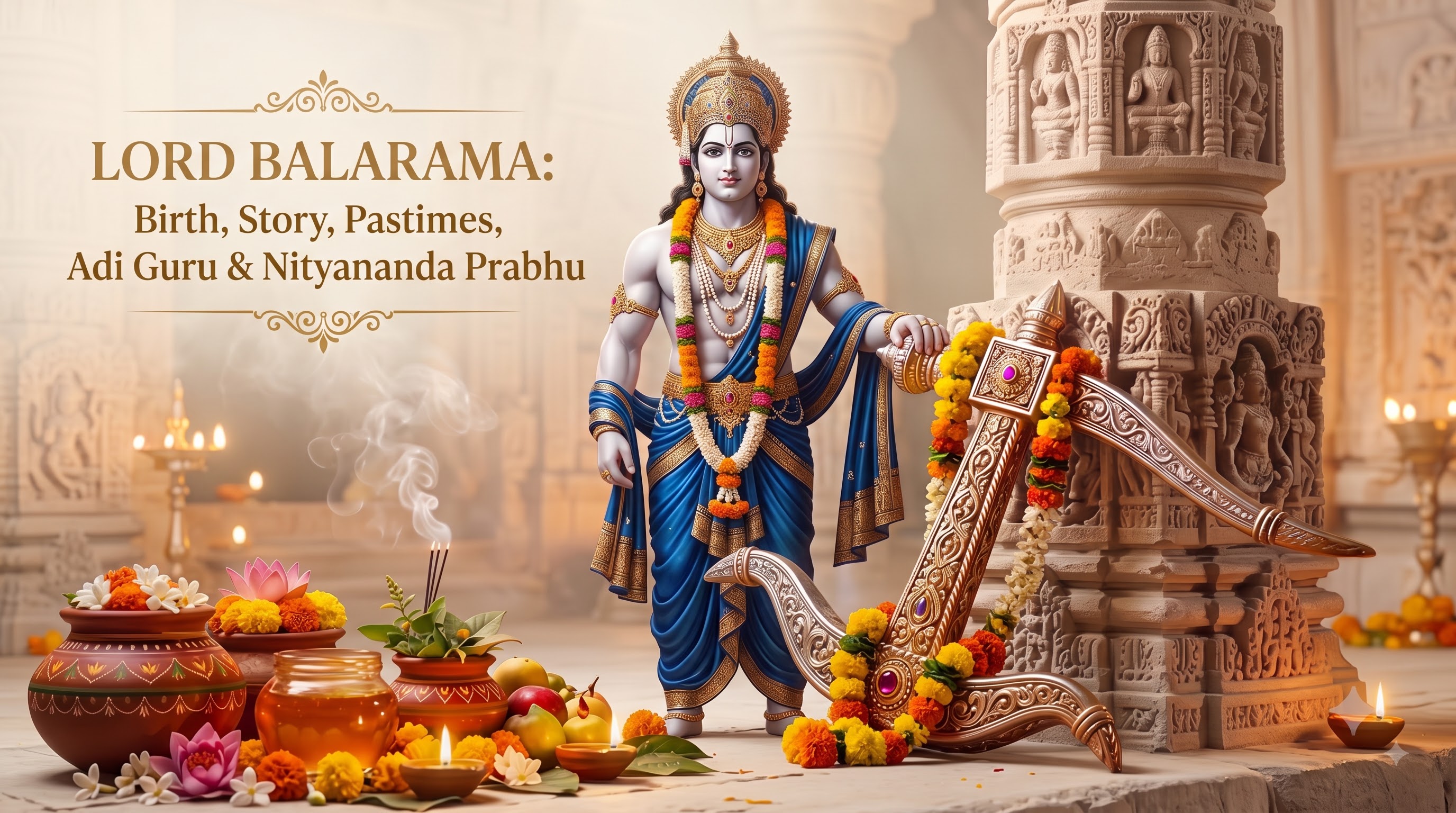
His two weapons, the plough (Hala) and the mace (Musala), tell you everything about him. The plough is not just a weapon of war, it is a tool of agriculture, sustenance, and creation. Balarama is a warrior who serves life as much as he protects it.
Name of Lord Balaram and Their Meaning
| Name | Meaning |
|---|---|
| Balarama | One who possesses or gives great strength |
| Baladeva | The divine Lord of strength |
| Sankarshana | Drawn away, Associated with His transfer from Devaki's womb to Rohini's |
| Haladhara | Bearer of the plough |
| Halayudha | He whose weapon is the plough |
| Rohineya | Son of Rohini |
| Taladhwaja | He whose banner bears the emblem of a palm tree |
| Dauji | Elder Brother |
How was Lord Balram born?
Kansa's Threat
A divine voice told King Kansa of Mathura that the eighth child of his sister Devaki would bring about his death. He imprisoned Devaki and her husband Vasudeva, and killed each of their first six children the moment they were born. There was no escape until the divine plan intervened.
The Miraculous Transfer
For the seventh child, who would be Balarama, Lord Vishnu arranged something extraordinary. The divine energy of Yogamaya transferred the embryo from Devaki's womb to Rohini's, another wife of Vasudeva who lived safely in Gokul. Kansa was made to believe that Devaki had suffered a miscarriage.
This is why Balarama is called Sankarshana, "one who was drawn away."
Childhood in Vrindavan
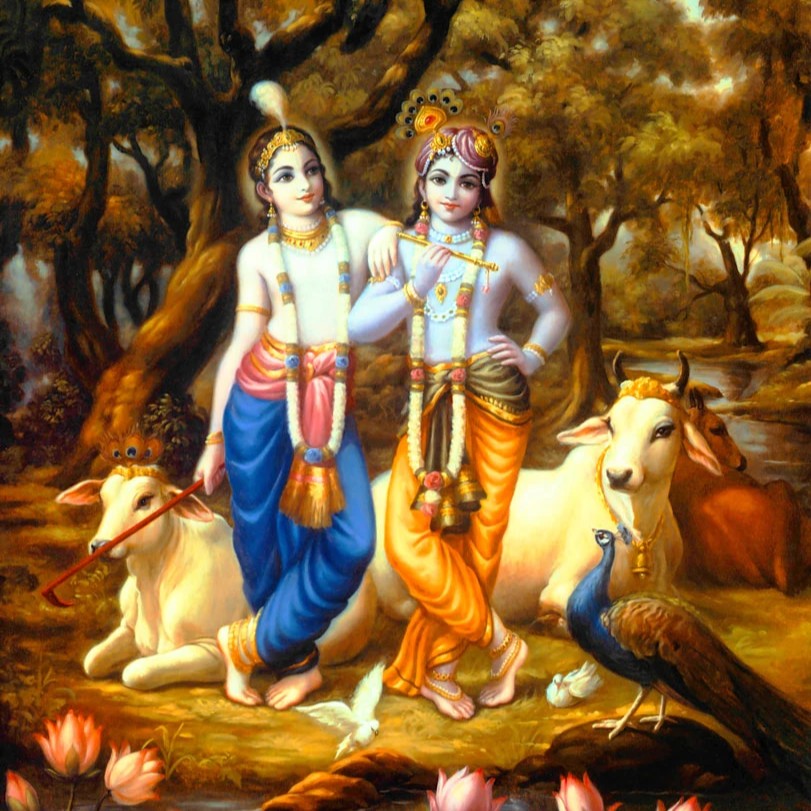
Balarama and Krishna grew up together in Vrindavan, inseparable as brothers. From their earliest days, Balarama was the protector. When Kansa sent demons to destroy the two brothers, Balarama often struck first. His earliest notable exploit was killing the demon Dhenuka, who had taken the form of a giant ass and terrorised the Talavana forest. Later, he killed the demon Pralamba, who had kidnapped him during a childhood game.
He and Krishna shared every adventure, every cowherding afternoon, every river bath, every festival in Gokul. Balarama was always the stronger, calmer, steadier presence beside his more playful younger brother.
His Role in the Mahabharata
By the time of the Mahabharata, Balarama was recognised as the greatest living teacher of mace-fighting. Both Bhima (the Pandava) and Duryodhana (the Kaurava) learned mace-fighting from him. When the Kurukshetra war came, Balarama refused to support either side, believing both had violated the codes of honourable warfare. Instead, he undertook a pilgrimage to sacred rivers during the 18 days of battle. He returned to witness the final duel between Bhima and Duryodhana, two of his own students.
Significance of Balarama Purnima
How to Observe Balarama Jayanti: Puja Vidhi
The Night Before (August 27, 2026)
Clean the home and set up a puja area. Place an image or idol of Lord Balarama, or a combined image of Krishna and Balarama. Arrange flowers, Tulsi leaves, fruits, and a lamp for the next morning.
On the Day of Balarama Purnima (August 28, 2026)
Wake up early before sunrise, bathe, and wear clean clothes. Yellow or white are considered auspicious colours for this day.
Perform Panchamrit Abhishek. Bathe the idol with the five sacred substances: milk, curd, honey, ghee, and sugar. Then bathe with pure water and dress the deity in fresh clothes.
Offer puja items. Yellow flowers, Tulsi leaves, incense, and a lit diya. Yellow is considered Lord Balarama's favourite colour.
Offer bhog. Prepare sweets and cooked food and offer to the Lord. Rice, kheer, fruits, and traditional sweets are all appropriate.
Read or listen to Balarama's story. Read from the Srimad Bhagavatam (10th Canto), which contains detailed accounts of his birth, childhood, and pastimes.
Perform aarti. Perform morning and evening aarti with a lamp and sing devotional songs.
Fast until noon. The fast is observed from morning until after the midday aarti. After offering prasad to the Lord, the fast is broken.
Evening kirtan. Spend the evening in devotional singing and, if possible, attend a Vaishnava or ISKCON temple for community celebrations.
Balarama Pranam Mantra (With Meaning)
Devotees traditionally offer this pranam (prayer of obeisance) to Lord Balarama during puja, before reading his pastimes, or whenever seeking His protection and blessings.
namas te halagraha
namas te musalayudha
namas te revati-kanta
namas te bhakta-vatsala
Obeisances unto You, O holder of the plough. Obeisances unto You, O wielder of the mace. Obeisances unto You, O beloved of Revati. Obeisances unto You, O kind benefactor of Your devotees.
namas te dharani-dhara
namas te balanam srestha
pralambare namas te 'stu
ehi mam krsna-purvaja
Obeisances unto You, O upholder of the earth. Obeisances unto You, O best of the mighty. Obeisances unto You, O vanquisher of the demon Pralamba. Please come to me, O elder brother of Krishna.
What Can Devotees Do on Balarama Purnima?
Devotees can observe Balarama Purnima or Balaram Jayanti by deepening their spiritual practices and devotion. They can:
- Read Srimad Bhagavatam
- Read Chaitanya Charitamrita
- Chant extra rounds of the Hare Krishna maha-mantra
- Serve Vaishnavas
- Offer fresh fruits to Lord Balarama
- Hear Hari-katha and narrations about Krishna and Balarama
- Attend temple programs and participate in devotional celebrations
- Donate or distribute Bhagavad Gita to help others connect with Krishna's teachings
- Support the devotional mission by helping provide nourishing meals to those in need through your contribution.
Hal Sashti: The North Indian Tradition
In North India, particularly UP, Bihar, MP, Chhattisgarh, and Rajasthan, Balarama's birth anniversary is observed as Hal Sashti. It is also called Lalahi Chhath or Baldev Chhath.
Hal Sashti 2026 is observed on Wednesday, September 16, 2026 (Bhadrapada Krishna Shashti).
Hal Sashti is primarily observed by mothers and farming communities. Mothers fast the entire day and eat only foods not grown by plough-cultivation, i.e., wild fruits, leaves, and dairy products. Cow's milk and products are strictly avoided. No grains, no plough-tilled vegetables. This is a direct act of reverence for the plough-bearing Lord; by choosing not to eat what the plough produces, mothers honour the deity whose weapon made that food possible.
In Chhattisgarh, the festival is called Halchhath and is accompanied by folk songs and community gatherings through the evening.
How Balarama Purnima is Celebrated Across India
The Gaudiya Vaishnava View on Balarama Purnima
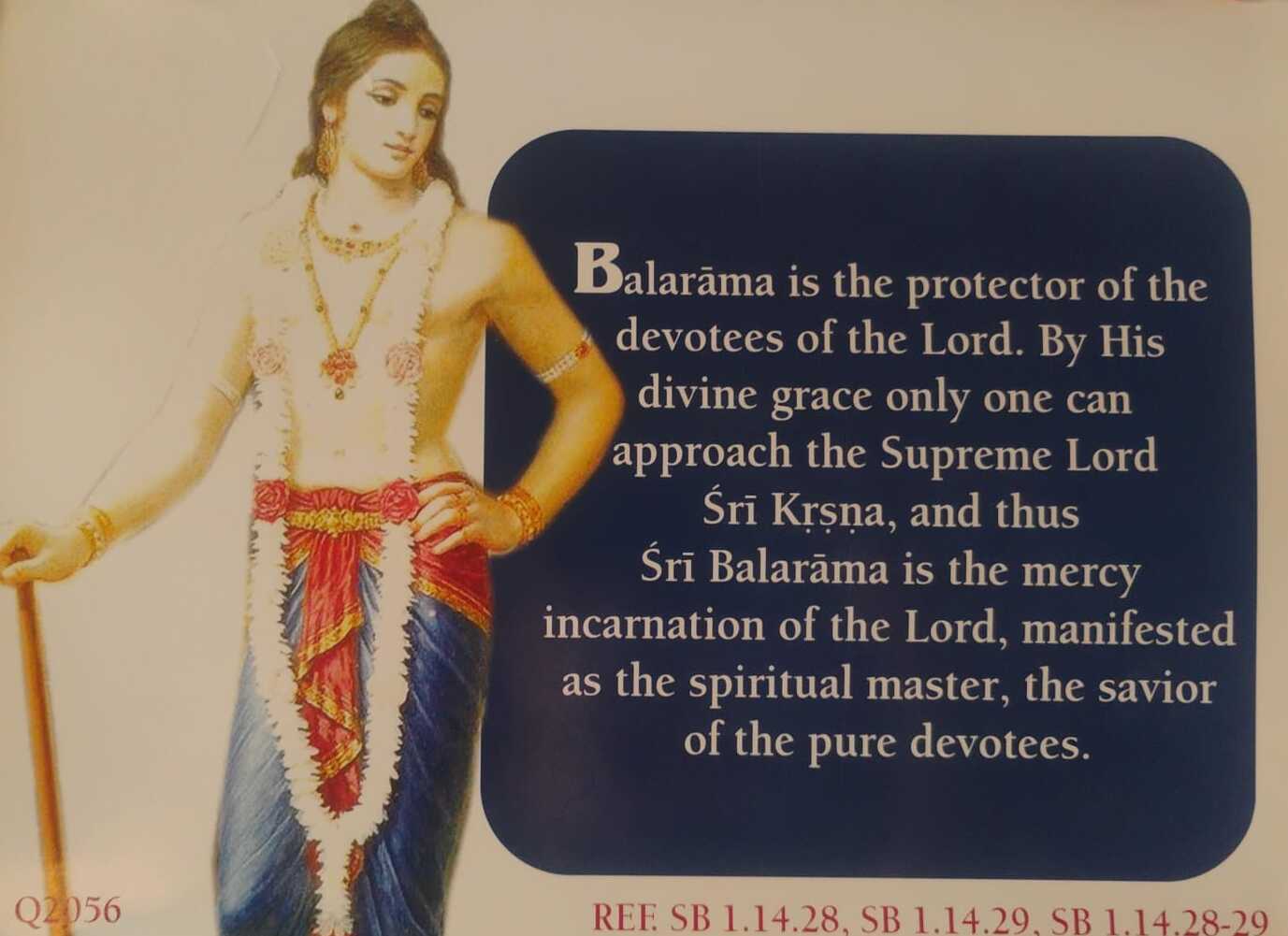
In the Gaudiya Vaishnava tradition founded by Sri Chaitanya Mahaprabhu, Lord Balarama holds a position of unique theological importance. He is understood not merely as Krishna's elder brother but as the first and foremost expansion of Krishna himself, the Adi-Guru, the source of all spiritual strength, and the original master from whom the entire guru lineage flows.
In Chaitanya Mahaprabhu's own pastimes, Balarama appeared as Sri Nityananda Prabhu, the embodiment of boundless mercy who embraced the most fallen souls and brought them to Krishna through the chanting of the holy names.
The famous verse of Narottama Das Thakura says: "Nitaier karuna habe, vraje Radha-Krishna pabe", only by the mercy of Nitai (Balarama as Nityananda) can one attain Krishna. For this reason, Gaudiya Vaishnavas celebrate Balarama Purnima with great devotion. Fasting from grains and seeking his grace are the essential doorway to the Lord.
Read Also: 10 Lessons To Be Learnt From Bhagavad GitaConclusion
Balarama Purnima is more than a celebration of Lord Krishna's elder brother. It is a reminder that true strength is rooted in humility, protection, and selfless service. Lord Balarama teaches that real power is not measured by physical might alone, but by the ability to uphold dharma, support others, and remain steadfast in devotion.
Whether you observe the festival through fasting, puja, or simply remembering His divine pastimes, the day offers an opportunity to seek both inner strength and spiritual growth. As Balarama Purnima 2026 coincides with Raksha Bandhan, it beautifully highlights the ideals of brotherhood, protection, and unconditional love, making it one of the most spiritually meaningful days in the Hindu calendar.
Hare Krishna!Frequently Asked Questions
1. Why is Lord Balarama called Sankarshana?
Lord Balarama is called Sankarshana because, according to the Puranas, the divine energy of Yogamaya transferred him from Devaki's womb to Rohini's womb before his birth to protect him from King Kansa. The name Sankarshana literally means "the one who was drawn away."
2. Why does Lord Balarama carry a plough instead of traditional weapons?
Lord Balarama carries the plough (Hala) because it represents agriculture, nourishment, and the protection of life. Along with his mace (Musala), the plough symbolizes that true strength is used to sustain society, protect dharma, and support those who cultivate the land.
3. Can anyone observe the Balarama Purnima fast?
Yes. Anyone can observe Balarama Purnima with devotion. Devotees generally fast until noon, offer prayers, chant Lord Balarama's names, perform puja, read from the Srimad Bhagavatam, and break the fast after offering prasad. Even those celebrating at home can observe the festival sincerely.
4. Why is Balarama Purnima 2026 considered especially auspicious?
Balarama Purnima in 2026 is especially significant because it falls on Friday, August 28, the same day as Raksha Bandhan.
5. Which scriptures describe Lord Balarama's life and pastimes?
The article recommends reading the 10th Canto of the Srimad Bhagavatam, which narrates Lord Balarama's birth, childhood, and divine pastimes. It is considered one of the primary scriptural sources for understanding his life and teachings.