Table of Contents
- 1. Who is Lord Jagannath?
- 2. Meaning of the Name Jagannath
- 3. Why Lord Jagannath Looks So Unique
- 4. Lord Jagannath, Balabhadra & Subhadra
- 5. The Origin Story: Nilamadhava, Vidyapati & King Indradyumna
- 6. Lord Jagannath as Daru Brahma
- 7. Jagannath Puri Temple & Daily Worship
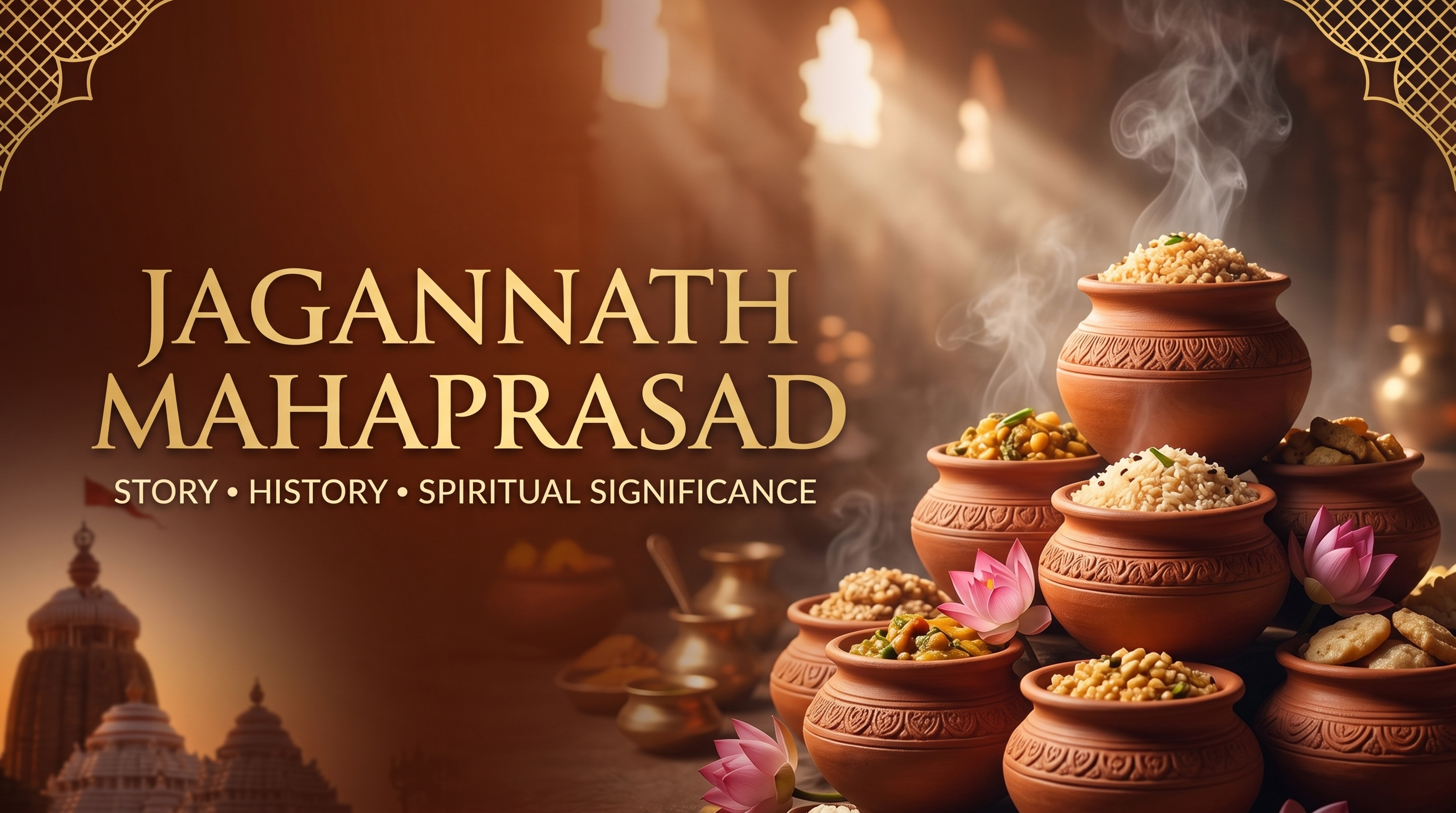
- 8. Jagannath Mahaprasad
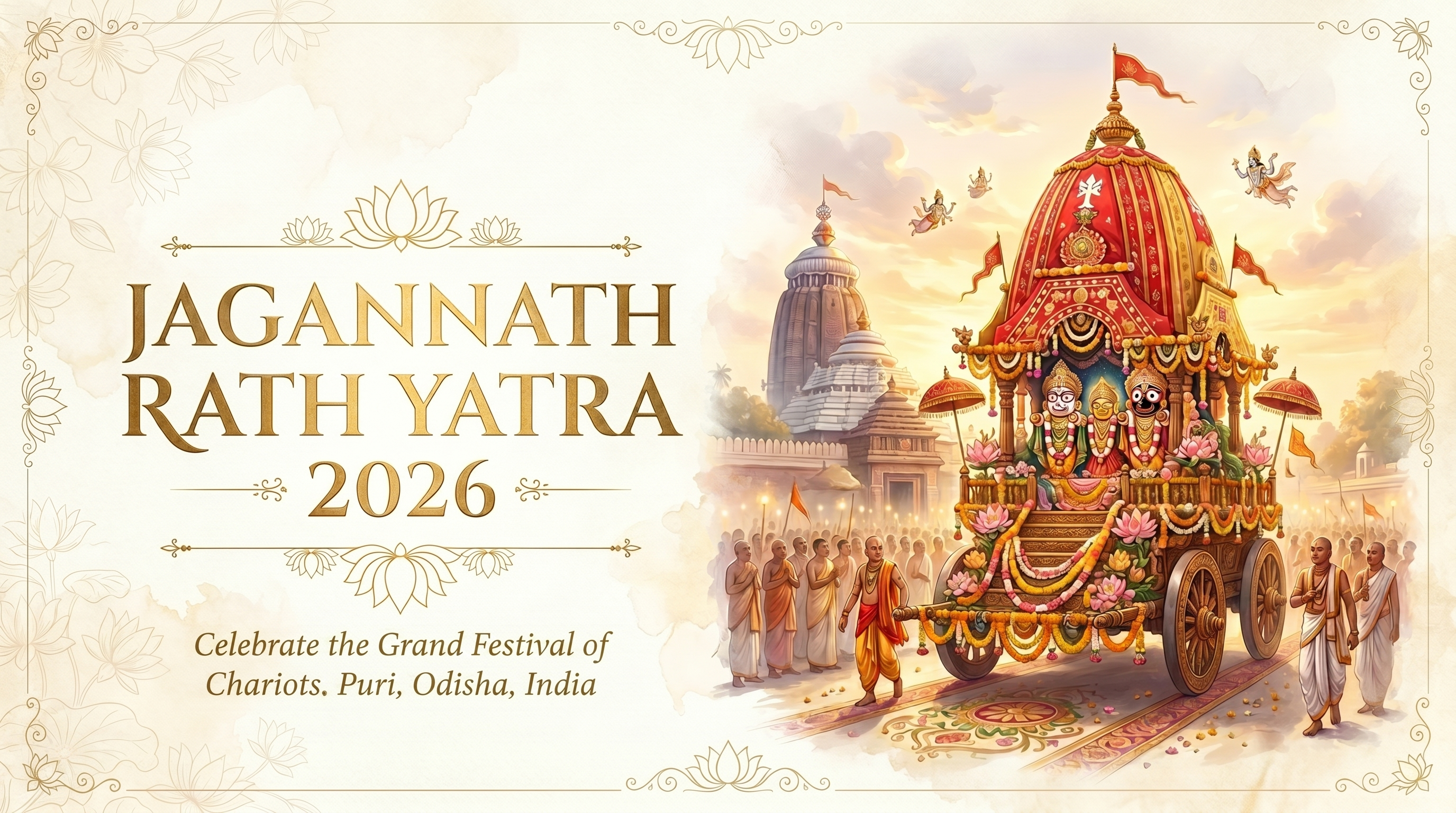
- 9. Jagannath Rath Yatra
- 10. Great Devotees of Lord Jagannath
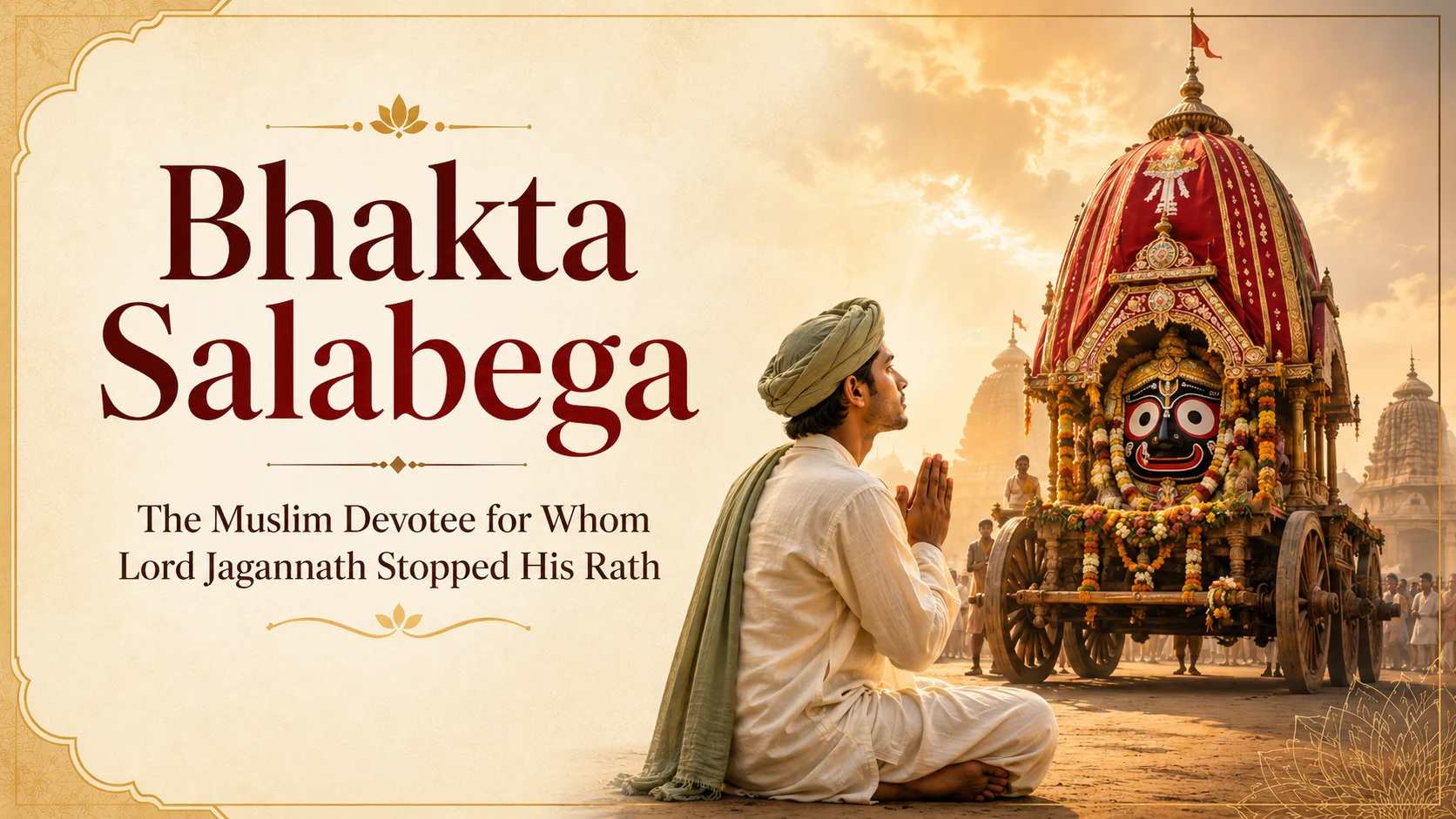
- Bhakta Salabega
- Dasia Bauri
- Sadan Kasai
- Bandhu Mohanty
- Jayadeva & Gita Govinda
- 11. Chaitanya Mahaprabhu & Lord Jagannath
- 12. Srila Prabhupada & Lord Jagannath
- 13. Spiritual Lessons from Lord Jagannath
- 14. How to Remember Lord Jagannath at Home
- 15. Frequently Asked Questions
- 16. Conclusion
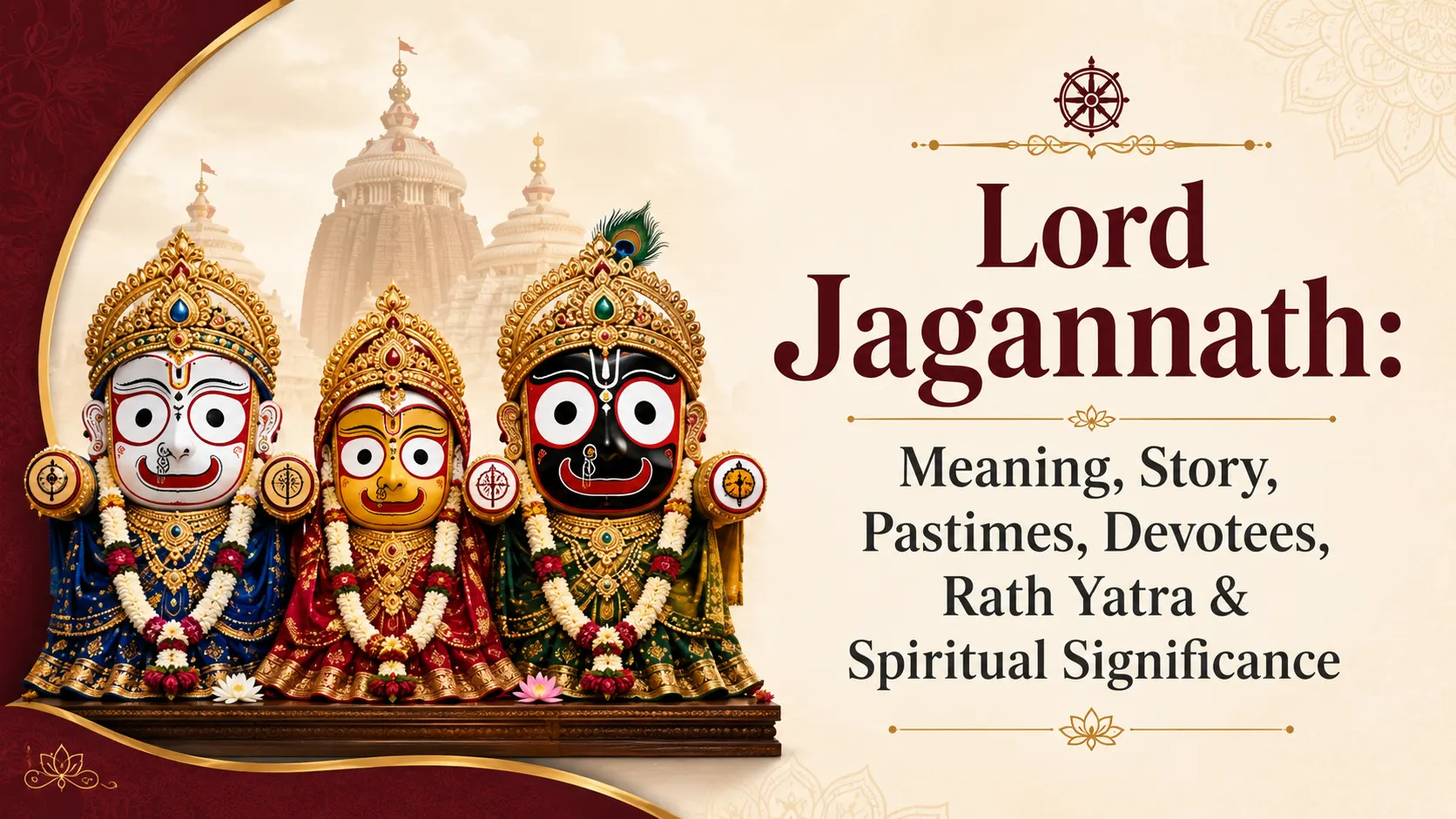
Lord Jagannath is a beloved form of the Supreme Lord worshiped especially in Puri, Odisha, along with His brother Lord Balabhadra and sister Devi Subhadra. The name Jagannath means “Lord of the Universe.” In Vaishnava and Gaudiya Vaishnava understanding, Lord Jagannath is Krishna, who mercifully appears in a unique wooden form with large compassionate eyes to bless all people — especially through His famous Rath Yatra and Mahaprasad.
| Who is Lord Jagannath? | The Lord of the Universe, worshiped as Krishna / Vishnu in the famous Puri tradition. |
|---|---|
| Where is the main temple? | Shree Jagannath Temple, Puri, Odisha. |
| Who are worshiped with Him? | Lord Balabhadra, Devi Subhadra, and Sudarshana. |
| What is His form made of? | Sacred wood, traditionally associated with neem / daru. |
| Most famous festival | Jagannath Rath Yatra, also called the chariot festival. |
| Most famous offering | Jagannath Mahaprasad, also called Mahaprasad or Abhada. |
| Key devotional mood | The Lord comes out to give darshan and mercy to everyone. |
Who is Lord Jagannath?
Lord Jagannath is one of the most merciful and widely loved forms of the Supreme Lord. He is worshiped in Puri, Odisha, together with Lord Balabhadra and Devi Subhadra. For millions of devotees, Jagannath is not only a temple deity; He is a living Lord who eats, rests, dresses, travels, accepts service, gives Mahaprasad, and personally responds to the love of His devotees.
The word “Jagannath” means “Lord of the Universe.” Yet His form is wonderfully simple: large round eyes, a smiling face, and an unfinished-looking wooden body. This simplicity is one of the reasons devotees feel so close to Him. He does not appear distant or unreachable. He appears as the Lord who is ready to look at everyone, accept everyone, and bless everyone.
In Vaishnava understanding, Lord Jagannath is worshiped as Lord Krishna, the Supreme Personality of Godhead. In Puri, He is served with royal opulence. In Gaudiya Vaishnava understanding, He is also understood in the deep mood of Krishna remembering Vrindavan and receiving the love of Srimati Radharani and the Vrajavasis. This is why the Jagannath tradition is both majestic and intimate: He is the Lord of the Universe, yet He is also the beloved Krishna of Vrindavan.
Meaning of the Name Jagannath
The name Jagannath comes from two Sanskrit words: jagat, meaning the universe or the moving world, and nath, meaning Lord, master, protector, or shelter. Therefore, Jagannath means the Lord, protector, and shelter of all living beings.
This name is spiritually significant. The Lord is not limited to one nation, one caste, one language, one community, or one period of history. He belongs to everyone because everyone belongs to Him. This universal mood is visible in Rath Yatra, when Lord Jagannath comes out of the temple and gives darshan to all people on the street. Many devotees who cannot enter the temple or travel deeply into ritual life can still see Him on His chariot and offer their prayers.
Jagannath means “Lord of the Universe.” The name shows that Lord Jagannath is the universal shelter of all souls, not the property of any one group. His Rath Yatra especially shows this mercy, because He comes out to bless everyone.
Why Lord Jagannath Looks So Unique
Among the many forms of the Lord, Jagannath is instantly recognizable. His round eyes are large and open. His smile is broad and gentle. His arms and legs are not visible in the usual human-like form. His body appears simple, wooden, and deeply symbolic.
Devotees explain His large eyes as the eyes of unlimited compassion. Lord Jagannath does not blink, because He never wants to stop seeing His devotees. His eyes are open to every sincere soul. They also remind us that the Lord sees beyond external labels and looks directly at the heart.
His apparently incomplete form teaches another beautiful lesson. The Lord does not need material perfection to be complete. He can appear in any form He chooses. In the devotional tradition, His form is connected with divine ecstasy, deep remembrance of Krishna-lila, and the Lord’s desire to be accessible to everyone. To the proud, He may look unusual; to the devotee, He looks like mercy itself.
The wooden form also connects Him with the ancient Jagannath tradition of Daru Brahma, the Lord appearing through sacred wood. Odisha Review sources discuss the Nilamadhava and tribal / Sabara traditions as part of the broader cultural memory of Lord Jagannath’s worship in Odisha.
Lord Jagannath, Balabhadra & Subhadra
Lord Jagannath is worshiped on the main altar with Lord Balabhadra, Devi Subhadra, and Sudarshana. Lord Balabhadra is the elder brother of Krishna, known for strength, protection, and spiritual power. Devi Subhadra is the beloved sister of Krishna and Balarama, representing auspiciousness and divine shelter. Sudarshana represents the Lord’s divine weapon and spiritual protection.
Together, these deities create a family mood. Devotees do not approach Jagannath as an abstract idea. They approach Him as a loving person, surrounded by His dear family members. This makes Jagannath worship emotionally rich and deeply personal.
In the Rath Yatra procession, the three principal deities ride on three separate chariots. Lord Balabhadra rides on Taladhwaja, Devi Subhadra rides on Darpadalana or Devadalana, and Lord Jagannath rides on Nandighosa. Odisha Review notes the traditional chariot details and procession order, including Balabhadra’s chariot being pulled first, followed by Subhadra and Jagannath.
The Origin Story: Nilamadhava, Vidyapati & King Indradyumna
The origin of Lord Jagannath is explained through scripture, temple tradition, Odisha cultural memory, and devotional narration. Details may vary across retellings. The following is presented as a traditional devotional account, with historical-cultural notes where relevant.
One of the most beloved traditional accounts begins with King Indradyumna, a pious king who desired to worship the Supreme Lord in a special form. He heard of a mysterious deity named Nilamadhava, secretly worshiped in a forest by the Sabara chief Vishwavasu. The king sent Vidyapati, a learned brahmana, to search for this hidden deity.
Vidyapati eventually reached the place of Vishwavasu. Through devotion and providence, he came to know about Nilamadhava. In many retellings, Vishwavasu first hesitated to reveal the sacred place, because Nilamadhava was worshiped privately with deep love. Later, Vidyapati was taken to the hidden deity, and he recognized the Lord’s extraordinary presence.
When King Indradyumna later tried to see Nilamadhava, the deity had disappeared. The king was deeply disappointed, but the Lord revealed that He would appear again in another form. A sacred log, often described as Daru, came floating from the ocean. The Lord would be carved from this sacred wood and worshiped as Jagannath, Balabhadra, Subhadra, and Sudarshana.
This story is powerful because it brings together royal devotion, tribal devotion, scriptural memory, and the Lord’s independent will. Jagannath does not belong to the king alone. He does not belong only to priests or scholars. He first reveals Himself through the simple-hearted devotion of Vishwavasu, then accepts the service of King Indradyumna, and finally becomes the Lord who gives darshan to the world.
Read the full story: King Indradyumna, Nilamadhava and Daru Brahma →Lord Jagannath as Daru Brahma
Daru Brahma means the Supreme Lord manifesting through sacred wood. In most temples, deities are made from stone or metal, but Jagannath’s wooden form is one of the most distinctive features of the Puri tradition. The Lord’s form is renewed in the Nabakalebara ceremony at special intervals according to the traditional calendar.
The idea of Daru Brahma teaches that matter becomes spiritual when it is connected with the Lord’s will and service. Wood by itself is material. But when the Lord chooses to appear through it and devotees serve Him with faith, that form is no longer ordinary. The deity is not an idol imagined by humans; He is the worshipable form of the Lord who accepts service and reciprocates with devotion.
For devotees, Daru Brahma also gives a lesson in humility. The Lord of unlimited universes appears in a form that can be touched, dressed, decorated, offered food, and carried in procession. He becomes accessible without losing His divine position.
Jagannath Puri Temple & Daily Worship
The Shree Jagannath Temple in Puri is one of India’s most sacred Vaishnava pilgrimage centers. The temple tradition is famous for its elaborate daily worship, seasonal dress, festivals, cooking, music, and service. Odisha Review documents daily rituals such as Mangala Arati, different offerings, and the organized service system through which the Lord is worshiped from early morning until night.
One special feature of Jagannath worship is that the Lord is served like a living royal person. He wakes up, bathes, changes clothes, receives food offerings, gives darshan, rests, and participates in festivals. This personal service mood helps devotees understand that God is not only a distant power; He is a person who can be loved and served.
The temple tradition also reflects the inclusive and layered history of Odisha. Over centuries, the worship of Jagannath has been associated with Vaishnava, local, royal, tribal, and devotional cultural streams. Rather than reducing Jagannath to one category, a balanced understanding shows how His worship has touched many communities while remaining centered on loving service to the Supreme Lord.
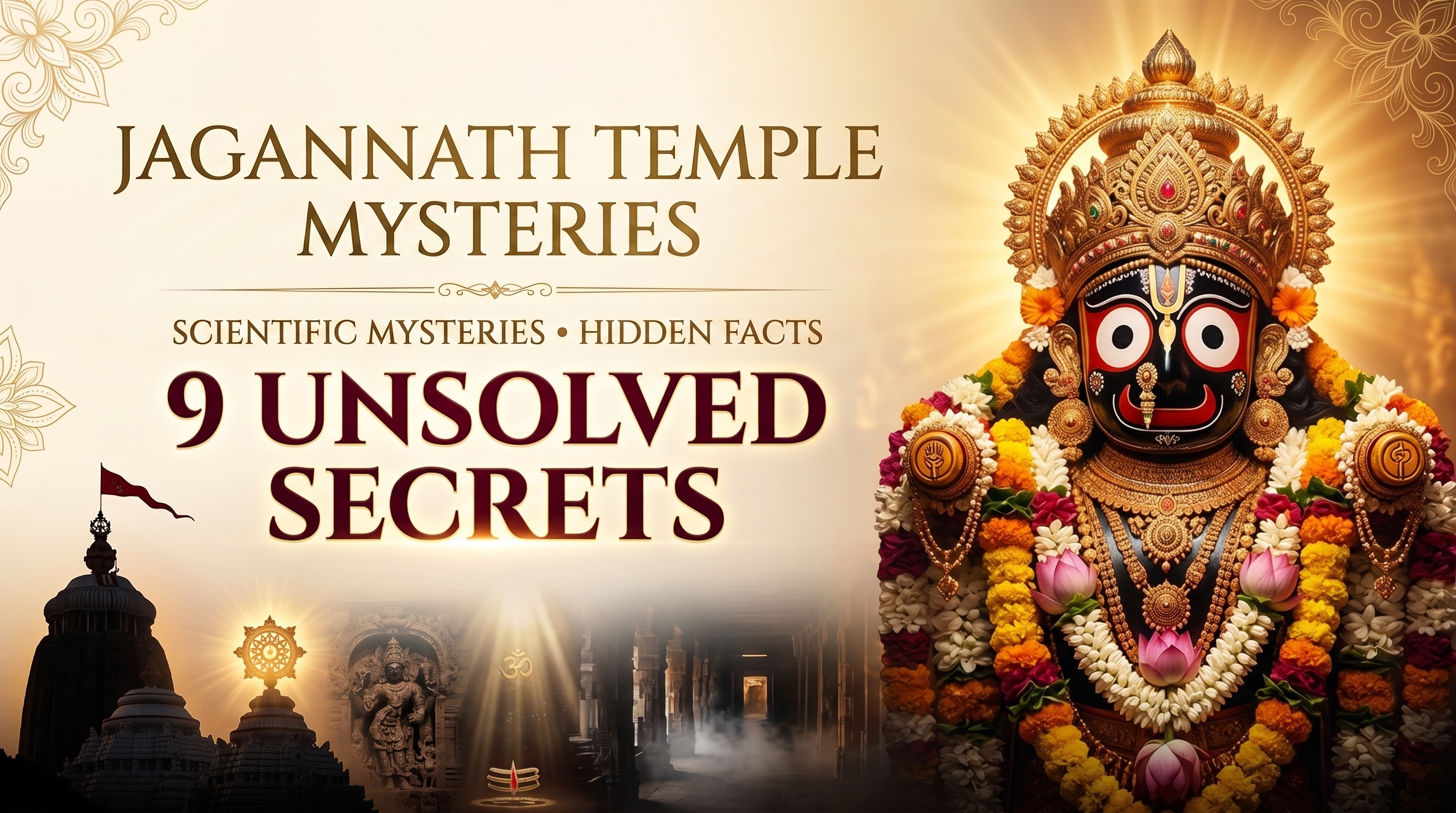
Myesteries Explained: Jagannath Temple — 9 Unsolved Secrets →Jagannath Mahaprasad
Mahaprasad is one of the greatest glories of Lord Jagannath. Food offered to Lord Jagannath is honored as His mercy. In the Puri tradition, Mahaprasad is not merely food; it is sacred grace, shared among devotees with reverence. Many devotees experience Jagannath’s mercy most directly through Mahaprasad.
Mahaprasad also carries a strong social and spiritual message. When people sit together and honor the Lord’s remnants, external distinctions become secondary. The Lord’s mercy is higher than social pride. In a world divided by status, wealth, education, and identity, Jagannath Mahaprasad teaches equality through devotion.
Read more: Jagannath Mahaprasad, Chappan Bhog & Anand Bazaar — the meaning of honoring the Lord’s mercy →Jagannath Rath Yatra
Jagannath Rath Yatra is the world-famous chariot festival in which Lord Jagannath, Lord Balabhadra, and Devi Subhadra leave the main temple and travel to the Gundicha Temple on three grand chariots. Odisha Review describes the festival as being held on Ashadha Shukla Dwitiya and also records traditional chariot details such as Nandighosa, Taladhwaja, and Devadalana / Darpadalana.
The spiritual meaning is very deep. Externally, Rath Yatra is a public festival of darshan, kirtan, chariot pulling, and devotion. Internally, in Gaudiya Vaishnava understanding, it represents the loving mood of bringing Krishna from Kurukshetra back to Vrindavan. Sri Chaitanya Mahaprabhu’s ecstatic dancing before Lord Jagannath reveals this inner mood.
Srila Prabhupada made Rath Yatra famous around the world through ISKCON. In his festival lectures, he emphasized that Lord Jagannath, Balabhadra, and Subhadra come before everyone to reclaim the conditioned souls and give mercy through darshan and devotional service.
Complete guide: Jagannath Rath Yatra 2026 — dates, chariots and spiritual meaning →Great Devotees of Lord Jagannath
The history of Lord Jagannath is filled with stories of devotees whose love overcame social boundaries, poverty, distance, and personal difficulty. These pastimes are emotionally powerful, evergreen, and deeply inspiring — each one showing that the Lord sees the heart.
Bhakta Salabega
Bhakta Salabega is one of the most beloved devotees of Lord Jagannath. Born in a Muslim family background, he became deeply attached to Lord Jagannath and composed devotional songs that are still remembered in Odisha. Odisha Review records the devotional tradition that Lord Jagannath’s chariot stopped so that Salabega could receive darshan, and that the Lord’s chariot still pauses near his samadhi in memory of his devotion.
The lesson of Salabega is simple and powerful: Lord Jagannath sees devotion, not external identity.
Dasia Bauri
Dasia Bauri is remembered as a simple-hearted devotee whose love for Lord Jagannath was accepted by the Lord despite social limitations. His story teaches that sincere bhakti is greater than social position. In Jagannath tradition, the Lord is repeatedly shown as bhava-grahi — the one who accepts the feeling of devotion. As devotees say, “Bhagavan bhav ke bhukhe hain”: the Lord is hungry for love, not pride.
Sadan Kasai
Sadan Kasai, often described in devotional tradition as a butcher by birth who became absorbed in Hari bhakti, is another powerful story of transformation. This story should be understood with a source-confidence note, because versions vary across Bhaktamal and regional retellings. The heart of the story is that the Lord’s mercy can transform even a life that appears externally unsuitable.
Bandhu Mohanty
Bandhu Mohanty is remembered in Jagannath tradition as a devotee who depended completely on the Lord. His story is often narrated to show how Lord Jagannath personally cares for those who surrender to Him. The lesson is dependence: when the devotee takes shelter of Jagannath with faith, the Lord does not forget.
Jayadeva & Gita Govinda
Jayadeva’s Gita Govinda has a special place in the devotional culture connected with Lord Jagannath. Its poetry expresses the intimate love of Radha and Krishna, and this mood is deeply connected with how Gaudiya Vaishnavas understand Lord Jagannath and Sri Chaitanya Mahaprabhu’s ecstasy in Puri.
Featured story: Bhakta Salabega and the chariot that stopped for love →Chaitanya Mahaprabhu & Lord Jagannath
No understanding of Lord Jagannath is complete without Sri Chaitanya Mahaprabhu. After accepting sannyasa, Chaitanya Mahaprabhu spent many years in Jagannath Puri. His darshan of Lord Jagannath, His tears, His kirtan, His Gundicha Marjana, and His dancing during Rath Yatra are among the highest expressions of Gaudiya Vaishnava devotion.
In Sri Chaitanya-caritamrita, Rath Yatra is not only a festival; it is a revelation of the inner mood of Srimati Radharani bringing Krishna back to Vrindavan. Prabhupada’s commentary on Madhya-lila 13.119 explains the relationship between Lord Jagannath, Krishna, Kurukshetra, Vrindavan, and the mood of Chaitanya Mahaprabhu.
This is one of Nandgram Dham’s strongest themes. Generic accounts may explain Jagannath culture, but here we share the Gaudiya Vaishnava heart of Jagannath worship: the Lord of the Universe is the beloved Krishna of Vrindavan, and Chaitanya Mahaprabhu reveals how to approach Him with deep love.
Srila Prabhupada & Lord Jagannath
Srila Prabhupada brought Lord Jagannath’s Rath Yatra to the streets of the Western world and made the mercy of Jagannath accessible internationally. Through ISKCON festivals, millions of people have seen Lord Jagannath, heard the holy name, honored prasadam, and joined kirtan.
In his Rath Yatra lectures, Srila Prabhupada repeatedly emphasized that Lord Jagannath is mercifully coming before everyone. He explained Rath Yatra not as a cultural display but as a spiritual opportunity: by seeing, chanting, serving, and pulling the Lord’s chariot, people can begin their journey back to Krishna consciousness.
Spiritual Lessons from Lord Jagannath
- The Lord sees the heart. Stories like Salabega, Dasia Bauri, and Sadan Kasai show that external background cannot block sincere devotion.
- God is personal. Jagannath wakes, eats, dresses, rests, travels, and accepts service. This teaches that devotion is a relationship.
- The Lord comes to us. In Rath Yatra, Jagannath leaves the temple and gives darshan to everyone, including those who may not otherwise approach Him.
- Mercy is greater than qualification. Jagannath Mahaprasad, darshan, and kirtan are available to all sincere people.
- Devotion unites. The Lord of the Universe gathers people through chanting, festivals, prasadam, and seva.
- Vrindavan love is the heart of worship. Through Chaitanya Mahaprabhu, devotees understand Jagannath as Krishna being drawn by the love of His devotees.
How to Remember Lord Jagannath at Home
Devotees who cannot visit Puri can still remember and worship Lord Jagannath with devotion. Simple spiritual practices done sincerely are very pleasing to the Lord.
- Chant the holy names:Hare Krishna Hare Krishna Krishna Krishna Hare Hare · Hare Rama Hare Rama Rama Rama Hare Hare.
- Offer simple vegetarian food prepared with cleanliness and devotion, then honor it as prasadam.
- Read about Lord Jagannath, Chaitanya Mahaprabhu, Srila Prabhupada, and great devotees like Salabega.
- Sing Jagannath bhajans and kirtan with family or devotees.
- Keep a small picture or deity of Lord Jagannath, Balabhadra, and Subhadra in a clean place.
- Participate in Rath Yatra, satsang, temple seva, and prasadam distribution whenever possible.
To deepen your connection with Lord Jagannath and Krishna bhakti, join satsang, kirtan, Bhagavad Gita study, and devotional festivals at Nandgram Dham. You may also support prasadam, kirtan, and spiritual education seva.
Frequently Asked Questions
Who is Lord Jagannath?
Lord Jagannath is the Lord of the Universe, worshiped especially in Puri, Odisha, along with Lord Balabhadra and Devi Subhadra. In Vaishnava understanding, He is Lord Krishna / Vishnu appearing in a very merciful form.
What does Jagannath mean?
Jagannath means “Lord of the Universe.” It comes from jagat, meaning universe, and nath, meaning Lord or shelter.
Is Lord Jagannath the same as Lord Krishna?
Yes. In Vaishnava and Gaudiya Vaishnava understanding, Lord Jagannath is Krishna, the Supreme Lord, appearing in a special form filled with compassion and divine emotion.
Why does Lord Jagannath have big eyes?
Devotees understand His big eyes as a sign of unlimited mercy. He is always looking toward His devotees and never ignores a sincere soul.
Why does Lord Jagannath have no visible hands and legs?
His form teaches that the Lord is complete beyond material ideas of perfection. Devotees also connect His form with divine ecstasy and His desire to embrace all beings.
Who are Balabhadra and Subhadra?
Balabhadra is Lord Krishna’s elder brother Balarama, and Subhadra is Krishna’s sister. They are worshiped with Lord Jagannath in Puri and ride with Him during Rath Yatra.
What is the story of Nilamadhava?
Nilamadhava is the hidden form of the Lord worshiped by Vishwavasu in the forest. King Indradyumna later desired to worship the Lord, leading to the appearance of Lord Jagannath in Daru Brahma form.
What is Daru Brahma?
Daru Brahma means the Supreme Lord manifesting through sacred wood. Lord Jagannath’s wooden form is one of the most unique features of the Puri tradition.
Why is Rath Yatra celebrated?
Rath Yatra celebrates Lord Jagannath, Balabhadra, and Subhadra coming out on chariots to bless everyone. In Gaudiya Vaishnava understanding, it also represents Krishna being lovingly drawn back to Vrindavan.
Who was Bhakta Salabega?
Salabega was a great devotee of Lord Jagannath known for his heartfelt songs. Devotional tradition says Lord Jagannath’s chariot stopped so Salabega could receive darshan.
What is Jagannath Mahaprasad?
Jagannath Mahaprasad is sanctified food offered to Lord Jagannath and honored as His mercy. It is one of the greatest spiritual gifts of the Puri tradition.
Can anyone worship Lord Jagannath?
Yes. Lord Jagannath is the Lord of the Universe and accepts sincere devotion from everyone. One can worship Him through chanting, offering prasadam, reading, kirtan, and service.
Conclusion
Lord Jagannath is the Lord of the Universe, but He is also the Lord who becomes wonderfully close to His devotees. He appears in a simple wooden form, opens His eyes wide with compassion, accepts offerings, gives Mahaprasad, rides on His chariot, and responds to the love of devotees from every background.
His stories teach that devotion is greater than external qualification. His Rath Yatra teaches that the Lord comes out to bless all. His Mahaprasad teaches that mercy should be shared. His relationship with Chaitanya Mahaprabhu reveals the deepest heart of Krishna bhakti: the Supreme Lord is conquered by love.
May Lord Jagannath, Lord Balabhadra, and Devi Subhadra bless us with sincere devotion, humble service, and constant remembrance of the holy names.
- Google Search Central. Optimizing your website for generative AI features on Google Search. developers.google.com
- Google Search Central. Creating helpful, reliable, people-first content. developers.google.com
- Dina Krishna Joshi. Lord Jagannath — The Tribal Deity. Odisha Review, June–July 2007. magazines.odisha.gov.in
- Odisha Review. Salabega devotional tradition and Lord Jagannath chariot halt, June–July 2020. magazines.odisha.gov.in
- Odisha Review. The Famous Car Festival of Puri, July 2013. magazines.odisha.gov.in
- A.C. Bhaktivedanta Swami Prabhupada. Sri Chaitanya-charitamrita, Madhya-lila 13.119. prabhupadabooks.com
- Vedabase. Sri Chaitanya-charitamrita, Madhya-lila Ch. 13: The Ecstatic Dancing of the Lord at Ratha-yatra. vedabase.io
- A.C. Bhaktivedanta Swami Prabhupada. Ratha-yatra Festival Lecture, San Francisco, July 5, 1970. prabhupadabooks.com
- Odisha Review. Daily Rituals of Sri Jagannath Temple, July 2011. magazines.odisha.gov.in
- Dr. Subas Pani. Songs of Salabega. Odisha Review, June 2004. magazines.odisha.gov.in
Traditional pastimes of Lord Jagannath are drawn from scripture, temple tradition, Odisha cultural records, and devotional narration; details may vary across retellings.