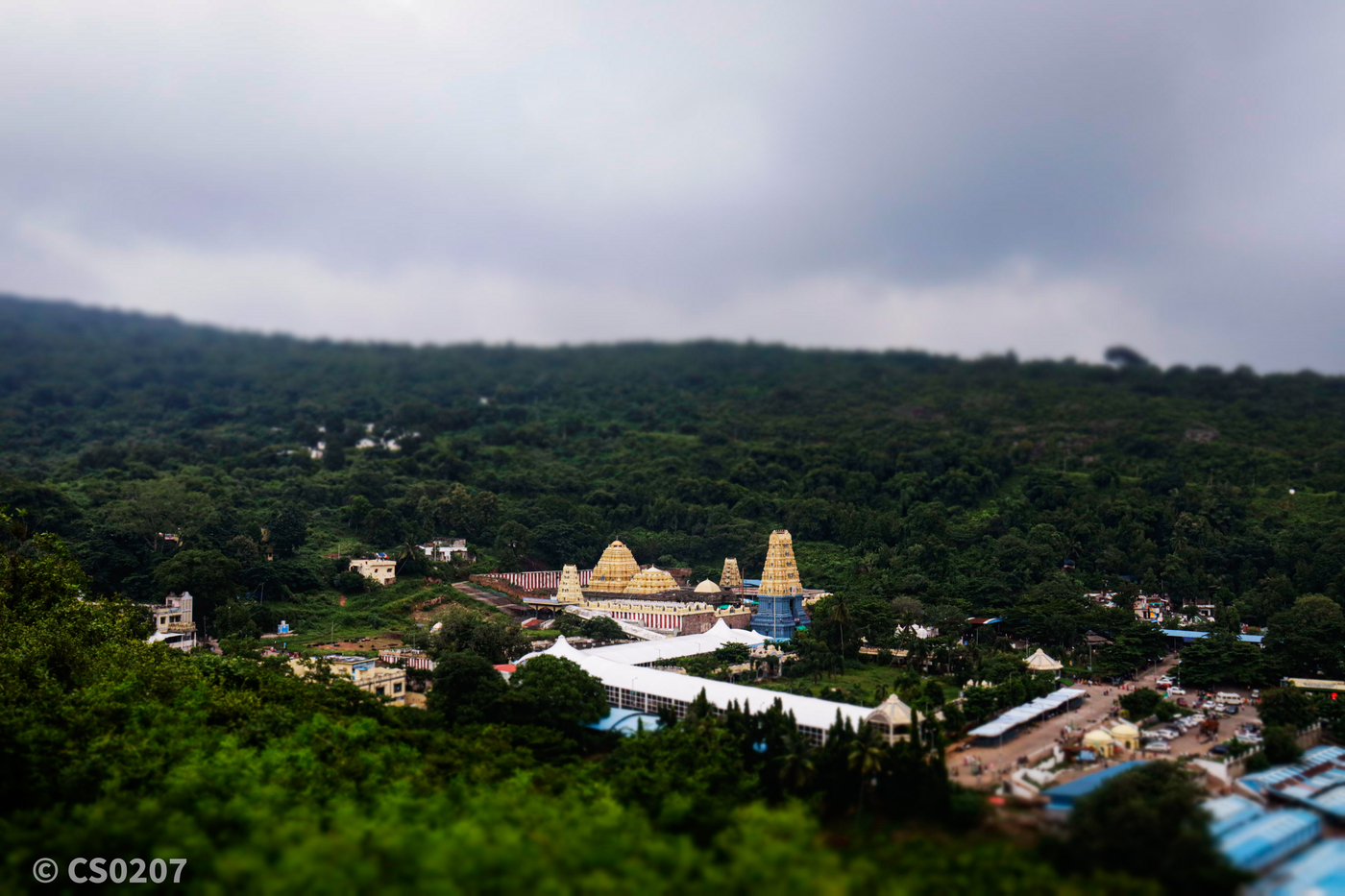
Most figures this early in the Madhva-sampradaya's history are known only through devotional biographies written generations after their death. Narahari Tirtha is the exception. Nine of his own inscriptions survive, cut into temple walls at Srikurmam and Simhachalam in the eastern Ganga kingdom of Kalinga. They let historians check the devotional story against solid written evidence. This is a genuinely rare chance this far back in the tradition.
An Ascetic With Real Political Power #
Narahari's earliest dated inscription, from 1264 CE, already addresses him by the ascetic title Sripada. So he had accepted Madhvacharya's teaching and formally renounced family life at or before that date. B. N. K. Sharma's academic history of the Dvaita school is still the standard scholarly reference for this period. Sharma calculates that Narahari was probably about twenty-two years old at the time. Narahari met Madhvacharya not long after Madhvacharya's own public teaching began. What makes Narahari unusual is that becoming a sannyasi did not end his involvement in worldly affairs. His later inscriptions, most of them dated between 1281 and 1293, describe him holding real power in government under the Eastern Ganga kings who ruled Kalinga. By 1281, Sharma writes, the wording of his own grants shows he was functioning as "the virtual overlord of the country." Sharma also notes that Narahari's own father appears to have held high office in the same kingdom, probably as a minister himself. This may explain how a young sannyasi came to be trusted with such heavy state responsibility in the first place.
The Regent's Twelve Years #
Devotional tradition, recorded in an early devotional biography called the Narahariyatistotra, adds a fuller story to this bare political record. It holds that Narahari governed Kalinga as regent for about twelve years, protecting the throne on behalf of an infant prince until the boy came of age. Then, it says, he stepped down from power of his own free will. At least on the length of the regency, this detail actually holds up well against the inscriptions. Narahari's recorded years of real political authority fall mainly between about 1281 and 1293. This comes close enough to a twelve-year span that it is one of the more believable details in a telling that is otherwise legendary.
The same source tells a much more colorful story about how the regency began. When the reigning king of Kalinga died, his ministers are said to have followed an old court custom of sending out the royal elephant to find a suitable regent. The elephant walked through the city, found Narahari, and placed the coronation garland around his neck. Sharma gives a direct opinion on this detail. He calls the elephant story "too legendary and antediluvian to have any place in sober history." We state this openly and do not smooth it over. The inscriptions confirm that Narahari really did hold a Kalinga regency at roughly the right time. But the vivid story of exactly how he came to hold it belongs to devotional legend, not to the documented history.
A Deity Recovered From the Royal Treasury #
According to the Narahariyatistotra, Narahari's entire journey to Kalinga had a devotional purpose from the start. Madhvacharya is said to have sent him there specifically to recover the ancient deities of Sri Mula Rama and Sita, which carried a long legendary lineage of their own. Tradition says they passed from King Ikshvaku to Dasharatha, then to Lakshmana, to Hanuman, to Bhima, and finally into the state treasury of the Gajapati kings who ruled Kalinga. There they had simply been kept as royal property for generations. When Narahari finally gave up the regency after the rightful prince came of age, the grateful king offered him a reward of his choosing. Narahari asked for nothing but these deities. He is said to have carried them back and presented them to Madhvacharya. Later tradition holds they were kept safe at the Uttaradi Matha in the care of a later pontiff, Kavindra Tirtha, and are today worshipped at the Raghavendra Swami Matha in Mantralayam. Sharma's academic judgment is cautious. He treats the recovery of the deities as a real, and probably "purely incidental," episode in an otherwise ordinary political career. He does not see it as the elaborate divine mission that later devotional retellings make of it. This shows that even a well-documented life like Narahari's mixes real events with later additions. Telling the two apart honestly matters more than telling the most dramatic possible version.
A verse still recited in Narahari's memory sums up exactly this deed in a single couplet: "sasItāmūlarāmārchā koshe gajapateH sthitā, yenānItā namastasmai shrīmannR^iharibhixave," roughly, "salutations to that renunciant Sri Nrihari, by whom the deity of Rama with Sita, kept in the Gajapati's treasury, was brought back." A separate tradition adds that Madhvacharya also gave Narahari a different deity, a four-armed Krishna shown dancing on the serpent Kaliya, at the time the mathas were divided among his disciples. This tradition is recorded only on gaudiyahistory.iskcondesiretree.com. It is not found in Sharma's academic history or on Uttaradi Matha's own official page. So this claim rests on a single source that is weaker by comparison, and it should be read with care. The Mula Rama story above, by contrast, is supported by inscriptions.
