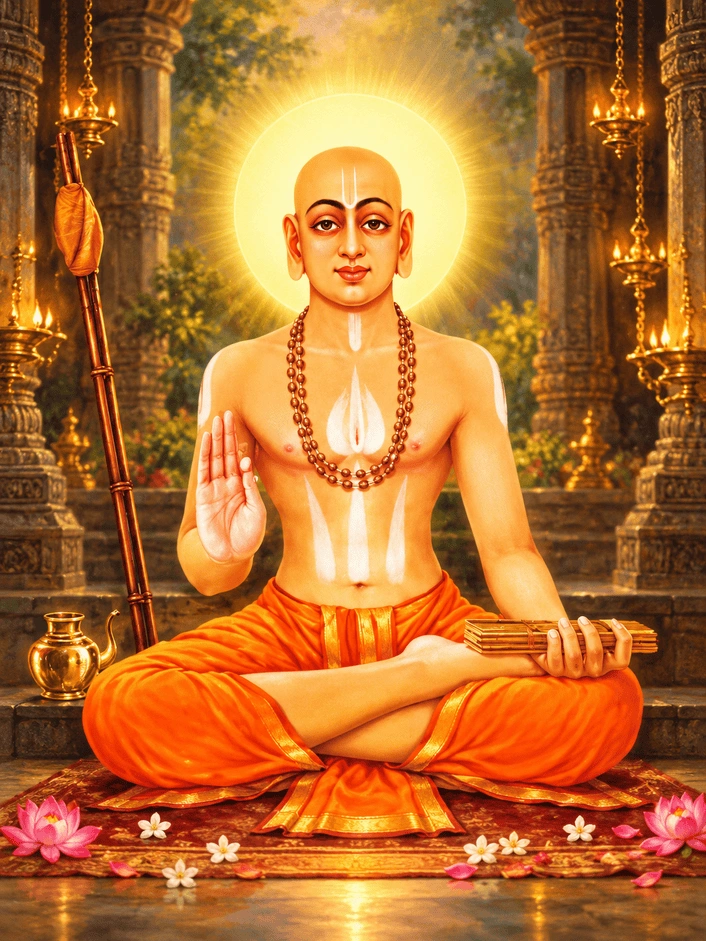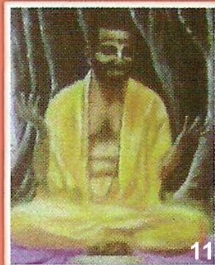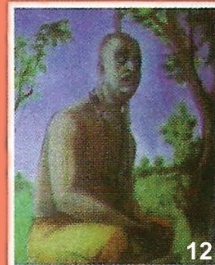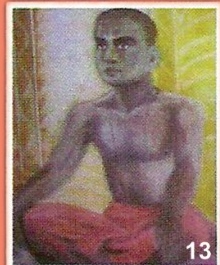
Sri Narahari Tirtha
The Minister and Regent Who Became the Second Head of Madhvacharya's Matha
Also known as Nrihari Tirtha, Svami Sastri (his name before sannyasa, also given as Shama Sastri or Shyama Sastri)
Sri Narahari Tirtha stands out among the names in the guru-parampara for an unusual reason. His life is not known from devotional biography alone. For roughly three decades before he became a pontiff, or head of a matha, records show he served in the government of the Eastern Ganga kings who ruled Kalinga. Kalinga was the medieval kingdom covering much of today's Odisha and the northern edge of Andhra Pradesh. He left behind stone inscriptions at the Srikurmam and Simhachalam temples that scholars still study today. B. N. K. Sharma's academic history of the Dvaita school is the standard work on it. Sharma says that one of these inscriptions, dated Shaka 1203, became real evidence that helped settle a long argument among scholars over Madhvacharya's own historical dates. So this is an unusual case, where a disciple's own records help to confirm his guru's dates. Dvaita-tradition sources describe him as a direct disciple of Madhvacharya, initiated under his earlier name Svami Sastri. He is remembered as the second pontiff of the matha that Padmanabha Tirtha had headed first. The traditional Gaudiya guru-parampara, handed down through Srila Bhaktisiddhanta Sarasvati Thakura, places him in that very same spot in the chain, calling him Nrihari Tirtha. But when we look closely at the sources, even this picture, which seems to match so well, has some real problems. They are set out in full below.
| Detail | Description |
|---|---|
| Birth name | Svami Sastri (also given as Shama Sastri or Shyama Sastri) |
| Approximate dates | B. N. K. Sharma's academic dating: born about 1241 CE, active in Kalinga 1264-1294 CE, died 1333 CE. Srila Prabhupada's purport instead gives Shaka 1127, about 1205 CE, as his birth year in the succession list. That gap between the two sources remains unresolved. |
| Guru | Madhvacharya himself, per B. N. K. Sharma's academic history. He is separately remembered as the matha successor of Padmanabha Tirtha, a distinction explained below. |
| Political role | Minister, then regent, of the Eastern Ganga kingdom of Kalinga, confirmed by his own inscriptions at Srikurmam and Simhachalam |
| Chief works | Bhavaprakashika, a commentary on Madhvacharya's Gita Bhashya, and commentaries on several of Madhvacharya's ten Prakaranas. Tradition credits him with fifteen works in all, but only fragments of these survive. |
| Samadhi | Chakra-tirtha, near Hampi, Karnataka |
Minister and Regent in Kalinga #
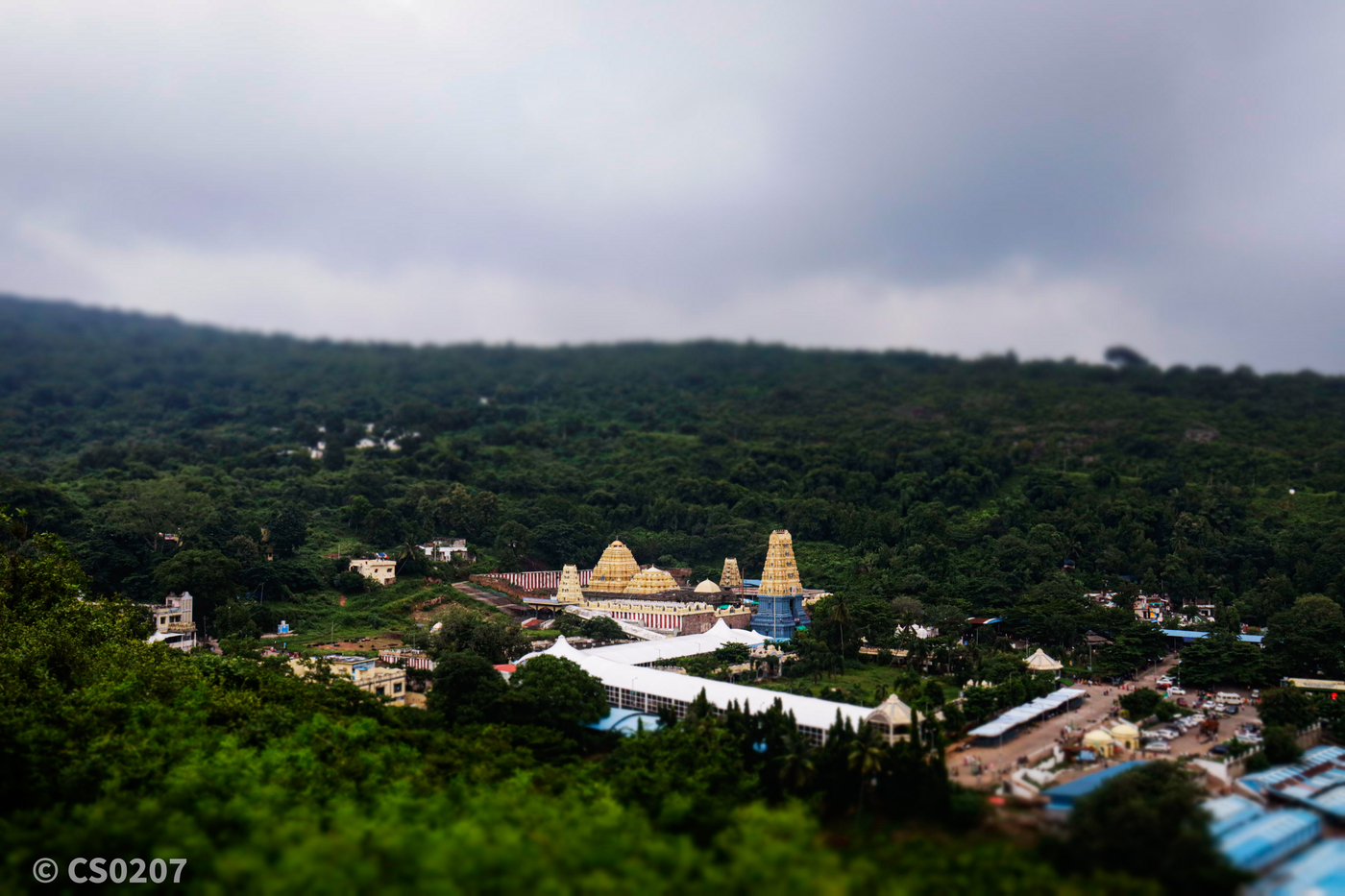
Narahari's own inscriptions give us unusually firm facts about this part of his life, for a figure this early in the list. His earliest dated inscription, from 1264 CE, already gives him the ascetic title Sripada. So he had already accepted Madhvacharya's teaching and taken formal renunciation by that date. By Sharma's calculation, he was probably about twenty-two at the time. Even though he was an ascetic, Narahari went on to hold real political power in Kalinga for years afterward. Nine of his inscriptions survive from the Srikurmam and Simhachalam temples, spread across thirty years between 1264 and 1294. Their wording shows that by 1281 he was, in Sharma's own words, "the virtual overlord of the country." Devotional tradition adds more detail to this bare fact. Narahari is remembered as regent of Kalinga for about twelve years. In this account, he protected the throne for an infant prince until the boy came of age, and then stepped down of his own free will. The years of his recorded political activity, mostly between about 1281 and 1293, match that twelve-year span closely. So, unlike some other details in his story, this part holds up well when it is checked carefully. The fuller story of his regency, and of a well-known legend about how it began, is told on Regent of Kalinga and the Mula Rama Deity.
A Deity Recovered From a Royal Treasury #
The best-known episode from these Kalinga years is not political but devotional. Tradition holds that Madhvacharya sent Narahari to Kalinga specifically to recover the ancient deities of Sri Mula Rama and Sita, kept for generations in the state treasury of the Gajapati kings. When Narahari finally gave up the regency, the grateful king let him take the very deities he had originally come for. He is said to have carried them back and presented them to his guru. They were later kept at the Uttaradi Matha and, by one account, are today worshipped at the Raghavendra Swami Matha in Mantralayam. A verse still recited in his memory sums up exactly this deed: "sasItāmūlarāmārchā koshe gajapateH sthitā, yenānItā namastasmai shrīmannR^iharibhixave," roughly, "salutations to that renunciant Sri Nrihari, by whom the deity of Rama with Sita, kept in the Gajapati's treasury, was brought back." This story is different from that of the famous Krishna deity later installed at Udupi. The difference is important and is explained on Place in the Guru-Parampara.
Scholar and an Early Voice of the Haridasa Movement #
Tradition credits Narahari with fifteen written works, but only fragments of two are known to survive. The first is the Bhavaprakashika, a commentary on Madhvacharya's Gita Bhashya. Both Jayatirtha and the later Raghavendra Tirtha, pontiff of the Kumbakonam Matha (now the Raghavendra Swami Matha), quote it with approval. The second is a set of commentaries on several of Madhvacharya's ten short Prakarana works. Of these, only the sections on two texts are known, through later quotation. Sharma studied the surviving fragment of the Bhavaprakashika. He found a writer who kept to the point, wrote in a plain though sometimes wordy style, and was willing to criticize the interpretations of rival Vedanta commentators, including Shankaracharya and Bhaskara. Beyond Sanskrit scholarship, Uttaradi Matha's own account of his life calls him the earliest Haridasa for whom definite historical information survives. A Haridasa is a singer-saint of the Kannada devotional-song tradition. The same account credits him with a handful of surviving compositions under the pen name (ankita) Narahari or Narahari Raghupathi. Sharma's independent academic history agrees on the main point. It calls him a forerunner of the later Dasa Kuta devotional movement in Kannada, even though barely any of his own songs have survived complete. The fuller picture of his writing and his place at the head of the Haridasa tradition is told on Scholar and Early Haridasa.
Death and the Path to the Pitha #
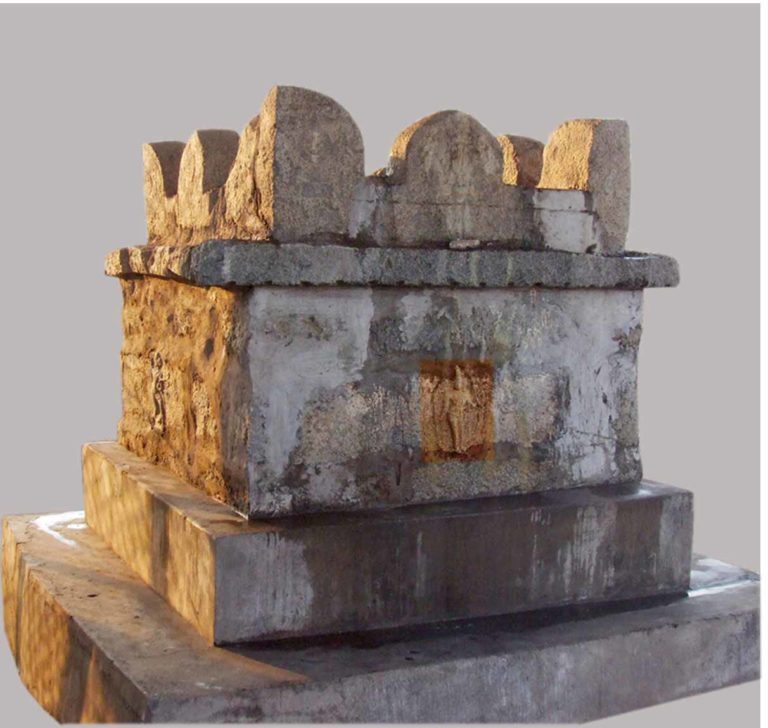
Sharma's history states plainly that Narahari succeeded Padmanabha Tirtha as pontiff in 1324 and held the position for nine years, dying in the cyclic year Srimukha, 1333 CE. But Sharma's own reasoning about the dates shows that this neat order is harder to prove than it looks. If Padmanabha Tirtha really headed the matha for the seven years that some matha lists give him, simple math would put Narahari on the pitha by about 1285. Yet his own inscriptions show him still active in Kalinga as late as 1293. Sharma can fit these two facts together only by concluding that Narahari could not actually have taken the pitha until some time after 1293. So the exact date of the handover, and the real length of Padmanabha's time as head, are less settled than the standard matha lists suggest. Narahari's samadhi, called his Moola Brindavana, is kept today at Chakra-tirtha, near Hampi.
Place in the Guru-Parampara #
The traditional Gaudiya guru-parampara list places Narahari Tirtha (as Nrihari Tirtha) directly after Padmanabha Tirtha and before Madhava Tirtha. On the surface, mainstream Dvaita-tradition sources, including Uttaradi Matha's own official succession list, appear to confirm exactly this order. But B. N. K. Sharma's academic history, the standard scholarly reference for this whole period, openly says that the evidence for a clean, one-after-another "succession" among Madhvacharya's four immediate successors is weaker than tradition assumes. He calls the whole idea "a popular assumption for which there is no conclusive evidence," and he points out two things. First, Narayana Pandita's own devotional biography of Madhvacharya names only Padmanabha individually among his disciples. Second, even Jayatirtha's writing pays direct homage to Padmanabha and Akshobhya Tirtha, but says nothing at all about Narahari and Madhava Tirtha. Sharma's own judgment is that Narahari was a direct, personally-ordained disciple of Madhvacharya, not of Padmanabha Tirtha. This page records Narahari's place as Padmanabha Tirtha's successor on the matha seat. The Gaudiya list itself is built on this same idea of succession to the seat of a matha. Listing him this way is not a claim about who personally trained him. On Madhavendra Puri's Life in the Madhva Sampradaya we began to compare the Gaudiya list carefully with the Dvaita records, which are documented independently. The same careful comparison applies to Narahari Tirtha too. One more correction should be stated plainly. Wikipedia does not connect Narahari Tirtha to the famous Krishna deity later installed at Udupi. Neither does Uttaradi Matha's own account, nor Srila Prabhupada's purport to Chaitanya-charitamrita, Madhya 9.245. Every available account says that Madhvacharya himself discovered and installed that deity. Narahari's own deity connection, which is separate and solidly documented, is the very different Mula Rama and Sita story above. The fullest treatment of this whole question is on Place in the Guru-Parampara.
Scriptural evidence
From the purport: Purport excerpt: "(14) Padmanabha, 1120; Narahari, 1127; Madhava, 1136; and Aksobhya 1159...(the dates are those of birth in the Sakabda Era; for Christian era dates, add seventy-eight years)."
Converting per the purport's own instruction, this places Narahari Tirtha's birth at Shaka 1127, or about 1205 CE, a real, unreconciled discrepancy against B. N. K. Sharma's own academic calculation, from Narahari's inscriptions, of a birth around 1241 CE. Both figures are reported honestly in the main biography rather than silently choosing one.
- B. N. K. Sharma, A History of the Dvaita School of Vedanta and Its Literature, Vol. I, full text via Internet Archive
- B. N. K. Sharma, History of the Dvaita School of Vedanta and Its Literature (1961/1981), via Internet Archive
- Sri Narahari Tirtha - Sri Uttaradi Math (official parampara page)
- Narahari Tirtha (Nrihari) - Gaudiya History (ISKCON Desire Tree)
- Sri Chaitanya-charitamrita, Madhya-lila 9.245, purport
- Madhavendra Puri: Life in the Madhva Sampradaya (this website)
Disciples
Frequently asked
When was Sri Narahari Tirtha born?
Sri Narahari Tirtha appeared B. N. K. Sharma's academic history works out his birth as about 1241 CE, from his own inscriptions. Srila Prabhupada's purport to Chaitanya-charitamrita, Madhya 9.245, instead gives Shaka 1127 (about 1205 CE) as his birth year in its list of the succession. The two sources differ by roughly thirty-five years, and this difference has not been settled. in Sources agree only on the wider Andhra-Kalinga coastal region (present-day Andhra Pradesh and Odisha); no single town is confirmed by independent records.
Who was the guru of Sri Narahari Tirtha?
The spiritual master of Sri Narahari Tirtha was Padmanabha Tirtha.
When and where did Sri Narahari Tirtha disappear?
Sri Narahari Tirtha disappeared Traditionally 1333 CE (the cyclic year Srimukha), after nine years as the second head of the matha Madhvacharya founded. Before that he spent roughly three decades in public life as a minister and regent in Kalinga at Chakra-tirtha (Cakratirtha), near Hampi, Karnataka, where his samadhi -- called his Moola Brindavana -- is still maintained.
What are the main pastimes of Sri Narahari Tirtha?
The pastimes covered here include: Regent of Kalinga and the Mula Rama Deity, Scholar and Early Haridasa, Place in the Guru-Parampara.