The best-recorded single fact about Rajendra Tirtha's life is also the most important one. The Madhva sampradaya's monastic succession had been unbroken for over a century after Madhvacharya. Rajendra Tirtha is the reason it split into two separate branches, and both branches continue to this day.
| Detail | Description |
|---|---|
| Guru | Vidyadhiraja Tirtha, seventh pontiff of the original Udupi matha, in descent from Madhvacharya through Jayatirtha |
| Rival successor | Kavindra Tirtha, ordained in Rajendra Tirtha's absence |
| Resulting branches | Uttaradi Matha (Kavindra Tirtha's line) and Rajendra Tirtha Matha, later Vyasaraja Matha (Rajendra Tirtha's own line) |
| Key source | B. N. K. Sharma, History of the Dvaita School of Vedanta (1961), page 452 |
An Absence at the Wrong Moment #
According to the account preserved by Dvaita-tradition historians, Vidyadhiraja Tirtha had already settled on Rajendra Tirtha, his senior and most trusted disciple, as his intended successor. When Vidyadhiraja fell gravely ill, he sent word for Rajendra Tirtha to return at once for a formal installation. Rajendra Tirtha was traveling and teaching elsewhere at the time, and the message reached him only after it was too late. With his own death near, Vidyadhiraja ordained the disciple who happened to be present instead, a monk named Kavindra Tirtha, simply so that the matha would not be left without a recognized head.
Two Lines From One Split #
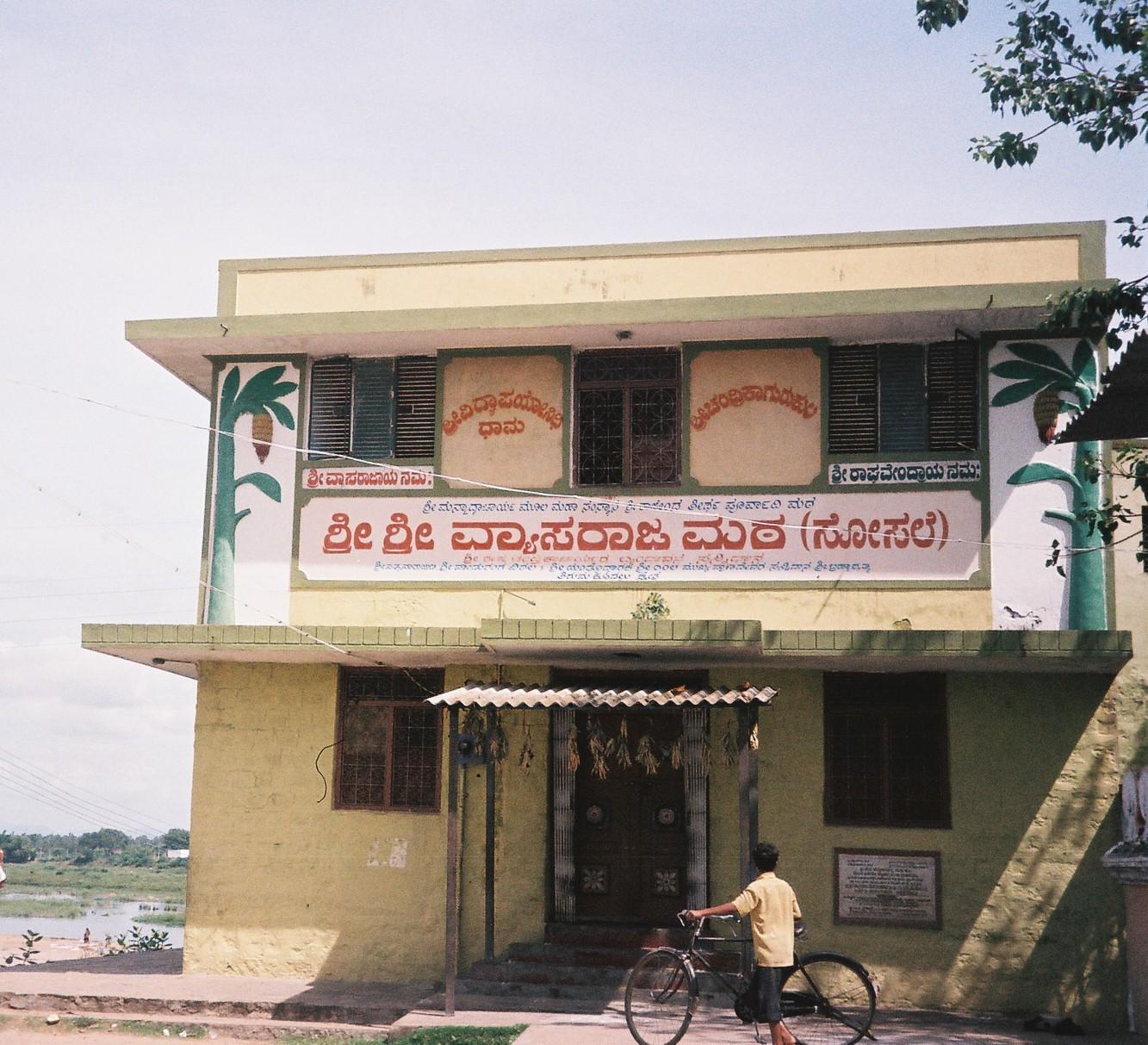
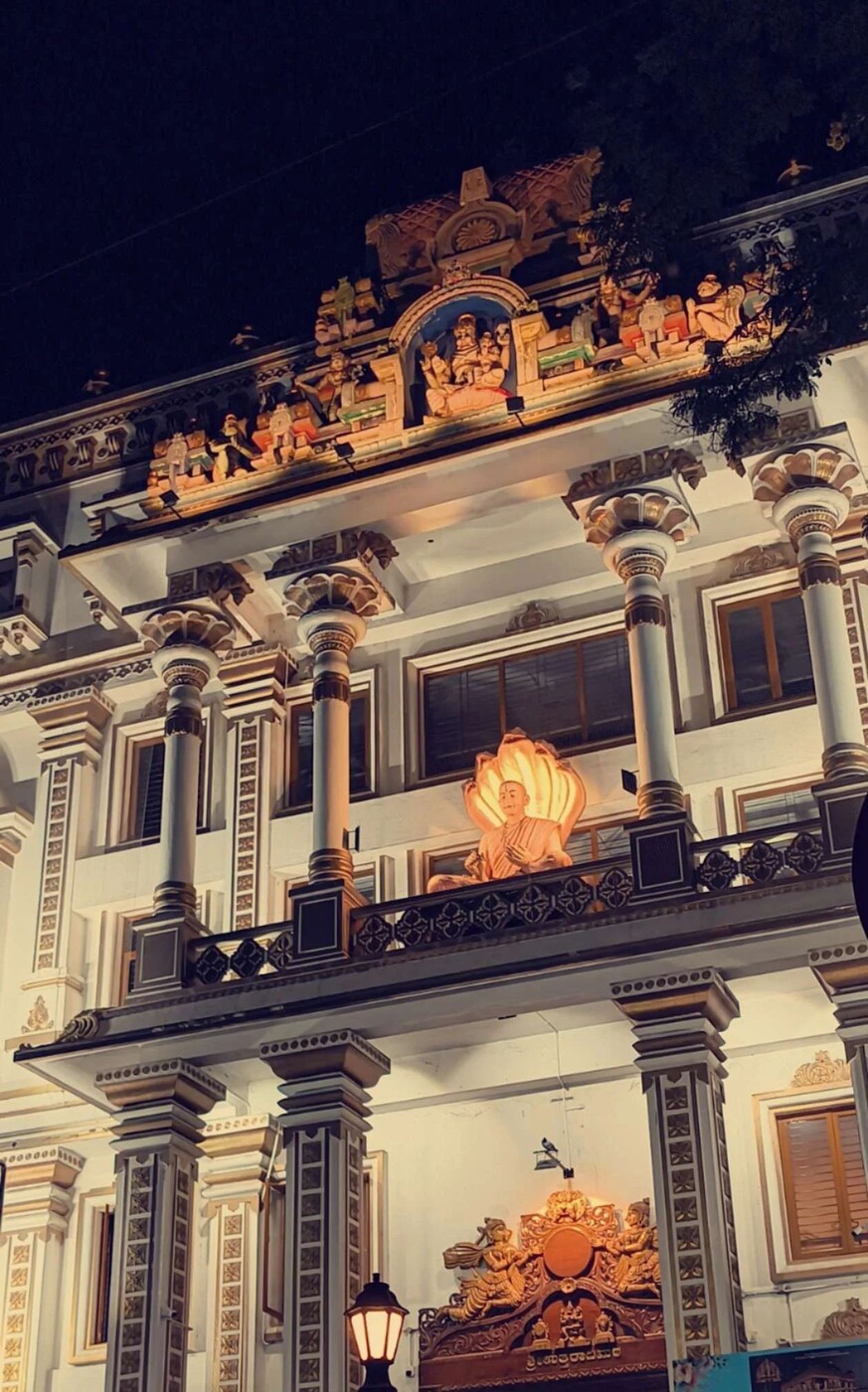
Kavindra Tirtha's branch of the succession became Uttaradi Matha. Today it is one of the three institutions still counted among the premier pontifical lines of Dvaita Vedanta. Raghavendra Matha is another. Rajendra Tirtha, for his part, did not simply accept being left out. He went on to found and head his own separate matha, at the time called the Rajendra Tirtha Matha, also known as Poorvadi Matha. That matha continued as an independent line of teachers. Generations later, it was renamed after its most celebrated later pontiff, Sri Vyasa Tirtha, the sixteenth-century royal guru. Today it is known as Vyasaraja Matha, and it is now centered at Sosale on the banks of the Kaveri river.
An Honest Question About the Reason #
Even the standard scholarly account of this event admits real uncertainty about why it happened the way it did. We report this honestly instead of smoothing it over. B. N. K. Sharma's History of the Dvaita School of Vedanta remains the standard academic reference for this period. He wrote plainly that "it is not possible to ascertain now what precisely was the reason for the second ordination," and he added that "the reason of the disciple's absence during the guru's illness given for the bifurcation is not convincing," pointing out that an interim arrangement could easily have been made instead. Such an arrangement was reportedly made during a later, similar split under a different teacher, Ramachandra Tirtha. Sharma's own best guess is that a single missed message was not the main cause. The real cause was more likely the practical, growing needs of an expanding tradition that had outgrown a single center. Whatever the exact cause, the result is not disputed. Two lines, both tracing back through Vidyadhiraja Tirtha to Madhvacharya himself, have continued side by side from that point onward. Each has given its own teachers and its own body of Dvaita scholarship down to the present day.
Where He Is Remembered #
Rajendra Tirtha received his own sannyasa ordination at a place called Hevilambi. Tradition places his samadhi, along with that of his guru Vidyadhiraja Tirtha, at Ergola, near the old town of Malkhed (Manyakheta) in present-day Karnataka. A site visit recorded by B. N. K. Sharma in 1975 found Ergola itself largely in ruins, and the exact tombs could no longer be clearly identified. This is a small reminder that, even for a well-recorded Dvaita-tradition figure, much of the physical trace has simply not survived the centuries between his life and ours.
