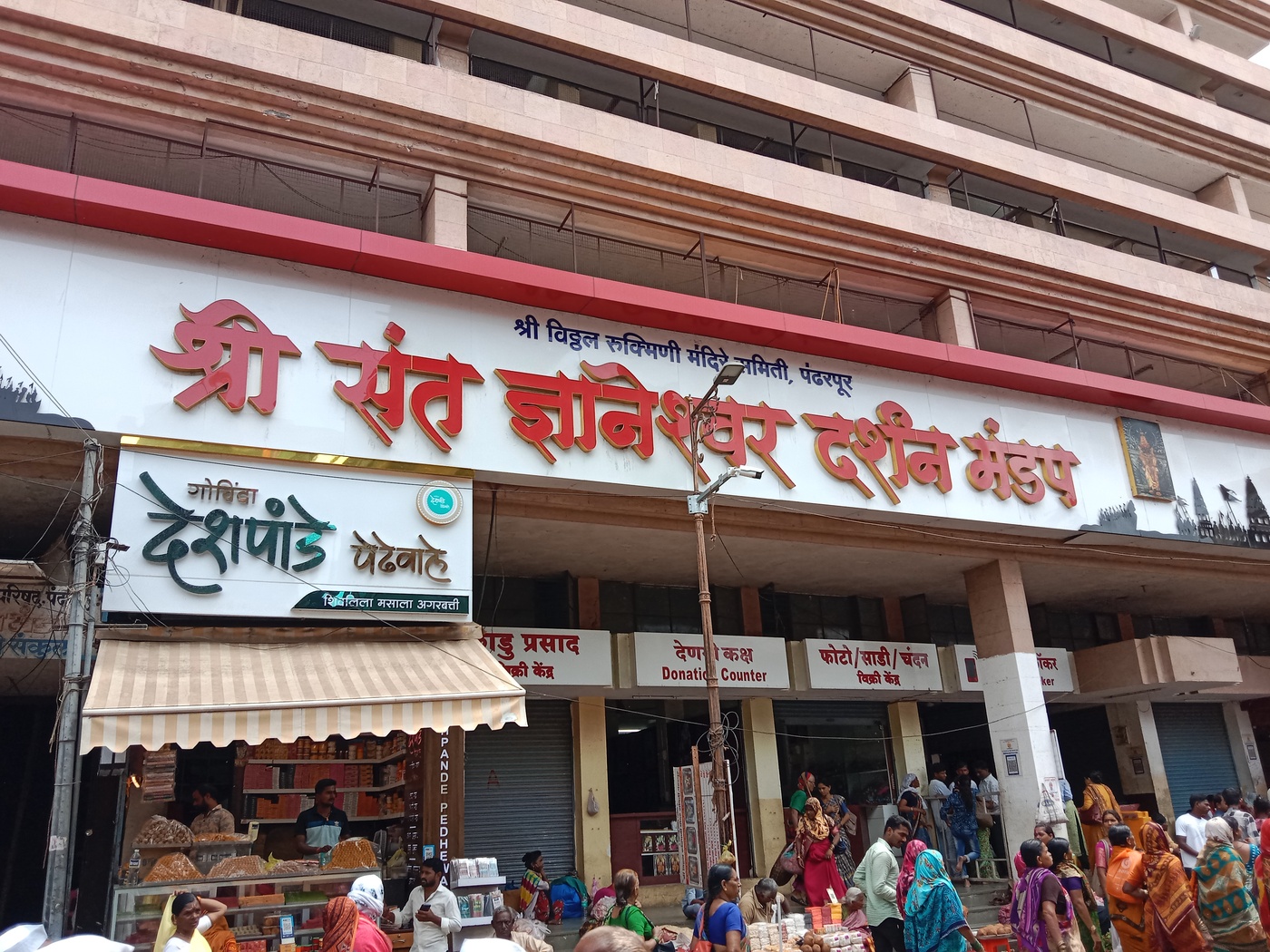
When Sri Chaitanya Mahaprabhu's tour of South India carried Him past Kolapura and on to Pandarpur, a temple town on the banks of the Bhima River, He went straight to the temple of Vitthala Thakura and stood before the Deity in open joy. He chanted and danced there as He had at every stop on the journey, and a brahmana who happened to see Him, moved by the sight, invited Him home. The brahmana fed Him with great love and respect, and only once the meal was finished did the Lord receive the piece of news that would shape the rest of His stay in the town.
A Brahmana Named Ramadasa #
Chaitanya-charitamrita names this host only once, and only in its own summary chapter. He is a brahmana called Ramadasa, whose sufferings Mahaprabhu is said to have relieved simply by meeting him (Madhya-lila 1.113). Nothing more about him survives. There is no family, no later life, not even a description of what those sufferings were. The name Ramadasa appears several times in Chaitanya-charitamrita for different devotees Mahaprabhu met in the south. This Pandarpur brahmana is a separate man from any of them. Apart from sharing a common name, the text gives no reason to connect him with the others.
Word of Another Sannyasi Nearby #
While Mahaprabhu was resting at Ramadasa's house, He learned that another sannyasi was staying at a second brahmana's home nearby. This was Sri Ranga Puri, a disciple of Srila Madhavendra Puri. Mahaprabhu went there immediately. Entering the house and seeing Ranga Puri seated there, He fell flat on the ground in obeisance. All at once His body was overtaken by the visible marks of ecstatic love: tears, the hairs of His body standing on end, trembling, and perspiration breaking out over His whole frame. Not a word had yet passed between the two men.
Recognized by a Symptom, Not a Name #
Ranga Puri was astonished at what he was seeing. He called out, "Your Holiness, please get up," asking the stranger to rise. Then, before any introduction was made, he offered a guess that turned out to be exactly right: "Your Holiness is certainly related to Sri Madhavendra Puri, without whom there is no fragrance of ecstatic love." He had not been told who this visitor was. He had simply recognized the flavor of the devotion itself, and from it he reasoned back to its only possible source. Srila Bhaktisiddhanta Sarasvati Thakura's own remark on this exchange explains why that guess meant so much. Before Madhavendra Puri, the Madhva line of sannyasis worshipped Krishna alone, in a mood the tradition treats as more formal. It was Madhavendra Puri who first brought the sweeter, more intimate mood of Radha and Krishna together into that worship. Life in the Madhva Sampradaya tells this in fuller detail. So when a disciple of that same line saw this kind of ecstasy in a total stranger, he had only one place to look for its origin.
The Embrace #
Ranga Puri lifted Mahaprabhu up from the ground and embraced Him. Shoulder to shoulder, the two men wept together in ecstasy, and neither seems to have needed any words to explain it. Only when they had both grown calm enough to speak did Mahaprabhu complete the introduction that Ranga Puri had already partly guessed. He was the disciple of Isvara Puri, Ranga Puri's own godbrother under Madhavendra Puri. For a moment it had looked like a meeting between total strangers. But it turned out to be a reunion inside the same small family of sannyasis. Once that was settled, the two of them simply sat down and talked. Krishnadasa Kaviraja Goswami records that they continued discussing Krishna together, without interruption, for five to seven days.
That conversation did not stay on general devotional subjects the whole time. Before it ended, an ordinary question about Mahaprabhu's birthplace brought up something neither man could have expected. It was a piece of family news thirty years old, waiting in an old sannyasi's memory. That part of the same conversation is told on News of Vishvarupa. This meeting is also told from the other side of the lineage, on Mahaprabhu's Reverence for His Guru. That page describes how Mahaprabhu treated His own guru's memory throughout His life.
