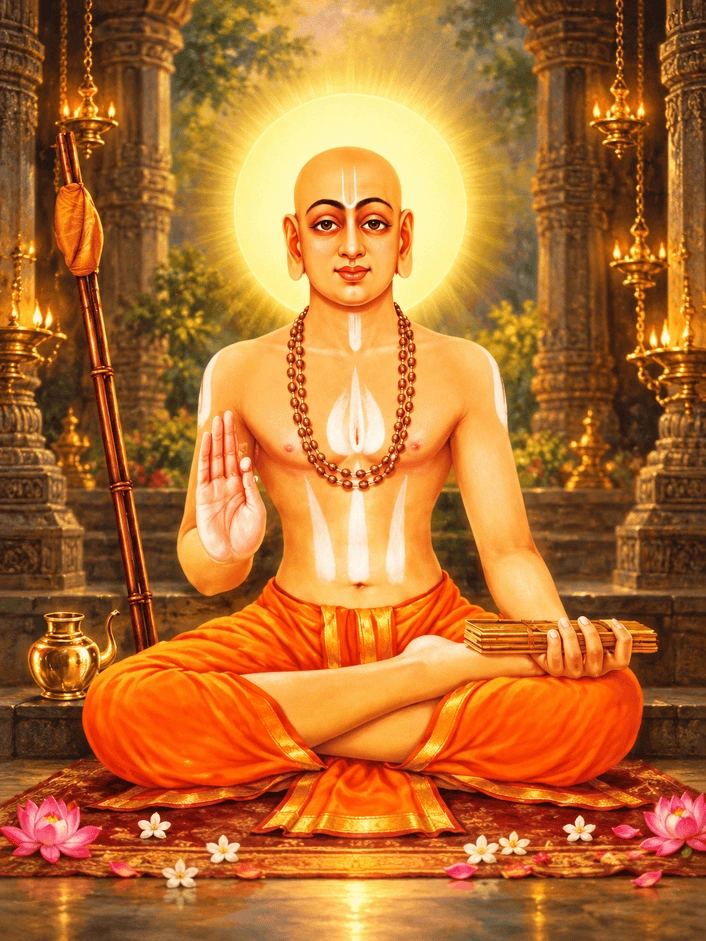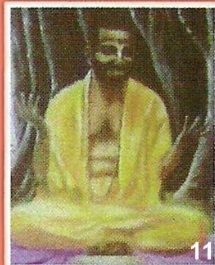
Sri Akshobhya Tirtha
Guru of Jayatirtha, Fourth Pontiff of the Madhva Peetha
Also known as Govinda Shastri, Govinda Bhatta, Akshobhyarat, Akshobhya Teertha
Sri Akshobhya Tirtha holds a clear and well-recorded place in the history of Dvaita Vedanta. Dvaita tradition agrees that he was the fourth pontiff to hold the Madhva Peetha after Madhvacharya himself, following Padmanabha Tirtha, Narahari Tirtha and Madhava Tirtha. He won a famous public debate against the Advaita scholar Vidyaranya. And in his final years he trained Jayatirtha. Dvaita scholars regard Jayatirtha as the most important commentator the Madhva sampradaya produced after its own founder. His extraordinary life is told in full on his own page.
| Detail | Description |
|---|---|
| Birth name | Govinda Shastri, also called Govinda Bhatta |
| Ordained by | Sources differ. Sri Vyasaraja Matha's own succession record names Sri Madhava Tirtha, his immediate predecessor as pontiff. Wikipedia, following B. N. K. Sharma, names Padmanabha Tirtha instead. Some devotional accounts name Madhvacharya himself. |
| Tenure as pontiff | Traditionally 1350-1365 CE, the fourth of the four pontiffs after Madhvacharya |
| Chief disciple and successor | Jayatirtha |
| Best-recorded deed | Won a public debate against the Advaita scholar Vidyaranya at Mulbagal on the meaning of the phrase "tat tvam asi." A stone pillar commemorating it still stands there. |
| Institution founded | Sri Kudli Akshobhya Tirtha Matha, near Shivamogga, Karnataka, carried forward by his disciple Trailokya Bhushana Tirtha |
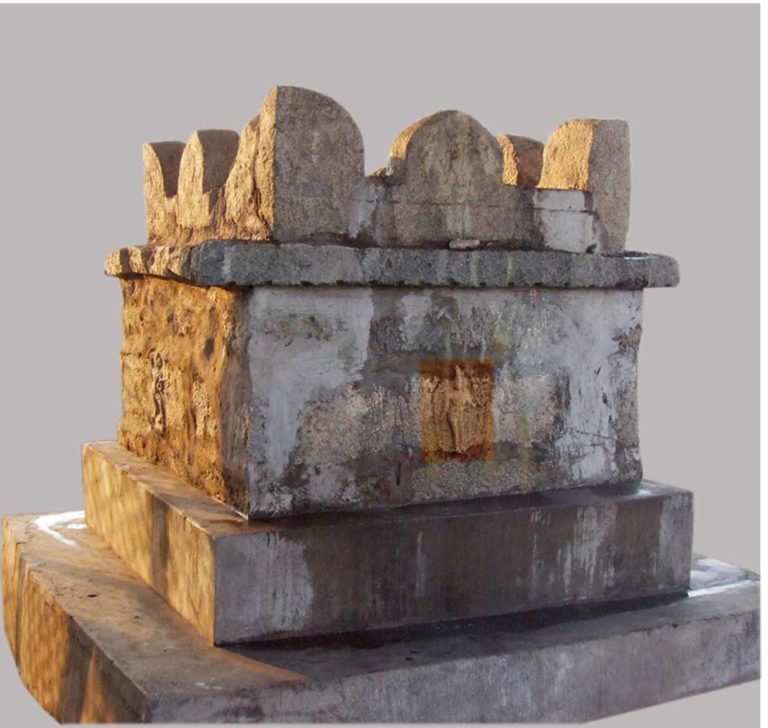
| Samadhi | Malkhed (ancient Manyakheta), Karnataka, on the bank of the river Kagini |
From Govinda Shastri To Akshobhya Tirtha #
By tradition, Akshobhya Tirtha was born in Uttara-Karnataka under the name Govinda Shastri, also recorded as Govinda Bhatta. No source records his birth year directly. The commonly quoted date of about 1282 CE is a modern reconstruction, worked out backward from his documented tenure as pontiff from 1350 to 1365. Devotional accounts say he first followed a non-Vaishnava, Advaita line of teaching. He later travelled to Udupi after hearing of Madhvacharya's growing fame, and there he surrendered to him.
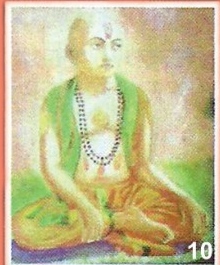
We do not know for certain who actually gave Akshobhya Tirtha his sannyasa initiation. Sri Uttaradi Math's own historical account states that he "took sanyasa directly from Shri Madhvacharya" and received the Deity of Aja-Vithala from him personally. B. N. K. Sharma's history, the standard scholarly book on this period, is very careful about that claim. Sharma notes there is "no evidence, apart from tradition," that Madhva himself personally ordained the later ones among his early successors. He also points out that Dvaita sources disagree on this exact question. One source, the Satyasandhavilasa, names Padmanabha Tirtha as the one who initiated Narahari, Madhava and Akshobhya Tirtha in turn. Another, a verse by the Haridasa poet Pranega Vithala, calls Akshobhya the direct disciple of Madhava Tirtha instead. Sri Vyasaraja Matha's own succession record clearly takes this second view: "Sri Akshobhya Tirtha was ordained the 5th Pithadhipati by Sri Madhava Tirtha." This page follows that Dvaita-tradition succession record and treats Madhava Tirtha as Akshobhya Tirtha's guru. But Sharma himself calls the whole question "vague" and other sources disagree.
Fourth Pontiff Of The Madhva Peetha #
Whoever ordained whom, Dvaita tradition agrees that Padmanabha, Narahari, Madhava and Akshobhya Tirtha held the Madhva Peetha one after another. Later tradition calls this group the "Mula-Matha" line. It is separate from the eight mathas that Madhvacharya founded at Udupi, which all existed side by side. Sharma again urges caution here. He notes that the idea of one pontiff "succeeding" another and "ruling" for a fixed number of years was not clearly recorded at first. It was recorded clearly only after the three major mathas tracing back through Jayatirtha were properly established, around the middle of the fifteenth century. That was a full century after Akshobhya Tirtha's own death. But every account agrees that Akshobhya Tirtha was the last name in this founding group of four before Jayatirtha received the seat in 1365.
Victory Over Vidyaranya At Mulbagal #
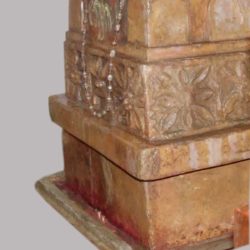
Akshobhya Tirtha is best known to independent history for his debate with Vidyaranya (1302-1387), the celebrated Advaita scholar associated with the founding of the Vijayanagara Empire. The subject was the meaning of the Upanishadic text "tat tvam asi." Tradition holds that the judge of the debate was the Sri Vaishnava scholar Vedanta Desika (1268-1388), a master of many subjects. It says he ruled in Akshobhya Tirtha's favor in a verse still quoted in traditional circles today. The episode is recorded in several independent works: Vyasa Tirtha's own Jayatirtha-Vijaya, the later Raghavendra-Vijaya, and even the rival Sri Vaishnava text Acharya-Vijaya-Champu. Sharma also notes real support from an inscription. This is a stone pillar at Mulbagal, near Kolar, set up to mark the debate, though today "in a grossly mutilated form." Even Sharma's own dating leaves the exact year open, somewhere between the 1320s and the 1360s. It depends on which dating scheme is used for the pontiffs before him. But the basic fact of the debate, and its outcome, is about as well confirmed as anything from this early period of Dvaita history. The fuller story is told on Victory Over Vidyaranya at Mulbagal.
Founding Kudli And Consecrating Deities #
Sharma says plainly that Akshobhya Tirtha was "not distinguished as a writer." One source credits him with a single work, the Madhva-tattva-sara-samgraha, but no manuscript of it has ever been found. He is remembered instead for the institutions he founded and for acts that were recorded. He is credited with consecrating a Deity of Chintamani Narasimha at Kudli Kshetra, where the Tunga and Bhadra rivers meet near Shivamogga, and with founding a matha there. That matha continues today as the Sri Kudli Akshobhya Tirtha Matha, carried forward by his disciple Trailokya Bhushana Tirtha. A dated Kannada copper-plate grant from 1337 CE records a purification rite that Akshobhya Tirtha personally performed at Malkhed. Kapatral Krishnarao first brought this grant to the notice of scholars, and Sharma cites it. The rite restored the lost Brahmin status of two men named Ranganna and Damanna. It is a small piece of the historical record, but it has a clear date. Most of what survives about him has no firm date, so a dated record like this is rare for this period. The fuller account is told on Kudli Matha and the Narasimha Consecrations.
Guru Of Jayatirtha And Samadhi At Malkhed #
By tradition, Akshobhya Tirtha moved north in his later years to Pandharpur, on the bank of the Bhima river. There he met a young man who would become his most celebrated disciple, Jayatirtha. He initiated and trained him there before the two of them moved on to Malkhed. Jayatirtha's own page tells in full what that meeting actually involved, and how Jayatirtha went on from that riverbank to become Tikacharya, "the Commentator" of Dvaita Vedanta. Akshobhya Tirtha spent his final years at Malkhed training Jayatirtha in the fine points of Madhva's philosophy. Jayatirtha succeeded him on the Madhva Peetha in 1365 and went on to write more than twenty works, chief among them the Nyaya-sudha. Akshobhya Tirtha's own samadhi (brindavana) stands at Malkhed, ancient Manyakheta, on the bank of the river Kagini. Jayatirtha himself was later laid to rest in the same town. A short account of this period, and of the mathas still active today that trace back through Jayatirtha to Akshobhya Tirtha, is told on Guru of Jayatirtha and the Samadhi at Malkhed.
Place In The Gaudiya Guru-Parampara #
On this one point, Akshobhya Tirtha's place in the traditional Gaudiya Vaishnava guru-parampara is better recorded than the place of several other names in the same chain. We say this plainly, as we also do on Madhavendra Puri's Life in the Madhva Sampradaya. Srila Prabhupada's own purport to Sri Chaitanya-charitamrita, Madhya 9.245, gives a numbered disciplic succession of the Madhva sampradaya:
"The disciplic succession of the Madhvacharya-sampradaya is as follows... (14) Padmanabha, 1120; Narahari, 1127; Madhava, 1136; and Akshobhya 1159; (15) Jaya Tirtha, 1167."
Here Padmanabha, Narahari, Madhava and Akshobhya Tirtha appear together as one generation, immediately followed by Jaya Tirtha. This matches the Dvaita-tradition succession order followed above. One point may cause confusion. The same purport also separately lists the eight original heads of the monasteries that Madhvacharya appointed at Udupi. It names one of them as "Akshobhya Tirtha (Pejavara-matha)." That is a different office and a different person from the fourth Mula-Matha pontiff described here, because the two lists describe two separate lines of succession. In the Gaudiya list, Jayatirtha stands between Akshobhya Tirtha and Jnanasindhu, the next name in the chain. The Gaudiya list gives this order, but no independent source confirms Jnanasindhu as the name after Jayatirtha. This placement is discussed in full on Place in the Gaudiya Guru-Parampara.
Scriptural evidence
মধ্বাচার্য-স্থানে আইলা যাঁহা ‘তত্ত্ববাদী’ ।
উড়ুপীতে ‘কৃষ্ণ’ দেখি, তাহাঁ হৈল প্রেমোন্মাদী ॥
madhvācārya-sthāne āilā yāṅhā 'tattvavādī'
uḍupīte 'kṛṣṇa' dekhi, tāhāṅ haila premonmādī
Word for word
madhva-ācārya-sthāne: at the place of Madhvācārya; āilā: arrived; yāṅhā: where; tattva-vādī: philosophers known as Tattvavādīs; uḍupīte: at the place known as Uḍupī; kṛṣṇa dekhi: seeing the Deity of Lord Kṛṣṇa; tāhāṅ: there; haila: became; prema-unmādī: mad in ecstasy
Caitanya Mahaprabhu next arrived at Udupi, the place of Madhvacharya, where the philosophers known as Tattvavadis resided. There He saw the Deity of Lord Krishna and became mad with ecstasy.
From the purport: Purport excerpt: "The disciplic succession of the Madhvacharya-sampradaya is as follows... (14) Padmanabha, 1120; Narahari, 1127; Madhava, 1136; and Akshobhya 1159; (15) Jaya Tirtha, 1167."
This same purport separately lists the eight original monastery-commanders Madhvacharya appointed at Udupi, naming one of them "Akshobhya Tirtha (Pejavara-matha)", a different office and a different person from the fourth Mula-Matha pontiff profiled here, who appears instead in the purport's own sequential disciplic-succession list quoted above, immediately before Jaya Tirtha. Readers should not conflate the two same-named figures.
- B. N. K. Sharma, History of the Dvaita School of Vedanta and Its Literature (1961/1981), full text via Internet Archive
- Sri Akshobhya Tirtha - Sri Uttaradi Math (official)
- Sri Akshobhya Tirtha - Sri Vyasaraja Matha (official)
- Akshobhya Tirtha - Gaudiya History (ISKCON Desire Tree)
- Sri Chaitanya-charitamrita, Madhya-lila 9.245, purport
- Madhavendra Puri: Life in the Madhva Sampradaya (this website)
Disciples
Frequently asked
When was Sri Akshobhya Tirtha born?
Sri Akshobhya Tirtha appeared No birth year is directly recorded; born Govinda Shastri (also Govinda Bhatta) in Uttara-Karnataka. Modern scholars (Wikipedia, following B. N. K. Sharma's dating) place his birth at about 1282 CE, by counting backward from his time as pontiff (1350-1365 CE). This is a date worked out later, not a directly recorded one. in Uttara-Karnataka (North Karnataka); exact village not recorded.
Who was the guru of Sri Akshobhya Tirtha?
The spiritual master of Sri Akshobhya Tirtha was Sri Madhava Tirtha.
When and where did Sri Akshobhya Tirtha disappear?
Sri Akshobhya Tirtha disappeared Traditionally 1365 CE, at the end of his fifteen years as the fourth pontiff after Madhvacharya (1350-1365 CE, according to B. N. K. Sharma's dating) at Malkhed (ancient Manyakheta), Karnataka, on the bank of the river Kagini, where his samadhi (brindavana) still stands.
What are the main pastimes of Sri Akshobhya Tirtha?
The pastimes covered here include: Victory Over Vidyaranya at Mulbagal, Kudli Matha and the Narasimha Consecrations, Guru of Jayatirtha and the Samadhi at Malkhed.