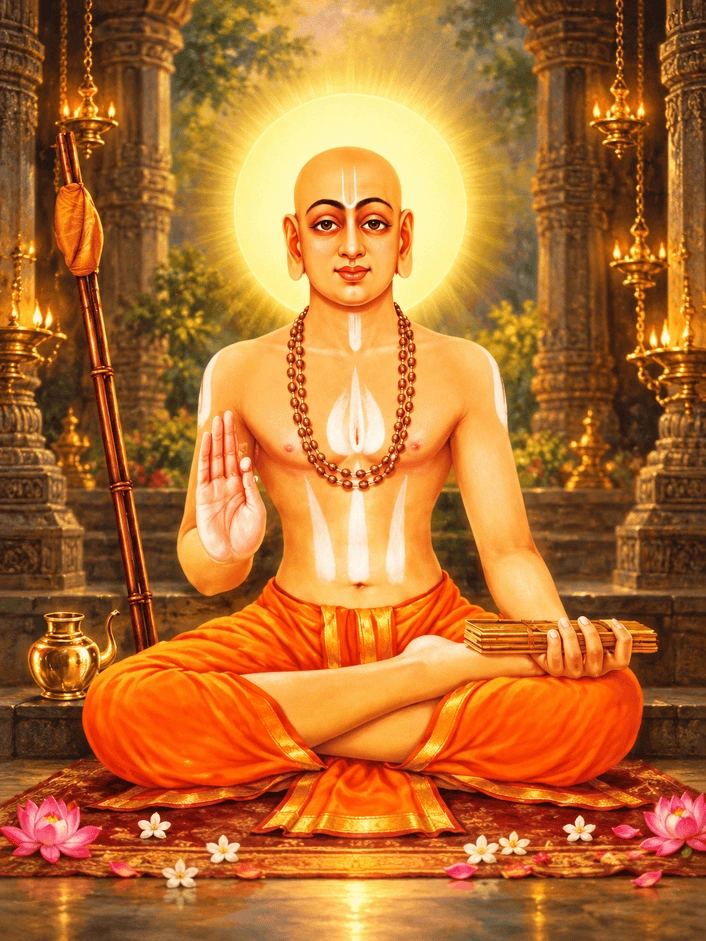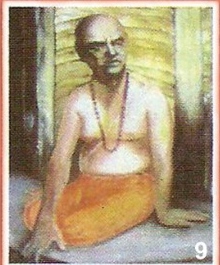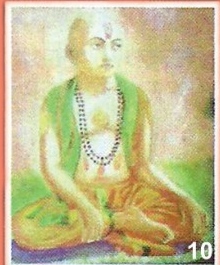
Sri Jayatirtha
Tikacharya, the Commentator of Dvaita Vedanta
Also known as Dhondopant, Dhondo Pant Raghunath, Jaya Tirtha, Tikacharya
Śrī Jayatīrtha holds a special place in the guru-paramparā. Scholars of Dvaita Vedānta, including those outside the Gauḍīya Vaiṣṇava tradition, regard him as the most important philosopher of the Madhva-sampradāya after Madhvācārya himself. He accepted sannyāsa in his twenties from Akṣobhya Tīrtha and served for only twenty-three years as the sixth leader after Madhvācārya. During this short period, he wrote or is credited with more than twenty works. Most of them are commentaries on the writings of Madhvācārya. Because of these works, he became known as Ṭīkācārya, "the Commentator." In his academic work *History of the Dvaita School of Vedanta and Its Literature*, B. N. K. Sharma explains that Jayatīrtha strengthened Dvaita philosophy in much the same way that Vācaspati Miśra strengthened Śaṅkarācārya's Advaita. His commentaries helped the young Dvaita school stand alongside the much older Advaita and Viśiṣṭādvaita schools.
| Detail | Description |
|---|---|
| Birth name | Dhondopant, also given as Dhondo Pant Raghunath, of a Deshpande family |
| Approximate dates | Traditionally about 1345-1388 CE; pontiff 1365-1388 (23 years). Srila Prabhupada's purport to Chaitanya-charitamrita, Madhya 9.245, gives an earlier date, Shaka 1167 (about 1245 CE). This gap is looked at honestly below |
| Birthplace | Traditionally Mangalvedhe, near Pandharpur, Maharashtra. One early source instead places his family at Malkhed, Karnataka. B. N. K. Sharma leaves the question open |
| Identity | Incarnation of Indra with the avesha of Shesha, according to the Madhva tradition (Uttaradi Matha) |
| Guru | Akshobhya Tirtha, fifth pontiff after Madhvacharya |
| Title | Tikacharya, "the Commentator," for his commentaries on nearly all of Madhvacharya's writing |
| Chief works | Nyaya-sudha (on the Anu-vyakhyana) and Tattva-prakashika (on the Brahma-sutra-bhashya), among more than twenty works in all |
| Samadhi | Malkhed (ancient Manyakheta), Karnataka, on the bank of the river Kagini |
A Horseman Drawn Into Renunciation #
Stories about Jayatīrtha's early life mainly come from later devotional life-stories known as Vijayas, which were written several generations after his passing. B. N. K. Sharma therefore treats these accounts with caution instead of accepting every detail without question. According to most traditions, Jayatīrtha was born in a Deshpande family with a military background and was named Dhondopant. Even his birthplace is not certain. The common tradition says he was born at Maṅgalavedhe, near Paṇḍharpur in present-day Maharashtra. However, an older text called the Gurucaryā places his family at Malkhed in Karnataka, the same town where he later lived, wrote, and passed away. Sharma does not take a definite position and leaves the question open.
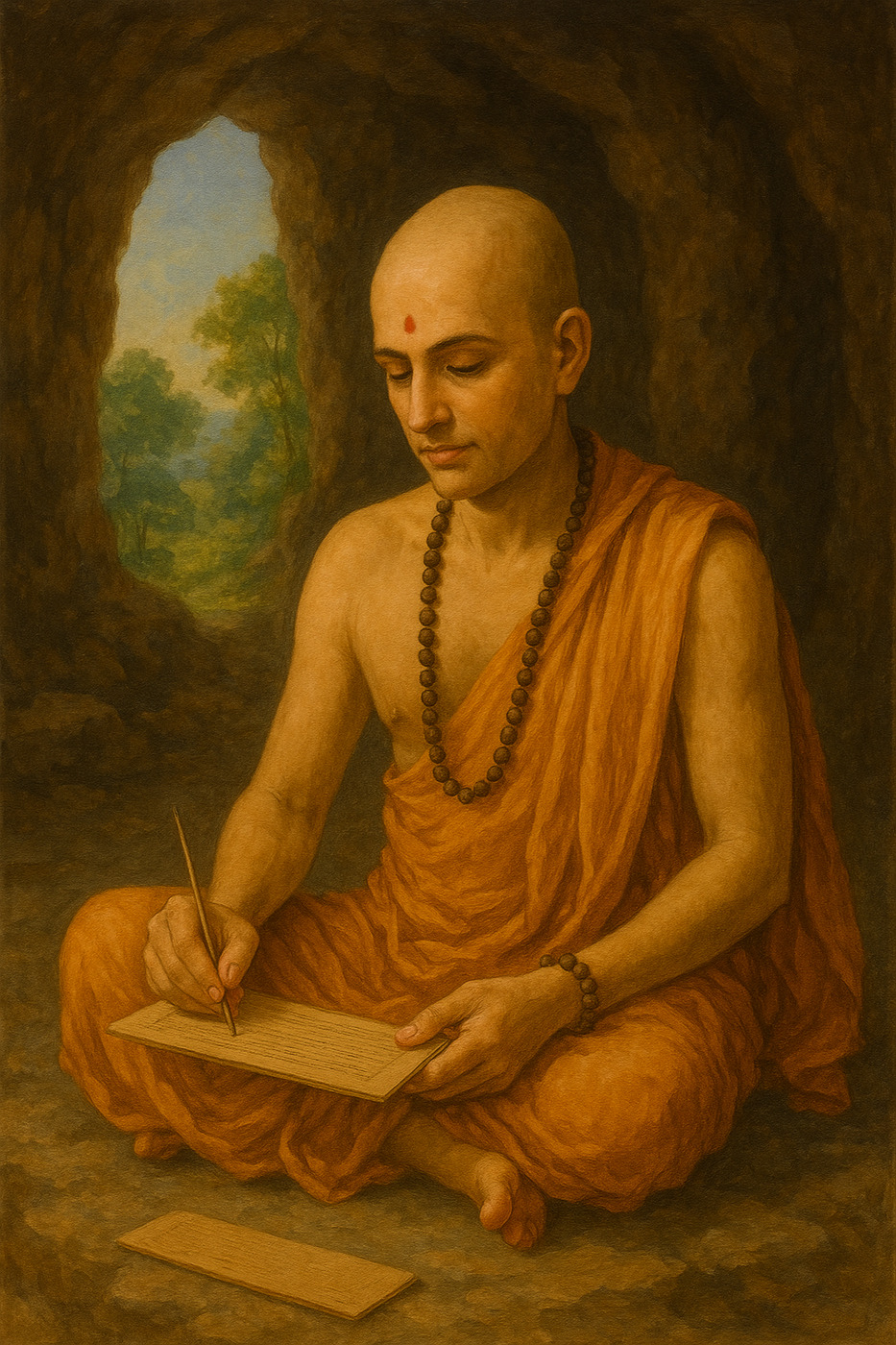
According to tradition, the turning point in Dhondopant's life came when he was about twenty years old. While riding, he stopped near a river to give water to his horse. There he met Akṣobhya Tīrtha, a sannyāsī in the disciplic line of Madhvācārya. That line came down from Madhvācārya through Padmanābha Tīrtha, Narahari Tīrtha (called Nṛhari Tīrtha in the Gauḍīya guru-paramparā list) and Mādhava Tīrtha to Akṣobhya Tīrtha himself. It is said that a brief exchange of questions deeply affected the young Dhondopant, and he immediately asked to be initiated. His father later tried to bring him home. Some later accounts add a dramatic story that his father forced him back into married life before he again escaped to his guru. B. N. K. Sharma rejects this part of the story as unthinkable "in the social and religious climate of orthodox Brahmin society in the 14th century." He sees it as a later addition meant to make the story more dramatic. The more careful sources agree on the main point: Akṣobhya Tīrtha accepted Dhondopant, gave him the name Jayatīrtha, trained him in Madhva's Dvaita philosophy. In 1365 this disciple succeeded him as leader. The fuller account, including Sharma's reasons for rejecting the more dramatic version, is given in Life and Renunciation Under Akṣobhya Tīrtha.
Tikacharya: The Commentator Who Gave Dvaita Its Classical Form #
Jayatīrtha's greatest importance comes from the works he wrote during the next twenty-three years. His most famous work is the Nyāya-sudhā, a large commentary traditionally said to contain about 24,000 verses. It explains Madhvācārya's Anuvyākhyāna, which is Madhva's verse supplement to his Brahma-sūtra-bhāṣya. In this work, Jayatīrtha carefully discusses the views of other Vedānta teachers such as Śaṅkarācārya, Rāmānujācārya, and Bhāskara. He also examines the teachings of Nyāya, Sāṅkhya, Mīmāṁsā, and Buddhist philosophy. A traditional saying states that "the Sudhā alone deserves to be called a real commentary." B. N. K. Sharma, after many years of studying Dvaita literature, also writes that "in the whole range of Sanskrit philosophical literature, there is not one other work like" it. His second most important work is the Tattva-prakāśikā. Today it is the most widely studied commentary on Madhvācārya's Brahma-sūtra-bhāṣya. It is said to contain about 8,000 verses and later inspired at least eleven further commentaries by Dvaita scholars, including Śrī Vyāsa Tīrtha's Tātparya-candrikā.
Beyond these two works, Jayatīrtha wrote commentaries on almost every other work in Madhvācārya's Sarvamūla collection. He also wrote a few independent works of his own. The main ones are the Vādāvalī, an early work opposing the Advaita teaching that the world is unreal, and the Pramāṇa-paddhati, a standard Dvaita text on logic and the means of valid knowledge. By commenting on nearly the entire body of Madhvācārya's writings, Jayatīrtha gave Dvaita philosophy a clear technical language and defended its grammar and reasoning against many Advaita criticisms. For this reason, he became known as Ṭīkācārya, "the Commentator." Later tradition places him with Madhvācārya and Vyāsa Tīrtha among the Munitraya, the "three sages" of Dvaita Vedānta. The full range of his writings is presented in Nyāya-sudhā and the Commentaries on Madhva.
The Madhva tradition also holds a belief about who Jayatīrtha was. The Uttarādi Maṭha, one of the three maṭhas that descend from him, states it in its account of the paramparā: "Shri Jayateertha is believed to be the incarnation of Indra with Aavesha of Shesha..." (Uttaradi Math, Sri Jayateertha). This is the Madhva tradition's own belief, told in its later life-stories of the saint. It is not an identification found in Gauḍīya sources such as the Gaura-gaṇoddeśa-dīpikā.
Samadhi at Malkhed and Three Living Mathas #
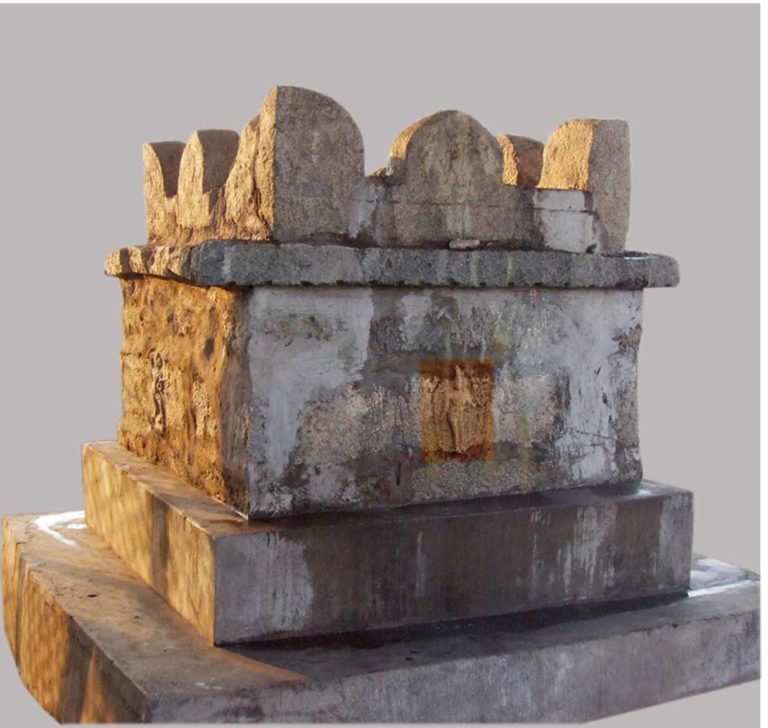
According to tradition, Jayatīrtha passed away in 1388. No inscription or historical document directly naming him has yet been found. For such an important writer, this is a striking gap in the historical record. His samādhi, called a bṛndāvana in this tradition, is at Malkhed, the ancient Mānyakheṭa, on the bank of the Kāginī River. It stands near the samādhi of his guru, Akṣobhya Tīrtha.
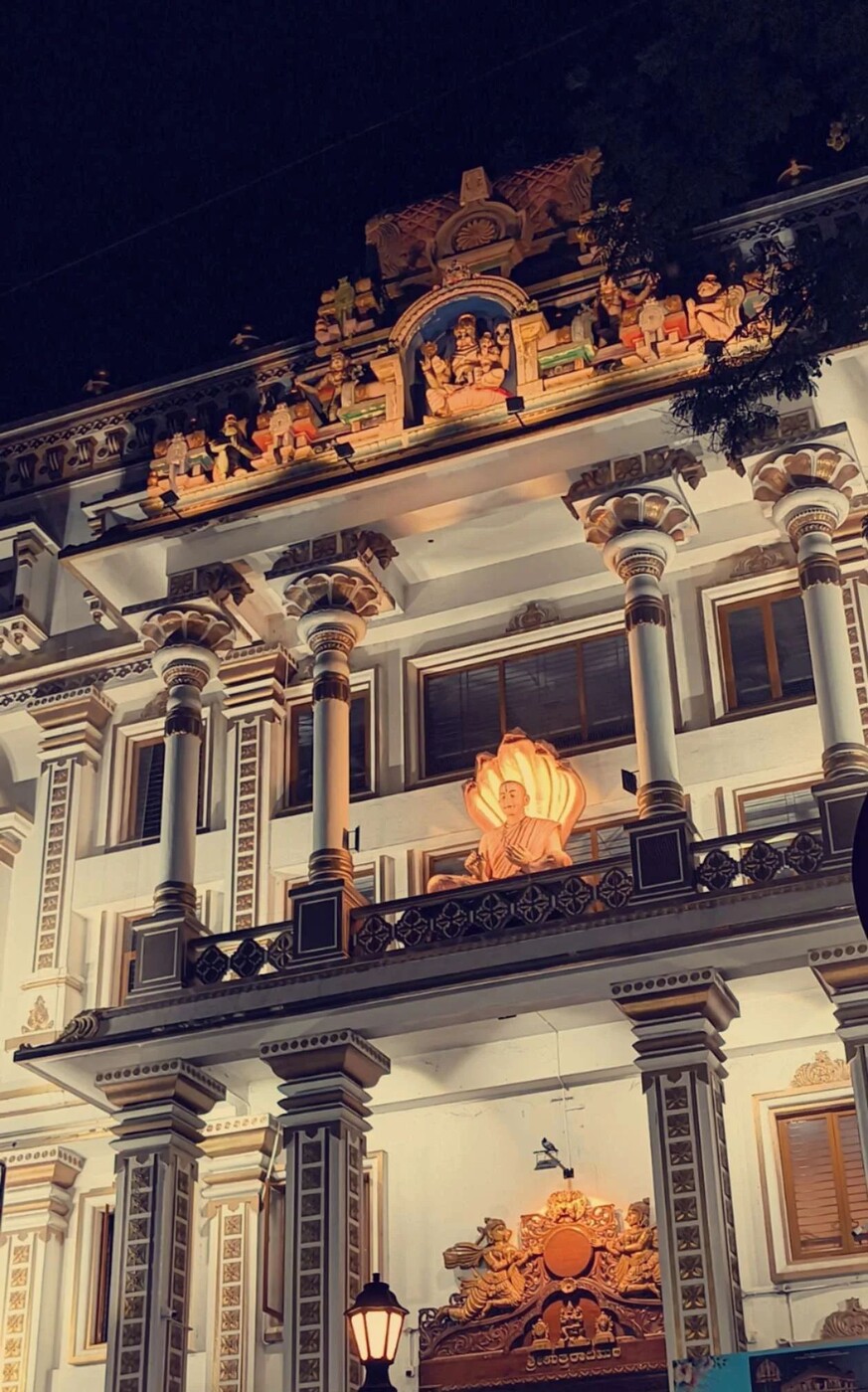
His influence continued long after his passing. Over the next two centuries, the maṭha line after him developed into what Dvaita tradition calls the Maṭha-traya, or "three maṭhas." These are the Uttarādi Maṭha, the Vyāsarāja Maṭha, and the Rāghavendra Svāmī Maṭha at Mantralayam. The Vyāsarāja Maṭha received its present name in a later period after its most famous leader, Vyāsa Tīrtha, whose institutional line traces back through Rājendra Tīrtha. All three maṭhas still exist today. B. N. K. Sharma states that, despite the rivalry that developed among them over the centuries, "these three Mutts now enjoy the status of 'Matha-traya' or the three premier Madhva Mathas descended from Jayatirtha." He adds that the smaller maṭhas founded separately by Padmanābha Tīrtha, Mādhava Tīrtha and Akṣobhya Tīrtha "are as much historically connected with Madhva" as these three. In this way, Jayatīrtha stands near the root of every major living branch of the Madhva-sampradāya. The fuller institutional history is given in Samādhi at Malkhed and the Three Maṭhas.
A Contested Rung in the Gaudiya List #
In the traditional Gauḍīya Vaiṣṇava guru-paramparā list, Jayatīrtha's guru is named as Akṣobhya Tīrtha. Independent sources from the Dvaita tradition also clearly confirm this relationship. The next question is who came after Jayatīrtha in the same line. This needs the same careful study that other figures in the paramparā receive, for example on Rājendra Tīrtha's page and in Mādhavendra Purī's Life in the Madhva Sampradāya. The traditional Gauḍīya list names Jayatīrtha's disciple as Jñānasindhu, followed by Dayānidhi and Vidyānidhi, before reaching Rājendra Tīrtha. However, Śrīla Prabhupāda's purport to Caitanya-caritāmṛta, Madhya 9.245, the main Gauḍīya source for the full list, gives a different sequence. It names Vidyādhirāja Tīrtha, a well-documented figure in independent Dvaita sources, as Jayatīrtha's immediate successor. Rājendra Tīrtha appears later through a separate branch under Vidyādhirāja:
madhvācārya-sthāne āilā yāṅhā 'tattvavādī'
uḍupīte 'kṛṣṇa' dekhi, tāhāṅ haila premonmādī
"Caitanya Mahaprabhu next arrived at Udupi, the place of Madhvacharya, where the philosophers known as Tattvavadis resided. There He saw the Deity of Lord Krishna and became mad with ecstasy." (Sri Chaitanya-charitamrita, Madhya 9.245)
Srila Prabhupada's purport to this verse gives his own numbered list of Madhva-sampradaya acharyas: "Padmanabha, 1120; Narahari, 1127; Madhava, 1136; and Aksobhya, 1159; (15) Jaya Tirtha, 1167; (16) Vidyadhiraja, 1190; (17) Kavindra, 1255... (20) Vidyanidhi, 1298." Neither Jnanasindhu nor Dayanidhi appears anywhere in that purport, nor in any independent Dvaita-tradition source that we could check. This real gap in the record is discussed in full on Place in the Gaudiya Guru-Parampara.
- Jayatirtha - Hindupedia, the Hindu Encyclopedia
- Jayatirtha - New World Encyclopedia
- B. N. K. Sharma, History of the Dvaita School of Vedanta and Its Literature (1961/1981), full text via Internet Archive
- Jaya Tirtha - Gaudiya History (ISKCON Desire Tree)
- Sri Chaitanya-charitamrita, Madhya-lila 9.245, purport
- Madhavendra Puri: Life in the Madhva Sampradaya (this website)
Disciples
Frequently asked
When was Sri Jayatirtha born?
Sri Jayatirtha appeared Traditionally about 1345 CE; leader of the Madhva line 1365-1388 CE (23 years). Srila Prabhupada's purport to Chaitanya-charitamrita, Madhya 9.245, instead places him at Shaka 1167 (about 1245 CE). This difference has not been resolved. in Traditionally Mangalvedhe, near Pandharpur, Maharashtra; one early biographical source (the Gurucharya) instead places his family at Malkhed, Karnataka; B. N. K. Sharma's academic history leaves the question open..
Who was the guru of Sri Jayatirtha?
The spiritual master of Sri Jayatirtha was Sri Akshobhya Tirtha.
When and where did Sri Jayatirtha disappear?
Sri Jayatirtha disappeared Traditionally 1388 CE, after 23 years as the sixth leader after Madhvacharya at Malkhed (ancient Manyakheta), Karnataka, on the bank of the river Kagini, where his samadhi (brindavana) still stands.
What are the main pastimes of Sri Jayatirtha?
The pastimes covered here include: Life and Renunciation Under Akshobhya Tirtha, Nyaya-sudha and the Commentaries on Madhva, Samadhi at Malkhed and the Three Mathas, Place in the Gaudiya Guru Parampara.