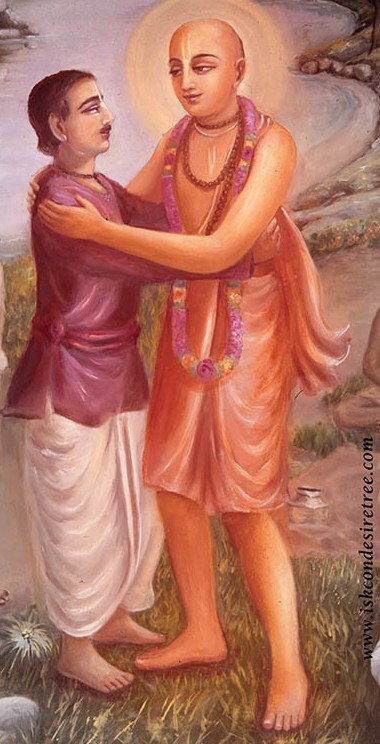
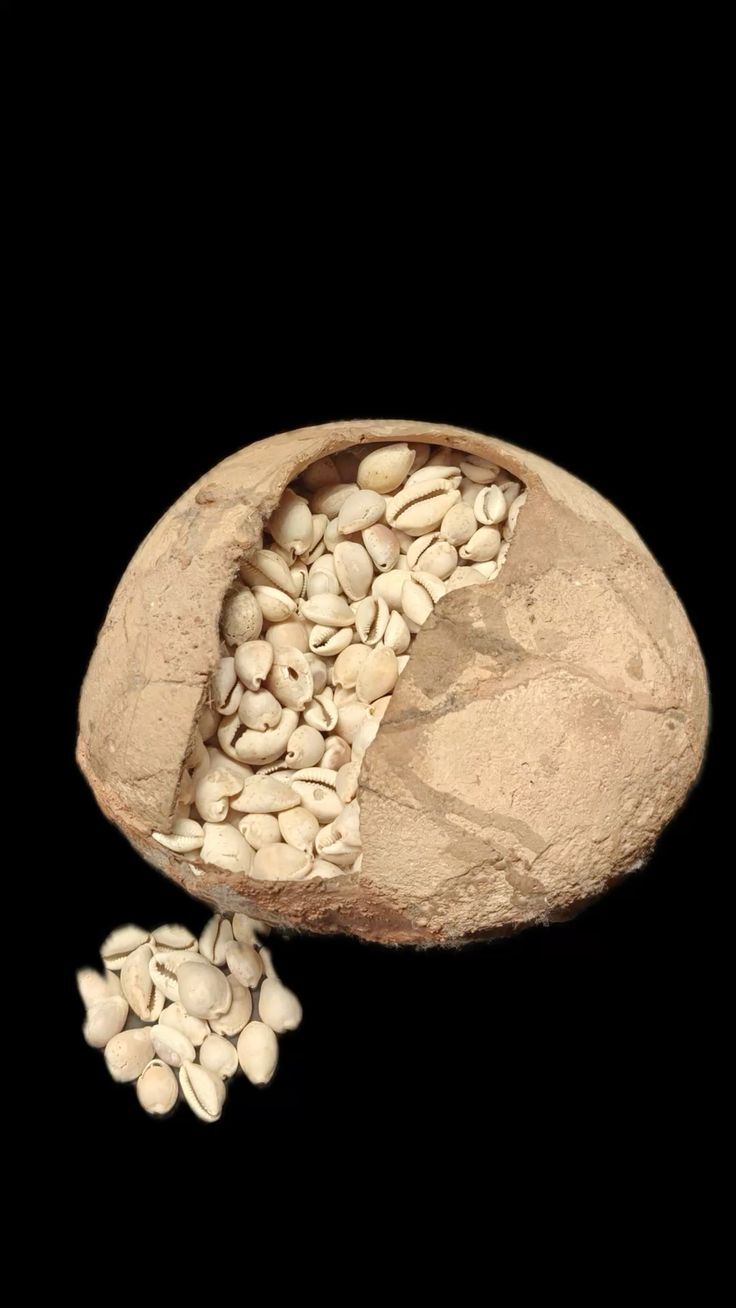
According to Sri Chaitanya-charitamrita's own account, the crisis began with an unpaid debt and a moment of temper. Gopinatha Pattanayaka, tahsildar at Malajathya Dandapata, came up short in his accounts with the Gajapati treasury by 200,000 kahanas of cowrie shells. Unable to pay in cash, he offered a dozen fine horses instead and brought them to the palace. The prince sent to value them had, the text notes, an odd habit of stretching his neck and looking up at the sky. This prince deliberately set the price far too low. Gopinatha, angry at being cheated, answered sharply that his horses at least did not keep looking up at the sky the way the prince did. It was a sharp joke, and it cost him dearly. The insulted prince went straight to the King and got permission to take the money by force. He had Gopinatha raised onto a changa, a platform with swords fixed beneath it. It was built so that the condemned man would be thrown down onto the blades. His younger brother Nayaka Vaninatha and the rest of the household were arrested at the same time.
Mahaprabhu's Strange, Angry Refusal #
The devotees rushed to tell Sri Chaitanya Mahaprabhu. They expected Him to act at once for a family He had called His own dear devotees. But what they got instead was a rebuke. "Gopinatha Pattanayaka does not want to pay the King the money that is due," Mahaprabhu said. "How then is the King at fault in punishing him?" He went further. He said that Gopinatha collected money on the government's behalf and used it wrongly for himself, unafraid of the King, spending it on dancing girls. As the danger grew worse, the devotees pressed Him again. He said flatly that He was only a beggar sannyasi and could not go begging the King for 200,000 kahanas on Gopinatha's behalf. This passage is startling to read, because it is Sri Chaitanya Mahaprabhu speaking. And the text does not soften His words or explain them away at that point.
What Made Him Smile #
The whole episode turns on a small detail that seems almost by the way. While the appeals about Gopinatha were going on, another messenger arrived with news that Vaninatha too had been arrested. At this point, Mahaprabhu's tone changed. He asked what Vaninatha had been doing when he was seized. The answer: fearlessly and continuously chanting the Hare Krishna maha-mantra, counting the repetitions on his fingers, marking his body after every thousand names. Hearing this, Sri Chaitanya-charitamrita says, the Lord became very pleased. The news of Gopinatha's own danger had not pleased Him in this way. Krishnadasa Kaviraja Goswami almost tells the reader openly what Mahaprabhu's real interest in this whole affair was. It was Vaninatha's firm devotion under threat of death, not the fate of the treasury dispute itself. Everything else that followed has to be read in that light.
Kashi Mishra's Diplomacy #
Mahaprabhu's public refusal was not the end of the matter. An officer named Haricandana Patra went to King Prataparudra directly. He argued in plain practical terms that killing a debtor does not recover the debt. It would be better to take the horses at a fair price and let Gopinatha repay the rest over time. The King was truly surprised and agreed at once. He had wanted only the money, not a death. Gopinatha was taken down from the changa. But Mahaprabhu heard how many messengers had already disturbed His solitude over the affair. He told Kashi Mishra, the brahmana in whose house He lived at Puri, that He intended to leave for Alalanatha. He did not want to be troubled again by the family's money troubles. Then Kashi Mishra caught the Lord's feet and pleaded with Him, and this turned the whole episode. He said that Sanatana Gosvami had given up his post as a minister for Mahaprabhu's own sake, and that Raghunatha Dasa Goswami had renounced his family's wealth for Him. He also said that Gopinatha, whatever his fault, was a sincere soul who wanted nothing from the Lord for himself. Word of Mahaprabhu's unhappiness reached King Prataparudra through Kashi Mishra. The King was anxious above all to keep Mahaprabhu at Puri. So he forgave Gopinatha's entire debt outright, doubled his salary and gave him back his old post. He also sent Gopinatha back with a silken wrapper as a mark of honor. The King took care that Mahaprabhu should not be told that he had done it as a favor to Him.
I Have Not Been Favored by Such Mercy #
What Gopinatha did after this change of fortune is, in its own way, the real point of the chapter. Falling at Mahaprabhu's feet, his head covered in the King's silk, he told the whole story of what had happened. Then he set it aside as less important. "These are not the principal results of meditating upon Your lotus feet," he said. "Material opulence is very flickering." He pointed to his brothers Ramananda Raya and Vaninatha. He said the Lord had given them something far greater, freedom from attachment to worldly life altogether. Without bitterness, he admitted that he had not been given that same mercy. He asked for it directly: "Kindly bestow upon me Your pure mercy so that I may also become renounced. I am no longer interested in material enjoyment." Mahaprabhu's answer neither granted nor refused the request outright. If all five brothers renounced the world at once, He asked, who would maintain so large a family? He told them that all five remained His eternal servants, birth after birth, whether they were engaged in government service or fully renounced. He gave them one practical condition: pay what is owed to the King first, and spend only what is left on religious ends, never on anything sinful. Sri Chaitanya-charitamrita gives this teaching as much weight as the dramatic rescue itself. Srila Prabhupada later returned to it in his own preaching. He used it as proof that Krishna's mercy, not political influence, is what actually protects a devotee in difficulty.
