Gopinatha Pattanayaka
The Treasurer Saved From the Executioner's Swords
The complete life, on one page: The main biography and every pastime page, in order, in one place
Introduction
Gopinatha Pattanayaka is remembered for one extraordinary chapter of his life, and the Chaitanya-charitamrita remembers it so well that it gave that chapter his own name. He was the second of five sons born to Bhavananda Raya, a senior official of the Gajapati kingdom of Odisha. He was the full younger brother of Sri Ramananda Raya. Ramananda Raya had been a governor, and he became one of Sri Chaitanya Mahaprabhu's closest associates and confidants at Jagannatha Puri. Gopinatha himself held a government post, collecting revenue for the Gajapati treasury. He fell badly behind in the money he owed, and for this he was raised onto a platform of swords to be executed. Then Mahaprabhu's mercy, working in ways no one expected, saved his life and restored his post. It also left him asking for something more valuable than either.
| Detail | Description |
|---|---|
| Full name | Gopinatha Pattanayaka (also transliterated Gopinath Pattanayaka; Pattanayaka is an inherited Odia administrative title, not a personal name) |
| Family | Second of the five sons of Bhavananda Raya; younger brother of Ramananda Raya, elder brother of Nayaka Vaninatha |
| Identity | One of the five sons whom Mahaprabhu called the five Pandavas; no single Pandava is named for him (Chaitanya-charitamrita Adi 10.132-133) |
| Government post | Tahsildar (revenue collector) at Malajathya Dandapata under the Gajapati kingdom of Maharaja Prataparudra |
| Best known for | Condemned to death for a shortfall in the King's revenue, then delivered by Sri Chaitanya Mahaprabhu's mercy |
| Era | Early sixteenth century, during Sri Chaitanya Mahaprabhu's years at Jagannatha Puri |
| Textual source | Sri Chaitanya-charitamrita, Antya-lila, Chapter Nine, titled "The Deliverance of Gopinatha Pattanayaka" |
Scriptural evidence for the introduction (3)
এই পঞ্চ পুত্র তোমার মোর প্রিয়পাত্র ।
রামানন্দ সহ মোর দেহ-ভেদ মাত্র ॥
ei pañca putra tomāra mora priya-pātra
rāmānanda saha mora deha-bheda mātra
Word for word
ei: these; pañca: five; putra: sons; tomāra: your; mora: Mine; priya-pātra: very dear; rāmānanda saha: with Śrī Rāmānanda Rāya; mora: Mine; deha-bheda: bodily difference; mātra: only.
Sri Chaitanya Mahaprabhu told Bhavananda Raya, "Your five sons are all My dear devotees. Ramananda Raya and I are one, although our bodies are different."
From the purport: "The Gaura-ganoddesa-dipika (120-24) states that Ramananda Raya was formerly Arjuna."
Mahaprabhu's own declaration that all five brothers, Gopinatha included, were His dear devotees, the foundation of the family's standing, and for the purport's honest limit that only Ramananda's individual identity is worked out further.
আলিঙ্গন করি’ তাঁরে বলিল বচন ।
তুমি পাণ্ডু, পঞ্চপাণ্ডব—তোমার নন্দন ॥ ১৩২ ॥
āliṅgana kari' tāṅre balila vacana
tumi pāṇḍu, pañca-pāṇḍava — tomāra nandana
Embracing Rāya Bhavānanda, the Lord declared to him, “You formerly appeared as Pāṇḍu, and your five sons appeared as the five Pāṇḍavas.”
Mahaprabhu tells Bhavananda Raya that he was Pandu and that his five sons were the five Pandavas. The verse names the sons together, not one by one. Translation: Srila Prabhupada.
রামানন্দ রায়, পট্টনায়ক গোপীনাথ ।
কলানিধি, সুধানিধি, নায়ক বাণীনাথ ॥ ১৩৩ ॥
rāmānanda rāya, paṭṭanāyaka gopīnātha
kalānidhi, sudhānidhi, nāyaka vāṇīnātha
The five sons of Bhavānanda Rāya were Rāmānanda Rāya, Paṭṭanāyaka Gopīnātha, Kalānidhi, Sudhānidhi and Nāyaka Vāṇīnātha.
The list of Bhavananda Raya's five sons, with Pattanayaka Gopinatha named second. Translation: Srila Prabhupada.
Chapter 1
Second of the Five Pandavas
The family Bhavananda Raya raised at Puri, and the government post that later put Gopinatha Pattanayaka in danger of his life.
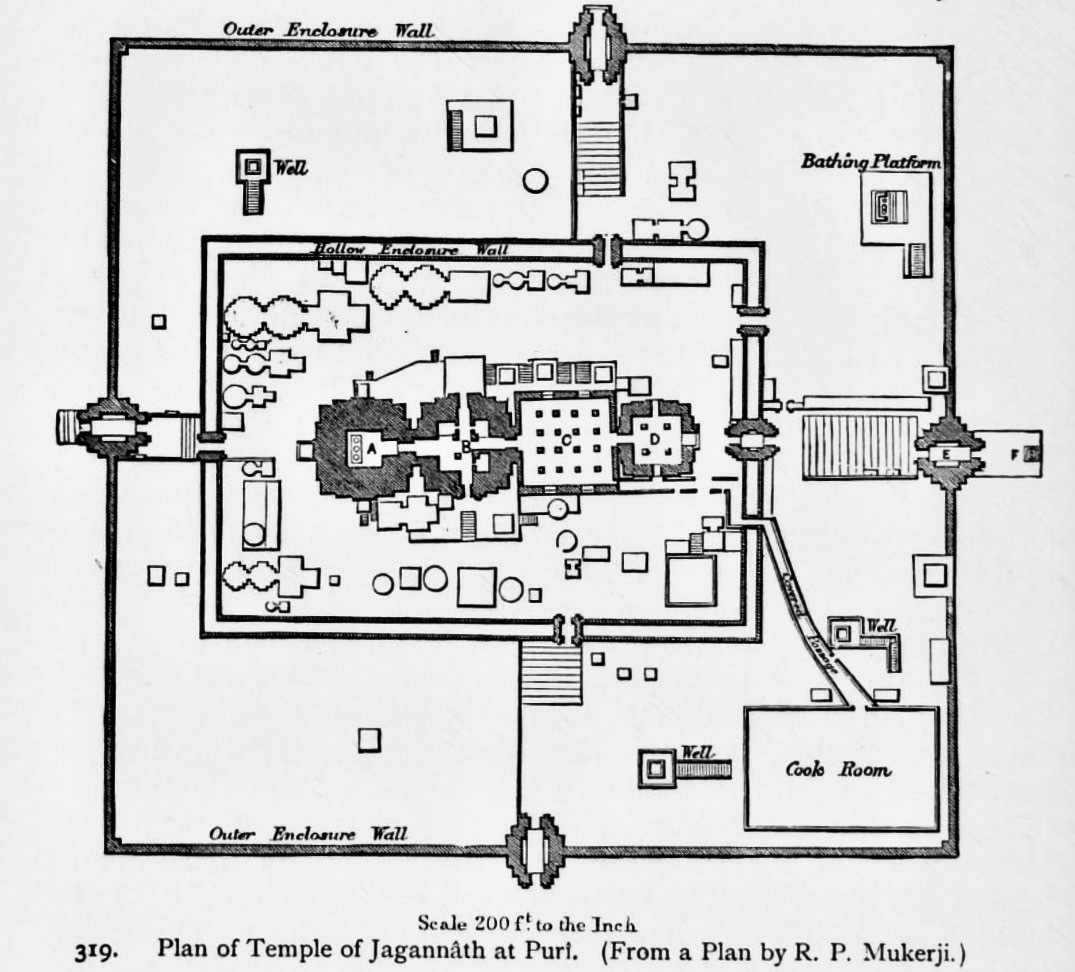
Before Sri Chaitanya Mahaprabhu ever spoke Gopinatha Pattanayaka's name, Gopinatha was already the second of five sons in a family that Gaudiya Vaishnavism has always held in high regard. His father, Bhavananda Raya, held a senior post in the government of the Gajapati kings of Odisha. Sri Chaitanya-charitamrita records something Mahaprabhu said about this family, words it does not say lightly about many families. Embracing Bhavananda Raya, the Lord told him that he had formerly been Maharaja Pandu of the Mahabharata, the husband of Kunti. He also told him that his five sons were those same five Pandava brothers, born again. The text then names them in order: Ramananda Raya, Pattanayaka Gopinatha, Kalanidhi, Sudhanidhi and Nayaka Vaninatha. This is how we know Gopinatha's place in the family. He was the second-born, younger than Ramananda Raya and older than the three brothers who came after him.
A Household Already Marked Out #
This identification goes far beyond ordinary praise. Sri Chaitanya-charitamrita does not simply call the five brothers good devotees. It has Mahaprabhu declare that all five were His dear devotees, and that He and Ramananda Raya were, in some sense, one soul in different bodies. What this meant would become fully clear only later, in Ramananda Raya's decades of confidential service to Mahaprabhu at Puri. But the declaration was made about the whole family at once, Gopinatha included. It came years before Gopinatha himself did anything the tradition thought worth recording. One later devotional history is Srila Bhakti Ballabh Tirtha Maharaja's Sri Chaitanya: His Life and Associates. It places the family's home in the village of Bentapura, close to Brahmagiri (also known as Alalanatha), west of Jagannatha Puri. It also states that the family's descendants there still carry a surname taken from their inherited title. This should be read as a later account. The Chaitanya-charitamrita itself does not state it.
The Karana Community and Government Service #
Bhavananda Raya's family belonged to Orissa's karana community. This was a caste of scribes and administrators who ran much of the Gajapati kingdom's government. The wider society of the time counted them as shudra, not brahmana. This mattered in Ramananda Raya's own story. Because of his caste, his later role as Mahaprabhu's teacher on matters of rasa was a truly bold and unusual thing. This is told in more detail on Ramananda Raya's own Birth and Family page. For Gopinatha, the same background meant that his career was already decided: government administration, the family trade. His life had none of the drama that would later surround his elder brother's meeting with a wandering sannyasi on the bank of the Godavari.
Tahsildar at Malajathya Dandapata #
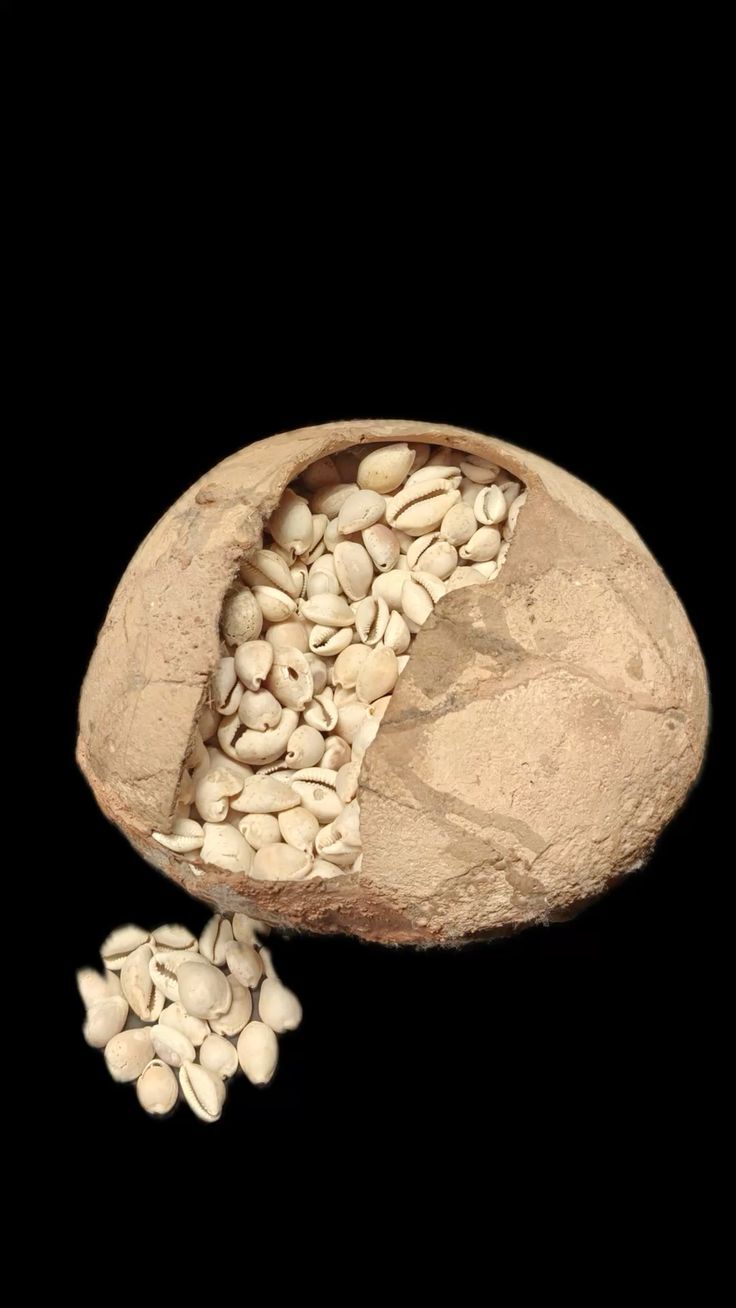
Gopinatha's own post was as a tahsildar, a revenue collector. He was stationed at a place Sri Chaitanya-charitamrita calls Malajathya Dandapata, in the Gajapati kingdom ruled by Maharaja Prataparudra. His job was to ask for and collect money owed to the crown and deposit it in the government treasury. In that era the accounts were kept in kahanas of cowrie shells, the shell-money then in use across much of India. The post needed real trust, and it carried real financial risk in equal measure. Large amounts of money passed through a tahsildar's hands. By the standards of the day, any shortfall was treated as a serious offense against the crown, not as a private debt. From the way Sri Chaitanya-charitamrita introduces the crisis, it appears that Gopinatha had held this post for quite a long time before anything went wrong.
A Reputation Already in Place #
By the time Gopinatha's crisis reached Sri Chaitanya Mahaprabhu's ears, the Lord did not need to be told who Bhavananda Raya's sons were. Ramananda Raya had already given up his governorship of Vidyanagara at Mahaprabhu's request. He had settled at Puri as one of Mahaprabhu's most confidential associates. The standing of the rest of the family in Mahaprabhu's eyes had already been declared years earlier, in the embrace and the words recorded in Adi-lila. But this standing did not mean an easy or automatic rescue when Gopinatha's own trouble came. If anything, it was the opposite. The Deliverance of Gopinatha Pattanayaka tells in full what actually happened when a shortfall of 200,000 kahanas caught up with him. It also tells why Mahaprabhu's first response to the news was anger, not help.
Scriptural evidence for this chapter (2)
আলিঙ্গন করি’ তাঁরে বলিল বচন ।
তুমি পাণ্ডু, পঞ্চপাণ্ডব—তোমার নন্দন ॥
aliṅgana kari' tāṅre balila vacana
tumi pāṇḍu, pañca-pāṇḍava — tomāra nandana
Word for word
āliṅgana kari': embracing; tāṅre: unto him; balila: said; vacana: those words; tumi: you; pāṇḍu: were Pāṇḍu; pañca: five; pāṇḍava: the Pāṇḍavas; tomāra: your; nandana: sons.
Embracing Raya Bhavananda, the Lord declared to him, "You formerly appeared as Pandu, and your five sons appeared as the five Pandavas."
The verse that identifies Gopinatha's father, Bhavananda Raya, as Maharaja Pandu reborn, and the five brothers as the five Pandavas: the source of the family's standing in Gaudiya Vaishnava memory.
রামানন্দ রায়, পট্টনায়ক গোপীনাথ ।
কলানিধি, সুধানিধি, নায়ক বাণীনাথ ॥
rāmānanda rāya, paṭṭanāyaka gopīnātha
kalānidhi, sudhānidhi, nāyaka vāṇīnātha
Word for word
rāmānanda rāya: Rāmānanda Rāya; paṭṭanāyaka gopīnātha: Paṭṭanāyaka Gopīnātha; kalānidhi: Kalānidhi; sudhānidhi: Sudhānidhi; nāyaka vāṇīnātha: Nāyaka Vāṇīnātha.
The five sons of Bhavananda Raya were Ramananda Raya, Pattanayaka Gopinatha, Kalanidhi, Sudhanidhi and Nayaka Vaninatha.
The single verse that names Gopinatha Pattanayaka directly and fixes his place in the family as the second-born of the five brothers.
Chapter 2
The Deliverance of Gopinatha Pattanayaka
How a shortfall in the King's revenue put Gopinatha Pattanayaka on a platform of swords, and what it actually took to save him.
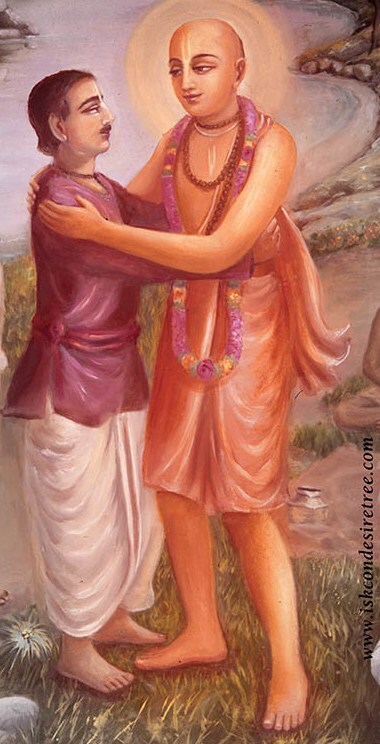
According to Sri Chaitanya-charitamrita's own account, the crisis began with an unpaid debt and a moment of temper. Gopinatha Pattanayaka, tahsildar at Malajathya Dandapata, came up short in his accounts with the Gajapati treasury by 200,000 kahanas of cowrie shells. Unable to pay in cash, he offered a dozen fine horses instead and brought them to the palace. The prince sent to value them had, the text notes, an odd habit of stretching his neck and looking up at the sky. This prince deliberately set the price far too low. Gopinatha, angry at being cheated, answered sharply that his horses at least did not keep looking up at the sky the way the prince did. It was a sharp joke, and it cost him dearly. The insulted prince went straight to the King and got permission to take the money by force. He had Gopinatha raised onto a changa, a platform with swords fixed beneath it. It was built so that the condemned man would be thrown down onto the blades. His younger brother Nayaka Vaninatha and the rest of the household were arrested at the same time.
Mahaprabhu's Strange, Angry Refusal #
The devotees rushed to tell Sri Chaitanya Mahaprabhu. They expected Him to act at once for a family He had called His own dear devotees. But what they got instead was a rebuke. "Gopinatha Pattanayaka does not want to pay the King the money that is due," Mahaprabhu said. "How then is the King at fault in punishing him?" He went further. He said that Gopinatha collected money on the government's behalf and used it wrongly for himself, unafraid of the King, spending it on dancing girls. As the danger grew worse, the devotees pressed Him again. He said flatly that He was only a beggar sannyasi and could not go begging the King for 200,000 kahanas on Gopinatha's behalf. This passage is startling to read, because it is Sri Chaitanya Mahaprabhu speaking. And the text does not soften His words or explain them away at that point.
What Made Him Smile #
The whole episode turns on a small detail that seems almost by the way. While the appeals about Gopinatha were going on, another messenger arrived with news that Vaninatha too had been arrested. At this point, Mahaprabhu's tone changed. He asked what Vaninatha had been doing when he was seized. The answer: fearlessly and continuously chanting the Hare Krishna maha-mantra, counting the repetitions on his fingers, marking his body after every thousand names. Hearing this, Sri Chaitanya-charitamrita says, the Lord became very pleased. The news of Gopinatha's own danger had not pleased Him in this way. Krishnadasa Kaviraja Goswami almost tells the reader openly what Mahaprabhu's real interest in this whole affair was. It was Vaninatha's firm devotion under threat of death, not the fate of the treasury dispute itself. Everything else that followed has to be read in that light.
Kashi Mishra's Diplomacy #
Mahaprabhu's public refusal was not the end of the matter. An officer named Haricandana Patra went to King Prataparudra directly. He argued in plain practical terms that killing a debtor does not recover the debt. It would be better to take the horses at a fair price and let Gopinatha repay the rest over time. The King was truly surprised and agreed at once. He had wanted only the money, not a death. Gopinatha was taken down from the changa. But Mahaprabhu heard how many messengers had already disturbed His solitude over the affair. He told Kashi Mishra, the brahmana in whose house He lived at Puri, that He intended to leave for Alalanatha. He did not want to be troubled again by the family's money troubles. Then Kashi Mishra caught the Lord's feet and pleaded with Him, and this turned the whole episode. He said that Sanatana Gosvami had given up his post as a minister for Mahaprabhu's own sake, and that Raghunatha Dasa Goswami had renounced his family's wealth for Him. He also said that Gopinatha, whatever his fault, was a sincere soul who wanted nothing from the Lord for himself. Word of Mahaprabhu's unhappiness reached King Prataparudra through Kashi Mishra. The King was anxious above all to keep Mahaprabhu at Puri. So he forgave Gopinatha's entire debt outright, doubled his salary and gave him back his old post. He also sent Gopinatha back with a silken wrapper as a mark of honor. The King took care that Mahaprabhu should not be told that he had done it as a favor to Him.
I Have Not Been Favored by Such Mercy #
What Gopinatha did after this change of fortune is, in its own way, the real point of the chapter. Falling at Mahaprabhu's feet, his head covered in the King's silk, he told the whole story of what had happened. Then he set it aside as less important. "These are not the principal results of meditating upon Your lotus feet," he said. "Material opulence is very flickering." He pointed to his brothers Ramananda Raya and Vaninatha. He said the Lord had given them something far greater, freedom from attachment to worldly life altogether. Without bitterness, he admitted that he had not been given that same mercy. He asked for it directly: "Kindly bestow upon me Your pure mercy so that I may also become renounced. I am no longer interested in material enjoyment." Mahaprabhu's answer neither granted nor refused the request outright. If all five brothers renounced the world at once, He asked, who would maintain so large a family? He told them that all five remained His eternal servants, birth after birth, whether they were engaged in government service or fully renounced. He gave them one practical condition: pay what is owed to the King first, and spend only what is left on religious ends, never on anything sinful. Sri Chaitanya-charitamrita gives this teaching as much weight as the dramatic rescue itself. Srila Prabhupada later returned to it in his own preaching. He used it as proof that Krishna's mercy, not political influence, is what actually protects a devotee in difficulty.
Scriptural evidence for this chapter (5)
একদিন লোক আসি’ প্রভুরে নিবেদিল ।
গোপীনাথেরে ‘বড় জানা’ চাঙ্গে চড়াইল ॥
eka-dina loka āsi' prabhure nivedila
gopīnāthere 'baḍa jānā' cāṅge caḍāila
Word for word
eka-dina: one day; loka: people; āsi': coming; prabhure: to Sri Chaitanya Mahaprabhu; nivedila: informed; gopīnāthere: Gopinatha Pattanayaka; baḍa jānā: the eldest son of King Prataparudra; cāṅge caḍāila: raised him on the changa.
One day people suddenly came to Sri Chaitanya Mahaprabhu and informed Him, "Gopinatha Pattanayaka, the son of Bhavananda Raya, has been condemned to death by the bada-jana, the eldest son of the King, and has been raised on the changa.
From the purport: "The changa was a device for killing a condemned person. It consisted of a raised platform on which the condemned was made to stand. Underneath the platform, there were stationary upright swords."
Opens the whole episode and, via the purport, explains exactly what a changa was and how close to death Gopinatha actually came.
রাজ-বিলাত্ সাধি’ খায়, নাহি রাজ-ভয় ।
দারী-নাটুয়ারে দিয়া করে নানা ব্যয় ॥
rāja-vilāt sādhi' khāya, nāhi rāja-bhaya
dārī-nāṭuyāre diyā kare nānā vyaya
Word for word
rāja-vilāt: money due the King; sādhi': collecting; khāya: he uses; nāhi rāja-bhaya: without fear of the King; dārī-nāṭuyāre: to dancing girls; diyā: giving; kare: makes; nānā: various; vyaya: expenditures.
"Gopinatha Pattanayaka is in charge of collecting money on behalf of the government, but he misappropriates it. Not fearing the King, he squanders it to see dancing girls.
Part of Mahaprabhu's own sharp, un-softened rebuke of Gopinatha when the news first came: the verse that shows the Lord initially took the King's side, not the family's.
শুনি’ মহাপ্রভু হইলা পরম আনন্দ ।
কে বুঝিতে পারে গৌরের কৃপা-ছন্দবন্ধ ॥
śuni' mahāprabhu ha-ilā parama ānanda
ke bujhite pāre gaurera kṛpā-chanda-bandha?
Word for word
śuni': hearing; mahāprabhu: Sri Chaitanya Mahaprabhu; ha-ilā: became; parama ānanda: very pleased; ke bujhite pāre: who can understand; gaurera: of Lord Sri Chaitanya Mahaprabhu; kṛpā-chanda-bandha: mercy upon His devotee.
Hearing this news, the Lord was very pleased. Who can understand the mercy of the Lord upon His devotee?
Mahaprabhu's real reaction to hearing that Vaninatha was chanting fearlessly in prison, not to the news of Gopinatha's own danger: the hinge the whole chapter turns on.
প্রভু কহে, — “সন্ন্যাসী যবে হইবা পঞ্চজন ।
কুটুম্ব-বাহুল্য তোমার কে করে ভরণ ?”
prabhu kahe, — "sannyāsī yabe ha-ibā pañca-jana
kuṭumba-bāhulya tomāra ke kare bharaṇa?"
Word for word
prabhu kahe: Lord Sri Chaitanya Mahaprabhu said; sannyāsī: sannyasis; yabe: when; ha-ibā: will be; pañca-jana: five persons; kuṭumba-bāhulya: the many members of the family; tomāra: your; ke: who; kare bharaṇa: will maintain.
Sri Chaitanya Mahaprabhu said, "If you all adopt the renounced order and lose interest in dealing with pounds, shillings and pence, who will take charge of maintaining your large family?
Mahaprabhu's practical answer to Gopinatha's request for renunciation, immediately followed (Antya 9.141) by the instruction that all five brothers remain His eternal servants whether householders or renunciates.
কিন্তু তোমার স্মরণের নহে এই ‘মুখ্যফল’ ।
‘ফলাভাস’ এই, — যাতে ‘বিষয়’ চঞ্চল ॥
kintu tomāra smaraṇera nahe ei 'mukhya-phala'
'phalābhāsa' ei, — yāte 'viṣaya' cañcala
Word for word
kintu: but; tomāra: Your; smaraṇera: of remembrance; nahe: not; ei: this; mukhya-phala: chief result; phala-ābhāsa: a glimpse of the result; ei: this; yāte: because; viṣaya: material opulence; cañcala: flickering.
"However, my Lord, these are not the principal results of meditating upon Your lotus feet. Material opulence is very flickering. Therefore it is simply a glimpse of the result of Your mercy.
From the purport: As indicated in Srimad-Bhagavatam (dharmah projjhita-kaitavo 'tra), success in the four kinds of material and spiritual gain is not the true result of devotional service; the true result is the actual development of one's dormant love for Krishna. By the mercy of Sri Caitanya Mahaprabhu, Gopinatha Pattanayaka could understand that the material benefits he had achieved were not the ultimate result of meditating upon His lotus feet.
Gopinatha Pattanayaka's own opening words after his release, immediately preceding his request for renunciation in the following two verses (Antya 9.138-139); the purport's citation of dharmah projjhita-kaitavo 'tra (Srimad-Bhagavatam 1.1.2) grounds his statement in scripture.
Closing
A Second Son Named for Krishna's Protector #
Gopinatha's own name means "Lord of the cowherds," one of Krishna's names. Pattanayaka is not a personal name at all. It is an office his family held generation after generation in Gajapati service. Sri Chaitanya-charitamrita records that Sri Chaitanya Mahaprabhu once embraced Bhavananda Raya and told him plainly that he had formerly been Maharaja Pandu of the Mahabharata. He also told him that his five sons were the five Pandava brothers born again. The text names them in this order: Ramananda Raya, Pattanayaka Gopinatha, Kalanidhi, Sudhanidhi and Nayaka Vaninatha. Gopinatha was the second-born of the five, after Ramananda Raya and before Kalanidhi, Sudhanidhi and Vaninatha. One later devotional history of the period is Srila Bhakti Ballabh Tirtha Maharaja's Sri Chaitanya: His Life and Associates. It places the family's household in the village of Bentapura, not far from Brahmagiri (also called Alalanatha). It also states that descendants there still carry a surname taken from the family's own title. This detail should be read as a later tradition, not as something Sri Chaitanya-charitamrita itself records.
These are the two verses of Sri Chaitanya-charitamrita, first Mahaprabhu's own words and then Krishnadasa Kaviraja Goswami's list of the sons:
āliṅgana kari' tāṅre balila vacana
tumi pāṇḍu, pañca-pāṇḍava — tomāra nandana
"Embracing Rāya Bhavānanda, the Lord declared to him, “You formerly appeared as Pāṇḍu, and your five sons appeared as the five Pāṇḍavas.”" (Chaitanya-charitamrita Adi 10.132)
rāmānanda rāya, paṭṭanāyaka gopīnātha
kalānidhi, sudhānidhi, nāyaka vāṇīnātha
"The five sons of Bhavānanda Rāya were Rāmānanda Rāya, Paṭṭanāyaka Gopīnātha, Kalānidhi, Sudhānidhi and Nāyaka Vāṇīnātha." (Chaitanya-charitamrita Adi 10.133)
Tahsildar Under the Gajapati Crown #
However devoted his household was, Gopinatha's working life was entirely worldly. He served as a tahsildar, a revenue collector, stationed at a post called Malajathya Dandapata. He gathered money owed to the Gajapati treasury and deposited it with the crown. The money in these accounts was counted in cowrie shells. Sri Chaitanya-charitamrita states that the shortfall that brought him down came to 200,000 kahanas of conchshells. That was a truly enormous sum in the shell-money economy of the day. This was the same Gajapati government that Maharaja Prataparudra ruled. Ramananda Raya had until recently governed a province for it. Gopinatha's family were officials, not renunciates, yet Mahaprabhu took their devotion with complete seriousness.
What Gopinatha Himself Asked For #
What happened after Gopinatha was safe perhaps tells us even more than the rescue itself. He did not simply celebrate his freedom, his restored post, or the doubled salary and silk wrapper with which the King honored him. Falling at Mahaprabhu's feet, he said plainly that this was only a flickering material result. The real mercy, he said, had gone to his brothers Ramananda Raya and Vaninatha, whom Mahaprabhu had freed from attachment to worldly life altogether. He asked for that same detachment for himself. Mahaprabhu did not grant the renunciation Gopinatha requested. Instead He told all five brothers that they remained His eternal servants, whether they lived as householders or as renunciates. He gave them one practical instruction: pay what is owed honestly, then spend only what remains on religious ends, never on anything sinful.
Identity in Krishna-Lila, and an Honest Gap #
Sri Chaitanya-charitamrita clearly states that the five brothers, as a family, were the five Pandavas of the Mahabharata reborn (Adi-lila 10.132). But later Gaudiya literature, mainly Kavi Karnapura's Gaura-ganoddesha-dipika, works out an individual identity only for the eldest of them. There, Ramananda Raya is identified as the Vrindavana cowherd Arjuna, combined with the Mahabharata's own Arjuna. No available source gives Gopinatha a specific identity of his own, either as one particular Pandava or as anyone in Krishna's own Vrindavana pastimes, in the way Ramananda's identity is worked out at length. We state this silence honestly here instead of filling it in. What is well recorded is that Gopinatha's brother Nayaka Vaninatha was imprisoned with him in this same episode. The whole time, Vaninatha fearlessly chanted the Hare Krishna maha-mantra on his fingers. Sri Chaitanya-charitamrita records that this detail gave Mahaprabhu more pleasure than the rescue itself. It also confirms that Gopinatha Pattanayaka and Vaninatha Pattanayaka were truly brothers, sons of the same father. This holds whatever confusion there may be between Odia officials with similar titles. Srila Prabhupada himself returned to Gopinatha's story directly in a 1977 room conversation in Bombay. He cited it as an example of a devotee who was saved by Krishna's mercy, not by Sri Chaitanya Mahaprabhu personally pleading his case to the King. Srila Prabhupada drew on this teaching for his own disciples centuries later, as they dealt with politics and powerful patrons.
- Sri Chaitanya-charitamrita, Adi-lila 10.132-134 and purport, via vedabase.io
- Sri Chaitanya-charitamrita, Antya-lila, Chapter Nine ("The Deliverance of Gopinatha Pattanayaka"), via vedabase.io
- Sri Chaitanya-charitamrita, Madhya-lila 1.265 (chapter summary reference)
- Room Conversation, April 28 1977, Bombay ("Vairagya, Salaries, and Political Etiquette"), via vedabase.io
- Gaudiya History (ISKCON Desire Tree): Gopinath Pattanayaka
- Gaudiya History (ISKCON Desire Tree): Vaninatha Pattanayaka
- Gaudiya History (ISKCON Desire Tree): Ramananda Raya - Biography 2 (Gaura-ganoddesha-dipika verses)
- Parishads: Sri Gopinath Pattanayaka, by Srila Bhakti Ballabh Tirtha Maharaja
