Kali Das

The Mercy of Mahaprabhu's Own Remnants

At Jagannatha Puri, Kali Das receives the Lord's own leftover food, and Chaitanya Mahaprabhu turns the moment into a teaching on the power of a devotee's remnants.

Jagannatha Puri — during Kali Das's visit with the Bengali devotees

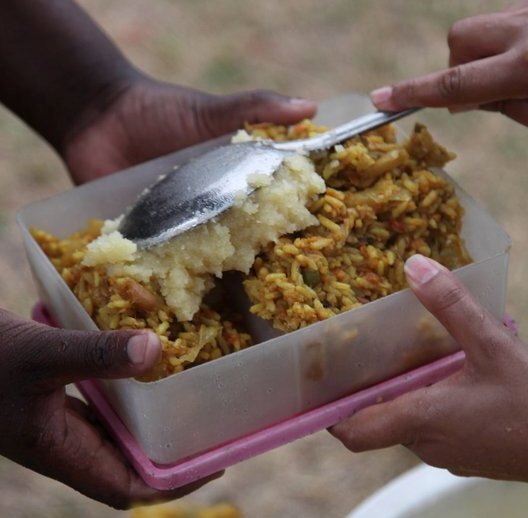
A photograph of prasada rice being served from a shared container, used on gaudiyahistory.iskcondesiretree.com's biography page for Kali Das — chosen for this page because it evokes the sharing and receiving of maha-prasada that is the culm
A photograph of prasada rice being served from a shared container, used on gaudiyahistory.iskcondesiretree.com's biography page for Kali Das — chosen for this page because it evokes the sharing and receiving of maha-pra…gaudiyahistory.iskcondesiretree.com (ISKCON Desire Tree) · ISKCON/BBT-affiliated devotional art, approved for use

Sri Chaitanya-charitamrita brings Kali Das's story to its high point at Jagannatha Puri, where he had travelled among the Bengali devotees to see Chaitanya Mahaprabhu. The text describes him standing outside the door where the Lord was staying, "expecting the remnants of food from Sri Caitanya Mahaprabhu." Mahaprabhu, aware of this, gave a quiet signal to His personal servant Govinda, who understood at once and delivered the Lord's own leftover food to Kali Das.

DetailDescription
Textual sourceSri Caitanya-caritamrita, Antya-lila 16.55-64, with purport
What happenedChaitanya Mahaprabhu personally arranged for Kali Das to receive His own food remnants
The teachingOn maha-prasada, maha-maha-prasada, and the power of a devotee's remnants
The Lord's own conclusion"The evidence is Kalidasa himself"

Waiting at the Door #

Sri Chaitanya-charitamrita's language here is spare but pointed: "Kalidasa was standing outside the door, expecting the remnants of food from Sri Caitanya Mahaprabhu. Knowing this, Mahaprabhu gave an indication to Govinda." A devotee who had spent his whole life seeking out the leftover food of ordinary Vaishnavas was now, without asking directly, granted the leftover food of the Lord Himself. The text draws the connection explicitly: "Taking the remnants of the food of Vaishnavas is so valuable that it induced Sri Caitanya Mahaprabhu to offer Kalidasa His supreme mercy." The years spent honoring other devotees' remnants, the text implies, are what made Kali Das ready to receive this particular gift.

Mahaprabhu's Own Teaching #

What follows is one of Sri Chaitanya-charitamrita's more direct passages of instruction, placed in Mahaprabhu's own mouth and prompted entirely by Kali Das's example. "Therefore, giving up hatred and hesitation, try to eat the remnants of the food of Vaishnavas," the Lord says, "for you will thus be able to achieve your desired goal of life." He then lays out a small but precise hierarchy: food offered to Krishna is maha-prasada, but once a devotee has eaten from that same food, what remains becomes maha-maha-prasada — greater still. Three things in particular, He says, are extremely powerful: "the dust of the feet of a devotee, the water that has washed the feet of a devotee, and the remnants of food left by a devotee." Service to these three, rendered with real faith rather than hesitation, is declared to bring the highest goal of life, ecstatic love for Krishna — a claim the text says all the revealed scriptures repeat "again and again." Mahaprabhu underlines the point Himself before drawing it to a close: "Therefore, my dear devotees, please hear from me, for I insist again and again: please keep faith in these three and render service to them without hesitation." It is not a passing remark but a teaching Mahaprabhu wants repeated and remembered.

"The Evidence Is Kalidasa Himself" #

Mahaprabhu closes His own teaching by pointing directly at the man standing in front of Him: "From these three one achieves the highest goal of life — ecstatic love of Krishna. This is the greatest mercy of Krishna. The evidence is Kalidasa himself." Sri Chaitanya-charitamrita adds that the Lord continued afterward to bestow great mercy on Kali Das invisibly, without any further outward sign. It is a quiet ending for a devotee whose entire recorded life was built from small, largely unnoticed acts — but Sri Chaitanya-charitamrita treats it as one of the clearest available demonstrations of a principle central to Gaudiya Vaishnava practice: that honoring a devotee, in however humble or literal a form, is itself a direct path to the same love of God that scripture and philosophy describe by other names. Read alongside Background and Family in Bengal and The Vow of Eating Vaishnava Remnants, this final scene at Puri is less a reward tacked onto Kali Das's story than its natural conclusion — the same practice, extended, without Kali Das changing anything about how he approached it, to the Lord of the Vaishnavas Himself.

Scriptural sources for this pastime

bahir-dvāre āche kālidāsa pratyāśā kariyā
govindere ṭhāre prabhu kahena jāniyā
vaiṣṇavera śeṣa-bhakṣaṇera eteka mahimā
kālidāse pāoyāila prabhura kṛpā-sīmā

Word for word

bahih-dvāre — outside the door; āche — there was; kālidāsa — Kalidasa; pratyāśā kariyā — expecting; govindere — unto Govinda; ṭhāre — by indications; prabhu — Sri Caitanya Mahaprabhu; kahena — speaks; jāniyā — knowing; vaiṣṇavera — of Vaisnavas; śeṣa-bhakṣaṇera — of eating the remnants of food; eteka mahimā — so much value; kālidāse — Kalidasa; pāoyāila — caused to get; prabhura — of Sri Caitanya Mahaprabhu; kṛpā-sīmā — the supreme mercy.

Kalidasa was standing outside the door, expecting the remnants of food from Sri Caitanya Mahaprabhu. Knowing this, Mahaprabhu gave an indication to Govinda... Taking the remnants of the food of Vaishnavas is so valuable that it induced Sri Caitanya Mahaprabhu to offer Kalidasa His supreme mercy.

Antya 16.55-57 Sri Caitanya-caritamrita

The turning point of Kali Das's story: a lifetime spent honoring other Vaishnavas' remnants leads directly to receiving Mahaprabhu's own.

tāte 'vaiṣṇavera jhuṭā' khāo chāḍi' ghṛṇā-lāja
yāhā haite pāiba nija vāñchita saba kāja

Word for word

tāte — therefore; vaiṣṇavera jhuṭā — remnants of the food of Vaisnavas; khāo — eat; chāḍi' — giving up; ghṛṇā-lāja — hate and hesitation; yāhā haite — by which; pāiba — you will get; nija — your own; vāñchita — desired; saba kāja — all success.

Therefore, giving up hatred and hesitation, try to eat the remnants of the food of Vaishnavas, for you will thus be able to achieve your desired goal of life.

Antya 16.58 Sri Caitanya-caritamrita

Mahaprabhu's own instruction, addressed to Kali Das and, through him, to all devotees, on the value of Vaishnava remnants.

kṛṣṇera ucchiṣṭa haya 'mahā-prasāda' nāma
'bhakta-śeṣa' haile 'mahā-mahā-prasādākhyāna'
bhakta-pada-dhūli āra bhakta-pada-jala
bhakta-bhukta-avaśeṣa, — tina mahā-bala
ei tina-sevā haite kṛṣṇa-prema haya
punaḥ punaḥ sarva-śāstre phukāriyā kaya

Word for word

kṛṣṇera ucchiṣṭa — remnants of the food of Krsna; haya — are; mahā-prasāda nāma — called maha-prasada; bhakta-śeṣa — the remnants of a devotee; haile — when it becomes; mahā-mahā-prasāda-ākhyāna — named great maha-prasada; bhakta-pada-dhūli — the dust of the lotus feet of a devotee; āra — and; bhakta-pada-jala — the water that washed the feet of a devotee; bhakta-bhukta-avaśeṣa — the remnants of food eaten by a devotee; tina — three; mahā-bala — very powerful; ei tina-sevā haite — from rendering service to these three; kṛṣṇa-prema haya — there is ecstatic love for Krsna; punaḥ punaḥ — again and again; sarva-śāstre — all the revealed scriptures; phu-kāriyā kaya — declare loudly.

The remnants of food offered to Lord Krishna are called maha-prasada. After this same maha-prasada has been taken by a devotee, the remnants are elevated to maha-maha-prasada. The dust of the feet of a devotee, the water that has washed the feet of a devotee, and the remnants of food left by a devotee are three very powerful substances. By rendering service to these three, one attains ecstatic love for Krishna. In all the revealed scriptures this is loudly declared again and again.

Antya 16.59-61 Sri Caitanya-caritamrita

The theological center of the whole episode: Mahaprabhu's own explanation of maha-prasada versus maha-maha-prasada and the three powerful substances of Vaishnava-seva.

tina haite kṛṣṇa-nāma-premera ullāsa
kṛṣṇera prasāda, tate 'sākṣī' kālidāsa

Word for word

tina haite — from these three; kṛṣṇa-nāma — of the holy name of Lord Krsna; premera ullāsa — awakening of ecstatic love; kṛṣṇera prasāda — the mercy of Lord Krsna; tate — in that; sākṣī — evidence; kālidāsa — Kalidasa.

From these three one achieves the highest goal of life — ecstatic love of Krishna. This is the greatest mercy of Krishna. The evidence is Kalidasa himself.

Antya 16.63 Sri Caitanya-caritamrita

Mahaprabhu's own conclusion, naming Kali Das directly as living proof of the teaching just given — the line chosen as this page's headline quote.

nīlācale mahāprabhu rahe ei-mate
kālidāse mahā-kṛpā kaila alakṣite

Word for word

nīlācale — at Jagannatha Puri; mahāprabhu — Sri Caitanya Mahaprabhu; rahe — remains; ei-mate — in this way; kālidāse — unto Kalidasa; mahā-kṛpā — great favor; kaila — bestowed; alakṣite — invisibly.

In this way Sri Caitanya Mahaprabhu remained at Jagannatha Puri, Nilacala, and He invisibly bestowed great mercy upon Kalidasa.

Antya 16.64 Sri Caitanya-caritamrita

The closing verse of the episode, noting that Mahaprabhu's mercy toward Kali Das continued quietly, without any further outward or public sign.
