Kali Das
The Devotee Who Lived on the Remnants of the Vaishnavas
Also known as Kalidasa, Kali Dasa
“The dust of the feet of a devotee, the water that has washed the feet of a devotee, and the remnants of food left by a devotee are three very powerful substances... From these three one achieves the highest goal of life, ecstatic love of Krishna. This is the greatest mercy of Krishna. The evidence is Kalidasa himself.”
Sri Chaitanya Mahaprabhu's own words, Sri Caitanya-caritamrita, Antya-lila 16.60-63
Kali Das is not remembered for any teaching he wrote or any temple he built. He is remembered for a single, unusual practice, which Sri Chaitanya-charitamrita treats as one of the clearest lessons in the entire book. He spent his life trying to eat the food left over by other Vaishnavas. He went to their homes with gifts and begged for their plates when they were done. When they refused, he hid and licked clean whatever they threw away. Krishnadasa Kaviraja Goswami gives this whole story its own place in the Antya-lila. At the very end of it, Chaitanya Mahaprabhu Himself holds up Kali Das as living proof of a point about devotional service. The text says this point cannot be proven in any other way.
| Detail | Description |
|---|---|
| Family | Kayastha family; a distant uncle of Raghunatha Dasa Goswami |
| Birthplace | Village of Bheda (Bhaduwa), near Saptagram, Hooghly district, Bengal |
| Best known for | A lifelong vow to eat only the ucchishta, or remnants, of Vaishnavas, regardless of caste |
| Textual source | Sri Caitanya-charitamrita, Antya-lila, Chapter 16 |
| Where honored | Received Chaitanya Mahaprabhu's own personal remnants at Jagannatha Puri |
| Neighbor | Jhadu Thakura, a Vaishnava of the bhunimali (sweeper) caste, worshipped in the same village cluster |
A Kayastha Householder from Bengal #
Sri Chaitanya-charitamrita places Kali Das's home in the village of Bheda, also called Bhaduwa, in what is now Hooghly district. It is about three miles from Krishnapura, the birthplace of Raghunatha Dasa Goswami, and roughly a mile from the present-day Byandel Junction railway station. Srila Bhaktisiddhanta Sarasvati Thakura's purport identifies him as a distant uncle of Raghunatha Dasa Goswami on his mother's side. The text calls him simply an old man who "never uttered anything but the holy name of Krishna." Sri Chaitanya-charitamrita describes him as a maha-bhagavata, an advanced devotee. Even so, he was simple and humble in his ordinary dealings. He was so simple that even when he played dice for amusement, he chanted "Hare Krishna" as he threw them. Srila Prabhupada's purport on this detail is careful to add a warning, not an approval. It says that ordinary practitioners should not imitate an advanced devotee's playful habits. For anyone less than a maha-bhagavata, it explains, gambling together with the holy name is simply an offense.
A Vow to Eat Only What Vaishnavas Left Behind #
The center of Kali Das's story is his vow to eat the ucchishta, the leftover food, of every Vaishnava he could find in Bengal. He kept this vow his whole life, into old age. He would visit the homes of brahmana Vaishnavas, both advanced devotees and those just beginning on the path, and bring them gifts of fine food. Then he would ask for their leftover plates. If they refused out of embarrassment, he would hide nearby. Once they threw their used leaf-plates away, he would pick them up and lick them clean. He did exactly the same with Vaishnavas born in shudra families. He went to their homes with gifts in the same way, and afterward he ate their remnants in hiding. Sri Chaitanya-charitamrita clearly states that Kali Das's willingness to honor a Vaishnava did not depend at all on that Vaishnava's social caste. This is the very point the text goes on to explain at length.
Kali Das and Jhadu Thakura #
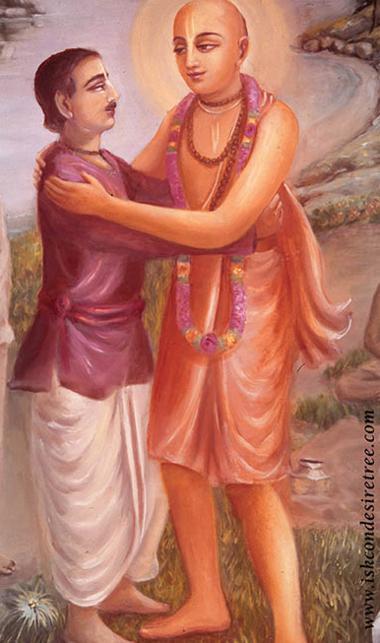
One particular visit is recorded in some detail. Kali Das went, carrying ripe mangoes as a gift, to the home of Jhadu Thakura, a genuine Vaishnava born into the bhunimali caste, one of the castes then treated as untouchable in Bengali society. Jhadu Thakura, recognizing the visit as an honor, offered to arrange for food to be cooked for Kali Das in a brahmana's kitchen rather than serve him directly, out of concern for his own low birth. Sri Chaitanya-charitamrita uses the exchange to make its point plainly: a Vaishnava's spiritual standing has nothing to do with the family he was born into, and anyone who judges a devotee by caste is said to think in a hellish way. Srila Bhaktisiddhanta Sarasvati Thakura's purport adds that Kali Das and Jhadu Thakura were both later worshipped together at a place called Sripatabati, in the same village cluster, and that Jhadu Thakura's own worshipped Deity, Madana Gopala, continued to be served long afterward.
Receiving the Lord's Own Remnants at Puri #
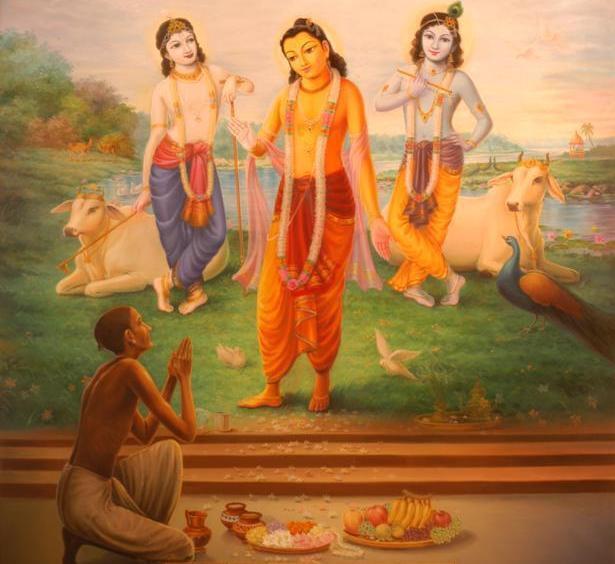
Kali Das travelled to Jagannatha Puri with a group of Bengali devotees who were returning to see Chaitanya Mahaprabhu, and there his story reaches its high point. He stood outside the Lord's door, hoping for a share of His own leftover food, and caught Mahaprabhu's attention. The Lord signaled His servant Govinda, who understood at once and gave Mahaprabhu's own remnants to him. Sri Chaitanya-charitamrita then has Mahaprabhu Himself turn this small act into a teaching: "Therefore, giving up hatred and hesitation, try to eat the remnants of the food of Vaishnavas, for you will thus be able to achieve your desired goal of life." He explains that food offered to Krishna becomes maha-prasada. But once a devotee has eaten from it, the remaining portion rises even higher, to maha-maha-prasada. He also explains that three things are extremely powerful: the dust of a devotee's feet, the water that has washed a devotee's feet, and a devotee's leftover food. And He says that serving these three with faith brings the highest goal of life, love for Krishna. He closes the point with Kali Das's own life as the proof: "The evidence is Kalidasa himself."
Kali Das in the Wider Family of Devotees #
Sri Chaitanya-charitamrita places Kali Das's story in the same chapter, and the same season, as the arrival of other Bengali devotees at Puri. These included Shivananda Sena, who that year brought his wife and youngest son, Puridasa, to see the Lord. Kali Das was connected to this circle through his family, not through formal discipleship. He was a distant uncle of Raghunatha Dasa Goswami. In his home village he was also a neighbor of Jhadu Thakura, another remembered Vaishnava, whose social standing was very different from his own. No guru, birth year, or date of disappearance is recorded for him in the available sources. His entire recorded life is this one vow, and the mercy it drew from Chaitanya Mahaprabhu Himself.
At a Glance #
- A kayastha householder from the village of Bheda (Bhaduwa), Hooghly district, and a distant uncle of Raghunatha Dasa Goswami.
- Kept a lifelong vow to eat the leftover food of Vaishnavas of every caste, including those born into castes his own society treated as untouchable.
- Visited the bhunimali-caste Vaishnava Jhadu Thakura with gifts of mangoes, an episode Sri Chaitanya-charitamrita uses to teach that caste has no bearing on spiritual standing.
- Received Chaitanya Mahaprabhu's own personal food remnants at Jagannatha Puri, prompting the Lord's own teaching on maha-prasada, maha-maha-prasada, and the power of a devotee's remnants.
- No birth year, guru, or disappearance date is recorded in the available sources.
Frequently asked
When was Kali Das born?
Kali Das appeared Not recorded in the available sources in Village of Bheda (also called Bhaduwa), near Saptagram, Hooghly district, Bengal.
When and where did Kali Das disappear?
Kali Das disappeared Not recorded in the available sources at Not recorded in the available sources.
What are the main pastimes of Kali Das?
The pastimes covered here include: Background and Family in Bengal, The Vow of Eating Vaishnava Remnants, The Mercy of Mahaprabhu's Own Remnants.