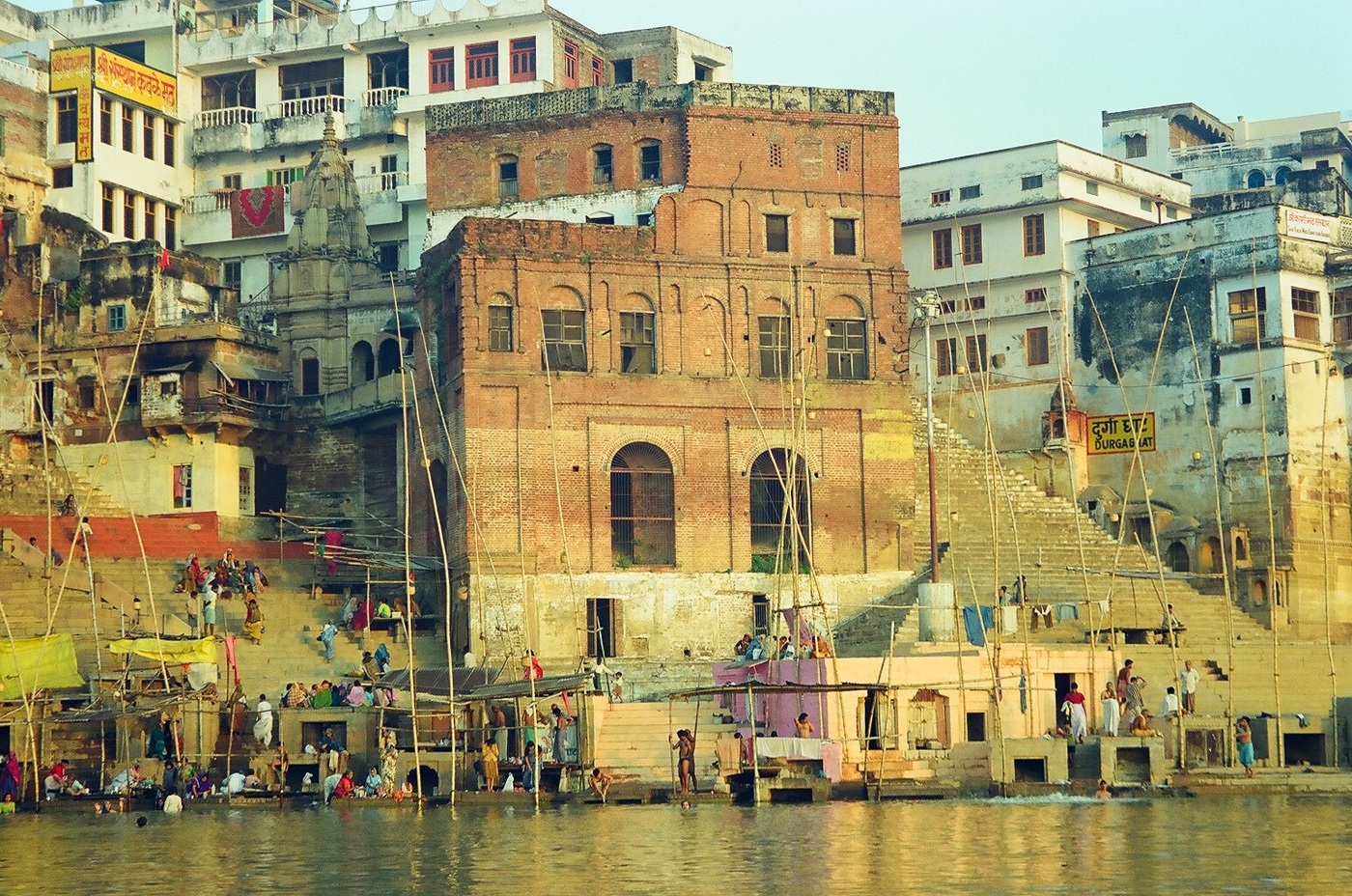
Long before he became known as the man who fed Sri Chaitanya Mahaprabhu daily in Varanasi, Tapana Mishra was simply a Bengali brahmana with an unanswered question. Both major biographies of the Lord tell how that question was answered. A chance meeting with a young Sanskrit teacher changed everything that followed, even the city where Tapana Mishra would spend the rest of his life.
| Detail | Description |
|---|---|
| Native region | East Bengal, on the Padma river |
| Occupation | A learned brahmana pandit |
| First met the Lord | As "Nimai Pandita," during His grihastha years teaching Sanskrit |
| Instruction received | Congregational chanting of the holy names is the one process suited to the present age |
| Sent to | Varanasi (Kashi), on the Lord's own order |
| Household | Settled with his wife; later joined by the physician Chandrashekhara Vaidya |
An Encounter With a Young Teacher #
Years of studying scripture had made Tapana Mishra a real pandit, but he still had not found a clear answer to one question. What is a soul meant to achieve in this life, and by what practical means? While he was living in East Bengal, he came to meet a young grihastha who was then teaching Sanskrit grammar and logic in the area. This teacher was known simply as Nimai Pandita, and later the whole world would know Him as Sri Chaitanya Mahaprabhu. Sri Chaitanya-charitamrita records that a brahmana appeared to Tapana Mishra in a dream and told him to go to Nimai Pandita. The brahmana said that this teacher was the Lord Himself and could surely guide him. So Tapana Mishra went to Him directly and put his question to Him.
An Answer That Reordered a Life #
As tradition remembers it, Nimai Pandita's reply did not point Tapana Mishra to the older paths he had spent years studying. Different eras call for different disciplines, He told the pandit, but this one, the age of quarrel and confusion, responds to nothing so directly as sankirtana, the loud, public, congregational singing of the Lord's names. A brahmana's mastery of ritual and scripture, however deep, was not the main thing. Chanting together was. Tapana Mishra took the instruction as final. Much later, he would learn that the young teacher who had settled his lifelong question was, in fact, the very Lord to whom those names belonged.
Tapana Mishra was overjoyed at what he had received. He hoped to move his family to Nabadwipa itself and stay permanently close to his new teacher. But Mahaprabhu had a different plan for him. Settle in Varanasi instead, He said, with an assurance that the two would cross paths there again in time. This order may seem surprising. At that time, and for generations afterward, Varanasi was a stronghold of Mayavadi philosophy. It was hardly the natural home for a man who had just been given sankirtana as his life's purpose. But Tapana Mishra went anyway. He took his wife with him and made his home there.
Word of a Renunciation, and Real Joy #
Years passed in Varanasi. Tapana Mishra's household grew. A son, Raghunatha Bhattacharya, was born to him there. The physician Chandrashekhara Vaidya, a fellow devotee, settled nearby and became a close associate. Then news reached Varanasi that the young teacher Tapana Mishra remembered from Bengal had accepted the renounced order of sannyasa. Sri Chaitanya-charitamrita records his reaction in a single, simple verse. On hearing that his Lord had taken sannyasa, Tapana Mishra's heart filled with joy. It is a small detail, but it shows something. Years of separation had not weakened what that first meeting in Bengal had given him.
An Invitation From No One Else #
Mahaprabhu, now a wandering sannyasi, did keep His promise. On His way toward Vrindavana He passed through Varanasi. Chandrashekhara had already seen the Lord's arrival in a dream, and he went out of the city to receive Him. When Tapana Mishra heard the news, he came at once and invited the Lord to take lunch at his own house. After the meal, he made a request. No scripture required it of him, and nothing in his long study of the scriptures had prepared him to ask it. He asked that for as long as Sri Chaitanya Mahaprabhu remained in Varanasi, He would accept an invitation from no one else. This is one of the few moments in Sri Chaitanya-charitamrita where an ordinary devotee's very human wish to keep the Lord's attention for himself alone is openly recorded, and Mahaprabhu granted it. In any case, He had already decided not to eat with the Mayavadi sannyasis who dominated the city. What became of that promise on the Lord's much longer return visit is told in Hosting Sri Chaitanya Mahaprabhu. What it meant for the young son growing up in that same household is told in Father of Raghunatha Bhatta Goswami.
