Kāliya-mardana Mandira
कालिय-मर्दन मन्दिर Hindi name proposed
Also called Kāliya Mardana Temple, Kāliyā Mardana
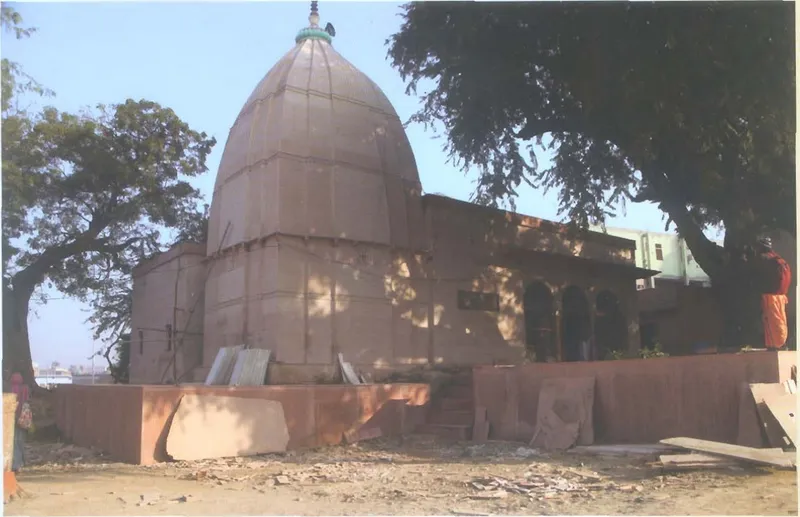
- What it is
- The Kāliya-mardana Mandira is a temple in Vṛndāvana dedicated to Kṛṣṇa's subduing of the serpent Kāliya, the pastime of Kāliya-ghāṭa.
- Visiting
- The Color Guide to Vṛndāvana (2000) gives the hours of darśana as 9 a.m. to 12 noon and 5 to 8 p.m.; these may have changed and have not been checked.
In short
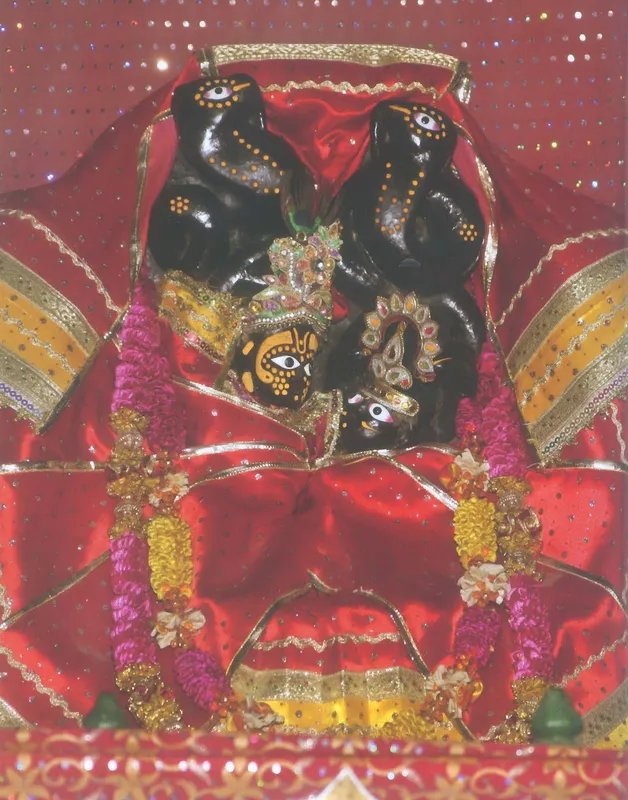
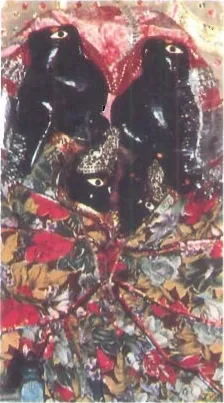
The Kāliya-mardana Mandira is a temple in Vṛndāvana dedicated to Kṛṣṇa's subduing of the serpent Kāliya, the pastime of Kāliya-ghāṭa.[1 +3] Vṛndāvana, the Playground of God (2010) describes its Deity as Śrīmatī Rādhārāṇī and Kṛṣṇa dancing on Kāliya's heads; The Color Guide to Vṛndāvana (2000) describes Kṛṣṇa subduing Kāliya.[1 +3] The guidebooks record a local tradition that the Deity is one of the original Deities of Vṛndāvana, installed by Vajranābha, but no scripture or document was found to support this, so it is not certain.[1 +3] No date for the temple has been found.[1 +3]
Key facts
| Kind | temple |
|---|---|
| Region · area | Vṛndāvana |
Divine pastimes
Śrīmad-Bhāgavatam (10.16) tells the moment the Deity shows. Kṛṣṇa rose from Kāliya's coils, mounted his heads and danced on them, crushing each head that would not bow, until Kāliya, his hoods broken, took shelter of Him within his mind. In the Bhāgavatam Kṛṣṇa dances alone, while the demigods accompany Him with drums, songs and flowers.[6 +5]
My dear King, Kāliya had 101 prominent heads, and when one of them would not bow down, Lord Śrī Kṛṣṇa, who inflicts punishment on cruel wrong-doers, would smash that stubborn head by striking it with His feet. Then, as Kāliya entered his death throes, he began wheeling his heads around and vomiting ghastly blood from his mouths and nostrils. The serpent thus experienced extreme pain and misery.
Translation: Śrīla Prabhupāda's disciples (BBT)Śrīla Viśvanātha Cakravartī Ṭhākura explains, in the words of the disciples' purport, that this display of dancing was meant for the young women of Vṛndāvana who had begun to love Kṛṣṇa. No verse or commentary that was read has Rādhā or the gopīs dance on the heads, as the 2010 guidebook describes the Deity.[6 +6]
Lord Kṛṣṇa, with those glowing reddish feet, then began to demonstrate His artistic skill by dancing on the unsteady, moving surface of the serpent’s hoods. This extraordinary demonstration of dancing skill was meant for the pleasure of the young women of Vṛndāvana, who at this phase of their relationship with Kṛṣṇa were seriously falling in love with Him.
Translation: Śrīla Prabhupāda's disciples (BBT)Śrīla Prabhupāda tells the dance in his Kṛṣṇa book. This is about the pastime in general, not about the temple:[6 +5]
General teaching (does not name the place)“Then He who is the original artist of all fine arts, such as dancing, began to dance upon the hoods of the serpent, although they were moving to and fro. Upon seeing this, the denizens of the upper planets showered flowers, beat drums, played different types of flutes and sang various prayers and songs.”
Śrīla Prabhupāda, Kṛṣṇa, the Supreme Personality of Godhead (Kṛṣṇa book), Chapter 16 (Subduing Kāliya) · vedabase.io
The whole pastime is told on the page of Kāliya-ghāṭa.[6 +5] Read more: How Kṛṣṇa subdued the serpent Kāliya →
Accounts differ Who danced on Kāliya's heads, and how the dance is told (the subject of the Kāliya-mardana temple's Deity).
- Śrīmad-Bhāgavatam 10.16.26–30Kṛṣṇa alone mounted the heads and danced, crushing with His feet each head that would not bow; the celestials accompanied Him with drums, songs, flowers and prayers; Kāliya was 'śataika-śīrṣṇaḥ' (10.16.28: '101 prominent heads' in the disciples' translation, 'a hundred chief heads' in Śrīdhara's, Śrīla Jīva's and Baladeva's reading) and had a thousand hoods (10.16.30)
- Śrīla Viśvanātha Cakravartī on ŚB 10.16.26the display of His art was meant for the girls of Vraja who had begun to love Him (shown to them; they do not dance)
- Kṛṣṇa book ch. 16 (Śrīla Prabhupāda)Kṛṣṇa danced on the hoods while the denizens of the upper planets showered flowers, beat drums, played flutes and sang; Kāliya had about a hundred hoods
- Harivaṁśa (critical edition) 56.6, 56.30–32Kāliya had five heads; Kṛṣṇa bent down the middle head with His hand, mounted it and danced
Traditional accounts
The Varāha Purāṇa says that those who die north of "Harideva" and south of "Kāliya", between these two deities, are not born …
A Deity of Kāliya's subduer
The Varāha Purāṇa says that those who die north of "Harideva" and south of "Kāliya", between these two deities, are not born again. Śrīla Jīva Gosvāmī, quoting the verse, explains that Harideva is the presiding Deity of Govardhana and that "Kāliya" here means Kāliya-damana, the subduer of Kāliya. He does not say where that Deity stood, and no source links it to this temple.[15]
Two lives of Śrī Caitanya Mahāprabhu, Śrīla Murāri Gupta's Kṛṣṇa-caitanya-caritāmṛta and Śrīla Locana dāsa Ṭhākura's Caitanya-maṅgala, tell that His guide showed Him an image of the subduer of Kāliya at the lake. They do not say where it stood or what became of it.[16 +2]
Vajranābha
According to the local tradition recorded in the guidebooks, the Deity is five thousand years old and was installed by Vajranābha; this is not certain.[1 +3] Śrīmad-Bhāgavatam (1.15.39) and Śrīla Prabhupāda's purport make Vajra the son of Aniruddha, Kṛṣṇa's grandson, and so Kṛṣṇa's great-grandson, made King of Mathurā; two of the guidebooks call him Kṛṣṇa's grandson instead.[19]
Accounts differ Vajranābha's relation to Kṛṣṇa, as the guidebooks state it for the installer of the Deity.
- Vṛndāvana, the Playground of God (2010)Installed by the Lord's great-grandson, Vajranābha.
- The Color Guide to Vṛndāvana (2000); the undated parikramā notes VṛndāvanaInstalled by Krishna's grandson, Vajranaba.
- Śrīmad-Bhāgavatam 1.15.39 with Śrīla Prabhupāda's purportVajra was the son of Aniruddha (Kṛṣṇa's grandson), the great-grandson of Kṛṣṇa.
Visiting today
The Color Guide to Vṛndāvana (2000) gives the hours of darśana as 9 a.m. to 12 noon and 5 to 8 p.m.; these may have changed and have not been checked.[3 +1] The guidebooks list the temple right after Kāliya-ghāṭa and the samādhi of Śrīla Prabodhānanda Sarasvatī, without saying how far it is.[3 +4]
Location
Pictures
2 pictures
History
The Bengali Vṛndāvana-kathā (1920) places a Kāliya-mardana Deity a little to the north of the kadamba from which, it says, Kṛṣṇa jumped into the Yamunā. It names no temple and no date.[20] The historian A. W. Entwistle (1987) reports a modern image of Kṛṣṇa dancing on Kāliya in a small shrine on the ghāṭa.[21] No source says which of these images is the Deity of the present temple.
Accounts differ Which image of Kṛṣṇa subduing Kāliya stood or stands at Kāliya-ghāṭa, and how old it is (the Deity of the Kāliya-mardana temple).
- Śrīla Murāri Gupta, Kṛṣṇa-caitanya-caritāmṛta 4.7.9; Śrīla Locana dāsa, Caitanya-maṅgala (Śeṣa-khaṇḍa, p. 173)In Śrī Caitanya's time His guide showed Him an image of Kāliya's subduer at the lake.
- Vṛndāvana-kathā (1920), p. 195A Kālīya-mardana Ṭhākura stands a little to the north of the kadamba from which Kṛṣṇa jumped.
- A. W. Entwistle (1987), a historianEntwistle found a modern image of Kṛṣṇa dancing on Kāliya's hoods in a small shrine made from one of the kiosks on the ghāṭa.
- The Color Guide to Vṛndāvana (2000); the undated parikramā notes VṛndāvanaThe Kāliyā Mardan temple's Deity of Kṛṣṇa subduing Kāliya is said to be 5,000 years old and to have been installed by Vajranābha (the undated parikramā notes Vṛndāvana without 'said').
More on this place
How Kṛṣṇa subdued the serpent Kāliya
References
25 references
- Vṛndāvana, the Playground of God (2010), Bhakti Caitanya Svāmī, PDF p. 137
- Vṛndāvana, the Playground of God (2010), Bhakti Caitanya Svāmī, PDF p. 136
- The Color Guide to Vṛndāvana (2000), Written and Photographed by Rājaśekhara dāsa Brahmacārī, PDF p. 56
- the undated parikramā notes Vṛndāvana, ¶40
- Bhāgavata-māhātmya, Skanda Bhāgavata-māhātmya 2.4-6, Sanskrit Wikisource
- Śrīmad-Bhāgavatam 10.16.9, Bhagavata Vidya Pith edition, ed. Bhagavata Rishi and Krishna Shankar Shastri, 1996
- Śrīmad-Bhāgavatam 10.16.22, GRETIL
- Śrīmad-Bhāgavatam 10.16.23, Bhagavata Vidya Pith edition, ed. Bhagavata Rishi and Krishna Shankar Shastri, 1996
- Śrīmad-Bhāgavatam 10.16.26, Bhagavata Vidya Pith edition, ed. Bhagavata Rishi and Krishna Shankar Shastri, 1996
- Śrīmad-Bhāgavatam 10.16.28, Bhagavata Vidya Pith edition, ed. Bhagavata Rishi and Krishna Shankar Shastri, 1996
- Śrīmad-Bhāgavatam 10.16.30, GRETIL
- Śrīmad-Bhāgavatam 10.16.28, Bhagavata Vidya Pith edition, ed. Bhagavata Rishi and Krishna Shankar Shastri, 1996
- Śrīla Viśvanātha Cakravartī Ṭhākura: commentary on ŚB 10.16.26, Bhagavata Vidya Pith edition, ed. Bhagavata Rishi and Krishna Shankar Shastri, 1996
- Śrīla Viśvanātha Cakravartī Ṭhākura: commentary on ŚB 10.16.26, Bhagavata Vidya Pith edition, ed. Bhagavata Rishi and Krishna Shankar Shastri, 1996
- Śrīla Jīva Gosvāmī: commentary on ŚB 10.11.35, Bhagavata Vidya Pith edition, ed. Bhagavata Rishi and Krishna Shankar Shastri, 1996
- Kṛṣṇa-caitanya-caritāmṛta, prakrama 4, sarga 7, verse 8
- Kṛṣṇa-caitanya-caritāmṛta, prakrama 4, sarga 7, verses 9–10 (4.7.9–10), PDF page 569
- Śrīla Locana dāsa Ṭhākura, Caitanya-maṅgala, Śeṣa-khaṇḍa, 1903 ed. p. 173: left column, last line; right column, lines 1–6
- Śrīla Prabhupāda, Śrīmad-Bhāgavatam, Canto 1, 1.15.39, translation and purport · vedabase.io
- Pulinbihārī Datta, chapter 17, section 2 ('udyāna'), printed p. 195
Show all 25 references
- A. W. Entwistle, ch. 8 §66.1 'Kalidah Ghat', printed p. 401, Egbert Forsten, Groningen, 1987
- Śrī Vraja-maṇḍala Parikramā (2007), PDF p. 341
- Śrī Vraja-maṇḍala Parikramā (2007), PDF p. 299
- Vṛndāvana, the Playground of God (2010), Bhakti Caitanya Svāmī, PDF p. 126
- The Color Guide to Vṛndāvana (2000), Written and Photographed by Rājaśekhara dāsa Brahmacārī, PDF p. 55