Kātyāyanī-devī Mandira (Vṛndāvana)
कात्यायनी-देवी मन्दिर (वृन्दावन) Hindi name proposed
Also called Kātyāyanī Temple, Kātyayānī Devī, Katyayani Devi Temple
In short
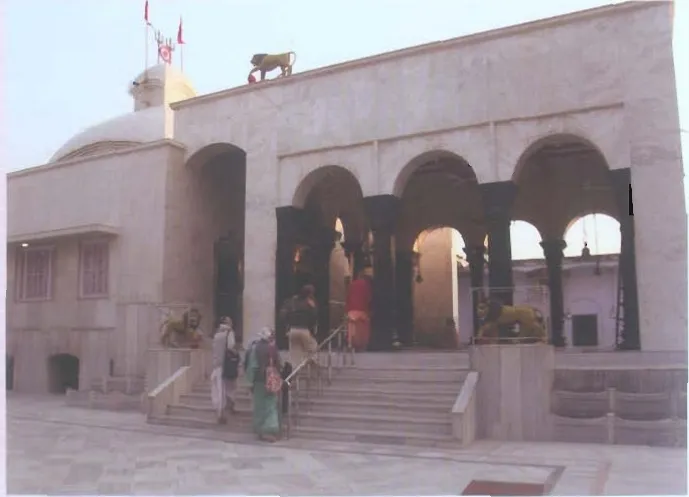
The Kātyāyanī-devī Mandira is a temple of the goddess Kātyāyanī, also called Durgā, in Vṛndāvana. According to the guidebook Vṛndāvana, the Playground of God (2010), it was opened in 1923 and is a general Hindu temple where five Deities are worshipped.[1] Its name recalls the vow that the unmarried gopīs, the cowherd girls of Vraja, kept to Kātyāyanī in the Bhāgavatam, so that Kṛṣṇa would become their husband.[2 +3] The guidebooks say plainly that it is not the shrine where the gopīs worshipped, since their image of the goddess was made of sand.[3 +2]
Key facts
| Kind | temple |
|---|---|
| Region · area | Vṛndāvana |
Divine pastimes
The gopīs' vow
Śrīmad-Bhāgavatam (10.22) tells that in the first month of winter the unmarried girls of Vraja kept a month-long vow to Kātyāyanī. They bathed in the Yamunā at sunrise, made an image of the goddess out of sand on the bank, worshipped it and prayed that the son of Nanda would become their husband. The Bhāgavatam names no shrine or ghāṭa for the vow.[2 +3]
kātyāyani mahā-māye mahā-yoginy adhīśvari / nanda-gopa-sutaṃ devi patiṃ me kuru te namaḥ / iti mantraṃ japantyas tāḥ pūjāṃ cakruḥ kamārikāḥ
Each of the young unmarried girls performed her worship while chanting the following mantra. “O goddess Kātyāyanī, O great potency of the Lord, O possessor of great mystic power and mighty controller of all, please make the son of Nanda Mahārāja my husband. I offer my obeisances unto you.”
Translation: Śrīla Prabhupāda's disciples (BBT)Commenting on this chapter, Śrīla Jīva Gosvāmī says (summarised here, not translated) that the gopīs bathed and set up their sand image at the water's edge of the Yamunā, at a ghāṭa of Vraja that was still known in his day by the name of the goddess Ghaṭṭa-vāsinī, "she who dwells at the ghāṭa". He does not say where that ghāṭa was, and no source connects it with this temple.[8] The guidebooks connect the vow and the taking of the gopīs' clothes with Cīra-ghāṭa instead.[2 +3] Read more: The Kātyāyanī vow and the gopīs' clothes: the pastime and its places →
Which goddess the gopīs worshipped
Śrīla Viśvanātha Cakravartī Ṭhākura explains (summarised here, not translated) that the goddess the gopīs worshipped is Yogamāyā, the Lord's internal potency and Kṛṣṇa's sister, not the external Māyā, and that people are confused only because both are called Durgā and Mahāmāyā. Śrīla Jīva Gosvāmī calls Kātyāyanī the Vaiṣṇavī potency, and Śrīla Sanātana Gosvāmī calls her a supreme Vaiṣṇavī, Pārvatī, the beloved of Śiva. None of them speaks of a temple.[9]
Śrīla Prabhupāda tells the gopīs' vow in his Kṛṣṇa book. This is about the vow in general, not about the temple:[2 +3]
General teaching (does not name the place)“The unmarried gopīs used to prepare the deity of Goddess Durgā and worship it with candana pulp, garlands, incense, lamps and all kinds of presentations – fruits, grain and twigs of plants. … Early in the morning, the gopīs used to go to the bank of the Yamunā to take a bath.”
Śrīla Prabhupāda, Kṛṣṇa, the Supreme Personality of Godhead, Chapter 22 (Stealing the Garments of the Unmarried Gopī Girls) · vedabase.io
Location
History
Vṛndāvana, the Playground of God (2010) says that the temple was opened in 1923 and that Durgā (Kātyāyanī), Śiva, Viṣṇu, Gaṇeśa and Sūrya are worshipped there, and adds that it is not connected with the Vaiṣṇava history of Vṛndāvana.[1] The historian A. W. Entwistle (1987) also dates the installation of its images to 1923 and names its founder as a swami from Bengal named Keśavānanda.[10]
Where the sources differ
The guidebooks and a historian describe the temple differently, and two of them report a tradition about the goddess's hair that …
The guidebooks and a historian describe the temple differently, and two of them report a tradition about the goddess's hair that no older text was found to support.
Accounts differ What the Kātyāyanī temple of Vṛndāvana stands for.
- Vṛndāvana, the Playground of God (2010)A general Hindu temple of five-Deity worship, opened in 1923, not connected with the Vaiṣṇava history of Vṛndāvana, though popular.
- The Color Guide to Vṛndāvana (2000); the undated parikramā notes VṛndāvanaA very famous temple of Vṛndāvana where, it is said, the hair of Kali fell from the sky; it recalls the gopīs' Kātyāyanī worship but is not their shrine.
- A. W. Entwistle (1987), a historianEntwistle says that the Kātyāyanī Pīṭha was founded by Svāmī Keśavānanda from Bengal, that its images were installed in 1923, and that it is held to be the place where Satī's hair fell.
More on this place
The Kātyāyanī vow and the gopīs' clothes: the pastime and its places
References
10 references
- Vṛndāvana, the Playground of God (2010), Bhakti Caitanya Svāmī, PDF p. 234
- Śrīmad-Bhāgavatam 10.22.1, GRETIL
- Śrīmad-Bhāgavatam 10.22.2, GRETIL
- Śrīmad-Bhāgavatam 10.22.4, GRETIL
- Śrīla Prabhupāda, Kṛṣṇa, the Supreme Personality of Godhead, Chapter 22 (Stealing the Garments of the Unmarried Gopī Girls) · vedabase.io
- The Color Guide to Vṛndāvana (2000), Written and Photographed by Rājaśekhara dāsa Brahmacārī, PDF p. 150
- the undated parikramā notes Vṛndāvana, ¶286
- Śrīla Jīva Gosvāmī: commentary on ŚB 10.22.2, Bhagavata Vidya Pith edition, ed. Bhagavata Rishi and Krishna Shankar Shastri, 1996
- Śrīla Viśvanātha Cakravartī Ṭhākura: commentary on ŚB 10.22.4, Bhagavata Vidya Pith edition, ed. Bhagavata Rishi and Krishna Shankar Shastri, 1996
- A. W. Entwistle, ch. 8 §66, 'The area beyond Tatti Asthan' (after no. 38), printed p. 416, Egbert Forsten, Groningen, 1987