Lālā Bābū Mandira
लाला बाबू मन्दिर Hindi name proposed
Also called Lāl Babu Temple, temple of Krishana Chandrama
- What it is
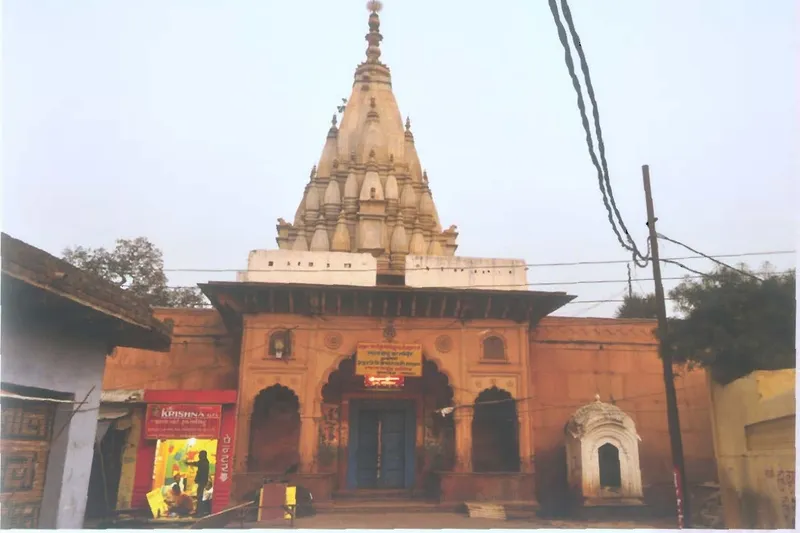
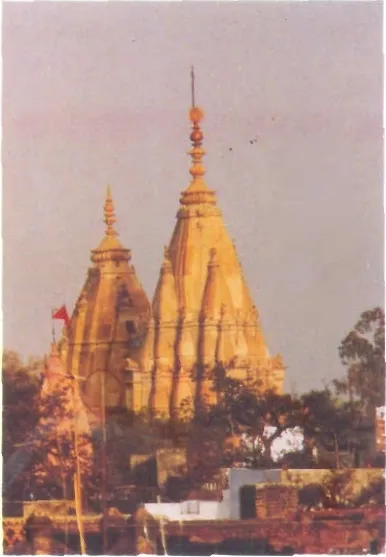
- The Lālā Bābū Mandira is a large stone temple of Śrī Kṛṣṇacandra in a walled garden in Vṛndāvana.
- Visiting
- The guidebooks describe the temple in a garden surrounded by a high wall.
In short
The Lālā Bābū Mandira is a large stone temple of Śrī Kṛṣṇacandra in a walled garden in Vṛndāvana. Two guidebooks date it to 1810 and name its builder as Lālā Bābū, a wealthy landholder from Bengal; two historians agree on the founder and on about that year.[1 +6] Śrīla Prabhupāda tells of a Calcutta landholder known as Lal Babu who became a Vaiṣṇava, lived in Vṛndāvana and begged from door to door, even at the homes of his enemies. He does not mention the temple, and that his Lal Babu is its founder is probable but not stated.[3 +1] How he came to renounce his wealth is told differently (see below).
Key facts
| Kind | temple |
|---|---|
| Region · area | Vṛndāvana |
Traditional accounts
Vṛndāvana, the Playground of God (2010) tells, without a source, that after renouncing he begged a donation from a wealthy businessman he had once cheated; the man poured ashes over his head, and Lālā Bābū answered that at least he had started giving. The story is not certain.[3 +1]
Śrīla Prabhupāda
Śrīla Prabhupāda gives Lal Babu as an example of a devotee free from pride (a general teaching, not about the temple) …
Śrīla Prabhupāda gives Lal Babu as an example of a devotee free from pride (a general teaching, not about the temple):[3 +1]
General teaching (does not name the place)“Even very recently, about two hundred years ago or less, one big landlord known as Lal Babu, a Calcutta landholder, became a Vaiṣṇava and lived in Vṛndāvana. He was also begging from door to door, even at the homes of his political enemies.”
Śrīla Prabhupāda, The Nectar of Devotion, Chapter 18 · vedabase.io
Visiting today
The guidebooks describe the temple in a garden surrounded by a high wall. The Color Guide to Vṛndāvana (2000) gave its hours as maṅgala-ārati at 5 am and darśana from 8 am to noon and 4 to 8 pm, summer and winter alike; they may have changed.[1 +2]
Location
| Where it is | map key 24[12] |
|---|
Nearby places
Rādhā-Gopāla Mandira
Pictures
1 pictures
History
Śrī Vraja-maṇḍala Parikramā (2007) says that Lālā Bābū installed the Deity of Śrī Kṛṣṇacandra in this temple in 1810, and The Color Guide to Vṛndāvana (2000) that the temple of "Lord Krishna Candrama" was built that year by Krishna Candra Sinh, better known as Lālā Bābū. Neither gives a source.[1 +2] The historians Prabhudayāl Mītal (1966) and A. W. Entwistle (1987) support the founder, Kṛṣṇacandra Siṁha, known in Braj as Lālā Bābū; Mītal gives the year as Saṁvat 1867, about 1810–11, and Entwistle's account also points to about 1810. No inscription or dated record of the consecration has been seen.[4 +3]
The Bengali Vṛndāvana-kathā (1920) adds that he had the temple and a guesthouse built in 1810 at a cost of 25 lakh rupees, and gave the Deity a zamindari (landed estate) yielding 20,000 to 22,000 rupees a year for their upkeep.[10]
Lālā Bābū also paid for stone ghāṭas (bathing steps) at Rādhā-kuṇḍa, as two guidebooks and both historians say. One guidebook gives the year 1817, which the historians do not confirm.[2 +3]
Where the sources differ
Where Lālā Bābū came from, when he renounced, and when he died: the guidebooks, Śrīla Prabhupāda, the historians and the 1920 …
Where Lālā Bābū came from, when he renounced, and when he died: the guidebooks, Śrīla Prabhupāda, the historians and the 1920 Vṛndāvana-kathā give different details.[3 +5]
Accounts differ Where Lālā Bābū came from and when he renounced.
- Śrī Vraja-maṇḍala Parikramā (2007)A famous and wealthy landlord of East Bengal.
- Nectar of Devotion ch. 18 (Śrīla Prabhupāda); Vṛndāvana, the Playground of God (2010) quoting itA Calcutta landholder.
- The Colour Guide to Rādhā-kuṇḍa (1999)A wealthy landlord from Calcutta who later entered the renounced order.
- The Color Guide to Vṛndāvana (2000)A millionaire from Bengal named Krishna Candra Sinh, who 'renounced the world at an early age'.
What made him renounce: the guidebooks tell of a boatman's and a washerman's words, or of a voice telling him that it was time; these are local traditions, and which of them is true is not certain.[1 +1]
Accounts differ What made Lālā Bābū renounce.
- Śrī Vraja-maṇḍala Parikramā (2007)A boatman's 'O brother, the day is over. Go across', then a washerman's 'The day is over; go and burn the vāsanā', heard on two evening walks by the river.
- Vṛndāvana, the Playground of God (2010)One afternoon in Calcutta he heard a voice say 'It is time'.
References
12 references
- Śrī Vraja-maṇḍala Parikramā (2007), PDF p. 335
- The Color Guide to Vṛndāvana (2000), Written and Photographed by Rājaśekhara dāsa Brahmacārī, PDF p. 134
- Vṛndāvana, the Playground of God (2010), Bhakti Caitanya Svāmī, PDF p. 199
- A. W. Entwistle, ch. 5 §35 (nineteenth-century patrons), printed p. 216, Egbert Forsten, Groningen, 1987
- A. W. Entwistle, ch. 8 §66.36 'Gopishwar' (end), printed p. 415, Egbert Forsten, Groningen, 1987
- Prabhudayāl Mītal, part 1 ('ब्रज-संस्कृति की भूमिका'), 'Braj-yātrā', Vṛndāvana: 'Lālā Bābū kā mandir', printed p. 139
- Prabhudayāl Mītal, part 2 ('ब्रज का इतिहास'), modern period, entry 'Kṛṣṇacandra Siṁha (Lālā Bābū)', printed p. 275
- Śrīla Prabhupāda, The Nectar of Devotion, Chapter 18 · vedabase.io
- Vṛndāvana, the Playground of God (2010), Bhakti Caitanya Svāmī, PDF p. 200
- Pulinbihārī Datta, chapter 20 (temples founded under British rule), no. 1 'Lālā Bābu's kuñja', printed p. 240
- The Colour Guide to Rādhā-kuṇḍa (1999), Rājaśekhara dāsa Brahmacārī, PDF p. 43
- Śrī Vraja-maṇḍala Parikramā (2007), p. 644-645