Rādhā-kuṇḍa
राधा-कुण्ड Hindi name proposed
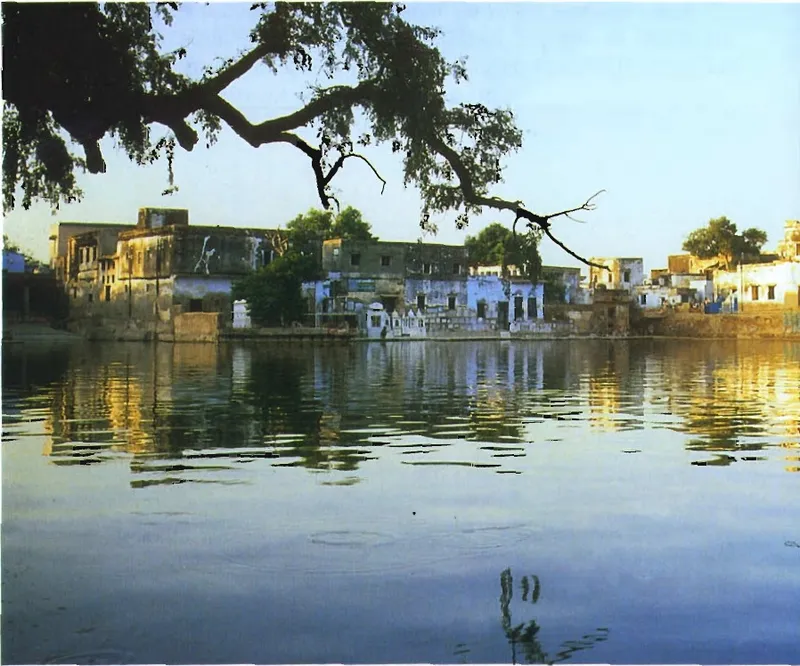
- What it is
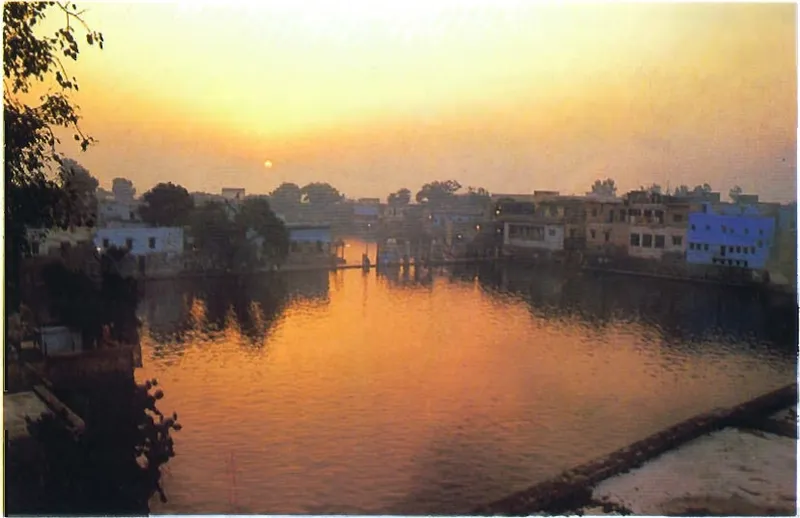
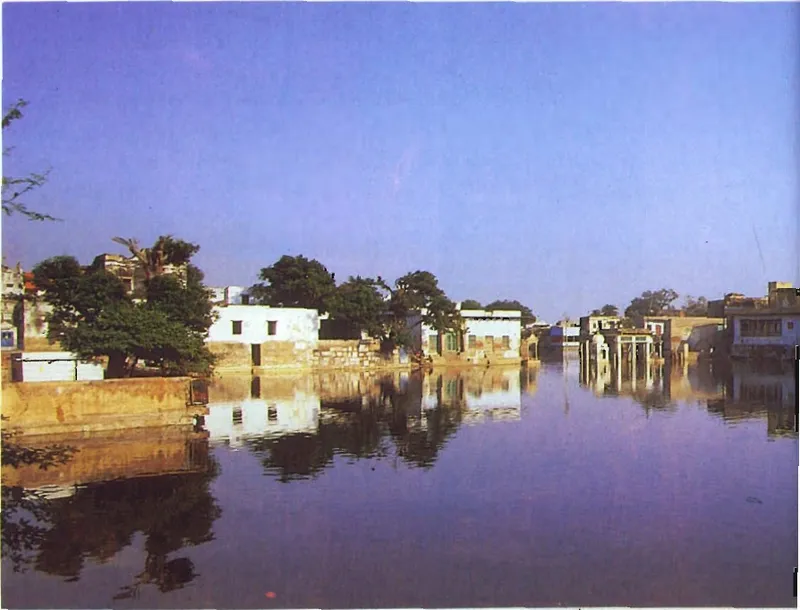
- Rādhā-kuṇḍa is the lake of Śrī Rādhā at the foot of Govardhana Hill, in the village of Āriṭa.
- Visiting
- The guidebook Śrī Vraja-maṇḍala Parikramā (2007) places the village of Āriṭa about three miles north-east of Govardhana and fourteen miles from Mathurā and Vṛndāvana.
- Parikramā
- Govardhana parikramā, station 1 & 43
- Places here
- Śyāma-kuṇḍa, Lalitā-kuṇḍa, Mohana-kuṇḍa, Lagmohana-kuṇḍa, Kaṅkaṇa-kuṇḍa +71 more
In short
Rādhā-kuṇḍa is the lake of Śrī Rādhā at the foot of Govardhana Hill, in the village of Āriṭa. Kṛṣṇa's lake, Śyāma-kuṇḍa, lies beside it on the east, and the two kuṇḍas (sacred ponds) meet where their banks touch.[1 +15] Śrīla Rūpa Gosvāmī ranks Rādhā-kuṇḍa above every other holy place, and a verse that the Gosvāmīs quote says that it is as dear to Kṛṣṇa as Rādhā Herself.[1 +10] Śrīmad-Bhāgavatam tells how Kṛṣṇa killed the bull-demon Ariṣṭa without naming the kuṇḍa; its commentators tell how Rādhā then made it.[11 +5] Śrī Caitanya Mahāprabhu found the lost kuṇḍas in two paddy fields, and Śrīla Raghunātha dāsa Gosvāmī lived at the kuṇḍa for most of his life.[6 +14]
Key facts
| Kind | kuṇḍa |
|---|---|
| Also part of | Govardhana, Rādhā-kuṇḍa (village), Bahulāvana |
| On the parikramā | Govardhana parikramā, stations 1 and 43 (start and end) · the route |
| Ācāryas | Śrī Caitanya Mahāprabhu, Śrīla Raghunātha dāsa Gosvāmī, Śrīla Jīva Gosvāmī, Śrīla Rūpa Gosvāmī, Śrīla Sanātana Gosvāmī |
Why it is glorified
Śrīla Rūpa Gosvāmī's Upadeśāmṛta (The Nectar of Instruction) climbs a ladder of holy places: Mathurā above Vaikuṇṭha, Vṛndāvana …
Śrīla Rūpa Gosvāmī's Upadeśāmṛta (The Nectar of Instruction) climbs a ladder of holy places: Mathurā above Vaikuṇṭha, Vṛndāvana above Mathurā, Govardhana above Vṛndāvana. Above them all, he writes, stands Rādhā-kuṇḍa, flooded with Kṛṣṇa's prema, His pure love.[1 +4]
वैकुण्ठाज्जनितो वरा मधुपुरी तत्रापि रासोत्सवाद्वृन्दारण्यमुदारपाणिरामणात्तत्रापि गोवर्धनः ।
राधाकुण्डमिहापि गोकुलपतेः प्रेमामृताप्लावनात्कुर्यादस्य विराजतो गिरितटे सेवां विवेकी न कः ॥ ९ ॥
vaikuṇṭhāj janito varā madhu-purī tatrāpi rāsotsavād
vṛndāraṇyam udāra-pāṇi-ramaṇāt tatrāpi govardhanaḥ
rādhā-kuṇḍam ihāpi gokula-pateḥ premāmṛtāplāvanāt
kuryād asya virājato giri-taṭe sevāṁ vivekī na kaḥ
The holy place known as Mathurā is spiritually superior to Vaikuṇṭha, the transcendental world, because the Lord appeared there. Superior to Mathurā-purī is the transcendental forest of Vṛndāvana because of Kṛṣṇa’s rāsa-līlā pastimes. And superior to the forest of Vṛndāvana is Govardhana Hill, for it was raised by the divine hand of Śrī Kṛṣṇa and was the site of His various loving pastimes. And, above all, the superexcellent Śrī Rādhā-kuṇḍa stands supreme, for it is overflooded with the ambrosial nectarean prema of the Lord of Gokula, Śrī Kṛṣṇa. Where, then, is that intelligent Person who is unwilling to serve this divine Rādhā-kuṇḍa, which is situated at the foot of Govardhana Hill?
Translation: Śrīla A.C. Bhaktivedanta Swami PrabhupādaIn the next two verses he says that Śrī Rādhā's kuṇḍa is as dear to Kṛṣṇa as She is, that even great devotees rarely reach it, and that one bath in it awakens pure love of Kṛṣṇa.[1 +4] Śrīla Rūpa Gosvāmī and Śrīla Jīva Gosvāmī quote the same teaching from the Padma Purāṇa, and in the Caitanya-caritāmṛta Śrī Caitanya Mahāprabhu recites that verse at the kuṇḍa:[21 +5]
যথা রাধা প্রিয়া বিষ্ণোস্তস্যাঃ কুণ্ডং প্রিয়ং তথা ।
সর্বগোপীষু সৈবৈকা বিষ্ণোরত্যন্তবল্লভা ॥ ৮ ॥
yathā rādhā priyā viṣṇos
tasyāḥ kuṇḍaṁ priyaṁ tathā
sarva-gopīṣu saivaikā
viṣṇor atyanta-vallabhā
“ ‘Just as Śrīmatī Rādhārāṇī is most dear to Lord Kṛṣṇa, so Her lake, known as Rādhā-kuṇḍa, is also very dear to Him. Of all the gopīs, Śrīmatī Rādhārāṇī is certainly the most beloved.’
Translation: Śrīla A.C. Bhaktivedanta Swami PrabhupādaŚrīla Raghunātha dāsa Gosvāmī writes that Vṛndāvana, Govardhana and the place of the rāsa dance (Kṛṣṇa's dance with the cowherd girls) do not equal even a fraction of this kuṇḍa.[8 +3] Śrīla Viśvanātha Cakravartī Ṭhākura writes that, as he understands it, Rādhā and Kṛṣṇa melted with joy at the sight of each other and became the two kuṇḍas, so that a bath in them gives prema.[49]
The Varāha Purāṇa says that a bath in Kṛṣṇa's kuṇḍa, which it calls Ariṣṭa, and in Rādhā-kuṇḍa brings the merit of the Rājasūya and Aśvamedha, two great Vedic sacrifices.[10 +3] The Nārada Purāṇa calls the Lord rādhā-kuṇḍa-ratiḥ, the one whose delight is Rādhā-kuṇḍa, and the Garga-saṁhitā lists the kuṇḍa among the holy waters of Govardhana, with Lalitā-kuṇḍa and Kusuma-sarovara.[52 +2]
Divine pastimes
Ariṣṭa and the two kuṇḍas
Śrīmad-Bhāgavatam (10.36) tells how the bull-demon Ariṣṭa came to the cowherd village, tearing up the earth with his hooves, and how Kṛṣṇa seized him by the horns, killed him and entered the village with Balarāma. It names no kuṇḍa and no spot for the fight; Śrīla Prabhupāda's Kṛṣṇa book, which retells the chapter, names no kuṇḍa either.[27 +3]
evaṃ kukudminaṃ hatvā stūyamānaḥ dvijātibhiḥ / viveśa goṣṭhaṃ sa-balo gopīnāṃ nayanotsavaḥ //
Having thus killed the bull demon Ariṣṭa, He who is a festival for the gopīs’ eyes entered the cowherd village with Balarāma.
Translation: Śrīla Prabhupāda's disciples (BBT)The commentators on this verse tell what followed (summarised here, not translated). Śrīla Sanātana Gosvāmī and Śrīla Jīva Gosvāmī, following the Varāha Purāṇa, say that Kṛṣṇa made a kuṇḍa with a blow of His heel and bathed in it. After a joking exchange about the killing of a bull, Rādhā made a second kuṇḍa, which became known by Her name; Śrīla Jīva Gosvāmī adds that a hundred thousand friends helped Her clear away the earth that Ariṣṭa's hooves had crushed.[11 +1] In his Gopāla-campū the exchange is a loving joke: Kṛṣṇa teases Rādhā, Her friends answer that they have killed no bull and need no atonement, and He replies that the "bull" was really a demon.[55 +3] Both say that the pair could still be seen in their day, on the eastern or north-eastern edge of Govardhana.[31]
Commenting on the same verse, Śrīla Viśvanātha Cakravartī Ṭhākura gives the story in twenty verses that he calls the account of the Purāṇas, though he names no Purāṇa (the BBT edition prints them with ŚB 10.36.16).[31 +2] In them the gopīs, the cowherd girls, joking with Kṛṣṇa, demand that He bathe in every holy place to atone for killing a bull, and He strikes the ground with His heel and calls all the holy places there. Rādhā and Her friends dig their own pond in a ditch that Ariṣṭa's hooves had left just west of Kṛṣṇa's. She refuses the water of His pond, and the holy places in it, at Kṛṣṇa's sign, ask Her leave, break through and fill Her kuṇḍa. Kṛṣṇa blesses it:[13 +10]
proce hariḥ priyatame tava kuṇḍam etan
mat-kuṇḍato ’pi mahimādhikam astu loke
atraiva me salila-kelir ihaiva nityaṁ
snānaṁ yathā tvam asi tadvad idaṁ saro me
Lord Hari then said, ‘My dear Rādhā, may this pond of Yours become even more world-renowned than Mine. I will always come here to bathe and to enjoy My water pastimes. Indeed, this lake is as dear to Me as You are.
Translation: Śrīla Prabhupāda's disciples (BBT)Other works say it differently. In the Varāha Purāṇa, Rādhā embraces Kṛṣṇa and makes a kuṇḍa known by Her name not far from His; in Śrīla Nārāyaṇa Bhaṭṭa Gosvāmī's Vraja-bhakti-vilāsa, Rādhā and Kṛṣṇa bathe in the kuṇḍa together.[10 +3] The time differs too: Śrīla Jīva Gosvāmī places the rāsa dance of that night in spring, while two modern guidebooks say that the kuṇḍas appeared at midnight on Bahulāṣṭamī, the eighth day of the dark fortnight of the month of Kārttika.[31 +6] Read more: How Rādhā-kuṇḍa appeared: the accounts side by side →
The eternal pastimes
Śrī Caitanya Mahāprabhu's prayer in the Caitanya-caritāmṛta says that Kṛṣṇa and Rādhā sport in this water every day and dance the rāsa on its bank.[72 +4] According to the Bhakti-ratnākara, the kuñjas (groves) of Rādhā's eight sakhīs, Her companions headed by Lalitā, surround the kuṇḍa. Śrīla Kṛṣṇadāsa Kavirāja Gosvāmī's Govinda-līlāmṛta gives each kuñja its own quarter, beginning with Lalitā's in the north.[12 +5] Read more: The kuñjas of the sakhīs around Rādhā-kuṇḍa →
Śrīla Raghunātha dāsa Gosvāmī takes shelter of the place where the banks of the two kuṇḍas meet.[8 +2] The Govinda-līlāmṛta sets a bridge on pillars above it, and a commentary on Śrīla Viśvanātha Cakravartī Ṭhākura's Kṛṣṇa-bhāvanāmṛta says that the golden causeway there is known as the Saṅgama, the meeting.[16 +1]
Śrī Caitanya Mahāprabhu finds the kuṇḍa
The Caitanya-caritāmṛta (Madhya 18) tells how Śrī Caitanya Mahāprabhu came dancing through Vraja to Āriṭ-grāma and asked where Rādhā-kuṇḍa was. No one knew, not even the brāhmaṇa travelling with Him.[6 +5]
তীর্থ ‘লুপ্ত’ জানি’ প্রভু সর্বজ্ঞ ভগবান্ ।
দুই ধান্যক্ষেত্রে অল্পজলে কৈলা স্নান ॥ ৫ ॥
tīrtha ‘lupta’ jāni’ prabhu sarvajña bhagavān
dui dhānya-kṣetre alpa-jale kailā snāna
The Lord then understood that the holy place called Rādhā-kuṇḍa was no longer visible. However, being the omniscient Supreme Personality of Godhead, He discovered Rādhā-kuṇḍa and Śyāma-kuṇḍa in two paddy fields. There was only a little water, but He took His bath there.
Translation: Śrīla A.C. Bhaktivedanta Swami PrabhupādaThe villagers were astonished. Mahāprabhu prayed to the kuṇḍa, danced on its bank, marked His body with tilaka made from its earth and took some of the earth with Him.[6 +5] Śrīla Prabhupāda writes that Āriṭ-grāma is also called Ariṣṭa-grāma, and that Mahāprabhu understood that Kṛṣṇa had killed Ariṣṭāsura in that village.[4 +5]
According to the Bhakti-ratnākara, Mahāprabhu sat under a tamāla tree there, and the villagers had called the two fields Kālī and Gaurī.[39 +3] In Śrīla Murāri Gupta's account, in summary, His guide instead points out a pair of kuṇḍas east of the hill, without naming them.[88] Read more: How Rādhā-kuṇḍa was found and dug out again →
Traditional accounts
According to the Bhakti-ratnākara, Śrīla Raghunātha dāsa Gosvāmī once wished that the two kuṇḍas were full of water, then …
According to the Bhakti-ratnākara, Śrīla Raghunātha dāsa Gosvāmī once wished that the two kuṇḍas were full of water, then reproached himself for the wish. A wealthy man, told in a dream by Nārāyaṇa of Badarikāśrama, then brought him coins at Āriṭ-grāma, and the two kuṇḍas were dug out.[79 +4] Śrīla Prabhupāda writes in one purport that Śrīla Rūpa Gosvāmī and Śrīla Sanātana Gosvāmī renovated Rādhā-kuṇḍa on Mahāprabhu's direction, and in another that Mahāprabhu's devotees, headed by the Six Gosvāmīs, excavated it.[19 +1]
In the prologue of Śrīla Rūpa Gosvāmī's drama Lalita-mādhava, the stage-manager says that he will present the play to Vaiṣṇavas gathered on the bank of Śrī Rādhā-kuṇḍa for the Govardhana worship at Dīpāvalī.[94] According to Śrīla Nārāyaṇa Bhaṭṭa Gosvāmī's Vraja-bhakti-vilāsa, one bathes first in Rādhā-kuṇḍa and then in Kṛṣṇa-kuṇḍa.[95 +2]
The Gosvāmīs and ācāryas
Śrīla Prabhupāda writes that Śrīla Raghunātha dāsa Gosvāmī lived at Rādhā-kuṇḍa for most of his long life and that the place of …
Śrīla Raghunātha dāsa Gosvāmī
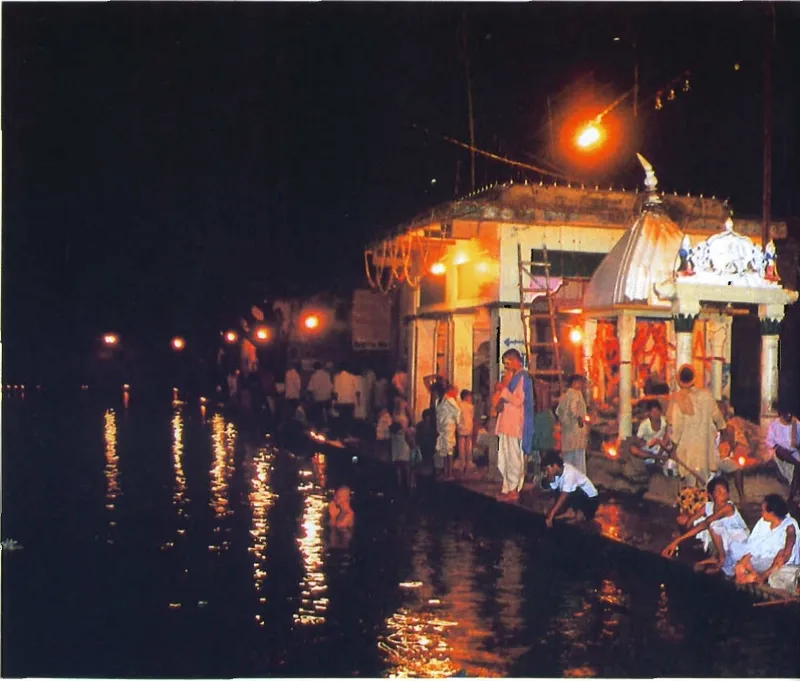
Śrīla Prabhupāda writes that Śrīla Raghunātha dāsa Gosvāmī lived at Rādhā-kuṇḍa for most of his long life and that the place of his devotional service, his bhajana-kuṭī (a hut for chanting and prayer), still exists there; in a 1970 talk he adds that his tomb, his samādhi, is there too.[41 +2] According to the Caitanya-caritāmṛta he bathed in the kuṇḍa three times a day, and in his own vows he writes that he lives at the kuṇḍa of the Queen, Śrī Rādhā, and will die by that dear lake.[40 +5]
Śrīla Viśvanātha Cakravartī Ṭhākura says in his commentary that Śrīla Rūpa Gosvāmī wrote the Dāna-keli-kaumudī at the order of Śrīla Raghunātha dāsa Gosvāmī, "the resident of Śrī Rādhā-kuṇḍa".[111 +1] According to the Bhakti-ratnākara, Śrīla Śrīnivāsa Ācārya, Śrīla Narottama dāsa Ṭhākura, Śrīla Śyāmānanda Paṇḍita and Śrīla Rāmacandra Kavirāja each came to see him there, and Śrīla Kṛṣṇadāsa Kavirāja Gosvāmī was with him at some of these meetings.[39 +5]
The same work tells that Śrīla Jāhnavā-devī came at his request and stayed three or four days. One midday on the bank she heard Kṛṣṇa's flute and saw Him with Rādhā and the sakhīs under a kadamba tree; her sitting place is at the kuṇḍa.[44 +5] Read more: Śrīla Raghunātha dāsa Gosvāmī's life at Rādhā-kuṇḍa →
Other Gosvāmīs and ācāryas
- Śrīla Kṛṣṇadāsa Kavirāja Gosvāmī tells the rediscovery in the Caitanya-caritāmṛta and describes the kuṇḍa at length in his Govinda-līlāmṛta (his bhajana-kuṭī).[12 +5]
- Śrīla Raghunātha Bhaṭṭa Gosvāmī later lived by Rādhā-kuṇḍa in a small cottage, as Śrīla Prabhupāda writes and Śrīla Kavi-karṇapūra's Gaura-gaṇoddeśa-dīpikā also says.[125 +1]
- According to the Bhakti-ratnākara, Śrī Gopāla Bhaṭṭa Gosvāmī kept a lodging at the kuṇḍas (his bhajana-kuṭī).[90]
- Śrīla Viśvanātha Cakravartī Ṭhākura speaks of "the great wealth" of living on the bank of Rādhā-kuṇḍa, and the Bengali Vṛndāvana-kathā (1920) says that he lived there from his youth, which is not certain (his bhajana-kuṭī).[127 +2]
- Śrīla Bhaktivinoda Ṭhākura sang of the kuṇḍa's banks, and Śrīla Prabhupāda reports that he called it "the most select place" for service following Rādhā's sakhīs and mañjarīs, Her maidservants (his bhajana-kuṭī).[20 +2]
- Śrīla Bhaktisiddhānta Sarasvatī Ṭhākura stayed here for the Kārttika vow and read the Upaniṣads, as Śrīla Prabhupāda tells below (his bhajana-kuṭī).[132 +3]
Śrīla Prabhupāda
In The Nectar of Instruction Śrīla Prabhupāda writes that Rādhā-kuṇḍa is worshipped mainly by the Gauḍīya Vaiṣṇavas, the …
In The Nectar of Instruction Śrīla Prabhupāda writes that Rādhā-kuṇḍa is worshipped mainly by the Gauḍīya Vaiṣṇavas, the followers of Śrī Caitanya Mahāprabhu, and that everyone interested in Kṛṣṇa consciousness should finally take shelter of it.[19 +1]
Names this place“Rādhā-kuṇḍa, at the foot of Govardhana, is superior to all because it is there that love of Kṛṣṇa overflows. Advanced devotees prefer to reside at Rādhā-kuṇḍa because this place is the site of many memories of the eternal loving affairs between Kṛṣṇa and Rādhārāṇī (rati-vilāsa).”
Śrīla Prabhupāda, The Nectar of Instruction (Śrī Upadeśāmṛta), Text 9, purport · vedabase.io
In 1976 he said how the kuṇḍa should be respected:[135 +2]
Names this place“There is no difference between Rādhā-kuṇḍa and Rādhārāṇī. So how you can jump over Rādhārāṇī? Rādhā-kuṇḍa and Rādhārāṇī, nondifferent. How you can enjoy Rādhā-kuṇḍa by swimming in it? You cannot touch with your feet even Rādhā-kuṇḍa. You can take little water and keep it on the head. That is respectful to Rādhā-kuṇḍa.”
Śrīla Prabhupāda, Room Conversation, Vṛndāvana, 5 September 1976 · vedabase.io
He said that going to Rādhā-kuṇḍa by force does not make one fit for it, and he gave Śrīla Raghunātha dāsa Gosvāmī as the standard:[137 +7]
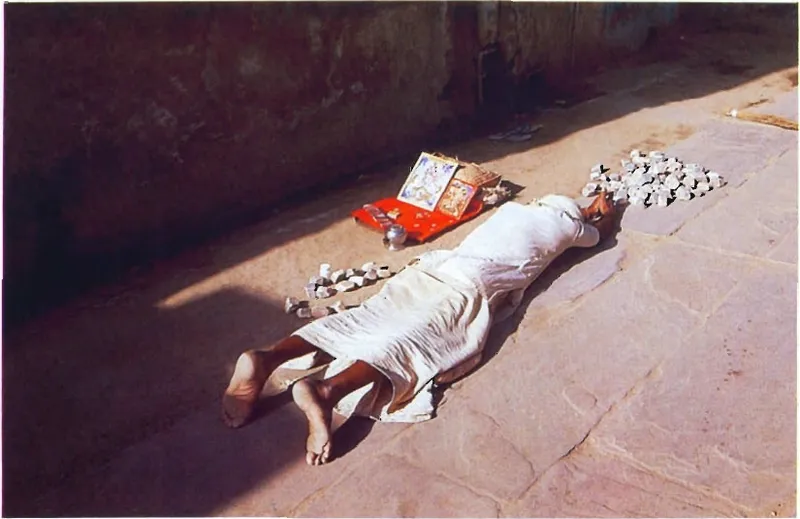
Names this place“Raghunātha dāsa Gosvāmī showed how to live in Rādhā-kuṇḍa. Saṅkhyā-pūrvaka-nāma-gāna-natibhiḥ kālāvasānī-kṛtau. He was circumambulating Rādhā-kuṇḍa, falling down, making a mark. That is Rādhā-kuṇḍa vāsī.”
Śrīla Prabhupāda, Room Conversation, Bombay, 16 August 1976 · vedabase.io
Rādhā-kuṇḍa is also where he last met his spiritual master, Śrīla Bhaktisiddhānta Sarasvatī Ṭhākura. He heard him say there that the bābājīs, renounced Vaiṣṇavas, who avoided his classes on the Upaniṣads lived not in Rādhā-kuṇḍa but in "Naraka-kuṇḍa", a pond of hell, and there his spiritual master told him personally to print books if he got money.[132 +6] He gave the year differently at different times: in a lecture of 14 February 1971 he placed the Upaniṣad classes "sometimes in 1934", and in a morning walk of 7 June 1976 in 1935; in the opening words of the Eighth Canto of Śrīmad-Bhāgavatam he dates his visit and the instruction about books to 1935, and in a lecture of 21 February 1976 to 1933.[132 +3]
Names this place“In my last meeting with him in Radha Kunda he advised me to print some books if I get money.”
Śrīla Prabhupāda, Letter to: Syama Sundarji, letter 76-11-15 (to Sri Purusottama Math, Puri), November 15th 1976 · vedabase.io
Songs
Śrīla Raghunātha dāsa Gosvāmī's Rādhā-kuṇḍāṣṭaka: each of its eight verses ends by taking the kuṇḍa as his only shelter.
Śrīla Raghunātha dāsa Gosvāmī's Rādhā-kuṇḍāṣṭaka: each of its eight verses ends by taking the kuṇḍa as his only shelter.[46 +1]
vrsabha-danuja-nasan narma-dharmokti-rangair
nikhila-nija-sakhibhir yat sva-hastena purnam
prakatitam api vrndaranya-rajna pramodais
tad ati-surabhi radha-kundam evasrayo me
Śrīla Bhaktivinoda Ṭhākura's song, which describes the cintāmaṇi (wish-fulfilling gem) banks and his longing to sit in a cottage in Svānanda-sukhada-kuñja and sing Kṛṣṇa's names.[20 +2]
cintāmaṇi-moya rādhā-kuṇḍa-taṭa
tāhe kuñja śata śata
prabala bidruma- moya taru latā
muktā-phale abanata
Visiting today
The village
The guidebook Śrī Vraja-maṇḍala Parikramā (2007) places the village of Āriṭa about three miles north-east of Govardhana and fourteen miles from Mathurā and Vṛndāvana. Govardhana Hill (2001) says that most ISKCON devotees begin their Govardhana parikramā (the walk around the hill) here, where the Vṛndāvana road meets the path.[4 +4] In 1971 Śrīla Prabhupāda said that thousands of devotees go to see the two lakes every day.[153]
At the kuṇḍa
Smaller places described here
- Jhūlana-ghāṭa, on the western bank: according to the local tradition recorded in Śrī Vraja-maṇḍala Parikramā (2007), Rādhā and Kṛṣṇa used to swing here; the book adds that the girls of Rādhā-kuṇḍa still swing here at festival time, a report of 2007 that may not describe the present.[96]
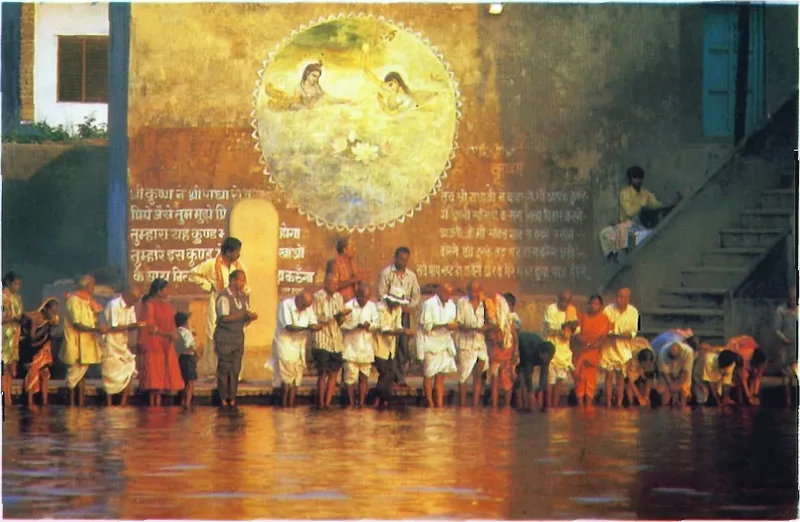
- Dāsa Gosvāmī-ghāṭa: The Colour Guide (1999) shows sādhus (holy men) bathing here but does not say how the ghāṭa got its name.[134 +1]
- Bhānukhora: according to the Bhakti-ratnākara, one of two kuṇḍas, with Śivakhora, that Śrīla Rāghava Paṇḍita showed Śrīla Śrīnivāsa Ācārya and Śrīla Narottama dāsa Ṭhākura here.[115]
- Śiva Khari: the last name, no. 69, in the key of the numbered chart of Govardhana, after Uddhava-kuṇḍa (no. 68), in a list that begins with Rādhā-kuṇḍa; the key gives the name only and says nothing about the place.[155] The chart draws no. 69 as a circle round a pond beside its route line at the western edge of Rādhā-kuṇḍa town, south of the line where it enters the town from the direction of no. 68, and north-west of the numbers for Rādhā-kuṇḍa and Śyāma-kuṇḍa; it prints no name beside the number.[156] The Bhakti-ratnākara names a kuṇḍa called Śiva-khora at Rādhā-kuṇḍa, but it does not use the name Khari or say where the kuṇḍa lies, and no source says that the two names belong to one place.[115]
- Rādhā-Dāmodara shrine: a small temple with Śrīla Jīva Gosvāmī's bhajana-kuṭī across the road from Lalitā-kuṇḍa, according to the undated parikramā notes Rādhā-kuṇḍa.[157 +1]
- Vaiṣṇava samādhis near Lalitā-kuṇḍa: known only from a photograph in The Colour Guide (1999), which names none of them.[159]
- The kadamba forest that may once have surrounded Ban-Khaṇḍī Mahādeva had disappeared by 1999, according to The Colour Guide (1999).[160]
Location
| Where it is | At the northern-most point of Govardhana Hill; "at the foot of Govardhana Hill"; on the district map north of Govardhana.[161] Pilgrims performing Govardhana parikramā "enter the narrow streets of Rādhā-kuṇḍa"[162] |
|---|---|
| On the numbered Govardhana chart | 1 (printed as “Radha Kunda”)[163] |
Places at Rādhā-kuṇḍa
97 places
Kuṇḍas
10 places- Śyāma-kuṇḍa
- Lalitā-kuṇḍa
- Mohana-kuṇḍa
- Lagmohana-kuṇḍa
- Kaṅkaṇa-kuṇḍa
- Vajranābha-kuṇḍa
- Mālyahāriṇī-kuṇḍa
- Śivakhora
Show all (10)
Ghāṭas
6 placesKuñjas of the sakhīs
19 placesPlaces of the ācāryas
13 placesTemples and shrines
22 places- Girirāja Mahārāja Mandira
- Lalitā-bihārī Mandira
- Rādhā-Gopīnātha Mandira (Rādhā-kuṇḍa, by Jāhnavā's sitting place)
- Rādhā-Gokulānanda Mandira
- Rādhā-Gopīnātha Mandira (Rādhā-kuṇḍa, Madhu Paṇḍita's pratibhū)
- Gadādhara-Caitanya Mandira
- Rādhā-Kānta Mandira
- Rādhā-Ramaṇa Mandira
Show all (22)
- Śyāmasundara Mandira
- Rādhā-Mādhava Mandira
- Rādhā-vinoda Mandira
- Sītānātha Mandira
- Madana-mohana Mandira
- Kuṇḍeśvara Mahādeva Mandira
- Bāṅke-bihārī Mandira
- Aṣṭa-sakhī Mandira
- Rādhā-Dāmodara Mandira
- Bankhaṇḍī Mahādeva Mandira
- Rādhā-Kuñjabihārī Gauḍīya Maṭha
- Jagannātha Mandira
- Rādhā-Govinda Mandira
- Rādhā-Kṛṣṇa Mandira
Also listed here
- Bhānukhora
- Dāsa Gosvāmī-ghāṭa ghāṭa
- Jhūlana-ghāṭa ghāṭa
- Kadamba forest (Ban-Khaṇḍī Mahādeva) forest
- Rādhā-Dāmodara shrine (Jīva Gosvāmī's bhajana-kuṭī, Rādhā-kuṇḍa) shrine
- Rādhā-kuṇḍa (village) village
- Sanānda-kuñja kuñja
- Svānanda-sukhada-kuñja (Bhaktivinoda Ṭhākura's song) kuñja
- Śiva Khari (Govardhana chart key 69)
- Balarāma-kuṇḍa (Rādhā-kuṇḍa) kuṇḍa
- Gopāla Maṇipura Mandira temple
- Imlī-tala (Rādhā-kuṇḍa) tree
- Mahāprabhu Mandira (Rādhā-kuṇḍa) temple
- Maṇipura Mahārāja Mandira (Rādhā-kuṇḍa) temple
- Nandinī-gherā
- Parikramā path (Rādhā-kuṇḍa) street/lane
- Rādhā-vinoda-bihārī Mandira temple
- Rāmeśvara Mandira (Rādhā-kuṇḍa) temple
- Vraja-Mohana Mandira temple
- Śiva Mandira (Rādhā-kuṇḍa, northern guardian) temple
Nearby places
Pūñcharī · Govardhana (town) · Govardhana · Mathurā
Pictures
8 pictures
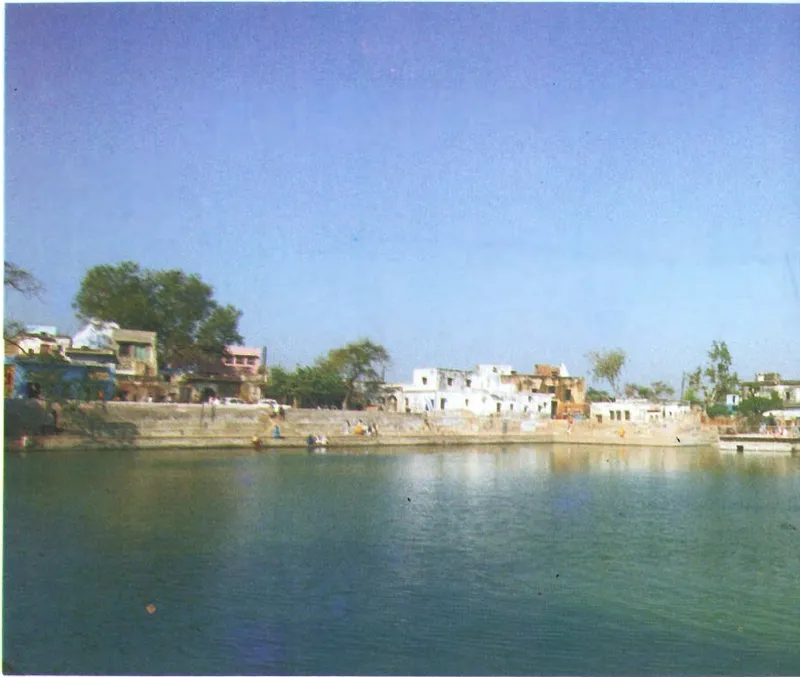
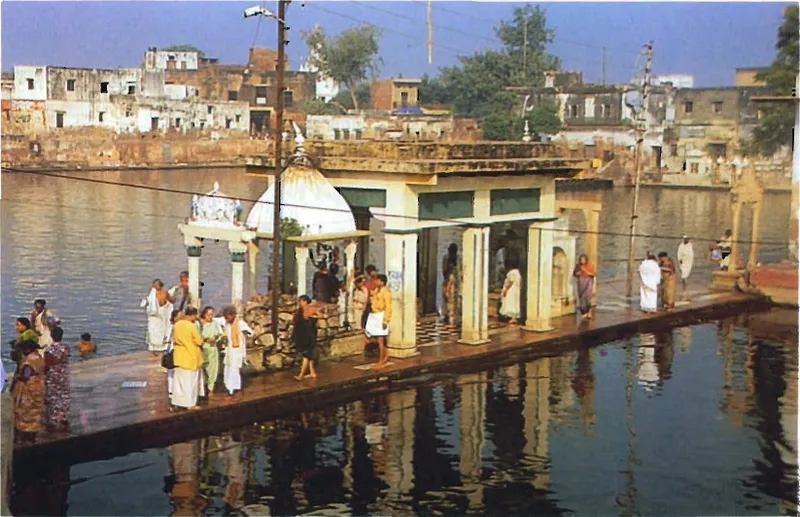
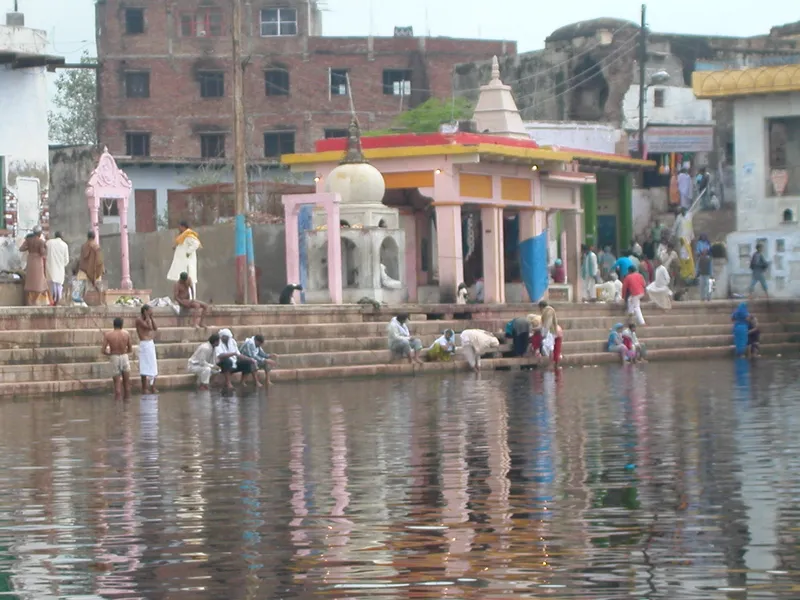
History
Two historians, A. W. Entwistle (1987) and Prabhudayāl Mītal (1966), credit the masonry ghāṭas (bathing steps) of Rādhā-kuṇḍa to Lālā Bābū (Kṛṣṇacandra Siṁha), a wealthy Bengali who settled in Vraja early in the nineteenth century, but give no year.[98 +3] The Bengali Vṛndāvana-kathā (1920) says that he had all four sides of the kuṇḍa faced with stone.[101]
The earlier dates come from modern guidebooks and are not certain. The Colour Guide to Rādhā-kuṇḍa (1999) and The Color Guide to Vṛndāvana (2000) give 1545 for the purchase of the fields and the start of the digging and 1554 for its end; the first alone gives 1591 for steps added by Rājā Mān Singh of Jaipur.[91 +7] Entwistle (1987) reports a record of 1545 in which Śrīla Raghunātha dāsa Gosvāmī bought land from the village council to dump the earth from the digging; the record itself has not been independently examined. The Colour Guide says instead that Śrīla Jīva Gosvāmī bought the two fields in Śrīla Raghunātha dāsa Gosvāmī's name.[91 +6]
Where the sources differ
The Bhāgavatam does not tell how the kuṇḍa came into being; the later accounts differ.
The Bhāgavatam does not tell how the kuṇḍa came into being; the later accounts differ.
Accounts differ How Rādhā-kuṇḍa came into being.
- Varāha Purāṇa 164.32–37After killing Ariṣṭa Kṛṣṇa makes a tīrtha with His heel and bathes; Rādhā, embracing Him, makes not far away a kuṇḍa known by Her own name.
- Gopāla-campū and Saṅkalpa-kalpadruma (Śrīla Jīva Gosvāmī)Kṛṣṇa makes His tīrtha and teases Rādhā; Her friends say that Her lake will come to be (Gopāla-campū [72]); after the night's rāsa the text names the pond that Rādhā, with countless friends, formed with Her own hands. In the Saṅkalpa-kalpadruma (v. 106) the joker, having made His kuṇḍa, causes Śrī Rādhikā to make another (anyat kārayāmāsa).
- Rādhā-kuṇḍāṣṭaka (Śrīla Raghunātha dāsa Gosvāmī)After the bull-demon's death, amid joking talk about dharma, the kuṇḍa was made full 'with (one's) own hand' (sva-hastena) together with all (one's) own female friends (nikhila-nija-sakhībhiḥ); whose hand is meant is a reading question.
- Purāṇic verses quoted by Śrīla Viśvanātha CakravartīRādhā and Her friends dig a pond in a shallow ditch left by Ariṣṭa's hooves, west of Kṛṣṇa's pond, and the tīrthas fill it from Kṛṣṇa-kuṇḍa.
The wording of these accounts is our summary of the sources, not a published translation.
Accounts differ When Ariṣṭa was killed and the two kuṇḍas appeared (time of day and season).
- Śrīmad-Bhāgavatam 10.36.1'Then' (tarhi) Ariṣṭa came to the cowherd village; no time of day, month or season is given.
- Śrīla Sanātana Gosvāmī, Śrīla Jīva Gosvāmī and Śrīla Viśvanātha Cakravartī on ŚB 10.36.1 (quoting the Viṣṇu Purāṇa)Ariṣṭa came at dusk (pradoṣa), when Kṛṣṇa was setting out for the rāsa; no month is given.
- Śrīla Jīva Gosvāmī on ŚB 10.36.16 (and Vaṁśīdhara)The rāsa at Govardhana of that night is well known to have taken place in the middle of spring.
- Śrīla Jīva Gosvāmī, Gopāla-campū, Pūrva 31.57Sets the rāsa of that night in spring; at dawn after it the pair's joy spread in the pond Rādhā had formed with Her own hands; whether She formed it at that dawn the sentence does not settle. No month is given.
Accounts differ Whether Śrī Caitanya Mahāprabhu found the forgotten kuṇḍas Himself or was shown them by His guide.
- Caitanya-caritāmṛta, Madhya 18.3–5 (Śrīla Prabhupāda's translation and purport)The kuṇḍas were lost to everyone's vision; the omniscient Lord discovered Rādhā-kuṇḍa and Śyāma-kuṇḍa in two paddy fields and bathed in the little water.
- Bhakti-ratnākara, Fifth Wave p. 194Neither the people of Ariṣṭa-grāma nor the brāhmaṇa who had come with Him from Mathurā could tell Him where the kuṇḍas were; the omniscient Lord saw the hidden tīrtha in the two paddy fields.
- Śrīla Murāri Gupta, Kṛṣṇa-caitanya-caritāmṛta 4.8.8At Govardhana His guide, the Mathurā brāhmaṇa Kṛṣṇa-dāsa, shows Him the pair of kuṇḍas east of the hill, which give the rasa of Kṛṣṇa, and the best rāsa-maṇḍala to the south; no paddy fields and no search are mentioned, and the verse names neither kuṇḍa.
Who dug out the two kuṇḍas again.
Accounts differ Who excavated or restored the two kuṇḍas (Rādhā-kuṇḍa and Śyāma-kuṇḍa) after Śrī Caitanya Mahāprabhu found them.
- Śrīla Prabhupāda, CC Ādi 10.90 purport'Following His directions, Śrīla Rūpa Gosvāmī and Sanātana Gosvāmī renovated Rādhā-kuṇḍa' (after Śrī Caitanya Mahāprabhu had bathed in the small reservoir in an agricultural field and pointed out that Rādhā-kuṇḍa was originally there); 'This is one of the brilliant examples of how the Gosvāmīs excavated lost places of pilgrimage.'
- Śrīla Prabhupāda, The Nectar of Instruction, text 9, purportAfter Śrī Caitanya Mahāprabhu took His bath in the small pond and told His devotees that the actual Rādhā-kuṇḍa was there, 'Later the pond was excavated by Lord Caitanya's devotees, headed first by the Six Gosvāmīs, such as Rūpa and Raghunātha dāsa.'
- The Colour Guide to Rādhā-kuṇḍa (1999)Śrīla Raghunātha dāsa Gosvāmī excavated the kuṇḍas, with the large donation of a wealthy merchant, Samarpaṇ ('some say Samarpaṇ was a King'), whom Lord Badri-Nārāyaṇa had sent to him in a dream; he called Śrīla Jīva Gosvāmī, who bought the two paddy fields in Śrīla Raghunātha dāsa Gosvāmī's name in 1545, and the excavation was then under the personal supervision of both; the work was completed in 1554. On it says that Śrīla Raghunātha dāsa Gosvāmī was 'the inspiration and spiritual force behind the excavation', but that it was Śrīla Jīva Gosvāmī 'who actually purchased the land, oversaw the excavation and managed all the affairs'.
- Śrī Vraja-maṇḍala Parikramā (2007), Vṛndāvana-Dhāma Ki Jaya! (c. 1986) and the undated parikramā notes Rādhā-kuṇḍaŚrīla Raghunātha dāsa Gosvāmī restored the two kuṇḍas with the money of a wealthy pilgrim from Badarikāśrama whom Śrī Badrī-nārāyaṇa had sent to him; in Vṛndāvana-Dhāma Ki Jaya! (c. 1986) a rich merchant named Sampanna, to whom Kṛṣṇa appeared in a dream at Badarikāśrama, came to help him excavate Rādhā-kuṇḍa. Śrī Vraja-maṇḍala Parikramā (2007) adds that Śrī Caitanya made manifest the kuṇḍas 'which had been established by Mahārāja Vajranābha' and that 'Later, Śrī Raghunātha dāsa Gosvāmī reconstructed them as we see them today', and tells, as hearsay, that he found Deities 'while he was renovating the kuṇḍa'; the undated parikramā notes Rādhā-kuṇḍa: he dug around the Pāṇḍava trees while excavating Śyāma-kuṇḍa. …
Accounts differ What land was bought at Rādhā-kuṇḍa in 1545, and by whom
- The Colour Guide to Rādhā-kuṇḍa (1999)Śrīla Raghunātha dāsa Gosvāmī asked Śrīla Jīva Gosvāmī to buy the two paddy fields where Rādhā-kuṇḍa and Śyāma-kuṇḍa lay; Śrīla Jīva Gosvāmī bought them in Śrīla Raghunātha dāsa Gosvāmī's name in 1545, and the digging then began under both of them.
- Entwistle (1987), p. 148, citing Mukherjee and Wright (1979), p. 316 n. 20It is recorded that in 1545 Śrīla Raghunātha dāsa Gosvāmī bought land from the local village council (the 'Panch') to dump the earth dug out of the tank; Śrīla Jīva Gosvāmī is not named.
The year of Śrīla Prabhupāda's last meeting with his spiritual master here.
Accounts differ The year of Śrīla Prabhupāda's meeting with Śrīla Bhaktisiddhānta Sarasvatī at Rādhā-kuṇḍa (the instruction to print books) and of Śrīla Bhaktisiddhānta's Kārttika stay there.
- Śrīla Prabhupāda, ŚB Canto 8 (opening words)'Sometime in the year 1935 when His Divine Grace was staying at Rādhā-kuṇḍa, I went to see him from Bombay.'
- Śrīla Prabhupāda, morning walk, Los Angeles, 7 June 1976Śrīla Bhaktisiddhānta went to Rādhā-kuṇḍa for Kārttika-vrata 'in 1935' (the Upaniṣad classes).
- Śrīla Prabhupāda, lecture, Gorakhpur, 14 February 1971The same Upaniṣad episode 'sometimes in 1934'.
- Śrīla Prabhupāda, lecture, Māyāpur, 21 February 1976'And in 1933, when he was in Rādhā-kunḍa, I was at that time Bombay…' (the instruction to print books).
What Śrīla Prabhupāda said about bathing in the kuṇḍa, and when: his recorded words are those of 5 September 1976; the "three drops" instruction is the guidebooks' report and was not found in his recorded words.[135 +2]
Accounts differ What Śrīla Prabhupāda said about bathing in Rādhā-kuṇḍa, and when.
- Śrīla Prabhupāda, room conversation, Vṛndāvana, 5 September 1976 (vedabase)Rādhā-kuṇḍa and Rādhārāṇī are non-different; one cannot swim in it or touch it with the feet; 'You can take little water and keep it on the head.'
- The Colour Guide to Rādhā-kuṇḍa (1999)In 1976, after devotees were reported swimming in Rādhā-kuṇḍa, he told the devotees gathered for the Gaura-Pūrṇimā festival that no one should bathe in it but should sprinkle three drops of water on their heads; it then quotes the words of the 5 September conversation in an edited form.
- Govardhana Hill: India's Most Sacred Mountain (2001)When he heard of devotees splashing in Rādhā-kuṇḍa he said they should 'only sprinkle three drops of water on their heads as this was as good as bathing' (no date).
Accounts differ To what the name Svānanda-sukhada-kuñja belongs.
- Śrīla Bhaktivinoda Ṭhākura's songs as the song book (Nandgram Dham Vaiṣṇava song book (nandgramdham.org/songs/) (2026)) gives them: 'Cintāmaṇi-moya' and 'Baraṇe taḍit' (Gīta-mālā, Siddhi-lālasā) and 'Āmi to' svānanda-sukhada-bāsī' (Śaraṇāgati); with Vṛndāvana-Dhāma Ki Jaya! (c. 1986)'s own English of 'Cintāmaṇi-moya'Among the hundreds of groves on the cintāmaṇi banks of Rādhā-kuṇḍa is the charming Svānanda-sukhada kuñja, with a cottage where the singer longs to sit and sing Kṛṣṇa's names ('Cintāmaṇi-moya' vv. 1–2; Vṛndāvana-Dhāma Ki Jaya! (c. 1986): 'My cottage is shining beautifully within that most enchanting garden called Svānanda-sukhada-kuñja'); the singer longs to be the maidservant Kamala-mañjarī, whose home (dhāma) is Svānanda-sukhada, and asks when, residing at Rādhā-kuṇḍa, she will serve Rādhā-Kṛṣṇa ('Baraṇe taḍit' vv. 1, 4; the song does not say in so many words that this home is at Rādhā-kuṇḍa); the singer is a resident of Svānanda-sukhada and a maidservant of Rādhikā-Mādhava's feet ('Āmi to'' v. 1; the song does not name Rādhā-kuṇḍa).
- The Colour Guide to Rādhā-kuṇḍa (1999); the undated parikramā notes Rādhā-kuṇḍaŚrīla Bhaktivinoda Ṭhākura's bhajana-kuṭīra at Rādhā-kuṇḍa, used after him by Śrīla Bhaktisiddhānta Sarasvatī Ṭhākura, 'is known as the Vraja-Swānanda-Sukhada-kuñja' (The Colour Guide to Rādhā-kuṇḍa (1999), text and photo caption); the undated parikramā notes Rādhā-kuṇḍa reports a sign above its entrance reading 'Vraja Swananda Sukhada Kunja'.
- Śrī Vraja-maṇḍala Parikramā (2007)In the centre of Śrī Rādhā-kuṇḍa is Anaṅga Mañjarī's kuñja, Anaṅgamañjarī-ānandada-kuñja, 'also known as Svānanda-sukhada-kuñja'; its map of the kuñjas labels the medallion in the middle of the water 'Svānanda-sukhada-kuñja'.
- Song book (Nandgram Dham Vaiṣṇava song book (nandgramdham.org/songs/) (2026)): about-text of 'Āmi to' svānanda-sukhada-bāsī' and the description of its Śaraṇāgati section ('Bhakti Pratikūla Bhāva Varjanāṅgīkāra')Svānanda-sukhada-kuñja is 'a specific grove in Godruma near Māyāpura tied to his own devotional life' (about-text); the last sentence of the section description likewise names 'Svananda-sukhada-kunja in Godruma'. Neither gives a source for the Godruma placement (the song page lists four 'Further reading' web pages after the about-text; they are not sources used here), and no source has been found that places the kuñja in Godruma.
More on this place
How Rādhā-kuṇḍa appeared: the accounts side by side · How Rādhā-kuṇḍa was found and dug out again · Śrīla Raghunātha dāsa Gosvāmī's life at Rādhā-kuṇḍa · The kuñjas of the sakhīs around Rādhā-kuṇḍa
References
163 references
- Śrīla Rūpa Gosvāmī, Upadeśāmṛta 9 (The Nectar of Instruction, text 9), online edition · vedabase.io
- Śrīla Jīva Gosvāmī, Saṅkalpa-kalpadruma, verses 221–222, GRETIL
- The Colour Guide to Rādhā-kuṇḍa (1999), Rājaśekhara dāsa Brahmacārī, PDF p. 13
- Śrī Vraja-maṇḍala Parikramā (2007), PDF p. 83
- the undated parikramā notes Rādhā-kuṇḍa, ¶3
- Śrīla Kṛṣṇadāsa Kavirāja Gosvāmī, Śrī Caitanya-caritāmṛta, CC Madhya-līlā 18.3, online edition · vedabase.io
- Śrīla Jīva Gosvāmī, Gopāla-campū, Pūrva-campū 1.9, GRETIL
- Śrīla Raghunātha dāsa Gosvāmī, Vraja-vilāsa-stava, verses 52–54
- Śrīla Raghunātha dāsa Gosvāmī, Vraja-vilāsa-stava, verse 58
- Śrīla Narahari Cakravartī, Bhakti-ratnākara, Pañcama-taraṅga (5th wave), printed page 193, 2nd ed., 1912
- Varāha Purāṇa, adhyāya 164, verses 32–37, Sanskrit Wikisource
- Śrīla Kṛṣṇadāsa Kavirāja Gosvāmī, Govinda-līlāmṛta, sarga 7, vv. 26–27, after the editions of Haridas Das and Haridas Shastri
- Śrīmad-Bhāgavatam 10.36.16, purport, verse 7 of the twenty quoted verses, online edition · vedabase.io
- The Colour Guide to Rādhā-kuṇḍa (1999), Rājaśekhara dāsa Brahmacārī, PDF p. 30
- Śrī Vraja-maṇḍala Parikramā (2007), PDF p. 101
- Śrīla Kṛṣṇadāsa Kavirāja Gosvāmī, Govinda-līlāmṛta, sarga 7, verse 6 (in the 26-verse kulaka 7.1–26 on Rādhā-kuṇḍa), after the editions of Haridas Das and Haridas Shastri
- Śrīla Rūpa Gosvāmī, Upadeśāmṛta, Śrī Upadeśāmṛta, text 10, online edition · vedabase.io
- Śrīla Rūpa Gosvāmī, Upadeśāmṛta, Śrī Upadeśāmṛta, text 11, online edition · vedabase.io
- Śrīla Prabhupāda, The Nectar of Instruction (Śrī Upadeśāmṛta), Text 9, purport · vedabase.io
- Śrīla Prabhupāda, The Nectar of Instruction (Śrī Upadeśāmṛta), Text 11, purport · vedabase.io
Show all 163 references
- Śrīla Rūpa Gosvāmī, Laghu-bhāgavatāmṛta, Uttara-khaṇḍa (2), 1.45, GRETIL
- Śrīla Rūpa Gosvāmī, Ujjvala-nīlamaṇi, 4.4–4.5, GRETIL
- Śrīla Jīva Gosvāmī, Ṣaṭ-sandarbha, Prīti-sandarbha, anuccheda 109, GRETIL
- Śrīla Jīva Gosvāmī, Gopāla-campū, Pūrva-campū, pūraṇa 31, prose [83], GRETIL
- Śrīla Raghunātha dāsa Gosvāmī, Muktā-carita para 304–308, GRETIL
- Śrī Caitanya-caritāmṛta, Madhya-līlā 18.8, online edition · vedabase.io
- Śrīmad-Bhāgavatam 10.36.1, GRETIL
- Śrīmad-Bhāgavatam 10.36.13, GRETIL
- Śrīmad-Bhāgavatam 10.36.15, GRETIL
- Śrīla Prabhupāda, Kṛṣṇa, the Supreme Personality of Godhead (Kṛṣṇa book), Chapter 36, 'Kaṁsa Sends Akrūra for Kṛṣṇa' · vedabase.io
- Śrīla Sanātana Gosvāmī: commentary on ŚB 10.36.15, Bhagavata Vidya Pith edition, ed. Bhagavata Rishi and Krishna Shankar Shastri, 1996
- Śrīla Kṛṣṇadāsa Kavirāja Gosvāmī, Śrī Caitanya-caritāmṛta, CC Madhya-līlā 18.4, online edition · vedabase.io
- Śrīla Kṛṣṇadāsa Kavirāja Gosvāmī, Śrī Caitanya-caritāmṛta, Madhya-līlā 18.5, online edition · vedabase.io
- Śrīla Kṛṣṇadāsa Kavirāja Gosvāmī, Śrī Caitanya-caritāmṛta, CC Madhya-līlā 18.6, online edition · vedabase.io
- Śrīla Kṛṣṇadāsa Kavirāja Gosvāmī, Śrī Caitanya-caritāmṛta, Madhya-līlā 18.13, online edition · vedabase.io
- Śrīla Kṛṣṇadāsa Kavirāja Gosvāmī, Śrī Caitanya-caritāmṛta, Madhya-līlā 18.14, online edition · vedabase.io
- Śrīla Prabhupāda, Śrī Caitanya-caritāmṛta, Madhya-līlā 18.3, purport · vedabase.io
- Śrīla Prabhupāda, Śrī Caitanya-caritāmṛta, Madhya-līlā 18.5, translation · vedabase.io
- Śrīla Narahari Cakravartī, Bhakti-ratnākara, Pañcama-taraṅga (5th wave), printed page 194, 2nd ed., 1912
- Śrīla Kṛṣṇadāsa Kavirāja Gosvāmī, Śrī Caitanya-caritāmṛta, Ādi-līlā 10.101, online edition · vedabase.io
- Śrīla Prabhupāda, Śrī Caitanya-caritāmṛta, Ādi-līlā 10.91, purport · vedabase.io
- Śrīla Prabhupāda, Vaiṣṇava Calendar Description conversation, Calcutta, 2 September 1970 · vedabase.io
- Śrīla Prabhupāda, Lecture on Bhagavad-gītā 4.22, Bombay, 11 April 1974 · vedabase.io
- Śrīla Narahari Cakravartī, Bhakti-ratnākara, Ekādaśa-taraṅga (11th wave), printed page 668, 2nd ed., 1912
- Śrīla Raghunātha dāsa Gosvāmī, Sva-niyama-daśaka v.9 (Grantha Mandira Stavāvalī, section (12))
- Śrīla Raghunātha dāsa Gosvāmī, Rādhā-kuṇḍāṣṭaka, verses 1–2 and 9
- Śrīla Raghunātha dāsa Gosvāmī, Muktā-carita, invocation, fourth verse, GRETIL
- Śrīla Raghunātha dāsa Gosvāmī, Vraja-vilāsa-stava, verse 53
- Śrīla Viśvanātha Cakravartī Ṭhākura, Vraja-rīti-cintāmaṇi, tṛtīyaḥ sargaḥ, vv. 34 and 36
- Śrīla Rūpa Gosvāmī, Mathurā-māhātmya, part 1 vv. 418–419, section 'śrī-rādhā-kuṇḍādikasya'
- Varāha Purāṇa, adhyāya 164, verses 35-37, Sanskrit Wikisource
- Nārada Purāṇa, Pūrva-bhāga (पूर्वार्धः), adhyāya 82, v. 118 (Wikisource numbering 82-118)
- Garga-saṁhitā, Girirāja-khaṇḍa (3), adhyāya 7, verse 8, Sanskrit Wikisource
- Garga-saṁhitā, Girirāja-khaṇḍa (3), adhyāya 8, verse 6, Sanskrit Wikisource
- Śrīla Jīva Gosvāmī, Gopāla-campū, Pūrva-campū 31, prose [56]–[60], GRETIL
- Śrīla Jīva Gosvāmī, Gopāla-campū, Pūrva-campū 31, prose [65]–[69], GRETIL
- Śrīla Jīva Gosvāmī, Gopāla-campū, Pūrva-campū 31.57–58, GRETIL
- Śrīla Jīva Gosvāmī, Saṅkalpa-kalpadruma, verses 104–106, GRETIL
- Purāṇic verses quoted by Viśvanātha Cakravartī Ṭhākura, ŚB 10.36.16, purport, online edition · vedabase.io
- Rādhā-kuṇḍotpatti-varṇana, part 1 v.1, with the text's heading (Rādhā-kuṇḍotpatti-varṇana)
- Śrīmad-Bhāgavatam 10.36.16, purport, verse 17 of the twenty quoted verses, online edition · vedabase.io
- Śrīla Narahari Cakravartī, Bhakti-ratnākara, Fifth Wave, 1912 ed. p. 191, 2nd ed., 1912
- Śrī Vraja-maṇḍala Parikramā (2007), PDF p. 85
- The Colour Guide to Rādhā-kuṇḍa (1999), Rājaśekhara dāsa Brahmacārī, PDF p. 31
- the undated parikramā notes Rādhā-kuṇḍa, ¶79
- Śrīmad-Bhāgavatam 10.36.16, purport, verse 18 of the twenty quoted verses, online edition
- Śrīla Nārāyaṇa Bhaṭṭa, Vraja-bhakti-vilāsa, adhyāya 4, printed page 85, 1st ed., publ. Bābā Kṛṣṇadāsa, Kusuma-sarovara, Saṁvat 2008
- Śrīla Jīva Gosvāmī: commentary on ŚB 10.36.16, Bhagavata Vidya Pith edition, ed. Bhagavata Rishi and Krishna Shankar Shastri, 1996
- Śrī Vraja-maṇḍala Parikramā (2007), PDF p. 76
- Bhaviṣya Purāṇa, parva 3 (Pratisarga), khaṇḍa 2, adhyāya 14, vv. 40–41
- Śrīla Rūpa Gosvāmī, Mathurā-māhātmya, part 1 vv. 420–423
- Śrīla Kṛṣṇadāsa Kavirāja Gosvāmī, Śrī Caitanya-caritāmṛta, Madhya-līlā 18.7, online edition · vedabase.io
- Śrīla Kṛṣṇadāsa Kavirāja Gosvāmī, Śrī Caitanya-caritāmṛta, Madhya-līlā 18.9, online edition · vedabase.io
- Śrīla Kṛṣṇadāsa Kavirāja Gosvāmī, Śrī Caitanya-caritāmṛta, Madhya-līlā 18.10, online edition · vedabase.io
- Śrīla Kṛṣṇadāsa Kavirāja Gosvāmī, Śrī Caitanya-caritāmṛta, Madhya-līlā 18.11, online edition · vedabase.io
- Śrī Caitanya-caritāmṛta, Madhya-līlā 18.12, online edition · vedabase.io
- Śrīla Narahari Cakravartī, Bhakti-ratnākara, Pañcama-taraṅga (5th wave), printed page 191, 2nd ed., 1912
- Śrīla Raghunātha dāsa Gosvāmī, Rādhā-kuṇḍāṣṭaka, verses 6–8
- Śrī Vraja-maṇḍala Parikramā (2007), PDF p. 87
- Śrī Vraja-maṇḍala Parikramā (2007), PDF p. 88
- the undated parikramā notes Rādhā-kuṇḍa, ¶94
- Govardhana Hill: India's Most Sacred Mountain (2001), Rajasekhara dasa Brahmacari, PDF p. 151
- Vṛndāvana-Dhāma Ki Jaya! (c. 1986), by Dhruva Mahārāja dāsa, PDF p. 35
- Śrīla Viśvanātha Cakravartī Ṭhākura, Kṛṣṇa-bhāvanāmṛta, sarga 14 (jala-vihāra-līlāsvādana), verse 15, with the ṭīkā, after the edition of Radhikanath Goswami, Vrindavan, 1906
- Śrīla Jīva Gosvāmī: commentary on ŚB 10.36.5–6, Bhagavata Vidya Pith edition, ed. Bhagavata Rishi and Krishna Shankar Shastri, 1996
- Śrīla Narahari Cakravartī, Bhakti-ratnākara, Fifth Wave, 1912 ed. p. 195, lines 4-5, 2nd ed., 1912
- The Colour Guide to Rādhā-kuṇḍa (1999), Rājaśekhara dāsa Brahmacārī, PDF p. 37
- Kṛṣṇa-caitanya-caritāmṛta, prakrama 4, sarga 8, vv. 8–10
- Śrīla Narahari Cakravartī, Bhakti-ratnākara, Fifth Wave, 1912 ed. p. 195, 2nd ed., 1912
- Śrīla Narahari Cakravartī, Bhakti-ratnākara, Fifth Wave, 1912 ed. p. 196, 2nd ed., 1912
- The Colour Guide to Rādhā-kuṇḍa (1999), Rājaśekhara dāsa Brahmacārī, PDF p. 42
- Vṛndāvana-Dhāma Ki Jaya! (c. 1986), by Dhruva Mahārāja dāsa, PDF p. 31
- Śrīla Prabhupāda, Śrī Caitanya-caritāmṛta, Ādi-līlā 10.90, purport · vedabase.io
- Śrīla Rūpa Gosvāmī, Lalita-mādhava, act 1, prose after v. 2 … after v.2')
- Śrīla Nārāyaṇa Bhaṭṭa, Vraja-bhakti-vilāsa, printed p. 85, section on the Rādhā and Kṛṣṇa kuṇḍas (ending '॥ ५ ॥'), 1st ed., publ. Bābā Kṛṣṇadāsa, Kusuma-sarovara, Saṁvat 2008
- Śrī Vraja-maṇḍala Parikramā (2007), PDF p. 100
- The Colour Guide to Rādhā-kuṇḍa (1999), Rājaśekhara dāsa Brahmacārī, PDF p. 158
- A. W. Entwistle, ch. 8 §12 'Radhakund', printed p. 339, Egbert Forsten, Groningen, 1987
- A. W. Entwistle, ch. 5 §35 'Patronage in the nineteenth century' (Krishna Chandra Sinha, 'Lala Babu'), printed p. 216, Egbert Forsten, Groningen, 1987
- Prabhudayāl Mītal, part 2 ('Braj kā itihās'), 'Ādhunik kāl': 'Braj ke samṛddhiśālī bhakt jan', Kṛṣṇacandra Siṁha (Lālā Bābū), printed p. 275
- Vṛndāvana-kathā, Viṁśa pariccheda, printed page 242
- The Colour Guide to Rādhā-kuṇḍa (1999), Rājaśekhara dāsa Brahmacārī, PDF p. 44
- The Color Guide to Vṛndāvana (2000), Written and Photographed by Rājaśekhara dāsa Brahmacārī, PDF p. 159
- A. W. Entwistle, ch. 5 §7 'The Six Goswamis and other contemporary Gaudiya devotees', printed p. 148, Egbert Forsten, Groningen, 1987
- The Colour Guide to Rādhā-kuṇḍa (1999), Rājaśekhara dāsa Brahmacārī, PDF p. 43
- The Colour Guide to Rādhā-kuṇḍa (1999), Rājaśekhara dāsa Brahmacārī, PDF p. 45
- The Colour Guide to Rādhā-kuṇḍa (1999), Rājaśekhara dāsa Brahmacārī, PDF p. 108
- The Colour Guide to Rādhā-kuṇḍa (1999), Rājaśekhara dāsa Brahmacārī, PDF p. 173
- Govardhana Hill: India's Most Sacred Mountain (2001), Rajasekhara dasa Brahmacari, PDF p. 160
- Vṛndāvana-Dhāma Ki Jaya! (c. 1986), by Dhruva Mahārāja dāsa, PDF p. 33
- Śrīla Rūpa Gosvāmī, Dāna-keli-kaumudī, vv. 99–100, after the undated edition published by Krishna Das of Kusum Sarovar
- Viśvanātha Cakravartī Ṭhākura, commentary on v. 100'), after the undated edition published by Krishna Das of Kusum Sarovar
- Śrīla Narahari Cakravartī, Bhakti-ratnākara, Sixth Wave (ṣaṣṭha taraṅga), 1912 ed. p. 456, 2nd ed., 1912
- Śrīla Narahari Cakravartī, Bhakti-ratnākara, Ninth Wave (navama taraṅga), 1912 ed. p. 576, 2nd ed., 1912
- Śrīla Narahari Cakravartī, Bhakti-ratnākara, Fifth Wave, 1912 ed. p. 198, 2nd ed., 1912
- Śrīla Narahari Cakravartī, Bhakti-ratnākara, Eleventh Wave (ekādaśa taraṅga), 1912 ed. p. 667, 2nd ed., 1912
- Śrīla Narahari Cakravartī, Bhakti-ratnākara, Eleventh Wave, 1912 ed. p. 668, 2nd ed., 1912
- Śrīla Narahari Cakravartī, Bhakti-ratnākara, Ekādaśa-taraṅga (11th wave), printed page 667, 2nd ed., 1912
- Śrīla Prabhupāda, Śrī Caitanya-caritāmṛta, Ādi-līlā 10.85, purport · vedabase.io
- Śrīla Narahari Cakravartī, Bhakti-ratnākara, Ekādaśa-taraṅga (11th wave), printed page 669, 2nd ed., 1912
- Śrīla Narahari Cakravartī, Narottama-vilāsa, Navama-vilāsa, vv. 50–52, printed page 79, right column, 1st ed., Baṅgābda 1314
- Śrī Caitanya-caritāmṛta, Ādi-līlā 4.125, online edition · vedabase.io
- Śrīla Kṛṣṇadāsa Kavirāja Gosvāmī, Govinda-līlāmṛta, sarga 7, vv. 1–2, after the editions of Haridas Das and Haridas Shastri
- Śrīla Kṛṣṇadāsa Kavirāja Gosvāmī, Govinda-līlāmṛta, sarga 7, vv. 100–101, after the editions of Haridas Das and Haridas Shastri
- Śrīla Prabhupāda, Śrī Caitanya-caritāmṛta, Ādi-līlā 10.158, purport · vedabase.io
- Gaura-gaṇoddeśa-dīpikā, v.185
- Surata-kathāmṛta, verse 103 (the author's closing verses)
- Vṛndāvana, the Playground of God (2010), Bhakti Caitanya Svāmī, PDF p. 93
- Vṛndāvana-kathā, chapter 19 (ūnaviṁśa pariccheda), note on Viśvanātha Cakravartī, printed p. 227
- Vṛndāvana-Dhāma Ki Jaya! (c. 1986), by Dhruva Mahārāja dāsa, PDF p. 32
- the undated parikramā notes Rādhā-kuṇḍa, ¶93
- Śrīla Prabhupāda, Morning Walk, Los Angeles, 7 June 1976 · vedabase.io
- Śrīla Prabhupāda, Lecture on Śrīmad-Bhāgavatam 6.3.20–23, Gorakhpur, 14 February 1971 · vedabase.io
- The Colour Guide to Rādhā-kuṇḍa (1999), Rājaśekhara dāsa Brahmacārī, PDF p. 49
- Govardhana Hill: India's Most Sacred Mountain (2001), Rajasekhara dasa Brahmacari, PDF p. 154
- Śrīla Prabhupāda, The Nectar of Instruction (Śrī Upadeśāmṛta), Text 10, purport · vedabase.io
- Śrīla Prabhupāda, Room Conversation, Vṛndāvana, 5 September 1976 · vedabase.io
- The Colour Guide to Rādhā-kuṇḍa (1999), Rājaśekhara dāsa Brahmacārī, PDF p. 48
- Śrīla Prabhupāda, Room Conversation, Bombay, 16 August 1976 · vedabase.io
- Śrīla Prabhupāda, Room Conversation, Vṛndāvana, 5 September 1976 · vedabase.io
- Śrīla Prabhupāda, Room Conversation, Vṛndāvana, 5 September 1976 · vedabase.io
- Śrīla Prabhupāda, Lecture on Śrīmad-Bhāgavatam 6.3.20-23, Gorakhpur, 14 February 1971 · vedabase.io
- Śrīla Prabhupāda, Morning Walk, Los Angeles, 7 June 1976 · vedabase.io
- Śrīla Prabhupāda, The Nectar of Instruction, Text 11, purport · vedabase.io
- Śrīla Prabhupāda, Lecture on Śrīmad-Bhāgavatam 6.3.18, Gorakhpur, 11 February 1971 · vedabase.io
- Śrīla Prabhupāda, Letter to: Srutadeva, letter 74-10-24, October 24th 1974 · vedabase.io
- Śrīla Prabhupāda, Arrival Address, Los Angeles, 20 June 1975 · vedabase.io
- Śrīla Prabhupāda, Letter to: Syama Sundarji, letter 76-11-15 (to Sri Purusottama Math, Puri), November 15th 1976 · vedabase.io
- Śrīla Prabhupāda, Śrīmad-Bhāgavatam, Canto 8, Chapter 1 page, Śrīla Prabhupāda's opening words to the canto · vedabase.io
- Śrīla Prabhupāda, Śrīla Bhaktisiddhānta Sarasvatī Appearance Day Lecture, Māyāpur, 21 February 1976 · vedabase.io
- Śrī Vraja-maṇḍala Parikramā (2007), PDF p. 95
- Govardhana Hill: India's Most Sacred Mountain (2001), Rajasekhara dasa Brahmacari, PDF p. 38
- Śrīla Prabhupāda, Lecture, San Francisco, 28 June 1971 · vedabase.io
- The Colour Guide to Rādhā-kuṇḍa (1999), Rājaśekhara dāsa Brahmacārī, PDF p. 92
- the key of the numbered Govardhana chart, ¶72
- the numbered chart of Govardhana, marker 69
- the undated parikramā notes Rādhā-kuṇḍa, ¶106
- The Colour Guide to Rādhā-kuṇḍa (1999), Rājaśekhara dāsa Brahmacārī, PDF p. 127
- The Colour Guide to Rādhā-kuṇḍa (1999), Rājaśekhara dāsa Brahmacārī, PDF p. 130
- The Colour Guide to Rādhā-kuṇḍa (1999), Rājaśekhara dāsa Brahmacārī, PDF p. 146
- The Colour Guide to Rādhā-kuṇḍa (1999), Rājaśekhara dāsa Brahmacārī, p. 10
- The Colour Guide to Rādhā-kuṇḍa (1999), Rājaśekhara dāsa Brahmacārī, p. 52
- Numbered list of the Govardhana sites (key of the Govardhana chart)