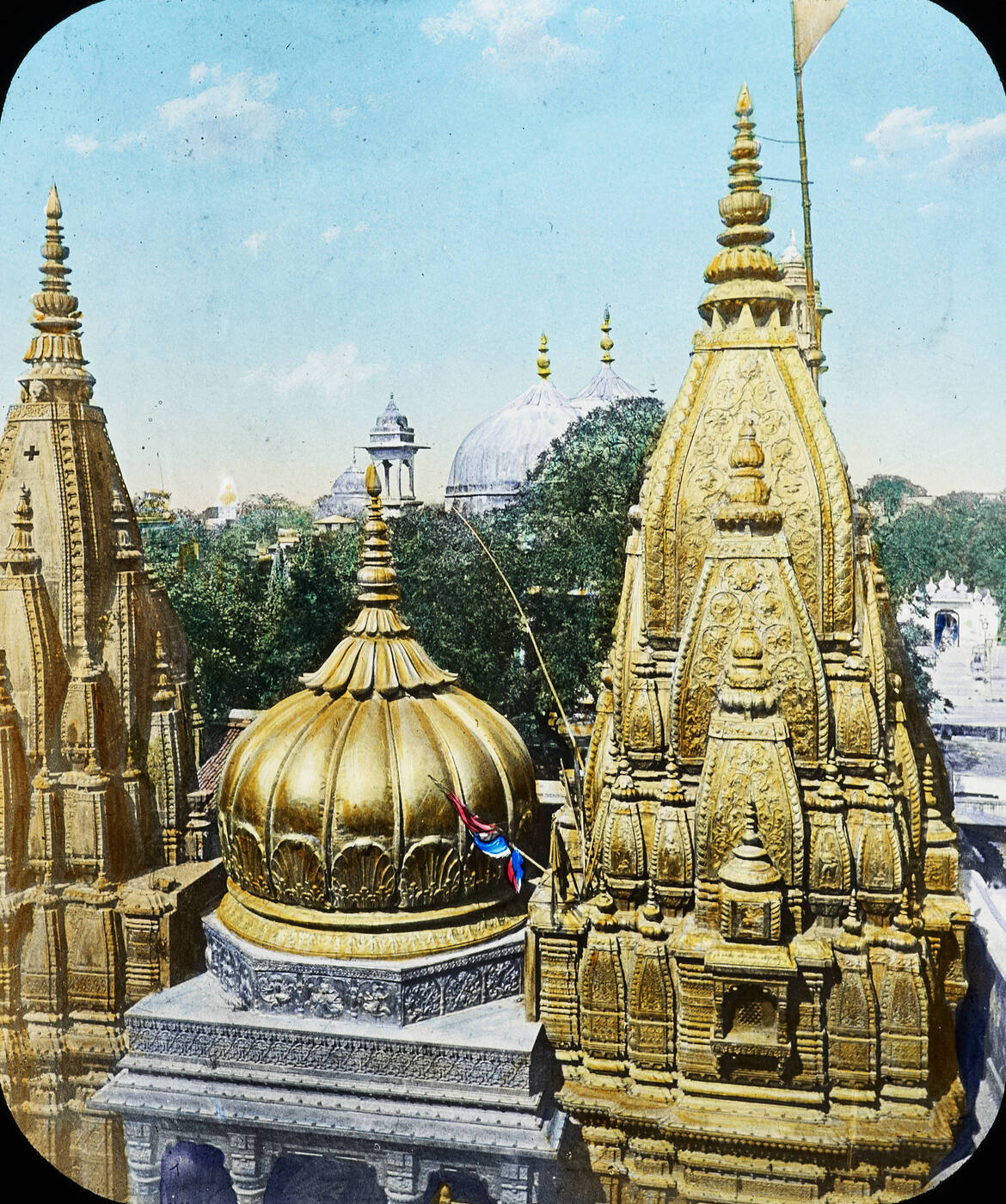
Almost everything known about Chandrashekhara Acharya comes from his role as host to Sri Chaitanya Mahaprabhu at Varanasi. Independent detail about his own life is thin.
The Physician's Trade #
Sri Chaitanya-charitamrita's account of Sri Chaitanya Mahaprabhu's associates at Varanasi introduces him in a single, precise phrase: "the physician Candrasekhara." The word used, vaidya, means a doctor of the classical Indian medical tradition. The text treats it almost as part of his name, "Candrasekhara Vaidya," and not as a passing detail. A traditional account of the household built around Tapana Mishra also records that Chandrasekhara Acharya worked as a scribe. He copied scripture by hand for the panditas of Kashi in a fine style of calligraphy. The same account says he belonged to a family long recognized for its learning. In this period Kashi was a major center of Sanskrit scholarship and Ayurvedic medicine. A physician who also copied manuscripts for the city's scholars would have moved easily among its learned circles. This fits the little else that is recorded of him. He appears as a settled, respected householder, not a wanderer who had given up family life.
Three Devotees in a City of Scholars #
Sri Chaitanya Mahaprabhu drew great fame in Varanasi. Even so, Sri Chaitanya-charitamrita clearly names only three devotees that He kept there: Chandrasekhara Acharya, Tapana Mishra, and in time Tapana Mishra's son, Raghunatha Bhatta Goswami. The text's own purport to this listing notes that the Lord went to Varanasi essentially alone, without a large party. It also notes that His local friendships were limited to this small circle, even as His public influence in the city grew large. So the Lord had a huge following across the city, but almost no personal companions. This is part of what makes Chandrasekhara Acharya's house significant. It was one of only two Vaishnava homes in all of Kashi that Sri Chaitanya Mahaprabhu treated as His own.
Two Men, One Name #
Any search for "Chandrasekhara Acharya" quickly turns up a second, better-documented person of the same name. He was a Navadvipa householder, sometimes called Acharyaratna, who lived beside the home of Sri Chaitanya Mahaprabhu's own father, Jagannatha Mishra. The young Lord's early kirtans, and a celebrated Vraja-lila play, were held in his house. Some traditional sources describe him as a relative of Mahaprabhu's mother's family. That Navadvipa Chandrasekhara is an important figure. Chaitanya-bhagavata even records his birth at Sylhet, along with several other associates who took birth ahead of Mahaprabhu by the Lord's own arrangement. His samadhi is still shown at Sridhama Mayapur. But he is a different person from the physician described here. Srila Prabhupada spoke about this confusion directly in a recorded conversation with Srila Bhakti Raksaka Sridhara Maharaja. In it, the two discussed a published article that had mixed up "Benares Chandrasekhara" with "Navadvipa Chandrasekhara." Prabhupada's reply was clear. The Benares Chandrasekhara "was a vaidya," a physician, and a separate person from the Navadvipa householder called Mahaprabhu's uncle. This account is only about the Varanasi physician. Readers researching the Navadvipa figure should look elsewhere.
A Class of Physician-Scholars #
In the Bengal and Kashi of this period, vaidya was not only a trade. It was also a recognized social community, standing among the learned, respectable classes alongside brahmanas and kayasthas. Chandrasekhara Acharya is said to have been a physician who could also read and copy Sanskrit manuscripts. Such a man would have belonged naturally to Varanasi's wider world of pandits, even without formal brahmana birth. This background helps explain a question that Chaitanya-charitamrita itself never answers. Sri Chaitanya Mahaprabhu was a sannyasi with no interest in wealth or status. Why would He twice choose to make His home in a physician's house, and not in a temple or a monastery? The text simply presents it as friendship. It says nothing more, and lets the two months of daily hospitality that followed show that friendship.
