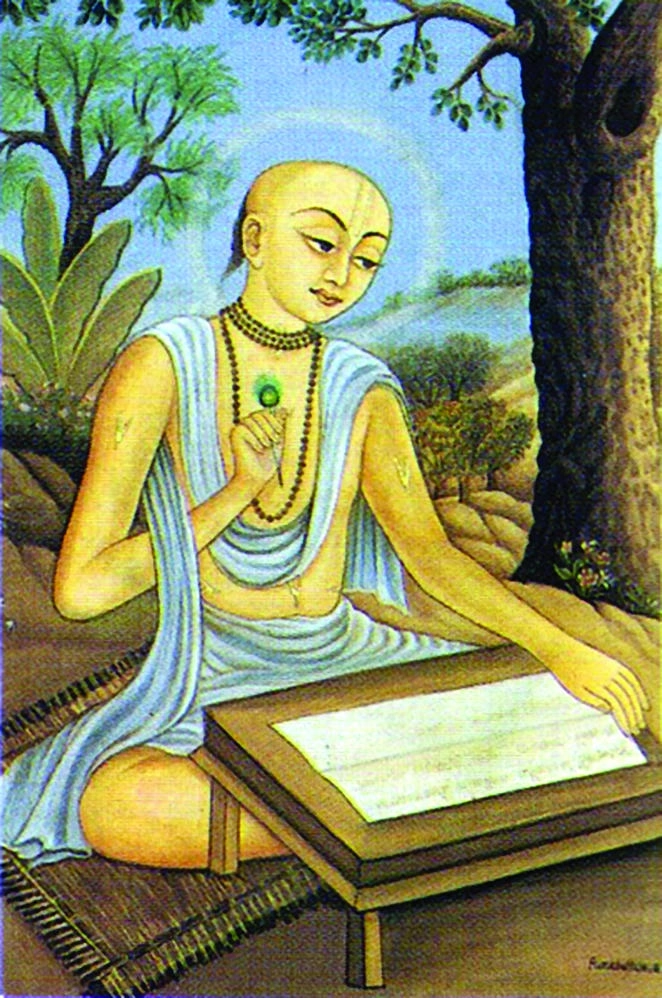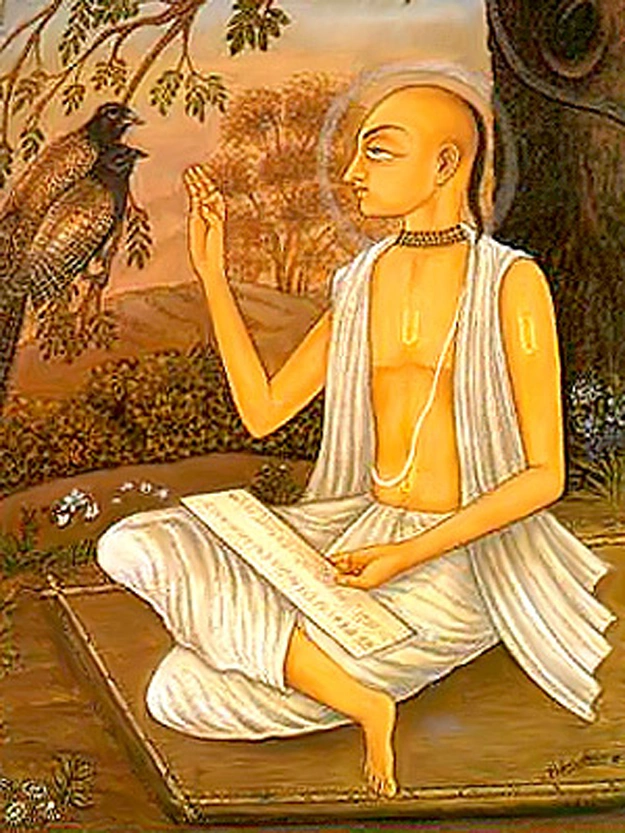
Srila Raghunatha Bhatta Goswami
The Goswami Whose Voice Made Srimad-Bhagavatam Sing
Also known as Raghunatha Bhattacharya, Raghunatha Bhatta Gosvami, Raghunath Bhatt Goswami, Bhatta Raghunatha
“When you return home, serve your aged father and mother, who are devotees, and try to study Srimad-Bhagavatam from a pure Vaishnava who has realized God.”
Sri Chaitanya Mahaprabhu's parting words to Raghunatha Bhatta at Jagannatha Puri (Chaitanya-charitamrita, Antya-lila 13.113).
raghunāthākhyako bhaṭṭaḥ purā yā rāga-mañjarī
kṛta-śrī-rādhikā-kuṇḍa-kuṭīra-vasatiḥ sa tu
"Raga-manjari appeared as Srila Raghunatha bhatta Gosvami, who lived in a cottage by the shore of Radha-kunda." (Gaura-ganoddesha-dipika 185)
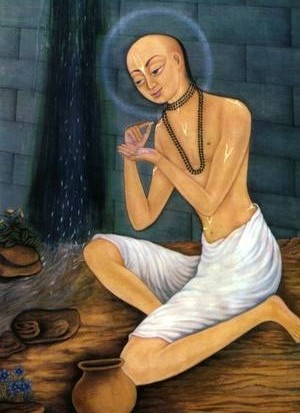
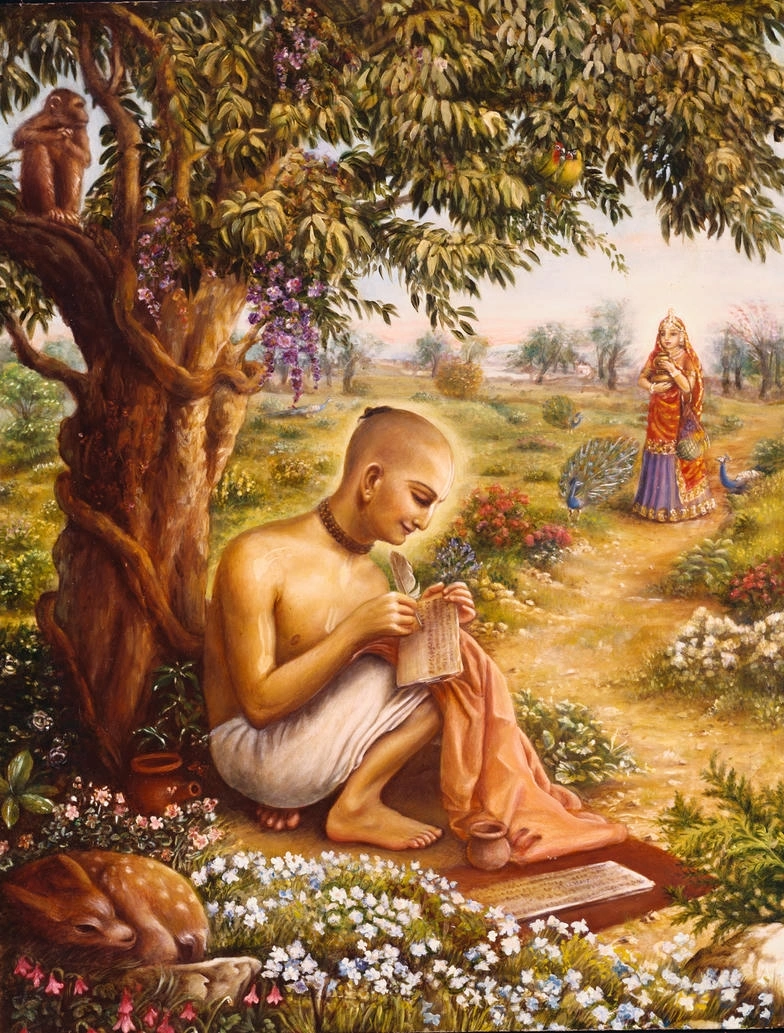
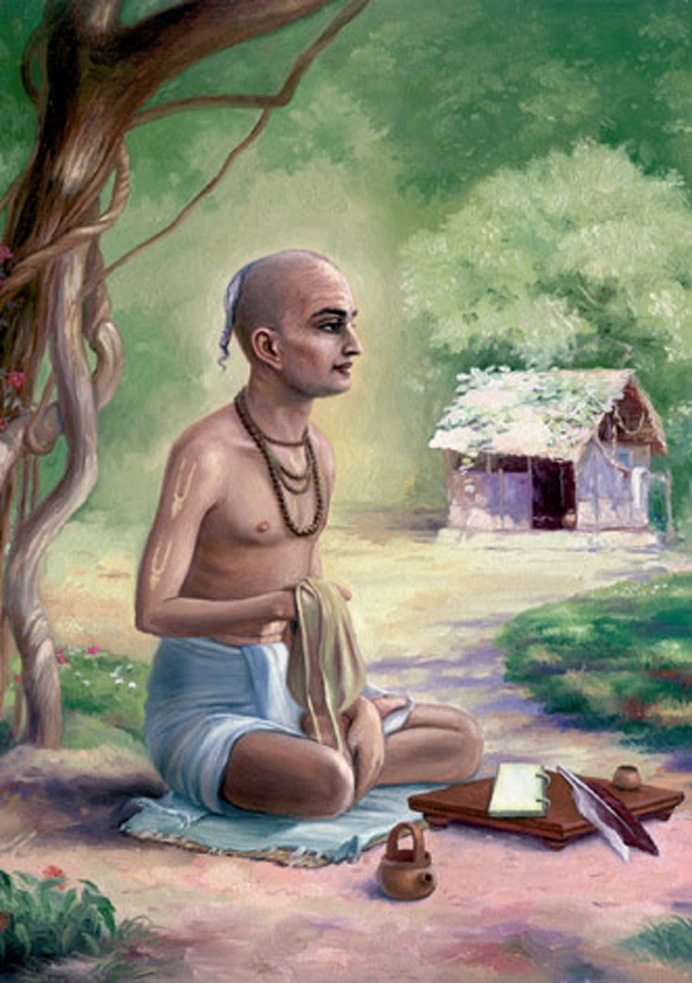
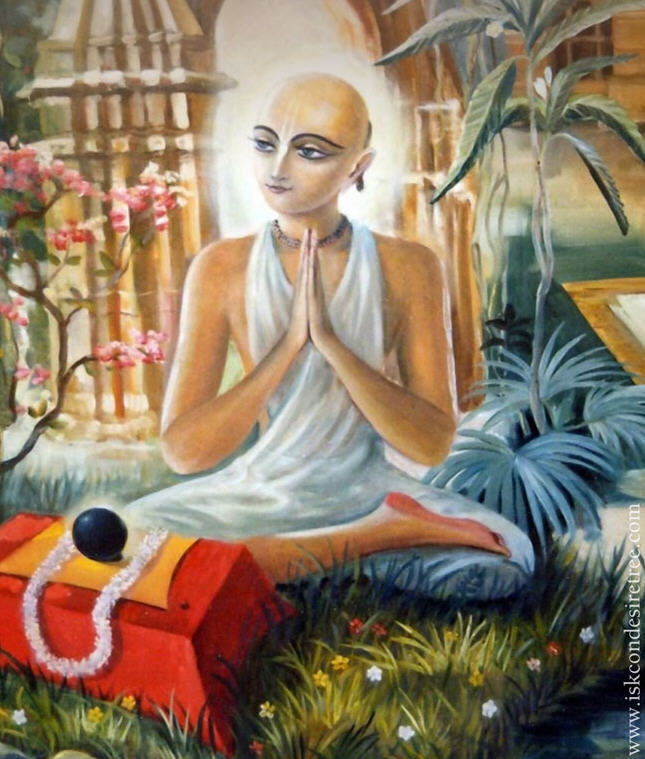
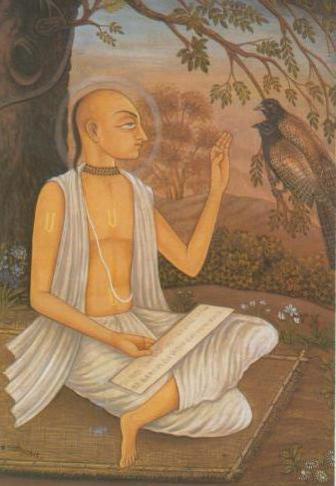
Srila Raghunatha Bhatta Goswami is remembered among the Six Goswamis of Vrindavana for one gift above all others: a voice. When he recited Srimad-Bhagavatam, Sri Chaitanya-charitamrita says, his tone was as sweet as a cuckoo's, and he would carry a single verse through three or four different tunes before moving on. People who heard him could not help but weep. Born in Varanasi as the son of Sri Chaitanya Mahaprabhu's devotee Tapana Mishra, he spent his boyhood in the Lord's own presence, was personally forbidden by Him to marry, and was sent at last to Vrindavana to spend the rest of his life reciting the Bhagavatam beside Radha-kunda.
| Detail | Description |
|---|---|
| Full name | Raghunatha Bhattacharya, later Raghunatha Bhatta Gosvami |
| Born | c. 1503-1505 (sources vary), Varanasi (Kashi) |
| Father | Tapana Mishra, a brahmana devotee of Sri Chaitanya Mahaprabhu |
| Identity | In Krishna-lila: Raga-manjari, a gopi (Gaura-ganoddesha-dipika 185; Chaitanya-charitamrita Adi 10.158 purport) |
| Sent to study under | Rupa Gosvami and Sanatana Gosvami, Vrindavana |
| Known for | Reciting Srimad-Bhagavatam in a voice "as sweet as a cuckoo's" |
| Deity served | Govinda, at the temple he inspired his disciples to build |
| Disappeared | c. 1579, at Radha-kunda, Vrindavana |
A Boyhood Spent Near the Lord #
Raghunatha's father, Tapana Mishra, was already dear to Sri Chaitanya Mahaprabhu long before his son was born. Chaitanya-charitamrita records that Tapana Mishra first met the Lord while He was still travelling as a young teacher of Sanskrit, and that he received harinama initiation directly from Him. On Mahaprabhu's own instruction, Tapana Mishra then settled in Varanasi and raised his family there. Together with the physician Chandrasekhara Vaidya, he became one of just three devotees whom Sri Chaitanya Mahaprabhu is said to have kept in that city. When Mahaprabhu passed through Varanasi again on His way back from Vrindavana, He stayed two months at Chandrasekhara's house. He took His meals at Tapana Mishra's house every day. Young Raghunatha, still a boy, was given the service of massaging the Lord's feet after lunch. The fuller story of this household, and of the dream that first drew Tapana Mishra to Mahaprabhu, is told in Birth and Early Life in Varanasi and Childhood With Sri Chaitanya Mahaprabhu.
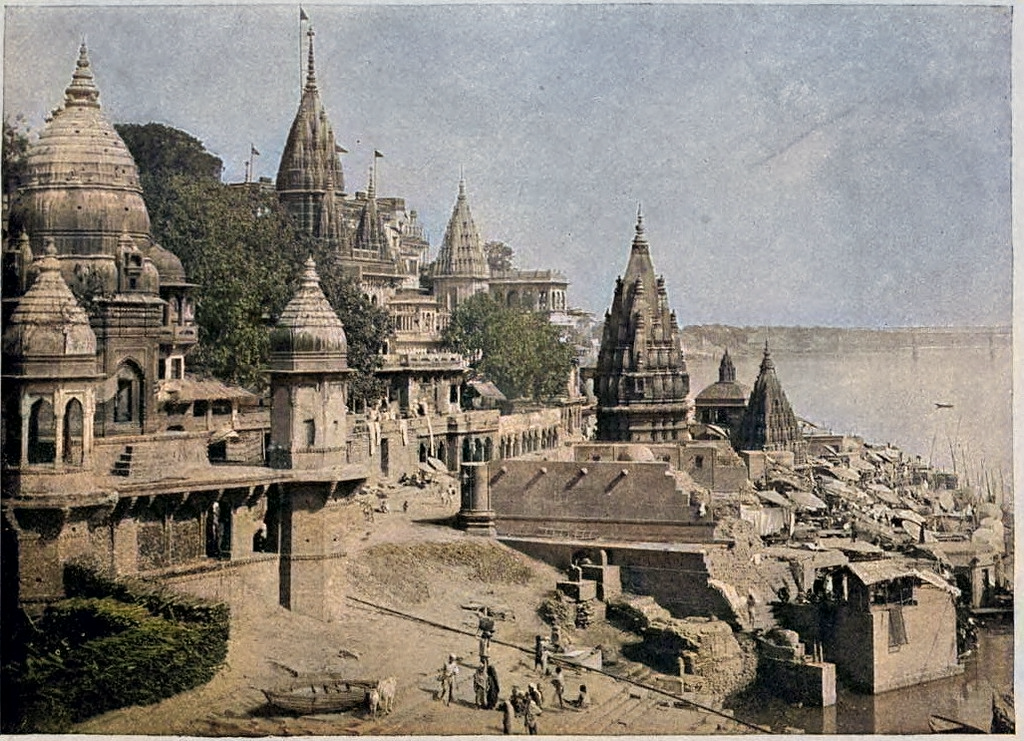
Once his formal education in Sanskrit grammar, rhetoric and scripture was complete, Raghunatha could not stay away. Twice he walked from Varanasi to Jagannatha Puri simply to be near the Lord again, and each time he stayed eight months. He cooked for Him and took His remnants. On his second visit, Mahaprabhu Himself ordered him to go on to Vrindavana and live there under Rupa Gosvami and Sanatana Gosvami. During these visits Mahaprabhu asked one thing of him that shaped the rest of his life: lifelong vairagya, a life without marriage. That instruction, and the tulasi garland and Deity remnants that Mahaprabhu pressed into his hands when they parted, are described in Sent to Vrindavana by the Lord's Order.
The Bhagavatam in a Cuckoo's Voice #
At Vrindavana, Raghunatha Bhatta's entire occupation was to recite the Bhagavatam for Rupa Gosvami and Sanatana Gosvami to hear. Here Chaitanya-charitamrita gives him its most memorable lines. His voice was pika-svara, sweet as a cuckoo, and a single verse would pass through three or four tunes before he finished it. Often he could not finish at all, because tears would choke his throat and stop the recitation completely. Word of this spread quickly among the Vrindavana Vaishnavas. He came to be honoured as a kirtana-acharya, a master of chanting, and nobody wanted to miss his sessions. He is also remembered as a man who never once spoke ill of another Vaishnava. More about this gift, and about the character that came with it, is given in The Voice That Recited Srimad-Bhagavatam.
Chaitanya-charitamrita also answers a question that later readers sometimes ask about him: was he himself counted as a guru? The text does not record a separate diksha, or initiation, ceremony for Raghunatha Bhatta. It speaks of his lifelong attachment to Sri Chaitanya Mahaprabhu Himself and of his years of training under Rupa and Sanatana Gosvami at Vrindavana. But one thing is certain. In the opening invocation of Sri Chaitanya-charitamrita, Krishnadasa Kaviraja Goswami names Raghunatha Bhatta as one of his own six instructing spiritual masters, together with Rupa, Sanatana, Jiva Gosvami, Gopala Bhatta Gosvami and Raghunatha Dasa Goswami. Krishnadasa Kaviraja does this even though, by his own later account, his diksha-guru was specifically Raghunatha Dasa Goswami. The two Raghunathas were close companions, not guru and disciple to each other. Gaudiya Vaishnava tradition has always kept them carefully separate, while praying to them together as a pair.
Settling Beside Radha-kunda #
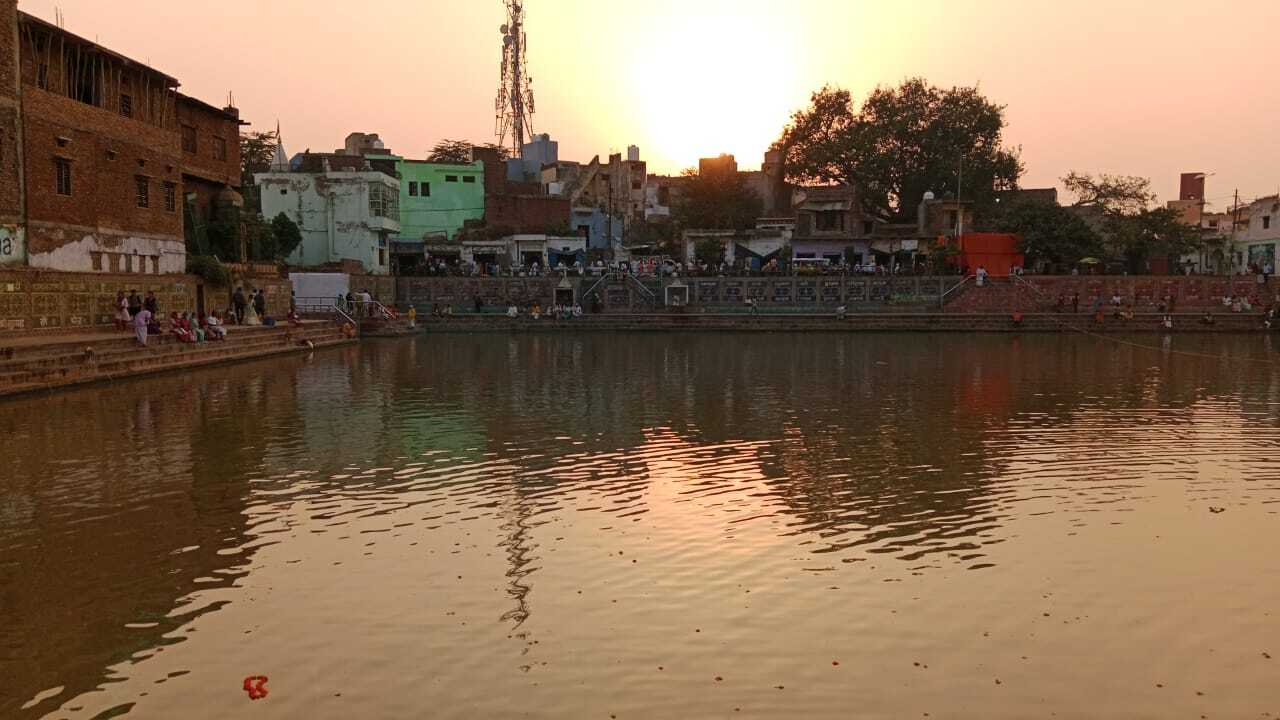
Raghunatha Bhatta gave the rest of his working life to Govinda. Under his direction, disciples built a temple for the Deity in Vrindavana. Another devotional account names Raja Man Singh of Amber, one of Raghunatha Bhatta's own disciples, as the one who was given charge of that construction. Raghunatha Bhatta himself made ornaments for Govinda, including a flute and a pair of shark-shaped earrings. Chaitanya-charitamrita says plainly that Govinda's lotus feet became his life and soul. Later he made his own home near Radha-kunda, not far from where Raghunatha Dasa Goswami had settled for his own decades of bhajana. Since then the two men's names have always been linked. They were not guru and disciple, but two of the six who together gave Gaudiya Vaishnavism its foundation in Vrindavana. The temple, the ornaments, and his lasting reputation as a spiritual guide for devotees are covered fully in Life and Service at Radha-kunda.
Disappearance and Living Memory #
Raghunatha Bhatta Goswami is generally said to have left this world around 1579, though, as with several of the Six Goswamis, the exact year is not settled beyond dispute. Srila Prabhupada kept his memory alive in the invocation Gaudiya Vaishnavas still recite daily, the Sri Sad-gosvamy-ashtaka, and explained to his own students exactly who "the other Raghunatha" was. According to the Gaura-ganoddesha-dipika (verse 185), a traditional register of the eternal identities behind Sri Chaitanya Mahaprabhu's associates, Raghunatha Bhatta Goswami serves Radha and Krishna eternally as the gopi Raga-manjari. What became of his physical body, and what still remains of his worship and his memory at Vrindavana today, is the subject of Disappearance and Legacy.
Srila Prabhupada records this identity in his purport to Chaitanya-charitamrita Adi 10.158, the verse about Raghunatha Bhatta's Bhagavatam recitation for Rupa Gosvami:
tāṅra sthāne rūpa-gosāñi śunena bhāgavata
prabhura kṛpāya teṅho kṛṣṇa-preme matta
"While he stayed with Śrīla Rūpa Gosvāmī, his engagement was to recite Śrīmad-Bhāgavatam for him to hear. As a result of this Bhāgavatam recitation, he attained perfectional love of Kṛṣṇa, by which he remained always maddened." (Chaitanya-charitamrita Adi 10.158)
The purport ends: "Later Raghunātha Bhaṭṭa Gosvāmī lived by Rādhā-kuṇḍa in a small cottage. In the Gaura-gaṇoddeśa-dīpikā (185) it is said that Raghunātha Bhaṭṭa Gosvāmī was formerly the gopī named Rāga-mañjarī."
Scriptural evidence
Quoted in the text above:
- Verse 185 Gaura-ganoddesha-dipika
- Adi 10.158 Sri Chaitanya-charitamrita quoted above ↑
Further verses:
শ্রীরূপ, সনাতন, ভট্ট–রঘুনাথ ।
শ্রীজীব, গোপালভট্ট, দাস–রঘুনাথ ॥
sri-rupa, sanatana, bhatta-raghunatha
sri-jiva, gopala-bhatta, dasa-raghunatha
Word for word
sri-rupa - Srila Rupa Gosvami; sanatana - Sanatana Gosvami; bhatta-raghunatha - Raghunatha Bhatta Gosvami; sri-jiva - Srila Jiva Gosvami; gopala-bhatta - Gopala Bhatta Gosvami; dasa-raghunatha - Srila Raghunatha dasa Gosvami.
My instructing spiritual masters are Sri Rupa Gosvami, Sri Sanatana Gosvami, Sri Bhatta Raghunatha, Sri Jiva Gosvami, Sri Gopala Bhatta Gosvami and Srila Raghunatha dasa Gosvami.
Krishnadasa Kaviraja Goswami names Raghunatha Bhatta Goswami among his six instructing (siksha) spiritual masters in the opening invocation of Sri Chaitanya-charitamrita.
- Sri Chaitanya-charitamrita, Adi-lila 10.152-154 (Bhaktivedanta VedaBase)
- Sri Chaitanya-charitamrita, Adi-lila 10.158 (Bhaktivedanta VedaBase)
- Sri Chaitanya-charitamrita, Antya-lila, Chapter 13 (Bhaktivedanta VedaBase)
- Srila Prabhupada, Six Gosvamis Lecture (Sri Sri Sad-gosvamy-ashtaka), Los Angeles, November 18 1968
- Raghunatha Bhatta Goswami - Gaudiya History
- Srila Raghunatha Bhatta Goswami - Official Blog of ISKCON Bangalore
- Srila Raghunatha Bhatta Goswami - Shyam Das Baba (excerpted from Bhakti Ballabh Tirtha Maharaja, Sri Chaitanya: His Life & Associates)
Frequently asked
When was Srila Raghunatha Bhatta Goswami born?
Srila Raghunatha Bhatta Goswami appeared c. 1503-1505 (sources vary) in Varanasi (Kashi).
When and where did Srila Raghunatha Bhatta Goswami disappear?
Srila Raghunatha Bhatta Goswami disappeared c. 1579 (some sources say 1580) at Radha-kunda, Vrindavana.
What are the main pastimes of Srila Raghunatha Bhatta Goswami?
The pastimes covered here include: Birth and Early Life in Varanasi, Childhood With Sri Chaitanya Mahaprabhu, The Journey to Jagannatha Puri, Sent to Vrindavana by the Lord's Order, The Voice That Recited Srimad-Bhagavatam, Life and Service at Radha-kunda, Disappearance and Legacy.