Srila Devakinandana Dasa Thakur
Poet of the Vaishnava-vandana
The complete life, on one page: The main biography and every pastime page, in order, in one place
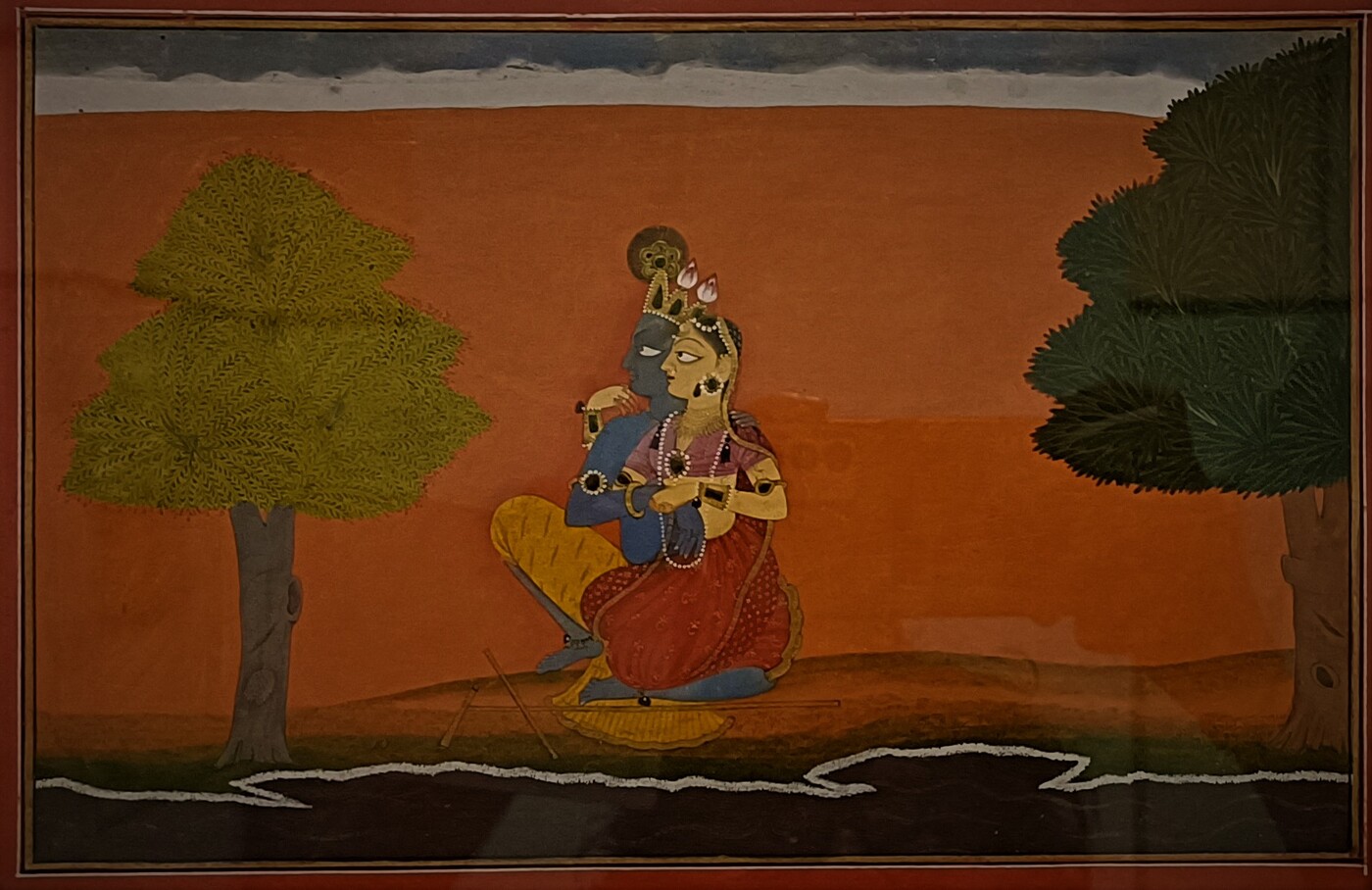
Introduction
Gaudiya Vaishnava tradition remembers Srila Devakinandana Dasa Thakur as one of the three main disciples of Purushottama Dasa Thakura. Sri Chaitanya-charitamrita counts Purushottama Dasa Thakura among the closest associates of Nityananda Prabhu himself. Almost nothing is recorded about Devakinandana Dasa Thakur's own birth, family, or death. Over four and a half centuries, only a handful of verses signed with his own name have survived. Among them is a prayer that Gaudiya Vaishnavas still recite today, even those who may never have heard of him at all.
| Detail | Description |
|---|---|
| Guru | Purushottama Dasa Thakura, a close associate of Nityananda Prabhu |
| Godbrothers | Madhavacharya (Madhava Chattopadhyaya) and Yadavacharya, also brahmana disciples of Purushottama Thakura |
| Birth and disappearance | Not recorded in the available sources |
| Literary work | Vaishnava-vandana, including the still-chanted closing prayer Vaishnava Sharana |
| Songs preserved today | Two songs signed with his name survive in the Vaishnava songbook |
Chapter 1
Life and Discipleship
What we can say about a disciple whose own life story was never recorded separately.
No available source gives a birth year, birthplace, or family name for Devakinandana Dasa Thakur. We say this plainly at the start, because almost everything else known about him comes from the household he served, not from any record of his own. He is remembered as a kulina brahmana by birth, and as one of the three principal disciples of Purushottama Dasa Thakura, along with Madhavacharya and Yadavacharya. Sri Chaitanya-charitamrita and Sri Chaitanya-Bhagavata both count Purushottama Dasa Thakura among the closest personal associates of Nityananda Prabhu.
| Detail | Description |
|---|---|
| Caste and birth | Kulina brahmana family; birth year and place not recorded |
| Guru | Purushottama Dasa Thakura |
| Godbrothers | Madhavacharya (who married Nityananda Prabhu's daughter Ganga Devi) and Yadavacharya |
| Guru's family shrine | Nagaradesh villages of Bengal: Beledanga, then Sukhasagara, then further sites lost to the Ganges |
Entering Purushottama Dasa Thakura's Household #
Purushottama Dasa Thakura's own family was remembered across four generations as devotees close to Nityananda Prabhu: his grandfather Kamsari Sen, his father Sadashiva Kaviraja, Purushottama Thakura himself, and Purushottama's son Kanu Thakura. Devakinandana Dasa Thakur was not born into that family; he came to it as a disciple, one of three brahmana devotees who took shelter of Purushottama Thakura and studied under him. His godbrother Madhavacharya was also called Madhava Chattopadhyaya of Jirat in the Hooghly district. Madhavacharya went on to marry Nityananda Prabhu's own daughter Ganga Devi. This tied that circle of disciples directly into Nityananda's family. Almost nothing beyond his name is recorded about the third godbrother, Yadavacharya.
Srila Bhaktisiddhanta Sarasvati Thakura's Anubhasya commentary on Chaitanya-charitamrita records that Purushottama Thakura's family kept a Deity of Radha-Krishna. The Deity was worshiped first at Beledanga. After the first temple was lost to the Ganges, the Deity was moved to Sukhasagara, a village between the Chakdaha and Simurali railway stations. This is as close as we can come to knowing where the whole circle that Devakinandana Dasa Thakur belonged to was based. No source says which of these villages, if any, he lived in himself.
A Single Surviving Memory #
From this period, one short verse of respectful praise has come down to us from Devakinandana Dasa Thakur's own hand. It is part of his larger work Vaishnava-vandana. In it he writes of his guru's father, Sadashiva Kaviraja, as a man so absorbed in love that he had lost all outward awareness. He also writes of Purushottama Thakura himself, dancing at only seven years old. Purushottama's Krishna-consciousness was so intense that it drew in everyone who saw him. No separate, fuller edition of Vaishnava-vandana could be found. This verse is available to us only because gaudiyahistory.iskcondesiretree.com quotes it in its biography of Purushottama Dasa Thakura. It is practically the only eyewitness-style account of that household that has survived at all. And it happens to have been written by Devakinandana Dasa Thakur, not about him.
Not Narottama Dasa Thakura's Disciple #
Devakinandana Dasa Thakur wrote devotional Bengali poetry in roughly the same era that Narottama Dasa Thakura was organizing the Kheturi festival with the help of Shrinivasa Acharya. So it would be easy to assume some direct link between them, such as a shared guru, or his presence at that famous gathering. This idea was checked carefully, and no support for it was found anywhere. The biography page for Devakinandana Dasa Thakur on gaudiyahistory.iskcondesiretree.com names only Purushottama Dasa Thakura as his guru. The introductions published with his surviving songs on vaishnavsongs.iskcondesiretree.com and on gourgovindaswami.org say the same. None of the available sources list him among the people Narahari Chakravarti records as present at Kheturi in Bhakti-ratnakara or Narottama-vilasa. So, as far as the sources show, these were two separate circles of Bengali Gaudiya Vaishnavas, active during some of the same decades. No record connects this particular disciple with that particular festival.
One Contested Detail #
A single source states that Devakinandana Dasa Thakur was known as Gopal Chapal before he received Sri Chaitanya Mahaprabhu's grace and became a Vaishnava. This source is a 1986 lecture by Srila Gour Govinda Swami, transcribed on the Ananda Sambada website. No other available source mentions this earlier name, so we give it here only as one unconfirmed report, not as an established fact. His own poetry is full of descriptions of himself as an unworthy sinner given shelter by the Vaishnavas. If this report is true, that poetry was written by a man who had real memories of a life before that shelter.
Scriptural evidence for this chapter (5)
শ্রীসদাশিব কবিরাজ—বড় মহাশয় । শ্রীপুরুষোত্তম দাস—তাঁহার তনয় ॥
śrī-sadāśiva kavirāja — baḍa mahāśaya, śrī-puruṣottama-dāsa — tāṅhāra tanaya
Word for word
śrī-sadāśiva kavirāja: Śrī Sadāśiva Kavirāja; baḍa mahāśaya: great, respectable gentleman; śrī-puruṣottama-dāsa: Śrī Puruṣottama dāsa; tāṅhāra tanaya: his son
The twenty-third and twenty-fourth prominent devotees of Nityananda Prabhu were Sadashiva Kaviraja and his son Purushottama dasa, who was the tenth gopala.
Names the family Devakinandana Dasa Thakur later joined as a disciple: his guru Purushottama Dasa Thakura and Purushottama's father Sadashiva Kaviraja, both listed among Nityananda Prabhu's own associates.
আজন্ম নিমগ্ন নিত্যানন্দের চরণে । নিরন্তর বাল্য–লীলা করে কৃষ্ণ–সনে ॥
ājanma nimagna nityānandera caraṇe, nirantara bālya-līlā kare kṛṣṇa-sane
Word for word
ājanma: from birth; nimagna: merged; nityānandera caraṇe: in the lotus feet of Lord Nityananda Prabhu; nirantara: always; bālya-līlā kare kṛṣṇa-sane: engages in childish play with Krishna
From birth, Purushottama dasa was merged in the service of the lotus feet of Lord Nityananda Prabhu, and he always engaged in childish play with Lord Krishna.
From the purport: Purport excerpt: "Sadasiva Kaviraja and Nagara Purushottama, who were father and son, are described in the Caitanya-bhagavata as maha-bhagyavan, greatly fortunate. They belonged to the vaidya caste of physicians."
sadasivasuto namna nagarah purusottamah, vaidya-vamsodbhavo namna dama yo vallavo vraje
Nagara Purushottama, the son of Sadashiva, born into a vaidya family, was formerly the cowherd boy named Daman in Vraja.
Identifies the eternal Vraja identity of Devakinandana Dasa Thakur's guru, Purushottama Dasa Thakura, cited here for context on the household this disciple served.
I worship Sadashiva Kaviraj with great attentiveness. He was constantly intoxicated with love and had no external consciousness... I bow down to my worshipable Lord, Purushottam Thakur. Who can list his incomparable qualities? He was merciful to those who were devoid of virtue, displaying the natural power of his compassion. When only seven years old, he was so intoxicated with love for Krishna that he danced in a way that enchanted the entire world.
The only surviving verse written by Devakinandana Dasa Thakur himself about his own guru's family; no independent edition of Vaishnava-vandana was located, so it is cited here via the gaudiyahistory.iskcondesiretree.com biography of Purushottama Dasa Thakura, which quotes it.
From the purport: Purport excerpt: "Purusottama dasa Thakura sometimes lived at Sukhasagara, near the Cakadaha and Simurali railway stations. All the Deities installed by Purusottama Thakura were formerly situated in Beledanga-grama, but when the temple was destroyed the Deities were brought to Sukhasagara."
Anchors the geography of the household Devakinandana Dasa Thakur belonged to as a disciple, even though no source specifies which village he personally lived in.
Chapter 2
The Vaishnava-vandana
A Bengali poem of homage to every follower of Sri Chaitanya Mahaprabhu, part of which is still sung every day.
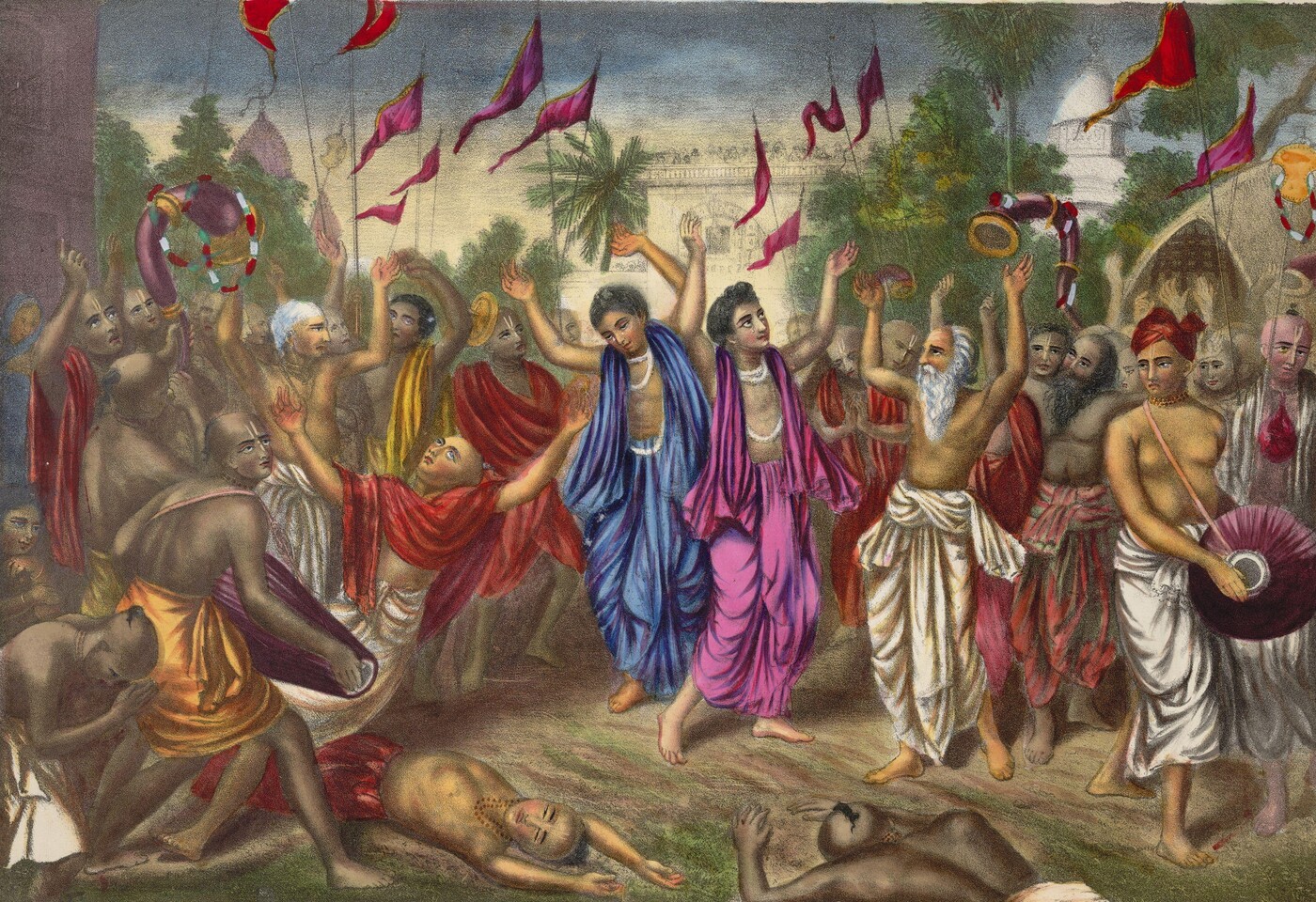
Devakinandana Dasa Thakur is remembered today above all for one work, Vaishnava-vandana. It is a Bengali devotional poem that offers pranama, respectful obeisance, to the Vaishnavas of Sri Chaitanya Mahaprabhu's mission by name and by region. At first sight it may seem a modest work, just verse after verse of bowing down. But the theology behind it is not modest at all. And one section of it has lasted longer than any other trace of its author.
| Detail | Description |
|---|---|
| Work | Vaishnava-vandana ("homage to the Vaishnavas") |
| Best-known section | Vaishnava Sharana, twelve verses beginning "vrndavana-vasi jata vaisnavera gana" |
| Structure | Moves outward: Vrindavana, then Nilachala (Jagannatha Puri), then Navadvipa, then Gauda-desha, then every country, then every devotee past and future |
| Continued use | Recited daily by many Gaudiya Vaishnavas; recorded by devotee singers including Sivarama Swami and Haladhara Swami |
| A second surviving song | "Mari Na Lo Nadiyara Majhare O Na Rupa," describing Gauranga dancing in Nadiya |
Bowing to Every Circle of Devotees #
Vaishnava Sharana, the final section of Vaishnava-vandana, which survives complete, moves through the holy lands of Gaudiya Vaishnavism one region at a time. Devakinandana Dasa Thakur first bows to the Vaishnavas living in Vrindavana. Then he falls flat before Mahaprabhu's associates at Nilachala (Jagannatha Puri). Next he turns to the devotees of Navadvipa, and from there to every devotee of Gauda-desha, the wider region of Bengal. After covering all of these, the poem widens still further. It offers pranama to Gauranga's followers in whatever country they may live, and finally to every servant of Mahaprabhu who has ever lived or ever will. In this way the poem is built to leave no devotee out.
The reason for this becomes clear partway through the poem. The poem states that even a single pure Vaishnava has the spiritual power to deliver an entire universe, and it says that the Vedas and Puranas themselves support this. A related teaching is attributed to Sri Chaitanya Mahaprabhu in Sri Chaitanya-Bhagavata. We found it cited in a 1986 lecture by Srila Gour Govinda Swami, not directly on vedabase.io. This teaching holds that praising Krishna's Vaishnavas, not blaspheming them, is the one method that can destroy sinful reactions that even countless formal atonements cannot touch. Seen in this light, Vaishnava-vandana is less a list of names than a way of spiritual protection: bow to everyone, so as to offend no one.
Humility as the Poem's Own Subject #
Again and again, Devakinandana Dasa Thakur turns the poem toward himself. At one point he pictures himself bowing to the devotees with a piece of straw between his teeth. In Indian devotional culture, this is a traditional gesture of the deepest humility. Later he openly admits that he has no real ability to glorify the Vaishnavas properly. He says that whatever pride made him try anyway comes from his own ignorance. He asks the devotees to forgive the attempt and to accept him as their servant all the same. In the closing verse, where he signs his own name, he presents the whole work as a plea born of greed for the Vaishnavas' mercy, not as a finished offering. In this way the humility typical of bhakti literature is carried all the way to the final line.
Still in Daily Use #
Unlike almost everything else connected with Devakinandana Dasa Thakur, Vaishnava Sharana did not have to be pieced together from a second-hand source. Its full twelve verses survive intact. A widely used English translation of it comes from a 1986 lecture by Srila Gour Govinda Swami. It is still sung today as part of Gaudiya Vaishnava kirtana, and singers such as Sivarama Swami and Haladhara Swami have recorded it. Many devotees use it as a short daily prayer, meant especially to guard against vaishnava-aparadha, offense against a fellow devotee. Its complete text and translation are on the Vaishnava Sharana song page, in the Vaishnava songbook.
A second song bearing his name, "Mari Na Lo Nadiyara Majhare O Na Rupa," also survives. It describes Chaitanya Mahaprabhu dancing through Nadiya in a form the poem calls more beautiful than gold. Its final verse, too, closes with Devakinandana speaking directly to the listener. It can be found under a separate author listing in the same collection. This small detail shows how differently his name was spelled in English letters in the sources that preserved his work.
What This Legacy Says #
As a subject for an ordinary biography, Devakinandana Dasa Thakur leaves us very little. There is no birth date, no death date, and no separately recorded life story. But if we look at what Gaudiya Vaishnavas actually still do, he is far from minor. Centuries ago he wrote a plea for forgiveness, for reasons we can no longer fully know. Today people still speak it aloud as they bow to Vaishnavas he never met.
Scriptural evidence for this chapter (11)
vṛndāvana-vāsī jata vaiṣṇavera gaṇa, prathame vandanā kari sabāra caraṇa
First of all I offer glorifications to the feet of all of the Vaisnavas of Vrndavana.
The opening line of Devakinandana Dasa Thakur's best-known surviving work, setting the pattern the whole poem follows.
navadvīpa-vāsī jata mahāprabhura bhakta, sabāra caraṇa vandoṅ haiyā anurakta
I pray for loving attachment to the lotus feet of all of Mahaprabhu's Navadvipa bhaktas.
Shows the poem's outward-moving structure reaching Navadvipa, Mahaprabhu's own birthplace, after Vrindavana and Nilachala.
je-deśe je-deśe baise gaurāṅgera gaṇa, ūrdhva-bāhu kari vandoṅ sabāra caraṇa
With upraised arms I pray to the feet of all of Gauranga's bhaktas, in whichever country they may reside.
Marks the point where the poem widens past Bengal entirely, to Gauranga's followers in any land.
haiyāchena haibena prabhura jata dāsa, sabāra caraṇa vandoṅ dante kari' ghāsa
Holding a straw between my teeth, I submit at the feet of all the servants of Mahaprabhu that were or will be.
The straw-between-the-teeth image is a traditional gesture of extreme humility in Indian devotional culture, central to this poem's self-effacing tone.
brahmāṇḍa tārite śakti dhare jane jane, e veda purāṇe guṇa gāya jevā śune
I have heard their glorification in the Vedas and Puranas, which proclaim that each one of His devotees has the sakti to deliver an entire universe.
States the poem's underlying theology: the reason to bow to every Vaishnava is that even one has the power to deliver a whole universe.
mahāprabhura gaṇa saba patita-pāvana, tāi lobhe mui pāpī lainu śaraṇa
Hearing of their glory, I have come with great eagerness to surrender to Mahaprabhu's bhaktas, who are all patita-pavana for sinners like me.
Source of the page's pull-quote; the verse from which the prayer's title, Vaishnava Sharana ("shelter of the Vaishnavas"), draws its meaning.
vandanā karite mui kata śakti dhari, tamo-buddhi-doṣe mui dambha mātra kari
What power do I have to glorify them? But out of my ignorance and unmitigating pride I do so anyway, thinking myself so qualified.
The poet's own admission of unworthiness partway through the poem, characteristic of Gaudiya Vaishnava devotional humility.
sarva-vāñchā siddhi haya yama-bandha chuṭe, jagate durlabha haiyā prema-dhana luṭe
They award the perfection of all desires, including freedom from death, and even that rarest treasure not found in this world - prema!
States the reward the poem promises for taking shelter of the Vaishnavas: prema, love of God, called the rarest treasure in the material world.
manera vāsanā pūrṇa acirāte haya, devakīnandana dāsa ei lobhe kaya
All of one's pure, heartfelt desires will be fulfilled without delay. Devakinandana dasa, intensely eager for this, glorifies and prays to the Vaisnavas.
The poem's closing signature line (bhanita), the direct textual basis for attributing this work to Devakinandana Dasa Thakur.
mari nā lo nadīyāra mājhāre o nā rūpa, sonāra gaurāṅga nāce ati aparūpa
Ah! Ah! Wonderful and glorious like gold, Lord Gauranga dances in Nadiya.
Opening refrain of a second song attributed to Devakinandana Dasa Thakur, distinct from Vaishnava-vandana, describing Chaitanya Mahaprabhu's dancing.
debakīnandana bale śuna lo ājulī, tumi ki nā jāna gorā nāgara bana-mālī
Devakinandana says: O friend, please listen - why do you not accept the truth, that Lord Gaura is Krishna Himself, the amorous teenage boy who wears a forest-flower garland?
Closing signature line confirming the same author's hand as Vaishnava-vandana, though catalogued under a slightly different name spelling in the /songs/ collection.
Closing
A Disciple in Nityananda Prabhu's Circle #
Gaudiya-history sources say that Devakinandana Dasa Thakur was born into a kulina brahmana family. They count him, with Madhavacharya and Yadavacharya, as one of Purushottama Dasa Thakura's three principal disciples. Sri Chaitanya-charitamrita names Purushottama Dasa's own father, Sadashiva Kaviraja, among Nityananda Prabhu's listed devotees. Srila Bhaktisiddhanta Sarasvati Thakura's Anubhasya commentary records that the family kept a shrine in the Nagaradesh group of villages in Bengal. The shrine was first at Beledanga, then at Sukhasagara, and then at further sites, as the Ganges forced the family to leave again and again. Devakinandana Dasa Thakur entered this household as a disciple, not by birth. His own name has survived only because of that discipleship. No separate record of his own family preserves it.
Correcting a Common Assumption #
Devakinandana Dasa Thakur belonged to roughly the same era of Bengali Gaudiya Vaishnavism as Narottama Dasa Thakura. This was the generation that carried the mission forward after the Six Goswamis. So it is easy to assume some direct tie between the two men. It is also easy to assume that Devakinandana had a role at the historic Kheturi festival, which Narottama organized and Shrinivasa Acharya helped conduct. None of the available sources support that assumption. The sources that do speak of him agree on something else. They are the biography page for Devakinandana Dasa Thakur on gaudiyahistory.iskcondesiretree.com, the biography of Purushottama Dasa Thakura, and the introductions published with his surviving songs on vaishnavsongs.iskcondesiretree.com and gourgovindaswami.org. All of them say that his guru was Purushottama Dasa Thakura, and nothing in the record places him at Kheturi. So this page follows that evidence, not the more familiar story centered on Narottama.
One Verse, By His Own Hand #
The closest thing we have to an eyewitness memory of Purushottama Dasa Thakura was written by Devakinandana Dasa Thakur himself. In a short surviving verse of Vaishnava-vandana, he describes his guru's father, Sadashiva Kaviraja, as a soul so absorbed in love that he lost awareness of his own surroundings. He also remembers Purushottama Thakura himself at only seven years old, dancing, intoxicated with Krishna. Everyone who watched was drawn in. This is a disciple's account, not a historian's. But it is the only first-hand picture of that household that the tradition has passed down.
A Word for Every Vaishnava #
Devakinandana Dasa Thakur's real legacy is Vaishnava-vandana. It is a Bengali poem offering respects to the Vaishnavas, and it moves outward in wider and wider circles. It honours first the Vaishnavas of Vrindavana, then Mahaprabhu's associates at Nilachala (Jagannatha Puri), and then the devotees of Navadvipa and of Gauda-desha more broadly. Finally it honours Gauranga's followers in any country, present or yet to come. One source says that Devakinandana Dasa Thakur was known as Gopal Chapal before he became a Vaishnava. This source is a 1986 lecture by Srila Gour Govinda Swami, transcribed on the Ananda Sambada site. No other available source confirms this detail, so we give it here only as one unconfirmed report. Every source agrees on the poem's purpose. As the poem itself says, glorifying Vaishnavas is the one sure way to burn away offenses that no amount of formal atonement can remove.
Vaishnava Sharana, Still Sung Today #
The final section of Vaishnava-vandana survives complete under the title Vaishnava Sharana. It opens with the line "vrndavana-vasi jata vaisnavera gana." In the middle of its twelve verses, the poem states its main teaching openly. Even a single pure Vaishnava has enough spiritual power to deliver an entire universe. The poem says that the Vedas and Puranas themselves confirm this teaching. Whether or not every singer today knows this by heart, the song itself is still in active use. Devotees such as Sivarama Swami and Haladhara Swami have recorded it, and its full twelve verses with translation are on the song page in the song collection. A second song attributed to him also survives. It describes Chaitanya Mahaprabhu dancing through the streets of Nadiya. It can be found under a second listing in the same collection, because the available records keep his name in two slightly different spellings, not as one merged entry.
Legacy #
Many of his contemporaries have a recorded shrine, samadhi, or line of disciples. None of these is recorded for Devakinandana Dasa Thakur, and we report this gap honestly here instead of filling it with guesswork. What remains is a poet's voice. By his own account, he felt he had "no strength" to glorify the Vaishnavas properly, but he did so anyway, out of what he called sheer greed for their mercy. Centuries later, Gaudiya Vaishnavas chant his closing prayer each day, even if they do not know his name. In this way they are still doing exactly what he asked of them. They bow to every devotee of Mahaprabhu, everywhere, in every age.
- Devakinandana Dasa Thakur - Gaudiya History
- Devakinandan Das Thakur - Vaishnav Songs (ISKCON Desire Tree)
- Ananda Sambada - Vaishnava Sharana (translation by Srila Gour Govinda Swami)
- Purushottama Dasa Thakura - Biography - Gaudiya History
- Sri Caitanya-caritamrta, Adi-lila 11.38-40
- Purushottama dasa Thakura - Stephen Knapp
