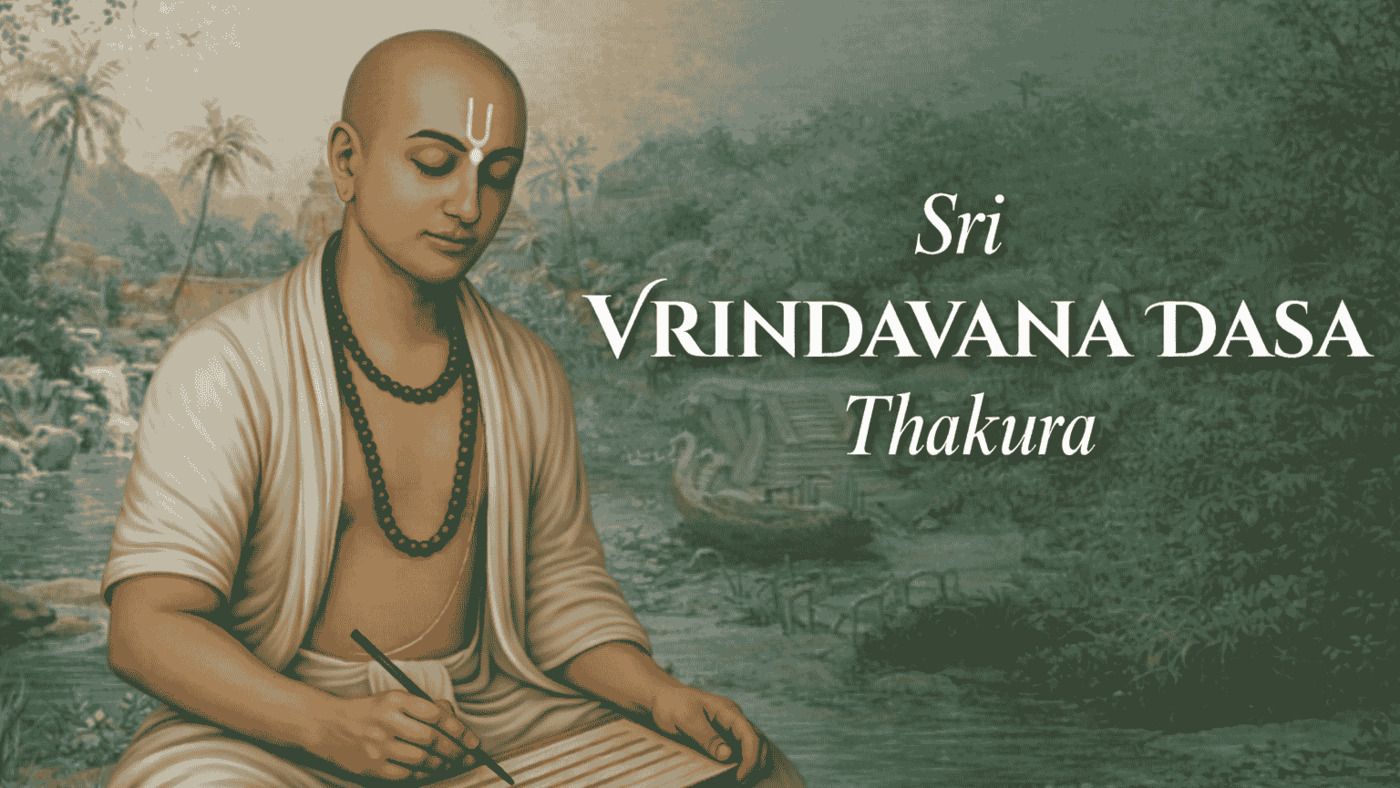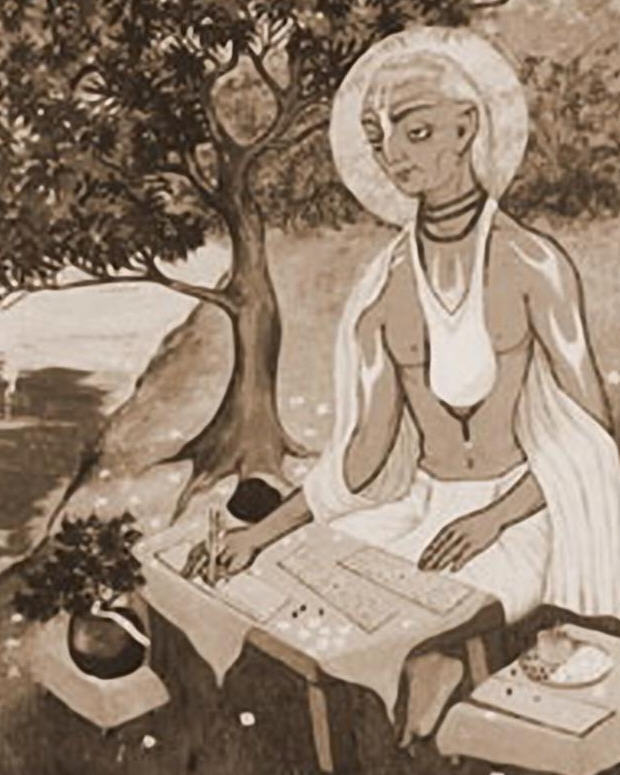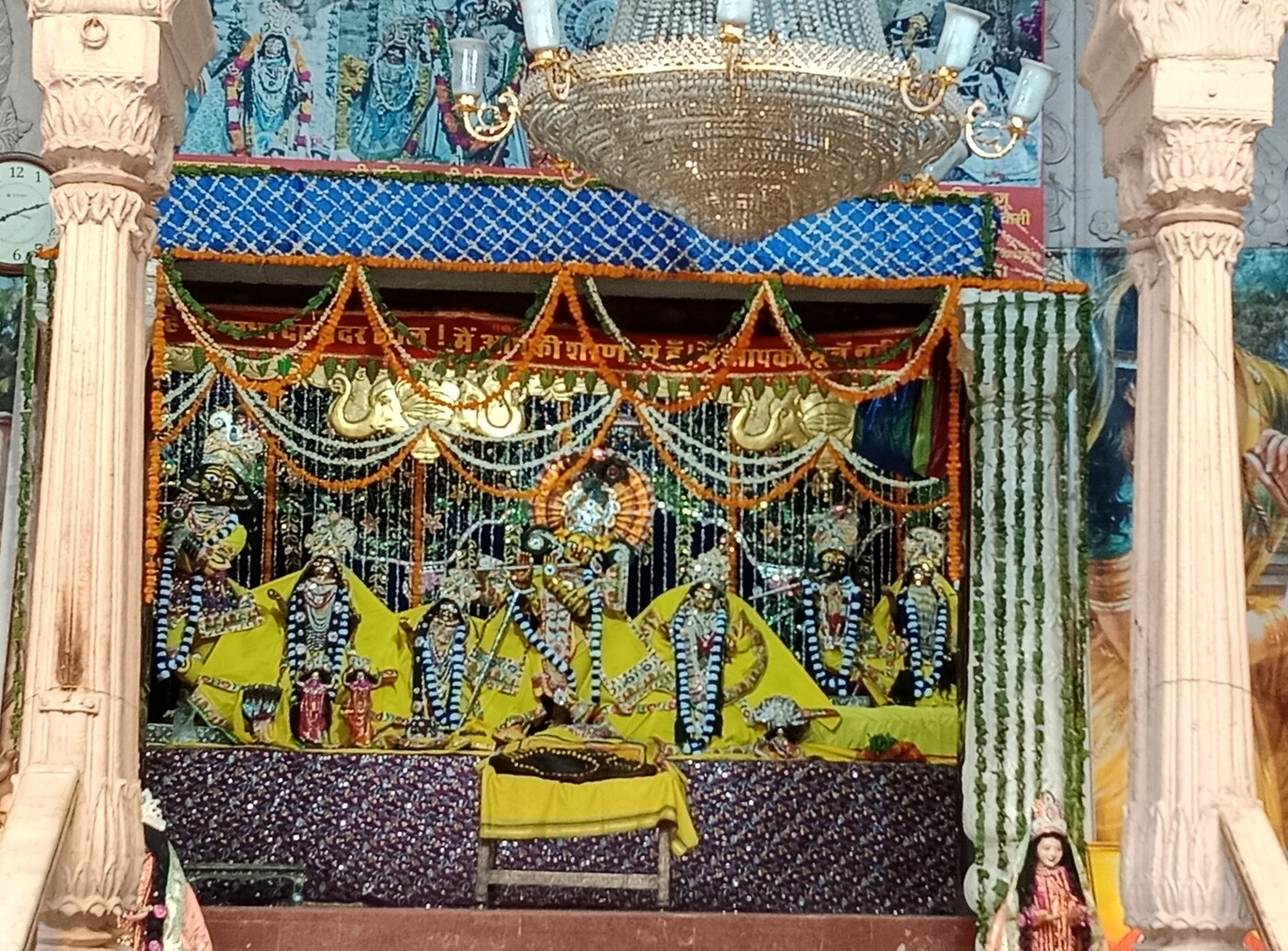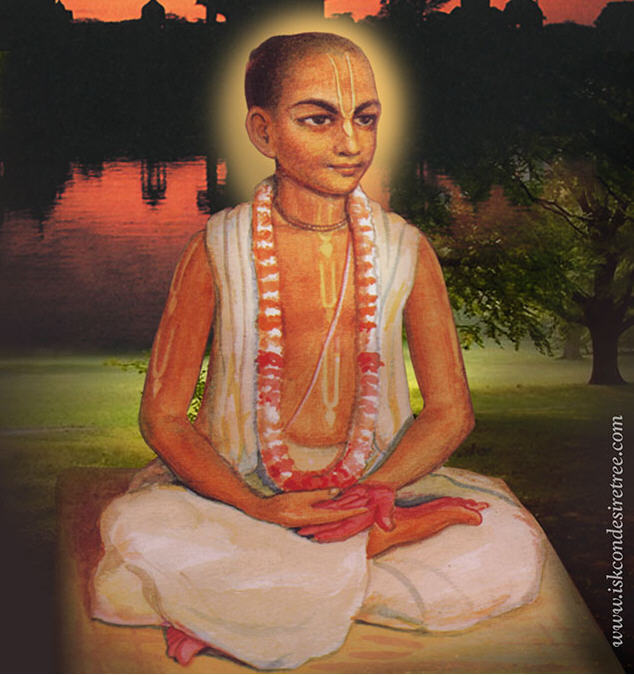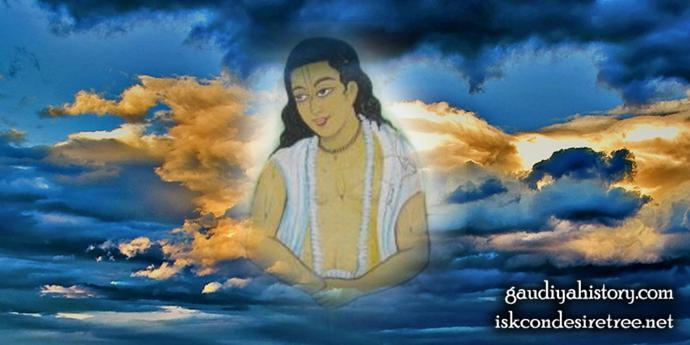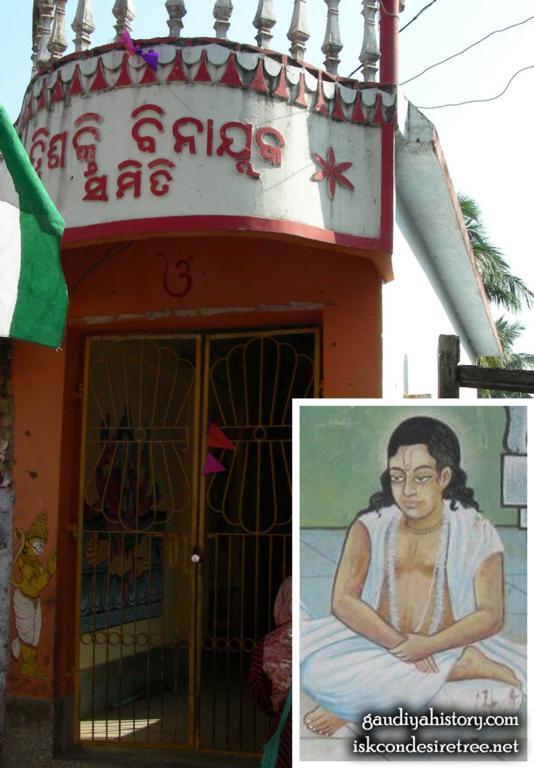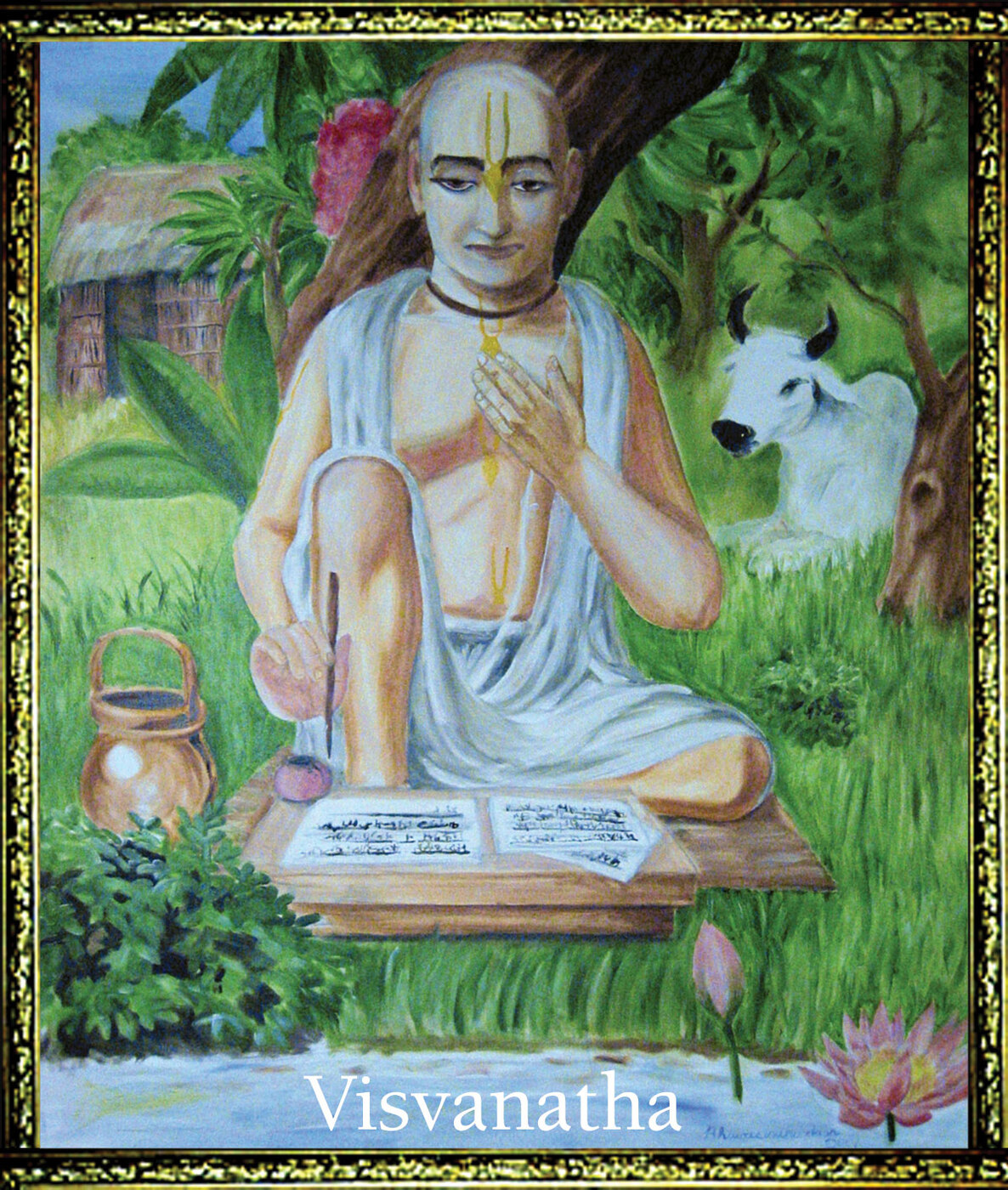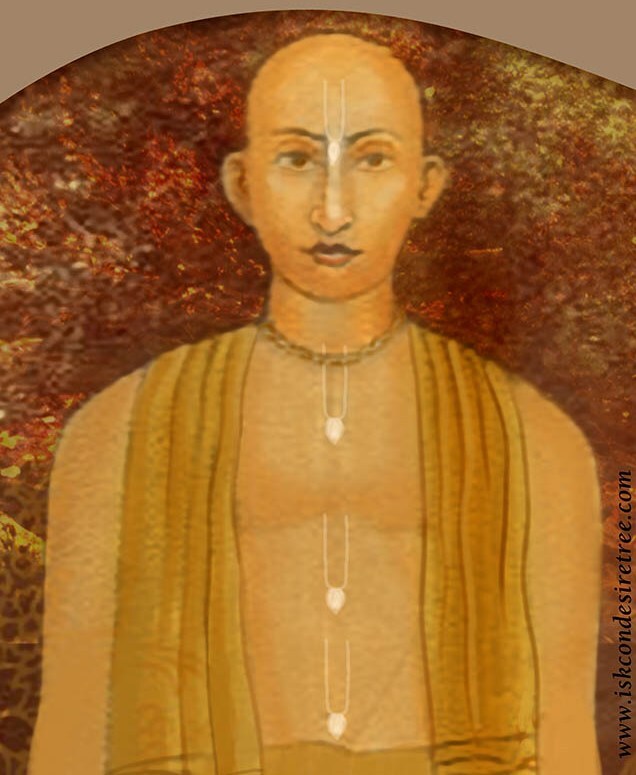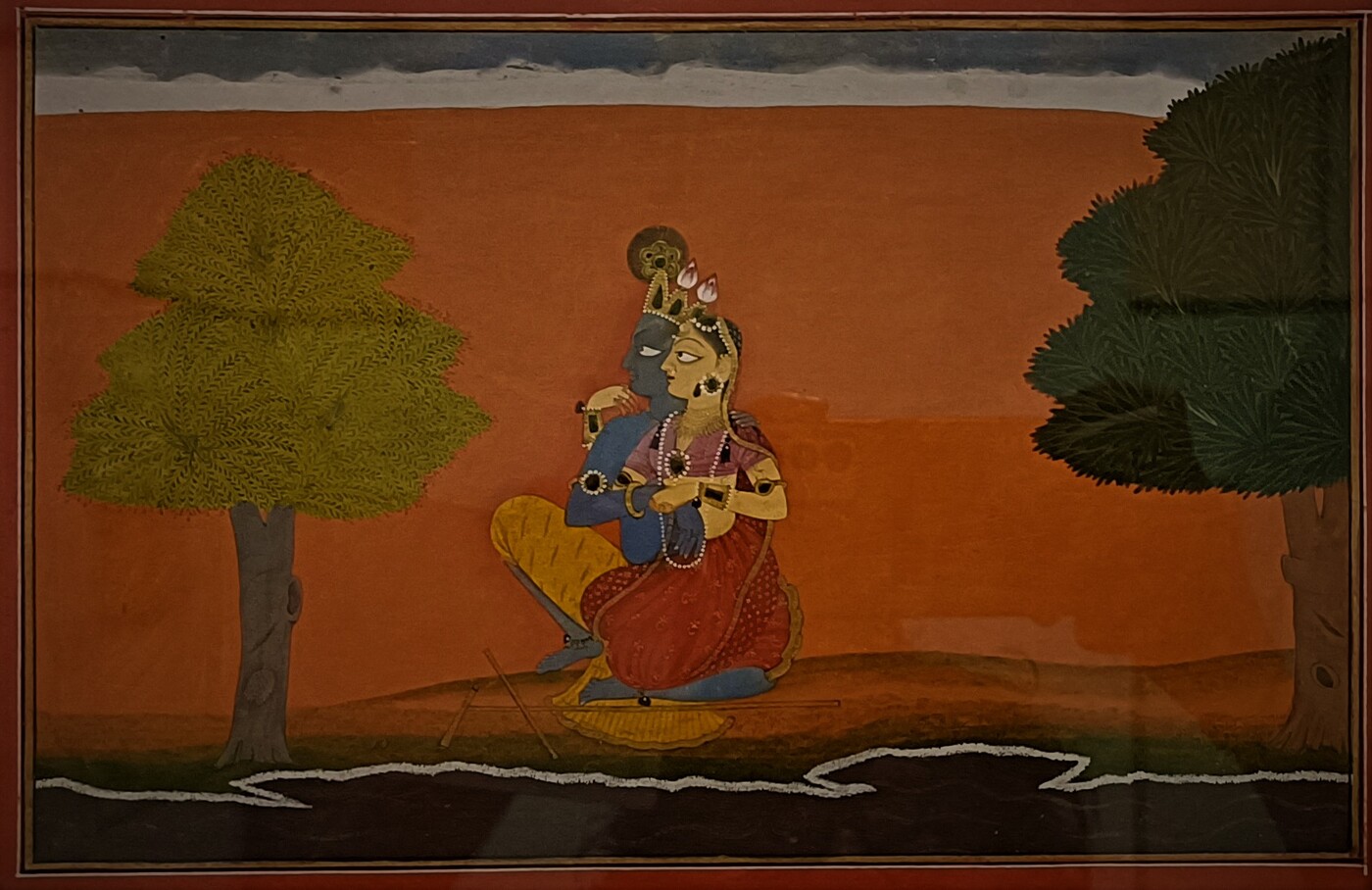
Srila Devakinandana Dasa Thakur
Poet of the Vaishnava-vandana
Also known as Devakinandana Dasa, Devakinandana Das Thakura, Debakinandana Das Thakur, Devakinandan Das Thakur, Devakīnandana dāsa
“I have come with great eagerness to surrender to Mahaprabhu's bhaktas, who are all patita-pavana for sinners like me.”
From Vaishnava-vandana, in the section known as Vaishnava Sharana, still recited daily by many Gaudiya Vaishnavas as a prayer against vaishnava-aparadha
Gaudiya Vaishnava tradition remembers Srila Devakinandana Dasa Thakur as one of the three main disciples of Purushottama Dasa Thakura. Sri Chaitanya-charitamrita counts Purushottama Dasa Thakura among the closest associates of Nityananda Prabhu himself. Almost nothing is recorded about Devakinandana Dasa Thakur's own birth, family, or death. Over four and a half centuries, only a handful of verses signed with his own name have survived. Among them is a prayer that Gaudiya Vaishnavas still recite today, even those who may never have heard of him at all.
| Detail | Description |
|---|---|
| Guru | Purushottama Dasa Thakura, a close associate of Nityananda Prabhu |
| Godbrothers | Madhavacharya (Madhava Chattopadhyaya) and Yadavacharya, also brahmana disciples of Purushottama Thakura |
| Birth and disappearance | Not recorded in the available sources |
| Literary work | Vaishnava-vandana, including the still-chanted closing prayer Vaishnava Sharana |
| Songs preserved today | Two songs signed with his name survive in the Vaishnava songbook |
A Disciple in Nityananda Prabhu's Circle #
Gaudiya-history sources say that Devakinandana Dasa Thakur was born into a kulina brahmana family. They count him, with Madhavacharya and Yadavacharya, as one of Purushottama Dasa Thakura's three principal disciples. Sri Chaitanya-charitamrita names Purushottama Dasa's own father, Sadashiva Kaviraja, among Nityananda Prabhu's listed devotees. Srila Bhaktisiddhanta Sarasvati Thakura's Anubhasya commentary records that the family kept a shrine in the Nagaradesh group of villages in Bengal. The shrine was first at Beledanga, then at Sukhasagara, and then at further sites, as the Ganges forced the family to leave again and again. Devakinandana Dasa Thakur entered this household as a disciple, not by birth. His own name has survived only because of that discipleship. No separate record of his own family preserves it.
Correcting a Common Assumption #
Devakinandana Dasa Thakur belonged to roughly the same era of Bengali Gaudiya Vaishnavism as Narottama Dasa Thakura. This was the generation that carried the mission forward after the Six Goswamis. So it is easy to assume some direct tie between the two men. It is also easy to assume that Devakinandana had a role at the historic Kheturi festival, which Narottama organized and Shrinivasa Acharya helped conduct. None of the available sources support that assumption. The sources that do speak of him agree on something else. They are the biography page for Devakinandana Dasa Thakur on gaudiyahistory.iskcondesiretree.com, the biography of Purushottama Dasa Thakura, and the introductions published with his surviving songs on vaishnavsongs.iskcondesiretree.com and gourgovindaswami.org. All of them say that his guru was Purushottama Dasa Thakura, and nothing in the record places him at Kheturi. So this page follows that evidence, not the more familiar story centered on Narottama.
One Verse, By His Own Hand #
The closest thing we have to an eyewitness memory of Purushottama Dasa Thakura was written by Devakinandana Dasa Thakur himself. In a short surviving verse of Vaishnava-vandana, he describes his guru's father, Sadashiva Kaviraja, as a soul so absorbed in love that he lost awareness of his own surroundings. He also remembers Purushottama Thakura himself at only seven years old, dancing, intoxicated with Krishna. Everyone who watched was drawn in. This is a disciple's account, not a historian's. But it is the only first-hand picture of that household that the tradition has passed down.
A Word for Every Vaishnava #
Devakinandana Dasa Thakur's real legacy is Vaishnava-vandana. It is a Bengali poem offering respects to the Vaishnavas, and it moves outward in wider and wider circles. It honours first the Vaishnavas of Vrindavana, then Mahaprabhu's associates at Nilachala (Jagannatha Puri), and then the devotees of Navadvipa and of Gauda-desha more broadly. Finally it honours Gauranga's followers in any country, present or yet to come. One source says that Devakinandana Dasa Thakur was known as Gopal Chapal before he became a Vaishnava. This source is a 1986 lecture by Srila Gour Govinda Swami, transcribed on the Ananda Sambada site. No other available source confirms this detail, so we give it here only as one unconfirmed report. Every source agrees on the poem's purpose. As the poem itself says, glorifying Vaishnavas is the one sure way to burn away offenses that no amount of formal atonement can remove.
Vaishnava Sharana, Still Sung Today #
The final section of Vaishnava-vandana survives complete under the title Vaishnava Sharana. It opens with the line "vrndavana-vasi jata vaisnavera gana." In the middle of its twelve verses, the poem states its main teaching openly. Even a single pure Vaishnava has enough spiritual power to deliver an entire universe. The poem says that the Vedas and Puranas themselves confirm this teaching. Whether or not every singer today knows this by heart, the song itself is still in active use. Devotees such as Sivarama Swami and Haladhara Swami have recorded it, and its full twelve verses with translation are on the song page in the song collection. A second song attributed to him also survives. It describes Chaitanya Mahaprabhu dancing through the streets of Nadiya. It can be found under a second listing in the same collection, because the available records keep his name in two slightly different spellings, not as one merged entry.
Legacy #
Many of his contemporaries have a recorded shrine, samadhi, or line of disciples. None of these is recorded for Devakinandana Dasa Thakur, and we report this gap honestly here instead of filling it with guesswork. What remains is a poet's voice. By his own account, he felt he had "no strength" to glorify the Vaishnavas properly, but he did so anyway, out of what he called sheer greed for their mercy. Centuries later, Gaudiya Vaishnavas chant his closing prayer each day, even if they do not know his name. In this way they are still doing exactly what he asked of them. They bow to every devotee of Mahaprabhu, everywhere, in every age.
- Devakinandana Dasa Thakur - Gaudiya History
- Devakinandan Das Thakur - Vaishnav Songs (ISKCON Desire Tree)
- Ananda Sambada - Vaishnava Sharana (translation by Srila Gour Govinda Swami)
- Purushottama Dasa Thakura - Biography - Gaudiya History
- Sri Caitanya-caritamrta, Adi-lila 11.38-40
- Purushottama dasa Thakura - Stephen Knapp
Frequently asked
When was Srila Devakinandana Dasa Thakur born?
Srila Devakinandana Dasa Thakur appeared Not recorded in the available sources in Not recorded in the sources consulted for this page.
Who was the guru of Srila Devakinandana Dasa Thakur?
The spiritual master of Srila Devakinandana Dasa Thakur was Srila Purushottama Dasa Thakura.
When and where did Srila Devakinandana Dasa Thakur disappear?
Srila Devakinandana Dasa Thakur disappeared Not recorded in the available sources at Not recorded in the available sources.
What are the main pastimes of Srila Devakinandana Dasa Thakur?
The pastimes covered here include: Life and Discipleship, The Vaishnava-vandana.