Srila Purushottama Dasa Thakura
Bengali Devotee Wholly Absorbed in Nityananda Prabhu
Also known as Nagara Purushottama, Purushottam Das, Purushottam Thakur, Puruṣottama dāsa Ṭhākura
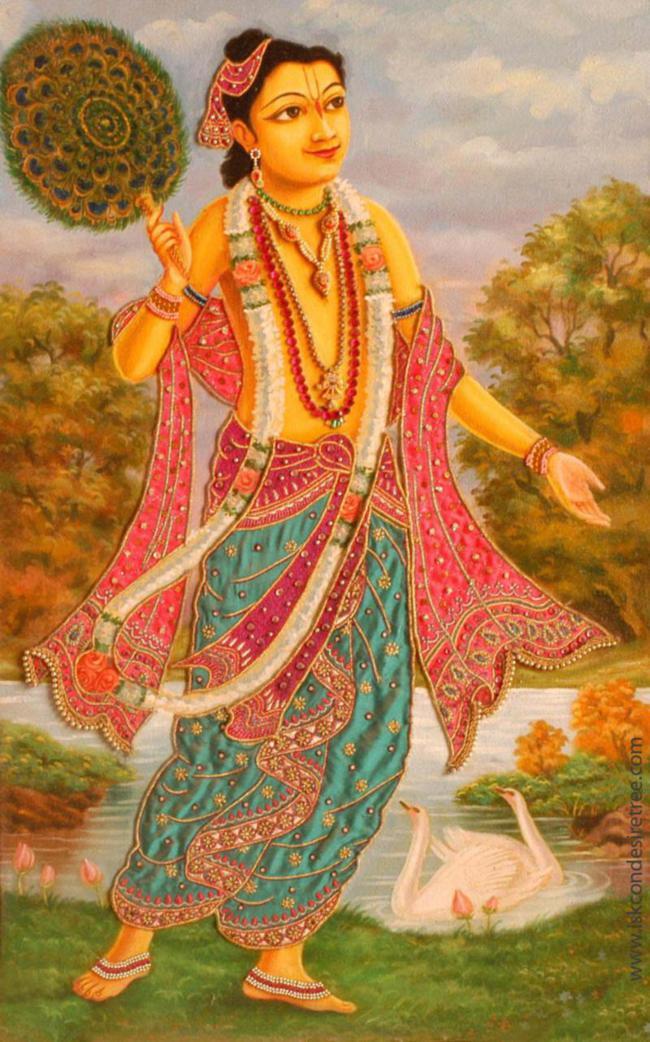
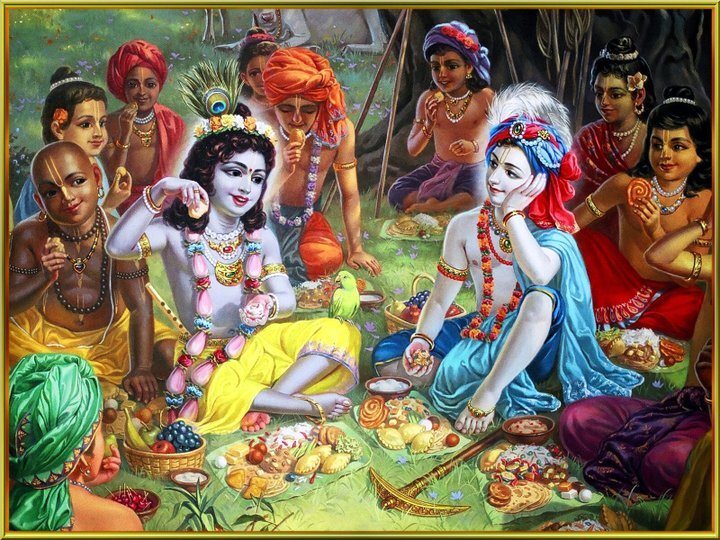
“From birth, Purushottama dasa was merged in the service of the lotus feet of Lord Nityananda Prabhu, and he always engaged in childish play with Lord Krishna.”
Sri Chaitanya-charitamrita, Adi-lila 11.39
Srila Purushottama Dasa Thakura was a Bengali devotee of the sixteenth century. He is remembered as one of Nityananda Prabhu's own closest associates. Krishnadasa Kaviraja Goswami names him directly in Sri Chaitanya-charitamrita. Krishnadasa Kaviraja describes Purushottama as having no external awareness of his own body, because his heart was so completely absorbed in Nityananda Prabhu. Very little of his outer life survives. But for a figure this far from the center of the story, what does survive comes from unusually good sources. These are verses from Chaitanya-charitamrita and Chaitanya-Bhagavata, a note from Srila Bhaktisiddhanta Sarasvati Thakura's Anubhasya commentary, and a family line that Gaudiya Vaishnavas still trace across four generations.
One caution is needed at the very start. It is about name ambiguity, which means two different people having almost the same name. A completely different man was also named Purushottama Dasa. He was an Odia poet at the Jagannatha temple in Puri, born around 1550, the son of one Bhagirathi Das, and the author of the poem Kanchi Kaveri. He shares almost the same name, turns up in general search results, and even has his own Wikipedia article. He has no connection to Nityananda Prabhu or the Chaitanya movement's Bengali circle. What follows is about the other man, the vaidya-family devotee whom Chaitanya-charitamrita counts among Nityananda Prabhu's own associates.
| Detail | Description |
|---|---|
| Also known as | Nagara Purushottama, Purushottam Das, Purushottam Thakur |
| Family | Son of Sadashiva Kaviraja; wife named Jahnava; son Kanu Thakura |
| Caste and region | Vaidya (physician) family of Nagaradesh, a cluster of villages in Bengal |
| Birth | Not recorded (probably early sixteenth century) |
| Identity | Dama, a cowherd friend of Krishna and the tenth of the twelve gopalas (Gaura-ganoddesha-dipika 131; Chaitanya-charitamrita Adi 11.38) |
| Listed in | Sri Chaitanya-charitamrita, Adi-lila 11.38-40, among Nityananda Prabhu's own associates |
| Disappearance | Not recorded in the sources |
At a Glance
- Born into a Bengali vaidya family, the son of Sadashiva Kaviraja, in a line that Gaudiya tradition remembers as four generations of devotees close to Nityananda Prabhu's own household.
- Named directly among Nityananda Prabhu's associates in Sri Chaitanya-charitamrita, where Krishnadasa Kaviraja Goswami says he had no external awareness of his own body.
- Identified in the Gaura-ganoddesha-dipika as Dama, one of the twelve gopala cowherd companions who traditionally serve Krishna's brother Balarama in Vraja. This is a fitting eternal identity for a man so fully devoted to Nityananda Prabhu, who is Balarama's own incarnation.
- His son, Kanu Thakura, was taken in by Nityananda Prabhu himself after the boy's mother died, and later carried to Vrindavana by Nityananda's wife Jahnava-devi.
- His disciples and the Deities his family worshiped carried his memory forward for centuries, even as flooding rivers repeatedly forced their shrine to move.
Two Men Named Purushottama Dasa #
The name Purushottama Dasa was common enough among Krishna devotees of medieval Bengal and Odisha that more than one prominent figure carries it. Wikipedia's article titled simply "Purushottama Dasa" describes a sixteenth-century Odia poet of the Karana caste. He was born around 1550 in the Puri district. He kept accounts for the Jagannatha temple and wrote "Kanchi Kaveri," a poem about a Gajapati king's marriage and the legend of how the deity stepped in during a battle. That man lived his whole life around Puri and has no recorded tie to Sri Chaitanya Mahaprabhu, Nityananda Prabhu, or the Bengali sankirtana movement at all.
The Purushottama Dasa described here instead comes from gaudiyahistory.iskcondesiretree.com's dedicated biography pages, from Sri Chaitanya-charitamrita, and from Sri Chaitanya-Bhagavata. All of these place him firmly inside Nityananda Prabhu's own circle of associates in Bengal. By checking these sources against each other, instead of relying on any single one, we can reliably tell the two men apart.
A Vaidya Family Devoted to Nityananda Prabhu #
Purushottama Dasa Thakura was born to Sadashiva Kaviraja. Sri Chaitanya-Bhagavata describes Sadashiva as maha-bhagyavan, "greatly fortunate," and Srila Bhaktisiddhanta Sarasvati Thakura's Anubhasya commentary says he belonged to the vaidya caste of physicians. His grandfather, Kamsari Sen, is remembered the same way. The Gaura-ganoddesha-dipika is the traditional key that links Chaitanya-era devotees back to their eternal identities in Krishna's own pastimes. It names Kamsari Sen as the gopi Ratnavali and Sadashiva Kaviraja as the gopi Chandravali in a former life. Under the title "Nagara Purushottama," it calls Purushottama himself a cowherd boy named Dama. More on this family background and on the "Nagara" title appears on the birth and early life page.
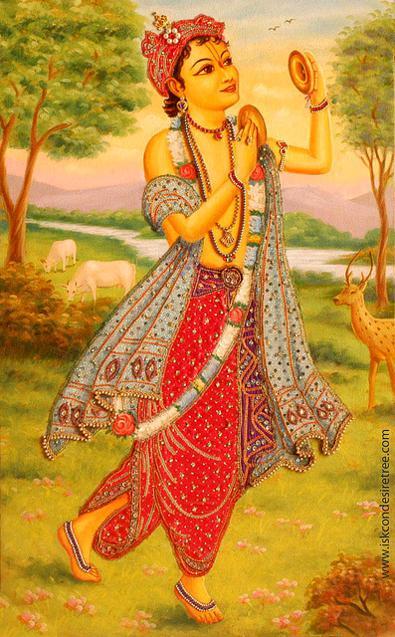
The verse of Kavi Karnapura's Gaura-ganoddesha-dipika (verse 131) identifies him by his father's name:
sadāśiva-suto nāmnā nāgaraḥ puruṣottamaḥ
vaidya-vaṁśodbhavo nāmnā dāmā yo ballavo vraje
"Dama-gopa, who had been Lord Krsna's cowherd friend in Vraja, appeared in Lord Caitanya's pastimes as Nagara Purusottama. ... his father's name was Sadasiva." (Gaura-ganoddesha-dipika 131)
Srila Prabhupada's purport to Chaitanya-charitamrita Adi 11.40 quotes Srila Bhaktisiddhanta Sarasvati Thakura's Anubhashya to the same effect: "The son of Sadāśiva was Puruṣottama Ṭhākura, and his son was Kānu Ṭhākura. The descendants of Kānu Ṭhākura know him as Nāgara Puruṣottama. He was the cowherd boy named Dāma during kṛṣṇa-līlā."
Named Among Nityananda Prabhu's Own Associates #
Sri Chaitanya-charitamrita counts Sadashiva Kaviraja and his son Purushottama Dasa as the twenty-third and twenty-fourth of Nityananda Prabhu's listed devotees. Of Purushottama in particular, it says that "from birth, [he] was merged in the service of the lotus feet of Lord Nityananda Prabhu, and he always engaged in childish play with Lord Krishna" (Chaitanya-charitamrita, Adi-lila 11.39). Chaitanya-Bhagavata goes even further. It says he had no external consciousness of his own body, because Nityananda Prabhu was constantly active through him. The full story of this bond, and of what happened to his wife and infant son, is told on the association with Nityananda Prabhu page.
Sons, Disciples, and a Deity That Kept Moving #
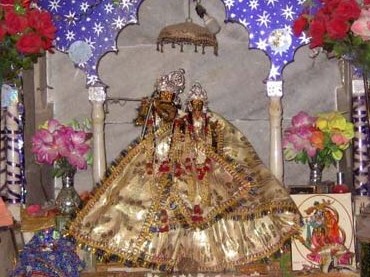
Purushottama Thakura's son, Kanu Thakura, grew up to be remembered as an equally great devotee. Purushottama himself is said to have had three principal disciples. They were Madhavacharya, who later married Nityananda Prabhu's own daughter Ganga Devi; Yadavacharya; and Devakinandana Dasa, who wrote a verse of homage to both Sadashiva Kaviraja and Purushottama Thakura that still survives. The Deities Purushottama Thakura installed were carried from village to village for centuries afterward, because the Ganges again and again swallowed the ground beneath their temples. This later history is covered on the disappearance and legacy page, along with the gaps in what is known about Purushottama Thakura's own death.
What Is Not Known #
No source records Purushottama Dasa Thakura's birth year, birthplace, or the date or place of his disappearance. This is a real gap, and we do not fill it in here with a guess. A date from one generation later is more certain. Bhaktisiddhanta Sarasvati Thakura's Anubhasya places the birth of Purushottama's own son, Kanu Thakura, in the Bengali year 942 (1535 CE). This at least places Purushottama's own adult life in the early-to-mid sixteenth century, the time of Nityananda Prabhu and other associates such as Abhirama Gopala Thakura and Gauridasa Pandit, who lived and preached in the same Bengali circle.
Scriptural evidence
Quoted in the text above:
- Verse 131 Gaura-ganoddesha-dipika
Further verses:
sri-sadasiva kaviraja — bada mahasaya, sri-purusottama-dasa — tanhara tanaya
Word for word
sri-sadasiva kaviraja: Sri Sadasiva Kaviraja; bada: great; mahasaya: respectable gentleman; sri-purusottama-dasa: Sri Purushottama dasa; tanhara tanaya: his son
The twenty-third and twenty-fourth prominent devotees of Nityananda Prabhu were Sadashiva Kaviraja and his son Purushottama dasa, who was the tenth gopala.
The verse that first places Purushottama Dasa Thakura on Chaitanya-charitamrita's list of Nityananda Prabhu's named associates.
- Purushottama Dasa Thakura (biography) - gaudiyahistory.iskcondesiretree.com
- Purushottama Dasa Thakura - Biography - gaudiyahistory.iskcondesiretree.com
- Purushottama Dasa - Biography - gaudiyahistory.iskcondesiretree.com
- Purushottama Dasa Thakura - Biography (excerpted from Bhakti Ballabh Tirtha Maharaj's Sri Chaitanya: His Life & Associates) - gaudiyahistory.iskcondesiretree.com
- Sri Chaitanya-charitamrita, Adi-lila 11.38-40
Disciples
Frequently asked
When was Srila Purushottama Dasa Thakura born?
Srila Purushottama Dasa Thakura appeared Not recorded (probably early-to-mid 16th century) in Nagaradesh, a cluster of villages in Bengal (exact village not recorded).
Who was the guru of Srila Purushottama Dasa Thakura?
The spiritual master of Srila Purushottama Dasa Thakura was Sri Nityananda Prabhu.
When and where did Srila Purushottama Dasa Thakura disappear?
Srila Purushottama Dasa Thakura disappeared Not recorded in the available sources at Not recorded in the available sources.
What are the main pastimes of Srila Purushottama Dasa Thakura?
The pastimes covered here include: Birth and Early Life, Association With Nityananda Prabhu, Disappearance and Legacy.