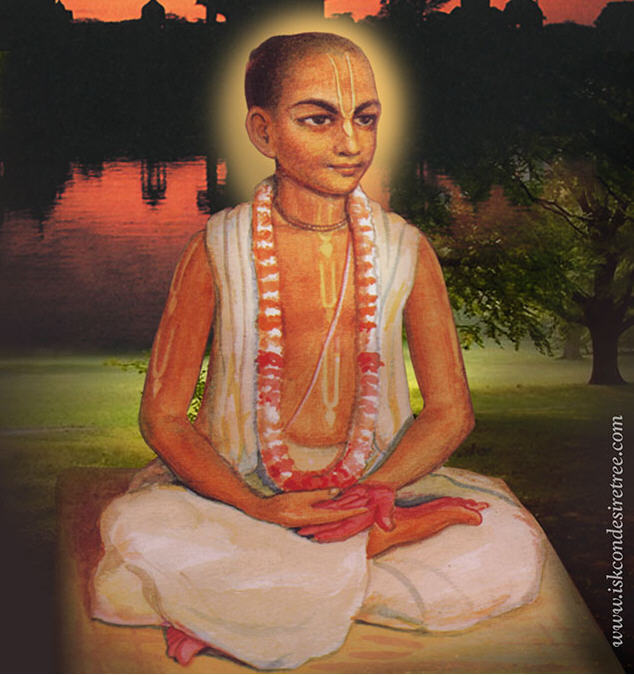
Srila Narottama Dasa Thakura
Poet-Saint Who United Gaudiya Vaishnavism at Kheturi
Also known as Narottam Das Thakur, Thakura Mahasaya, Narottama Thakura, Sri Thakura Mahasaya
“hā hā prabhu nanda-suta, vṛṣabhānu-sutā-yuta, karuṇā karaha ei-bāra / narottama-dāsa kaya, nā ṭheliha rāṅgā-pāya, tomā vine ke āche āmāra”
From Narottama Dasa Thakura's Prarthana, quoted by Srila Prabhupada in his purport to Srimad-Bhagavatam 5.16.20-21
Srila Narottama Dasa Thakura was one of three preachers, together with Srinivasa Acharya and Shyamananda Prabhu, who carried the teachings of the Six Goswamis of Vrindavana back into Bengal a generation after the disappearance of Chaitanya Mahaprabhu. He was born into a princely landholding family of Gopalpur-Kheturi, in what is now Rajshahi district, Bangladesh. He gave up a kingdom to seek Vrindavana and became the dear disciple of Lokanatha Gosvami. He is remembered above all for organizing the Kheturi festival, and for writing the devotional songs of Prarthana and Prema-bhakti-candrika, which Gaudiya Vaishnavas still sing today.
| Detail | Description |
|---|---|
| Birth | Month of Magha; exact tithi and year disputed. Narottama-vilasa, one of the four traditional biographies, places the year at 1534 CE (see below) |
| Birthplace | Kheturi, Gopalpur pargana, Rajshahi district (present-day Bangladesh) |
| Parents | Raja Krishnananda Datta and Narayani Devi |
| Diksha Guru | Lokanatha Gosvami |
| Siksha Guru | Jiva Goswami |
| Manjari identity | Champaka Manjari, assisting Rupa Manjari's service to Radha and Krishna |
| Major Works | Prarthana, Prema-bhakti-candrika |
| Disappearance | Karttika, Krishna Panchami; year not established by most sources, though Narottama-vilasa gives 1611 CE (see below) |
The biography of Srila Narottama Dasa Thakura is traditionally drawn from four Bengali works: Bhakti-ratnakara, Narottama-vilasa, Prema-vilasa, and Narottama-carita.
A Prince Drawn to Vrindavana #
Narottama was the son of a raja who governed the Gopalpur pargana from his seat at Kheturi on the Padma River. Traditional accounts say that from birth he showed the bodily marks of a mahapurusha: long arms, a deep navel, a golden luster to his skin. The family's astrologers, the accounts say, predicted he would become either a great king or a wandering renunciant. His anna-prashana is the ceremony marking a baby's first taking of grain. During this ceremony Narottama is said to have turned away in disgust from ordinary food. He ate happily only when a Vaishnava brought grain that had first been offered to Krishna. His parents took this as proof of the child's inborn devotion. He mastered Sanskrit grammar and scripture as a boy. But he lost his taste for it on hearing wandering devotees describe the mercy of Chaitanya Mahaprabhu and Nityananda Prabhu. Sources differ on exactly what turned his longing into action. Several retellings describe a dream in which Nityananda Prabhu told him to bathe in the Padma and there receive prema. The Narottama-vilasa names the spot, Prema-tali Ghat. There Narottama is said to have entered the river as a golden-hued youth and come out transformed, his complexion taking on Mahaprabhu's own molten-gold luster. Other accounts simply describe a longing that grew for years as pilgrims passed through his father's territory. Both agree that his family grew alarmed as he cared less and less for the throne, and set a guard to keep him from leaving.
Discipleship and the Return to Bengal #
His chance came when his father and uncle traveled away to meet the ruler of Bengal. One retelling adds a further detail. It says the guard on him loosened only when, at around sixteen, he was summoned to the court of the local Jaygirdar and slipped past his escort on the way. The men sent after him asked why he would abandon a kingdom. Narottama is said to have compared himself to a devoted wife determined to join her husband on the funeral pyre, an offering no well-wisher could rightly refuse. Narottama slipped out of Kheturi on the full-moon night of Kartika and made his way toward Vrindavana as an ordinary pilgrim. There Jiva Goswami received him warmly. But Jiva Goswami did not usually give formal initiation to disciples, so he directed Narottama to seek shelter of Lokanatha Gosvami instead. At first Lokanatha refused outright. By most accounts he did not wish to accept a disciple at all. For roughly a year Narottama secretly cleaned the forest place where Lokanatha passed stool each night. Moved by this hidden service, Lokanatha at last agreed to initiate him. At the same time Lokanatha revealed Narottama's own eternal identity as Champaka Manjari, a maidservant assisting Rupa Manjari in the service of Radha and Krishna. Soon afterward, tradition says, Radharani Herself appeared to Narottama in a dream and engaged him in a confidential eternal service, boiling milk for Krishna under the direction of the gopi Champakalata. Devotees still tell how Narottama, absorbed in that meditation, caught the overflowing milk with his bare hands and bore the burns without complaint.
Narottama remained in Vrindavana afterward. He lived by madhukari begging and studied rasa-shastra under Jiva Goswami, together with his close companions Srinivasa Acharya and, later, Shyamananda Prabhu. Later Jiva Goswami instructed the three to carry the Goswamis' writings to Bengal and preach there, and they left Vrindavana together. On this mission Narottama came face to face with brahmana opposition to a non-brahmana leading vaishnava worship. He answered it less with argument than with the quiet example of his own conduct and of his disciples.
The Kheturi Festival #
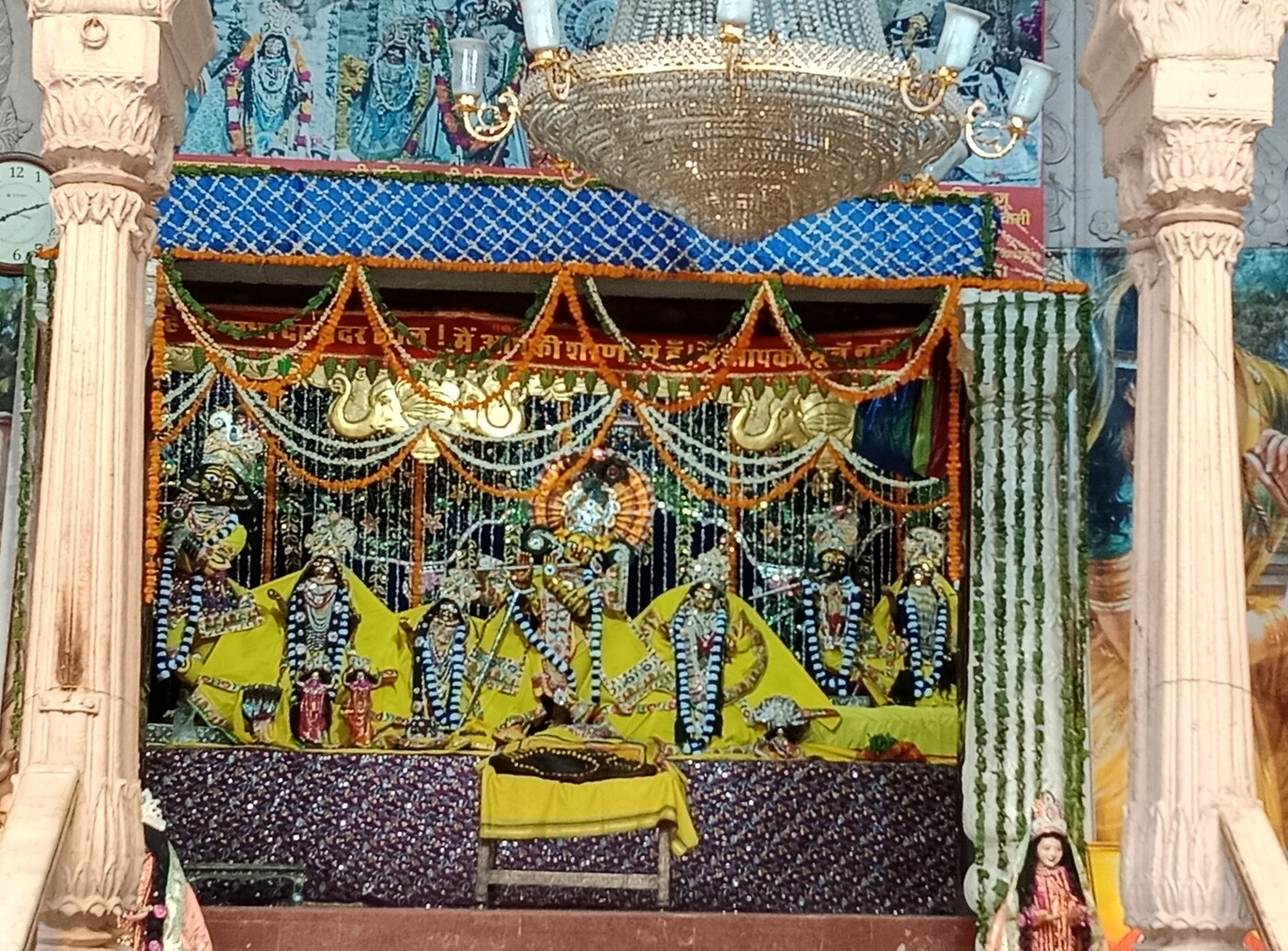
Narottama later returned to his childhood home at Kheturi, where his cousin Santosh Datta had inherited the family's wealth and position. Santosh built a large temple complex there. Its dedication was timed to Chaitanya Mahaprabhu's appearance day, and it grew into the Kheturi Mahotsava, one of the most important single gatherings in early Gaudiya Vaishnavism. Six Deities were installed, Srinivasa Acharya performed the installation rites, and Jahnava Devi, the consort of Nityananda Prabhu, presided over the festival. Vaishnavas came to Kheturi from across Bengal and Odisha. Until then the followers of the Six Goswamis had been scattered, divided by distance and by different ways of devotional practice. Here, under one roof and one kirtana, they were drawn together as a single Gaudiya Vaishnava community.
Poet of Prarthana #
Narottama's lasting influence on Gaudiya Vaishnava practice comes as much from his writing as from his preaching. His Prarthana and his Prema-bhakti-candrika are still part of the daily singing in Gaudiya Vaishnava and ISKCON temples. Prarthana is a collection of thirty-three Bengali songs arranged in fifty-five sections of 258 verses. More than half of them are devoted to manjari-sadhana, the confidential practice of serving Radharani as one of her own maidservants. Prema-bhakti-candrika is a 120-verse meditation in nine sections on the path of raga-bhakti taught by Rupa Goswami and Sanatana Goswami. A later Vaishnava commentator, Vishvanatha Chakravarti Thakura, wrote a full Sanskrit explanation of the Prema-bhakti-candrika. Srila Prabhupada quoted Narottama's verses often in his own Bhagavad-gita and Srimad-Bhagavatam classes. In one 1975 lecture he recalled that Srinivasa Acharya himself had praised these simple Bengali songs as carrying the authority of shruti.
Narottama is equally remembered for the kirtana style he brought to life at Kheturi, still known as Garanahati, built on the serene, majestic dhrupada technique and marked by the sophisticated use of tala, raga, and abhinaya. Devotees who compiled the Bhakti-ratnakara describe the festival's kirtana in terms that read less like ordinary music criticism than like scripture itself:
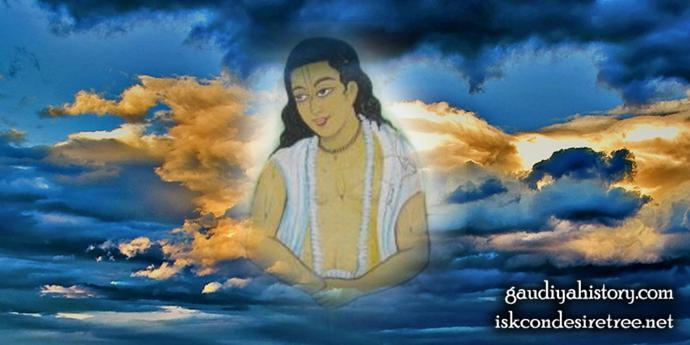
Who can describe the wealth of happiness felt by the devotees when, in the midst of their kirtana, appeared the munificent Sri Chaitanya Mahaprabhu Himself. Like a flash of lightning in the midst of a mass of beautiful clouds, Sri Chaitanya Himself appeared within the crowd of devotees through divine manifestation. (Bhakti-ratnakara 10.572)
How overwhelmed in ecstasy were Advaita and Nityananda! How wonderful was the circle the devotees made around Sri Chaitanya, who danced in its middle. Srinivasa Acharya and Narottama Thakura fully understood these pastimes as the wonderful manifestation of Sri Chaitanya Mahaprabhu's causeless mercy. (Bhakti-ratnakara 10.607)
Disappearance and Legacy #
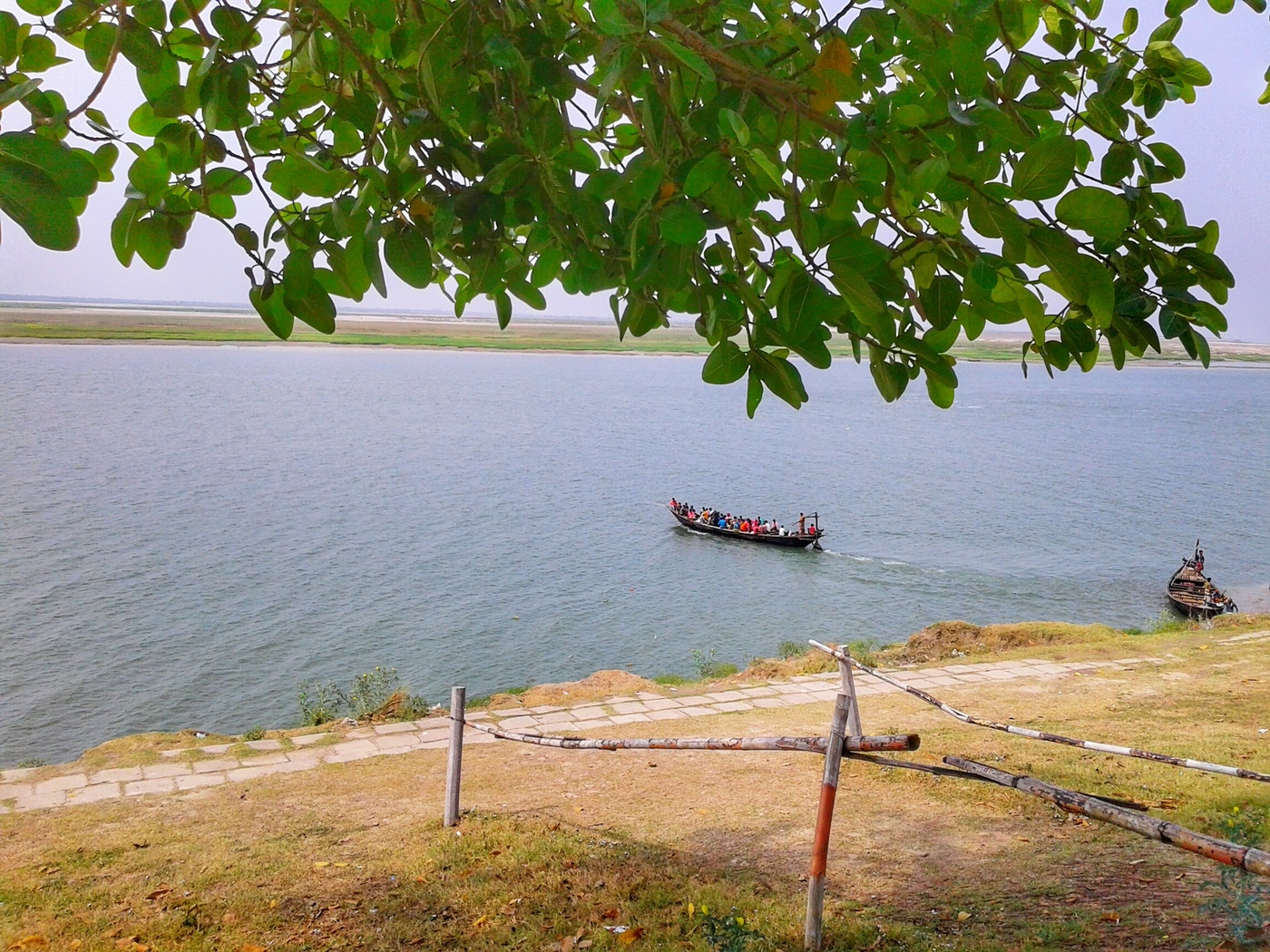
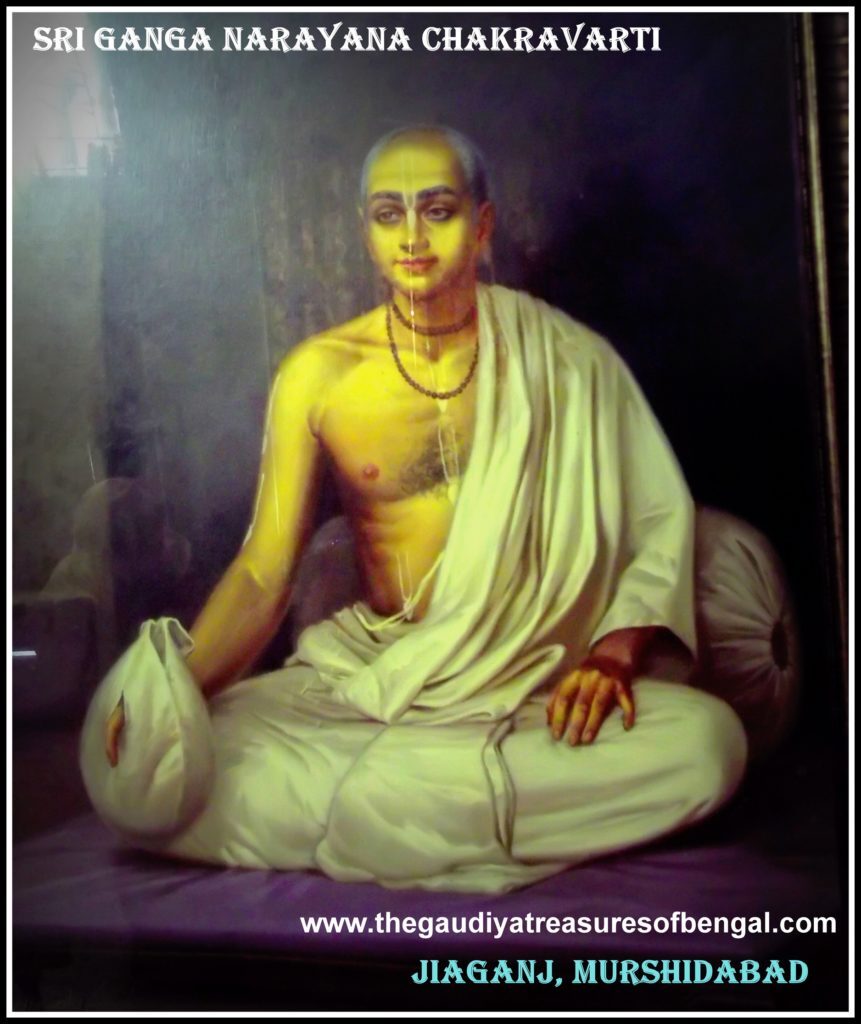
Accounts of Narottama's final days differ. One tradition, drawn from the Bhakti-ratnakara, describes him as overcome with grief after the deaths of his disciple Ramachandra Kaviraja and of Srinivasa Acharya. In this account he entered the river near Kheturi during sankirtana and disappeared from view. Another account, found in some modern retellings, links his final period instead to the caste controversy over his brahmana disciples. It adds an episode in which he is said to have returned briefly from apparent death at his disciples' request, before finally departing. The Narottama-vilasa itself appears to describe both of these as stages of one continuous ending. First there was a grave illness at Gambhila, from which Narottama seemingly departed. Then he revived when his disciple Ganganarayana Chakravarti prayed for his return, so as to silence the brahmana critics. Only afterward, in 1611 CE by this account, came a final entry into the Ganges, in which his body is described as dissolving into milk. His disciples are said to have carried that milk to Jiya Ganja, near Murshidabad in Bengal, where a samadhi called Dugdha-samadhi, "the tomb of milk," was raised. That place is hard to fit together with the samadhi in Vrindavana's Radha-Gokulananda temple, described below, and this account does not try to force the two to agree. Across all sources, neither the year of his birth nor the year of his disappearance is established with confidence. But the greatness of what he left behind is certain. He has a samadhi in the courtyard of Vrindavana's Radha-Gokulananda temple, beside that of his own guru. He had disciples who carried his teaching forward. And he left songs that Gaudiya Vaishnavas, ISKCON devotees among them, continue to sing every day.
Songs in the Vaishnava Song Book #
The Vaishnava Song Book carries 67 songs attributed to Srila Narottama Dasa Thakura. See the full author page here.
What Srila Prabhupada said
"Just like Narottama dasa Thakura says, ha ha prabhu nanda-suta, vrishabhanu-suta-juta, karuna karaha ei-bara, narottama-dasa koy, na theliha ranga pay, toma bine ke ache amara... This position, that 'Krishna, except Yourself, I have nothing to claim. I have nothing, no possession.'"
Disciples
Frequently asked
When was Srila Narottama Dasa Thakura born?
Srila Narottama Dasa Thakura appeared Month of Magha (year disputed) in Kheturi, Gopalpur pargana, Rajshahi district (present-day Bangladesh).
Who was the guru of Srila Narottama Dasa Thakura?
The spiritual master of Srila Narottama Dasa Thakura was Srila Lokanatha Gosvami.
When and where did Srila Narottama Dasa Thakura disappear?
Srila Narottama Dasa Thakura disappeared Karttika, Krishna Panchami (year not established) at Near Kheturi, on the Ganges-Padma, Bengal.
What are the main pastimes of Srila Narottama Dasa Thakura?
The pastimes covered here include: Royal Birth and Renunciation, Discipleship Under Lokanatha Gosvami, Return to Bengal and Preaching, The Kheturi Festival, Literary and Musical Legacy, Disappearance and Legacy.