Srila Gaura Kishora Dasa Babaji
The Renounced Mendicant of Vrindavana and Nabadwip
Also known as Vamsi Dasa, Gaurakisora dasa Babaji
“I do not know how to read or write.”
Srila Gaura Kishora Dasa Babaji's usual reply when asked about scripture. His disciples understood that this humility hid deep realisation
namo gaura-kiśorāya sākṣād-vairāgya-mūrtaye
vipralambha-rasāmbhodhe pādāmbujāya te namaḥ
"I offer my respectful obeisances unto Gaura Kishora Dasa Babaji Maharaja, who is renunciation personified. He is always merged in a feeling of separation and intense love of Krishna."
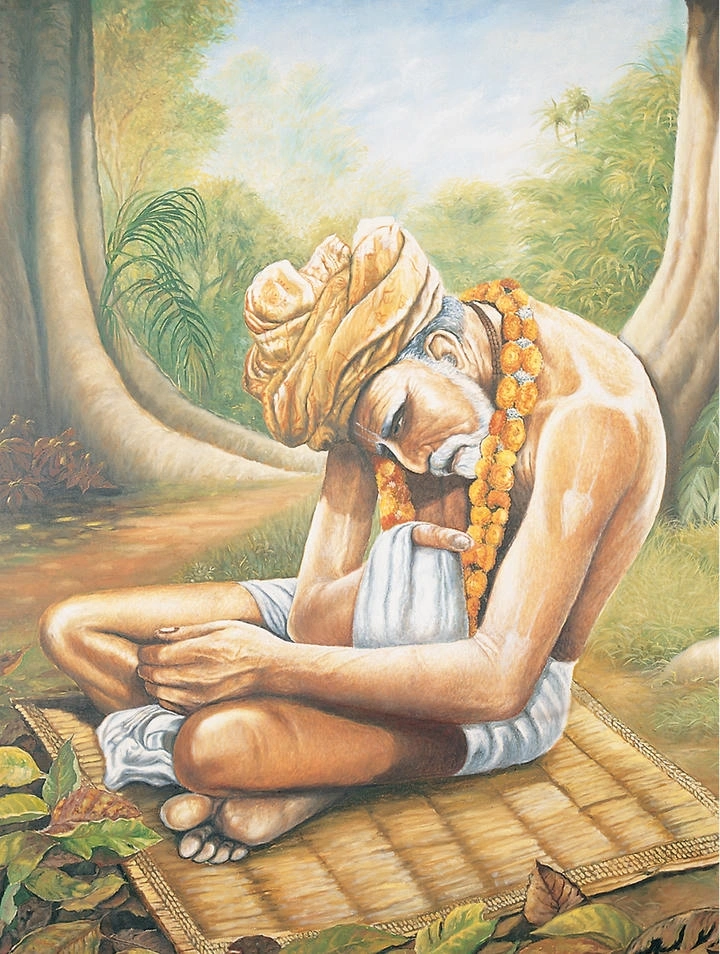
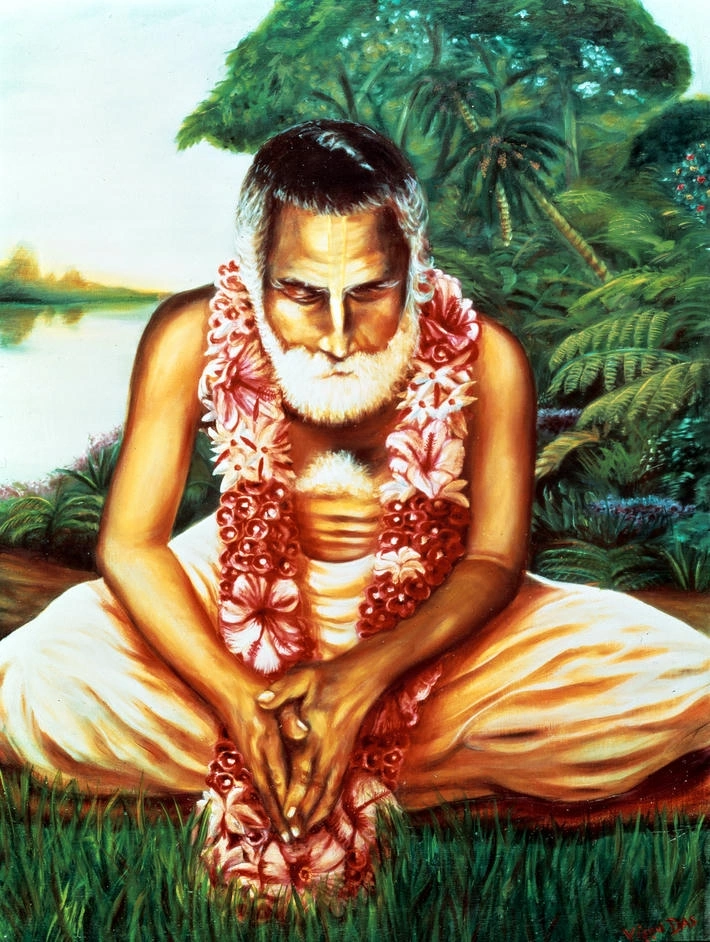
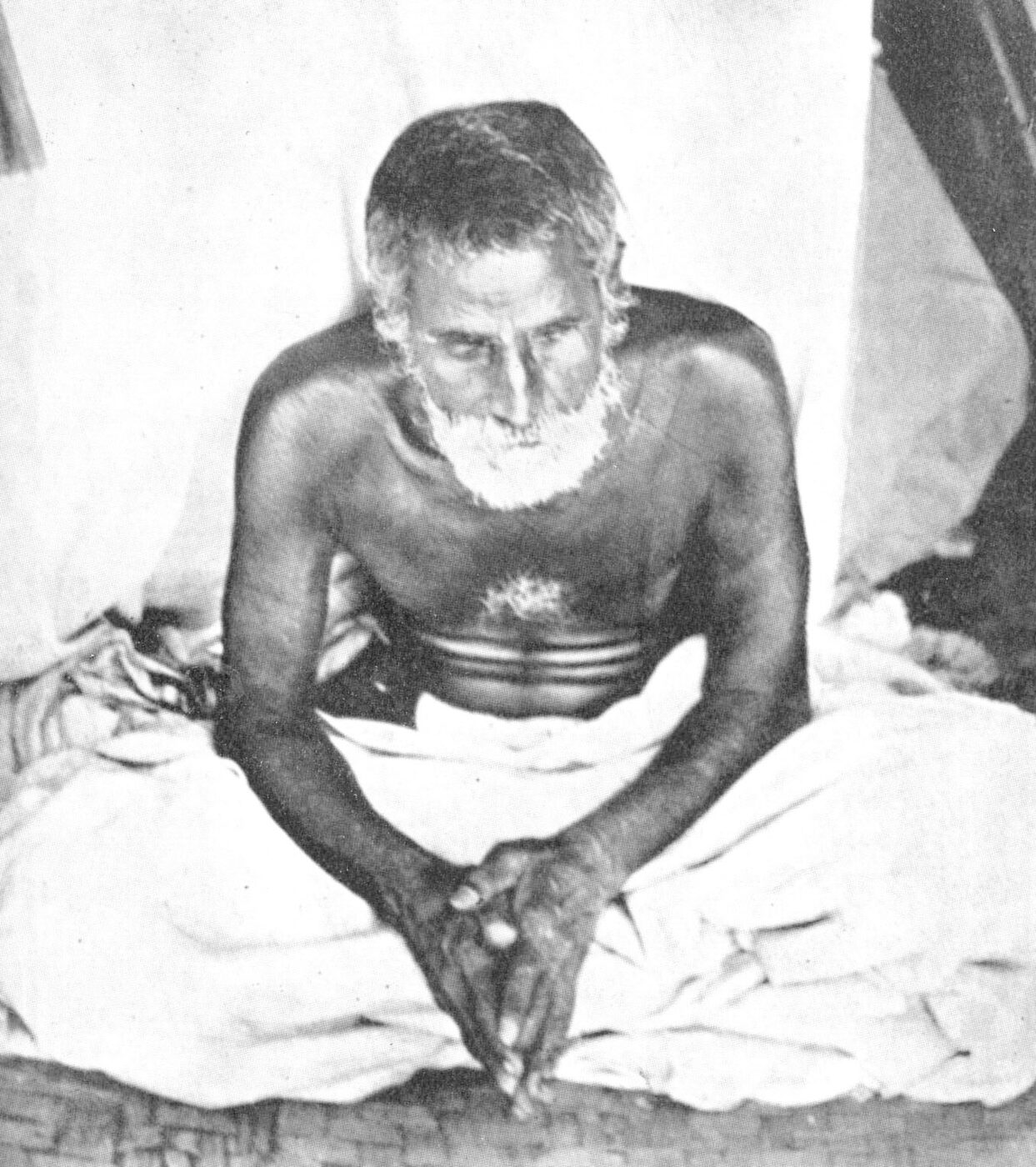
Srila Gaura Kishora Dasa Babaji (1838-1915) is remembered as one of the most exalted and least worldly figures in the entire Gaudiya Vaishnava tradition. He was a wandering mendicant of Vrindavana and Nabadwip. He owned almost nothing and did not look for followers. Yet he became the initiating spiritual master of Srila Bhaktisiddhanta Sarasvati Thakura, and so he stands as a direct link in the chain that produced ISKCON. Almost everything recorded about him is about his way of life, not about any worldly achievement. He lived in such complete renunciation that even the biographers of his own disciple find it hard to piece together the ordinary details of his life.
Early Life and Renunciation #
He was born Vamsi Dasa in 1838 into a simple merchant family, in the village of Vagyana in the Faridpur district of Bengal (in present-day Bangladesh). Vaishnava sources record little of his years as a householder. His wife died when he was around twenty-nine. After that he gave up worldly life completely and accepted the vows of a Vaishnava babaji, taking initiation in the line of Jagannatha Dasa Babaji. His early life and the circumstances of his renunciation are covered here.
Life as a Wandering Mendicant #
For the following decades he lived as a mendicant ascetic between Vrindavana and Nabadwip, absorbed in chanting the holy names. He became famous for behaviour that was completely free of ordinary social custom, and onlookers who did not understand him even thought badly of him for it. Vaishnava literature calls such behaviour avadhuta, the conduct of a soul fully beyond all material identity. In 1897 he travelled from Vrindavana to Nabadwip on the direct instruction of Jagannatha Dasa Babaji, the senior Vaishnava in whose line he had taken his babaji vows, and stayed there for the rest of his life. He deliberately did not show any learning, and he would sometimes act as though he could not read. But those closest to him understood this to be humility, not the truth. His years as a mendicant, and the stories that illustrate his character, are told here.
Initiating Bhaktisiddhanta Sarasvati #
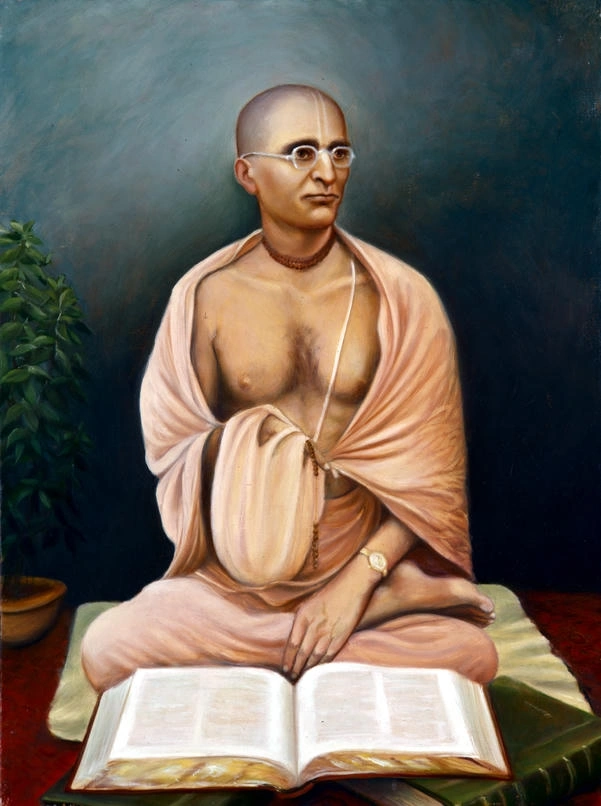
In 1900 he accepted Bimala Prasad Datta as his disciple and gave him the name Varshabhanavi-devi-dayita Dasa. Bimala Prasad was the learned son of Bhaktivinoda Thakura, and he would later become Srila Bhaktisiddhanta Sarasvati Thakura. Bimala Prasad was a great scholar, while Gaura Kishora Dasa Babaji looked in every way like a man who could not read. So Calcutta's educated Vaishnava community was startled that such a scholar would seek initiation from him. This is one of the stories the tradition tells most often to show the difference between worldly learning and spiritual realisation. The initiation and what followed from it are described here.
Disappearance and Legacy #
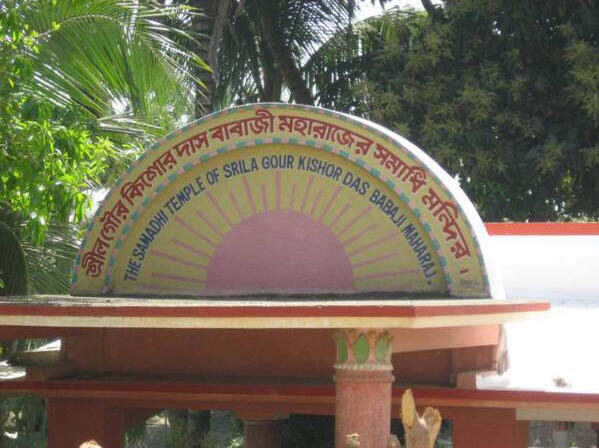
He disappeared from this world on 17 November 1915, on his own seventy-seventh birthday, at Nabadwip. Three years later his disciple accepted the sannyasa order. He did not receive it from a living teacher. Instead, he sat before Gaura Kishora Dasa Babaji's photograph and accepted it there. This was an act of very unusual devotion. To this day Vaishnava historians debate whether the sannyasa given in this way was formally valid. But it has never been disputed within the Gaudiya Math or ISKCON's own lineage. His disappearance and this unusual legacy are covered here, and the guru-parampara page here traces the succession he passed on.
Very little else is recorded of him with confidence. Vaishnava sources themselves admit that not every account agrees even on who his own initiating teacher was. This section reports only what can be traced to a source. It does not fill the gaps with invention.
Disciples
Frequently asked
When was Srila Gaura Kishora Dasa Babaji born?
Srila Gaura Kishora Dasa Babaji appeared 17 November 1838 in Vagyana, Faridpur district, Bengal (now Bangladesh).
When and where did Srila Gaura Kishora Dasa Babaji disappear?
Srila Gaura Kishora Dasa Babaji disappeared 17 November 1915, on his 77th birthday at Nabadwip, Bengal.
What are the main pastimes of Srila Gaura Kishora Dasa Babaji?
The pastimes covered here include: Early Life and Renunciation, Life as a Wandering Mendicant, Initiating Bhaktisiddhanta Sarasvati, Disappearance and Legacy.