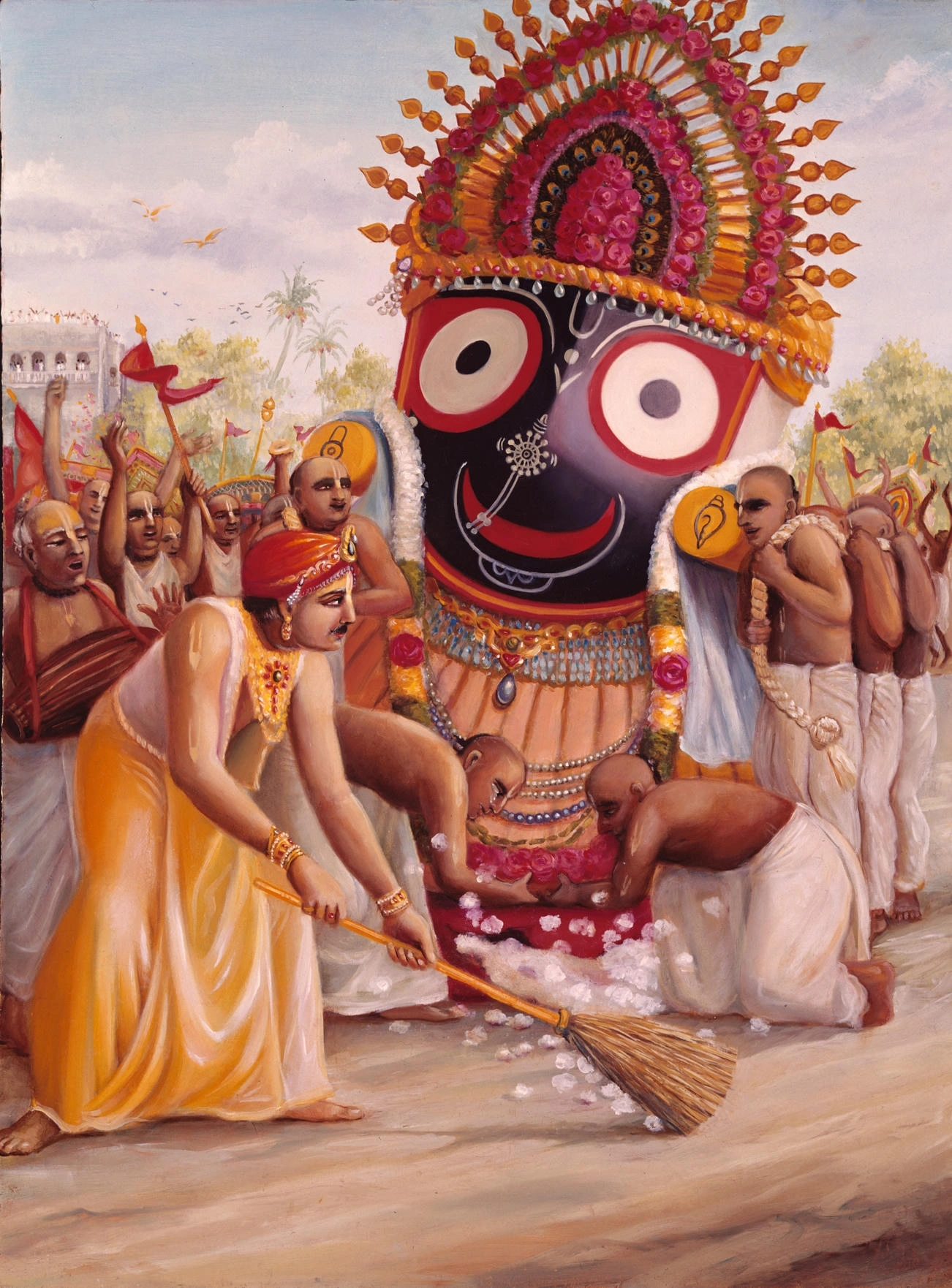
Maharaja Prataparudra
The Gajapati King Who Swept the Road for the Lord
Also known as Prataparudra Deva, Pratapa Rudra Deva, Gajapati Prataparudra, Pratāparudra Rāya, King Prataparudra of Puri
“My Lord, I am the most obedient servant of Your servants. It is my ambition that You will accept me as the servant of Your servants.”
Spoken to Sri Chaitanya Mahaprabhu in the Balagandi garden during Ratha-yatra, once the Lord finally asked who he was (Chaitanya-charitamrita, Madhya-lila 14.18).
Maharaja Prataparudra ruled Odisha as its Gajapati emperor for almost the whole span of Sri Chaitanya Mahaprabhu's eighteen years at Jagannatha Puri. No king anywhere in the Gaudiya Vaishnava tradition is remembered quite the way he is. He commanded an empire that at its height reached from the Bengal border to the Krishna river. He fought three wars in one lifetime to hold it together. Yet for years he could not get even a private audience with the wandering sannyasi living in his own capital's temple town. This was because that sannyasi had made a rule, and kept it strictly, that one who has renounced the world does not associate with kings. So Prataparudra's story is really two stories in one. The first is the reign of a real historical emperor, recorded in his own dynasty's chronicles and in the records of the powers he fought. The second is the account, preserved in loving detail in the Chaitanya-charitamrita, of a king who spent years trying to get near a man who would not look at him. In the end he succeeded by putting down his crown and picking up a broom.
| Detail | Description |
|---|---|
| Full title | Gajapati Maharaja Prataparudra Deva |
| Dynasty | Suryavamsha Gajapati dynasty of Odisha |
| Reign | c. 1497-1540 CE |
| Capital | Cuttack (Kataka), later Khurda |
| Father | Purushottama Deva |
| Identity | Formerly King Indradyumna, who began the worship of Lord Jagannatha (Gaura-ganoddesha-dipika 118; Chaitanya-charitamrita Adi 10.135-136 purport) |
| Chief queen | Gauri Devi |
| Best known for | Refused an audience by Sri Chaitanya Mahaprabhu for years, then embraced after sweeping the Ratha-yatra road and approaching Him in disguise |
The Gajapati Throne of Odisha #
Prataparudra inherited the throne that his grandfather Kapilendra Deva had founded and his father Purushottama Deva had expanded. He ruled from the coastal capital of Cuttack. His kingdom took its ruler's title, Gajapati, "lord of elephants," from the war-elephant corps that was the main strength of the Odishan army. By every account that survives, he was a capable emperor, tested in battle. He spent much of his reign defending his territory, not simply enjoying it. He was also a truly devoted worshipper of Lord Jagannatha long before he ever heard of the sannyasi who would arrive in his temple town. The fuller story of his ancestry, his wars and his position among the kings of his day is told on The Gajapati Throne of Odisha.
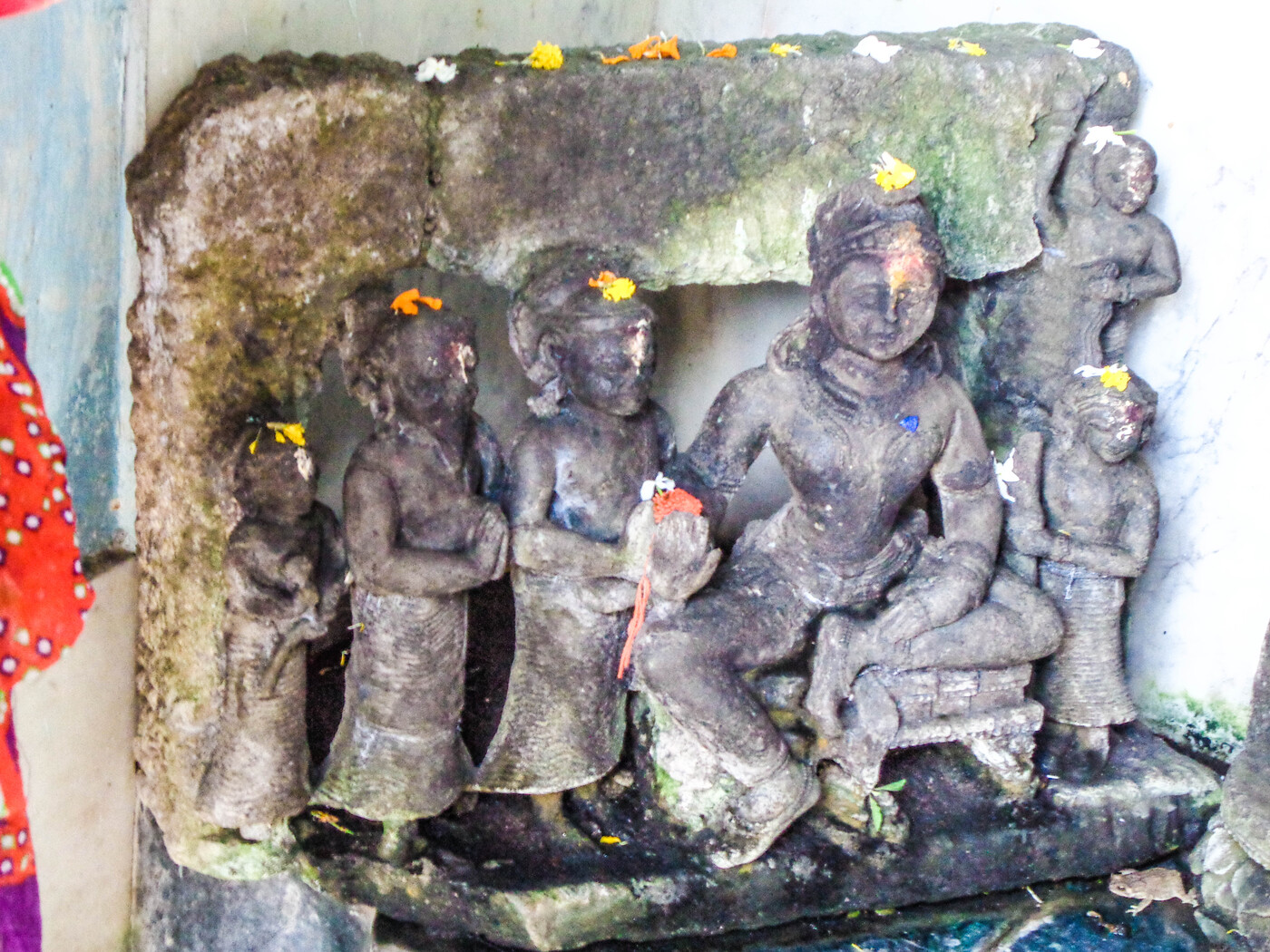
Kavi Karnapura's Gaura-ganoddesha-dipika (verse 118) traces this devotion to an earlier life:
indradyumno mahārājo jagannāthārcakaḥ purā
jātaḥ pratāparudraḥ san sama indreṇa so’dhunā
"Maharaja Prataparudra, who was as powerful as Lord Indra, had formerly been Maharaja Indradyumna, who began the worship of Lord Jagannatha." (Gaura-ganoddesha-dipika 118)
Srila Prabhupada explains this verse in his purport to Chaitanya-charitamrita Adi 10.135-136: "In the Gaura-gaṇoddeśa-dīpikā (118) it is said that King Indradyumna, who established the temple of Jagannātha thousands of years ago, later took birth again in his own family as Mahārāja Pratāparudra during the time of Śrī Caitanya Mahāprabhu. Mahārāja Pratāparudra was as powerful as King Indra."
A Rule the Lord Would Not Break #
Sri Chaitanya Mahaprabhu had settled at Jagannatha Puri as a sannyasi. Sannyasis of His own strict standard did not meet kings under any circumstance, however sincere the king's devotion might be. Meeting royalty, He said, was as dangerous to a sannyasi's vow as meeting a woman. Sarvabhauma Bhattacharya, the Vedantist the Lord had converted soon after arriving in Puri, carried Prataparudra's repeated requests for an audience. He was refused every time, sometimes so sharply that he was warned never to raise the subject again. Ramananda Raya was Prataparudra's own former governor, and the Lord had personally asked him to leave royal service and live at Puri. Only Ramananda Raya was able to soften the Lord's resistance even slightly. He did this by describing how completely the King had thrown himself into loving service. The full account of this refusal is told on Forbidden by Sannyasa Etiquette, along with everything the King's own devotees tried in order to change the Lord's mind.
Sweeping the Road, Meeting in Disguise #
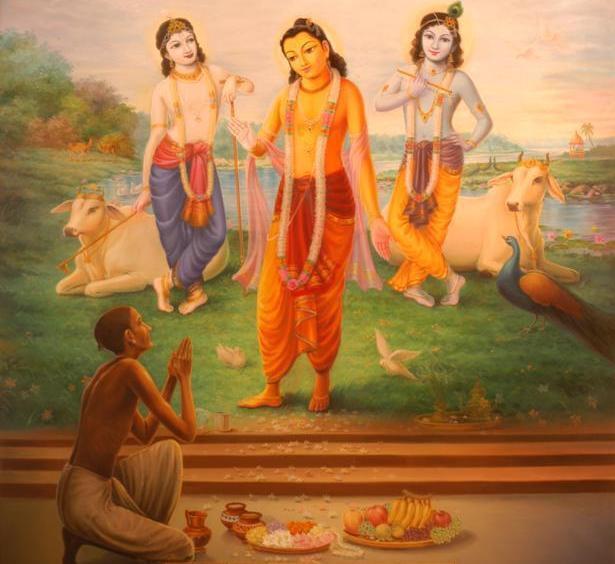
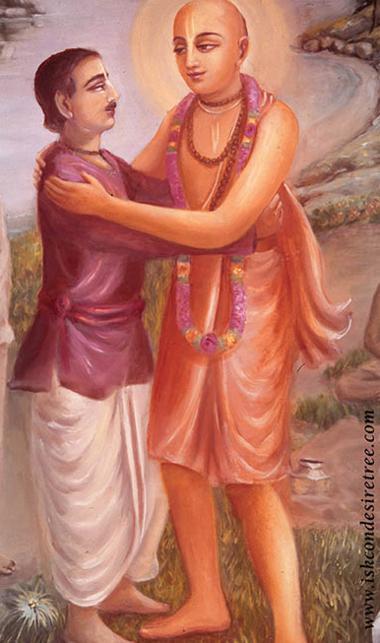
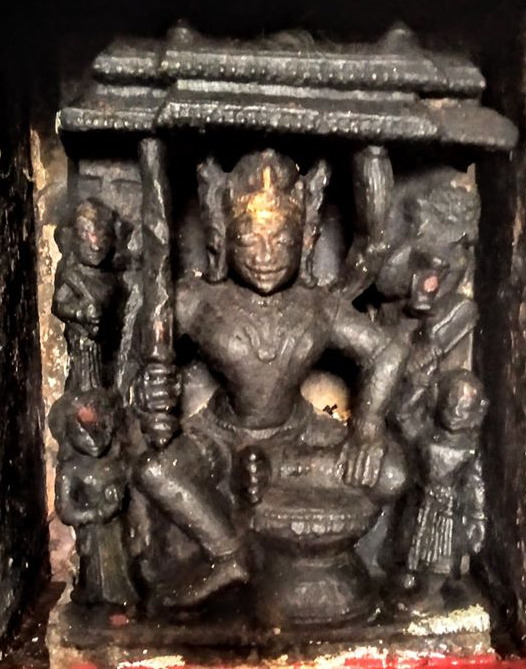
What finally moved Sri Chaitanya Mahaprabhu was not persuasion but service. During the Ratha-yatra car festival, as Lord Jagannatha's deity was carried to the chariot, Prataparudra himself took up a golden-handled broom and swept the road clean. Then he sprinkled it with sandalwood water. This was the humble work of an ordinary sweeper, done by the owner of the Gajapati throne. Later the same day, following advice from Sarvabhauma Bhattacharya, the King set aside his royal dress and entered the garden at Balagandi where the Lord lay resting. He came as an ordinary devotee, not as a monarch to be feared. He began massaging the Lord's feet while reciting verses of the gopis' love for Krishna from Srimad-Bhagavatam. Sri Chaitanya Mahaprabhu rose and embraced him before He even knew who he was. The complete story, with the exact verses the King recited, is told on The Disguise at Ratha-yatra.
Named the Deliverer of a King #
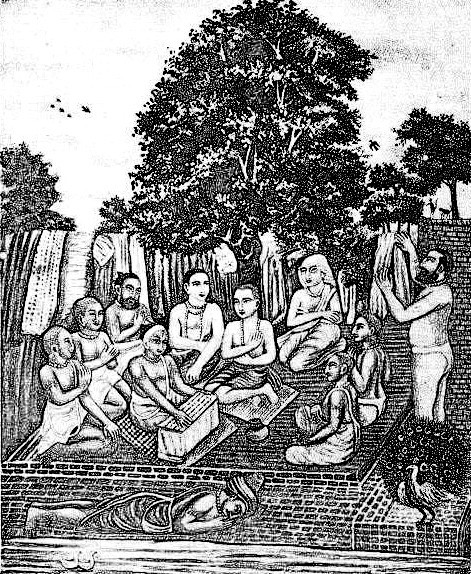
After this mercy, the Chaitanya-charitamrita records, Sri Chaitanya Mahaprabhu came to be known among the devotees by a new name. That name was Pratāparudra-santrātā, "the deliverer of Maharaja Prataparudra," and the Lord earned it again a few years later. On His attempted journey to Vrindavana, He passed through Cuttack and rested under a bakula tree. There He let the King approach and embrace Him openly, this time with no disguise needed. In between, Prataparudra watched over the Lord's safety in the crush of the Ratha-yatra crowds. He made it a fixed daily practice to massage the feet of Kashi Mishra, the brahmana in whose house the Lord lived. He also defended Srivasa Thakura against his own minister's anger during one of the Lord's kirtana processions. The fuller picture of this relationship, as it continued and deepened, is told on Meeting Sri Chaitanya Mahaprabhu.
Kashi Mishra, Not a Formal Diksha Guru #
No source records that Prataparudra ever took formal diksha initiation from anyone. Other Vaishnavas are remembered with a specific guru at a specific place and time. His devotion is remembered through service instead. Gaudiya tradition holds that he gave that same daily, personal service to Kashi Mishra, the brahmana in whose house Sri Chaitanya Mahaprabhu lived at Puri. He visited Kashi Mishra every day to massage his feet and to hear about the state of Lord Jagannatha's worship. That is a real relationship of respect and instruction. But it is not the formal guru-disciple bond recorded for other Gaudiya Vaishnava associates, and the sources do not claim that it was.
Later Years and an Uncertain Legacy #
Prataparudra's reign did not end with his devotion. He fought on three fronts during his lifetime and did building work at the Jagannatha temple. By tradition, he also commissioned or encouraged several Sanskrit and Odia works. But the old manuscripts themselves raise doubts about who wrote at least one of the works credited to him. When Sri Chaitanya Mahaprabhu eventually left Puri for the last time, the King is remembered as never fully recovering from the separation. His empire, one of the most powerful in eastern India during his lifetime, did not survive his death by many years. These later chapters, along with two points on which the sources disagree with each other, are told on Legacy and Later Reign.
Scriptural evidence
pratāparudra chāḍi' karibe jagat nistāra
ei pratijñā kari' kariyāchena avatāra?
Word for word
pratāparudra chāḍi': except for Prataparudra; karibe jagat nistāra: will deliver the whole universe; ei pratijñā kari': making this vow; kariyāchena avatāra: has He appeared as an incarnation.
Alas, has Sri Chaitanya Mahaprabhu incarnated to deliver all kinds of sinners with the exception of a king named Maharaja Prataparudra?
From the purport: Purport excerpt: "The more fallen a person is, the more he has the right to be delivered by the Lord—provided, of course, he surrenders unto the Lord."
The King's own lament at being seemingly excluded from the Lord's mercy, with Srila Prabhupada's purport on why his surrender made that exclusion impossible in the end.
पुरी परमानन्दो य आसीदुद्धवः पुरा ॥
इन्द्रद्युम्नो महाराजो जगन्नाथार्चकः पुरा ।
जातः प्रतापरुद्रः सन्सम इन्द्रेण सोऽधुना ॥११८॥
purī paramānando ya āsīd uddhavaḥ purā ||
indradyumno mahārājo jagannāthārcakaḥ purā |
jātaḥ pratāparudraḥ san sama indreṇa so’dhunā ||118||
Sri Paramananda Puri had formerly been Uddhava. Maharaja Prataparudra, who was as powerful as Lord Indra, had formerly been Maharaja Indradyumna, who began the worship of Lord Jagannatha.
From the purport: In the Gaura-gaṇoddeśa-dīpikā (118) it is said that King Indradyumna, who established the temple of Jagannātha thousands of years ago, later took birth again in his own family as Mahārāja Pratāparudra during the time of Śrī Caitanya Mahāprabhu. Mahārāja Pratāparudra was as powerful as King Indra. (Srila Prabhupada, Chaitanya-charitamrita Adi 10.135-136 purport)
Kavi Karnapura records that King Indradyumna, the ancient worshiper of Lord Jagannatha, took birth again as Maharaja Prataparudra. Sanskrit: diacritic edition of the Gaura-ganoddesha-dipika; English translation as published at bvmlu.org.
Frequently asked
When was Maharaja Prataparudra born?
Maharaja Prataparudra appeared Not recorded; ascended the Gajapati throne in 1497 in Presumably Cuttack (Kataka), the Gajapati capital.
When and where did Maharaja Prataparudra disappear?
Maharaja Prataparudra disappeared 1540 CE at Odisha (exact place not recorded).
What are the main pastimes of Maharaja Prataparudra?
The pastimes covered here include: The Gajapati Throne of Odisha, Forbidden by Sannyasa Etiquette, The Disguise at Ratha-yatra, Meeting Sri Chaitanya Mahaprabhu, Legacy and Later Reign.