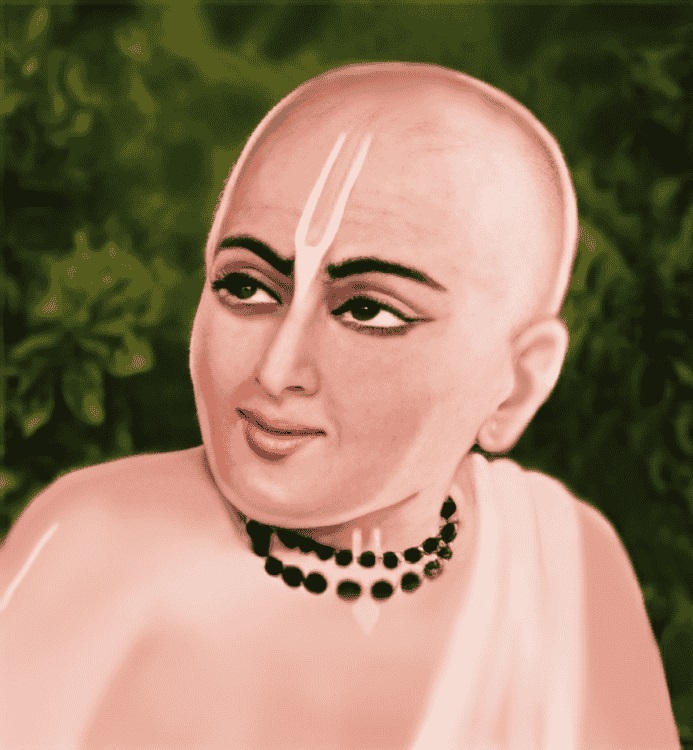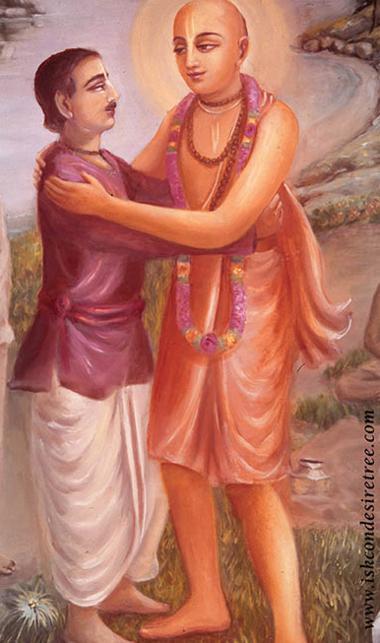
Srila Ramananda Raya
The Governor Who Became Mahaprabhu's Confidant
Also known as Ramananda Ray, Raya Ramananda, Rama Raya, Ramananda Ray Patnaik
“Ramananda Raya and I are one, although our bodies are different.”
Sri Chaitanya Mahaprabhu's own description of His relationship with Ramananda Raya, spoken to Ramananda Raya's father Bhavananda Raya (Sri Chaitanya-charitamrita, Adi-lila 10.134).
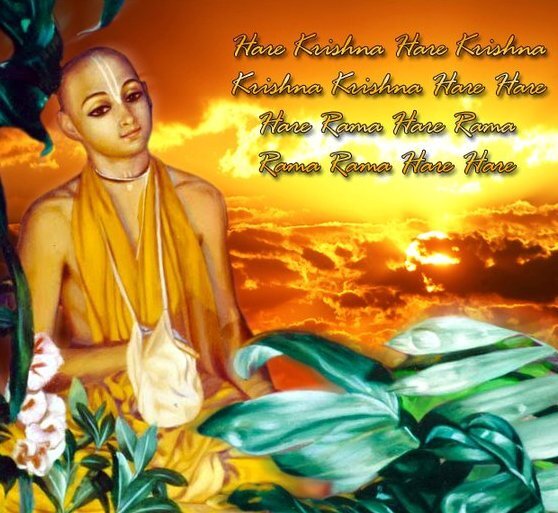
Srila Ramananda Raya was one of the most unusual people Sri Chaitanya Mahaprabhu ever drew close to Himself. He was a working provincial governor, not a monk or a scholar-priest by profession. By the caste rules of his own time, he was not even considered fit company for a brahmana, let alone a sannyasi. Yet Sri Chaitanya Mahaprabhu made a special effort to seek him out. He spoke with Ramananda for ten evenings on the bank of the Godavari river, as a student rather than a teacher. Afterward, for the rest of His life in Puri, He kept Ramananda among the two or three people allowed closest to Him in His most private moods. Gaudiya Vaishnavism remembers Ramananda Raya as one of the deepest experts in rasa-shastra, the study of devotional mellows. He had that reputation even before he ever met the Lord. He is also remembered as living proof of Sri Chaitanya Mahaprabhu's own teaching that knowledge of Krishna, not birth, is what qualifies someone to teach it.
| Detail | Description |
|---|---|
| Also known as | Ramananda Ray, Raya Ramananda, Rama Raya |
| Father | Bhavananda Raya, a senior official under the Gajapati kings of Orissa |
| Identity | Cowherd Arjuna and the Pandava Arjuna combined; some say the gopi Lalita (Gaura-ganoddesha-dipika 120-124; Chaitanya-charitamrita Adi 10.134 purport) |
| Social position | Born into the karana (scribal-administrative) community, not a brahmana by birth |
| Government post | Governor of Vidyanagara, on the Godavari, under Maharaja Prataparudra |
| Best known for | The Ramananda Samvada with Sri Chaitanya Mahaprabhu, and decades of confidential service at Puri afterward |
| Literary work | Jagannatha-vallabha-nataka, a Sanskrit drama on Radha and Krishna's pastimes in Vrindavana |
| Constant companion | Svarupa Damodara Goswami, alongside whom he served Mahaprabhu in Puri |
A Governor from a Scribal Family #
Ramananda Raya was the eldest of five sons born to Bhavananda Raya, a prominent official of the Gajapati kingdom connected with the area around Alalanatha (Brahmagiri), not far from Jagannatha Puri. The family belonged to the karana community, Orissa's traditional class of scribes and administrators. It was a community that the wider society of the day classed as shudra, not brahmana. Sri Chaitanya-charitamrita later has Mahaprabhu tell Bhavananda Raya directly that he was Maharaja Pandu himself, reborn, and that his five sons, Ramananda, Pattanayaka Gopinatha, Kalanidhi, Sudhanidhi and Nayaka Vaninatha, were the five Pandavas. Ramananda grew into a scholar, poet and dramatist of real standing, expert in rasa-shastra, well before he had any reason to expect a wandering sannyasi would change the rest of his life. The fuller story of his family and social position is told in Birth and Family.
Governor of Vidyanagara #
By the time Sri Chaitanya Mahaprabhu's South India tour brought Him near the Godavari, Ramananda Raya was already governing the province of Vidyanagara for King Prataparudra. It was an important post. He was responsible for revenue, justice and order along a stretch of the Gajapati kingdom's southern frontier. Sarvabhauma Bhattacharya had recently become Mahaprabhu's own follower. He told the Lord plainly that no one alive understood the moods of Radha and Krishna's love as deeply as this governor did. He urged Mahaprabhu to meet Ramananda, and not to let his government post keep Him away. More on his career and reputation before the two ever met is told in Governor of Vidyanagara.
The Meeting on the Godavari #
What happened next is one of the most important conversations in the whole Gaudiya Vaishnava tradition. Sri Chaitanya Mahaprabhu sat waiting by the Godavari until Ramananda Raya's party came down to bathe. Then the two of them, a young sannyasi and a governor twice his age, fell into each other's arms in open, unrestrained tears, to the visible shock of the brahmanas standing nearby. Over the ten evenings that followed, in private, Ramananda Raya answered question after question about the goal of life and the nature of pure love for Krishna. His answers rose through stage after stage, until Mahaprabhu revealed to him a form of Himself that Ramananda Raya had never imagined seeing. A full, verse-by-verse account of that dialogue, from Mahaprabhu's own side of the story, is told at the Ramananda Samvada. What that meeting meant for Ramananda Raya himself, and how it changed the rest of his life, is told in The Meeting on the Godavari.
Leaving Government Service for Puri #
Before the two parted, Mahaprabhu asked Ramananda Raya to resign his post and come live near Him at Jagannatha Puri. This was not a small thing to ask of a governor in office, with a family and a career. But Ramananda Raya did exactly that. He asked King Prataparudra to release him from service. By Sri Chaitanya-charitamrita's account, he received that release because of the Lord's own wish rather than his own. When Ramananda Raya finally reached Puri, still in the King's company, he went straight to Mahaprabhu, even before he had visited the Jagannatha temple. Krishnadasa Kaviraja Goswami records this detail because it shows what now mattered most to Ramananda Raya. The full account is told in Resigning His Post for Puri.
Confidential Service in Puri #
Throughout Mahaprabhu's Puri years, Svarupa Damodara Goswami is named as Ramananda Raya's constant companion in service. For the rest of Sri Chaitanya Mahaprabhu's manifest life, these two were the people most consistently present during the Lord's most intense devotional states. Sri Chaitanya-charitamrita compares Ramananda Raya's role to that of Subala, the cowherd friend who helped Krishna Himself through moods of separation from Radha in Vrindavana. Ramananda Raya sang his own verses and the poetry of Vidyapati, Chandidasa and Jayadeva to console Mahaprabhu through nights of longing. In a pastime that still startles readers today, he also personally trained young temple dancers for Lord Jagannatha's pleasure. He trained them with a degree of physical closeness that, as Sri Chaitanya-charitamrita insists, no one else could safely imitate. More of this extraordinary period, and what Krishnadasa Kaviraja Goswami says about it, is told in Confidential Service in Puri.
Who Ramananda Raya Is in Krishna-Lila #
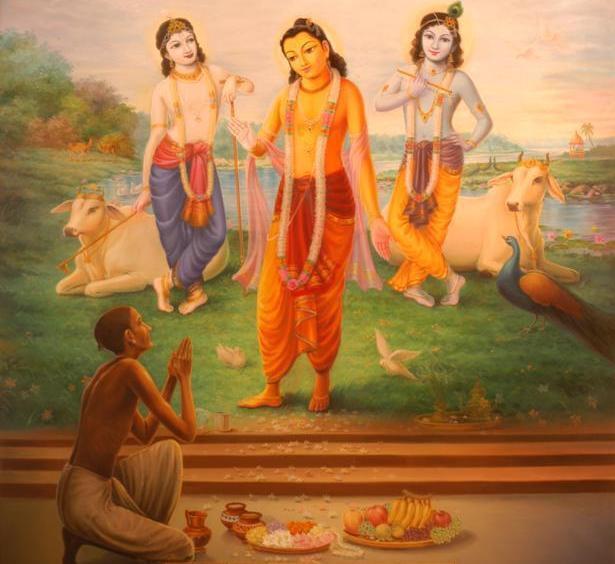
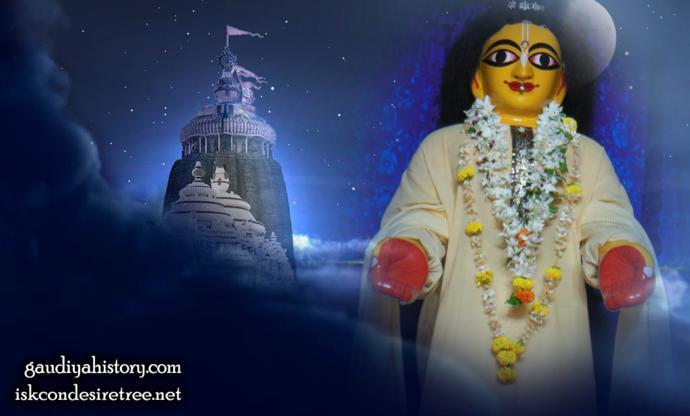
Gaudiya Vaishnava tradition understands that a person this close to Sri Chaitanya Mahaprabhu has an eternal identity in Krishna's own pastimes in Vrindavana. In Ramananda Raya's case, the tradition gives more than one answer. Kavi Karnapura's Gaura-ganoddesha-dipika identifies him with Arjuna, and in fact with two different Arjunas merged into one. The same text also records that some say he was the gopi Lalita. Other respected Vaishnavas in the tradition, including Srila Bhaktivinoda Thakura, hold that he was an incarnation of Lalita or Vishakha, two of Radha's closest gopi friends. Sri Chaitanya Mahaprabhu's own description of their bond went further still. He told Bhavananda Raya that He and Ramananda were, in effect, a single person appearing in two bodies. The full range of what different sources say, and where they disagree, is told in His Identity in Krishna-Lila.
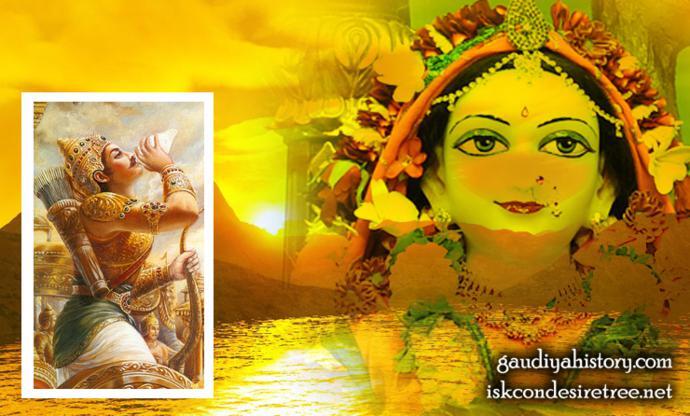
Kavi Karnapura gives the Arjuna identity in verse 120 of the Gaura-ganoddesha-dipika:
priya-narma-sakhā kaścid arjunaḥ pāṇḍavo’rjunaḥ
militvā samabhūd rāmānanda-rāyaḥ prabhoḥ priyaḥ
"The cowherd boy Arjuna who was a close friend of the Lord in Vrndavana, and the Pandava Arjuna, both joined to become Ramananda Raya, who was very dear to Lord Caitanya." (Gaura-ganoddesha-dipika 120)
Srila Prabhupada sums up this passage in his purport to Chaitanya-charitamrita Adi 10.134: "The Gaura-gaṇoddeśa-dīpikā (120-24) states that Rāmānanda Rāya was formerly Arjuna. He is also considered to have been an incarnation of the gopī Lalitā, although in the opinion of others he was an incarnation of Viśākhādevī."
Final Years and Legacy #
Ramananda Raya remained at Sri Chaitanya Mahaprabhu's side through the hardest years of the Lord's life at Puri. In those years Mahaprabhu's separation from Krishna grew so intense that only Ramananda's recitations and Svarupa Damodara's songs are said to have sustained Him. No source records exactly when, where or how Ramananda Raya himself passed from this world. Even the devotional literature that remembers him in such detail gives two different dates for his disappearance day, not one agreed date. What survives clearly is his own Sanskrit drama, Jagannatha-vallabha-nataka, and a reputation, repeated by Srila Prabhupada in lecture after lecture across the decades, as living evidence that bhakti and closeness to the Lord have nothing to do with birth. The final period of his life is told in Final Days and Disappearance.
Scriptural evidence
Quoted in the text above:
- Verse 120 Gaura-ganoddesha-dipika
Further verses:
ललितेत्याहुरेके यत्तदेकेनानुमन्यन्ते ।
भवानन्दं प्रति प्राह गौरो यत्त्वं पृथापतिः ॥१२२॥
गोप्यार्जुनीयया सार्धमेकीभायापि पाण्डवः ।
अर्जुनो यद्रायरामानन्द इत्याहुरुत्तमाः ॥१२३॥
अर्जुनीयाभवत्तूर्णं अर्जुनोऽपि च पाण्डवः ।
इति पाद्मोत्तरखण्डे व्यक्तमेव विराजते ।
तस्मादेतत्त्रयं रामानन्दरायमहाशयः ॥१२४॥
lalitety āhur eke yat tad ekenānumanyante |
bhavānandaṁ prati prāha gauro yat tvaṁ pṛthā-patiḥ ||122||
gopyārjunīyayā sārdham ekībhāyāpi pāṇḍavaḥ |
arjuno yad rāya-rāmānanda ity āhur uttamāḥ ||123||
arjunīyābhavat tūrṇaṁ arjuno’pi ca pāṇḍavaḥ |
iti pādmottara-khaṇḍe vyaktam eva virājate |
tasmād etat trayaṁ rāmānanda-rāya-mahāśayaḥ ||124||
Some say that Ramananda Raya is the incarnation of Lalita-gopi, and others say that because Lord Caitanya directly told Ramananda Raya's father, Bhavananda Raya, that he was the incarnation of Maharaja Pandu, Arjuna's father, therefore Ramananda Raya must be the incarnation of Pandava Arjuna. The most learned devotees say that Ramananda Raya is the incarnation of both the Pandava Arjuna, and a gopi named Arjuniya. This explanation is also supported by the statements of the Padma Purana, Uttara-khanda. From all this we may conclude that Ramananda Raya is the incarnation of Lalita-gopi, Arjuniya-gopi, and Pandava Arjuna.
Kavi Karnapura records the other views: the gopi Lalita, and the gopi Arjuniya joined with the Pandava Arjuna, citing the Padma Purana, Uttara-khanda. Sanskrit: diacritic edition of the Gaura-ganoddesha-dipika; English translation as published at bvmlu.org.
What Srila Prabhupada said
"This Ramananda, he was also Raya, Ramananda Raya, a great devotee of Lord Caitanya and governor of Madras. So Caitanya Mahaprabhu picked up a very important persons, the six Gosvamis, Ramananda Raya, Sarvabhauma Bhattacharya, like that, eight or ten direct disciples."
- Sri Chaitanya-charitamrita, Adi-lila 10.133-134 and purport
- Sri Chaitanya-charitamrita, Madhya-lila 1.104, 7.62, 8 (background), 10.50-53, 11.15-40
- Sri Chaitanya-charitamrita, Antya-lila 2.105-106, 5, 6.9, 7.23-37, 20.3-8
- Gaudiya History: Ramananda Raya - Biography
- Gaudiya History: Ramananda Raya - Biography 2
- Gaudiya History: Ramananda Raya - Biography 3
Frequently asked
When was Srila Ramananda Raya born?
Srila Ramananda Raya appeared Exact year not recorded (a mature man of about forty, roughly twice Sri Chaitanya Mahaprabhu's age, when they met around 1510-1512) in Near Alalanatha (Brahmagiri), west of Jagannatha Puri, Orissa.
When and where did Srila Ramananda Raya disappear?
Srila Ramananda Raya disappeared Exact date not recorded: sources vary between Jyestha Krishna-panchami and Vaishakha Krishna-panchami at Not recorded in the available sources; he remained at Jagannatha Puri through Sri Chaitanya Mahaprabhu's final years.
What are the main pastimes of Srila Ramananda Raya?
The pastimes covered here include: Birth and Family, Governor of Vidyanagara, The Meeting on the Godavari, Resigning His Post for Puri, Confidential Service in Puri, His Identity in Krishna-Lila, Final Days and Disappearance.