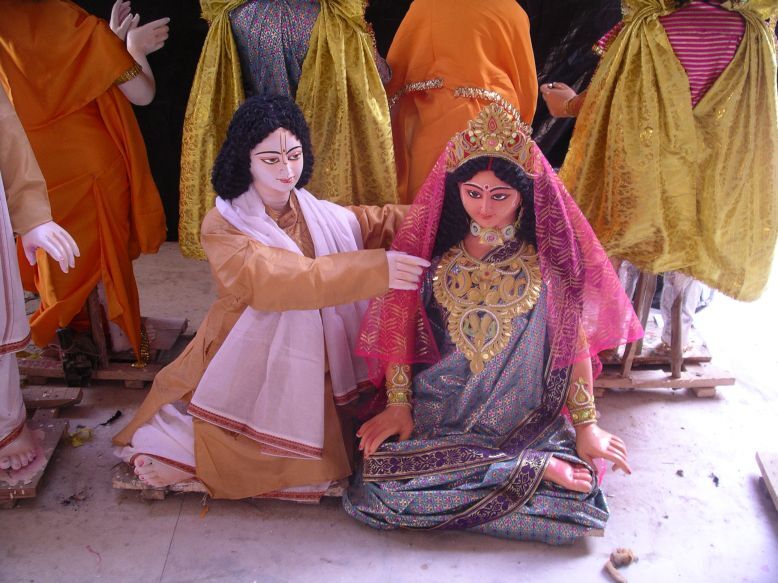
बुद्धिमन्त खान को अधिकतर उस धन के लिए याद किया जाता है, जो उन्होंने चुपचाप खर्च किया: एक विवाह का खर्च, औषधि का मूल्य, पुरी तक पहुँचाया गया भोजन। केवल एक दृश्य इस क्रम से अलग है। उसमें महाप्रभु की गृहस्थ-लीलाओं में उनकी अपनी एक सच्ची भूमिका है। यह घटना नवद्वीप में चन्द्रशेखर आचार्य के घर में हुई। वृन्दावन दास ठाकुर ने बाद में चैतन्य-भागवत में उस दिन का विस्तार से वर्णन किया।
व्रज-लीला के अभिनय का अचानक निर्णय #
अपने गृहस्थ-जीवन के इस समय तक श्री चैतन्य महाप्रभु अपने भक्तों को उन प्रेम-भावों की झलक दिखाने लगे थे, जो बाद में उनके पुरी के वर्षों की पहचान बने। कीर्तन के समय वे नाचते, रोते और बाहरी चेतना खो देते थे। इस विशेष दिन उन्होंने इससे भी आगे जाने का निश्चय किया। उन्होंने तय किया कि अपने ही भक्तों को पात्र बनाकर व्रज में कृष्ण की लीलाओं के दृश्यों का अभिनय किया जाए। इसमें वे स्वयं कृष्ण की भूमिका नहीं लेंगे। वे कृष्ण की अपनी दिव्य नारी-शक्तियों, दुर्गा, लक्ष्मी और अन्य, की भूमिका निभाएँगे। यह किसी औपचारिक नाट्य-परम्परा को फिर से जीवित करना नहीं था। यह प्रेम-भाव से उठी एक प्रबल इच्छा थी, जिसे महाप्रभु उसी दिन चन्द्रशेखर आचार्य के घर पर तुरन्त साकार करना चाहते थे।
नाम लेकर दिया गया आदेश #
ऐसे आयोजन के लिए थोड़े समय में वस्त्र और सजावट चाहिए थी, और महाप्रभु ने यह काम संयोग पर नहीं छोड़ा। चैतन्य-भागवत में लिखा है कि उन्होंने सीधे पुकारा: 'बुद्धिमन्त खान! शीघ्र जाओ और वस्त्रों की व्यवस्था करो, क्योंकि आज मैं नृत्य करूँगा।' भक्ति-रत्नाकर कई पीढ़ियों बाद लिखा गया। वह इसी दृश्य को परम्परा की एक स्थापित बात की तरह लगभग वैसे ही दोहराता है। वह बताता है कि यह काम दो व्यक्तियों को सौंपा गया था: बुद्धिमन्त खान और सदाशिव पण्डित नाम के एक भक्त। सब भक्तों के सामने ऐसे काम के लिए नाम लेकर चुना जाना अपने आप में विश्वास का चिह्न था। महाप्रभु किसी अपरिचित व्यक्ति से यह काम नहीं करवा रहे थे। वे एक ऐसे गृहस्थ से कह रहे थे, जिनके बारे में वे पहले से जानते थे कि वे बिना संकोच यह काम करेंगे।
एक कार्य पर असीम आनन्द #
ग्रन्थ इस बात पर बल नहीं देता कि काम कितना कठिन था। वह उसके पीछे के भाव पर बल देता है। वर्णन है कि आदेश मिलते ही बुद्धिमन्त खान और सदाशिव ऐसे आनन्द से भरकर घर लौटे, जिसे ग्रन्थ असीम कहता है। यह किसी सेवक का बेमन से आज्ञा मानना नहीं था। यह उस भक्त की उत्सुकता थी, जिसे सेवा का अवसर मिला हो। उन्होंने घर पर बाँस और कपड़े से एक चंदोवा खड़ा किया। उसके नीचे वे अलग-अलग भूमिकाएँ निभाने वाले भक्तों को वस्त्र पहनाने लगे। लिखा है कि बुद्धिमन्त खान ने स्वयं महाप्रभु को वस्त्र पहनाए। वे वस्त्र और सजावट की सामग्री लाकर प्रभु के सामने रखते थे, ताकि नाटक ठीक वैसे ही आगे बढ़ सके जैसा प्रभु चाहते थे।
पाँच सौ वर्षों तक सुरक्षित एक छोटा-सा दृश्य #
इस प्रसंग में वैसा कोई नाटकीय मोड़ नहीं है, जैसा किसी धर्म-परिवर्तन की कथा या शास्त्रार्थ में होता है। न कोई बन्दी बनाया जाता है, न कोई शास्त्र पर वाद-विवाद करता है, न किसी का जीवन बदलता है। और ठीक इसी कारण बुद्धिमन्त खान को समझने के लिए यह प्रसंग मूल्यवान है। महाप्रभु के साथ उनके सम्बन्ध के बारे में जो कुछ भी लिखा मिलता है, वह इसी तरह की तत्परता से बना है। जिस चीज़ का खर्च उठाना था, उसका खर्च उन्होंने उठाया, और जिसकी व्यवस्था करनी थी, उसकी व्यवस्था की। वे हमेशा कहे जाते ही काम में लग जाते थे, और जहाँ तक अभिलेख बताते हैं, उन्हें कभी दोबारा कहने की आवश्यकता नहीं पड़ी। चैतन्य-चरितामृत उनके बारे में संक्षेप में कहता है कि वे आजन्म आज्ञाकारी थे, अर्थात् जन्म से ही प्रभु की आज्ञा मानने वाले। चन्द्रशेखर आचार्य के घर पर वस्त्रों और सजावट की उस एक दोपहर से अधिक सटीक उदाहरण इन शब्दों का शायद ही कहीं मिले।
