एक झोली जो कभी भरी न रह पाई #
नवद्वीप में हर दिन सुबह शुक्लाम्बर ब्रह्मचारी अपने कंधे पर कपड़े की एक झोली डालकर घर-घर चावल माँगने निकलते थे। उनकी कोई बड़ी इच्छा नहीं थी। वे बस उतना ही रखते थे, जितना भगवान को अर्पित करके स्वयं खा सकें। उनका बाकी दिन कृष्ण के नामों के कीर्तन में बीतता था। वे उन्हीं गलियों में बार-बार चलते, और उनकी आँखों से आँसू बहते रहते। जो पड़ोसी केवल बाहरी रूप देखकर आँकते थे, उन्हें वे बस एक भिखारी दिखते थे। लेकिन श्री चैतन्य महाप्रभु ने उनमें कुछ और देखा। श्री चैतन्य-चरितामृत इसका परिणाम एक छोटे-से श्लोक में बताता है: भगवान कभी हँसी में और कभी गम्भीरता से शुक्लाम्बर ब्रह्मचारी से भोजन माँगते थे, या बस छीनकर खा लेते थे (आदि 10.38)। भगवान के भक्तों की एक लम्बी सूची में यही एक पंक्ति शुक्लाम्बर ब्रह्मचारी की पूरी प्रसिद्धि का आधार है। ध्यान से पढ़ें, तो यह पंक्ति यह भी बताती है कि ऐसा एक से अधिक बार हुआ।
भगवान प्रतीक्षा न कर सके #
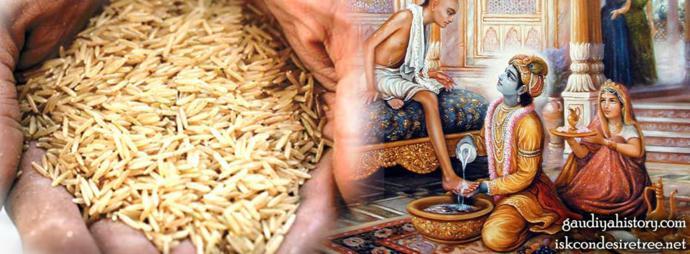
चैतन्य-चरितामृत ऐसे कम-से-कम एक अवसर का विस्तार से वर्णन करता है। शुक्लाम्बर ब्रह्मचारी नवद्वीप में गंगा के तट पर रहते थे। एक दिन उन्होंने श्री चैतन्य महाप्रभु को भाव-विभोर होकर नृत्य करते हुए देखा। उस समय किसी का ध्यान शुक्लाम्बर की भिक्षा-झोली के चावल पर नहीं था। महाप्रभु उनसे इतने प्रसन्न हुए कि उन्होंने शुक्लाम्बर की झोली में हाथ डाला, कच्चे, बिना कुटे चावल की एक मुट्ठी निकाली, और वहीं खाने लगे। वहाँ मौजूद किसी ने उन्हें रोकने का प्रयास नहीं किया, और वे स्वयं भी नहीं रुके। वे तब तक खाते रहे, जब तक सारा चावल खत्म नहीं हो गया (आदि 17.20)। जिस व्यक्ति के बारे में और बहुत कम जानकारी मिलती है, उसकी जीवनी में यह एक चौंका देने वाली बात है। कृष्णदास कविराज गोस्वामी के अपने वर्णन के अनुसार, स्वयं भगवान चावल पकने की प्रतीक्षा नहीं कर सके।
जन्म-जन्मान्तर के निर्धन सेवक #
श्री चैतन्य-भागवत इसी घटना को आगे बढ़ाता है। इसमें महाप्रभु के कुछ वचन हैं, जो इस घटना का अर्थ बताते हैं। वृन्दावन दास ठाकुर लिखते हैं कि महाप्रभु ने शुक्लाम्बर ब्रह्मचारी की ओर मुड़कर उनसे कहा कि वे जन्म-जन्मान्तर से भगवान के निर्धन सेवक रहे हैं। वे सदा सब कुछ अर्पित करते रहे और अपने लिए कुछ भी नहीं रखा। भगवान ने उनसे यह भी कहा कि यदि वे अपनी इच्छा से नहीं देंगे, तो भगवान उसे बलपूर्वक ले लेंगे, ठीक वैसे ही जैसे उन्होंने एक बार पहले किया था। यह संकेत कृष्ण के अपने जीवन की ओर है। द्वारका की यह कथा स्मरण की जाती है कि कृष्ण ने एक बार चिवड़े की छिपाई हुई पोटली छीन ली थी, और रुक्मिणी देवी ने उनका हाथ पकड़कर उन्हें रोकने का प्रयास किया था (चैतन्य-भागवत, मध्य-खण्ड, अध्याय 16)। यह तुलना शुक्लाम्बर ब्रह्मचारी को एक बहुत पुरानी कथा से जोड़ देती है। उस कथा में वे कोई छोटी-सी अलग बात नहीं हैं, बल्कि उसी कृपा का एक दूसरा उदाहरण हैं।
श्रीवास के घर एक प्रतिध्वनि #
यह लीला किसी एक दोपहर तक सीमित नहीं रही। नरहरि चक्रवर्ती द्वारा बाद में लिखे गए ग्रन्थ भक्ति-रत्नाकर में इसी प्रकार का एक और प्रसंग मिलता है। इस बार यह श्रीवास ठाकुर के घर में हुआ। महाप्रभु कीर्तन में लीन थे। जब शुक्लाम्बर उनके पास से गुज़रे, तो भगवान ने उनकी भिक्षा-झोली में हाथ डाला और बिना धुले चावल की एक मुट्ठी निकाल ली। उन्होंने शुक्लाम्बर को सुदामा कहकर पुकारा। सुदामा द्वारका में कृष्ण के निर्धन ब्राह्मण मित्र का नाम था। शुक्लाम्बर कंधे पर झोली लटकाए हुए ही कीर्तन में नाचते रहे। वे इतने भाव-विभोर थे कि और कुछ कर ही नहीं सके। आसपास के भक्तों के हृदय में भी वैसी ही भावनाएँ उमड़ पड़ीं। यह बार-बार होना महत्वपूर्ण है। यह भगवान की कोई एक बार की क्रीड़ा नहीं थी। यह दोनों के बीच का एक जाना-पहचाना आदान-प्रदान था, जो बार-बार होता था। लोगों ने इसे इतनी बार देखा कि इसे दो अलग-अलग ग्रन्थों में लिखा गया।
पवित्र नाम के साथ चावल #
आदि 17.20 का यह प्रसंग केवल एक सुन्दर कथा नहीं रह जाता, क्योंकि कृष्णदास कविराज गोस्वामी इसके ठीक बाद एक बड़ी शिक्षा रखते हैं। शुक्लाम्बर ब्रह्मचारी का कच्चा चावल खाने के तुरंत बाद महाप्रभु ने बृहन्नारदीय पुराण के हरेर्नाम श्लोक की लम्बी और विस्तृत व्याख्या शुरू की। यह श्लोक पूरी गौड़ीय परम्परा में प्रसिद्ध है, क्योंकि यह बताता है कि इस युग की कठिनाइयों को पार करने का एकमात्र निश्चित उपाय पवित्र नाम का कीर्तन है: "इस कलियुग में हरि के पवित्र नाम के कीर्तन के अतिरिक्त आत्म-साक्षात्कार का और कोई उपाय नहीं है, कोई उपाय नहीं है, कोई उपाय नहीं है" (आदि 17.21)। कृष्णदास कविराज गोस्वामी इन दोनों को आपस में असम्बद्ध दो घटनाओं की तरह नहीं रखते। वे इस व्याख्या को भोजन के ठीक बाद, उसी भाव-विभोर अवस्था में रखते हैं। इस प्रकार एक निर्धन भक्त की भिक्षा का चावल, जिसे भगवान ने कच्चा ही खा लिया, सीधे पवित्र नाम के बारे में परम्परा की एक मुख्य शिक्षा तक ले जाता है। यदि चावल छीनने की घटना को केवल एक अनोखी कहानी मानकर पढ़ा जाए, तो यह सम्बन्ध आसानी से छूट जाता है।
धन की कथा नहीं #
इस सबको केवल भोजन की कथा मान लेना आसान होगा। लेकिन वास्तव में यह इस बात की कथा है कि भगवान किस पर ध्यान देते हैं। शुक्लाम्बर ब्रह्मचारी के पास बताने लायक कुछ भी नहीं था। न उनके पास अर्पित करने को कोई विद्वत्ता थी, न कोई घर-गृहस्थी, जिसमें वे भगवान को बुला सकें। हर स्रोत बार-बार इसी बात पर लौटता है। उनकी निर्धनता कभी महाप्रभु के स्नेह में बाधा नहीं बनी। बल्कि भगवान उनकी इसी निर्धनता की ओर और भी अधिक उत्साह से बढ़े। शुक्लाम्बर के घर पर हुए इस सम्बन्ध की पूरी कथा अलग से दी गई है। उसमें वह रात है, जब महाप्रभु के अपने भक्त शुक्लाम्बर की छत के नीचे इकट्ठा हुए। उसमें वह पका हुआ भोजन भी है, जिसे भगवान ने बाद में अपने जीवन का सबसे स्वादिष्ट भोजन कहा। उसके लिए देखें शुक्लाम्बर के घर भोजन।
