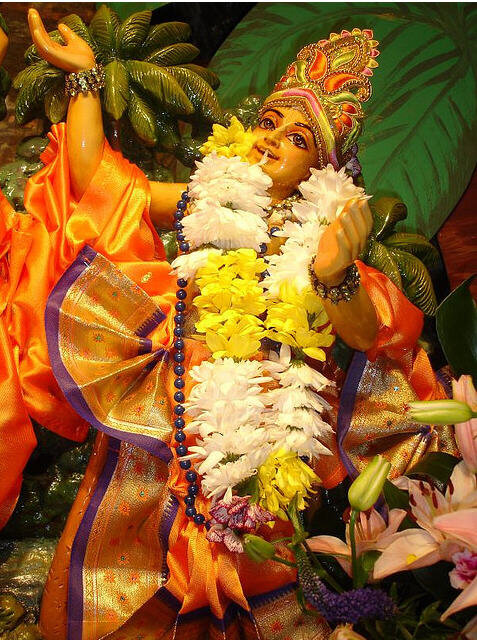
Sri Srivasa Thakura
In Whose Courtyard the Sankirtana Movement Began
Also known as Srivasa Pandit, Narada Muni
“Let the chanting finish. The news can wait.”
Srivasa Thakura's decision on the night his son died, in summary
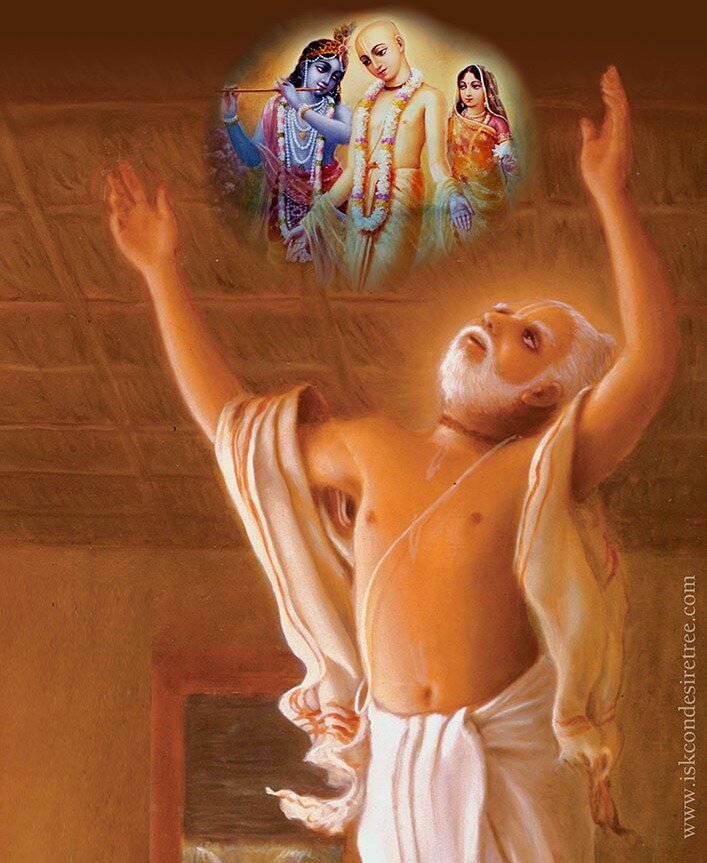
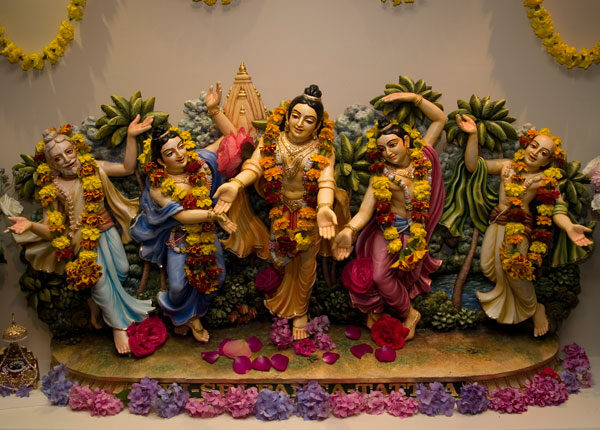
Sri Srivasa Thakura, also called Srivasa Pandit, is the fifth member of the Panca-tattva. In the Panca-tattva he represents the pure devotee (bhakta-tattva). He is regarded in the tradition as an incarnation of Narada Muni, who in the Puranas is the model travelling devotee and kirtana performer. This is fitting, because the sankirtana movement began in Srivasa Thakura's courtyard.
| Detail | Description |
|---|---|
| Place in the Panca-tattva | The pure devotee, bhakta-tattva |
| Identity | An incarnation of Narada Muni (Gaura-ganoddesha-dipika 90; Chaitanya-charitamrita Adi 10.8 purport) |
| Born | Srihatta |
| Settled | Nabadwip, on the bank of the Ganges near Mahaprabhu's home |
| Wife | Malini Devi |
| Brothers | Sripati, Srirama and Srikanta |
| Courtyard | Srivasa Angan, still shown at Mayapur |
Family and Life at Nabadwip #
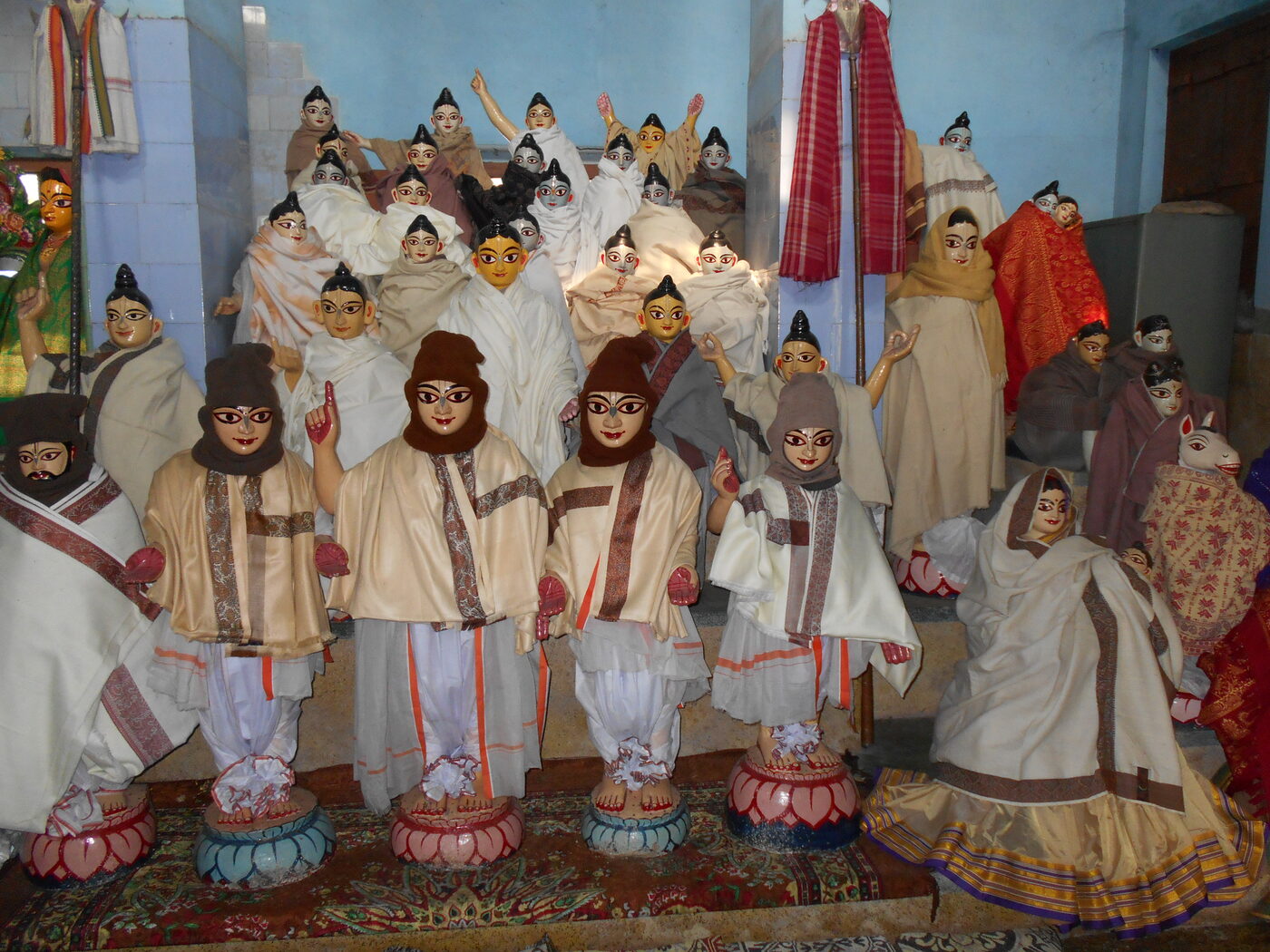
He was born in Srihatta and settled in Nabadwip, on the bank of the Ganges near Mahaprabhu's own home, with his wife Malini Devi and his brothers Sripati, Srirama and Srikanta. He was much older than Nimai and was already a practising Vaishnava, quietly worshipping Krishna and chanting the holy names. At that time the town's religious life was dominated by ritual and by scholarship in logic. Vaishnava accounts describe him as one of the very few people in Nabadwip who recognised what had happened to Nimai Pandita after His return from Gaya. It was not a breakdown. It was pure love of God appearing in Him.
Kavi Karnapura's Gaura-ganoddesha-dipika (verse 90) gives the earlier identity of both Srivasa and his younger brother Srirama:
śrīvāsa-paṇḍito dhīmān yaḥ purā nārado muniḥ
parvatākhyo muni-varo ya āsīn nārada-priyaḥ
sa rāma-paṇḍitaḥ śrīmāns tat-kaniṣṭha-sahodaraḥ
"Intelligent Srivasa Pandita had previously been Narada Muni, the best of the sages. Srivasa's younger brother, Sriman Rama Pandita, had previously been Narada's close friend Parvata Muni." (Gaura-ganoddesha-dipika 90)
Srila Prabhupada confirms this in his purport to Chaitanya-charitamrita Adi 10.8: "In the Gaura-gaṇoddeśa-dīpikā (90), Śrīvāsa Paṇḍita (Śrīvāsa Ṭhākura) is described as an incarnation of Nārada Muni, and Śrī Rāma Paṇḍita, his younger brother, is said to be an incarnation of Parvata Muni, a great friend of Nārada's."
Srivasa Angan and the First Kirtanas #
His house became the birthplace of the movement. For a full year, before the chanting went out into the streets, Mahaprabhu held nightly kirtana at Srivasa Thakura's home with the doors closed. This was so that people who mocked the devotees could not come in and make fun of what they saw. It was there that the ecstatic pastimes of that first period took place: the Lord's manifestation of divine forms, the twenty-one hours of continuous ecstasy, the abhiseka in which Srivasa worshipped Him formally as the Supreme Lord. That courtyard, Srivasa Angan, is still shown at Mayapur and is among the most visited sites in the Gaudiya world.
The Slander of Gopala Chapala #
Association with the Lord cost him. The orthodox brahmana community of Nabadwip resented the nightly chanting, and Srivasa Thakura, as its host, faced much of their anger. The Chaitanya-charitamrita records how a brahmana named Gopala Chapala tried to have him publicly disgraced as a worshipper of the goddess Bhavani. Overnight, he laid out wine and the items used in tantric worship on Srivasa's doorstep. The slander failed. Afterwards the man got leprosy, and in the end he had to take shelter of the very devotee he had tried to ruin.
The Death of His Son #
The episode for which he is most honoured, however, is the death of his son. During one of the nightly kirtanas at his house, a child of his family died. The household knew what the news would do to the assembled devotees and to the Lord. So they kept it silent and let the chanting continue until it ended naturally. When Mahaprabhu learned of it He is described as deeply moved. He caused the dead boy to speak. The child himself explained to his grieving relatives how the soul passes from one body to another, and that his time with them had simply ended. Throughout Gaudiya literature, Srivasa Thakura's calm on that night is held up as the model of a devotee's steady faith, even under the worst pressure a householder can face.
The Puri Years and His Place in the Panca-tattva #
When Mahaprabhu took sannyasa and moved to Puri, Srivasa Thakura remained in Bengal. But each year he travelled with the party of Bengali devotees for the Ratha-yatra festival. The Chaitanya-charitamrita names him again and again among those closest to the Lord in the Puri years. In the Panca-tattva he stands for the ordinary devotee. He is not an incarnation of the Lord, and not a potency of the Lord. He was a householder brahmana who gave his house, his reputation and his peace to the movement, and his courtyard is where it all started.
Scriptural evidence
Quoted in the text above:
- Verse 90 Gaura-ganoddesha-dipika
Frequently asked
When was Sri Srivasa Thakura born?
Sri Srivasa Thakura appeared c. 1450 in Srihatta (Sylhet); settled at Nabadwip.
When and where did Sri Srivasa Thakura disappear?
Sri Srivasa Thakura disappeared after 1534 at Bengal.
What are the main pastimes of Sri Srivasa Thakura?
The pastimes covered here include: The Advent and Family of Srivasa Thakura, Srivasa Angan, the Birthplace of Sankirtana, The Night His Son Died, The Later Years and Disappearance of Srivasa Thakura.