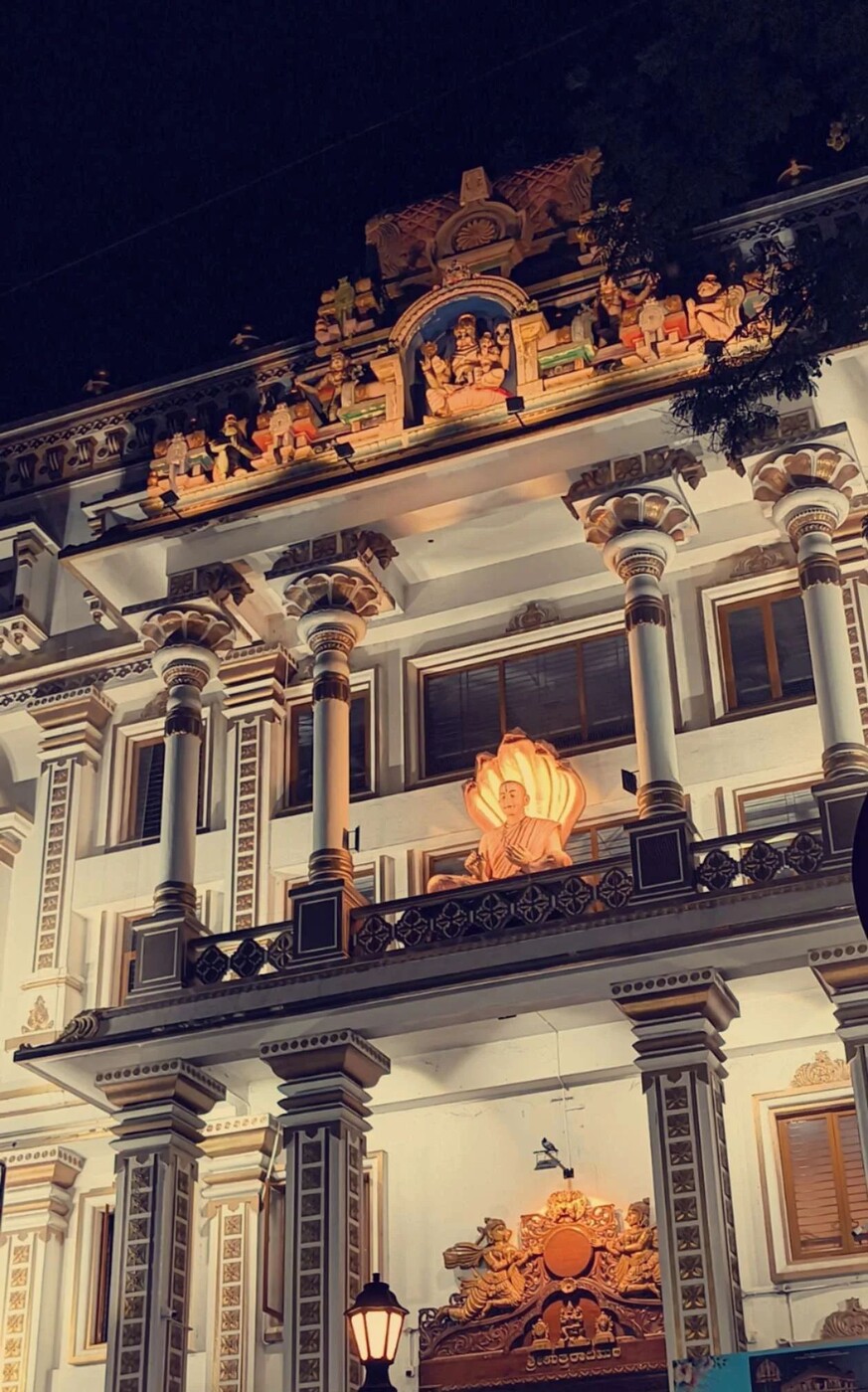
By tradition, Jayatirtha passed from this world in 1388, at Malkhed, ancient Manyakheta. This was the former capital of the Rashtrakuta kings, in what is now Karnataka's Kalaburagi district. Sharma's academic history notes a truly curious gap here. No inscription or historical document naming so important a writer has ever been found. One so-called nineteenth-century inscription claimed to record his date. But Sharma himself later examined it and rejected it as a forgery, made by joining pieces of unrelated texts. What survives instead is a strong and steady memory, kept by devotees and by the mathas, of where he is honored. This memory remains even though no independent document proves exactly when he passed away.
| Detail | Description |
|---|---|
| Traditional year of disappearance | 1388 CE, at the close of a 23-year pontificate |
| Samadhi (brindavana) site | Malkhed (Manyakheta), Karnataka, on the bank of the river Kagini |
| Neighboring samadhis | Those of his own guru, Akshobhya Tirtha, and of Raghunatha Tirtha |
| Immediate successor | Vidyadhiraja Tirtha, pontiff from 1388 |
| First matha split | About 1412 CE |
| Second matha split | About 1435 CE |
| The Matha-traya today | Uttaradi Matha, Vyasaraja Matha, Raghavendra Swami Matha |
A Brindavana On The Kagini #
Jayatirtha's samadhi, called a brindavana in this tradition, stands at Malkhed on the bank of the river Kagini, which flows into the Bhima. It is close to the samadhi of his own guru Akshobhya Tirtha, who had spent his own final years at the same place. His brindavana sits between those of Akshobhya Tirtha and of a later head of the matha, Raghunatha Tirtha. The site still draws an annual Aradhana festival with pilgrims from across India. One older travel account also claims a second tomb site at Anagondi, near Hampi, next to a samadhi identified there as Padmanabha Tirtha's. But this is only one personal account, with weak support. It does not appear in Sharma's academic history or in the more carefully recorded Malkhed tradition. So it is mentioned here only to be complete, not as an established fact.
The Matha-traya: Three Mathas From One Root #
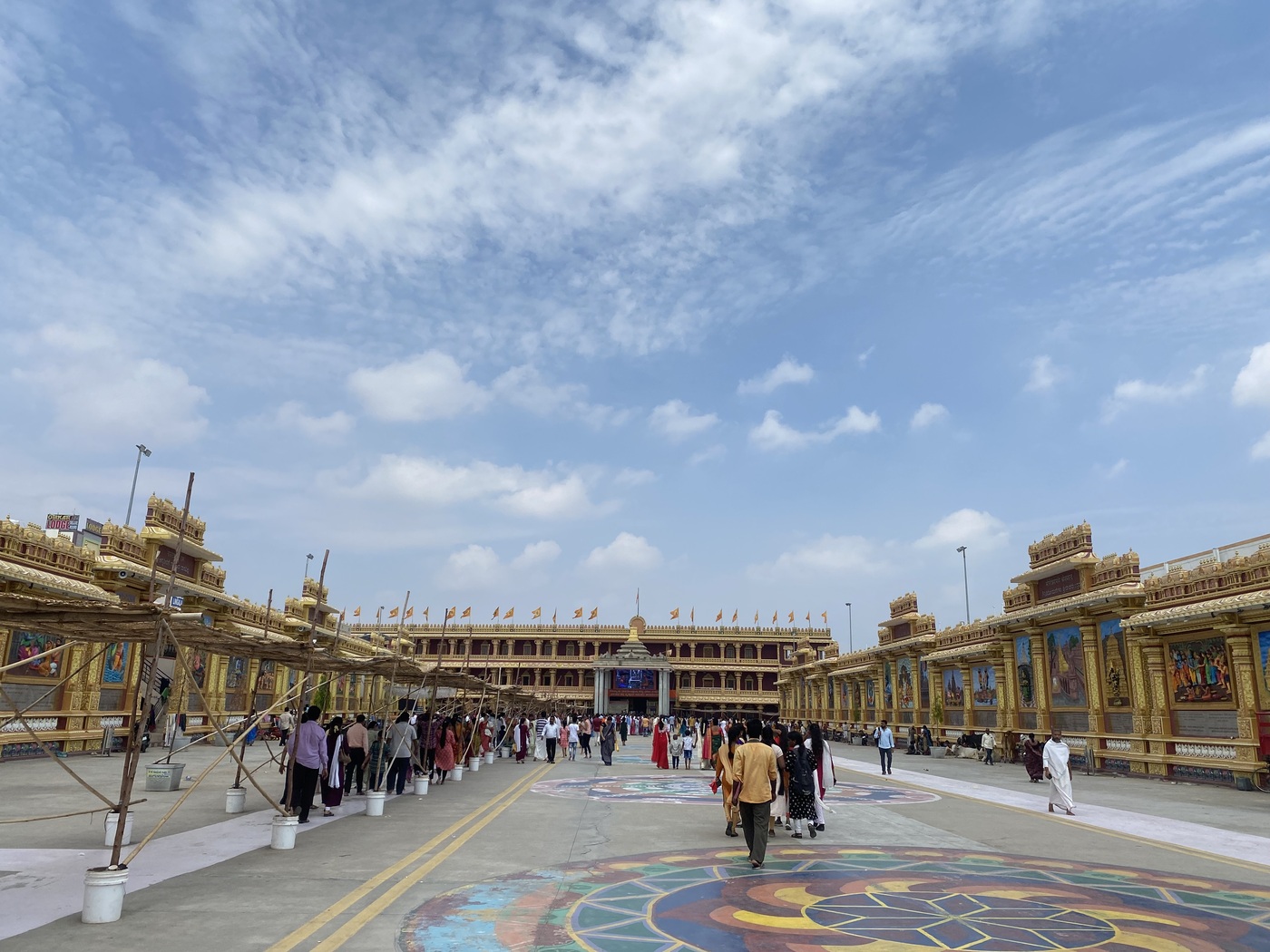
Jayatirtha was succeeded on the pitha by Vidyadhiraja Tirtha in 1388. Sharma's history calls Vidyadhiraja Jayatirtha's "immediate disciple and successor," and dates his time as head of the matha to about 1388-1412. Sharma bases this revised date on independent matha records. The matha eventually split under Vidyadhiraja's own line of successors, not under Jayatirtha directly. The first split came around 1412, when the line divided into two branches. Around 1435, the younger of those two branches split a second time. Over the following two centuries, this gave rise to three separate institutions. The first is the Vyasaraja Matha. It was later renamed for its most celebrated head, Vyasa Tirtha. His fame in the early 1500s, with the support of the Vijayanagara kings, made this matha especially well known. The second is the Raghavendra Swami Matha, based today at Mantralayam. It is named for its own celebrated seventeenth-century head, Raghavendra Tirtha. The third is the Uttaradi Matha. Its name comes from a region and dates only from the time of Raghunatha Tirtha in the mid-1400s. It refers to Uttara-Karnataka, the northern part of Karnataka, the region its heads came from after that time.
All three survive as active institutions today. Whatever rivalry has grown between them over the centuries, "these three Mutts now enjoy the status of 'Matha-traya' or the three premier Madhva Mathas descended from Jayatirtha," Sharma states plainly. In the same breath, he adds that the smaller, less prominent mathas founded separately by Padmanabha Tirtha, Madhava Tirtha and Akshobhya Tirtha "are as much historically connected with Madhva" as these three are. In his view, no single matha can claim to be Madhva's only heir. Few figures in the history of the Madhva-sampradaya stand so directly at the root of nearly every major living branch of the tradition.
