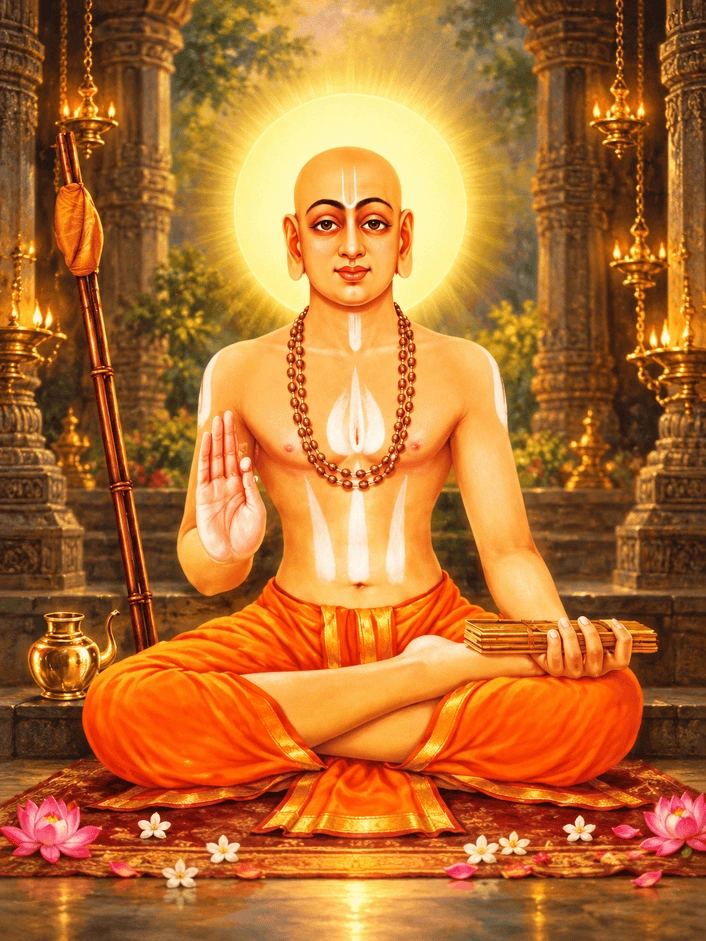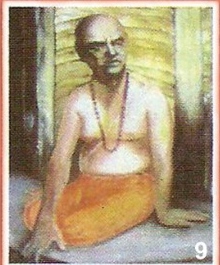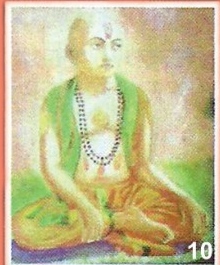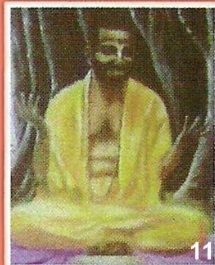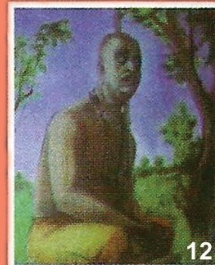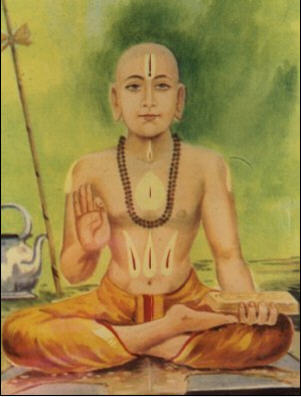
Srila Ishvara Puri
Diksha-Guru of Sri Chaitanya Mahaprabhu
Also known as Isvara Puri, Sri Isvara Puri, Ishvarapuri, Puripada
“The seed of devotional service next fructified in the form of Sri Isvara Puri, and then the gardener Himself, Chaitanya Mahaprabhu, became the main trunk of the tree of devotional service.”
Krishnadasa Kaviraja Goswami's description of the Gaudiya bhakti lineage passing from Srila Madhavendra Puri through Ishvara Puri to Sri Chaitanya Mahaprabhu (Sri Chaitanya-charitamrita, Adi-lila 9.11).
Srila Ishvara Puri has one of the most important single roles in the whole Gaudiya Vaishnava tradition. He is the sannyasi who gave Sri Chaitanya Mahaprabhu His diksha, or formal initiation, at Gaya around 1509-1510. The other parts of his life are also worth knowing for their own sake. These include his years of humble service to Srila Madhavendra Puri, his devotional writing in Bengal, and his short life after that meeting at Gaya. But it is the initiation itself, and what it set in motion, that makes Ishvara Puri's quietly recorded life one of the key turning points of the whole Chaitanya movement.
| Detail | Description |
|---|---|
| Sannyasa name | Ishvara Puri (his name before taking sannyasa is not recorded in the sources) |
| Father | Shyamasundara Acharya, a brahmana of the Rarha (Radha) region of Bengal |
| Birthplace | Kumarahatta, Bengal (today near Halisahar and Kanchrapara, North 24 Parganas, close to Kolkata) |
| Guru | Srila Madhavendra Puri, whose most devoted disciple he became |
| Best known for | Initiating Sri Chaitanya Mahaprabhu with the Krishna mantra at Gaya |
| Literary work | Sri Krishna-lilamrita, a devotional poem on Krishna's pastimes |
| Chief disciples | Kashishvara and Govinda, later sent to serve Sri Chaitanya Mahaprabhu |
A Life Spent in Service to Madhavendra Puri #
Ishvara Puri was born on the full moon day of the month of Jyestha into a brahmana family from Bengal's Rarha region. His father's name, Shyamasundara Acharya, survives, but his own name before he took sannyasa does not. Instead, the tradition remembers the nature of his devotion. He became the most devoted disciple of Srila Madhavendra Puri. In his final days, Madhavendra Puri grew too weak to move. Then Ishvara Puri personally cleaned him and fed him. He sat by him, constantly reciting the name and pastimes of Krishna, so that Madhavendra Puri's mind stayed fixed on the Lord to the last. Sri Chaitanya-charitamrita directly contrasts this service with the conduct of a godbrother, Ramachandra Puri. Ramachandra Puri criticized their dying guru instead of serving him, and he was cursed for it. Krishnadasa Kaviraja Goswami uses that contrast to show exactly why Ishvara Puri, and not anyone else, was the disciple in whom Madhavendra Puri's devotion clearly took root. The fuller story of that service, and of the guru who shaped it, is told in Discipleship Under Madhavendra Puri.
Krishna-lilamrita and the Months in Navadvipa #
Long before Gaya, Ishvara Puri's travels brought him to Navadvipa, where he stayed for several months as a guest in the house of Gopinatha Acharya. There the boy Nimai Pandita first came to know him. At that time no one yet recognized Nimai as Sri Chaitanya Mahaprabhu. Nimai invited him home for meals cooked by Nimai's mother, Sachi Devi. It was also there that Ishvara Puri composed his own devotional poem on Krishna's pastimes, Sri Krishna-lilamrita, and read it aloud. He taught it with special affection to the young Gadadhara Pandit. The months in Navadvipa, and the striking exchange that took place in them between Ishvara Puri, not yet known as Nimai's guru, and his future disciple, are told in full in Krishna-lilamrita and Life in Bengal.
The Initiation at Gaya #
Some time later, Nimai Pandita traveled to Gaya to perform shraddha rites for His deceased father, Jagannatha Mishra. This was an ordinary pilgrim's duty, but it became the setting for the most important meeting of His life. At Gaya, He and Ishvara Puri met again, and this time Nimai asked to be initiated. Sri Chaitanya-Bhagavata describes a ten-syllable mantra being given. Chaitanya-charitamrita does not repeat the mantra itself. But it describes the result in words it does not use lightly. Immediately after the initiation, the Lord began showing visible symptoms of love of Godhead. These symptoms continued to appear after He returned home to Navadvipa. Everything the tradition understands about how Sri Chaitanya Mahaprabhu's outward mood changed after Gaya starts here. The full account of the meeting, the initiation, and the transformation that followed is told in Initiating Sri Chaitanya Mahaprabhu at Gaya.
A Guru Mahaprabhu Never Stopped Honoring #
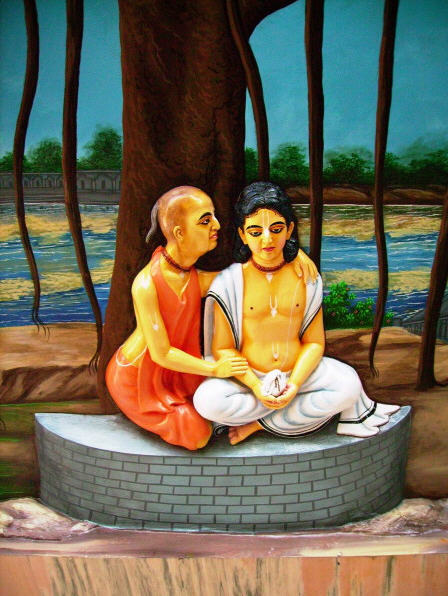
Sri Chaitanya Mahaprabhu's reverence for Ishvara Puri did not end with the initiation. He personally cooked for His guru and served him with His own hand. On His way back from Gaya He stopped at Kumarahatta, the place where His guru was born. He rolled on the ground there and collected a handful of dust from the spot, which He kept with Him for the rest of the journey. Years later, at Jagannatha Puri, the great scholar Sarvabhauma Bhattacharya asked why Ishvara Puri had accepted a personal servant born in a shudra family. Mahaprabhu's answer is one of the most direct statements of guru-tattva in the entire Chaitanya-charitamrita. He said that an empowered spiritual master is to be honored exactly as one honors Krishna Himself, without regard for birth. Years earlier, He had shown much the same teaching without saying a word. He fell weeping at the feet of a man He did not know, the moment He learned that the man was a godbrother of Ishvara Puri. Both episodes are gathered in Mahaprabhu's Reverence for His Guru.
The Trunk of the Desire Tree #
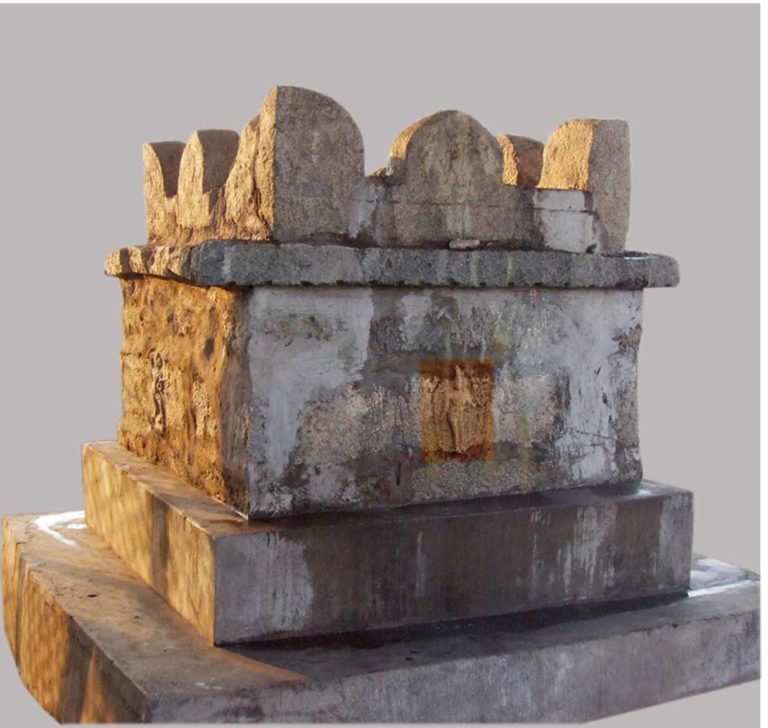
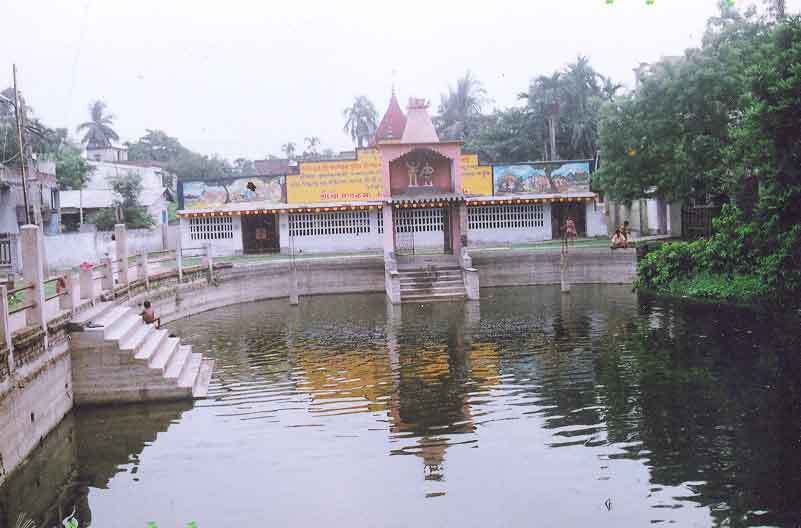
No source records exactly when or where Ishvara Puri passed away. The sources record only that it came soon. It was sometime between the initiation at Gaya and Sri Chaitanya Mahaprabhu's arrival at Jagannatha Puri after accepting sannyasa, no more than a year or two later. His final instruction was to send his two disciples, Kashishvara and Govinda, to serve Mahaprabhu in his place. Mahaprabhu honored this order without hesitation for the rest of His manifest life. Krishnadasa Kaviraja Goswami gives a famous image of the Gaudiya line that shows why this mattered so much. Madhavendra Puri was the first sprout of the desire tree of devotion. Ishvara Puri was the young plant it grew into. And Sri Chaitanya Mahaprabhu Himself became the trunk that every later branch of the tradition rests on. The story of his final days, and of the pilgrimage site at Kumarahatta that still carries his memory, is told in Final Days and Disappearance.
Scriptural evidence
śrī-īśvarapurī-rūpe aṅkura puṣṭa haila
āpane caitanya-mālī skandha upajila
Word for word
śrī-īśvara-purī: by the name Sri Isvara Puri; rūpe: in the form of; aṅkura: the seed; puṣṭa: cultivated; haila: became; āpane: Himself; caitanya-mālī: the gardener of the name Sri Chaitanya Mahaprabhu; skandha: trunk; upajila: expanded.
The seed of devotional service next fructified in the form of Sri Isvara Puri, and then the gardener Himself, Chaitanya Mahaprabhu, became the main trunk of the tree of devotional service.
From the purport: Purport excerpt: "Isvara Purī appeared in a brāhmaṇa family and was the most beloved disciple of Srīla Mādhavendra Purī."
This is the verse that supplies the site's central image for Ishvara Puri: the second stage of growth between Madhavendra Puri's first sprout and Sri Chaitanya Mahaprabhu's own trunk.
What Srila Prabhupada said
Kṛṣṇa gives the knowledge, perfect knowledge, to Brahmā, and Brahmā gives the knowledge to Nārada. Nārada gives the knowledge to Vyāsa. Vyāsa gives the knowledge to Madhvācārya. Madhvācārya gives the knowledge to his disciplic succession; later on, to Mādhavendra Purī. Mādhavendra Purī gives that knowledge to Īśvara Purī. Īśvara Purī gives that knowledge to Caitanya Mahāprabhu, Lord Caitanya. He delivers that knowledge to His immediate disciples, six Gosvāmīs.
Then, from Krsna, Narada. From Narada, Vyasadeva. From Vyasadeva to Madhvacarya, from Madhvacarya to Isvara Puri, Madhavendra Puri, then Caitanya Mahaprabhu, then His disciples, the six Goswamis, then Krsna dasa Kaviraja, then Baladeva Vidyabhusana. So we are taking account very rigidly from Caitanya Mahaprabhu, and I am the tenth generation from Caitanya Mahaprabhu.
Room Conversation with Mohsin Hassan: Conversation, 1971-07-18, Detroit
- Sri Chaitanya-caritamrta, Adi-lila 9.10-11 (desire tree of devotion)
- Sri Chaitanya-caritamrta, Adi-lila 13.54-55 (eternal associates)
- Sri Chaitanya-caritamrta, Adi-lila 17.7-9 (the Gaya initiation)
- Sri Chaitanya-caritamrta, Antya-lila 8.26-32 (service to Madhavendra Puri; contrast with Ramachandra Puri)
- Sri Chaitanya-caritamrta, Madhya-lila 4.18 (the Remuna Gopinatha story)
- Sri Chaitanya-caritamrta, Madhya-lila 9.285-301 (meeting Ranga Puri)
- Sri Chaitanya-caritamrta, Madhya-lila 10.130-148 (Govinda and Sarvabhauma Bhattacharya)
- Sri Chaitanya-caritamrta, Adi-lila 10.138-139 (Kashishvara and Govinda)
- Sri Chaitanya-Bhagavata, Adi-khanda, Chapter 11 — Meeting with Sri Isvara Puri (translated by Bhumipati Dasa)
- Sri Chaitanya-Bhagavata, Adi-khanda, Chapter 17 — The Lord's Travel to Gaya (translated by Bhumipati Dasa)
- Gaudiya History: Ishvara Puri — Biography
- Gaudiya History: Ishvara Puri — Biography (pastimes)
- ISKCON Desire Tree: Sri Isvara Puri — Disappearance
- The Gaudiya Treasures of Bengal: Chaitanya Doba, Halisahar — The Birthplace of Isvara Puri
Disciples
Frequently asked
When was Srila Ishvara Puri born?
Srila Ishvara Puri appeared Full moon day of the month of Jyestha (exact year not recorded) in Kumarahatta, Bengal — today near Halisahar and Kanchrapara, North 24 Parganas, close to Kolkata.
Who was the guru of Srila Ishvara Puri?
The spiritual master of Srila Ishvara Puri was Srila Madhavendra Puri.
When and where did Srila Ishvara Puri disappear?
Srila Ishvara Puri disappeared Exact date not recorded: he passed away between Sri Chaitanya Mahaprabhu's initiation at Gaya (c. 1509-1510) and the Lord's arrival at Jagannatha Puri after taking sannyasa at Not recorded in the available sources; he is said to have spent much of his later life at Gaya, near Srila Madhavendra Puri's own ashrama there.
What are the main pastimes of Srila Ishvara Puri?
The pastimes covered here include: Discipleship Under Madhavendra Puri, Krishna-lilamrita and Life in Bengal, Initiating Sri Chaitanya Mahaprabhu at Gaya, Mahaprabhu's Reverence for His Guru, Final Days and Disappearance.