Ramadasa Vipra
Brahmana Devotee of Lord Ramachandra Met at Southern Mathura
The complete life, on one page: The main biography and every pastime page, in order, in one place
Introduction
Chapter 1
The Brahmana Who Forgot to Cook
Absorbed in the world of Sita and Rama, a Madurai brahmana forgets his own guest, then is plunged into grief over Sita's kidnapping.
Arriving at Southern Mathura #
Sri Chaitanya Mahaprabhu's tour through South India had already carried Him past dozens of temples and holy rivers when He arrived at southern Mathura, present-day Madurai, from a place Chaitanya-charitamrita calls Kamakoshthi. There He met a brahmana who, on recognizing his guest, invited Him home for the midday meal. Before the story goes any further, Krishnadasa Kaviraja Goswami takes care to describe exactly who this brahmana was. He was a great devotee and an authority on the pastimes of Lord Ramachandra. He was so given over to chanting Rama's holy name that ordinary conversation with him was rare. From the outside, it was an ordinary act of hospitality along a much-travelled pilgrimage road.
"Sita Will Cook When Lakshmana Returns" #
Mahaprabhu bathed in the river Krtamala and arrived at the appointed hour, only to find nothing prepared. Asked directly why, the brahmana answered as though the question had been asked of someone else entirely: "My dear Lord, we are living in the forest. For the time being we cannot get all the ingredients for cooking. When Lakshmana brings all the vegetables, fruits and roots from the forest, Sita will do the necessary cooking." For that stretch of time, he no longer felt himself to be a householder in a South Indian town. He was living inside the exile years of the Ramayana, as though he himself stood somewhere in the forest of Panchavati, waiting for Sita to cook. Chaitanya-charitamrita records that Mahaprabhu was not offended by this at all. He was, the text says, very satisfied to see the depth of the brahmana's absorption in his chosen form of worship. Only when the brahmana's ordinary awareness returned did he realize, with real embarrassment, what had happened, and he quickly prepared a meal after all.
A Vow to End His Own Life #
What followed was harder to resolve than an unmade lunch. Once Mahaprabhu had eaten, past three in the afternoon by then, the brahmana himself would not touch food at all. When he was pressed to say why he was fasting and looked so unhappy, he answered without any hesitation: "I have no reason to live. I shall give up my life by entering either fire or water. My dear Sir, mother Sita is the mother of the universe and the Supreme Goddess of fortune. She has been touched by the demon Ravana, and I am troubled upon hearing this news. Sir, due to my unhappiness I cannot continue living. Although my body is burning, my life is not leaving." This was not a small worry. For a devotee whose whole religious life centered on Sita and Rama, the idea that Ravana's hands had ever actually touched the Goddess of Fortune was, for one afternoon, almost too painful to bear.
The Lord's Answer #
Mahaprabhu's reply drew on a theological point that runs through much of the Ramayana's own devotional interpretation: "Please do not think this way any longer. You are a learned pandita. Why don't you consider the case? Sita Devi, the dearmost wife of the Supreme Lord Ramachandra, certainly has a spiritual form full of bliss. No one can see her with material eyes, for no materialist has such power. To say nothing of touching mother Sita, a person with material senses cannot even see her. When Ravana kidnapped her, he kidnapped only her material, illusory form. As soon as Ravana arrived before Sita, she disappeared. Then just to cheat Ravana she sent an illusory, material form. Spiritual substance is never within the jurisdiction of the material conception. This is always the verdict of the Vedas and Puranas." Srila Prabhupada's own purport to this passage grounds the teaching in the Katha Upanishad's statement that spirit lies beyond the reach of material eyes, words, or mind, and in a verse of Srimad-Bhagavatam warning against mistaking the body for the self. "Have faith in My words," Mahaprabhu told him, "and do not burden your mind any longer with this misconception." Trusting a man he had known for less than a single day, the brahmana accepted food at last, and his life was saved.
The story did not end there. Weeks later, on a different stretch of His South Indian tour, Mahaprabhu would come across independent scriptural confirmation of precisely this teaching, and go out of His way to bring proof of it back to the man who had needed to hear it most. That return journey is told in The Return of the Kurma-Purana Leaf.
Scriptural evidence for this chapter (3)
Quoted in the text above:
- Madhya 9.192 Sri Chaitanya-charitamrita
- Madhya 9.194 Sri Chaitanya-charitamrita
Further verses:
vipra kahe, — prabhu, mora araṇye vasati
pākera sāmagrī vane nā mile samprati
Word for word
vipra kahe: the brahmana replied; prabhu: O Lord; mora: my; araṇye: in the forest; vasati: residence; pākera sāmagrī: the ingredients for cooking; vane: in the forest; nā mile: are not available; samprati: at this time.
The brahmana replied, "My dear Lord, we are living in the forest. For the time being we cannot get all the ingredients for cooking.
The verse in which the brahmana, absorbed in the mood of the Ramayana forest exile, explains why lunch is not ready.
Chapter 2
The Return of the Kurma-Purana Leaf
Weeks after comforting a grieving brahmana, Sri Chaitanya Mahaprabhu finds scriptural proof of His own teaching - and carries it back across many miles to give it to him.
An Assembly of Brahmanas Reciting the Kurma Purana #
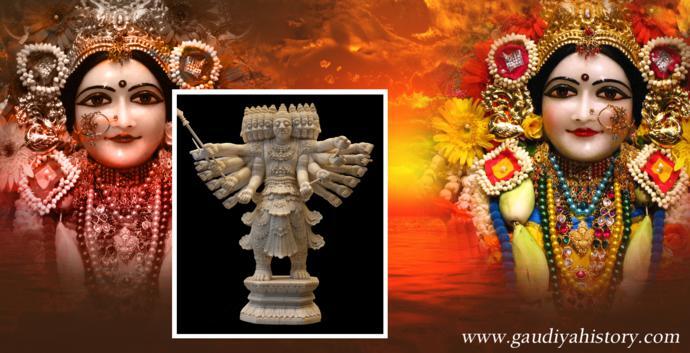
After leaving Ramadasa Vipra comforted but still grieving in Madurai, Sri Chaitanya Mahaprabhu continued south along a route Chaitanya-charitamrita traces in some geographic detail. He came first to Durvashana (Tiruppullani, near Ramnad), where He bathed in the river Krtamala and saw a temple of Lord Ramachandra. Then He went on to the hill of Mahendra-shaila near Tirunelveli, where He offered prayers to Lord Parashurama. From there He reached Setubandha on the island of Pambam. He bathed at the holy place called Dhanus-tirtha and rested at the Rameshvara temple. Srila Prabhupada's purport notes that the very name of this shrine marks Lord Shiva there as himself a devotee of Rama. The Lord then followed the Tamraparni river to Naya-tirupati, where nine temples of Vishnu stand along its bank. At some point in this part of the journey, Chaitanya-charitamrita says, He sat among an assembly of brahmanas who were reciting from the Kurma Purana. In that very old text He heard an account of Sita's chastity that repeated almost exactly what He Himself had told Ramadasa. According to it, the fire-god made an illusory Sita, and that illusory Sita is what Ravana carried off. The real Sita waited safely in Agni's keeping until Rama's victory. Later, it was this illusory form that entered the fire during Sita's trial by Ramachandra Himself.
Old Leaves for New #
Hearing this, Mahaprabhu's mind went straight back to Ramadasa. Chaitanya-charitamrita is direct about the sequence: "When Sri Chaitanya Mahaprabhu heard this story, He was very pleased, and He remembered the words of Ramadasa Vipra." What He did next went well beyond simple satisfaction that scripture had proved Him right. He asked the brahmanas' permission to take the actual manuscript leaves. These were old, fragile palm-leaf pages of the Kurma Purana. He arranged for fresh copies to be written out, so that the brahmanas would lose nothing by giving Him the originals. He wanted the old leaves specifically, the text says, "for direct evidence". He did not want a paraphrase or a secondhand account. He wanted the physical page itself, carried back across the very distance He had already traveled south.
Back to Madurai #
Mahaprabhu returned to southern Mathura and delivered the original leaf manuscript directly into Ramadasa's hands. It is a striking gesture for a sannyasi who owned almost nothing. Elsewhere in Chaitanya-charitamrita He is shown discouraging devotees from becoming absorbed in scriptural debate for its own sake. Here, though, the point was not debate. It was mercy aimed at one man's own particular grief. And it came in the only form that this brahmana, with his scholar's nature, could fully accept: written proof that he could quote. When Ramadasa received the leaves, he at once fell at Mahaprabhu's feet and wept.
"You Are Ramacandra Himself" #
What Ramadasa said next shows how completely his devotion to Lord Ramachandra had shaped the way he understood the man standing in front of him. "Sir, You are Lord Ramacandra Himself and have come in the dress of a sannyasi to give me audience," he told Mahaprabhu. Then he invited Him to accept a meal that day, since his mental distress the first time around had kept him from serving a proper one. Krishnadasa Kaviraja Goswami does not record Mahaprabhu correcting this identification, even though the wider theology of Chaitanya-charitamrita holds Him to be Krishna Himself in the mood of His own devotee, Radharani. Instead, the text simply shows Mahaprabhu accepting the invitation. This time the brahmana cooked in genuine happiness, and a full, well-prepared meal was offered and eaten. So the story closed. It had begun on Mahaprabhu's first visit with an unmade lunch, and with a devotee too absorbed in Rama's pastimes to notice that his guest was waiting.
Beyond this second visit, nothing further is recorded of Ramadasa Vipra. The first encounter was built on his overwhelming absorption in Sita and Rama's story. The second came from Mahaprabhu acting on His own to ease the grief that this absorption had caused. These two encounters are the whole of what Chaitanya-charitamrita, or any other available source, preserves of him.
Scriptural evidence for this chapter (3)
Quoted in the text above:
- Madhya 9.207 Sri Chaitanya-charitamrita
Further verses:
patra lañā punaḥ dakṣiṇa-mathurā āilā
rāmadāsa vipre sei patra āni dilā
Word for word
patra lañā: taking those leaves; punaḥ: again; dakṣiṇa-mathurā āilā: came to southern Mathura; rāmadāsa vipre: unto the brahmana known as Ramadasa; sei patra āni dilā: brought and delivered those leaves.
Sri Chaitanya Mahaprabhu returned to southern Mathura [Madurai] and delivered the original manuscript of the Kurma Purana to Ramadasa Vipra.
The physical act of mercy at the center of this episode: Mahaprabhu personally carries scriptural proof back to the man who needed it.
vipra kahe, — tumi sākṣāt śrī-raghunandana
sannyāsīra veṣe more dilā daraśana
Word for word
vipra kahe: the brahmana said; tumi sākṣāt: You are directly; śrī-raghunandana: Lord Sri Ramachandra; sannyāsīra veṣe: in the dress of a sannyasi; more dilā daraśana: You gave me audience.
After receiving the manuscript, the brahmana, being very pleased, said, "Sir, You are Lord Ramacandra Himself and have come in the dress of a mendicant to give me audience.
Ramadasa's own conclusion about who Mahaprabhu is, used as this acharya's pull-quote.
Closing
Two Meetings at Southern Mathura #
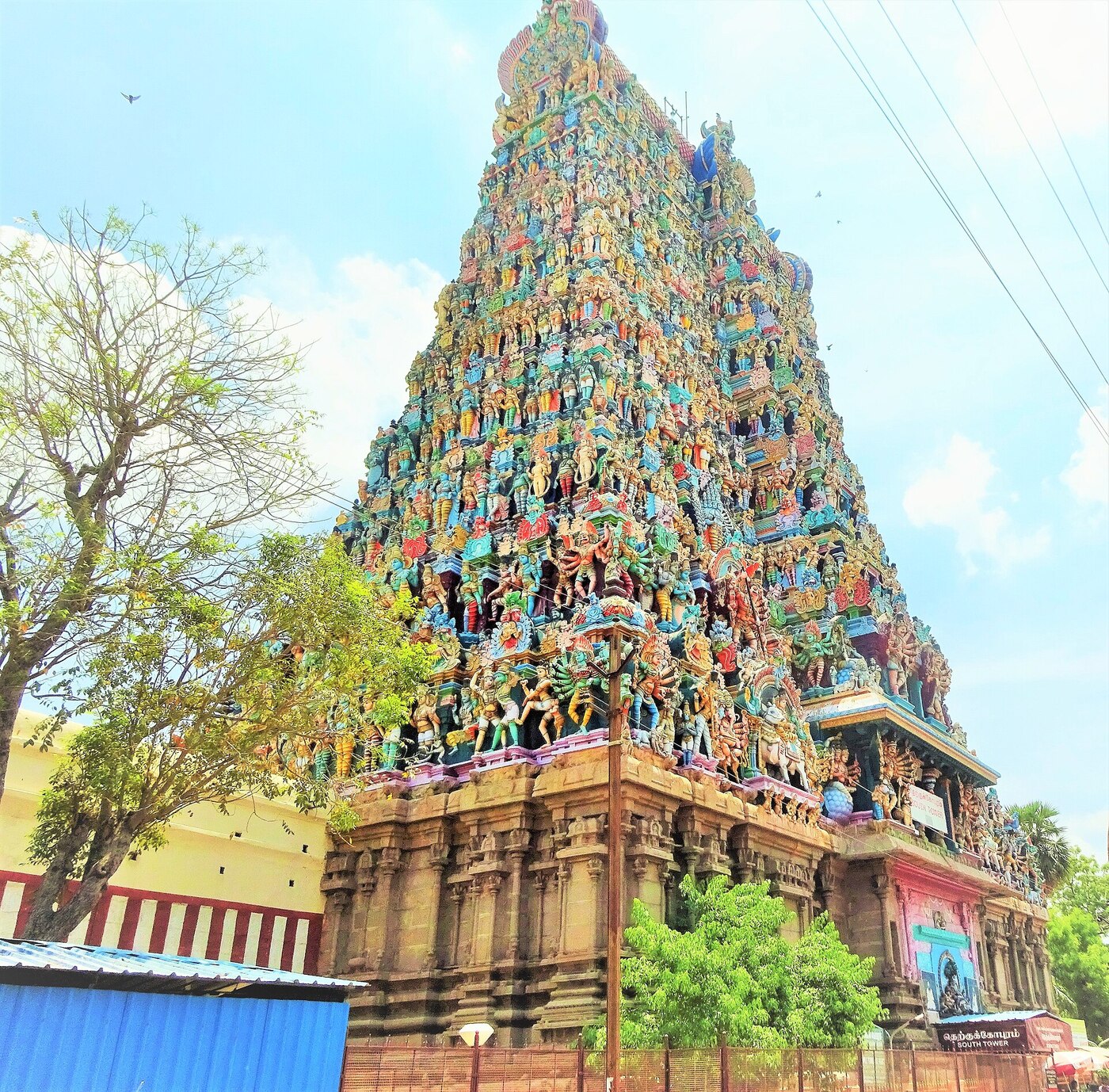
Among the Rama bhaktas whom Sri Chaitanya Mahaprabhu met during His years of travel through South India was a brahmana of southern Mathura, the town known today as Madurai in Tamil Nadu. Sri Chaitanya-charitamrita records him only as "Ramadasa Vipra". The word vipra simply means brahmana. It is not a family name. Two connected episodes give the fullest picture of him that the tradition preserves. They happened several weeks apart, while Mahaprabhu journeyed on through the far south. In the first, one afternoon, his absorption in Rama's pastimes made him forget to feed his guest. The second meeting was deliberately arranged by Mahaprabhu Himself, and it ended with a fragment of ancient scripture placed directly in his hands.
| Detail | Description |
|---|---|
| Met Sri Chaitanya Mahaprabhu | At southern Mathura (Madurai), during the Lord's tour of South India |
| Background | A brahmana, learned in scripture, a lifelong chanter of the holy name of Lord Ramachandra |
| Primary source | Sri Chaitanya-charitamrita, Madhya-lila, Chapter Nine (verses 178-217) |
| Best-known episodes | Forgetting to cook out of absorption in Rama's pastimes; later receiving an original leaf of the Kurma Purana from Mahaprabhu's own hand |
| What is not recorded | His birth and disappearance dates, his family, and any life before or after these two encounters |
Three Devotees Named Ramadasa #
The name Ramadasa - "servant of Rama" - was common enough among devotees of that era that Chaitanya-charitamrita itself names at least three separate men by it, each a devotee of Lord Ramachandra, each met independently by Sri Chaitanya Mahaprabhu. This account is about the brahmana of Madurai. A second brahmana Rama-bhakta, met earlier in the very same chapter of Chaitanya-charitamrita at a place called Siddhavata, is remembered separately as Ramadasa Brahmana. A third man, a Bengali government official of the kayastha caste who years later carried Raghunatha Bhatta Goswami's baggage on the road to Jagannatha Puri, is remembered as Ramadasa Vishvasa. None of these three should be confused with Minaketana Ramadasa, Nityananda Prabhu's ecstatic flute-playing servant, who appears on Krishnadasa Kaviraja Goswami's own page. Chaitanya-charitamrita gives no indication that any of these men knew of the others.
A Brahmana Who Chanted Only Rama's Name #
When Sri Chaitanya Mahaprabhu arrived at southern Mathura from a place called Kamakoshthi, a brahmana there invited Him home for lunch. Krishnadasa Kaviraja Goswami describes this brahmana as a great devotee, an authority on Lord Ramachandra, and a man so given over to chanting Rama's holy name that he rarely spoke of anything else. It was an ordinary act of South Indian hospitality toward a wandering sannyasi. But the guest was Mahaprabhu, and the host's devotion was so deep that it nearly spoiled the very meal he had offered to cook.
Grief Over Mother Sita #
That same visit turned suddenly dark. Once he had served the meal, the brahmana refused to eat anything himself. He declared he would rather end his life than go on living with what he knew: that the demon Ravana had once laid hands on Sita, the Supreme Goddess of Fortune and mother of the universe. Mahaprabhu's answer became a quiet but important theological moment of His South Indian travels. It was a teaching about spiritual substance, which can never actually be seen by any material eye or touched by any material hand. The brahmana ate again only once he trusted the words of a man he had known for less than a day.
What the Tradition Does and Doesn't Preserve #
Beyond these two encounters, Chaitanya-charitamrita says nothing further about Ramadasa Vipra. No birth or disappearance date survives, no family, no later life, and no verse or writing of his own beyond the words Krishnadasa Kaviraja records him speaking in these two scenes. The only place named is the town where they met, southern Mathura, which Srila Prabhupada's purport to Madhya-lila 9.178 identifies as present-day Madurai. What the tradition keeps of him instead is a portrait. His entire religious life had narrowed to a single name. He was tested by grief because he took the Ramayana as more than a story. And he was answered first with a teaching, and then with a physical page of scripture, carried across many miles for his sake alone.
