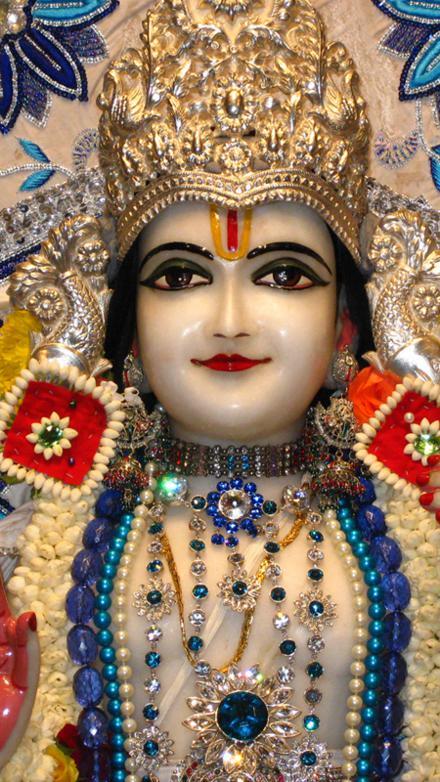
Ramadasa Vipra
Brahmana Devotee of Lord Ramachandra Met at Southern Mathura
Also known as Rama Das Vipra, Ramdas Vipra
“Sir, You are Lord Ramacandra Himself and have come in the dress of a sannyasi to give me audience.”
Spoken to Sri Chaitanya Mahaprabhu at Madurai on receiving the Kurma Purana leaf (Chaitanya-charitamrita, Madhya-lila 9.214).
Two Meetings at Southern Mathura #
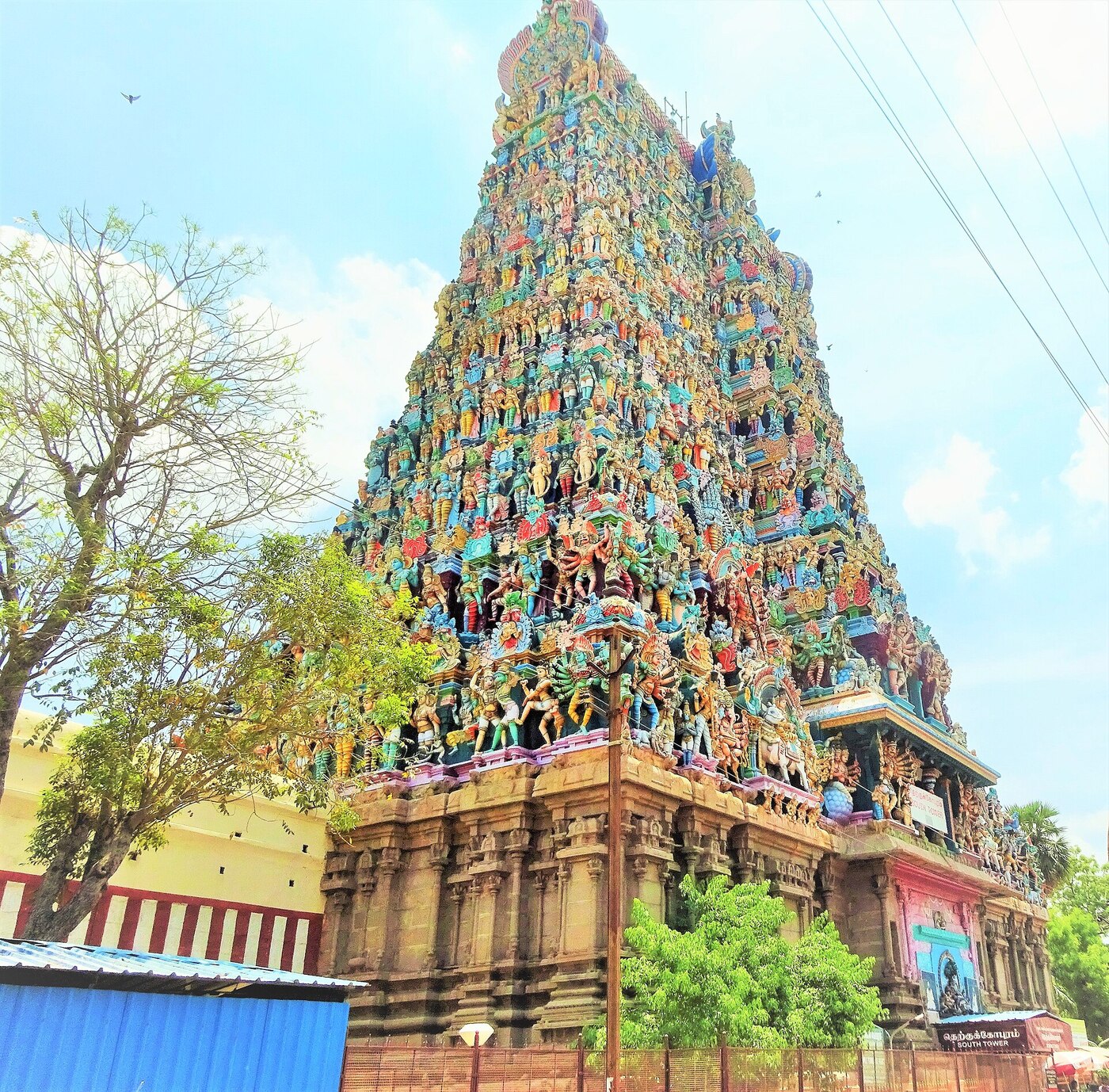
Among the Rama bhaktas whom Sri Chaitanya Mahaprabhu met during His years of travel through South India was a brahmana of southern Mathura, the town known today as Madurai in Tamil Nadu. Sri Chaitanya-charitamrita records him only as "Ramadasa Vipra". The word vipra simply means brahmana. It is not a family name. Two connected episodes give the fullest picture of him that the tradition preserves. They happened several weeks apart, while Mahaprabhu journeyed on through the far south. In the first, one afternoon, his absorption in Rama's pastimes made him forget to feed his guest. The second meeting was deliberately arranged by Mahaprabhu Himself, and it ended with a fragment of ancient scripture placed directly in his hands.
| Detail | Description |
|---|---|
| Met Sri Chaitanya Mahaprabhu | At southern Mathura (Madurai), during the Lord's tour of South India |
| Background | A brahmana, learned in scripture, a lifelong chanter of the holy name of Lord Ramachandra |
| Primary source | Sri Chaitanya-charitamrita, Madhya-lila, Chapter Nine (verses 178-217) |
| Best-known episodes | Forgetting to cook out of absorption in Rama's pastimes; later receiving an original leaf of the Kurma Purana from Mahaprabhu's own hand |
| What is not recorded | His birth and disappearance dates, his family, and any life before or after these two encounters |
Three Devotees Named Ramadasa #
The name Ramadasa - "servant of Rama" - was common enough among devotees of that era that Chaitanya-charitamrita itself names at least three separate men by it, each a devotee of Lord Ramachandra, each met independently by Sri Chaitanya Mahaprabhu. This account is about the brahmana of Madurai. A second brahmana Rama-bhakta, met earlier in the very same chapter of Chaitanya-charitamrita at a place called Siddhavata, is remembered separately as Ramadasa Brahmana. A third man, a Bengali government official of the kayastha caste who years later carried Raghunatha Bhatta Goswami's baggage on the road to Jagannatha Puri, is remembered as Ramadasa Vishvasa. None of these three should be confused with Minaketana Ramadasa, Nityananda Prabhu's ecstatic flute-playing servant, who appears on Krishnadasa Kaviraja Goswami's own page. Chaitanya-charitamrita gives no indication that any of these men knew of the others.
A Brahmana Who Chanted Only Rama's Name #
When Sri Chaitanya Mahaprabhu arrived at southern Mathura from a place called Kamakoshthi, a brahmana there invited Him home for lunch. Krishnadasa Kaviraja Goswami describes this brahmana as a great devotee, an authority on Lord Ramachandra, and a man so given over to chanting Rama's holy name that he rarely spoke of anything else. It was an ordinary act of South Indian hospitality toward a wandering sannyasi. But the guest was Mahaprabhu, and the host's devotion was so deep that it nearly spoiled the very meal he had offered to cook.
Forgetting to Cook for the Lord #
When Mahaprabhu returned from His bath at noon expecting lunch, He found nothing prepared. Asked why, the brahmana answered from inside whatever inner vision he was absorbed in: he and his household lived in the forest, he said, and Sita would cook once Lakshmana returned with roots and fruit gathered from the woods. He had, in effect, stopped living in Madurai and started living inside the Ramayana. Mahaprabhu was delighted rather than troubled by this, and the full scene - the brahmana's ecstasy, his shame on returning to ordinary awareness, and what followed next - is told at length in The Brahmana Who Forgot to Cook.
Grief Over Mother Sita #
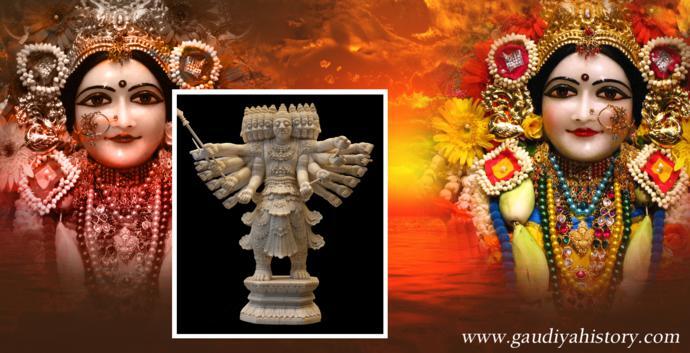
That same visit turned suddenly dark. Once he had served the meal, the brahmana refused to eat anything himself. He declared he would rather end his life than go on living with what he knew: that the demon Ravana had once laid hands on Sita, the Supreme Goddess of Fortune and mother of the universe. Mahaprabhu's answer became a quiet but important theological moment of His South Indian travels. It was a teaching about spiritual substance, which can never actually be seen by any material eye or touched by any material hand. The brahmana ate again only once he trusted the words of a man he had known for less than a day.
The Return of the Kurma-Purana Leaf #
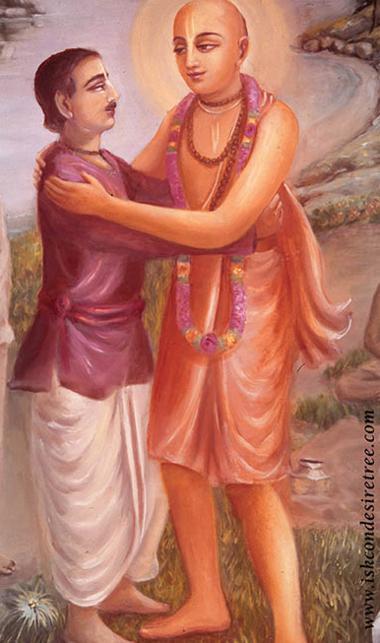
Weeks later and much farther south, Mahaprabhu happened to sit among a gathering of brahmanas reciting from the Kurma Purana, and heard, from that ancient text itself, independent scriptural confirmation of exactly what He had told Ramadasa: that an illusory, shadow form of Sita was what Ravana actually kidnapped, while the real Sita waited safely with the fire-god Agni until Rama's victory. Pleased and moved, Mahaprabhu asked the brahmanas there for the original manuscript leaves, had fresh copies made for them, and personally carried the old leaves back to Madurai to place in Ramadasa's own hands as proof. What Ramadasa said when he understood what had happened - and who he then believed Mahaprabhu to actually be - is told in The Return of the Kurma-Purana Leaf.
What the Tradition Does and Doesn't Preserve #
Beyond these two encounters, Chaitanya-charitamrita says nothing further about Ramadasa Vipra. No birth or disappearance date survives, no family, no later life, and no verse or writing of his own beyond the words Krishnadasa Kaviraja records him speaking in these two scenes. The only place named is the town where they met, southern Mathura, which Srila Prabhupada's purport to Madhya-lila 9.178 identifies as present-day Madurai. What the tradition keeps of him instead is a portrait. His entire religious life had narrowed to a single name. He was tested by grief because he took the Ramayana as more than a story. And he was answered first with a teaching, and then with a physical page of scripture, carried across many miles for his sake alone.
Frequently asked
When was Ramadasa Vipra born?
Ramadasa Vipra appeared Not recorded in Probably southern Mathura (present-day Madurai, Tamil Nadu) or its surrounding region.
When and where did Ramadasa Vipra disappear?
Ramadasa Vipra disappeared Not recorded at Not recorded; last mentioned residing at southern Mathura.
What are the main pastimes of Ramadasa Vipra?
The pastimes covered here include: The Brahmana Who Forgot to Cook, The Return of the Kurma-Purana Leaf.