Ramadasa Vishvasa
The Kayastha Companion of Raghunatha Bhatta Goswami
Also known as Ramadasa Bishvas, Ramadasa Visvasa, Vishvasa Pandita
“I am a shudra, a fallen soul. To serve a brahmana is my duty and religious principle.”
Spoken to Raghunatha Bhatta Goswami on the road to Jagannatha Puri, explaining why Ramadasa insisted on carrying Raghunatha's baggage (Chaitanya-charitamrita, Antya-lila 13.97).
A Servant Met on the Road to Puri #
When Raghunatha Bhatta Goswami left Varanasi for Jagannatha Puri after finishing his education, he met a fellow traveler on the road through Bengal. This was a government secretary of the kayastha caste named Ramadasa. Sri Chaitanya-charitamrita calls him Ramadasa Vishvasa. "Vishvasa" was not a family name but his actual government title, meaning roughly "confidential secretary." Ramadasa insisted on carrying Raghunatha's baggage himself, all the way to Nilachala. The words he used to explain this have come down to us almost exactly as he spoke them. This page brings together what Chaitanya-charitamrita records about him, in more detail than the short mention of him on Raghunatha Bhatta Goswami's own page.
| Detail | Description |
|---|---|
| Caste and occupation | Kayastha; secretary in a royal government administration |
| Learning | A scholar of scripture and a teacher of the Sanskrit poetics text Kavya-prakasha |
| Devotion | A lifelong worshiper and chanter of the holy name of Lord Ramachandra |
| Met on the road with | Raghunatha Bhatta Goswami, traveling from Varanasi to Jagannatha Puri |
| Primary source | Sri Chaitanya-charitamrita, Antya-lila, Chapter Thirteen (verses 89-112) |
| Later life | Settled at Jagannatha Puri, teaching Kavya-prakasha to the Pattanayaka family |
Three Devotees Named Ramadasa #
Sri Chaitanya-charitamrita names at least three separate devotees called Ramadasa. Two of them were brahmanas of the far south and devotees of Lord Ramachandra, met during Mahaprabhu's own South India tour. They are remembered here as Ramadasa Brahmana and Ramadasa Vipra. Neither of them shares this Ramadasa's caste, work or region. Ramadasa Vishvasa is clearly described as a kayastha, a government secretary and a Bengali. He was met years later and hundreds of miles away, in a completely different chapter of Chaitanya-charitamrita. A fourth figure with a similar name, Minaketana Ramadasa, was Nityananda Prabhu's own ecstatic servant and appears on Krishnadasa Kaviraja Goswami's page. He too is unrelated. "Ramadasa," meaning servant of Rama, was simply a common name among devotees of that generation. Here "Vishvasa" (sometimes spelled Bishvas or Visvasa) marks the government post he held, not a family line. This is also why some later retellings drop it and refer to him more loosely as a brahmana or vipra. But Chaitanya-charitamrita itself is clear and consistent: this Ramadasa is a kayastha, not a brahmana. His story belongs to Raghunatha Bhatta Goswami's Antya-lila years at Puri, not to the earlier South India tour.
A Government Secretary Among the Kayasthas #
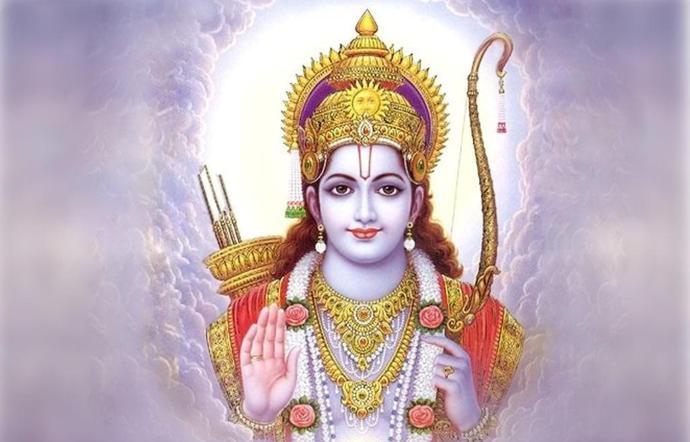
Sri Chaitanya-charitamrita is exact about Ramadasa's social standing. He belonged to the kayastha caste and worked as a secretary in the government accounting department. Srila Prabhupada's purport notes that the kayasthas were a class of professional administrators who worked in the offices of kings and governors throughout Bengal at the time. Even with this worldly post, the text calls him learned in all revealed scriptures. He was also a teacher of Kavya-prakasha, the famous Sanskrit textbook on poetics by Mammata Bhatta. This was a real scholarly achievement for a working government clerk. Chaitanya-charitamrita adds that he was a great devotee and worshiper of Ramachandra. As he set out, like Raghunatha, to see Lord Jagannatha, he renounced everything and chanted Rama's holy name twenty-four hours a day.
Meeting Raghunatha Bhatta on the Road #
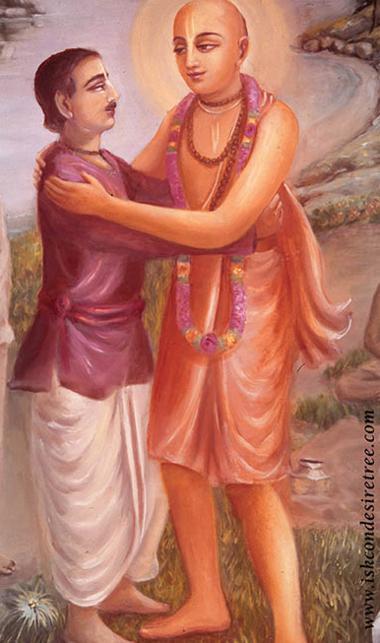
When the two men's paths crossed in Bengal, Ramadasa learned that his fellow traveler was a brahmana. At once he began serving him. He took Raghunatha's baggage onto his own head, massaged his feet and refused every protest. "I am a shudra, a fallen soul," he told the embarrassed Raghunatha, according to Chaitanya-charitamrita's own record of his words. "To serve a brahmana is my duty and religious principle." The full scene is told in The Kayastha Who Called Himself a Shudra. It includes Raghunatha's repeated attempts to refuse service from a man who was so fully his equal in learning.
Received Without Special Mercy #
At Jagannatha Puri, Raghunatha introduced Ramadasa to Sri Chaitanya Mahaprabhu. Here Chaitanya-charitamrita records something unusual. Ramadasa had learning, renunciation and clear devotion to Rama, yet Mahaprabhu did not give him any special mercy at this first meeting. The text gives an exact reason. It says that within his heart Ramadasa still kept a desire to merge into the impersonal existence of the Supreme, and that he had some pride in his own learning. Mahaprabhu, who knows everything, could see these two things plainly, whatever Ramadasa's outward practice looked like. The Bhagavad-gita confirms the same principle: "For those whose minds are attached to the unmanifested, impersonal feature of the Supreme, advancement is very troublesome. To make progress in that discipline is always difficult for those who are embodied" (Bhagavad-gita 12.5). Bhaktivinoda Thakura's own note on this passage adds one more point. In that age no one could easily tell a genuine Vaishnava from a devotee still influenced by impersonalism. Ramadasa's case shows exactly why this difference mattered to Mahaprabhu, even when it was invisible to everyone else. What this meant for the rest of his time at Puri is told in No Special Mercy at Nilachala.
A Teacher's Later Life at Puri #
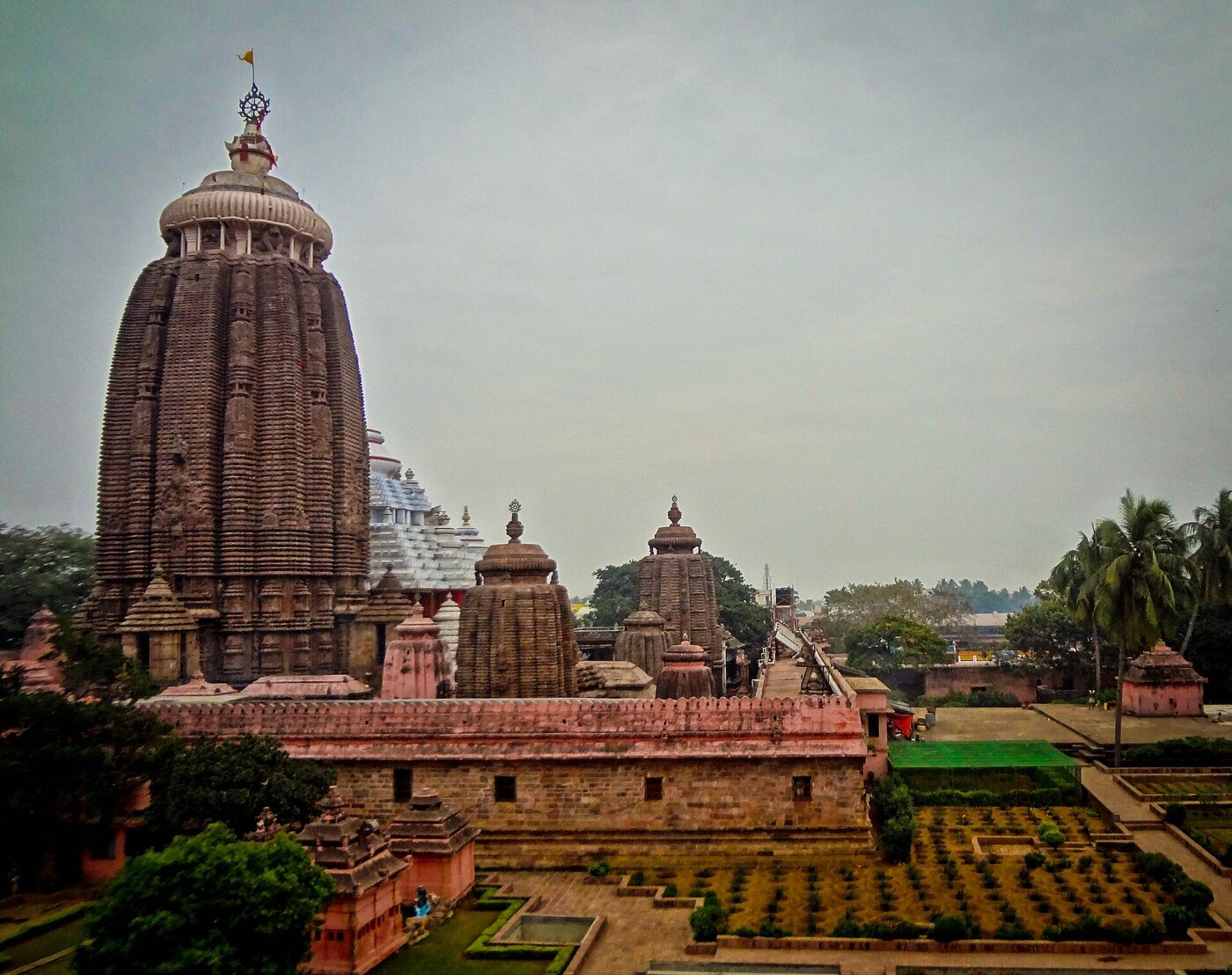
Ramadasa did not return to Bengal. Chaitanya-charitamrita's own summary of his life is brief but specific. He settled at Nilachala and spent his remaining years teaching Kavya-prakasha to the Pattanayaka family. They were the descendants of Bhavananda Raya, the same noble household from which Ramananda Raya himself came. It is one of the small, concrete details that Chaitanya-charitamrita preserves about ordinary devotional life around Mahaprabhu at Puri. Here was a scholar-devotee who was denied nothing outwardly. He quietly made his teaching of poetics to a great local family both his living and his religious practice.
What the Record Leaves Unanswered #
Chaitanya-charitamrita does not say whether Ramadasa ever left behind the leaning toward impersonalism that Mahaprabhu saw in him. It also does not record his birth, his disappearance, or any further meeting with Mahaprabhu after Raghunatha Bhatta's own eight months at Puri came to an end. Among some devotees he later came to be seen as an early example of a Vaishnava who fell short of a Vaishnava's full surrender. This view rests entirely on this one, unusually frank verse of Krishnadasa Kaviraja Goswami. The tradition has kept this passage because it shows that outward learning and renunciation, on their own, were never enough to satisfy Mahaprabhu's own standard of devotion.
Frequently asked
When was Ramadasa Vishvasa born?
Ramadasa Vishvasa appeared Not recorded in Bengal (exact village not recorded).
When and where did Ramadasa Vishvasa disappear?
Ramadasa Vishvasa disappeared Not recorded at Not recorded; last mentioned residing at Jagannatha Puri (Nilachala).
What are the main pastimes of Ramadasa Vishvasa?
The pastimes covered here include: The Kayastha Who Called Himself a Shudra, No Special Mercy at Nilachala.