A Bath at Soro-kshetra #
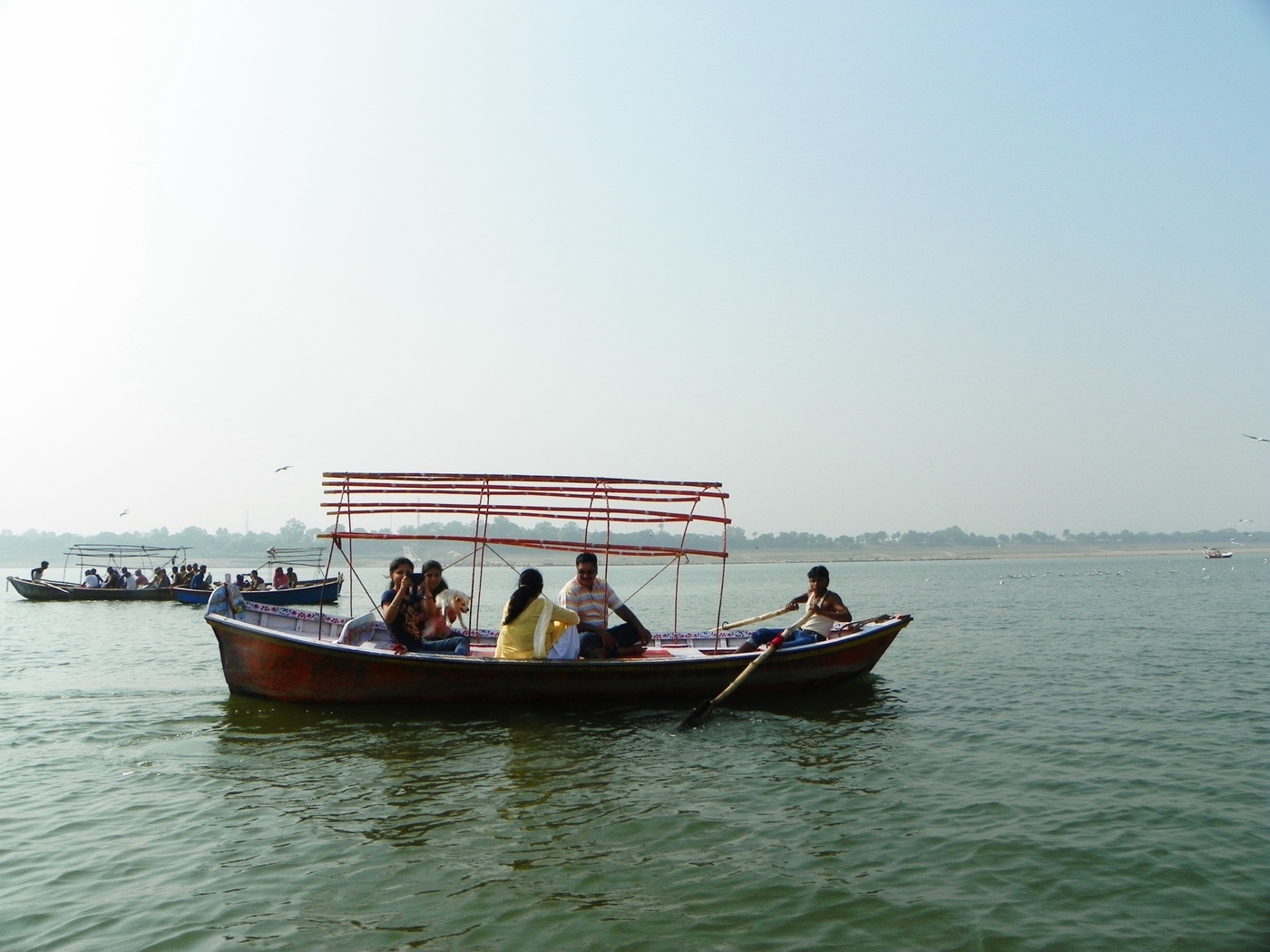
After the encounter with the Pathan soldiers on the road out of Vrindavana, Mahaprabhu continued west and south along the route the Sanoriya brahmana had proposed. He is said to have brought good fortune to the yavanas and mlecchas of that region as He passed. The Pathan soldiers converted on the road are one clear example. When He reached the holy place of Soro-kshetra, He bathed in the Ganges there, just as the brahmana had planned back in Vrindavana. Then He started along the riverbank road toward Prayaga.
"Where Shall We Again Get Your Feet?" #
It was at Soro-kshetra that Mahaprabhu tried to send His two Vrindavana guides home. He asked the Sanoriya brahmana and the Rajaputa Krishnadasa to return, their work of guiding Him apparently done. Both refused - with folded hands, the text says, they pleaded to continue. "Let us go to Prayaga with You," they said. "If we do not go, when shall we again get the association of Your lotus feet?" They gave Mahaprabhu a practical reason too: this was Muslim-ruled country, disturbances could arise anywhere, and Balabhadra Bhattacharya, learned scholar though he was, did not speak the local language. Mahaprabhu smiled and let them stay.
The Last Mention #
As far as the surviving text goes, this is the last time the Chaitanya-charitamrita gives either the Sanoriya brahmana or Krishnadasa a personal moment. The text says that wherever Mahaprabhu went from there, whoever saw Him became a Vaishnava, and whoever met that Vaishnava became one in turn. In this way town after town turned to devotion, just as Mahaprabhu had earlier transformed South India. He finally reached Prayaga and spent ten days bathing at the meeting place of the Yamuna and Ganges during the Makara-sankranti festival, known there as the Magha-mela.
Krishnadasa Kaviraja Goswami ends his account of the Vrindavana tour by admitting that it was too great for him to describe fully. He writes that even Lord Shesha, with His thousands of hoods, could not reach the end of Mahaprabhu's activities there, and that he had only sketched the general direction. Shortly after, at Prayaga, Mahaprabhu's circle famously grows to include Srila Rupa Gosvami. At that point the story moves on. Neither the Sanoriya brahmana nor Krishnadasa the Rajaputa appears again in the text.
Nothing more is recorded about what became of the brahmana. We do not know whether he returned to his home and family in Mathura, whether he continued in devotional life, or how his days ended. Even his personal name was never given, so it is lost for good. What remains is what Krishnadasa Kaviraja Goswami chose to preserve in two chapters. This unnamed brahmana came from a community that society ranked low. Yet Chaitanya Mahaprabhu addressed him as a guru. He fed the Lord, though social custom forbade it. He guided the Lord past danger. Then, just where the story turns to someone else, he vanished from history.
This is not unique to him. The Chaitanya-charitamrita and Chaitanya-bhagavata both name dozens of devotees this briefly: a house, a single service, a line of dialogue, and nothing more. But the Sanoriya brahmana is different. In that short space, Krishnadasa Kaviraja Goswami still gives him great importance. He was a godbrother of the Lord's guru. He planned the Lord's route. And he was the one calm voice standing between four travelers and a company of soldiers ready to kill them. For a biography, the record he leaves behind is very short. But short does not mean unimportant.
