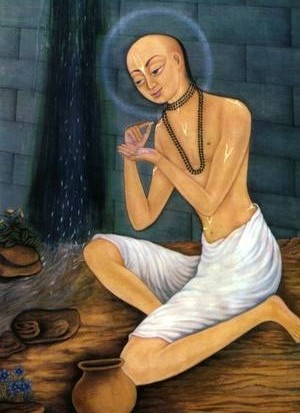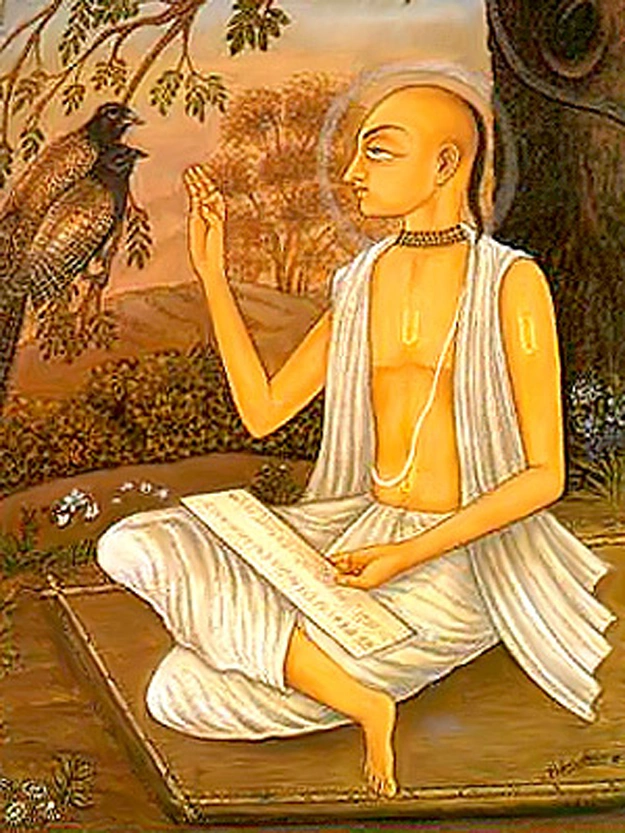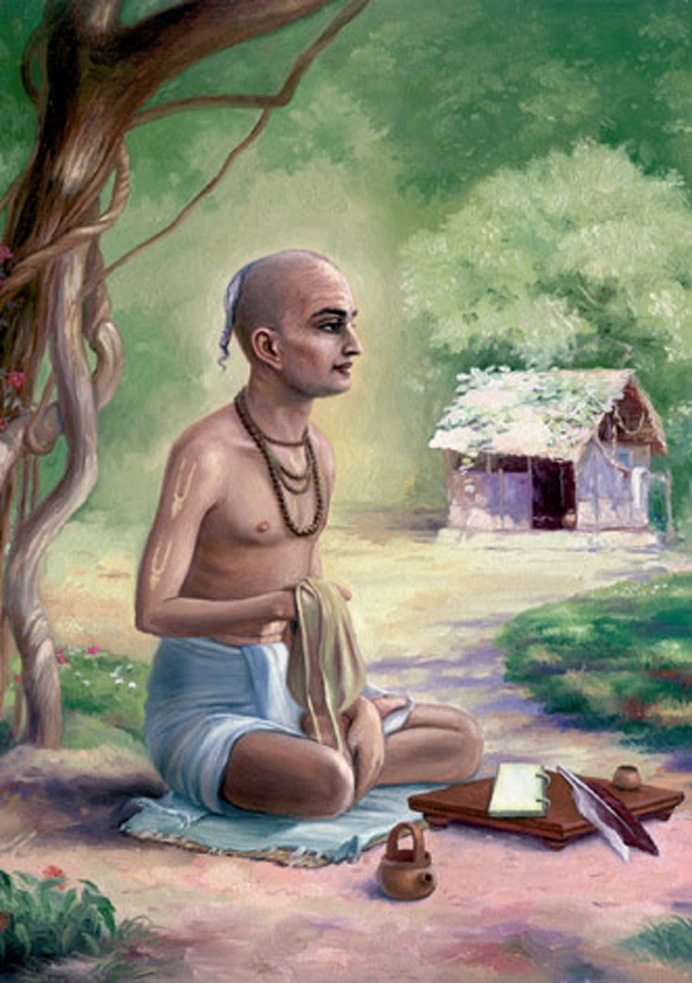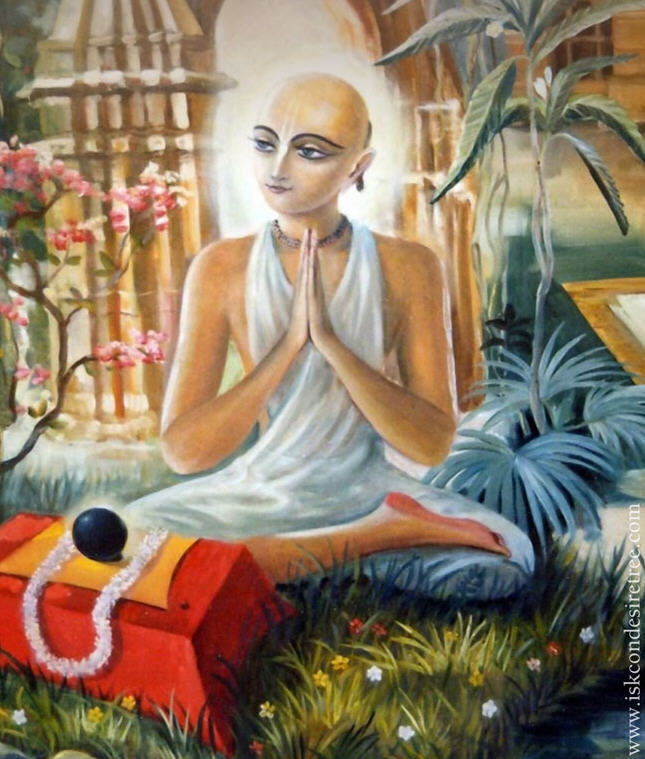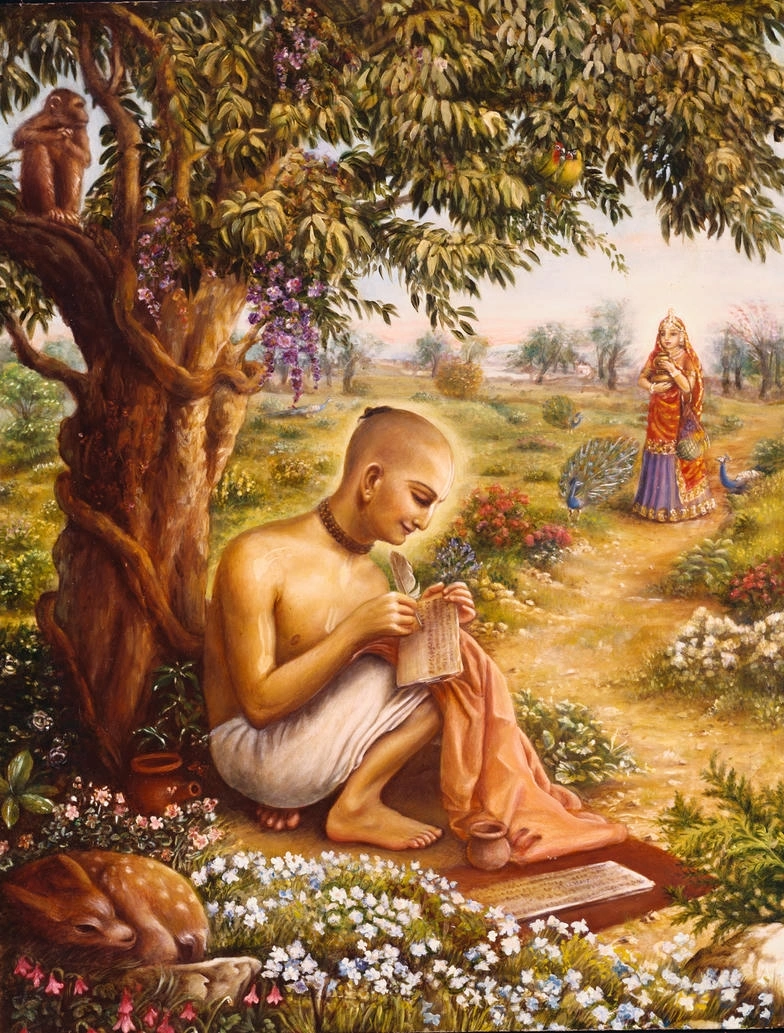
Srila Rupa Gosvami
Foremost of the Six Gosvamis of Vrindavana, Architect of the Science of Devotional Rasa
Also known as Rupa Gosvami, Dabir Khas, Dabira Khasa (his court name before initiation), Rupa Gosvami Prabhupada
“Although I am the lowest of men and have no knowledge, the inspiration to write transcendental literatures about devotional service has been mercifully bestowed upon me. Therefore I am offering my obeisances at the lotus feet of Sri Chaitanya-deva, the Supreme Personality of Godhead, who has given me the chance to write these books.”
Bhakti-rasamrita-sindhu 1.1.2, quoted by Krishnadasa Kaviraja Gosvami in Sri Chaitanya-charitamrita, Madhya-lila 19.134.
śrī-caitanya-mano-'bhīṣṭaṁ sthāpitaṁ yena bhū-tale
svayaṁ rūpaḥ kadā mahyaṁ dadāti sva-padāntikam
"When will Srila Rupa Gosvami Prabhupada, who has established within this material world the mission to fulfill the desire of Sri Chaitanya Mahaprabhu, give me shelter at his lotus feet?" This is the traditional pranama-mantra offered to Srila Rupa Gosvami.
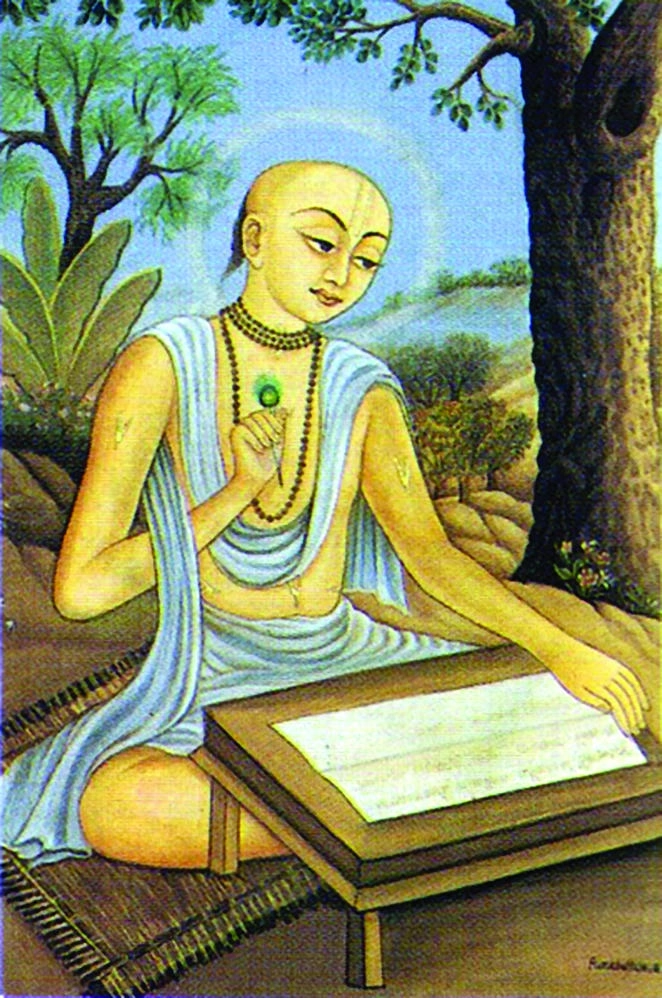
Srila Rupa Gosvami is the leader of the Six Goswamis, the renounced scholars of Vrindavana. Sri Chaitanya Mahaprabhu sent Rupa and his brother Sanatana there to recover its lost holy places and to set down the theology of the Gaudiya Vaishnava tradition in written scripture. Rupa was once the chief secretary in the court of an independent Muslim sultan of Bengal. He gave away his great fortune to follow a wandering sannyasi he had barely met. Within a few decades he became the most systematic theologian the tradition would ever produce. His book on the science of devotional rasa, his two Sanskrit dramas, and his short manual on how a devotee should live day to day are still essential reading in Gaudiya Vaishnavism five centuries later. Srila Prabhupada carried this lineage to the West. Gaudiya Vaishnavas call themselves rupanugas, followers in the line of Rupa Gosvami.
| Detail | Description |
|---|---|
| Birth name | Given variously as Rupa or Santosha in secondary sources |
| Born | c. 1489 (sources vary), into a Karnataka-brahmana family settled in Bengal |
| Father | Kumaradeva |
| Brothers | Sanatana Gosvami (elder), Anupama (Vallabha, younger, father of Jiva Gosvami) |
| Identity | In Krishna-lila: Sri Rupa-manjari, a gopi famous in Vrindavana (Gaura-ganoddesha-dipika 180; Chaitanya-charitamrita Adi 10.84 purport) |
| Court title under Hussain Shah | Dabir Khas, chief secretary |
| Chief works | Bhakti-rasamrita-sindhu, Vidagdha-madhava, Lalita-madhava, Ujjvala-nilamani, Upadeshamrita |
| Disappeared | Traditionally 1564, at Seva-kunja, Vrindavana |
Birth in a Karnataka-Brahmana Family Settled in Bengal #
Rupa Gosvami's family traced its ancestry to a line of Karnataka brahmanas of the Bharadvaja gotra. Over several generations they had migrated eastward, settling first near the Ganges at Naihati and later in the territory of Gauda, the seat of the Bengal sultanate. His father, Kumaradeva, and mother, Revatidevi, raised six children in all, one daughter and five sons. Three of the sons would become extraordinary. Sanatana was the eldest, then came Rupa, and the youngest was Anupama, also called Vallabha, who would later become the father of Jiva Gosvami. Secondary sources differ on the exact town of Rupa's birth. Some name Fatehabad, while others place the family's home at Naihati at that time. They also differ on his birth year, which is most commonly given as around 1489. The account here follows the figures repeated most widely, but no document from his own time fixes them exactly. All three brothers were given a strict education in Sanskrit and Nyaya (logic). Unusually for brahmana boys of the period, they also learned Persian and Arabic, the languages of the Bengal court they were being trained to serve. This early family background is covered more fully in Birth and Early Life in Bengal.
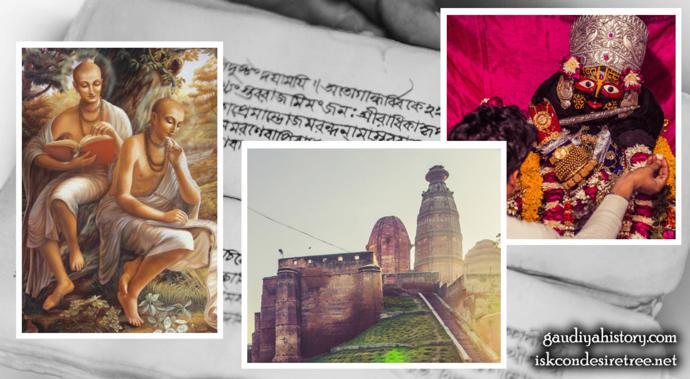
Behind this earthly family, the tradition records Rupa's eternal identity in Krishna's pastimes. Kavi Karnapura's Gaura-ganoddesha-dipika (verse 180) says:
śrī-rūpa-mañjarī khyātā yāsīd vṛndāvane purā
sādya rūpākhya-gosvāmī bhūtvā prakaṭatām iyāt
"Sri Rupa-manjari, who had been famous in Vrndavana-dhama, appeared as Srila Rupa Gosvami." (Gaura-ganoddesha-dipika 180)
Srila Prabhupada repeats this in his purport to Chaitanya-charitamrita Adi 10.84: "In the Gaura-gaṇoddeśa-dīpikā (180) Śrī Rūpa Gosvāmī is described to be the gopī named Śrī Rūpa-mañjarī."
Service in the Court of Hussain Shah #
Rupa and Sanatana entered government service under Alauddin Husain Shah, the independent Sultan of Bengal. His court valued their learning so highly that it overlooked the caste objections orthodox brahmana society would normally have raised against such service. Many later retellings disagree about the brothers' posts, but Sri Chaitanya-charitamrita itself settles the point. It names Rupa as Dabira Khasa, the Sultan's confidential secretary, and Sanatana as Sakara Mallika, his chief minister. Srila Prabhupada gives the same posts in his own preface to The Nectar of Devotion. Under these Muslim titles the brothers lived as men of the world. They were wealthy and powerful, but by their own later account they were deeply unhappy. Even while they continued to carry out the Sultan's business, they were secretly writing to Sri Chaitanya Mahaprabhu. The fuller story of this period is told in Service in the Court of Hussain Shah.
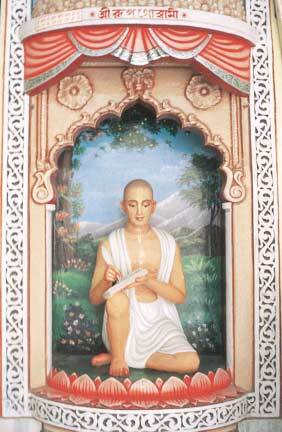
The Meeting at Ramakeli #
When Sri Chaitanya Mahaprabhu passed through the border village of Ramakeli on His way toward Vrindavana, Rupa and Sanatana came to Him secretly at night. They held straw between their teeth as a sign of complete humility. They confessed that they were the most fallen of men, because of the company they had kept in royal service. The Lord raised them, renamed them Rupa and Sanatana on the spot, and embraced them as His own eternal servants. The brothers also anxiously advised Mahaprabhu not to travel to Vrindavana with the vast crowd then following Him. The fuller account of this meeting, and of that advice, is told in The Meeting at Ramakeli.
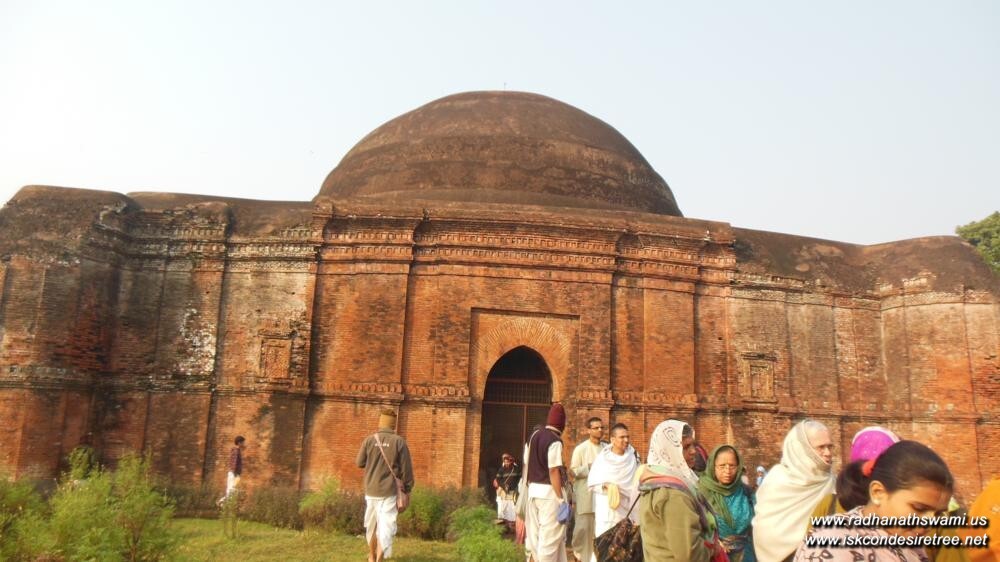
Ten Days of Instruction at Prayag #
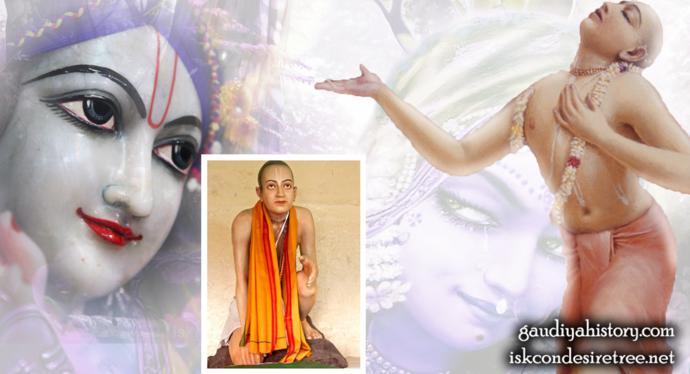
Rupa did not act at once on his decision to leave court service. First he spent months quietly settling his affairs and giving away his enormous wealth. He also arranged his brother's later escape from the prison where the Nawab had put him. This story is told in full in Renouncing Worldly Service. Then Rupa set out to find Sri Chaitanya Mahaprabhu, and he caught up with Him at Prayaga (Allahabad). There, at the Dashashvamedha-ghat, for ten unbroken days, the Lord poured into him the entire philosophy of Krishna consciousness. He taught Rupa the nature of the living entity, the seed of devotional service, and the way rasa is classified, rising at last to conjugal love. Krishnadasa Kaviraja Gosvami records these ten days at length in Sri Chaitanya-charitamrita, Madhya-lila 19. Gaudiya Vaishnavas regard this as one of the most important single instructions in the tradition's history, so The Instruction at Prayag treats the episode in depth.
Rediscovering a Lost Vrindavana #
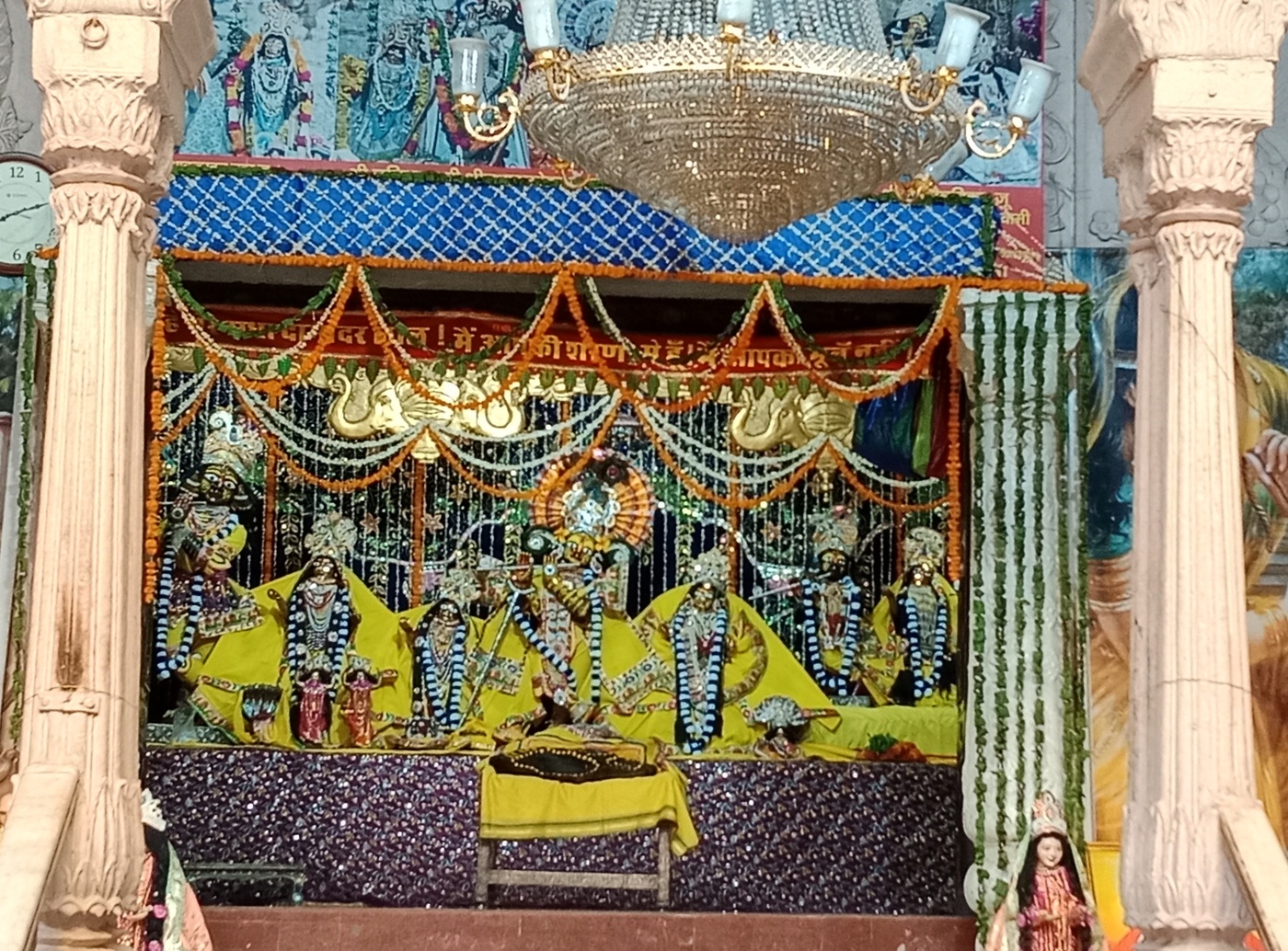
Mahaprabhu sent Rupa on to Vrindavana. There Rupa found a forest that had lost almost every visible sign of Krishna's pastimes. Over the years that followed, he and Sanatana were reunited there, and they uncovered several of Vraja's most important deities. Rupa is credited with the discovery of Sri Govindaji at Gomatila and of Vrinda Devi at Brahma-kunda. All this time the brothers lived on begged chapatis and a handful of fried chickpeas. They slept barely ninety minutes a night and spent nearly every remaining hour in chanting, hearing and writing. The austerity of the two brothers became so well known that devotees visiting from Bengal were routinely asked, on their return, simply "How are Rupa and Sanatana doing?"
The Architect of Rasa-shastra #
It was this life of bhajana that produced Gaudiya Vaishnavism's foundational literature. His main works are:
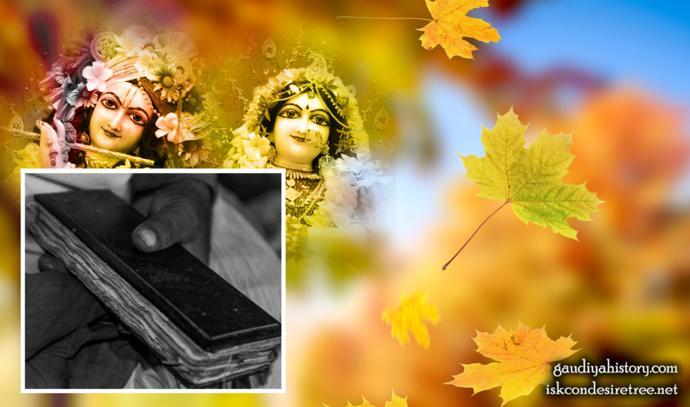
- Bhakti-rasamrita-sindhu: the first book to lay out the entire science of devotional mellows.
- Ujjvala-nilamani: its companion volume, which does the same for conjugal love alone.
- Vidagdha-madhava and Lalita-madhava: two Sanskrit dramas.
- Upadeshamrita: an eleven-verse manual of practical instruction.
- Stava-mala: a large body of shorter devotional poetry.
The full range of this literary work, and what each book actually contains, is described on Bhakti-rasamrita-sindhu and Other Works.
Final Days and Enduring Legacy #
Rupa Gosvami spent his final years at Seva-kunja, beside the Radha-Damodara temple he helped establish. Tradition says he left this world in 1564. Some sources place his disappearance only twenty-seven days after that of his elder brother. His nephew, Sri Jiva Gosvami, inherited both his books and the theological work Rupa had left unfinished. Jiva carried Rupa's system of teaching forward into the next generation of Gaudiya scholars. Centuries later, Srila Prabhupada would describe the entire Krishna consciousness movement he founded as standing on Rupa Gosvami's authority alone. He also called its members rupanugas, then as now: those who follow in Rupa Gosvami's footsteps.
Scriptural evidence
Quoted in the text above:
- Verse 180 Gaura-ganoddesha-dipika
- Sri Chaitanya-charitamrita, Madhya-lila, Chapters 1 and 19 (Bhaktivedanta VedaBase)
- The Nectar of Devotion, Preface (Bhaktivedanta VedaBase)
- Rupa Goswami - Gaudiya History
- Rupa Goswami - Gaudiya History (Biography 2)
- Srila Rupa Gosvami - PureBhakti
- Six Gosvamis Lecture, Sri Sri Sad-gosvamy-astaka, Los Angeles, November 18 1968 (Bhaktivedanta VedaBase)
Disciples
Frequently asked
When was Srila Rupa Gosvami born?
Srila Rupa Gosvami appeared c. 1489 (sources vary) in Bengal, into a Karnataka-brahmana family (secondary sources differ between Fatehabad and Naihati).
Who was the guru of Srila Rupa Gosvami?
The spiritual master of Srila Rupa Gosvami was Srila Sanatana Gosvami.
When and where did Srila Rupa Gosvami disappear?
Srila Rupa Gosvami disappeared Traditionally 1564, Shravana Shukla Dvadashi at Seva-kunja, Radha-Damodara temple, Vrindavana.
What are the main pastimes of Srila Rupa Gosvami?
The pastimes covered here include: Birth and Early Life in Bengal, Service in the Court of Hussain Shah, The Meeting at Ramakeli, Renouncing Worldly Service, The Instruction at Prayag, Arrival in Vrindavana, Bhakti-rasamrita-sindhu and Other Works, Final Days and Disappearance.