Keśavajī Gauḍīya Maṭha
केशवजी गौड़ीय मठ Hindi name proposed
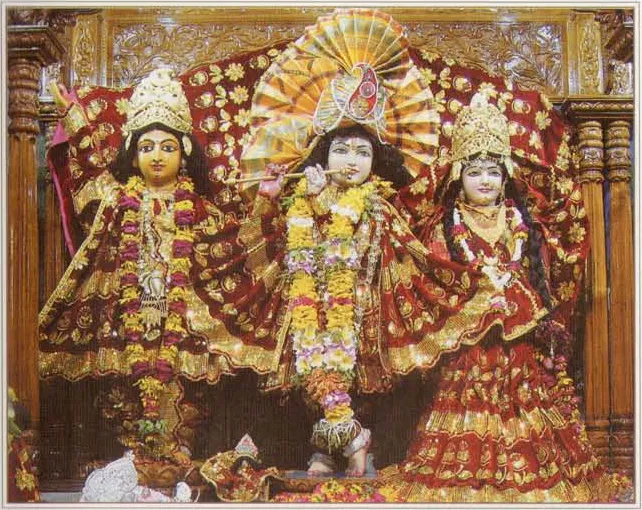
- What it is
- The Śrī Keśavajī Gauḍīya Maṭha is a temple and āśrama in Mathurā.
- Visiting
- Śrī Vraja-maṇḍala Parikramā (2007) places the maṭha next to Raṅgeśvara Mahādeva and Kaṁsa-ṭīlā, on the right of the Mathurā parikramā path and on the left of the Mathurā-Agra road.
In short
The Śrī Keśavajī Gauḍīya Maṭha is a temple and āśrama in Mathurā. Śrī Bhakti Prajñāna Keśava Gosvāmī Mahārāja established it and named it after Śrī Keśavajī, the presiding Deity of Mathurā.[1 +3] Here, on 17 September 1959, Śrīla Prabhupāda accepted sannyāsa, the renounced order of life, from this Godbrother and received the name Bhaktivedanta Swami.[3 +6] He said that it was really his own spiritual master who wanted him to accept sannyāsa so that he could preach.[10] Before that he had lived here and edited the Gauḍīya Patrikā, and he gave the maṭha its Deity of Śrī Caitanya Mahāprabhu.[4 +3]
Key facts
| Kind | maṭha |
|---|---|
| Region · area | Mathurā |
| Ācāryas | Śrīla A.C. Bhaktivedanta Swami Prabhupāda, Śrīla Bhakti Prajñāna Keśava Gosvāmī Mahārāja |
Śrīla Prabhupāda
Before his sannyāsa
According to his biography, Abhay gave Keśava Mahārāja the Deity of Lord Caitanya when he came to Mathurā, and at his request stayed to edit the Gauḍīya Patrikā. He lived at the maṭha and studied in its library.[4 +1] In 1976 Śrīla Prabhupāda recalled that the Deity had come from his League of Devotees at Jhansi:[4 +3]
Names this place“That you have seen this Keśavajī Gauḍīya Maṭha in Mathurā? No. There is Caitanya Mahāprabhu Deity. That Deity was there. When I closed that, I brought, that big, big sannyāsī, and delivered Them. … So at Mathurā I delivered the Deity to this Keśavajī Gauḍīya Maṭha, and I made my place in Vṛndāvana.”
Śrīla Prabhupāda, Room Conversation, Hyderabad, 21 August 1976 · vedabase.io
In the 1980s Vṛndāvana-Dhāma Ki Jaya! (c. 1986) described the Deity on the altar beside Śrī Śrī Rādhā-vinoda-vihārī.[4 +3]
The sannyāsa of 1959
Śrīla Prabhupāda said that he took sannyāsa in 1959 from his Godbrother Keśava Mahārāja, because sannyāsa has to be taken from a sannyāsī.[9 +1] When he heard in 1968 that Keśava Mahārāja had passed away, he explained that it was his own spiritual master's wish, carried out through this Godbrother:[10]
Names this placeNot he insisted me. Practically my spiritual master insisted me through him, that "You accept." Because without accepting the renounced order of life, nobody can become a preacher. … So I am feeling now very much obliged to my, this Godbrother, that he carried out the wish of my spiritual master and enforced me to accept this sannyāsa order.
Śrīla Prabhupāda, Bhaktiprajñāna Keśava Mahārāja's Disappearance Day Lecture, Seattle, 21 October 1968 · vedabase.io
His biography gives the day and the room: the morning of 17 September 1959, in the Deity room on the second floor. Keśava Mahārāja presided, his disciple Nārāyaṇa Mahārāja conducted the fire ceremony, and Abhay received the name Bhaktivedanta Swami Mahārāja.[3 +4]
From his biography“On the morning of September 17, 1959, in the fifty-by-twenty-five-foot Deity room on the second floor of the Keśavajī Math, a group of devotees sat before the Deities of Rādhā-Kṛṣṇa and Lord Caitanya. … Keśava Mahārāja said that Abhay would now be known as Bhaktivedanta Swami Mahārāja and that Sanātana would be Muni Mahārāja.”
Satsvarūpa dāsa Gosvāmī, Śrīla Prabhupāda-līlāmṛta, vol. 1, ch. 9, 17 September 1959 · vedabase.io
After the ceremony the two new sannyāsīs were photographed standing beside the seated Keśava Mahārāja, and Śrī Vraja-maṇḍala Parikramā prints such an old photograph.[5 +2] According to his biography, Bhaktivedanta Swami then made a short preaching tour of Agra, Kanpur, Jhansi and Delhi with some of the maṭha's devotees, and went back to his room at the Vaṁśī-gopālajī temple in Vṛndāvana.[19]
Later
In 1967, before returning to India from America, Śrīla Prabhupāda gave the Keśavajī Gauḍīya Maṭha, care of B. V. Nārāyaṇa Mahārāja, as his address in India, and among his papers he listed a certificate from the maṭha.[20 +1] His biography tells that in September of that year Nārāyaṇa Mahārāja showed his disciple Acyutānanda the hall where he had taken sannyāsa.[6]
Visiting today
Śrī Vraja-maṇḍala Parikramā (2007) places the maṭha next to Raṅgeśvara Mahādeva and Kaṁsa-ṭīlā, on the right of the Mathurā parikramā path and on the left of the Mathurā-Agra road. His biography describes it in 1959 as standing in one of Mathurā's town bazaars, entered through an arched doorway into a courtyard.[1 +2]
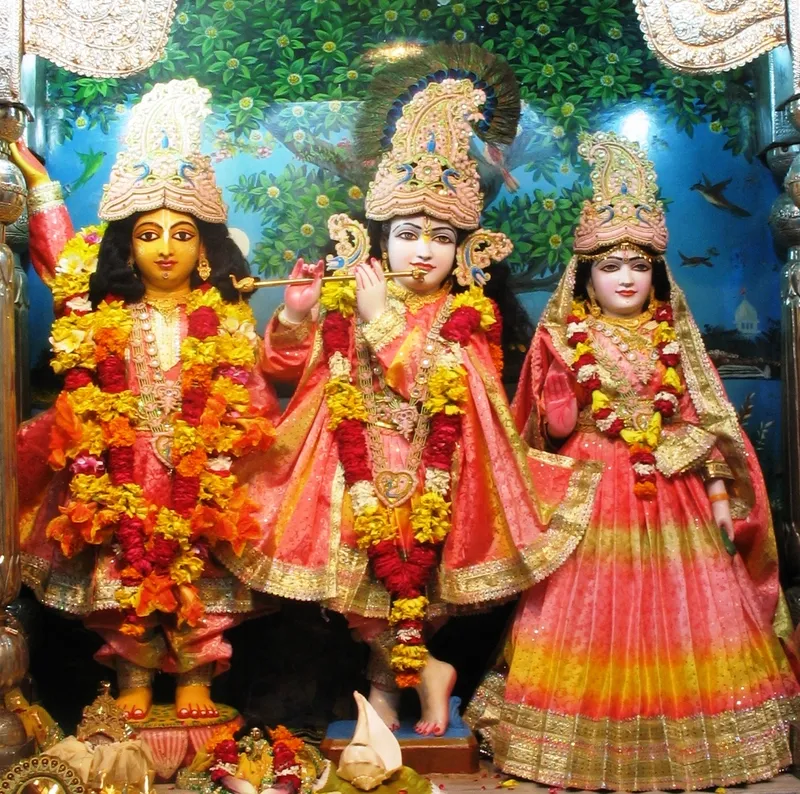
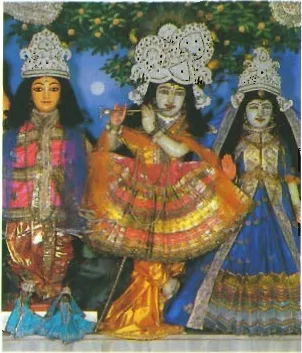
Vṛndāvana-Dhāma Ki Jaya! (c. 1986) said that the maṭha had been renovated, and that its presiding Deities were Śrī Śrī Rādhā-vinoda-vihārī, with Śrī Caitanya Mahāprabhu, a Govardhana-śilā (a stone from Govardhana Hill) and a mūrti of Keśava Mahārāja.[1 +2]
Location
| Where it is | 'adjacent to Śrī Raṅgeśvara Mahādeva and Kaṁsa-ṭīlā, on the right side of the parikramā path and on the left side of the Mathurā-Āgrā road'[22] Mathurā (map)[23] |
|---|
Nearby places
Raṅgeśvara Mahādeva · Kaṁsa-ṭīlā · Śiva-tāla
Pictures
2 pictures
History
The name
The maṭha's name recalls Keśava, the Lord of Mathurā in scripture. The Garga-saṁhitā calls Kṛṣṇa Himself, Keśava, the Lord of Mathurā; the Varāha Purāṇa places Keśava in the centre of the lotus of Mathurā; and Śrī Caitanya Mahāprabhu saw the Deity Keśava at the birthplace. The scriptures, of course, do not speak of the maṭha itself.[12 +5]
The founding
No year of founding has been found. The biography Śrīla Prabhupāda-līlāmṛta says that when Śrīla Prabhupāda, then called Abhay, came to Mathurā from Jhansi, Keśava Mahārāja was establishing his maṭha.[1 +3] Śrī Vraja-maṇḍala Parikramā (2007) says that the writer of its introduction was in charge of the maṭha from its opening, and that many Hindi books, among them Jaiva-dharma, Upadeśāmṛta, Manaḥ-śikṣā and the Bhagavad-gītā, and the monthly Śrī Bhāgavata-patrikā were published from it.[1 +2]
References
23 references
- Śrī Vraja-maṇḍala Parikramā (2007), PDF p. 46
- Vṛndāvana-Dhāma Ki Jaya! (c. 1986), by Dhruva Mahārāja dāsa, PDF p. 21
- the undated parikramā notes Mathurā, ¶60
- Satsvarūpa dāsa Gosvāmī, Śrīla Prabhupāda-līlāmṛta, vol. 1, ch. 8 · vedabase.io
- Satsvarūpa dāsa Gosvāmī, Śrīla Prabhupāda-līlāmṛta, vol. 1, ch. 9, 17 September 1959 · vedabase.io
- Satsvarūpa dāsa Gosvāmī, Śrīla Prabhupāda-līlāmṛta, vol. 1, ch. 27, September 1967 · vedabase.io
- Śrī Vraja-maṇḍala Parikramā (2007), PDF p. 47
- Vṛndāvana-Dhāma Ki Jaya! (c. 1986), by Dhruva Mahārāja dāsa, PDF p. 22
- Śrīla Prabhupāda, Room Conversation, Vṛndāvana, 3 October 1976 · vedabase.io
- Śrīla Prabhupāda, Bhaktiprajñāna Keśava Mahārāja's Disappearance Day Lecture, Seattle, 21 October 1968 · vedabase.io
- Śrīla Prabhupāda, Room Conversation, Hyderabad, 21 August 1976 · vedabase.io
- Garga-saṁhitā, Mathurā-khaṇḍa (5) 25.1-3, Sanskrit Wikisource
- Varāha Purāṇa, adhyāya 163 (Kapila-varāha-māhātmya), verses 15-17, Sanskrit Wikisource
- Śrīla Kṛṣṇadāsa Kavirāja Gosvāmī, Śrī Caitanya-caritāmṛta, Madhya-līlā 17.156, online edition · vedabase.io
- Śrīla Rūpa Gosvāmī, Mathurā-māhātmya, v.32-34 (Varāha to the Earth, under the heading 'excelling all tīrthas', 'ādi-vārāhe' at v.28)
- Śrīla Rūpa Gosvāmī, Mathurā-māhātmya, v.444-446 (the chief Deities of Māthura; closing verses)
- Śrīla Prabhupāda, Śrīmad-Bhāgavatam, 3.1.17, purport · vedabase.io
- Śrī Vraja-maṇḍala Parikramā (2007), PDF p. 10
- Satsvarūpa dāsa Gosvāmī, Śrīla Prabhupāda-līlāmṛta, vol. 1, ch. 10 · vedabase.io
- Śrīla Prabhupāda, Letter to Sumati Morarjee, letter dated July 20th 1967 · vedabase.io
- Śrīla Prabhupāda, Letter to Satsvarupa, letter dated October 6th 1967 · vedabase.io
- Śrī Vraja-maṇḍala Parikramā (2007), p. 66-67
- Vṛndāvana-Dhāma Ki Jaya! (c. 1986), by Dhruva Mahārāja dāsa, p. 3