Kṛṣṇa Janma-sthāna
कृष्ण जन्म-स्थान
Also called Janma-sthāna, Janama –Bhumi, Keśava-kaṭara, Kaṭarā Keśavadeva
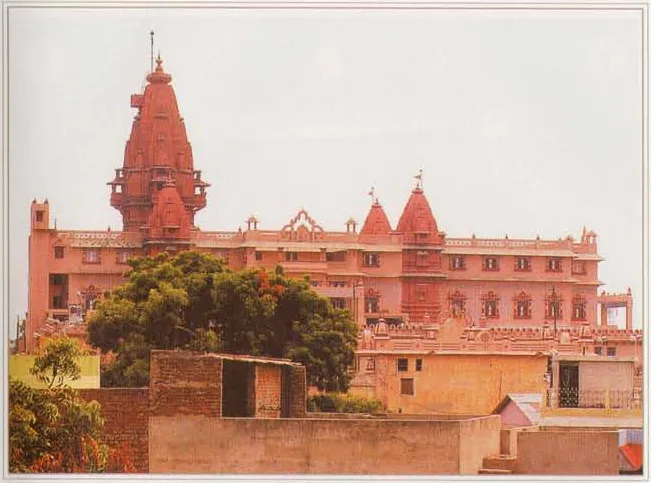
- What it is
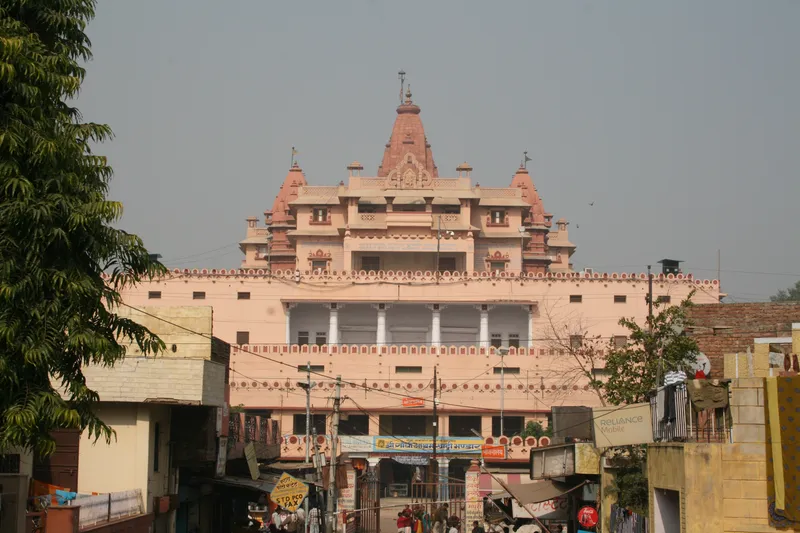
- The Kṛṣṇa Janma-sthāna, also called Kaṭarā Keśavadeva, is honoured as the place where Śrī Kṛṣṇa appeared from Devakī in Kaṁsa's prison.
- Visiting
- The guidebooks described several shrines in the temple complex of their time: Vṛndāvana-Dhāma Ki Jaya!
- Places here
- Replica of Kaṁsa's prison
In short
The Kṛṣṇa Janma-sthāna, also called Kaṭarā Keśavadeva, is honoured as the place where Śrī Kṛṣṇa appeared from Devakī in Kaṁsa's prison. It stands in the Mallapurā quarter of Mathurā; the guidebooks and the temple tradition place the prison here, while no scripture names the exact site.[1 +4] In the Varāha and Skanda Purāṇas the Lord calls Mathurā His birthplace.[6 +1] Śrī Caitanya Mahāprabhu saw the Deity Keśava at the birthplace and danced there in ecstatic love.[8 +4] Śrīla Prabhupāda writes that the emperor Aurangzeb attacked the Keśava temple here and built a big mosque; the historians A. W. Entwistle (1987) and Prabhudayāl Mītal (1966) report that the temple was razed and the mosque built on part of its site. A new temple was built in the twentieth century.[13 +8]
Key facts
| Kind | temple |
|---|---|
| Region · area | Mathurā |
| Also part of | Mallapurā |
| Ācāryas | Śrī Caitanya Mahāprabhu, Śrī Subuddhi Rāya, Śrīla A.C. Bhaktivedanta Swami Prabhupāda, Śrīla Viśvanātha Cakravartī Ṭhākura, Śrīla Rūpa Gosvāmī |
Why it is glorified
In the Varāha Purāṇa the Lord, as Varāha, tells the Earth that nothing is higher for Him than Mathurā, His birthplace; in the …
In the Varāha Purāṇa the Lord, as Varāha, tells the Earth that nothing is higher for Him than Mathurā, His birthplace; in the Skanda Purāṇa He calls Mathurā His dear birthplace, where every step gives the fruit of a pilgrimage.[6 +1] Another verse of the Skanda Purāṇa says that one who comes to the birthplace while devoted to austerity and fasting in Mathurā is freed from all sins.[12 +4]
बहुना किमिहोक्तेन नैतत्क्षेत्रसमं क्वचित् ।। तपोपवासनिरतो मथुरायां षडानन ।। जन्मस्थानं समासाद्य सर्वपापैः प्रमुच्यते ॥ 32 ॥ विश्रांतितीर्थे विधिवत्स्नात्वा कृत्वा तिलोदकम् ।। पितॄनुद्धृत्य नरकाद्विष्णुलोकं प्रगच्छति ॥ 33 ॥ यदि कुर्यात्प्रमादेन पातकं तत्र मानवः ।। विश्रांते स्नानमासाद्य भस्मीभवति तत्क्षणात् ॥ 34 ॥
bahunā kimihoktena naitatkṣetrasamaṁ kvacit
tapopavāsanirato mathurāyāṁ ṣaḍānana
janmasthānaṁ samāsādya sarvapāpaiḥ pramucyate viśrāṁtitīrthe vidhivatsnātvā kṛtvā tilodakam
pitṝnuddhṛtya narakādviṣṇulokaṁ pragacchati yadi kuryātpramādena pātakaṁ tatra mānavaḥ
viśrāṁte snānamāsādya bhasmībhavati tatkṣaṇāt
Śrīla Rūpa Gosvāmī gathers these glories in his Mathurā-māhātmya (summarised here, not translated). Under a heading on the glory of the birthplace he quotes the Skanda verse, and verses from the Padma Purāṇa: those who enter Keśava's birth-house even once in the month of Kārttika reach Kṛṣṇa, and nothing equals an Ekādaśī kept there.[12 +5] From the Ādi-varāha he quotes that whoever sees the Lord in Mathurā on Janmāṣṭamī, His birthday, is at once freed from the sins of millions of births, and that walking around Keśava in Mathurā equals walking around the whole earth.[12 +3]
The Bhaviṣya Purāṇa has Kṛṣṇa tell Yudhiṣṭhira that after Kaṁsa's death the vow of Janmāṣṭamī was first proclaimed in Mathurā, at His father's order, to be kept every year at midnight on the eighth day of the dark fortnight of Bhādra, the time of His birth from Devakī.[30 +1]
Divine pastimes
Devakī and Vasudeva in Kaṁsa's house
Kaṁsa, who had imprisoned his own father Ugrasena and ruled the Śūrasena states, kept his sister Devakī and her husband Vasudeva in fetters in his house and killed their sons one after another.[32 +3] The Bhāgavatam says that the Lord was born in the confinement of the king of the Bhojas, that is, Kaṁsa, and Śrīla Prabhupāda's purport places this prison at Mathurā:[35 +2]
vasudevasya devakyāṃ jāto bhojendra-bandhane / cikīrṣur bhagavān asyāḥ śam ajenābhiyācitaḥ
The Personality of Godhead, Lord Śrī Kṛṣṇa, being prayed to by Brahmā to bring welfare to the earth, was begotten by Vasudeva in the womb of his wife Devakī in the prison of the King of Bhoja.
Translation: Śrīla A.C. Bhaktivedanta Swami PrabhupādaThe appearance
At midnight, in deep darkness, the Lord appeared from Devakī like the full moon rising in the east. The Bhāgavatam does not name the place.[1 +6]
niśīthe tama-udbhūte jāyamāne janārdane / devakyāṃ deva-rūpiṇyāṃ viṣṇuḥ sarva-guhā-śayaḥ / āvirāsīd yathā prācyāṃ diśīndur iva puṣkalaḥ
Then the Supreme Personality of Godhead, Viṣṇu, who is situated in the core of everyone’s heart, appeared from the heart of Devakī in the dense darkness of night, like the full moon rising on the eastern horizon, because Devakī was of the same category as Śrī Kṛṣṇa.
Translation: Śrīla A.C. Bhaktivedanta Swami PrabhupādaVasudeva first saw the newborn child in His four-armed form, holding the conch, disc, club and lotus. After the prayers of Vasudeva and Devakī the Lord said that He had shown this form to remind them of His earlier births, and then, as they watched, He became an ordinary human child.[1 +4] Śrīla Rūpa Gosvāmī writes in his Laghu-bhāgavatāmṛta that Kṛṣṇa appeared on Devakī's bed, in the delivery room within the prison, at deep night on the dark eighth of Bhādrapada (summarised here, not translated).[45]
Vasudeva carries the child to Gokula
By the Lord's arrangement the guards fell asleep and the barred doors opened. Vasudeva carried the child across the Yamunā to Nanda's house in Gokula, left Him on Yaśodā's bed, took her newborn daughter and came back to the prison.[1 +5]
nanda-vrajaṃ śaurir upetya tatra tān
gopān prasuptān upalabhya nidrayā
amp;sutaṃ yaśodā-śayane nidhāya tat-
sutām upādāya punar gṛhān agāt
devakyāḥ śayane nyasya vasudevo 'tha dārikām / pratimucya pador loham āste pūrvavad āvṛtaḥ
When Vasudeva reached the house of Nanda Mahārāja, he saw that all the cowherd men were fast asleep. Thus he placed his own son on the bed of Yaśodā, picked up her daughter, an expansion of Yoga-māyā, and then returned to his residence, the prison house of Kaṁsa.
Translation: Śrīla A.C. Bhaktivedanta Swami PrabhupādaThe goddess who slipped from Kaṁsa's hands
Hearing of the birth, Kaṁsa rushed to the delivery room, snatched the girl from Devakī and tried to dash her against a stone. She slipped upward and appeared in the sky as the eight-armed goddess, Viṣṇu's younger sister, told Kaṁsa that his killer was already born elsewhere, and became known on earth by many names. Kaṁsa then released Devakī and Vasudeva from their fetters.[46 +5] Śrī Vraja-maṇḍala Parikramā (2007) identifies her with the goddess of the Kaṅkālī-devī Mandira in Mathurā, and the Garga-saṁhitā and the same guidebook give Mathurā's Mahāvidyā-devī the names Caṇḍikā and Ambikā, two of the names the Bhāgavatam says she would receive.[49 +3]
Two places of His birth
The Bhāgavatam's account, told above, is of Kṛṣṇa's birth from Devakī in Kaṁsa's prison at Mathurā, the birth this place honours.[1 +8] Nanda-bhavana in Mahāvana is also called Kṛṣṇa's birthplace. Śrīla Prabhupāda writes in his purport to ŚB 10.3.47:[55 +5]
General teaching (does not name the place)“Śrīla Viśvanātha Cakravartī Ṭhākura discusses that Kṛṣṇa appeared simultaneously as the son of Devakī and as the son of Yaśodā, along with the spiritual energy Yoga-māyā.”
Śrīla Prabhupāda, Śrīmad-Bhāgavatam, 10.3.47, purport · vedabase.io
Śrīla Rūpa Gosvāmī records a related view of some ancient devotees and calls it very secret (Laghu-bhāgavatāmṛta 1.5.456).[55]
Traditional accounts
Older texts speak of the place as Vasudeva's house.
Older texts speak of the place as Vasudeva's house. The Garga-saṁhitā says that Kṛṣṇa appeared from Devakī in Vasudeva's house, and in the Harivaṁśa the sages praise Him lying there as a child.[61 +2] According to the Bhakti-ratnākara, Śrīla Śrīnivāsa Ācārya was shown here the house of Vasudeva and Devakī, where Kṛṣṇa, the Lord of the world, was born, and was told that the Purāṇas glorify the birthplace.[12]
Śrīla Rūpa Gosvāmī names Keśava, in the centre of Mathurā, first among the chief Deities of the city.[64] According to the guidebooks, Vajranābha, Kṛṣṇa's great-grandson and king of Mathurā, built the first temple at the birthplace, and religious kings later built temples on the same site.[1 +4]
The Gosvāmīs and ācāryas
The Caitanya-caritāmṛta tells that on entering Mathurā Śrī Caitanya Mahāprabhu bathed at Viśrāma-ghāṭa and then saw the Deity …
Śrī Caitanya Mahāprabhu
The Caitanya-caritāmṛta tells that on entering Mathurā Śrī Caitanya Mahāprabhu bathed at Viśrāma-ghāṭa and then saw the Deity Keśava at the birthplace.[8 +3]
মথুরা আসিয়া কৈলা ‘বিশ্রান্তি-তীর্থে’ স্নান ।
‘জন্মস্থানে’ ‘কেশব’ দেখি’ করিলা প্রণাম ॥ ১৫৬ ॥
mathurā āsiyā kailā ‘viśrānti-tīrthe’ snāna
‘janma-sthāne’ ‘keśava’ dekhi’ karilā praṇāma
When Śrī Caitanya Mahāprabhu entered the city of Mathurā, He took His bath at Viśrāma-ghāṭa. He then visited the birthplace of Kṛṣṇa and saw the Deity named Keśavajī. He offered His respectful obeisances to this Deity.
Translation: Śrīla A.C. Bhaktivedanta Swami PrabhupādaThere He chanted and danced in ecstatic love. The people were astonished, a brāhmaṇa danced with Him, and the priest of Keśava offered Him a garland. According to the Bhakti-ratnākara, all the people floated in a flood of prema and said that He was Śrī Keśava Himself.[8 +3] He saw the birthplace again when He came back to Mathurā from Gokula.[8 +1]
Other ācāryas
- Śrīla Rūpa Gosvāmī gathered the Purāṇa verses on the birthplace, Keśava's birth-house and Janmāṣṭamī in his Mathurā-māhātmya, and in his Laghu-bhāgavatāmṛta he describes the appearance in the prison.[25 +5]
- According to the biography Śrīla Prabhupāda-līlāmṛta, the Vraja-maṇḍala parikramā that Śrīla Bhaktisiddhānta Sarasvatī Ṭhākura led in October 1932 visited Kṛṣṇa's birthplace, the place where Kṛṣṇa killed Kaṁsa and the Ādikeśava temple.[69 +1]
Śrīla Prabhupāda
Śrīla Prabhupāda's books describe the place of the birth as Kaṁsa's prison.
Śrīla Prabhupāda's books describe the place of the birth as Kaṁsa's prison.[37 +3]
Names this place“Thus Uddhava began the topics from the very beginning of His appearance as the son of Vasudeva and Devakī in the prison of Kaṁsa, the King of the Bhojas, at Mathurā.”
Śrīla Prabhupāda, Śrīmad-Bhāgavatam, 3.2.25, purport · vedabase.io
In a lecture on Janmāṣṭamī in 1968 he spoke of Mathurā as the place of Kṛṣṇa's appearance, and said that the birthplace is still there and well kept:[71 +3]
Names this place“So today is that auspicious day, Janmāṣṭamī, when Lord Kṛṣṇa appeared five thousand years ago in India, Mathurā. … It is about ninety miles south of New Delhi. Mathurā is still existing, and it is eternally existing. Kṛṣṇa appeared in Mathurā in His maternal uncle's house in a very precarious condition.”
Śrīla Prabhupāda, Janmāṣṭamī, Lord Śrī Kṛṣṇa's Appearance Day lecture, Montreal, 16 August 1968 · vedabase.io
Songs
A song that the song book credits to Śrīla Bhaktisiddhānta Sarasvatī Ṭhākura sets Mathurā above Vaikuṇṭha, because Kṛṣṇa took His …
A song that the song book credits to Śrīla Bhaktisiddhānta Sarasvatī Ṭhākura sets Mathurā above Vaikuṇṭha, because Kṛṣṇa took His birth there.[75]
Visiting today
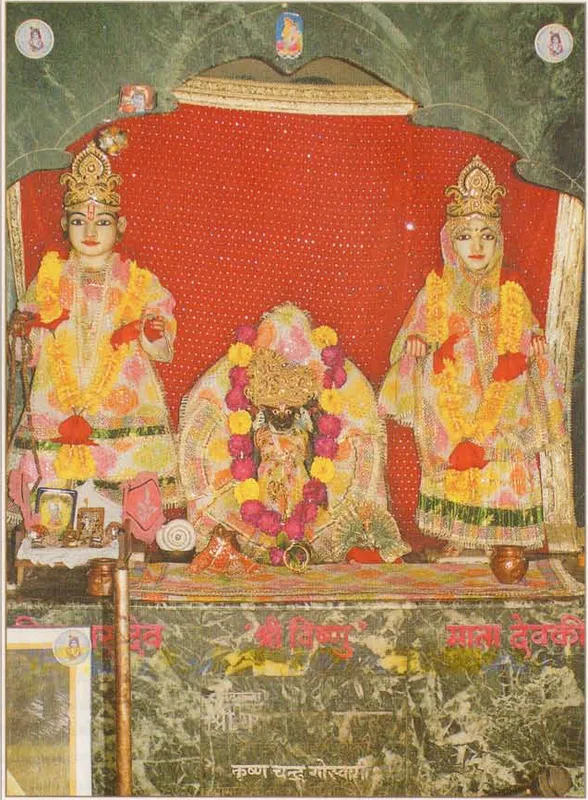
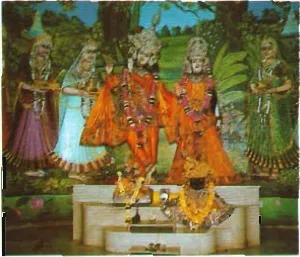
The guidebooks described several shrines in the temple complex of their time: Vṛndāvana-Dhāma Ki Jaya! (c. 1986) listed Jagannātha, Balarāma and Subhadrā, Rādhā-Keśava, Sītā-Rāma-Lakṣmaṇa and a Śiva-liṅga, and Śrī Vraja-maṇḍala Parikramā (2007) shows the Deities of Vāsudeva Kṛṣṇa with Vasudeva and Devakī; the present state has not been checked.[14 +1] According to the local tradition recorded in the 2007 guidebook, Potrā-kuṇḍa nearby was within the walls of Kaṁsa's prison, and the c. 1986 guidebook noted a replica of Kaṁsa's prison beside the temple.[2 +2] In 1974 Śrīla Prabhupāda noted rest-houses of the Kṛṣṇa Janma-bhūmi in Mathurā built for foreign pilgrims.[77]
Mallapurā
Mallapurā is the quarter of Mathurā around the birthplace. According to the guidebook Śrī Vraja-maṇḍala Parikramā (2007), Kṛṣṇa's birthplace lies within it, and Cāṇūra and Kaṁsa's other wrestlers (mallas) lived here; the same book sets Kṛṣṇa's birth, told above, at the Janma-sthāna in Mallapurā.[2 +1] It also places the Ādikeśava temple in Mallapurā, behind the present Janma-sthāna.[14 +1] No scripture or Gosvāmī text names the quarter; the name is recorded by Growse, who in 1883 named the suburb next to the Potrā-kuṇḍa and the cell then shown as the birthplace Mallpura.[78]
Location
| Where it is | 'within the Mallapurā area of Mathurā'; between Bhūteśvara and Jñāna-vāpī on the route[97] within the Mallapura area of Mathura[76] |
|---|
Places at Kṛṣṇa Janma-sthāna
2 places
Also described on this page
- Mallapurā locality
Nearby places
Bhūteśvara Mahādeva · Jñāna-vāpī · Caitanya Mahāprabhu's cave (Mathurā) · Potrā-kuṇḍa
Pictures
4 pictures
History
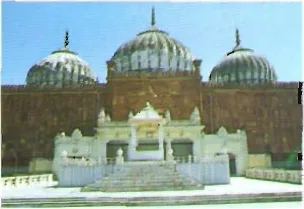
Śrīla Prabhupāda writes that the Keśavajī temple was attacked by the emperor Aurangzeb, who built a big mosque there, and that in his own time a very large temple was being built with the help of wealthy Marwari merchants.[13]
Names this place“At one time, Keśavajī-mandira was attacked by the emperor Aurangzeb, who constructed such a big mosque there that the temple of Keśavajī was insignificant in comparison. … Many archeological discoveries have been made there, and many people from foreign countries are beginning to appreciate Kṛṣṇa’s birthplace.”
Śrīla Prabhupāda, Śrī Caitanya-caritāmṛta, Madhya-līlā 17.156, purport · vedabase.io
The temple that Aurangzeb destroyed was a great temple of Keśava Deva; all the sources agree on him and on the mosque, while they differ on its builder and its dates (see below).[13 +5] In 1883 Growse described the Katra as a walled enclosure with the mosque on a raised terrace, the plinth of the old temple wall visible behind it and votive tablets of 1656 and 1663 in the pavement.[17]
According to the historian A. W. Entwistle (1987), Rājā Paṭnīmal bought the Katra in 1815, intending to build a new temple of Keśava, and Prabhudayāl Mītal (1966) wrote that he could not fulfil that wish. Entwistle adds that the site was bought from Paṭnīmal's descendants in 1943-44 and that building began in 1953.[19 +2] Śrīla Prabhupāda's biography describes the place as he passed it in the 1950s: the white domes of the mosque, with a newer, smaller Kṛṣṇa temple directly in front of it.[67] In December 1976 Śrīla Prabhupāda was told that the Dalmia family were completing their temple building at the Janma-bhūmi.[68] Read more: The temples at Śrī Kṛṣṇa's birthplace in Mathurā →
Where the sources differ
Whose house the place of the birth was: the scriptures, Śrīla Prabhupāda and Śrīla Rūpa Gosvāmī speak of Kaṁsa's house and …
Whose house the place of the birth was: the scriptures, Śrīla Prabhupāda and Śrīla Rūpa Gosvāmī speak of Kaṁsa's house and prison, other texts of Vasudeva's house.
Accounts differ Whose house the place of Kṛṣṇa's birth was, and how Devakī was held there.
- Śrīmad-Bhāgavatam 10.1.66, 10.3.51-52 (Sanskrit)Kaṁsa bound Vasudeva and Devakī with fetters 'in the house' (gṛhe); Vasudeva returned 'home' and put the fetters back on (these verses do not say whose house).
- Śrīmad-Bhāgavatam 3.2.25 and 10.2.19 (Sanskrit; Śrīla Prabhupāda's translations and his purport to 3.2.25)The Lord was born 'in the confinement of the king of the Bhojas' (bhojendra-bandhane: 'in the prison of the King of Bhoja'); Devakī was held 'in the house of the king of the Bhojas' (bhojendra-gehe: 'under arrest in the house of Kaṁsa'); the purport: 'in the prison of Kaṁsa, the King of the Bhojas, at Mathurā'.
- ŚB 10.3.51 translation (BBT) and Śrīla Prabhupāda's 1968 lecture'his residence, the prison house of Kaṁsa'; Kṛṣṇa 'appeared in Mathurā in His maternal uncle's house'.
- Harivaṁśa 47.3 and 48.17Devakī was kept hidden in the house under concealed guard, free to move about; the Lord lay as a child 'in Vasudeva's house'.
Which place is Kṛṣṇa's birthplace, Mathurā or Mahāvana-Gokula, and how the ācāryas explain the two.[8 +5]
Accounts differ Which place is Kṛṣṇa's birthplace (janma-sthāna): Kaṁsa's prison at Mathurā or Nanda-bhavana in Mahāvana-Gokula.
- Śrīmad-Bhāgavatam 10.3.8, 10.3.47-52; CC Madhya 17.156 and 18.69; Śrī Vraja-maṇḍala Parikramā (2007), Vṛndāvana-Dhāma Ki Jaya! (c. 1986), the undated parikramā notes MathurāKṛṣṇa appeared from Devakī in Kaṁsa's prison at Mathurā; the Mathurā janma-sthāna is His birthplace.
- CC Madhya 18.67 (Bengali) and Śrīla Prabhupāda's purport quoting the Bhakti-ratnākaraAt Mahāvana Śrī Caitanya 'saw the birth-site'; the Bhakti-ratnākara: 'See the birthplace of Lord Kṛṣṇa … Gokula'. Śrīla Prabhupāda's translation renders the verse as seeing Gokula, the place of Kṛṣṇa's early childhood pastimes.
- Śrī Vraja-maṇḍala Parikramā (2007) and the undated parikramā notes MahāvanaNanda-bhavana in Mahāvana is 'Kṛṣṇa's birthplace', where Yaśodā gave birth to Kṛṣṇa and Yogamāyā as twins.
- Śrīla Prabhupāda, ŚB 10.3.47 purport (after Śrīla Viśvanātha Cakravartī)Kṛṣṇa appeared simultaneously as the son of Devakī and as the son of Yaśodā.
The month of the birth: the Harivaṁśa says Śrāvaṇa, the other texts Bhādra.[27 +3]
Accounts differ The month of Kṛṣṇa's birth.
- Harivaṁśa 48.13The eighth of the dark fortnight of Śrāvaṇa, at midnight under Rohiṇī.
- Garga-saṁhitā 1.11.23; Bhaviṣya Purāṇa, Uttara-parvan 55.14; the Ādi-varāha as quoted by Śrīla Rūpa Gosvāmī (Mathurā-māhātmya v.163)The eighth of the dark fortnight of Bhādra (Bhādrapada).
- Śrīla Rūpa Gosvāmī, Laghu-bhāgavatāmṛta 1.5.445The dark eighth of Bhādrapada, at deep night.
- Aiśvarya-kādambinī 5.4, attributed to Śrīla Baladeva VidyābhūṣaṇaThe queen of Vraja gave birth to Hari, and Devakī too at that very time, at midnight on the dark eighth of the month Nabhasya, that is, Bhādra.
Accounts differ How many arms the goddess (Yogamāyā) showed when she rose from Kaṁsa's hands at the place of Kṛṣṇa's birth.
- Śrīmad-Bhāgavatam 10.4.9 (and Śrīla Prabhupāda's translation)Eight great arms bearing weapons (sāyudhāṣṭa-mahābhujā); the translation: 'the goddess Durgā, with eight arms'.
- Viṣṇu Purāṇa 5.3.26A great form with eight great arms bearing weapons.
- Garga-saṁhitā 1.11.58Māyā, eight-armed and bearing weapons, on a divine chariot.
- Śrīla Prabhupāda, Kṛṣṇa book ch. 4; Śrī Vraja-maṇḍala Parikramā (2007), the undated parikramā notes MathurāEight arms.
Where the great crowds came to see Śrī Caitanya Mahāprabhu in Mathurā, according to the guidebooks, the Caitanya-caritāmṛta and the Bhakti-ratnākara.[10 +4]
Accounts differ Where the great crowds came to see Śrī Caitanya in Mathurā.
- Śrī Vraja-maṇḍala Parikramā (2007), the undated parikramā notes MathurāAt the birthplace temple: hearing His kīrtana, 'hundreds of thousands of people assembled here'.
- CC Madhya 17.157-161 and 17.187-188At Keśava's temple He chanted and danced, a brāhmaṇa danced with Him, the people were astonished and Keśava's priest garlanded Him; the crowds of hundreds of thousands came later to the brāhmaṇa's house, where He came out to give them audience.
- Bhakti-ratnākara, Fifth Wave, printed p. 168At Keśava's place Śrī Caitanya danced wonderfully and all the people floated in a flood of prema, saying that He was this Śrī Keśava Rāya (no number given).
Where Śrī Caitanya Mahāprabhu met Śrī Subuddhi Rāya: the guidebooks say here, the Caitanya-caritāmṛta says at Vārāṇasī.[14 +3]
Accounts differ Where Śrī Caitanya met Śrī Subuddhi Rāya.
- Śrī Vraja-maṇḍala Parikramā (2007), the undated parikramā notes MathurāAt Kṛṣṇa's birthplace in Mathurā, where He stopped him from suicide; Śrī Subuddhi Rāya then served the Vaiṣṇavas 'at this place' for the rest of his days.
- CC Madhya 25.194-203At Vārāṇasī; the Lord told him to go to Vṛndāvana and chant; when he reached Mathurā the Lord had already left, and he lived there selling dry wood and serving Vaiṣṇavas.
Who built the temple that Aurangzeb destroyed, and when.[14 +10]
Accounts differ Builder and date of the temple that Aurangzeb destroyed at the birthplace.
- Śrī Vraja-maṇḍala Parikramā (2007), the undated parikramā notes MathurāBuilt for Ādikeśava in A.D. 1610 by Mahārāja Vīrasiṁhadeva of Orchā at a cost of 33 lakh rupees; destroyed in 1669.
- Growse (1883) and the 1911 gazetteerBuilt in the reign of Jahangir by Bīr Siṅh Deva, Bundela, of Orchhā at a cost of 33 lakhs; destroyed in 1669.
- Vṛndāvana-Dhāma Ki Jaya! (c. 1986)A magnificent temple constructed in A.D. 1650, some 250 feet high; no builder named.
- Śrīla Prabhupāda, CC Madhya 17.156 purportKeśavajī-mandira was attacked by Aurangzeb, who built a big mosque there (no date or builder).
What became of the old image of Keśava.[2 +5]
Accounts differ What became of the ancient image of Keśava (Ādikeśava) of Mathurā.
- Śrī Vraja-maṇḍala Parikramā (2007), the undated parikramā notes MathurāHidden by its priests at Rājadhāna near Īṭāvā, where it still is; a pratibhū-vigraha is worshipped in the Ādikeśava temple at Mallapurā.
- F. S. Growse, Mathurá (1883), a historianGrowse says that before Aurangzeb's raid the image was taken by Rāj Singh of Mewar to Siāṛh, now Nāthdwārā, where it is worshipped as Śrī Nāthjī.
- Śrī Vraja-maṇḍala Parikramā (2007)Śrī Nāthajī is the Gopāla Deity who appeared at Govardhana (Śrīla Mādhavendra Purī's Deity), not Keśava.
- A. W. Entwistle (1987), a historian, citing Sarkar and Sri Ram SharmaEntwistle says that when the temple was razed in 1670 its images were taken to Agra and buried under the steps of Jahānārā's mosque; a note adds that, according to Vijay, the original Deity was taken to the village of Rasdhan in Kanpur District.
Who paid for the present temple, and when its building began.[2 +3]
Accounts differ Who financed the present Janma-bhūmi temple, and when its building began.
- Śrī Vraja-maṇḍala Parikramā (2007), the undated parikramā notes MathurāFunds raised by Madana-mohana Mālavīya at the direction of Hanumān Prasāda Poddāra, with contributions from Ḍālmiyā and others.
- Vṛndāvana-Dhāma Ki Jaya! (c. 1986)Begun in 1965; financed by Yugala-kiśora Birla, Madan Mohan Malaviya and Hanuman Prasada Poddar.
- Conversation of 31 Dec 1976 (report to Śrīla Prabhupāda)The Dalmias were diverting their funds to complete their temple building at the Janma-bhūmi.
- Entwistle (1987), p. 320 (historian)Madan Mohan Mālavīya and Jugal Kiśor Birlā bought the site in 1943-44 from the descendants of Rājā Paṭnīmal; a Śrī Kṛṣṇa Janmasthān Trust was set up and construction began in 1953; the new temple was founded by Rām Kṛṣṇa Ḍālmiyā, with additions paid for by other business families, including Rāmnāth Goenkā.
More on this place
The temples at Śrī Kṛṣṇa's birthplace in Mathurā
References
97 references
- Śrī Vraja-maṇḍala Parikramā (2007), PDF p. 32
- Śrī Vraja-maṇḍala Parikramā (2007), PDF p. 34
- the undated parikramā notes Mathurā, ¶63
- the undated parikramā notes Mathurā, ¶68
- Vṛndāvana-Dhāma Ki Jaya! (c. 1986), by Dhruva Mahārāja dāsa, PDF p. 25
- Varāha Purāṇa, adhyāya 152, verses 10-12, Sanskrit Wikisource
- Skanda Purāṇa, Vaiṣṇava-khaṇḍa, Mārgaśīrṣa-māhātmya, adhyāya 17 (Mathurā-māhātmya-varṇana), verses 1-3, Sanskrit Wikisource
- Śrīla Kṛṣṇadāsa Kavirāja Gosvāmī, Śrī Caitanya-caritāmṛta, Madhya-līlā 17.156, online edition · vedabase.io
- Śrīla Kṛṣṇadāsa Kavirāja Gosvāmī, Śrī Caitanya-caritāmṛta, Madhya-līlā 18.69, online edition · vedabase.io
- Śrīla Kṛṣṇadāsa Kavirāja Gosvāmī, Śrī Caitanya-caritāmṛta, Madhya-līlā 17.157, online edition · vedabase.io
- Śrīla Kṛṣṇadāsa Kavirāja Gosvāmī, Śrī Caitanya-caritāmṛta, Madhya-līlā 17.160, online edition · vedabase.io
- Śrīla Narahari Cakravartī, Bhakti-ratnākara, Fifth Wave, printed p. 168 (1912 ed.), 2nd ed., 1912
- Śrīla Prabhupāda, Śrī Caitanya-caritāmṛta, Madhya-līlā 17.156, purport · vedabase.io
- Śrī Vraja-maṇḍala Parikramā (2007), PDF p. 33
- Vṛndāvana-Dhāma Ki Jaya! (c. 1986), by Dhruva Mahārāja dāsa, PDF p. 26
- the undated parikramā notes Mathurā, ¶67
- Mathurá (1883), F. S. Growse, B.C.S., M.A. Oxon., C.I.E. (as the title page gives him
- A. W. Entwistle, ch. 5 §24 (Aurangzeb's time), printed p. 181, Egbert Forsten, Groningen, 1987
- A. W. Entwistle, ch. 8 ('The pilgrimage itinerary'), §1.19 'Krishna Janmasthan/Janmabhumi', printed p. 320, Egbert Forsten, Groningen, 1987
- Prabhudayāl Mītal, history part ('ब्रज का इतिहास'), modern period, section 'Rājā Paṭnīmal' (running head 'Samṛddhiśālī bhakta jan'), printed p. 278
Show all 97 references
- A. W. Entwistle, ch. 5, the paragraph on Rājā Paṭnīmal (nineteenth century), printed p. 217, Egbert Forsten, Groningen, 1987
- Skanda Purāṇa, Vaiṣṇava-khaṇḍa, Badarikāśrama-māhātmya, adhyāya 1, verses 32-34, Sanskrit Wikisource
- Śrī Vraja-maṇḍala Parikramā (2007), PDF p. 30
- Śrī Vraja-maṇḍala Parikramā (2007), PDF p. 57
- Śrīla Rūpa Gosvāmī, Mathurā-māhātmya, v.207-209
- Śrīla Rūpa Gosvāmī, Mathurā-māhātmya, v.215 ('pādme kārttika-māhātmye')
- Śrīla Rūpa Gosvāmī, Mathurā-māhātmya, v.162-164 ('tatraiva janmāṣṭamyām': the same Ādi-varāha, on Janmāṣṭamī)
- Śrīla Rūpa Gosvāmī, Mathurā-māhātmya, v.212-214
- Śrīla Rūpa Gosvāmī, Mathurā-māhātmya, v.32-34 (Varāha to the Earth, under the heading 'excelling all tīrthas', 'ādi-vārāhe' at v.28)
- Bhaviṣya Purāṇa, Uttara-parvan 55.12-14 (Janmāṣṭamī-vrata)
- Bhaviṣya Purāṇa, Uttara-parvan 55.15-16
- Śrīmad-Bhāgavatam 10.1.66, GRETIL
- Śrīmad-Bhāgavatam 10.1.27, GRETIL
- Śrīmad-Bhāgavatam 10.1.69, GRETIL
- Śrīmad-Bhāgavatam 10.2.19, GRETIL
- Śrīmad-Bhāgavatam 3.2.25, GRETIL
- Śrīla Prabhupāda, Śrīmad-Bhāgavatam, 3.2.25, purport · vedabase.io
- Śrīmad-Bhāgavatam 10.3.8, GRETIL
- Śrīmad-Bhāgavatam 10.3.47-49, GRETIL
- Śrīmad-Bhāgavatam 10.3.51-52, GRETIL
- Vṛndāvana-Dhāma Ki Jaya! (c. 1986), by Dhruva Mahārāja dāsa, PDF p. 24
- Śrīla Prabhupāda, Kṛṣṇa, the Supreme Personality of Godhead, Chapter 3, 'The Birth of Lord Kṛṣṇa' · vedabase.io
- Śrīmad-Bhāgavatam 10.3.9-10, GRETIL
- Śrīmad-Bhāgavatam 10.3.44-46, GRETIL
- Śrīla Rūpa Gosvāmī, Laghu-bhāgavatāmṛta, 1.5.445-446, GRETIL
- Śrīmad-Bhāgavatam 10.4.3, GRETIL
- Śrīmad-Bhāgavatam 10.4.7-9, GRETIL
- Śrīmad-Bhāgavatam 10.4.12-13, GRETIL
- Śrīmad-Bhāgavatam 10.2.11-12, GRETIL
- Śrīmad-Bhāgavatam 10.4.23-24, GRETIL
- Viṣṇu Purāṇa, 5.3.25-27, GRETIL
- Śrī Vraja-maṇḍala Parikramā (2007), PDF p. 47
- Garga-saṁhitā, Mathurā-khaṇḍa (5) 25.10 ('śrī-mathurā-māhātmya-varṇana'), Sanskrit Wikisource
- Śrī Vraja-maṇḍala Parikramā (2007), PDF p. 50
- Śrīla Rūpa Gosvāmī, Laghu-bhāgavatāmṛta, 1.5.454-456, GRETIL
- Sārārtha-darśinī of Śrīla Viśvanātha Cakravartī Ṭhākura on Śrīmad-Bhāgavatam 10.3.47: commentary v.10.3.47, viśvanātha-cakravartī (sārārtha-darśiṇī), Bhagavata Vidya Pith edition, ed. Bhagavata Rishi and Krishna Shankar Shastri, 1996
- Harivaṁśa, 48.11-12, GRETIL
- Śrīla Prabhupāda, Śrīmad-Bhāgavatam, 10.3.47, purport · vedabase.io
- Śrīla Kṛṣṇadāsa Kavirāja Gosvāmī, Śrī Caitanya-caritāmṛta, Antya-līlā 1.67, online edition · vedabase.io
- Aiśvarya-kādambinī, Fifth Shower (pañcamī vṛṣṭiḥ) vv.4-6, after Haridas Shastri's undated edition
- Garga-saṁhitā, Goloka-khaṇḍa (1) 11.23-24, Sanskrit Wikisource
- Harivaṁśa, 48.17 (the sages' praise), GRETIL
- Harivaṁśa, 47.3, GRETIL
- Śrīla Rūpa Gosvāmī, Mathurā-māhātmya, v.444-446 (the chief Deities of Māthura; closing verses)
- the undated parikramā notes Mathurā, ¶65
- Śrīmad-Bhāgavatam 1.15.39, GRETIL
- Satsvarūpa dāsa Gosvāmī, Śrīla Prabhupāda-līlāmṛta, vol. 1, ch. 9 · vedabase.io
- Śrīla Prabhupāda, Room Conversation, Bombay, 31 December 1976 · vedabase.io
- Satsvarūpa dāsa Gosvāmī, Śrīla Prabhupāda-līlāmṛta, vol. 1, ch. 4, October 1932 · vedabase.io
- Śrī Vraja-maṇḍala Parikramā (2007), PDF p. 11
- Śrīla Prabhupāda, Śrīmad-Bhāgavatam, 1.11.16-17, purport (note on Vasudeva) · vedabase.io
- Śrīla Prabhupāda, Śrīmad-Bhāgavatam, 3.2.26, purport · vedabase.io
- Śrīla Prabhupāda, Janmāṣṭamī, Lord Śrī Kṛṣṇa's Appearance Day lecture, Montreal, 16 August 1968 · vedabase.io
- Śrīla Prabhupāda, Speech, Śrī Caitanya-caritāmṛta, Madhya 19.53, Vṛndāvana, 20 April 1975 · vedabase.io
- Vaikuntha Hoite Srestha (Bhaktisiddhānta Sarasvatī Ṭhākura (as the song book credits it)) · song book
- the undated parikramā notes Mathurā, ¶69
- Śrīla Prabhupāda, Letter to Gurudasa, letter dated January 17th 1974 · vedabase.io
- Mathurá (1883), F. S. Growse, B.C.S., M.A. Oxon., C.I.E. (as the title page gives him, p. 131
- Śrīla Kṛṣṇadāsa Kavirāja Gosvāmī, Śrī Caitanya-caritāmṛta, Madhya-līlā 18.67, online edition · vedabase.io
- Śrīla Prabhupāda, Śrī Caitanya-caritāmṛta, Madhya-līlā 18.67, purport (quoting the Bhakti-ratnākara, Fifth Wave) · vedabase.io
- Śrī Vraja-maṇḍala Parikramā (2007), PDF p. 271
- Harivaṁśa, 48.13, GRETIL
- Śrīla Kṛṣṇadāsa Kavirāja Gosvāmī, Śrī Caitanya-caritāmṛta, Madhya-līlā 17.188, online edition · vedabase.io
- the undated parikramā notes Mathurā, ¶66
- Śrīla Kṛṣṇadāsa Kavirāja Gosvāmī, Śrī Caitanya-caritāmṛta, CC Madhya-līlā 25.197, online edition · vedabase.io
- Śrīla Kṛṣṇadāsa Kavirāja Gosvāmī, Śrī Caitanya-caritāmṛta, Madhya-līlā 25.206, online edition · vedabase.io
- Mathurá (1883), F. S. Growse, B.C.S., M.A. Oxon., C.I.E. (as the title page gives him, p. 37
- Muttra (1911), D. L. Drake-Brockman, I.C.S. (edited and compiled)
- A. W. Entwistle, ch. 4 §11 'The Katra', printed p. 125, Egbert Forsten, Groningen, 1987
- A. W. Entwistle, ch. 5 §21 'Bir Singh Deo of Orchha', printed p. 176, Egbert Forsten, Groningen, 1987
- Prabhudayāl Mītal, history part ('ब्रज का इतिहास'), Mughal period, section 'Śrī Keśavarāya jī kā mandir' (running heads 'Rājā Vīrasiṁha' and 'Mugal kāl'), printed p. 203
- Prabhudayāl Mītal, history part ('ब्रज का इतिहास'), Mughal period, section 'Braj ke mandiroṁ kā dhvaṁs' (running head 'Mugal kāl'), printed p. 221
- Prabhudayāl Mītal, history part ('ब्रज का इतिहास'), Rājpūt period, section 'Vijayapāl athavā Vijayacandra' and its sub-section 'Vāsudeva Kṛṣṇa kā mandir' (running heads 'Braj kā itihās' and 'Rājpūt kāl'), printed p. 132
- Mathurá (1883), F. S. Growse, B.C.S., M.A. Oxon., C.I.E. (as the title page gives him, p. 130
- Śrī Vraja-maṇḍala Parikramā (2007), PDF p. 127
- Śrī Vraja-maṇḍala Parikramā (2007), PDF p. 128
- Śrī Vraja-maṇḍala Parikramā (2007), p. 38-39