Mathurā
मथुरा
Also called Mathurāpurī, Mathurā-dhāma, Śrī Dhāma Mathurā
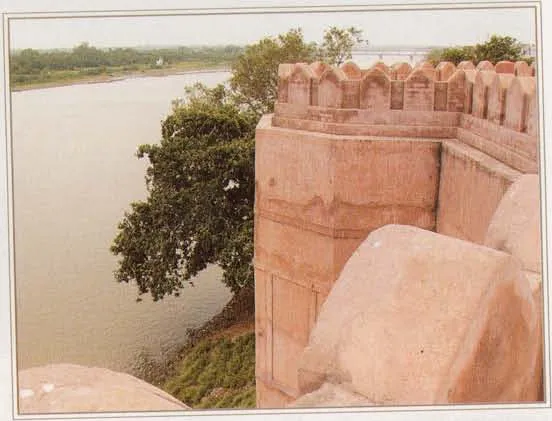
- What it is
- Mathurā is the city on the Yamunā where Śrī Kṛṣṇa appeared from Devakī in the prison of King Kaṁsa.
- Visiting
- Śrīla Prabhupāda writes that pure devotees live in the district of Mathurā or Vṛndāvana and visit all the places of Kṛṣṇa's pastimes, and that this parikramā, the walk around the holy places, is …
- Places here
- Ambikāvana, Śiva-tāla, Potrā-kuṇḍa, Balabhadra-kuṇḍa, Viśrāma-ghāṭa +31 more
In short
Mathurā is the city on the Yamunā where Śrī Kṛṣṇa appeared from Devakī in the prison of King Kaṁsa. Later He came here from Vraja, killed Kaṁsa and lived in the city until He moved His people to Dvārakā.[1 +10] Śrīmad-Bhāgavatam says that Śatrughna, Lord Rāma's brother, built the city in the forest of Madhuvana, and that the Lord, Hari, is always present here.[12 +9] Śrīla Rūpa Gosvāmī ranks Mathurā above Vaikuṇṭha because the Lord took birth here.[22 +2] Śrī Caitanya Mahāprabhu bathed at Viśrāma-ghāṭa, saw the Deity Keśava at the birthplace and bathed in the twenty-four ghāṭas (bathing places) of the Yamunā here.[25 +5]
Key facts
| Kind | town |
|---|---|
| Also part of | Madhuvana |
| Ācāryas | Śrī Caitanya Mahāprabhu, Śrīla Mādhavendra Purī, Śrīla Rūpa Gosvāmī, Śrīla Sanātana Gosvāmī |
Why it is glorified
Śrīmad-Bhāgavatam (10.1.27-28) says that Śūrasena, the chief of the Yadu dynasty, went to live in Mathurā, and that from then on …
Where the Lord is always present
Śrīmad-Bhāgavatam (10.1.27-28) says that Śūrasena, the chief of the Yadu dynasty, went to live in Mathurā, and that from then on Mathurā was the capital of all the Yadu kings, because the Lord, Hari, is always present there.[18 +3]
rājadhānī tataḥ sābhūt sarva-yādava-bhūbhujām / mathurā bhagavān yatra nityaṃ sannihito hariḥ
Since that time, the city of Mathurā had been the capital of all the kings of the Yadu dynasty. The city and district of Mathurā are very intimately connected with Kṛṣṇa, for Lord Kṛṣṇa lives there eternally.
Translation: Śrīla A.C. Bhaktivedanta Swami PrabhupādaThe commentators explain the word "always" (summarised here, not translated). Śrīla Sanātana Gosvāmī says that Mathurā is eternal and that the Lord never leaves it. Śrīla Viśvanātha Cakravartī Ṭhākura says that Kṛṣṇa, always present in His own abode there, simply becomes visible in the world, and does not come down from Vaikuṇṭha.[19 +3] In the Padma Purāṇa the Lord tells Śiva that His Mathurā is eternal, and so are the forest of Vṛndāvana, the Yamunā, the gopīs and the cowherd boys.[20 +2] Śrīla Jīva Gosvāmī concludes that Kṛṣṇa's own world has three places, Dvārakā, Mathurā and Gokula, and that the places of these names on earth are beyond the material world.[20 +7]
The Bhāgavatam also names Mathurā, as Madhupurī, among the holiest places of pilgrimage, where religious acts give a thousand times their result. Near its end it says that one who fasts at Puṣkara, Mathurā or Dvārakā and studies the Bhāgavatam is freed from all fear.[40 +1]
Above Vaikuṇṭha
Śrīla Rūpa Gosvāmī's Upadeśāmṛta (verse 9) begins its ladder of holy places with Mathurā: it is greater than Vaikuṇṭha, the spiritual world, because the Lord took birth here. The forest of Vṛndāvana, Govardhana and Rādhā-kuṇḍa stand higher still.[22 +2]
वैकुण्ठाज्जनितो वरा मधुपुरी तत्रापि रासोत्सवाद्वृन्दारण्यमुदारपाणिरामणात्तत्रापि गोवर्धनः ।
राधाकुण्डमिहापि गोकुलपतेः प्रेमामृताप्लावनात्कुर्यादस्य विराजतो गिरितटे सेवां विवेकी न कः ॥ ९ ॥
vaikuṇṭhāj janito varā madhu-purī tatrāpi rāsotsavād
vṛndāraṇyam udāra-pāṇi-ramaṇāt tatrāpi govardhanaḥ
rādhā-kuṇḍam ihāpi gokula-pateḥ premāmṛtāplāvanāt
kuryād asya virājato giri-taṭe sevāṁ vivekī na kaḥ
The holy place known as Mathurā is spiritually superior to Vaikuṇṭha, the transcendental world, because the Lord appeared there. Superior to Mathurā-purī is the transcendental forest of Vṛndāvana because of Kṛṣṇa’s rāsa-līlā pastimes.
Translation: Śrīla A.C. Bhaktivedanta Swami PrabhupādaIn the Caitanya-caritāmṛta Śrī Caitanya Mahāprabhu asked the scholar Śrīla Raghupati Upādhyāya which of Kṛṣṇa's abodes is the best, and he answered that it is Madhupurī, Mathurā. Śrīla Prabhupāda explains that Mathurā is considered better than Dvārakā.[24 +1] Śrīla Rūpa Gosvāmī's Bhakti-rasāmṛta-sindhu, as Śrīla Prabhupāda renders it, says that Kṛṣṇa's qualities are shown most fully in Gokula, "very perfect" in Dvārakā and "perfect" in Mathurā, while verses found in Śrī Dhyānacandra Gosvāmī's Paddhati (manual of worship) call Him fuller in Mathurā than in Dvārakā. (One Sanskrit copy of the Padma Purāṇa's Vṛndāvana-māhātmya adds these verses after its last chapter; the printed Padma Purāṇa does not have them.) The books rank the two cities differently (see below).[43 +1]
The glories in the Purāṇas
Śrīla Rūpa Gosvāmī gathered the Purāṇa verses on Mathurā in his Mathurā-māhātmya. In his own opening verses he says that Hari usually gives His worshippers liberation rather than devotion, and bows to the land of Mathurā, which keeps up a festival for the growth of devotion (summarised here, not translated).[45 +3] In the Varāha Purāṇa, Lord Varāha tells the Earth that nothing in the three worlds is as dear to Him as Mathurā, His birthplace; the Skanda Purāṇa says the same.[17 +5]
पृथिव्युवाच।। पुष्करं नैमिषं चैव पुरीं वाराणसीं तथा ।। एतान्हित्वा महाभाग मथुरां किं प्रशंसति ॥ 152.10 ॥ श्रीवराह उवाच ।। शृणु कार्त्स्न्येन वसुधे कथ्यमानं मयानघे ।। मथुरेति च विख्यातं तस्मान्नास्ति परं मम ॥ 11 ॥ सा रम्या च सुशस्ता च जन्मभूमिस्तथा मम ।। शृणु देवि यथा स्तौमि मथुरां पापहारिणीम् ॥ 12 ॥
pṛthivyuvāca|| puṣkaraṁ naimiṣaṁ caiva purīṁ vārāṇasīṁ tathā
etānhitvā mahābhāga mathurāṁ kiṁ praśaṁsati śrīvarāha uvāca
śṛṇu kārtsnyena vasudhe kathyamānaṁ mayānaghe
mathureti ca vikhyātaṁ tasmānnāsti paraṁ mama sā ramyā ca suśastā ca janmabhūmistathā mama
śṛṇu devi yathā staumi mathurāṁ pāpahāriṇīm
The Varāha Purāṇa also says that a resident of Mathurā attains liberation, that a moment in Mathurā equals a thousand years at Vārāṇasī, and that during the Lord's four months of sleep all the holy places, oceans and lakes of the earth come to Mathurā.[17 +4] The Skanda Purāṇa says that remembering Mathurā brings the merit of thirty-three thousand years in this land, that one who longs to see Mathurā but dies elsewhere is born in Mathurā, and that only the fortunate, with steady devotion and the Lord's mercy, reach it.[17 +9] Some of these verses are known only as the Gosvāmīs and the Bhakti-ratnākara quote them, and the books do not always name the same Purāṇa for a verse (see below).[17 +6]
The Garga-saṁhitā gives a whole chapter to Mathurā's glory: Kṛṣṇa Himself, as Keśava, is the Lord of Mathurā, and for a resident of Madhupurī every act, even walking, bears the fruit of devotion. Among Kāśī and the other holy cities, it says, Mathurā alone is blessed.[36 +7]
The lotus of Mathurā and Śrī Keśava
The Varāha Purāṇa describes the Mathurā-maṇḍala, the land of Mathurā, as a lotus. Keśava, who removes distress, stands in its whorl; Hari of Govardhana is on the western petal, Govinda on the northern, Viśrānti on the eastern and Varāha's own image on the southern.[17 +5] The Caitanya-caritāmṛta also speaks of the lotus of Mathurā:[17 +5]
‘মথুরা’-পদ্মের পশ্চিমদলে যাঁর বাস ।
‘হরিদেব’ নারায়ণ — আদি পরকাশ ॥ ১৮ ॥
‘mathurā’-padmera paścima-dale yāṅra vāsa
‘harideva’ nārāyaṇa — ādi parakāśa
Harideva is an incarnation of Nārāyaṇa, and His residence is on the western petal of the lotus of Mathurā.
Translation: Śrīla A.C. Bhaktivedanta Swami PrabhupādaKeśava is the Lord of Mathurā, as the Garga-saṁhitā says. In the Caitanya-caritāmṛta Śrī Caitanya Mahāprabhu tells Śrīla Sanātana Gosvāmī that Keśava is eternally present at Mathurā, as Jagannātha is at Nīlācala, and Śrīla Prabhupāda explains that these forms are Deities worshipped in temples, Keśava at Mathurā being the first named.[26 +7] Śrīla Jīva Gosvāmī writes that Keśava, known in Mathurā as the lord of the great Yogapīṭha called Keśava-sthāna, is Kṛṣṇa Himself.[79 +1] The Varāha Purāṇa says that walking around Keśava in Mathurā equals walking around the whole earth, and that there is no tīrtha beyond Mathurā and no deity beyond Keśava.[81 +7]
Śrīla Rūpa Gosvāmī lists Keśava, in the centre, first among the chief Deities of Mathurā, with Svayambhū, Padmanābha, Dīrgha-viṣṇu, Gataśrama, Govinda, Hari and Varāha.[46 +4] The guidebook Śrī Vraja-maṇḍala Parikramā (2007) says that Śrī Caitanya Mahāprabhu visited a temple of Śrī Keśavadeva after His bath at Viśrāma-ghāṭa. In the Caitanya-caritāmṛta and the Bhakti-ratnākara this Keśava stood at Kṛṣṇa's birthplace, and the guidebook itself tells the same scene at the birthplace temple.[26 +4]
Living in Mathurā
In the Caitanya-caritāmṛta Śrī Caitanya Mahāprabhu teaches Śrīla Sanātana Gosvāmī that living in Mathurā is one of the five most important practices of devotional service:[95 +4]
সাধুসঙ্গ, নামকীর্তন, ভাগবতশ্রবণ ।
মথুরাবাস, শ্রীমূর্তির শ্রদ্ধায় সেবন ॥ ১২৮ ॥
sādhu-saṅga, nāma-kīrtana, bhāgavata-śravaṇa
mathurā-vāsa, śrī-mūrtira śraddhāya sevana
“One should associate with devotees, chant the holy name of the Lord, hear Śrīmad-Bhāgavatam, reside at Mathurā and worship the Deity with faith and veneration.
Translation: Śrīla A.C. Bhaktivedanta Swami PrabhupādaŚrīla Rūpa Gosvāmī quotes the Purāṇas on this practice. Touching Mathurā gives what all pilgrimages give, and one who leaves Mathurā for another place is bewildered by illusion. One day's residence in Madhupurī, which is greater than Vaikuṇṭha, awakens devotion to Hari.[17 +8] Serving Śrī Dāmodara even once in Mathurā in the month of Kārttika, he quotes from the Padma Purāṇa, easily gives devotion.[105 +1] The Bhakti-ratnākara says that all the scriptures teach residence in Mathurā and that every perfection comes from living there.[58 +1]
Divine pastimes
The city of Śatrughna
Śrīmad-Bhāgavatam (9.11.14) tells that Śatrughna, Lord Rāma's brother, killed the Rākṣasa Lavaṇa, son of Madhu, and built the town of Mathurā in the great forest of Madhuvana. The Viṣṇu Purāṇa, the Harivaṁśa, the Brahmāṇḍa Purāṇa and the Varāha Purāṇa tell the same.[12 +5]
tadīyaṃ dhanamānīya sarvaṃ rājñe nyavedayat / śatrughnaśca madhoḥ putraṃ lavaṇaṃ nāma rākṣasam / hatvā madhuvane cakre mathurāṃ nāma vai purīm
Śatrughna also killed a Rākṣasa named Lavaṇa, who was the son of Madhu Rākṣasa. Thus He established in the great forest known as Madhuvana the town known as Mathurā.
Translation: Śrīla A.C. Bhaktivedanta Swami PrabhupādaThe forest was holy before the city. In the Bhāgavatam Nārada sends the boy Dhruva to Madhuvana on the Yamunā, where the Lord is always present, to worship Him, and the Viṣṇu Purāṇa says that this was the place where Śatrughna later built Mathurā.[13 +5] The Varāha Purāṇa places Dhruva's austerity at Dhruva-tīrtha in Mathurā, and Śrīla Prabhupāda writes that Dhruva meditated at Dhruva-ghāṭa on an elevated spot; a hill called Dhruva-ṭīlā stands near the ghāṭa. The sources do not agree on the place (see below).[112 +2] Read more: Madhuvana, Dhruva and the founding of Mathurā →
The Varāha Purāṇa adds that Śatrughna brought a Deity of Lord Varāha to Mathurā, which Śrī Rāma had given him, and installed it after killing Lavaṇa; the Garga-saṁhitā calls this Varāha the chief minister of Mathurā.[115 +7] Read more: The Varāha Deity of Mathurā and its journey from Kapila to Śatrughna → Śrīla Nārāyaṇa Bhaṭṭa Gosvāmī's Vraja-bhakti-vilāsa, quoting a passage it ascribes to the Skanda Purāṇa, tells another story of the city's beginning: the demon Madhu ruled from his city Madhupurī until Viṣṇu killed him, and the gods then named the city Mathurā and set up its eighty-four tīrthas.[123]
Kṛṣṇa's appearance
Kaṁsa imprisoned his own father, King Ugrasena, and ruled the Śūrasena states himself.[124] The Bhāgavatam says that the Lord was born of Vasudeva in Devakī in the confinement of the king of the Bhojas, that is, Kaṁsa, and Śrīla Prabhupāda's purport places this prison at Mathurā.[1 +2] At midnight, in deep darkness, He appeared from Devakī like the full moon rising in the east.[125 +1]
niśīthe tama-udbhūte jāyamāne janārdane / devakyāṃ deva-rūpiṇyāṃ viṣṇuḥ sarva-guhā-śayaḥ / āvirāsīd yathā prācyāṃ diśīndur iva puṣkalaḥ
Then the Supreme Personality of Godhead, Viṣṇu, who is situated in the core of everyone’s heart, appeared from the heart of Devakī in the dense darkness of night, like the full moon rising on the eastern horizon, because Devakī was of the same category as Śrī Kṛṣṇa.
Translation: Śrīla A.C. Bhaktivedanta Swami PrabhupādaWhen Vasudeva carried the child out, the doors, fastened with iron bolts and chains, opened by themselves; after leaving Him in Gokula, Vasudeva came back and put on his shackles again.[125 +5] The place of the birth is honoured today at the Kṛṣṇa Janma-sthāna, where Vṛndāvana-Dhāma Ki Jaya! (c. 1986) notes a replica of Kaṁsa's prison beside the temple.[131] Śrīla Prabhupāda calls the place Kaṁsa's prison, while the Bhakti-ratnākara calls it the house of Vasudeva and Devakī; the sources differ in their words (see below).[3 +1]
Older markers of the birth are recorded too. Growse (1883) records a small cell on the bank of Potrā-kuṇḍa, called the prison-house or the birthplace, and the undated parikramā notes Mathurā list an Old Janma-sthāna apart from the Janma-bhūmi, without saying where it is. No source says that the two are the same place.[132 +2]
Śrīmad-Bhāgavatam (3.2.26) tells that His father, afraid of Kaṁsa, took Him to the cow pastures of Nanda Mahārāja, where He lived with Balarāma for eleven years. The books give His age at His return to Mathurā differently (see below).[135]
Kṛṣṇa comes to Mathurā
One afternoon Kṛṣṇa, with Balarāma and the cowherd boys, entered Mathurā, wishing to see the city:[136 +1]
athāparāhne bhagavān kṛṣṇaḥ saṅkarṣaṇānvitaḥ / mathurāṃ prāviśad gopair didṛkṣuḥ parivāritaḥ
dadarśa tāṃ sphāṭika-tuṇga-gopura- dvārāṃ bṛhad-dhema-kapāṭa-toraṇām / tāmrāra-koṣṭhāṃ parikhā-durāsadām udyāna-ramyopavanopaśobhitām
The Lord saw Mathurā, with its tall gates and household entrances made of crystal, its immense archways and main doors of gold, its granaries and other storehouses of copper and brass, and its impregnable moats.
Translation: Śrīla Prabhupāda's disciples (BBT)The Brahma-vaivarta Purāṇa calls the city that He entered with Akrūra lovelier than Indra's, built by Viśvakarmā and studded with the finest jewels.[136 +1]
The killing of Kaṁsa
In Kaṁsa's wrestling arena, remembered at Raṅga-bhūmi, Kṛṣṇa leapt onto the king's high dais, seized him by the hair, threw him down onto the floor of the arena and fell upon him; then He dragged the dead body along the ground.[4 +5]
pragṛhya keśeṣu calat-kirītaṃ nipātya raṅgopari tuṅga-mañcāt / tasyopariṣṭāt svayam abja-nābhaḥ papāta viśvāśraya ātma-tantraḥ
Grabbing Kaṁsa by the hair and knocking off his crown, the lotus-naveled Lord threw him off the elevated dais onto the wrestling mat. Then the independent Lord, the support of the entire universe, threw Himself upon the King.
Translation: Śrīla Prabhupāda's disciples (BBT)Śrīla Jīva Gosvāmī explains (summarised here, not translated) that Kaṁsa died in the arena. Later, because no one could carry the huge body, Kṛṣṇa dragged it toward the Yamunā, and the ditch this made, Kaṁsa-khāta, could still be seen in his day reaching Viśrānti-tīrtha, today's Viśrāma-ghāṭa.[141 +1] The Bhakti-ratnākara shows pilgrims the arena, the platform where Kaṁsa sat and Kaṁsa-khāli, the place of Kaṁsa's end.[142 +1] Read more: How Kṛṣṇa killed Kaṁsa in the wrestling arena →
Kaṁsa-ṭīlā is a mound beside Raṅga-bhūmi. Growse (1883) describes it just outside the southern gate of the city, with the shrine of Raṅgeśvara Mahādeva on it. Whether Kaṁsa died on the floor of the arena or on this hill, the sources differ:[144 +2]
Accounts differ Where Kaṁsa was killed.
- Śrīmad-Bhāgavatam 10.44.34-38Kṛṣṇa threw Kaṁsa from the high royal dais onto the arena floor (raṅga-upari) and fell upon him; he died there and the body was dragged along the ground.
- Śrīla Prabhupāda, Kṛṣṇa book ch. 44Kṛṣṇa dragged Kaṁsa from his seat to the wrestling dais, threw him down and struck him until he died.
- Śrī Vraja-maṇḍala Parikramā (2007); the undated parikramā notes MathurāKaṁsa and his associates were slain in the wrestling arena (Raṅga-bhūmi).
- Vṛndāvana-Dhāma Ki Jaya! (c. 1986)Kaṁsa was killed on the hill known as Kaṁsa-tilā, opposite the present Main Post Office (the wrestling took place at Raṅga-bhūmi).
Kṛṣṇa's years in Mathurā
After the killing Kṛṣṇa comforted His parents and made His grandfather Ugrasena king of the Yadus.[4 +3]
evam āśvāsya pitarau bhagavān devakī-sutaḥ / mātāmahaṃ tūgrasenaṃ yadūnām akaron ṇṛpam
Thus having comforted His mother and father, the Supreme Personality of Godhead, appearing as the son of Devakī, installed His maternal grandfather, Ugrasena, as King of the Yadus.
Translation: Śrīla Prabhupāda's disciples (BBT)According to the Bhaviṣya Purāṇa, the people of Mathurā then asked for a festival on the day Devakī bore Him, and the vow of Janmāṣṭamī was first proclaimed in Mathurā, at His father's order.[147 +1]
Jarāsandha, the king of Magadha, besieged the Yadu capital seventeen times, and each time the Yadus, protected by Kṛṣṇa, defeated him. As the eighteenth battle was about to begin, a Yavana king, Kālayavana, laid siege to Mathurā with thirty million barbarian soldiers.[8 +5] Kṛṣṇa had a fortified city built in the sea, moved all His people there by His mystic power, and went out of Mathurā by its main gate, while Balarāma stayed to protect the city:[8 +3] Read more: Kṛṣṇa's years in Mathurā →
tatra yoga-prabhāvena nītvā sarva-janaṃ hariḥ / prajā-pālena rāmeṇa kṛṣṇaḥ samanumantritaḥ / nirjagāma pura-dvārāt padma-mālī nirāyudhaḥ
After transporting all His subjects to the new city by the power of His mystic Yoga-māyā, Lord Kṛṣṇa consulted with Lord Balarāma, who had remained in Mathurā to protect it. Then, wearing a garland of lotuses but bearing no weapons, Lord Kṛṣṇa went out of Mathurā by its main gate.
Translation: Śrīla Prabhupāda's disciples (BBT)Śrīla Rūpa Gosvāmī explains in his Laghu-bhāgavatāmṛta that when Kṛṣṇa goes to the city of the Yadus, He covers His identity as the son of the king of Vraja and shows His nature as Vāsudeva (summarised here, not translated).[151] In the Caitanya-caritāmṛta Śrī Caitanya Mahāprabhu quotes the verse on this teaching that Śrīla Rūpa Gosvāmī later gives as a verse of the Yāmala:[151]
কৃষ্ণোঽন্যো যদুসম্ভূতো যঃ পূর্ণঃ সোঽস্ত্যতঃ পরঃ ।
বৃন্দাবনং পরিত্যজ্য স ক্কচিন্নৈব গচ্ছতি ॥ ৬৭ ॥
kṛṣṇo ’nyo yadu-sambhūto
yaḥ pūrṇaḥ so ’sty ataḥ paraḥ
vṛndāvanaṁ parityajya
sa kvacin naiva gacchati
The Kṛṣṇa known as Yadu-kumāra is Vāsudeva Kṛṣṇa. He is different from the Kṛṣṇa who is the son of Nanda Mahārāja. Yadu-kumāra Kṛṣṇa manifests His pastimes in the cities of Mathurā and Dvārakā, but Kṛṣṇa the son of Nanda Mahārāja never at any time leaves Vṛndāvana.
Translation: Śrīla A.C. Bhaktivedanta Swami PrabhupādaAfter Kṛṣṇa's departure from the world, the Bhāgavatam says, Yudhiṣṭhira made Vajra, Kṛṣṇa's great-grandson, king at Mathurā, and the Bhāgavata-māhātmya tells that Parīkṣit went to Mathurā to see him.[153 +3]
Śrī Caitanya Mahāprabhu in Mathurā
The Caitanya-caritāmṛta tells that when Śrī Caitanya Mahāprabhu came near Mathurā and saw the city, He fell to the ground in ecstatic love.[25 +6]
মথুরা-নিকটে আইলা — মথুরা দেখিয়া ।
দণ্ডবৎ হঞা পড়ে প্রেমাবিষ্ট হঞা ॥ ১৫৫ ॥
mathurā-nikaṭe āilā — mathurā dekhiyā
daṇḍavat hañā paḍe premāviṣṭa hañā
When He approached Mathurā and saw the city, He immediately fell to the ground and offered obeisances with great ecstatic love.
Translation: Śrīla A.C. Bhaktivedanta Swami PrabhupādaHe bathed at Viśrāma-ghāṭa, saw the Deity Keśava at the birthplace and danced there, and Keśava's priest garlanded Him; according to the Bhakti-ratnākara, the people took Him to be Śrī Keśava Himself.[26 +4] An elderly Sanoḍiyā brāhmaṇa, a disciple of Śrīla Mādhavendra Purī, received Him in his house, and people came there by the hundreds of thousands to see Him.[25 +5] The brāhmaṇa showed Him the holy places, and He bathed in the twenty-four ghāṭas of the Yamunā:[25 +5]
যমুনার ‘চব্বিশ ঘাটে’ প্রভু কৈল স্নান ।
সেই বিপ্র প্রভুকে দেখায় তীর্থস্থান ॥ ১৯০ ॥
yamunāra ‘cabbiśa ghāṭe’ prabhu kaila snāna
sei vipra prabhuke dekhāya tīrtha-sthāna
Śrī Caitanya Mahāprabhu bathed in the twenty-four ghats along the banks of the Yamunā, and the brāhmaṇa showed Him all the places of pilgrimage.
Translation: Śrīla A.C. Bhaktivedanta Swami PrabhupādaThe Caitanya-caritāmṛta says that His love increased a thousand times when He saw Mathurā, and a hundred thousand times when He wandered in the forests of Vṛndāvana.[25 +5] After seeing Gokula He came back, saw the birthplace again and stayed in the brāhmaṇa's house; later, to avoid the crowds, He stayed in a quiet place at Akrūra-tīrtha.[26 +2] The Bhakti-ratnākara also shows the brāhmaṇa's house as the place where He took His meals. Vṛndāvana-Dhāma Ki Jaya! (c. 1986) names instead a cave near the Janma-bhūmi temple where He stayed; the sources differ:[163]
Accounts differ Where Śrī Caitanya Mahāprabhu stayed in Mathurā.
- Vṛndāvana-Dhāma Ki Jaya! (c. 1986)In a cave about five hundred yards from the Janma-bhūmi temple.
- Caitanya-caritāmṛta Madhya 18.69-70In the house of the Sanoḍiyā brāhmaṇa; then, because of the crowds, in a solitary place at Akrūra-tīrtha.
- Bhakti-ratnākara, 1912 print, p. 165The Sanoḍiyā brāhmaṇa's house, where Śrī Kṛṣṇa-Caitanya took His meal.
- Śrī Vraja-maṇḍala Parikramā (2007)At the house of a Sānoḍhiyā brāhmaṇa who lived near Jñāna-bāvaḍī (citing the Caitanya-caritāmṛta, which does not say where the house was).
Traditional accounts
Śrīla Rūpa Gosvāmī and the Bhakti-ratnākara count the bathing places of Mathurā from the central Viśrānti-tīrtha, twelve to the …
The twenty-four ghāṭas
Śrīla Rūpa Gosvāmī and the Bhakti-ratnākara count the bathing places of Mathurā from the central Viśrānti-tīrtha, twelve to the south and twelve to the north. Śrīla Rūpa Gosvāmī's Ādi-varāha verses close the southern series with Bodhi-tīrtha and open the northern one north of Asi-kuṇḍa, and he notes that by the count of a Mathurā-khaṇḍa that he quotes, the twenty-four do not include Viśrānti itself (summarised here, not translated).[164 +1] Śrīla Prabhupāda lists the twenty-four in which Śrī Caitanya Mahāprabhu bathed, from Avimukta in the south:[166]
Names this place“The twenty-four ghats (bathing places) along the Yamunā are (1) Avimukta, (2) Adhirūḍha, (3) Guhya-tīrtha, (4) Prayāga-tīrtha, (5) Kanakhala-tīrtha, (6) Tinduka, (7) Sūrya-tīrtha, (8) Vaṭa-svāmī, (9) Dhruva-ghāṭa”
Śrīla Prabhupāda, Śrī Caitanya-caritāmṛta, Madhya-līlā 17.190, purport · vedabase.io
His list counts Vaikuṇṭha fifteenth, between Kṛṣṇa-gaṅgā and Asi-kuṇḍa. The Varāha Purāṇa tells how a pilgrim from Mithilā, marked by the sin of killing a brāhmaṇa, was freed when he bathed at Vaikuṇṭha-tīrtha, and Śrīla Rūpa Gosvāmī quotes its verse and counts Vaikuṇṭha among Mathurā's great tīrthas. Whether it is one of the twenty-four, the sources differ:[113 +7] Read more: The twenty-four ghāṭas of Mathurā →
Accounts differ Is Vaikuṇṭha one of Mathurā's twenty-four ghāṭas?
- Śrīla Prabhupāda, CC Madhya 17.190 and ŚB 4.8.42 purportsYes: no. 15, between Kṛṣṇa-gaṅgā and Asi-kuṇḍa.
- Śrī Vraja-maṇḍala Parikramā (2007)No: its list of the twenty-four (twelve south, twelve north) has no Vaikuṇṭha; it names Vaikuṇṭha-ghāṭa separately on the closing stretch of the parikramā.
- Bhakti-ratnākara, 1912 print, p. 179Among the other tīrthas of Mathurā, shown after the twenty-four ghāṭas have been summed up.
- Growse (1883), printed p. 144In a local pandit's list of the twelve northern ghāṭs, as 'Sangaman-tirtha Ghāṭ, otherwise called Vaikunth Ghāṭ'.
The wording of these accounts is our summary of the sources, not a published translation.
Madhuvana and Madhupurī
According to the Bhakti-ratnākara, Mathurā lies within Madhuvana, and Śrīla Rūpa Gosvāmī quotes a verse that he gives from a Skanda Purāṇa "Mathurā-khaṇḍa": first comes Madhuvana, where the city of Mathurā is, and where Hari killed the demon Madhu. The books relate the city and the forest in different ways (see below).[65 +1]
Vajranābha's Deities
According to The Colour Guide to Rādhā-kuṇḍa (1999), King Vajranābha installed the Deities of Keśava, Dīrgha-viṣṇu and Bhūteśvara Mahādeva at Mathurā; the Bhāgavata-māhātmya speaks of Mathurā in his time but not of these Deities.[174] According to the local tradition recorded in the undated parikramā notes Govardhana, he installed four Deities in Vraja, among them Keśavadeva at Mathurā; this is not certain.[175]
The Gosvāmīs and ācāryas
The Caitanya-bhāgavata tells that Śrī Nityānanda Prabhu, after His pilgrimage, came back to Mathurā, roared on seeing the place …
Before and after Śrī Caitanya Mahāprabhu
The Caitanya-bhāgavata tells that Śrī Nityānanda Prabhu, after His pilgrimage, came back to Mathurā, roared on seeing the place of His former birth and lived in Vṛndāvana in the mood of a child, before Śrī Caitanya Mahāprabhu's own visit.[17 +1] According to Śrī Vraja-maṇḍala Parikramā (2007), Śrī Advaita Ācārya, Śrīla Lokanātha Gosvāmī and Śrīla Bhūgarbha Gosvāmī also reached Mathurā before Him, Śrīla Rūpa Gosvāmī, Śrīla Sanātana Gosvāmī and the other Gosvāmīs after Him, and later all the Gauḍīya ācāryas.[17 +1]
The Gosvāmīs
When Śrīla Rūpa Gosvāmī came to Mathurā, Śrī Subuddhi Rāya met him at Dhruva-ghāṭa. Śrī Subuddhi Rāya, once a big landholder of Bengal, lived in Mathurā by selling dry wood, spent his savings feeding the Bengali Vaiṣṇavas who came there, and took Śrīla Rūpa Gosvāmī to see the twelve forests of Vṛndāvana.[188 +7] Where he lived and chanted for the rest of his life, near the temple of Keśava in Mathurā or in Vṛndāvana, where his samādhi is shown, the sources tell differently (see below).[92 +1]
Śrīla Sanātana Gosvāmī collected the scriptures on the glory of Mathurā and, wandering in the forests, brought the lost holy places to light:[196 +1]
মথুরামাহাত্ম্য-শাস্ত্র সংগ্রহ করিয়া ।
লুপ্ততীর্থ প্রকট কৈলা বনেতে ভ্রমিয়া ॥ ২১৫ ॥
mathurā-māhātmya-śāstra saṅgraha kariyā
lupta-tīrtha prakaṭa kailā vanete bhramiyā
Śrīla Sanātana Gosvāmī collected some books about archaeological excavations in Mathurā, and wandering in the forest, he sought to renovate all those holy places.
Translation: Śrīla A.C. Bhaktivedanta Swami PrabhupādaAccording to Śrī Vraja-maṇḍala Parikramā (2007), Śrīla Sanātana Gosvāmī once saw the Deity Madana-gopāla playing as a child in the house of a Caubāin, a Caube woman of Mathurā, and at the Deity's request took Him to his bhajana-kuṭī; the story goes on at the old Madana-mohana temple of Vṛndāvana.[198 +1]
The Caitanya-caritāmṛta tells that in Śrīla Rūpa Gosvāmī's old age, when he could no longer go to Govardhana, the Gopāla Deity of Govardhana came to Mathurā for a month, because of fear of the Muslims, and stayed in the house of Śrī Viṭhṭhaleśvara, the son of Śrī Vallabhācārya. Śrīla Rūpa Gosvāmī stayed in Mathurā that month with Śrī Gopāla Bhaṭṭa Gosvāmī, Śrīla Raghunātha dāsa Gosvāmī, Śrīla Raghunātha Bhaṭṭa Gosvāmī, Śrīla Lokanātha Gosvāmī, Śrīla Bhūgarbha Gosvāmī, Śrīla Jīva Gosvāmī, Śrī Yādava Ācārya and others, and saw Gopāla.[39 +7] Read more: The Gopāla Deity of Govardhana →
Names this place“During his ripe old age, when Rūpa Gosvāmī could not go to Govardhana Hill because of invalidity, Gopāla kindly went to Mathurā and remained at the house of Viṭhṭhaleśvara for one month. It was then that Śrīla Rūpa Gosvāmī could see Gopāla’s beauty to his heart’s content.”
Śrīla Prabhupāda, Śrī Caitanya-caritāmṛta, Madhya-līlā 18.47, purport · vedabase.io
Śrī Vraja-maṇḍala Parikramā (2007) calls the place Sata-ghaḍā in Mathurā and says that Gopāla came down there from time to time to give the Gosvāmīs darśana; the Caitanya-caritāmṛta speaks only of Śrī Viṭhṭhaleśvara's house.[201 +2] The historians know a residence of Śrī Viṭhṭhaleśvara in Mathurā called Satghara or Satagharā: Mītal (1966) explains the name by seven houses built there for him and his sons, and says that in his day the quarter nearby still bore it.[209 +3] How often, and when, Gopāla came to Mathurā, the books tell differently (see below).
Their writings on Mathurā
- Śrīla Rūpa Gosvāmī compiled the Mathurā-māhātmya, wrote the Śrī Mathurā-stava, which pictures the other holy cities serving Mathurā as their queen, and put his own verses on Mathurā into his anthology Padyāvalī.[45 +7]
- Śrīla Jīva Gosvāmī wrote of Mathurā's eternity in his Kṛṣṇa-sandarbha, quoting the Purāṇas and the Gopāla-tāpanī Upaniṣad.[34 +6]
- Śrī Gopāla Bhaṭṭa Gosvāmī says that his Hari-bhakti-vilāsa arose from love for the feet of the Lord of Mathurā, and blesses the Vaiṣṇavas who live in the Mathurā-maṇḍala.[219]
- Śrīla Narahari Cakravartī Ṭhākura's Bhakti-ratnākara calls Mathurā the best of places, the shelter of countless tīrthas, shaped like a lotus with Keśavadeva in its whorl.[59 +4]
- Śrīla Baladeva Vidyābhūṣaṇa wrote a commentary on Śrīla Rūpa Gosvāmī's Śrī Mathurā-stava.[47 +2]
Later visitors
According to the Bhakti-ratnākara, Śrīla Rāghava Paṇḍita Gosvāmī of Govardhana brought Śrīla Śrīnivāsa Ācārya and Śrīla Narottama dāsa Ṭhākura to Mathurā; they stayed near the temple of Śrī Keśavadeva, where Śrī Subuddhi Rāya had lived, spoke of his qualities and sang the holy name in the evening.[86 +3] The same book tells that Śrīla Jāhnavā-devī stayed a day in Mathurā on her way to Vṛndāvana, took darśana of the Deities Varāha and Keśava, and left in the morning with the Vaiṣṇavas of Mathurā.[222] Śrīla Prabhupāda writes that Śrīla Bilvamaṅgala Ṭhākura, on simply hearing about Kṛṣṇa, set out for Mathurā and Vṛndāvana, where he became a perfect Vaiṣṇava.[223]
The Vraja-maṇḍala parikramā that Śrīla Bhaktisiddhānta Sarasvatī Ṭhākura led in October 1932 visited Kṛṣṇa's birthplace, the place where Kṛṣṇa killed Kaṁsa and the Ādikeśava temple, according to Śrīla Prabhupāda's biography.[224 +1]
Śrīla Prabhupāda
Śrīla Prabhupāda explains the Bhāgavatam's words that the Lord is always present in Mathurā …
Śrīla Prabhupāda explains the Bhāgavatam's words that the Lord is always present in Mathurā:[20]
Names this place“It is understood that Mathurā City is the transcendental abode of Lord Kṛṣṇa; it is not an ordinary material city, for it is eternally connected with the Supreme Personality of Godhead. … Whenever the Supreme Lord personally appears, He appears in Mathurā because of His intimate connection with this place.”
Śrīla Prabhupāda, Śrīmad-Bhāgavatam, 10.1.28, purport · vedabase.io
On Janmāṣṭamī in 1968 he told an audience in Montreal that Mathurā, about ninety miles south of New Delhi, still exists and exists eternally, and that Kṛṣṇa appeared there in the house of His maternal uncle.[37 +1] As a general teaching he explains that any place where the Lord is present by His name, form, qualities and paraphernalia becomes a dhāma, and that this is why one speaks of Mathurā-dhāma.[226]
On living in Mathurā he follows Śrīla Rūpa Gosvāmī:[95 +4]
Names this place“Rūpa Gosvāmī has stated that five kinds of devotional activities – namely, residing in Mathurā, worshiping the Deity of the Lord, reciting Śrīmad-Bhāgavatam, serving a devotee and chanting the Hare Kṛṣṇa mantra – are so potent that a small attachment to any one of these five items can arouse devotional ecstasy even in a neophyte.”
Śrīla Prabhupāda, The Nectar of Devotion, Chapter 13 · vedabase.io
He also warns, as he writes in the Caitanya-caritāmṛta, against living there for the wrong reason:[227]
Names this place“However, if one goes to Mathurā-maṇḍala-bhūmi for sense gratification or to make a livelihood, he commits an offense and is condemned. Whoever does so must be penalized in the next life by becoming a hog or a monkey in Vṛndāvana-dhāma.”
Śrīla Prabhupāda, Śrī Caitanya-caritāmṛta, Madhya-līlā 22.132, purport · vedabase.io
In a letter of 1976 he wrote that even a fortnight's residence in the Mathurā-maṇḍala guarantees liberation.[228] Many devotees, he wrote, go to Mathurā or Vṛndāvana for the month of Kārttika to perform devotional service there.[106] In 1976 he recalled that when he closed his centre at Jhansi, he gave its Deity of Śrī Caitanya Mahāprabhu to the Keśavajī Gauḍīya Maṭha in Mathurā and made his own place in Vṛndāvana.[229]
Songs
Śrīla Rūpa Gosvāmī's Śrī Mathurā-stava describes Mathurā as the mine of the pastimes of Kṛṣṇa's birth, greater than Vaikuṇṭha.
Śrīla Rūpa Gosvāmī's Śrī Mathurā-stava describes Mathurā as the mine of the pastimes of Kṛṣṇa's birth, greater than Vaikuṇṭha.[47 +2]
Visiting today
Coming to Mathurā
Śrīla Prabhupāda writes that pure devotees live in the district of Mathurā or Vṛndāvana and visit all the places of Kṛṣṇa's pastimes, and that this parikramā, the walk around the holy places, is still current.[231] Pilgrims who visit the twelve forests of Vraja, he writes, start at Mathurā.[232]
The parikramā of the city
The guidebook Śrī Vraja-maṇḍala Parikramā (2007) describes a ten-mile parikramā of Mathurā that begins and ends at Viśrāma-ghāṭa. After Pīpaleśvara Mahādeva it names, without describing them, the darśana of Veṇī-Mādhava, Rāmeśvara, Dāūjī (Balarāma), Madana-mohana, Tinduka-tīrtha, Sūrya-ghāṭa and Dhruva-ṭīlā, and then Sapta-ṛṣi-tīlā.[233 +2] Further on, after Mahāvidyā-devī, it names Sarasvatī-kuṇḍa, Cāmuṇḍā-devī and Rajaka-badha-ṭīlā, and after Gokarṇa Mahādeva it names Nīlakaṇṭheśvara Mahādeva near the Yamunā, with Ambarīṣa-ṭīlā beyond.[93 +1]
On the last stretch it names Kaṁsa-kilā, Ghaṇtākarṇa and Mukti-tīrtha; then Brahma-ghāṭa, Vaikuṇṭha-ghāṭa and Dhārāpatana on the way to Vasudeva-ghāṭa, near Svāmī-ghāṭa; and last Asi-kuṇḍa and Maṇikarṇikā-ghāṭa, before the walk ends at Viśrāma-ghāṭa. Ghaṇtākarṇa and Mukti-tīrtha are known only from this list.[237] Growse (1883) records a fair of Kaṁsa's killing on the tenth day of the bright half of Kārttika at Raṅgeśvara Mahādeva, where the Caubes tore a large wicker figure of Kaṁsa to pieces and then went in procession to Viśrānti-ghāṭa; Śrī Vraja-maṇḍala Parikramā (2007) describes the same festival of the Caubes, with a figure of Kaṁsa 25 to 30 feet high.[238 +1]
Smaller places described here
- Māṇika-choka, the quarter of the Dvārakādīśa temple, with the temples of Ādi-varāha and Śveta-varāha behind it, according to Śrī Vraja-maṇḍala Parikramā (2007); Growse (1883) records the Narasiṁha-līlā festival held there in Vaiśākha.[186 +2]
- Gatāśrama-ṭīlā, named by the same guidebook only as a landmark near Viśrāma-ghāṭa and the Dvārakādīśa temple; the verses that Śrīla Rūpa Gosvāmī quotes praise the Deity Gataśrama by the river just after Viśrānti, and name no ṭīlā.[51 +3]
- Satīburja, which F. S. Growse (1883) describes as a tower of red sandstone on the river front, 55 feet high, commemorating the self-sacrifice of a wife (a satī), built by Rājā Bhagavān Dās; the books give different years (see below).[245 +1]
- Sarasvatī-kuṇḍa: an inscription over the entrance of its Sarasvatī temple, which Growse (1883) prints, records that Baladeva Gosāīṁ of Mathurā restored the kuṇḍa and built the temple in 1846.[177 +2]
- Cāmuṇḍā-devī: Growse (1883) records a shrine of Chāmuṇḍ Devī below the mound next to the Mahāvidyā hill, which may or may not be the guidebook's shrine.[249]
- Sapta-sāmudrī-kūpa, "the well of seven oceans", east of the Raṅgeśvara Mahādeva temple, according to Śrī Vraja-maṇḍala Parikramā (2007), which tells no story of it.[246]
- Bali Mahārāja and Vāmanadeva Mandira, a temple near Sūrya-tīrtha where, according to the same guidebook, a Deity of Bali Mahārāja with his worshipful Śrī Vāmanadeva resides. The Varāha Purāṇa tells that Bali worshipped the sun-god at Sūrya-tīrtha.[250 +3]
- Sūrya-ghāṭa and Brahma-ghāṭa: the scriptures have Sūrya-tīrtha next to Tinduka and a Brahma-tīrtha on the northern stretch, but no source says that these ghāṭas are those tīrthas. Growse's list of 1883 probably has the same two ghāṭas under the names Surya and Brahmalok.[166 +10]
- Vasudeva-ghāṭa: the Bhakti-ratnākara shows the place where Vasudeva crossed the Yamunā with the newborn Kṛṣṇa without naming it, and Śrī Vraja-maṇḍala Parikramā (2007) says that some put the crossing at Svāmī-ghāṭa, Saṁyamana-tīrtha. No source connects the crossing with Vasudeva-ghāṭa, and the books give the name to different ghāṭas (see below).[237 +2]
- Maṇikarṇikā-ghāṭa, just before Viśrāma-ghāṭa: Mītal (1966) describes it as a women's ghāṭa and reports that a king of Jaipur had it built in stone; this is not certain.[263 +1]
- Nīlakaṇṭheśvara Mahādeva: the temple of Nīlakaṇṭheśvara that Entwistle (1987) describes near the meeting of the Yamunā and the Sarasvatī, a tall-spired building of the mid-nineteenth century, may be the guidebook's shrine.[265]
- Rāmeśvara: Growse (1883) records a shrine of Rāmeśvara Mahādeva by the Prāg Ghāṭ, beside the shrine of Veṇī-Mādhava.[212]
- Madana-mohana: Growse (1883) lists two temples of Madana-mohana in the city, one of 1859; either may or may not be the guidebook's darśana.[177]
- Balarāmajī Mandira, a temple of Balarāma that the undated parikramā notes Mathurā list without describing; Growse (1883) mentions a Baladeva temple of about 1820 near the Hardinge Arch, which may or may not be the same.[186 +1]
- Dhruva-ṭīlā: according to Growse (1883) and Entwistle (1987), a small temple of Dhruva was built on the hill in 1837 in place of an older shrine.[114 +1]
Location
| Where it is | 'Mathurā, the center of the lotus of Vraja-maṇḍala'[272] |
|---|
Places at Mathurā
86 places
Areas (1)
Kuṇḍas
3 placesViśrāma-ghāṭa, at the centre
1 placeThe twelve ghāṭas south of Viśrāma
12 places- 1. Avimukta-tīrtha
- 2. Guhya-tīrtha
- 3. Prayāga-tīrtha
- 4. Kankhala-tīrtha
- 5. Tinduka-tīrtha
- 6. Sūrya-tīrtha
- 7. Vaṭa-svāmī-tīrtha
- 8. Dhruva-tīrtha
Show all (12)
The twelve ghāṭas north of Viśrāma
12 places- 13. Nava-tīrtha
- 14. Saṁyamana-tīrtha
- 15. Dhārāpatana-tīrtha
- 16. Nāga-tīrtha
- 17. Ghaṇṭā-bharaṇaka-tīrtha
- 18. Brahma-tīrtha
- 19. Soma-tīrtha
- 20. Sarasvatī-patana-tīrtha
Show all (12)
Other ghāṭas
2 placesTemples and shrines
17 placesAlso listed here
- Balarāmajī Mandira (Mathurā) temple
- Bali Mahārāja and Vāmanadeva Mandira (Sūrya-tīrtha) temple
- Brahma-ghāṭa (Mathurā) ghāṭa
- Caitanya Mahāprabhu's cave (Mathurā) cave
- Cāmuṇḍā-devī (Mathurā) shrine
- Dhruva-ṭīlā (Mathurā) hill
- Dāūjī (Mathurā parikramā) shrine
- Gatāśrama-ṭīlā hill
- Ghaṇtākarṇa
- Kaṁsa-ṭīlā hill
- Keśavadeva Mandira temple
- Madana-mohana (Mathurā parikramā) shrine
- Maṇikarṇikā-ghāṭa (Mathurā) ghāṭa
- Mukti-tīrtha tīrtha
- Māṇika-choka locality
- Nīlakaṇṭheśvara Mahādeva temple
- Old Janma-sthāna pastime site
- Replica of Kaṁsa's prison
- Rāmeśvara (Mathurā) shrine
- Sapta-sāmudrī-kūpa (Mathurā) well
- Sarasvatī-kuṇḍa (Mathurā) kuṇḍa
- Sata-ghaḍā
- Satīburja
- Sūrya-ghāṭa (Mathurā) ghāṭa
- Vaikuṇṭha-ghāṭa ghāṭa
- Vasudeva-ghāṭa ghāṭa
Nearby places
Yamunā · Kole-ghāṭa · Akrūra-ghāṭa · Govardhana
Pictures
3 pictures
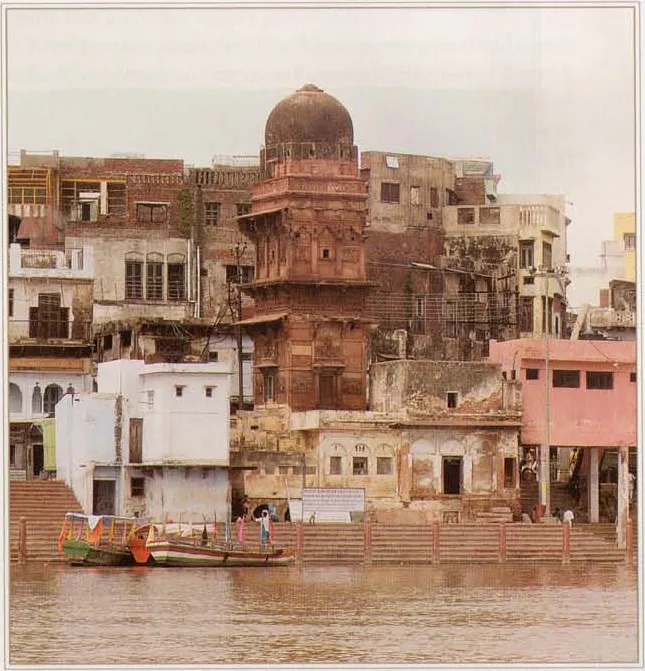
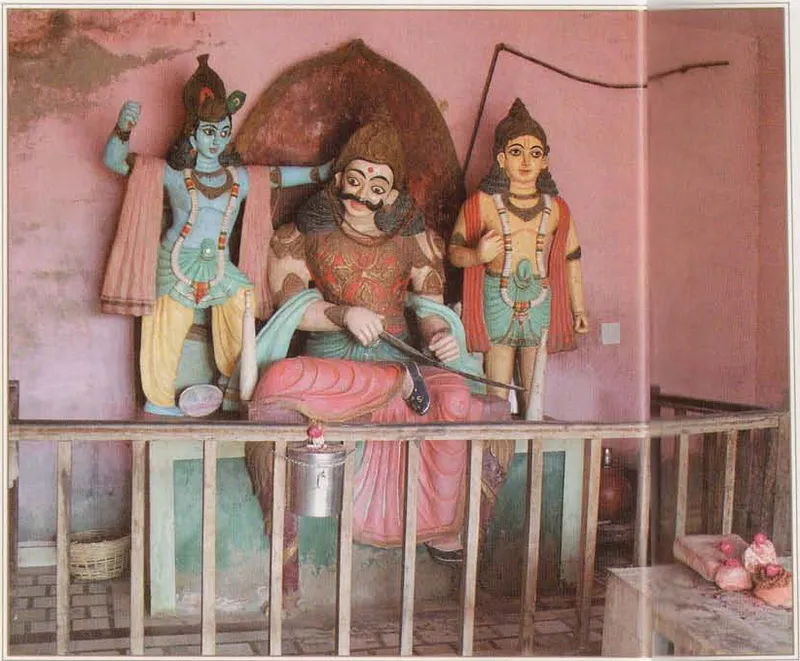
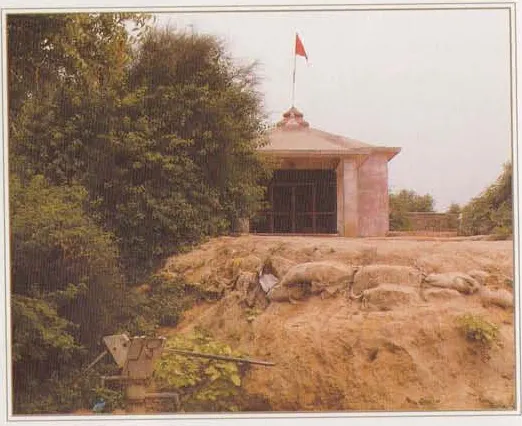
History
According to the undated parikramā notes Mahāvana, Mathurā had become the southern capital of the Kushan empire by the first century and was a centre of Buddhism under kings such as Kanishka and Huvishka. Growse (1883) reports Buddhist remains, and inscriptions naming Huvishka and King Vasudeva, found in the mounds of the city. The historians describe the city's rank in the empire in other words:[176 +4]
Accounts differ What kind of capital Mathurā was under the Kushans.
- the undated parikramā notes MahāvanaMathurā became the southern capital of the Kushan empire by the first century.
- A. W. Entwistle (1987), a historianEntwistle says that the Kushanas made Mathurā the capital of the eastern part of their empire, a major centre of their power alongside Taxila.
- Mītal (1966), part 2 p. 94Mathurā was the administrative centre of the Madhyadeśa (central) part of the Kushana empire.
According to Growse (1883), the first record of Mathurā written at the time is its sack by Sultan Mahmūd of Ghazni in 1017. The Sultan's secretary did not name the city, and later writers identified it; the historians A. W. Entwistle (1987) and Prabhudayāl Mītal (1966) give the same year.[131 +4]
Śrīla Prabhupāda writes that the emperor Aurangzeb attacked the Keśavajī temple at the birthplace and built a big mosque there, and that in his own time a very large temple was being built with the help of many wealthy Marwari merchants. Growse (1883) dates the mosque to 1669.[185 +1] Read more: The temples at Śrī Kṛṣṇa's birthplace in Mathurā →
Under Muslim rule the city was given a new name in official papers; the books report the name differently.
Accounts differ The name Muslim rulers tried to give Mathurā.
- Śrī Vraja-maṇḍala Parikramā (2007)Mathurā was changed to Mamīnābād (and Vṛndāvana to Fakīrābād).
- Growse, Mathurá (1883; low priority)Islampur or Islamabad for Mathurā (after Aurangzeb's destruction of the Keśava Deva temple); Muminabad for Brinda-ban.
- Muttra gazetteer (1911; low priority)The official name of Muttra was changed to Islamabad and that of Brindaban to Muminabad.
- Entwistle (1987), p. 181 and note 248Under Aurangzeb the names of Mathurā and Vṛndāvana were changed to Islamabad and Muminabad, used in practice only in official documents; coins of Shah Alam II (late eighteenth century) bear 'Muminabad-Bindraban' and 'Islamabad-Mathura'.
Where the sources differ
Who founded Mathurā, and how it got its name.
Who founded Mathurā, and how it got its name.
Accounts differ Whether Śatrughna founded Mathurā or re-established an older city.
- Śrīmad-Bhāgavatam 9.11.14; Viṣṇu Purāṇa 1.12.4; Harivaṁśa 44.53He made / created the city named Mathurā in Madhuvana.
- Śrī Vraja-maṇḍala Parikramā (2007)Madhu had established a kingdom in Madhuvana; after killing Lavaṇa, Śatrughna 're-established the deserted Madhupurī'.
- Vraja-bhakti-vilāsa of Śrīla Nārāyaṇa Bhaṭṭa, quoting 'the Skanda'The demon Madhu ruled from his city Madhupurī at the end of Satya-yuga; Viṣṇu killed him; the gods named the city Mathurā and set up its eighty-four tīrthas (Śatrughna is not mentioned).
- Skanda 'Mathurā-khaṇḍa' as quoted by Śrīla Rūpa Gosvāmī (Mathurā-māhātmya v.194)The demon Madhu was killed by Hari in Madhuvana, where the city of Mathurā is.
Accounts differ How Madhuvana and the city of Mathurā are related.
- Śrīmad-Bhāgavatam 9.11.14; Viṣṇu Purāṇa 1.12.3-4; Harivaṁśa 44.53; Brahmāṇḍa 2.63.186Śatrughna built Mathurā in (the place of) Madhuvana on the Yamunā.
- Śrī Vraja-maṇḍala Parikramā (2007)Present-day Mathurā 'lies within Madhuvana'.
- Śrī Vraja-maṇḍala Parikramā (2007)Madhuvana lies south-west of Mathurā, about two and a half miles from Bhūteśvara Mahādeva; its present name is Maholī-grāma.
- Śrīla Prabhupāda, ŚB 4.8.42 purportMadhuvana still exists in the Vṛndāvana area, in the district of Mathurā, as one of the twelve forests.
Accounts differ How large Mathurā / the Mathurā-maṇḍala is.
- Varāha Purāṇa 163.15The Māthura-maṇḍala is twenty yojanas.
- Vāyu Purāṇa as quoted by Śrīla Jīva Gosvāmī (Kṛṣṇa-sandarbha 106)Mathurā lies forty yojanas from there, which Jīva explains as from the Puṣkara tīrtha named before: a distance, not the size of Mathurā.
- Śrī Vraja-maṇḍala Parikramā (2007), rendering the same Vāyu verseMathurā-maṇḍala is within the eighty-four kosas of Vraja-maṇḍala.
- Śrīla Prabhupāda, The Nectar of Devotion ch. 13'the eighty-four-square-mile district of Mathurā'.
The wording of these accounts is our summary of the sources, not a published translation.
Accounts differ How Mathurā ranks against Dvārakā.
- CC Madhya 19.102 and Śrīla Prabhupāda's purportMadhupurī is the best abode; Mathurā is considered better than Dvārakā.
- Śrī Vraja-maṇḍala Parikramā (2007)Mathurā is more praiseworthy than Dvārakā, ornamented by the queens.
- Śrīla Rūpa Gosvāmī, BRS 2.1.223 (NOD ch. 23)Kṛṣṇa's qualities are shown 'very perfect' in Dvārakā and 'perfect' in Mathurā (a ranking of His manifestation, not of the places as such).
- Verses found in Śrī Dhyānacandra Gosvāmī's Paddhati (not in the printed Padma Purāṇa)Kṛṣṇa is fullest (sixteen kalās) in Vṛndāvana, fuller (fifteen) in Mathurā and full (fourteen) in Dvārakā: Mathurā above Dvārakā. One Sanskrit copy of the Padma Purāṇa's Vṛndāvana-māhātmya adds these verses after its last chapter.
Which Purāṇa two of the verses on Mathurā's glory come from.
Accounts differ Source of the verses 'na dṛṣṭā mathurā yena didṛkṣā yasya jāyate…' and 'mayi (harau) yeṣāṁ sthirā bhaktiḥ… mathurāyāṁ bhaved gatiḥ (ratiḥ)'.
- Śrī Vraja-maṇḍala Parikramā (2007)Padma Purāṇa (readings 'harau', 'tat-kṛpā', 'ratiḥ').
- Bhakti-ratnākara, Fifth Wave, printed p. 154'na dṛṣṭā mathurā…' is from the Padma Purāṇa, Pātāla-khaṇḍa.
- Skanda Purāṇa text, Vaiṣṇava-khaṇḍa, Mārgaśīrṣa-māhātmya 17Both verses are in this chapter (17.29 and 17.42, readings 'mayi', 'mat-kṛpā', 'gatiḥ'), spoken by the Lord to Brahmā.
- Padma Purāṇa textNeither verse was found.
Accounts differ Where Dhruva performed his austerity, and which 'Dhruva-ṭīlā' is meant.
- Śrīmad-Bhāgavatam 4.8.42In Madhuvana on the bank of the Yamunā (no hill named).
- Varāha Purāṇa 152.59 (quoted by Śrīla Rūpa Gosvāmī and the Bhakti-ratnākara)At Dhruva-tīrtha in Mathurā.
- Śrīla Prabhupāda, ŚB 4.8.42 purportAt Dhruva-ghāṭa, 'in an elevated spot'.
- Śrī Vraja-maṇḍala Parikramā (2007)Dhruva only met Nārada and bathed at Dhruva-tīrtha; he performed the austerity at the Dhruva-ṭīlā east of Maholī in Madhuvana.
Accounts differ Was the place of Kṛṣṇa's birth Kaṁsa's prison or Vasudeva and Devakī's house?
- Śrīmad-Bhāgavatam 10.1.66, 10.3.51 (Sanskrit)Kaṁsa kept them shackled 'in the house' (nigaḍair gṛhe); Vasudeva went back 'home' (gṛhān).
- Śrīla Prabhupāda's translation of ŚB 10.3.51 and Kṛṣṇa book ch. 3'his residence, the prison house of Kaṁsa'; Vasudeva 'shackled within the walls of Kaṁsa's prison'.
- Vṛndāvana-Dhāma Ki Jaya! (c. 1986)'the site where Lord Kṛṣṇa appeared, Kaṁsa's prison'; a replica of Kaṁsa's prison stands next to the temple.
- Bhakti-ratnākara, 1912 print, p. 168'This is Vasudeva and Devakī's house (ghara); here Kṛṣṇa was born.'
How long Kṛṣṇa lived in Vraja, and how old He was when He came to Mathurā, is told differently; the accounts are set side by side on the page of Vṛndāvana.[135 +4]
Accounts differ On which day Kaṁsa was killed.
- Śrīmad-Bhāgavatam 10.36.26Kaṁsa orders the bow sacrifice for the Caturdaśī, with offerings to Śiva; the day of the killing itself is not stated.
- Śrīla Jīva Gosvāmī, Laghu-vaiṣṇava-toṣaṇī on ŚB 10.36.16 and 10.45.3The killing of Kaṁsa is well known to have been on the Caturdaśī of Śiva-rātri; Keśī was killed on the dvādaśī of gauṇa Phālguna and Kaṁsa on the Caturdaśī after it.
- Śrīla Viśvanātha Cakravartī, Sārārtha-darśinī on ŚB 10.38.39-40 and 10.45.3Kaṁsa was killed on the Caturdaśī, at the worship of Bhūtarāja (Śiva); Kṛṣṇa reached Mathurā on the dark Trayodaśī of Caitra and killed Kaṁsa on the Caturdaśī.
- Śrī Vraja-maṇḍala Parikramā (2007)Kaṁsa was killed on Śiva-rātri (Caturdaśī), 'according to Śrīmad-Bhāgavatam and Śrīla Viśvanātha Cakravartī Ṭhākura'.
Accounts differ The size of Jarāsandha's army in his first attack on Mathurā.
- Śrīmad-Bhāgavatam 10.50.4Twenty-three akṣauhiṇīs (akṣauhiṇībhir viṁśatyā tisṛbhiś cāpi).
- Śrīla Prabhupāda, Kṛṣṇa book ch. 50'thirteen such military phalanxes'.
Where Śrī Subuddhi Rāya lived and chanted after Śrī Caitanya Mahāprabhu sent him to Vraja: the Caitanya-caritāmṛta has him live in Mathurā, selling dry wood and feeding the Bengali Vaiṣṇavas, and the Bhakti-ratnākara names his place near the Keśavadeva temple, while guidebooks set his last years at the Janma-sthāna or in Vṛndāvana. The accounts are set side by side on the page Śrī Subuddhi Rāya's samādhi.[92 +2]
Accounts differ When, why and how often Gopāla (Śrī Nāthajī) stayed in Mathurā
- Śrī Caitanya-caritāmṛta, Madhya 18.46-48, 18.54Once, in Śrīla Rūpa Gosvāmī's old age: because of fear of the Muslims Gopāla came to Mathurā and stayed one month in Viṭhṭhaleśvara's house; Rūpa and his associates saw Him there; then He returned to His own place.
- Śrīla Prabhupāda, CC Madhya 18.47 purport and the chapter 18 summaryGopāla went to Mathurā and stayed one month at the house of Viṭhṭhaleśvara 'just to give an audience to Śrīla Rūpa Gosvāmī'; Rūpa was very old then; Viṭhṭhaleśvara was born in 1515.
- Śrī Vraja-maṇḍala Parikramā (2007)Whenever the Gosvāmīs had a fervent desire to see Him, Śrī Nāthajī came down on some pretext, sometimes to Gāṅṭholī-grāma and sometimes to Sata-ghaḍā in Mathurā (no time or number of visits).
- Puṣṭimārga sources (as reported by A. W. Entwistle, 1987)While Śrī Viṭṭhalanātha was visiting Gujarat, his eldest son took Śrī Nāthajī to Satghara for the Holī celebrations; these sources date the visit 1566 or 1576.
Accounts differ When the Satī-burj was built, and whose death the satī it commemorates followed.
- Growse (1883), printed p. 148, repeated by the 1911 gazetteer, printed p. 301Erected in 1570 by Rāja Bhagavān Dās; by the best authenticated tradition the wife commemorated was the queen of Rāja Bihār Mal of Jaipur and Bhagavān Dās's mother.
- Mītal (1966), first part, p. 151 (historian)When the place was a cremation ground, the queen of Rājā Vihārīmal of Āmer became satī here; in her memory her son Rājā Bhagavānadāsa had the tower built in Saṁvat 1627.
- Entwistle (1987), pp. 159 and 313 (historian)Built by Rājā Bhagwandās of Jaipur in memory of his mother's immolation on the funeral pyre of his father, Bihār Mal, who died in 1574 (Bihār Mal ruled 1548-74, Bhagwandās 1574-89); no year is given for the tower.
Accounts differ Which ghāṭa is called Vasudeva-ghāṭa.
- F. S. Growse, Mathurá (1883), a historianGrowse calls Soma-tīrtha-ghāṭa by its more common names, Vasudeva-ghāṭa or Shaikh-ghāṭa.
- Śrī Vraja-maṇḍala Parikramā (2007)Soma-tīrtha is Gaū-ghāṭa; Vasudeva-ghāṭa is a separate ghāṭa near Svāmī-ghāṭa.
More on this place
How Kṛṣṇa killed Kaṁsa in the wrestling arena · Kṛṣṇa's years in Mathurā · The twenty-four ghāṭas of Mathurā · The temples at Śrī Kṛṣṇa's birthplace in Mathurā
- →How Kṛṣṇa killed Kaṁsa in the wrestling arenaarticle›
- →Kṛṣṇa's years in Mathurāarticle›
- →The twenty-four ghāṭas of Mathurāarticle›
- →The temples at Śrī Kṛṣṇa's birthplace in Mathurāarticle›
- →The Varāha Deity of Mathurā and its journey from Kapila to Śatrughnaarticle›
- →Madhuvana, Dhruva and the founding of Mathurāarticle›
- →The Gopāla Deity of Govardhanaarticle›
References
272 references
- Śrīmad-Bhāgavatam 3.2.25, GRETIL
- Śrīmad-Bhāgavatam 10.2.19, GRETIL
- Śrīla Prabhupāda, Śrīmad-Bhāgavatam, 3.2.25, purport · vedabase.io
- Śrīmad-Bhāgavatam 10.44.37, GRETIL
- Śrīmad-Bhāgavatam 10.45.12, GRETIL
- Śrīla Prabhupāda, Kṛṣṇa, the Supreme Personality of Godhead, Chapter 44, 'The Killing of Kaṁsa' · vedabase.io
- Śrīla Prabhupāda, Kṛṣṇa, the Supreme Personality of Godhead, Chapter 45, 'Kṛṣṇa Recovers the Son of His Teacher' · vedabase.io
- Śrīmad-Bhāgavatam 10.50.41, GRETIL
- Śrīmad-Bhāgavatam 10.50.57, GRETIL
- Śrīmad-Bhāgavatam 10.50.4, GRETIL
- Śrīla Prabhupāda, Kṛṣṇa, the Supreme Personality of Godhead, Chapter 50, 'Kṛṣṇa Erects the Dvārakā Fort' · vedabase.io
- Śrīmad-Bhāgavatam 9.11.14, GRETIL
- Viṣṇu Purāṇa, 1.12.2-4, GRETIL
- Harivaṁśa, 44.53, GRETIL
- Brahmāṇḍa Purāṇa, 2.63.186, GRETIL
- Varāha Purāṇa, adhyāya 163 (Kapila-varāha-māhātmya), verses 52-54, Sanskrit Wikisource
- Śrī Vraja-maṇḍala Parikramā (2007), PDF p. 30
- Śrīmad-Bhāgavatam 10.1.27, GRETIL
- Śrīmad-Bhāgavatam 10.1.28, GRETIL
- Śrīla Prabhupāda, Śrīmad-Bhāgavatam, 10.1.28, purport · vedabase.io
Show all 272 references
- Śrīla Prabhupāda, Kṛṣṇa, the Supreme Personality of Godhead, Chapter 1, 'Advent of Lord Kṛṣṇa' · vedabase.io
- Śrīla Rūpa Gosvāmī, Upadeśāmṛta 9 (The Nectar of Instruction, text 9), online edition · vedabase.io
- Śrīla Prabhupāda, The Nectar of Instruction, verse 9, purport · vedabase.io
- Śrīla Prabhupāda, Śrī Caitanya-caritāmṛta, Madhya-līlā 19.102, purport · vedabase.io
- Śrīla Kṛṣṇadāsa Kavirāja Gosvāmī, Śrī Caitanya-caritāmṛta, Madhya-līlā 17.155, online edition · vedabase.io
- Śrīla Kṛṣṇadāsa Kavirāja Gosvāmī, Śrī Caitanya-caritāmṛta, Madhya-līlā 17.156, online edition · vedabase.io
- Śrīla Kṛṣṇadāsa Kavirāja Gosvāmī, Śrī Caitanya-caritāmṛta, Madhya-līlā 17.167, online edition · vedabase.io
- Śrīla Kṛṣṇadāsa Kavirāja Gosvāmī, Śrī Caitanya-caritāmṛta, Madhya-līlā 17.188, online edition · vedabase.io
- Śrīla Kṛṣṇadāsa Kavirāja Gosvāmī, Śrī Caitanya-caritāmṛta, Madhya-līlā 17.190, online edition · vedabase.io
- Śrīla Kṛṣṇadāsa Kavirāja Gosvāmī, Śrī Caitanya-caritāmṛta, Madhya-līlā 17.227, online edition · vedabase.io
- Bṛhad-vaiṣṇava-toṣaṇī of Śrīla Sanātana Gosvāmī on Śrīmad-Bhāgavatam 10.1.28: commentary v.10.1.28, sanātana-gosvāmī (bṛhad-vaiṣṇava-toṣaṇī), Bhagavata Vidya Pith edition, ed. Bhagavata Rishi and Krishna Shankar Shastri, 1996
- Sārārtha-darśinī of Śrīla Viśvanātha Cakravartī Ṭhākura on Śrīmad-Bhāgavatam 10.1.28: commentary v.10.1.28, viśvanātha-cakravartī (sārārtha-darśiṇī), Bhagavata Vidya Pith edition, ed. Bhagavata Rishi and Krishna Shankar Shastri, 1996
- Padma Purāṇa, Pātāla-khaṇḍa 73.26-27, Sanskrit Wikisource
- Śrīla Jīva Gosvāmī, Kṛṣṇa-sandarbha, anuccheda 106, GRETIL
- Śrīla Jīva Gosvāmī, Kṛṣṇa-sandarbha, anuccheda 106, GRETIL
- Śrīla Jīva Gosvāmī, Kṛṣṇa-sandarbha, anuccheda 106, GRETIL
- Śrīla Prabhupāda, Janmāṣṭamī, Lord Śrī Kṛṣṇa's Appearance Day lecture, Montreal, 16 August 1968 · vedabase.io
- Śrīla Jīva Gosvāmī, Kṛṣṇa-sandarbha, anuccheda 106, GRETIL
- Śrī Caitanya-caritāmṛta, Madhya-līlā 18.50, online edition · vedabase.io
- Śrīmad-Bhāgavatam 7.14.31 and 7.14.33, GRETIL
- Śrīmad-Bhāgavatam 12.12.61, GRETIL
- Śrīla Kṛṣṇadāsa Kavirāja Gosvāmī, Śrī Caitanya-caritāmṛta, Madhya-līlā 19.102, online edition · vedabase.io
- Śrīla Rūpa Gosvāmī, Bhakti-rasāmṛta-sindhu, 2.1.223, GRETIL
- Verses found in Śrī Dhyānacandra Gosvāmī's Paddhati, the three verses on Kṛṣṇa's kalās
- Śrīla Rūpa Gosvāmī, Mathurā-māhātmya, v.1-2 (the compiler's opening verses, without a source label)
- Śrīla Rūpa Gosvāmī, Mathurā-māhātmya, v.444-446 (the chief Deities of Māthura; closing verses)
- Śrīla Rūpa Gosvāmī, Stava-mālā, Śrī Mathurā-stava v.1-2, after the edition of Bhakti Saranga Goswami and Purushottam Das, Vrindavan, 1959
- Śrīla Rūpa Gosvāmī, Stava-mālā, Śrī Mathurā-stava v.4, after the edition of Bhakti Saranga Goswami and Purushottam Das, Vrindavan, 1959
- Varāha Purāṇa, adhyāya 152 (Mathurā-tīrtha-praśaṁsā), verse 8, Sanskrit Wikisource
- Skanda Purāṇa, Mārgaśīrṣa-māhātmya, adhyāya 17, verses 20-22, Sanskrit Wikisource
- Śrī Vraja-maṇḍala Parikramā (2007), PDF p. 57
- Varāha Purāṇa, adhyāya 152, verses 10-12, Sanskrit Wikisource
- Skanda Purāṇa, Vaiṣṇava-khaṇḍa, Mārgaśīrṣa-māhātmya, adhyāya 17 (Mathurā-māhātmya-varṇana), verses 1-3, Sanskrit Wikisource
- Varāha Purāṇa, adhyāya 152, verses 13-15, Sanskrit Wikisource
- Varāha Purāṇa, adhyāya 152, verses 18-19, Sanskrit Wikisource
- Śrīla Rūpa Gosvāmī, Mathurā-māhātmya, v.159-161 ('ādi-vārāhe', for Jyeṣṭha and for Cāturmāsya)
- Śrīla Rūpa Gosvāmī, Mathurā-māhātmya, v.38-39 ('skānde mathurā-khaṇḍe nārada-vākyam')
- Skanda Purāṇa, Mārgaśīrṣa-māhātmya, adhyāya 17, verses 29-31, Sanskrit Wikisource
- Śrīla Narahari Cakravartī, Bhakti-ratnākara, Fifth Wave (pañcama taraṅga), printed p. 154 (1912 ed.), 2nd ed., 1912
- Śrīla Rūpa Gosvāmī, Mathurā-māhātmya, v.50 ('pātāla-khaṇḍe ca', within Rūpa Gosvāmī's Padma quotations from v.44)
- Skanda Purāṇa, Mārgaśīrṣa-māhātmya, adhyāya 17, verses 42-44, Sanskrit Wikisource
- Śrīla Rūpa Gosvāmī, Mathurā-māhātmya, v.80-82
- Śrīla Narahari Cakravartī, Bhakti-ratnākara, Fifth Wave, printed p. 156 (1912 ed.), 2nd ed., 1912
- Śrīla Rūpa Gosvāmī, Mathurā-māhātmya, v.18-19
- Śrīla Narahari Cakravartī, Bhakti-ratnākara, Fifth Wave, printed pp. 167-168 (1912 ed.), 2nd ed., 1912
- Garga-saṁhitā, Mathurā-khaṇḍa (5) 25.1-3, Sanskrit Wikisource
- Garga-saṁhitā, Mathurā-khaṇḍa (5) 25.31-33, Sanskrit Wikisource
- Garga-saṁhitā, Mathurā-khaṇḍa (5) 25.25-27, Sanskrit Wikisource
- Śrī Vraja-maṇḍala Parikramā (2007), PDF p. 29
- Padma Purāṇa, Pātāla-khaṇḍa 73.43-44, Sanskrit Wikisource
- Varāha Purāṇa, adhyāya 163 (Kapila-varāha-māhātmya), verses 15-17, Sanskrit Wikisource
- Varāha Purāṇa, adhyāya 163, verses 18-20, Sanskrit Wikisource
- Śrīla Kṛṣṇadāsa Kavirāja Gosvāmī, Śrī Caitanya-caritāmṛta, CC Madhya-līlā 18.18, online edition · vedabase.io
- Śrīla Narahari Cakravartī, Bhakti-ratnākara, Fifth Wave (pañcama taraṅga), printed p. 162 (1912 ed.), 2nd ed., 1912
- Śrīla Rūpa Gosvāmī, Mathurā-māhātmya, v.32-34 (Varāha to the Earth, under the heading 'excelling all tīrthas', 'ādi-vārāhe' at v.28)
- Śrīla Prabhupāda, Śrīmad-Bhāgavatam, 3.1.17, purport · vedabase.io
- Śrīla Kṛṣṇadāsa Kavirāja Gosvāmī, Śrī Caitanya-caritāmṛta, Madhya-līlā 20.215, online edition · vedabase.io
- Śrīla Prabhupāda, Śrī Caitanya-caritāmṛta, Madhya-līlā 20.217, purport · vedabase.io
- Śrīla Jīva Gosvāmī, Kṛṣṇa-sandarbha, anuccheda 29, GRETIL
- Śrīla Jīva Gosvāmī, Kṛṣṇa-sandarbha, anuccheda 153, on ŚB 6.8.20, GRETIL
- Varāha Purāṇa, adhyāya 158 (Wikisource numbering, 'Mathurā-tīrtha-prādurbhāva'), vv. 6-8, Sanskrit Wikisource
- Varāha Purāṇa, adhyāya 158, vv. 9-10, Sanskrit Wikisource
- Varāha Purāṇa, adhyāya 158, v. 31, Sanskrit Wikisource
- Varāha Purāṇa, adhyāya 158, v. 34, Sanskrit Wikisource
- Śrīla Rūpa Gosvāmī, Mathurā-māhātmya, v.212-214
- Śrīla Narahari Cakravartī, Bhakti-ratnākara, Fifth Wave (pañcama taraṅga), printed p. 168 (1912 ed.), 2nd ed., 1912
- Varāha Purāṇa, adhyāya 163, vv. 67-69, Sanskrit Wikisource
- Varāha Purāṇa, adhyāya 179, v. 36, Sanskrit Wikisource
- Śrīla Rūpa Gosvāmī, Mathurā-māhātmya, v.153-155
- Śrīla Rūpa Gosvāmī, Mathurā-māhātmya, v. 208, quoting the Padma Purāṇa
- Śrīla Rūpa Gosvāmī, Mathurā-māhātmya v.444
- Śrīla Narahari Cakravartī, Bhakti-ratnākara, Fifth Wave (pañcama taraṅga), 1912 ed. p. 150, 2nd ed., 1912
- Śrī Vraja-maṇḍala Parikramā (2007), PDF p. 50
- Śrī Vraja-maṇḍala Parikramā (2007), PDF p. 33
- Śrīla Kṛṣṇadāsa Kavirāja Gosvāmī, Śrī Caitanya-caritāmṛta, Madhya-līlā 22.128, online edition · vedabase.io
- Śrīla Rūpa Gosvāmī, Bhakti-rasāmṛta-sindhu, 1.2.235-237, GRETIL
- Śrīla Prabhupāda, The Nectar of Devotion, Chapter 6 · vedabase.io
- Śrīla Prabhupāda, The Nectar of Devotion, Chapter 13 · vedabase.io
- Śrīla Prabhupāda, Śrī Caitanya-caritāmṛta, Madhya-līlā 22.129, purport · vedabase.io
- Śrīla Rūpa Gosvāmī, Bhakti-rasāmṛta-sindhu, 1.2.211-213, GRETIL
- Śrīla Rūpa Gosvāmī, Mathurā-māhātmya, v.129-131
- Śrīla Narahari Cakravartī, Bhakti-ratnākara, Fifth Wave, printed p. 160 (1912 ed.), 2nd ed., 1912
- Śrī Vraja-maṇḍala Parikramā (2007), PDF p. 28
- Śrīla Rūpa Gosvāmī, Mathurā-māhātmya, v.133-135
- Śrīla Rūpa Gosvāmī, Bhakti-rasāmṛta-sindhu, 1.2.222-223, GRETIL
- Śrīla Prabhupāda, The Nectar of Devotion, Chapter 12 (Ūrja-vrata) · vedabase.io
- Śrīmad-Bhāgavatam 4.8.42, GRETIL
- Śrīmad-Bhāgavatam 4.8.43, GRETIL
- Śrīmad-Bhāgavatam 4.8.71, GRETIL
- Viṣṇu Purāṇa, 1.12.4-6, GRETIL
- Garga-saṁhitā, Mathurā-khaṇḍa (5) 25.18, Sanskrit Wikisource
- Varāha Purāṇa, adhyāya 152, vv. 59-60, Sanskrit Wikisource
- Śrīla Prabhupāda, Śrīmad-Bhāgavatam, 4.8.42, purport · vedabase.io
- A. W. Entwistle, ch. 8 ('The pilgrimage itinerary'), §1.10a 'Dhruv and Narad Tilas', printed p. 316, Egbert Forsten, Groningen, 1987
- Varāha Purāṇa, adhyāya 163, verses 23-25, Sanskrit Wikisource
- Varāha Purāṇa, adhyāya 163, verses 26-28, Sanskrit Wikisource
- Varāha Purāṇa, adhyāya 163, verses 32-33, Sanskrit Wikisource
- Varāha Purāṇa, adhyāya 163, verses 44-45, Sanskrit Wikisource
- Varāha Purāṇa, adhyāya 163, verses 48-50, Sanskrit Wikisource
- Varāha Purāṇa, adhyāya 163, verses 51-52, Sanskrit Wikisource
- Garga-saṁhitā, Mathurā-khaṇḍa (5) 25.4-6, Sanskrit Wikisource
- Garga-saṁhitā, Mathurā-khaṇḍa (5) 25.7-8, Sanskrit Wikisource
- Śrīla Nārāyaṇa Bhaṭṭa, Vraja-bhakti-vilāsa, chapter 3 (tṛtīyo 'dhyāyaḥ), beginning; printed p. 54, 1st ed., publ. Bābā Kṛṣṇadāsa, Kusuma-sarovara, Saṁvat 2008
- Śrīmad-Bhāgavatam 10.1.69, GRETIL
- Śrīmad-Bhāgavatam 10.3.8, GRETIL
- Śrīla Prabhupāda, Kṛṣṇa, the Supreme Personality of Godhead, Chapter 3, 'The Birth of Lord Kṛṣṇa' · vedabase.io
- Śrīmad-Bhāgavatam 10.1.65-66, GRETIL
- Śrīmad-Bhāgavatam 10.3.48-49, GRETIL
- Śrīmad-Bhāgavatam 10.3.51-52, GRETIL
- Śrīla Prabhupāda, Kṛṣṇa, the Supreme Personality of Godhead, Chapter 1, 'The Advent of Lord Kṛṣṇa' · vedabase.io
- Vṛndāvana-Dhāma Ki Jaya! (c. 1986), by Dhruva Mahārāja dāsa, PDF p. 26
- Mathurá (1883), F. S. Growse, B.C.S., M.A. Oxon., C.I.E. (as the title page gives him, p. 131
- the undated parikramā notes Mathurā, ¶16
- the undated parikramā notes Mathurā, ¶15
- Śrīmad-Bhāgavatam 3.2.26, GRETIL
- Śrīmad-Bhāgavatam 10.41.19-20, GRETIL
- Śrīla Prabhupāda, Kṛṣṇa, the Supreme Personality of Godhead, Chapter 41, 'Kṛṣṇa Enters Mathurā' · vedabase.io
- Brahma-vaivarta Purāṇa, Śrī-kṛṣṇa-janma-khaṇḍa (4) 72.1-3, Sanskrit Wikisource
- Śrīmad-Bhāgavatam 10.44.34, GRETIL
- Śrīmad-Bhāgavatam 10.44.38, GRETIL
- Śrīla Jīva Gosvāmī, Laghu-vaiṣṇava-toṣaṇī on Śrīmad-Bhāgavatam 10.45.1, Bhagavata Vidya Pith edition, ed. Bhagavata Rishi and Krishna Shankar Shastri, 1996
- Śrīmad-Bhāgavatam: commentary ŚB 10.44.38, commentary: Sanātana Gosvāmī (Bṛhad-vaiṣṇava-toṣaṇī), Bhagavata Vidya Pith edition, ed. Bhagavata Rishi and Krishna Shankar Shastri, 1996
- Śrīla Narahari Cakravartī, Bhakti-ratnākara, Fifth Wave (pañcama taraṅga), printed p. 183 (1912 ed.), with the editor's footnote, 2nd ed., 1912
- Mathurá (1883), F. S. Growse, B.C.S., M.A. Oxon., C.I.E. (as the title page gives him, p. 125
- Mathurá (1883), F. S. Growse, B.C.S., M.A. Oxon., C.I.E. (as the title page gives him, p. 122
- Vṛndāvana-Dhāma Ki Jaya! (c. 1986), by Dhruva Mahārāja dāsa, PDF p. 22
- Bhaviṣya Purāṇa, Uttara-parvan 55.12-14 (Janmāṣṭamī-vrata)
- Bhaviṣya Purāṇa, Uttara-parvan 55.15-16
- Śrīmad-Bhāgavatam 10.50.43-44, GRETIL
- Śrīla Prabhupāda, The Nectar of Devotion, Chapter 21 · vedabase.io
- Śrīla Rūpa Gosvāmī, Laghu-bhāgavatāmṛta, 1.5.463, GRETIL
- Śrīla Kṛṣṇadāsa Kavirāja Gosvāmī, Śrī Caitanya-caritāmṛta, Antya-līlā 1.67, online edition
- Śrīmad-Bhāgavatam 1.15.39, GRETIL
- Bhāgavata-māhātmya, Skanda version, adhyāya 1, verses 3-5, Sanskrit Wikisource
- Śrīla Prabhupāda, Śrīmad-Bhāgavatam, 1.15.39, purport · vedabase.io
- The Colour Guide to Rādhā-kuṇḍa (1999), Rājaśekhara dāsa Brahmacārī, PDF p. 34
- Śrīla Kṛṣṇadāsa Kavirāja Gosvāmī, Śrī Caitanya-caritāmṛta, Ādi-līlā 7.44, online edition · vedabase.io
- Śrīla Kṛṣṇadāsa Kavirāja Gosvāmī, Śrī Caitanya-caritāmṛta, Madhya-līlā 18.69, online edition · vedabase.io
- Śrīla Kṛṣṇadāsa Kavirāja Gosvāmī, Śrī Caitanya-caritāmṛta, Madhya-līlā 17.157, online edition · vedabase.io
- Śrīla Kṛṣṇadāsa Kavirāja Gosvāmī, Śrī Caitanya-caritāmṛta, Madhya-līlā 17.160, online edition · vedabase.io
- Śrīla Narahari Cakravartī, Bhakti-ratnākara, Fifth Wave, printed p. 168 (1912 ed.), 2nd ed., 1912
- Śrīla Kṛṣṇadāsa Kavirāja Gosvāmī, Śrī Caitanya-caritāmṛta, Madhya-līlā 18.70, online edition · vedabase.io
- Śrīla Narahari Cakravartī, Bhakti-ratnākara, Fifth Wave (pañcama taraṅga), printed p. 165 (1912 ed.), 2nd ed., 1912
- Śrīla Rūpa Gosvāmī, Mathurā-māhātmya, v.260-262 (end of the southern tīrthas and start of the northern ones)
- Śrīla Rūpa Gosvāmī, Mathurā-māhātmya, v.274 (Rūpa Gosvāmī's note on the Mathurā-khaṇḍa's count)
- Śrīla Prabhupāda, Śrī Caitanya-caritāmṛta, Madhya-līlā 17.190, purport · vedabase.io
- Varāha Purāṇa, adhyāya 163 (Wikisource numbering, 'Kapila-varāha-māhātmya'), vv. 1-3, Sanskrit Wikisource
- Varāha Purāṇa, adhyāya 163, vv. 10-12, Sanskrit Wikisource
- Śrīla Rūpa Gosvāmī, Mathurā-māhātmya, v. 277, quoting the Ādi-varāha
- Śrīla Rūpa Gosvāmī, Mathurā-māhātmya v.442-443, 'mathurā-mahā-tīrthāni'
- Śrīla Narahari Cakravartī, Bhakti-ratnākara, Fifth Wave (pañcama taraṅga), printed p. 179 (1912 ed.), 2nd ed., 1912
- Śrīla Nārāyaṇa Bhaṭṭa, Vraja-bhakti-vilāsa, chapter 2, list of the tīrtha-deities of Mathurā's northern bank, printed p. 44, 1st ed., publ. Bābā Kṛṣṇadāsa, Kusuma-sarovara, Saṁvat 2008
- Śrīla Rūpa Gosvāmī, Mathurā-māhātmya, v.194-196
- The Colour Guide to Rādhā-kuṇḍa (1999), Rājaśekhara dāsa Brahmacārī, PDF p. 35
- the undated parikramā notes Govardhana, ¶53
- the undated parikramā notes Mahāvana, ¶22
- Mathurá (1883), F. S. Growse, B.C.S., M.A. Oxon., C.I.E. (as the title page gives him
- A. W. Entwistle, ch. 4 §2 'Dynasties of ancient Mathura' (the Kushana period), printed p. 112, Egbert Forsten, Groningen, 1987
- A. W. Entwistle, ch. 4 §10 'Mounds outside the modern circumambulation of Mathura' (the Jamalpur mound), printed p. 125, Egbert Forsten, Groningen, 1987
- Prabhudayāl Mītal, part 2 ('ब्रज का इतिहास'), Kushana period, printed p. 94
- Mathurá (1883), F. S. Growse, B.C.S., M.A. Oxon., C.I.E. (as the title page gives him, p. 33
- A. W. Entwistle, ch. 4 §8 'The end of Hindu power in Braj', printed p. 122, Egbert Forsten, Groningen, 1987
- Prabhudayāl Mītal, part 2 ('ब्रज का इतिहास'), Rājpūt period, printed p. 126
- Prabhudayāl Mītal, part 2 ('ब्रज का इतिहास'), Rājpūt period: 'the plunder of Mathurā and the battle of Mahāvana', printed p. 126
- Śrīla Prabhupāda, Śrī Caitanya-caritāmṛta, Madhya-līlā 17.156, purport · vedabase.io
- Mathurá (1883), F. S. Growse, B.C.S., M.A. Oxon., C.I.E. (as the title page gives him, p. 179
- Śrīla Vṛndāvana dāsa Ṭhākura, Śrī Caitanya-bhāgavata, Madhya-khaṇḍa, chapter 3 (as the running heads of this edition give it), printed p. 148
- Śrīla Kṛṣṇadāsa Kavirāja Gosvāmī, Śrī Caitanya-caritāmṛta, CC Madhya-līlā 25.186, online edition · vedabase.io
- Śrīla Kṛṣṇadāsa Kavirāja Gosvāmī, Śrī Caitanya-caritāmṛta, Madhya-līlā 25.206, online edition · vedabase.io
- Śrīla Kṛṣṇadāsa Kavirāja Gosvāmī, Śrī Caitanya-caritāmṛta, CC Madhya-līlā 25.187, online edition · vedabase.io
- Śrīla Kṛṣṇadāsa Kavirāja Gosvāmī, Śrī Caitanya-caritāmṛta, CC Madhya-līlā 25.195, online edition · vedabase.io
- Śrīla Kṛṣṇadāsa Kavirāja Gosvāmī, Śrī Caitanya-caritāmṛta, CC Madhya-līlā 25.197, online edition · vedabase.io
- Śrīla Kṛṣṇadāsa Kavirāja Gosvāmī, Śrī Caitanya-caritāmṛta, Madhya-līlā 25.198, online edition · vedabase.io
- Śrīla Kṛṣṇadāsa Kavirāja Gosvāmī, Śrī Caitanya-caritāmṛta, CC Madhya-līlā 25.201, online edition · vedabase.io
- Śrīla Kṛṣṇadāsa Kavirāja Gosvāmī, Śrī Caitanya-caritāmṛta, CC Madhya-līlā 25.204, online edition · vedabase.io
- Śrīla Kṛṣṇadāsa Kavirāja Gosvāmī, Śrī Caitanya-caritāmṛta, Madhya-līlā 25.215, online edition · vedabase.io
- Śrīla Kṛṣṇadāsa Kavirāja Gosvāmī, Śrī Caitanya-caritāmṛta, CC Madhya-līlā 25.211, online edition · vedabase.io
- Śrī Vraja-maṇḍala Parikramā (2007), PDF p. 276
- Śrī Vraja-maṇḍala Parikramā (2007), PDF p. 277
- Śrīla Kṛṣṇadāsa Kavirāja Gosvāmī, Śrī Caitanya-caritāmṛta, Madhya-līlā 18.46, online edition · vedabase.io
- Śrīla Kṛṣṇadāsa Kavirāja Gosvāmī, Śrī Caitanya-caritāmṛta, CC Madhya-līlā 18.47, online edition · vedabase.io
- Śrīla Kṛṣṇadāsa Kavirāja Gosvāmī, Śrī Caitanya-caritāmṛta, Madhya-līlā 18.48, online edition · vedabase.io
- Śrīla Kṛṣṇadāsa Kavirāja Gosvāmī, Śrī Caitanya-caritāmṛta, CC Madhya-līlā 18.54, online edition · vedabase.io
- Śrīla Prabhupāda, Śrī Caitanya-caritāmṛta, Madhya-līlā 18.47, purport · vedabase.io
- Śrīla Prabhupāda, Śrī Caitanya-caritāmṛta, Madhya-līlā chapter 18, chapter summary (introduced on the page as the summary given by Śrīla Bhaktivinoda Ṭhākura in his Amṛta-pravāha-bhāṣya) · vedabase.io
- Śrīla Kṛṣṇadāsa Kavirāja Gosvāmī, Śrī Caitanya-caritāmṛta, Madhya-līlā 18.49, online edition · vedabase.io
- Śrī Vraja-maṇḍala Parikramā (2007), PDF p. 134
- Śrī Vraja-maṇḍala Parikramā (2007), PDF p. 142
- Prabhudayāl Mītal, 'Mugal kāl', section 'Viṭṭhalanāth jī kā sanmān', printed p. 185
- A. W. Entwistle, ch. 4 (Vitthalnath), printed p. 162, with note 139, Egbert Forsten, Groningen, 1987
- A. W. Entwistle, ch. 4 (Vitthalnath), printed p. 161, with notes 133-134, Egbert Forsten, Groningen, 1987
- Mathurá (1883), F. S. Growse, B.C.S., M.A. Oxon., C.I.E. (as the title page gives him, p. 144
- Śrīla Rūpa Gosvāmī's anthology, Padyāvalī, verse 119, GRETIL
- Śrīla Rūpa Gosvāmī's anthology, Padyāvalī, verses 122-123, GRETIL
- Śrīla Rūpa Gosvāmī's anthology, Padyāvalī, verse 124, GRETIL
- Śrīla Rūpa Gosvāmī's anthology, Padyāvalī, verse 121, GRETIL
- Padma Purāṇa, Pātāla-khaṇḍa 69.12-14, Sanskrit Wikisource
- Śrīla Rūpa Gosvāmī, Mathurā-māhātmya, v.121-123
- Śrīla Gopāla Bhaṭṭa Gosvāmī, Hari-bhakti-vilāsa, 1.2-1.4, GRETIL
- Śrīla Narahari Cakravartī, Bhakti-ratnākara, Fifth Wave, printed p. 162 (1912 ed.), 2nd ed., 1912
- Śrīla Rūpa Gosvāmī, Stava-mālā, Baladeva's ṭīkā, end of the Mathurā-stava, after the edition of Bhakti Saranga Goswami and Purushottam Das, Vrindavan, 1959
- Śrīla Narahari Cakravartī, Bhakti-ratnākara, Eleventh Wave (ekādaśa taraṅga), 1912 ed. p. 664; verses 96-97 in the Grantha Mandira text numbering, 2nd ed., 1912
- Śrīla Prabhupāda, The Nectar of Devotion, Chapter 13, 'Five Potent Forms of Devotional Service' · vedabase.io
- Satsvarūpa dāsa Gosvāmī, Śrīla Prabhupāda-līlāmṛta, vol. 1, ch. 4, October 1932 · vedabase.io
- Śrī Vraja-maṇḍala Parikramā (2007), PDF p. 11
- Śrīla Prabhupāda, Śrīmad-Bhāgavatam, 10.2.17, purport · vedabase.io
- Śrīla Prabhupāda, Śrī Caitanya-caritāmṛta, Madhya-līlā 22.132, purport · vedabase.io
- Śrīla Prabhupāda, Letter to Jayatirtha, letter dated January 20th 1976 · vedabase.io
- Śrīla Prabhupāda, Room Conversation, Hyderabad, 21 August 1976 · vedabase.io
- Mukter Govinda Bhakter (Śrī Mathurā-stava) (Rūpa Gosvāmī (as the song book credits it)) · song book
- Śrīla Prabhupāda, The Nectar of Devotion, Chapter 18 · vedabase.io
- Śrīla Prabhupāda, Śrī Caitanya-caritāmṛta, Madhya-līlā 1.239, purport · vedabase.io
- Śrī Vraja-maṇḍala Parikramā (2007), PDF p. 42
- Śrī Vraja-maṇḍala Parikramā (2007), PDF p. 43
- Śrīla Prabhupāda, Parikramā on the Way to Gokula, Vṛndāvana, 29 November 1971 · vedabase.io
- Śrī Vraja-maṇḍala Parikramā (2007), PDF p. 51
- Śrī Vraja-maṇḍala Parikramā (2007), PDF p. 53
- Mathurá (1883), F. S. Growse, B.C.S., M.A. Oxon., C.I.E. (as the title page gives him, p. 183
- Śrī Vraja-maṇḍala Parikramā (2007), PDF p. 46
- Śrī Vraja-maṇḍala Parikramā (2007), PDF p. 56
- the undated parikramā notes Mathurā, ¶44
- the undated parikramā notes Mathurā, ¶40
- Śrīla Rūpa Gosvāmī, Mathurā-māhātmya v.143
- Śrīla Rūpa Gosvāmī, Mathurā-māhātmya, vv. 237-238, quoting the Ādi-varāha
- Mathurá (1883), F. S. Growse, B.C.S., M.A. Oxon., C.I.E. (as the title page gives him, p. 148
- Śrī Vraja-maṇḍala Parikramā (2007), PDF p. 54
- A. W. Entwistle, ch. 8 ('The pilgrimage itinerary'), §1.22 'Saraswatikund', printed p. 322, Egbert Forsten, Groningen, 1987
- Prabhudayāl Mītal, first part ('ब्रज-संस्कृति की भूमिका'), section 'Mathurā kī parikramā', entry 'Sarasvatī kuṇḍ', printed p. 156
- Mathurá (1883), F. S. Growse, B.C.S., M.A. Oxon., C.I.E. (as the title page gives him, p. 135
- Śrī Vraja-maṇḍala Parikramā (2007), PDF p. 38
- Varāha Purāṇa, adhyāya 152, vv. 51-53, Sanskrit Wikisource
- Śrīla Rūpa Gosvāmī, Mathurā-māhātmya v.247, quoting the Ādi-varāha Purāṇa
- Śrīla Narahari Cakravartī, Bhakti-ratnākara, Fifth Wave (pañcama taraṅga), printed p. 172 (1912 ed.), 2nd ed., 1912
- Varāha Purāṇa, 152.51b-55, Sanskrit Wikisource
- Varāha Purāṇa, adhyāya 152, vv. 56-58, Sanskrit Wikisource
- Śrīla Rūpa Gosvāmī, Mathurā-māhātmya vv. 247-248, quoting the Ādi-varāha
- Śrīla Narahari Cakravartī, Bhakti-ratnākara, Fifth Wave, printed pp. 172-173 (1912 ed.), 2nd ed., 1912
- Varāha Purāṇa, 154.18-19, Sanskrit Wikisource
- Śrīla Rūpa Gosvāmī, Mathurā-māhātmya v.267, in the Ādi-varāha series that begins at v.259
- Śrīla Narahari Cakravartī, Bhakti-ratnākara, Fifth Wave, 1912 ed. p. 176, 2nd ed., 1912
- Śrīla Narahari Cakravartī, Bhakti-ratnākara, Fifth Wave (pañcama taraṅga), printed pp. 287-288 (1912 ed.), 2nd ed., 1912
- Śrī Vraja-maṇḍala Parikramā (2007), PDF p. 40
- Prabhudayāl Mītal, first part ('ब्रज-संस्कृति की भूमिका'), section 'Mathurā kī parikramā', the paragraph on Viśrāma-ghāṭa's temples, printed p. 151
- A. W. Entwistle, ch. 8 ('The pilgrimage itinerary'), §1.30 'Asikunda', printed p. 330, Egbert Forsten, Groningen, 1987
- A. W. Entwistle, ch. 8 ('The pilgrimage itinerary'), §1.24b (Mahātīrtha, Śivakṣetra, Rudramahālaya), printed p. 325, Egbert Forsten, Groningen, 1987
- the undated parikramā notes Mathurā, ¶12
- Mathurá (1883), F. S. Growse, B.C.S., M.A. Oxon., C.I.E. (as the title page gives him, p. 147
- Brahma-vaivarta Purāṇa, Śrī-kṛṣṇa-janma-khaṇḍa (4) 54.22-23, Sanskrit Wikisource
- Śrīla Prabhupāda, The Nectar of Devotion, Chapter 26 · vedabase.io
- Śrīla Prabhupāda, The Nectar of Devotion, Chapter 42 · vedabase.io
- Śrīla Prabhupāda, Śrīmad-Bhāgavatam, 3.2.26, purport · vedabase.io
- Vṛndāvana-Dhāma Ki Jaya! (c. 1986), by Dhruva Mahārāja dāsa, p. v