Madhu Paṇḍita's samādhi
मधु पण्डित की समाधि Hindi name proposed
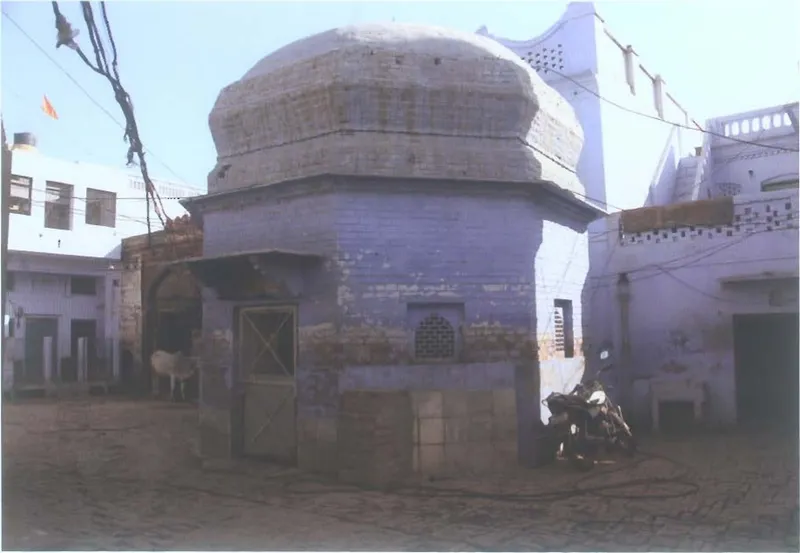
- What it is
- The samādhi (tomb) of Śrī Madhu Paṇḍita stands in the compound of the Rādhā-Gopīnātha Mandira in Vṛndāvana, east of the new temple and near the old main gate.
- Visiting
- The guidebooks place the samādhi in the compound of the Rādhā-Gopīnātha temple: east of the new temple (2007), near the original main gate (2000), or next to the temple; the wordings need not …
In short
The samādhi (tomb) of Śrī Madhu Paṇḍita stands in the compound of the Rādhā-Gopīnātha Mandira in Vṛndāvana, east of the new temple and near the old main gate.[1 +5] Śrī Madhu Paṇḍita, a disciple of Śrī Gadādhara Paṇḍita, was the servant in charge of the Deity Śrī Gopīnātha, as the Bhakti-ratnākara and Śrīla Prabhupāda confirm.[3 +5] The oldest mention of the tomb that was found is in the Bengali Bhaktamāla of Kṛṣṇadāsa Bābājī (1905). No text tells of his death, and only one guidebook says that his body was laid here.[3 +4]
Key facts
| Kind | samādhi |
|---|---|
| Region · area | Vṛndāvana · Rādhā-Gopīnātha Mandira (Vṛndāvana) |
| Ācāryas | Madhu Paṇḍita |
Traditional accounts
According to the Bengali Bhaktamāla, Śrī Madhu Paṇḍita searched every forest of Vṛndāvana for Kṛṣṇa, weeping, and lay without food under the Vaṁśīvaṭa on the Yamunā's bank. There Gopīnātha appeared to him in the form of a Deity; he carried Him off in his arms like a thief who has found a jewel and arranged His service near Keśī-ghāṭa. The book names no builder and gives no date for the temple (summarised here, not translated).[13]
The Gosvāmīs and ācāryas
The Bhakti-ratnākara of Śrīla Narahari Cakravartī Ṭhākura shows Śrī Madhu Paṇḍita at Gopīnātha's place over many years.
The servant of Śrī Gopīnātha
The Bhakti-ratnākara of Śrīla Narahari Cakravartī Ṭhākura shows Śrī Madhu Paṇḍita at Gopīnātha's place over many years. When Śrīla Jīva Gosvāmī brought Śrīla Śrīnivāsa Ācārya for darśana of Gopīnātha, Śrī Madhu Paṇḍita and Śrī Paramānanda received him with great affection. When Śrīnivāsa left for Bengal with the Gosvāmīs' books, Śrī Madhu Paṇḍita brought him Gopīnātha's garland as the Lord's permission. He was still Gopīnātha's servant in charge when Śrīla Vīracandra came to Vṛndāvana (summarised here, not translated).[7 +2]
According to the Sādhana-dīpikā of Śrī Rādhā-kṛṣṇa Gosvāmī, Gopīnātha was manifested at Vaṁśīvaṭa by Śrī Paramānanda Gosvāmī, a student of Śrī Gadādhara Paṇḍita, who then entrusted Gopīnātha's service to Śrī Madhu Paṇḍita. The same work quotes a verse from a hymn of eight verses that Śrī Madhu Paṇḍita composed on Śrī Paramānanda (summarised here, not translated).[8 +3] How the two were related is told differently (see below).[3 +5]
Śrīla Prabhupāda
Śrīla Prabhupāda lists Śrī Madhu Paṇḍita among the followers of Śrī Gadādhara Paṇḍita and writes that he built the temple of …
Śrīla Prabhupāda lists Śrī Madhu Paṇḍita among the followers of Śrī Gadādhara Paṇḍita and writes that he built the temple of Gopīnātha in Vṛndāvana; he says nothing of the tomb.[9]
Names this place“The Śākhā-nirṇaya, written by Yadunandana dāsa, also names other branches of Gadādhara Paṇḍita, as follows: … (5) Madhu Paṇḍita (this famous devotee lived near Khaḍadaha, in the village known as Sāṅibonā-grāma, about two miles east of the Khaḍadaha station, and constructed the temple of Gopīnāthajī in Vṛndāvana), … (13) Paramānanda Bhaṭṭācārya, (14) Bhavānanda Gosvāmī”
Śrīla Prabhupāda, Śrī Caitanya-caritāmṛta, Ādi-līlā 12.88, purport · vedabase.io
Visiting today
The guidebooks place the samādhi in the compound of the Rādhā-Gopīnātha temple: east of the new temple (2007), near the original main gate (2000), or next to the temple; the wordings need not disagree, and the exact spot has not been checked on the ground.[1 +5]
Nearby places
Rādhā-Gopīnātha Mandira (Vṛndāvana)
Pictures
1 pictures
History
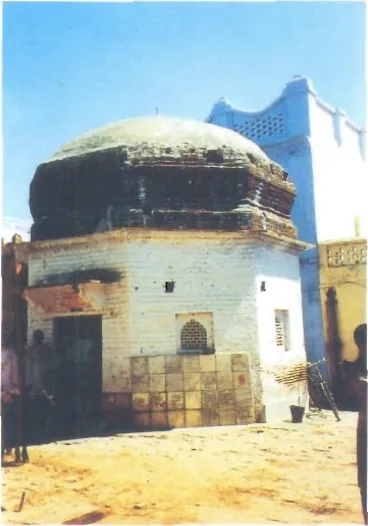
The Bengali Bhaktamāla names "the samādh of Śrī Madhu Paṇḍita Gosvāmī" among the holy places of Vṛndāvana, right after Gopīnātha, so it was a place of pilgrimage by then.[11 +1] In 1920 the Bengali Vṛndāvana-kathā found it in an eight-sided room near the old gate of the Gopīnātha temple; its author writes that he could find no biography of Śrī Madhu Paṇḍita.[14] No source dates the tomb or names its builder.[11 +1]
The Color Guide to Vṛndāvana (2000) says that Śrī Madhu Paṇḍita lived in Vṛndāvana until he entered samādhi and that his body was laid to rest at this spot. It is the only source that says so.[3 +2]
Where the sources differ
How Śrī Madhu Paṇḍita and Śrī Paramānanda were related: the sources tell it differently.
How Śrī Madhu Paṇḍita and Śrī Paramānanda were related: the sources tell it differently. The Bhakti-ratnākara calls Śrī Madhu Paṇḍita a disciple of Śrī Gadādhara Paṇḍita, and Śrīla Prabhupāda counts him among Śrī Gadādhara Paṇḍita's branches.[3 +6]
Accounts differ How Śrī Madhu Paṇḍita and Paramānanda Bhaṭṭācārya were related, and whose disciple Śrī Madhu Paṇḍita was.
- Bhakti-ratnākara, 13th waveŚrī Madhu Paṇḍita, Gopīnātha's adhikārī, is 'known as Gadādhara Paṇḍita's disciple'; Bhavānanda is his fellow student.
- Bhakti-ratnākara, 2nd waveParamānanda Bhaṭṭācārya had great affection for Śrī Madhu Paṇḍita (no guru relation stated).
- Śrīla Prabhupāda, CC Ādi 12.88 purport (Śākhā-nirṇaya list)Śrī Madhu Paṇḍita, Paramānanda Bhaṭṭācārya and Bhavānanda are all branches of Śrī Gadādhara Paṇḍita.
- Vṛndāvana, the Playground of God (2010), p. 42Śrī Madhu Paṇḍita and 'his close friend' Paramānanda Bhaṭṭācārya were both disciples of Śrī Gadādhara Paṇḍita.
References
21 references
- Śrī Vraja-maṇḍala Parikramā (2007), PDF p. 330
- Śrī Vraja-maṇḍala Parikramā (2007), PDF p. 345
- The Color Guide to Vṛndāvana (2000), Written and Photographed by Rājaśekhara dāsa Brahmacārī, PDF p. 124
- The Colour Guide to Rādhā-kuṇḍa (1999), Rājaśekhara dāsa Brahmacārī, PDF p. 167
- Vṛndāvana, the Playground of God (2010), Bhakti Caitanya Svāmī, PDF p. 48
- the undated parikramā notes Vṛndāvana, ¶238
- Śrīla Narahari Cakravartī, Bhakti-ratnākara, taraṅga 13, printed p. 1021, 2nd ed., 1912
- Śrīla Narahari Cakravartī, Bhakti-ratnākara, taraṅga 2, printed p. 94, 2nd ed., 1912
- Śrīla Prabhupāda, Śrī Caitanya-caritāmṛta, Ādi-līlā 12.88, purport · vedabase.io
- Śrīla Prabhupāda, Śrī Caitanya-caritāmṛta, Madhya-līlā 18.52, purport · vedabase.io
- Kṛṣṇadāsa, last mālā, list of Vṛndāvana's holy places, printed p. 350, left column, lines 9-10
- Kṛṣṇadāsa, last mālā, list of Vṛndāvana's holy places, printed p. 350, left column, lines 7-8
- Kṛṣṇadāsa, 2nd mālā, 'caritra śrī-madhupaṇḍita ṭhākurera', printed p. 21, left column, heading and the 10 lines below it, and right column, lines 1-18
- Vṛndāvana-kathā, ch. 4 'Gopīnāthajī', printed p. 75
- Śrīla Narahari Cakravartī, Bhakti-ratnākara, taraṅga 4, printed p. 143, 2nd ed., 1912
- Śrīla Narahari Cakravartī, Bhakti-ratnākara, taraṅga 6, printed p. 480, 2nd ed., 1912
- Śrīla Rādhā-kṛṣṇa Gosvāmī, Sādhana-dīpikā, part 1 (prathama-kakṣā), v.20
- Śrīla Rādhā-kṛṣṇa Gosvāmī, Sādhana-dīpikā, part 1 (prathama-kakṣā), prose after v.21
- Śrīla Rādhā-kṛṣṇa Gosvāmī, Sādhana-dīpikā, part 7 (saptama-kakṣā), opening prose, before any numbered verse of part 7 after v.6', part 2/7)
- Śrī Vraja-maṇḍala Parikramā (2007), p. 634-635
- Śrī Vraja-maṇḍala Parikramā (2007), p. 664-665