Rādhā-Gopīnātha Mandira (Vṛndāvana)
राधा-गोपीनाथ मन्दिर (वृन्दावन) Hindi name proposed
Also called Gopinatha, Rādhā Gopinātha Temple
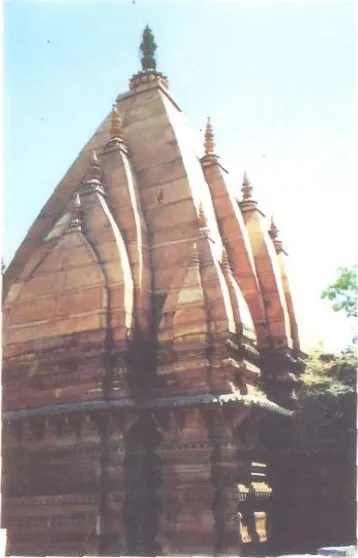
- What it is
- The Rādhā-Gopīnātha Mandira is one of the seven original Gauḍīya Vaiṣṇava temples of Vṛndāvana.
- Visiting
- Vṛndāvana, the Playground of God (2010) places the temple about one kilometre north of the old Govindajī temple, and says that the Soṇā Gaurāṅga temple is on the road opposite its entrance.
- Places here
- Madhu Paṇḍita's samādhi
In short
The Rādhā-Gopīnātha Mandira is one of the seven original Gauḍīya Vaiṣṇava temples of Vṛndāvana.[1 +5] Its Deity is Gopīnātha, "the Lord of the gopīs", whom the Caitanya-caritāmṛta praises as the Lord who began the rāsa dance and who stands on the bank at Vaṁśīvaṭa, drawing the gopīs with His flute.[7 +3] According to the Bhakti-ratnākara, Gopīnātha appeared near Vaṁśīvaṭa and Śrī Madhu Paṇḍita received His service; Śrīla Prabhupāda writes that Śrī Madhu Paṇḍita built His temple.[11 +2] When Aurangzeb was breaking temples the original Deity was taken to Jaipur, and a pratibhū Deity, a representative form, is worshipped here today.[6 +6]
Key facts
| Kind | temple |
|---|---|
| Region · area | Vṛndāvana |
| Ācāryas | Madhu Paṇḍita, Jāhnavā Mātā, Śrīla Jīva Gosvāmī, Śrīla Viśvanātha Cakravartī Ṭhākura, Parameśvara dāsa Ṭhākura (Parameśvarī dāsa) |
Why it is glorified
In the opening prayers of the Caitanya-caritāmṛta, Śrīla Kṛṣṇadāsa Kavirāja Gosvāmī asks for the blessing of Gopīnātha.
In the opening prayers of the Caitanya-caritāmṛta, Śrīla Kṛṣṇadāsa Kavirāja Gosvāmī asks for the blessing of Gopīnātha. The verse names Vaṁśīvaṭa, where, according to the Bhakti-ratnākara, the Deity appeared; it does not name the temple.[7 +3]
শ্রীমান্ রাসরসারম্ভী বংশীবটতটস্থিতঃ ।
কর্ষন্ বেণুস্বনৈর্গোপীর্গোপীনাথঃ শ্রিয়েঽস্তু নঃ ॥ ১৭ ॥
śrīmān rāsa-rasārambhī
vaṁśīvaṭa-taṭa-sthitaḥ
karṣan veṇu-svanair gopīr
gopī-nāthaḥ śriye ’stu naḥ
Śrī Śrīla Gopīnātha, who originated the transcendental mellow of the rāsa dance, stands on the shore in Vaṁśīvaṭa and attracts the attention of the cowherd damsels with the sound of His celebrated flute. May they all confer upon us their benediction.
Translation: Śrīla A.C. Bhaktivedanta Swami PrabhupādaHe then names the three Deities of Vṛndāvana, Madana-mohana, Govinda and Gopīnātha, as the Lords of his heart, and at the end of the book he calls the three, each with Śrī Rādhā, the life of the Gauḍīya Vaiṣṇavas.[20 +3]
এই তিন ঠাকুর গৌড়ীয়াকে করিয়াছেন আত্মসাৎ ।
এ তিনের চরণ বন্দোঁ, তিনে মোর নাথ ॥ ১৯ ॥
ei tina ṭhākura gauḍīyāke kariyāchena ātmasāt
e tinera caraṇa vandoṅ, tine mora nātha
These three Deities of Vṛndāvana [Madana-mohana, Govinda and Gopīnātha] have absorbed the heart and soul of the Gauḍīya Vaiṣṇavas [followers of Lord Caitanya]. I worship Their lotus feet, for They are the Lords of my heart.
Translation: Śrīla A.C. Bhaktivedanta Swami PrabhupādaŚrīla Prabhupāda explains in his purport that the three Deities stand for three stages of devotion. Gopīnātha, Kṛṣṇa as Gopījana-vallabha, is the Deity of the last stage:[9 +2]
Names this place“When by the grace of Kṛṣṇa and the devotees one reaches perfection in devotional service, he can appreciate Kṛṣṇa as Gopījana-vallabha, the pleasure Deity of the damsels of Vraja. … Lord Śrī Caitanya Mahāprabhu explained this mode of devotional service in three stages, and therefore these worshipable Deities were installed in Vṛndāvana by different Gosvāmīs.”
Śrīla Prabhupāda, Śrī Caitanya-caritāmṛta, Ādi-līlā 1.19, purport · vedabase.io
Telling how Rādhā-Ramaṇa appeared, the Bhakti-ratnākara names, in order, the face of Govinda, the chest of Gopīnātha and the feet of Madana-mohana, and says that the three are seen together in Him (summarised here, not translated).[24] Śrīla Viśvanātha Cakravartī Ṭhākura ends every verse of his Gopīnāthadevāṣṭaka with the same refrain, "broad-chested Gopīnātha is our refuge"; in the first verse (summarised here, not translated), Gopīnātha drowns the gopīs in the ocean of His flute's sound.[7 +6]
Divine pastimes
Śrīmad-Bhāgavatam (10.29) tells how, on a full-moon night, Kṛṣṇa saw the forest lit by the moon and played sweetly on His flute, and how the young women of Vraja, their minds seized by Him, went to where He was. The verses set the call only in "the forest" and do not use the name Gopīnātha.[26 +3]
dṛṣṭvā kumudvantam akhaṇḍa-maṇḍalaṃ
ramānanābhaṃ nava-kuṅkumāruṇam … vanaṃ ca tat-komala-gobhī rañjitaṃ
jagau kalaṃ vāma-dṛśāṃ manoharam
Lord Kṛṣṇa saw the unbroken disk of the full moon glowing with the red effulgence of newly applied vermilion, as if it were the face of the goddess of fortune. He also saw the kumuda lotuses opening in response to the moon’s presence and the forest gently illumined by its rays. Thus the Lord began to play sweetly on His flute, attracting the minds of the beautiful-eyed gopīs.
Translation: Śrīla Prabhupāda's disciples (BBT)Śrīla Sanātana Gosvāmī explains (summarised here, not translated) that Kṛṣṇa sang on the flute to attract the gopīs, a special song for that one night.[31] After the gopīs' search and His return, "there", on the Yamunā's bank, Govinda began the rāsa dance with them (ŚB 10.33.2). That verse too names no tree and no place.[27 +2] In his Kṛṣṇa book Śrīla Prabhupāda writes that at the sound of the flute the gopīs rushed toward the place known as Vaṁśīvaṭa (a retelling of the chapter that does not name Gopīnātha or the temple).[28]
The Caitanya-caritāmṛta gives both acts to Gopīnātha: He began the rāsa, and He calls the gopīs with His flute, standing at Vaṁśīvaṭa. The Bhakti-ratnākara quotes that verse at Vaṁśīvaṭa and says that Gopīnātha always sports there. No source read says that the pastime took place where the temple now stands.[7 +5] Śrīla Jīva Gosvāmī, commenting on ŚB 10.29.3, sets the flute call at a part of the Yamunā's bank that he says was still known as Rāsaulī (summarised here, not translated); he does not say whether this is Vaṁśīvaṭa.[31]
Accounts differ Where Kṛṣṇa called the gopīs with His flute and began the rāsa: the pastime that the Caitanya-caritāmṛta ascribes to Gopīnātha, the Deity of this temple, 'on the bank at Vaṁśīvaṭa'.
- Śrīmad-Bhāgavatam 10.29.3, 10.29.45, 10.32.11–12, 10.33.2the flute song in 'the forest' lit by the moon; then the sandy bank of 'the river' (10.29.45); after the reappearance, the bank of the Kālindī (10.32.11–12), where the rāsa dance is begun 'there' (10.33.2); in the gopīs' search the chapters name the creepers of Vṛndāvana and the trees on the Yamunā's bank (10.30.24, 10.30.9), but no tree or spot such as Vaṁśīvaṭa for the call or the dance
- Śrīla Jīva Gosvāmī, Laghu-vaiṣṇava-toṣaṇī on ŚB 10.29.3Kṛṣṇa sang with the attracting flute at the part of the Yamunā's bank still famous as Rāsaulī, a village square established by Śrī Vajra
- Śrī Caitanya-caritāmṛta Ādi 1.17 = Madhya 1.5 = Antya 1.7 (Śrīla Kṛṣṇadāsa Kavirāja Gosvāmī; Śrīla Prabhupāda's translations)Gopīnātha, who began the rāsa, stands on the shore at Vaṁśīvaṭa and draws the gopīs with His flute; Madhya 1.5: He 'has begun the most melodious rāsa dance on the bank of the Yamunā in Vaṁśīvaṭa'
- Bhakti-ratnākara, 5th wave (1912 ed. p. 327)at Vaṁśīvaṭa Gopīnātha always sports in joy and, in an enchanting dress, draws the gopīs by the sound of the flute (quoting CC Ādi 1.17)
The wording of these accounts is our summary of the sources, not a published translation.
Traditional accounts
According to the Bhakti-ratnākara (summarised here, not translated), Kṛṣṇa was bound by the love of Śrī Paramānanda Bhaṭṭācārya …
How Gopīnātha appeared
According to the Bhakti-ratnākara (summarised here, not translated), Kṛṣṇa was bound by the love of Śrī Paramānanda Bhaṭṭācārya and Śrī Madhu Paṇḍita. Out of mercy He suddenly gave darśana as Gopīnātha near Vaṁśīvaṭa, on the Yamunā's bank, and Śrī Madhu Paṇḍita received His service. The book supports this with a verse of the older Sādhana-dīpikā.[11 +1] The Sādhana-dīpikā itself, by Śrī Rādhā-kṛṣṇa Gosvāmī, names the one who manifested Gopīnātha there: Paramānanda, a student of Śrī Gadādhara Paṇḍita, who then entrusted Gopīnātha's service to Śrī Madhu Paṇḍita (summarised here, not translated).[11 +2] The same book quotes a verse that, it says, Śrī Madhu Paṇḍita wrote in praise of Paramānanda, whose mind is absorbed at Gopīnātha's feet (summarised here, not translated).[35]
Other books tell the finding differently. In the Hindi Bhaktamāla (1904) and the Bengali Bhaktamāla of Kṛṣṇadāsa Bābājī (1905), Śrī Madhu Paṇḍita himself finds Gopīnātha at Vaṁśīvaṭa, and the guidebooks add sand and a flood.
Accounts differ How and by whom the Gopīnātha Deity was found.
- Bhakti-ratnākara, 2nd wave, quoting the Sādhana-dīpikāKṛṣṇa, bound by the love of Paramānanda Bhaṭṭācārya and Śrī Madhu Paṇḍita, out of mercy 'suddenly gave darśana' near Vaṁśīvaṭa on the Yamunā bank; the verse says Gopīnātha was manifested by him (tena, unnamed); Śrī Madhu Paṇḍita became His servant. No sand or flood.
- Śrī Vraja-maṇḍala Parikramā (2007), p. 633The Yamunā's current cut into the bank and Gopīnātha was revealed from under the sand; Paramānanda found Him when he came to bathe in the morning and entrusted His service to Śrī Madhu Paṇḍita.
- Vṛndāvana, the Playground of God (2010), p. 42He had been hidden from the Muslims and was found buried in the sand on the Yamunā bank at Vaṁśīvaṭa by Śrī Madhu Paṇḍita and his close friend Paramānanda Bhaṭṭācārya while they were wandering there.
- The Color Guide to Vṛndāvana (2000), p. 108 (entry 55); the undated parikramā notes VṛndāvanaRediscovered at Vaṁśī-vaṭa by Paramānanda Gosvāmī, worshipped there by Paramānanda Bhaṭṭācārya, who gave the Deity to Śrī Madhu Paṇḍita.
The wording of these accounts is our summary of the sources, not a published translation.
According to the Bengali Vṛndāvana-kathā (1920), the ordinary Vaiṣṇavas and Vrajavāsīs believed that Kṛṣṇa's great-grandson Vajranābha installed Govinda, Madana-mohana and Gopīnātha at the end of the Dvāpara age. The author gives this as a popular belief, not from a text.[36]
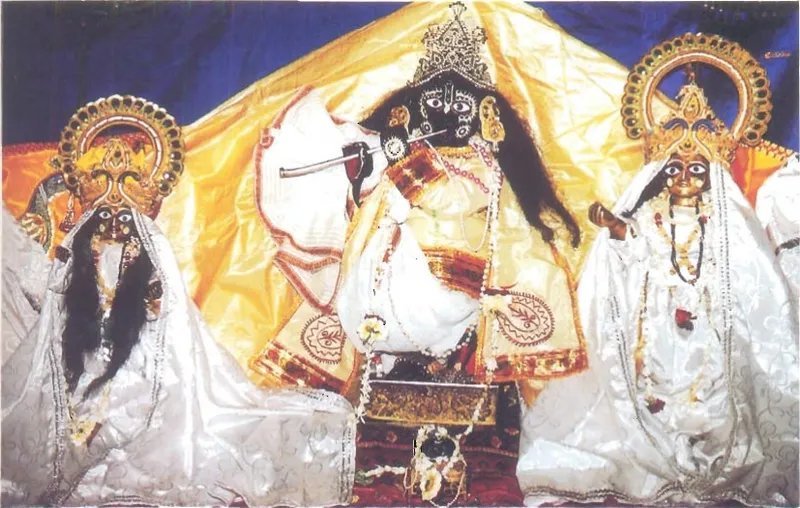
Śrīla Jāhnavā-devī's Rādhikā
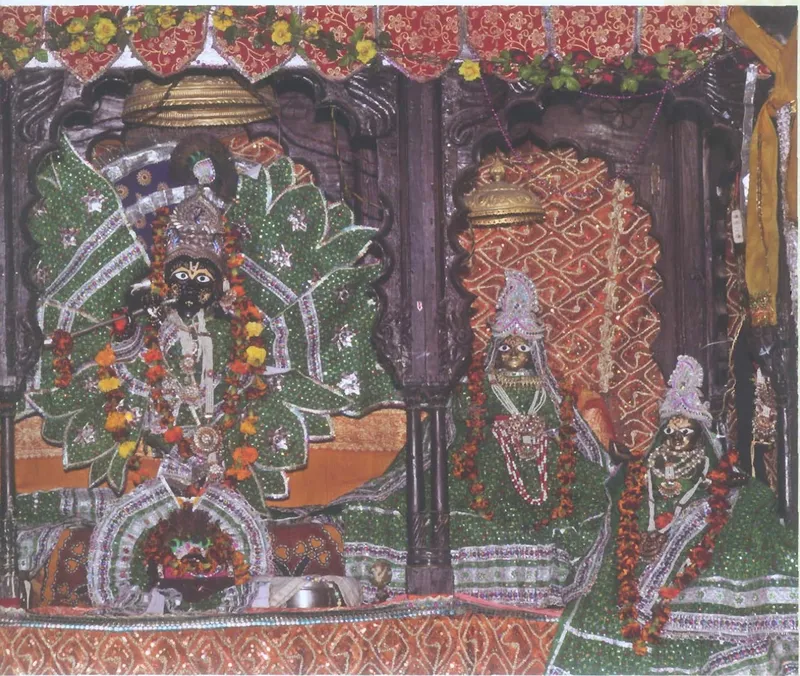
According to the Bhakti-ratnākara (summarised here, not translated), Śrīla Jāhnavā-devī, the wife of Śrī Nityānanda Prabhu, once stood before Gopīnātha in Vṛndāvana and thought that His Rādhikā should be a little taller. That night Gopīnātha asked her in a dream to make His beloved in Gauḍa (Bengal) and send Her to sit at His left, and Rādhikā agreed. The sculptor Nayana Bhāskara made the Deity of Śrī Rādhikā, Śrī Parameśvarī dāsa brought Her by boat to Vṛndāvana, and She was seated at Gopīnātha's left, while the former Ṭhākurāṇī sat at His right. So Gopīnātha now had two beloveds.[37 +4]
The Narottama-vilāsa, by the same author, adds that Gopīnātha gave Jāhnavā His own garland in the dream, and that "all the Gosvāmīs" seated Her at His left, with a great festival.[42 +1] The Bhakti-ratnākara then quotes two verses of Śrīla Viśvanātha Cakravartī Ṭhākura's Gopīnāthadevāṣṭaka for Gopīnātha between the two Rādhikās; one of them likens Him to a dark moon between two Rādhās.[29 +1] Śrīla Prabhupāda writes that the Gaura-gaṇoddeśa-dīpikā (66) describes Jāhnavā-mātā as Anaṅga-mañjarī of Vṛndāvana.[41 +1] Read more: Śrī Jāhnavā-devī's Rādhikā for Śrī Gopīnātha →
The Gosvāmīs and ācāryas
The Bhakti-ratnākara shows Śrī Madhu Paṇḍita serving Gopīnātha over many years.
Śrī Madhu Paṇḍita
The Bhakti-ratnākara shows Śrī Madhu Paṇḍita serving Gopīnātha over many years. When Śrīla Jīva Gosvāmī brought Śrīla Śrīnivāsa Ācārya for darśana of Gopīnātha, Paramānanda and Śrī Madhu Paṇḍita received him with great affection. Before Śrīnivāsa left for Gauḍa with the Gosvāmīs' books, Śrī Madhu Paṇḍita brought him Gopīnātha's garland of permission. He was still "Śrī Gopīnātha's adhikārī", the servant in charge, when Prabhu Vīracandra came to Vṛndāvana.[11 +5] The Vṛndāvana-kathā (1920) says that no life of Śrī Madhu Paṇḍita could be found, and that his samādhi stands in an eight-sided room near the old gate.[36]
The song book has a kīrtana that calls Rādhā-Gopīnātha the wealth of Śrī Madhu Paṇḍita's life.[11 +6]
Others
- Śrīla Prabhupāda names Paramānanda Bhaṭṭācārya and Śrī Madhu Paṇḍita among the Vaiṣṇavas who were with Śrīla Rūpa Gosvāmī in Vraja (a general purport that does not mention the temple).[63]
- Śrīla Viśvanātha Cakravartī Ṭhākura wrote the Gopīnāthadevāṣṭaka, which the Bhakti-ratnākara applies to this Deity.[29 +1]
Śrīla Prabhupāda
Śrīla Prabhupāda counts the Gopīnātha temple among the seven original Gauḍīya temples of Vṛndāvana …
Śrīla Prabhupāda counts the Gopīnātha temple among the seven original Gauḍīya temples of Vṛndāvana:[1 +5]
Names this place“Similarly, it is through the endeavor of the Gosvāmīs that all the important temples in Vṛndāvana were established. Originally there were seven important Gauḍīya Vaiṣṇava temples established in Vṛndāvana, namely the Madana-mohana temple, Govinda temple, Gopīnātha temple, Śrī Rādhāramaṇa temple, Rādhā-Śyāmasundara temple, Rādhā-Dāmodara temple and Gokulānanda temple.”
Śrīla Prabhupāda, Śrī Caitanya-caritāmṛta, Ādi-līlā 10.90, purport · vedabase.io
In 1968 he planned seven principal temples for New Vrindaban on the model of these seven, Gopīnātha among them.[3] His purport on the Śākhā-nirṇaya's list of Śrī Gadādhara Paṇḍita's followers is his only statement found on who built the temple:[13]
Names this place“The Śākhā-nirṇaya, written by Yadunandana dāsa, also names other branches of Gadādhara Paṇḍita, as follows: … (5) Madhu Paṇḍita (this famous devotee lived near Khaḍadaha, in the village known as Sāṅibonā-grāma, about two miles east of the Khaḍadaha station, and constructed the temple of Gopīnāthajī in Vṛndāvana), … (13) Paramānanda Bhaṭṭācārya, (14) Bhavānanda Gosvāmī”
Śrīla Prabhupāda, Śrī Caitanya-caritāmṛta, Ādi-līlā 12.88, purport · vedabase.io
In a 1970 lecture he told how the Deity left Vṛndāvana:[14]
Names this place“The king of Jaipur took away, when Aurangzeb was harassing Hindus and he was breaking some of the Hindu temple, at that time from Vṛndāvana the Govinda mūrti—not only Govinda, but Govinda Gopinatha and Madana-mohana—these mūrtis were taken from Vṛndāvana to Jaipur.”
Śrīla Prabhupāda, Lecture on the appearance day of Śrīla Baladeva Vidyābhūṣaṇa, Los Angeles, 14 June 1970 · vedabase.io
His biography, Śrīla Prabhupāda-līlāmṛta, says that from his rooftop room at the Vaṁśī-gopālajī temple near Keśī-ghāṭa he could see "the venerable tower of the Gopīnātha temple".[64]
Songs
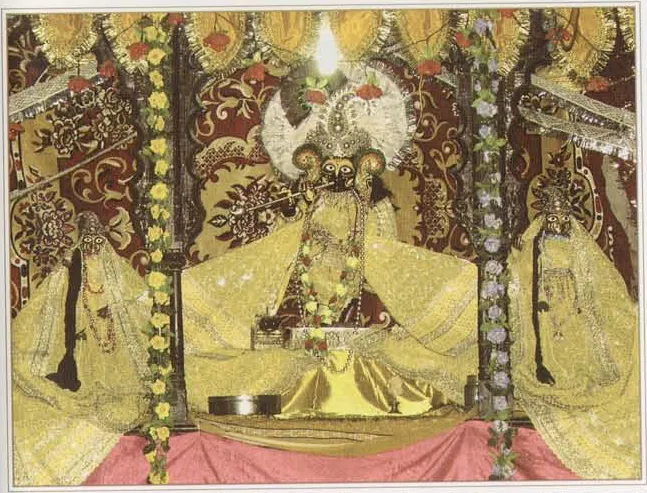
The Gopīnāthadevāṣṭaka, which the Bhakti-ratnākara quotes for Gopīnātha standing between His two Rādhikās.
The Gopīnāthadevāṣṭaka, which the Bhakti-ratnākara quotes for Gopīnātha standing between His two Rādhikās. The song book prints it without the author's name; the Stavāmṛta-laharī and the Bhakti-ratnākara give it to Śrīla Viśvanātha Cakravartī Ṭhākura.[29 +2]
tāpiñchaḥ kiṁ hema-vallī-yugāntaḥ
pārśva-dvandvoddyoti-vidyud-ghanaḥ kim
kiṁ vā madhye rādhayoḥ śyāmalendur
gopinatha pīna-vakṣā gatir naḥ
Visiting today
Vṛndāvana, the Playground of God (2010) places the temple about one kilometre north of the old Govindajī temple, and says that the Soṇā Gaurāṅga temple is on the road opposite its entrance. In 2000 The Color Guide to Vṛndāvana printed these darśana times, the same in summer and winter: maṅgala-ārati at 5 am, darśana 7:30 to 11:45 am and 4:30 to 8:30 pm; they may have changed since.[10 +3]
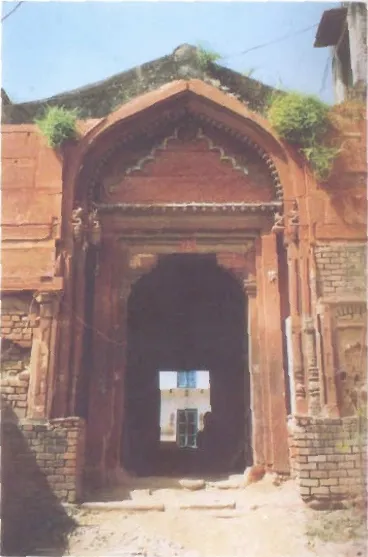
All the guidebooks say that the original Gopīnātha is now worshipped in Jaipur and that a pratibhū Deity stands here.[6 +5] In 1920 the Vṛndāvana-kathā found the pūjārīs presenting the image at Gopīnātha's left as Jāhnavā Ṭhākurāṇī, with the sakhī Viśveśvarī beside her, and a small Rādhikā with the sakhī Lalitā at His right; Śrī Caitanya's image had a separate seat.[68] The same book says that only the main shrine and its jagamohana, the hall in front, remained of the old temple, and that its half-ruined old gate stood on the Gopīnātha Bazaar road.[36]
Location
| Where it is | first near Vaṁśīvaṭa, later elsewhere; map key 18 ('Śrī Gopīnāthajī Temple')[69] 'about one kilometer north of the Govindajī temple'; the old temple is on the right of the corridor to the new courtyard[70] |
|---|
Places at Rādhā-Gopīnātha Mandira (Vṛndāvana)
1 places
Nearby places
Rādhā-Govinda Mandira (Vṛndāvana, old) · Soṇā Gaurāṅga Mandira · Vaṁśīvaṭa (Vṛndāvana)
Pictures
4 pictures
History
The first temple
Śrīla Prabhupāda writes that Śrī Madhu Paṇḍita, a follower of Śrī Gadādhara Paṇḍita from Sāṅibonā-grāma near Khaḍadaha in Bengal, built the temple of Gopīnāthajī in Vṛndāvana. He gives no date.[13] Two historians credit the foundation of the old temple to a Rājpūt chief of Akbar's time: A. W. Entwistle (1987) names Raysal Darbari, a chief of the Shekhawat branch of the Kachhwahas, and Prabhudayāl Mītal (1966) names Rāyasena and reports Growse's statement that the temple was finished in Saṁvat 1646 (about 1589–90).[45 +1] Both report a verse of Gopāla Kavi (1840s), which Mītal quotes: Rāyasena built the old temple, King Savāī Jayasiṁha the second, and Nandakumāra Bose the third.[47 +1] The guidebooks give other builders and years.
Accounts differ Who built the original Gopīnātha temple, and when.
- Śrīla Prabhupāda, CC Ādi 12.88 purport (giving the Śākhā-nirṇaya's list)Śrī Madhu Paṇḍita 'constructed the temple of Gopīnāthajī in Vṛndāvana'; no date.
- Vṛndāvana, the Playground of God (2010), p. 42In 1589 Śrī Madhu Paṇḍita built a temple for Gopīnātha about one kilometre north of the Govindajī temple; Gopīnātha was worshipped there until 1670.
- Vṛndāvana-Dhāma Ki Jaya! (c. 1986), p. 55Paramānanda Bhaṭṭācārya entrusted the worship to his disciple Śrī Madhu Paṇḍita, 'who soon constructed a temple'.
- The Color Guide to Vṛndāvana (2000), pp. 108, 110; the undated parikramā notes VṛndāvanaThe Deity was worshipped by Śrī Madhu Paṇḍita; The Color Guide to Vṛndāvana (2000) p. 110 adds that he 'established the temple of Rādhā Gopīnātha'; no date.
The Color Guide to Vṛndāvana (2000), Vṛndāvana, the Playground of God (2010) and the undated parikramā notes Vṛndāvana say that after Emperor Akbar's visit to Vṛndāvana in 1570 permission was given to build four great temples, Gopīnātha among them. No farmān or other dated document has been seen.[49 +3]
Aurangzeb and Jaipur
Śrīla Prabhupāda said in 1970 that when Aurangzeb was breaking Hindu temples, the king of Jaipur took Govinda, Gopīnātha and Madana-mohana from Vṛndāvana to Jaipur.[14] Neither historian gives a year for the damage: Mītal says the temple was damaged, but not badly, so that the old building kept roughly its first form.[46 +2] Entwistle writes that the Gauḍīya priests sought the protection of the rulers of Amber and first took the Deities to Kāmā.[53]
Accounts differ When and by whom the original Gopīnātha was taken to Jaipur, and in what order the move and the desecration came.
- Śrīla Prabhupāda, lecture, Los Angeles, 14 June 1970The king of Jaipur took Govinda, Gopīnātha and Madana-mohana from Vṛndāvana to Jaipur when Aurangzeb was breaking temples (no year, no name).
- Vṛndāvana, the Playground of God (2010), pp. 12, 42Worshipped in Śrī Madhu Paṇḍita's temple until 1670, when He was taken to Jaipur with Madana-mohana, Govindadeva and others by Mahārāja Jai Singh; 'thereafter the original temple was damaged' (p. 42). P. 12 says instead that the temples were attacked 'around 1670' and that 'caretakers of these three Deities brought Them to Jaipur in Rajasthan for safety' (no king named).
- The Color Guide to Vṛndāvana (2000), p. 108; the undated parikramā notes VṛndāvanaThe temple was desecrated by Aurangzeb's soldiers in 1670; the original Deity is in Jaipur, 'where He was sent for safe keeping'.
- Śrī Vraja-maṇḍala Parikramā (2007), p. 634During Aurangzeb's oppression the original Gopīnātha, Rādhikā and Jāhnavā went to Jaipura; Aurangzeb destroyed the 1632 temple.
The new temple
The pratibhū Deities are worshipped in a newer temple built just behind or next to the old one; Śrī Vraja-maṇḍala Parikramā (2007) dates the pratibhū Deities to 1748 and the new temple to 1819, and names Nandakumāra Vasu as its builder.[10 +3] Mītal gives Saṁvat 1805 (about 1748–49) and Saṁvat 1877 (about 1820–21). Both historians say that the same man built the new temples of Govinda and Madana-mohana; see the new Govindajī temple.[46 +3]
Accounts differ When the new Gopīnātha temple of Nandakumāra Vasu was built (and the pratibhū installed).
- Śrī Vraja-maṇḍala Parikramā (2007), p. 634The pratibhū-vigrahas were established in 1748 and the new temple, built by Nandakumāra Vasu, in 1819.
- Mītal (1966), part 1 p. 136 and part 2 p. 277The pratibhū-vigraha was installed in Saṁvat 1805 (about 1748-49) and the new temple built by Nandakumāra Vasu in Saṁvat 1877 (about 1820-21).
- Entwistle (1987), pp. 219 and 412A Bengali Kāyastha named Nand Kumar Bose built new temples of Govinda-deva, Madana-mohana and Gopīnātha next to the original ones (p. 219, no year); after Gopāla Kavi, Nand Kumar Bose made later additions to the Gopīnātha temple in the early nineteenth century (p. 412).
- Gopāla Kavi, Vṛndāvana-dhāmānurāgāvalī (1840s), as quoted by Prabhudayāl Mītal (1966), a historianAccording to Gopāla Kavi, Nandakumāra Basu's temple is the third Gopīnātha temple, after those of Rāyasena and Savāī Jayasiṁha. No year is given.
Where the sources differ
Who the second Deity beside Gopīnātha is, and how she came.
Accounts differ Who the second Deity beside Gopīnātha is, and how she came.
- Bhakti-ratnākara, 11th and 13th wavesDuring a visit Jāhnavā thought Rādhikā should be taller; in a dream Gopīnātha asked her to manifest His beloved in Gauḍa and send her, to sit at His left, and Rādhikā agreed; Nayana Bhāskara made the image, Parameśvarī dāsa took it to Vṛndāvana, and it was seated at Gopīnātha's left, the former Ṭhākurāṇī at His right. Both are called Rādhikā, 'Gopīnātha's two beloveds'.
- Śrī Vraja-maṇḍala Parikramā (2007), p. 634, citing the BhaktamālaAfter the same dream Jāhnavā had a taller Rādhikā made; and, per the Bhakta-māla, at her disappearance she revealed her own deity, which Gopīnātha told the hesitating priests to place at His left as 'My beloved Anaṅga Mañjarī', with Rādhikā at His right.
- Vṛndāvana, the Playground of God (2010), pp. 44-45, citing the Bhakti-ratnākaraAfter the dream Jāhnavā arranged a larger Rādhā; both Rādhās were kept on the altar (now in Jaipur, the smaller being the original); in the new Vṛndāvana temple the Deity on our right is Anaṅga Mañjarī, Rādhārāṇī's younger sister.
- The Color Guide to Vṛndāvana (2000), p. 109; The Colour Guide to Rādhā-kuṇḍa (1999), pp. 80-81On her return to Bengal Jāhnavā had a new Rādhārāṇī carved and sent (no dream mentioned); it looked like Jāhnavā because one of her disciples carved it, and the devotees came to accept it as Anaṅga Mañjarī ('The real fact is', The Colour Guide to Rādhā-kuṇḍa (1999)).
Accounts differ On which side of Gopīnātha the Deity connected with Jāhnavā stands (the sources do not always say whose right or left is meant).
- Bhakti-ratnākara, 13th waveThe image Jāhnavā sent was seated at the left (vāme); the former Ṭhākurāṇī at the right; the Rādhikā sent by Śrī Jāhnavā at the left side.
- Śrī Vraja-maṇḍala Parikramā (2007), p. 634Jāhnavā stands on Gopīnātha's left, Rādhikā on His right; in the present temple Jāhnavā is seated on His left, Lalitā Sakhī and a small Rādhikā on His right.
- Vṛndāvana, the Playground of God (2010), p. 44Rādhārāṇī is 'on our left of the Lord', Anaṅga Mañjarī 'on our right of Him'. In Jaipur the larger Rādhārāṇī (Jāhnavā's) stands on our right of Gopīnātha and the smaller, original one on our left (p. 44), i.e. the new one at His left, as in the Bhakti-ratnākara.
- The Color Guide to Vṛndāvana (2000), p. 109'Normally in all temples Rādhārāṇī stands on the right of Krishna, but in this temple she stands on the left and Anañga Mañjari stands on the right'; the new Deity 'was than installed on the right side of Lord Gopinātha'.
The wording of these accounts is our summary of the sources, not a published translation.
Accounts differ Who Anaṅga-mañjarī is in Śrī Caitanya Mahāprabhu's pastimes: Śrī Jāhnavā-devī or Śrī Gopāla Bhaṭṭa Gosvāmī (the identity on which the guidebooks' naming of the Deity beside Gopīnātha rests).
- Śrīla Prabhupāda, CC Ādi 11.21 purport (on Jāhnavā-mātā)'She is described in the Gaura-gaṇoddeśa-dīpikā (66) as Anaṅga-mañjarī of Vṛndāvana.'
- Gaura-gaṇoddeśa-dīpikā v.66Some (kecit) call Jāhnavī Anaṅga-mañjarī ('anaṅgamañjarīṁ kecij jāhnavīṁ ca pracakṣate'); the verse ends by calling both views it reports right ('ubhayaṁ tu samīcīnaṁ').
- Gaura-gaṇoddeśa-dīpikā v.184She who was Anaṅga-mañjarī is now Śrī Gopāla Bhaṭṭa Gosvāmī ('anaṅga-mañjarī yāsīt sādya gopāla-bhaṭṭakaḥ'); some call the Bhaṭṭa Gosvāmī Śrī Guṇa-mañjarī.
- Śrīla Prabhupāda, CC Ādi 10.105 purport (on Śrī Gopāla Bhaṭṭa Gosvāmī)'In the Gaura-gaṇoddeśa-dīpikā (184) it is mentioned that his previous name in the pastimes of Lord Kṛṣṇa was Anaṅga-mañjarī. Sometimes he is also said to have been an incarnation of Guṇa-mañjarī.'
Accounts differ Where and how Jāhnavā Devī ended her pastimes.
- Vṛndāvana, the Playground of God (2010), p. 44 ('It is said')One day the curtains of Gopīnātha's altar were closed and she went inside; when they opened she was not to be seen: so she concluded her pastimes.
- the undated parikramā notes VṛndāvanaGopīnātha jumped off the altar, took Jāhnavā inside and closed the curtain; when it was opened she was gone.
- Śrī Vraja-maṇḍala Parikramā (2007), p. 634, citing the BhaktamālaAt her disappearance she revealed her own deity, which then 'arrived at the temple of Gopīnātha in Vṛndāvana' (so she did not disappear in that temple).
- Bhakti-ratnākara, 13th waveAfter the new Rādhikā was installed, Jāhnavā went again to Vṛndāvana and saw Gopīnātha with the two Rādhās; her journeys are told in the Anurāga-vallī and other books; no end is told here.
The wording of these accounts is our summary of the sources, not a published translation.
How Śrī Madhu Paṇḍita and Paramānanda Bhaṭṭācārya were related: the accounts are set side by side on the page of Śrī Madhu Paṇḍita's samādhi.[35]
More on this place
Śrī Jāhnavā-devī's Rādhikā for Śrī Gopīnātha
References
70 references
- Śrīla Prabhupāda, Śrī Caitanya-caritāmṛta, Ādi-līlā 10.90, purport · vedabase.io
- Śrīla Prabhupāda, Room Conversation with Professor Olivier Lacombe, Paris, 14 June 1974 · vedabase.io
- Śrīla Prabhupāda, Letter to Kīrtanānanda and Hayagrīva, letter 68-08-23, 23 August 1968 · vedabase.io
- the undated parikramā notes Vṛndāvana, ¶13
- The Color Guide to Vṛndāvana (2000), Written and Photographed by Rājaśekhara dāsa Brahmacārī, PDF p. 25
- Vṛndāvana, the Playground of God (2010), Bhakti Caitanya Svāmī, PDF p. 12
- Śrīla Kṛṣṇadāsa Kavirāja Gosvāmī, Śrī Caitanya-caritāmṛta, Ādi-līlā 1.17, online edition · vedabase.io
- Śrīla Narahari Cakravartī, Bhakti-ratnākara, taraṅga 5, printed p. 327, 2nd ed., 1912
- Vṛndāvana-Dhāma Ki Jaya! (c. 1986), by Dhruva Mahārāja dāsa, PDF p. 73
- Vṛndāvana, the Playground of God (2010), Bhakti Caitanya Svāmī, PDF p. 42
- Śrīla Narahari Cakravartī, Bhakti-ratnākara, taraṅga 2, printed p. 94, 2nd ed., 1912
- Śrīla Rādhā-kṛṣṇa Gosvāmī, Sādhana-dīpikā, part 1 (prathama-kakṣā), v.20
- Śrīla Prabhupāda, Śrī Caitanya-caritāmṛta, Ādi-līlā 12.88, purport · vedabase.io
- Śrīla Prabhupāda, Lecture on the appearance day of Śrīla Baladeva Vidyābhūṣaṇa, Los Angeles, 14 June 1970 · vedabase.io
- Vṛndāvana, the Playground of God (2010), Bhakti Caitanya Svāmī, PDF p. 44
- The Color Guide to Vṛndāvana (2000), Written and Photographed by Rājaśekhara dāsa Brahmacārī, PDF p. 122
- Śrī Vraja-maṇḍala Parikramā (2007), PDF p. 330
- The Colour Guide to Rādhā-kuṇḍa (1999), Rājaśekhara dāsa Brahmacārī, PDF p. 167
- Śrīla Kṛṣṇadāsa Kavirāja Gosvāmī, Śrī Caitanya-caritāmṛta, Ādi-līlā 1.17, online edition
- Śrīla Kṛṣṇadāsa Kavirāja Gosvāmī, Śrī Caitanya-caritāmṛta, Ādi-līlā 1.19, online edition · vedabase.io
Show all 70 references
- Śrīla Kṛṣṇadāsa Kavirāja Gosvāmī, Śrī Caitanya-caritāmṛta, Antya-līlā 20.142–143, online edition · vedabase.io
- Śrīla Narahari Cakravartī, Bhakti-ratnākara, taraṅga 6, printed p. 461, 2nd ed., 1912
- Śrīla Prabhupāda, Śrī Caitanya-caritāmṛta, Ādi-līlā 1.19, purport · vedabase.io
- Śrīla Narahari Cakravartī, Bhakti-ratnākara, taraṅga 4, printed p. 140, 2nd ed., 1912
- Śrīla Viśvanātha Cakravartī Ṭhākura, Stavāmṛta-laharī no. 13 (as numbered on the page), Śrī Gopīnāthadevāṣṭaka, verse 1
- Śrīmad-Bhāgavatam 10.29.3, GRETIL
- Śrīmad-Bhāgavatam 10.33.2, GRETIL
- Śrīla Prabhupāda, Kṛṣṇa, the Supreme Personality of Godhead, Chapter 29, 'The Rāsa Dance: Introduction' · vedabase.io
- Śrīla Viśvanātha Cakravartī Ṭhākura, Stavāmṛta-laharī no. 13 (as numbered on the page), Śrī Gopīnāthadevāṣṭaka, verses 7-8 and colophon
- Śrīmad-Bhāgavatam 10.29.4, GRETIL
- Śrīla Sanātana Gosvāmī: commentary on ŚB 10.29.3
- Śrīla Viśvanātha Cakravartī Ṭhākura: commentary on ŚB 10.33.2
- Śrīla Prabhupāda, Kṛṣṇa, the Supreme Personality of Godhead (Kṛṣṇa book), Chapter 33, 'Description of the Rāsa Dance' · vedabase.io
- Śrīla Rādhā-kṛṣṇa Gosvāmī, Sādhana-dīpikā, part 1 (prathama-kakṣā), prose after v.21
- Śrīla Rādhā-kṛṣṇa Gosvāmī, Sādhana-dīpikā, part 7 (saptama-kakṣā), opening prose, before any numbered verse of part 7 after v.6', part 2/7)
- Vṛndāvana-kathā, ch. 4 'Gopīnāthajī', printed p. 75
- Śrīla Narahari Cakravartī, Bhakti-ratnākara, taraṅga 11, printed pp. 672-673, 2nd ed., 1912
- Śrīla Narahari Cakravartī, Bhakti-ratnākara, taraṅga 13, printed pp. 1005-1007, 2nd ed., 1912
- Śrīla Narahari Cakravartī, Bhakti-ratnākara, taraṅga 13, printed pp. 1014-1015, 2nd ed., 1912
- Śrīla Narahari Cakravartī, Bhakti-ratnākara, taraṅga 13, printed pp. 1017-1018, 2nd ed., 1912
- Gaura-gaṇoddeśa-dīpikā, vv. 65–66
- Śrīla Narahari Cakravartī, Narottama-vilāsa, 9th vilāsa, vv.81-86, printed p. 80, right column, 1st ed., Baṅgābda 1314
- Śrīla Narahari Cakravartī, Narottama-vilāsa, 10th vilāsa, vv.3-7, printed pp. 90-91, 1st ed., Baṅgābda 1314
- Śrīla Prabhupāda, Śrī Caitanya-caritāmṛta, Ādi-līlā 11.21, purport · vedabase.io
- A. W. Entwistle, ch. 5 §12 (Akbar's reign), printed p. 160, Egbert Forsten, Groningen, 1987
- Prabhudayāl Mītal, part 1 ('ब्रज-संस्कृति की भूमिका'), 'Braj-yātrā', Vṛndāvana: 'Śrī Gopīnātha-jī', printed p. 136
- Prabhudayāl Mītal, part 1 ('ब्रज-संस्कृति की भूमिका'), 'Braj-yātrā', Vṛndāvana: 'Śrī Gopīnātha-jī', footnote 1, printed p. 136: Gopāla Kavi's Vṛndāvana-dhāmānurāgāvalī as Mītal quotes it
- A. W. Entwistle, ch. 8 §66.30 'Gopinath', printed p. 412, Egbert Forsten, Groningen, 1987
- the undated parikramā notes Vṛndāvana, ¶9
- the undated parikramā notes Vṛndāvana, ¶9
- The Color Guide to Vṛndāvana (2000), Written and Photographed by Rājaśekhara dāsa Brahmacārī, PDF p. 24
- Vṛndāvana, the Playground of God (2010), Bhakti Caitanya Svāmī, PDF p. 177
- A. W. Entwistle, ch. 5 §25 'The exodus of deities from Braj', printed p. 185, Egbert Forsten, Groningen, 1987
- Prabhudayāl Mītal, part 2 ('ब्रज का इतिहास'), Aurangzeb: 'ब्रज के मदिरो का ध्वस' (the destruction of Braj's temples), printed p. 221
- the undated parikramā notes Vṛndāvana, ¶232
- Prabhudayāl Mītal, part 2 ('ब्रज का इतिहास'), modern period, entry 'Nandakumāra Vasu', printed p. 277
- A. W. Entwistle, ch. 5 §36 'The Gaudiya Sampraday in modern times', printed p. 219, Egbert Forsten, Groningen, 1987
- Śrīla Narahari Cakravartī, Bhakti-ratnākara, taraṅga 4, printed p. 143, 2nd ed., 1912
- Śrīla Narahari Cakravartī, Bhakti-ratnākara, taraṅga 6, printed p. 480, 2nd ed., 1912
- Śrīla Narahari Cakravartī, Bhakti-ratnākara, taraṅga 13, printed p. 1021, 2nd ed., 1912
- Bhaktamāla of Nābhā dāsa with Priyādāsa's Bhakti-rasa-bodhinī kavittas and Rūpakalā's Bhakti-sudhā-svāda tilaka, Priyādāsa's kavitta 380 'श्री मधुगुसांई जी' (running no. 474 of the book), part 2, printed p. 899
- Jaya Radha Madhava Radha Madhava Radhe (Jaya Rādhā-Kṛṣṇa Gīti) (not credited in the song book) · song book
- Śrīla Prabhupāda, Śrī Caitanya-caritāmṛta, Madhya-līlā 18.52, purport · vedabase.io
- Satsvarūpa dāsa Gosvāmī, Śrīla Prabhupāda-līlāmṛta, vol. 1, ch. 9 · vedabase.io
- Sri Gopinathadevastaka (Śrī Gopīnāthadevāṣṭaka) (Viśvanātha Cakravartī Ṭhākura (as the song book credits it)) · song book
- Vṛndāvana, the Playground of God (2010), Bhakti Caitanya Svāmī, PDF p. 187
- the undated parikramā notes Vṛndāvana, ¶235
- Vṛndāvana-kathā, ch. 4 'Gopīnāthajī', printed p. 74
- Śrī Vraja-maṇḍala Parikramā (2007), p. 632-633
- Vṛndāvana, the Playground of God (2010), Bhakti Caitanya Svāmī