Mīrābai Mandira
मीराबाई मन्दिर Hindi name proposed
Also called Mira Bai Temple, Mira Bhai
- What it is
- The Mīrābai Mandira is a small temple in Vṛndāvana dedicated to Śrī Mīrābai, the princess-saint known for her songs to Kṛṣṇa.
- Visiting
- Vṛndāvana, the Playground of God (2010) gives the way: walk past the Rādhā-Dāmodara Mandira to the road to Śṛṅgāravaṭa, turn right opposite it, and the temple is on the right just before the end of …
- Places here
- Mīrābai's sitting place
In short
The Mīrābai Mandira is a small temple in Vṛndāvana dedicated to Śrī Mīrābai, the princess-saint known for her songs to Kṛṣṇa. Two guidebooks, of 2000 and 2010, say that it stands where she lived and did her bhajana, her chanting and worship, when she came to Vṛndāvana; neither gives a source.[1 +3] Śrīla Prabhupāda calls her a staunch devotee of Kṛṣṇa as the lifter of Govardhana Hill.[5] No scripture or Gosvāmī work found mentions her stay in Vṛndāvana or this temple, and the historian Prabhudayāl Mītal (1966) reports that the present building was put up at the prompting of another Mīrā, not the Mīrābai of the songs; he names no document, so this is not certain.[1 +3]
Key facts
| Kind | temple |
|---|---|
| Region · area | Vṛndāvana |
| Ācāryas | Mīrābai |
Traditional accounts
Her life as the guidebooks tell it
According to Vṛndāvana, the Playground of God (2010), Śrī Mīrābai was born a princess in Rājasthān around 1500. As a small child she insisted on keeping a Deity of Kṛṣṇa that a sādhu had given her father, and when her mother said in jest that Kṛṣṇa would be her husband, she took it to heart. She was married to a prince of a family that worshipped Durgā and would not join their worship; when her husband was killed in battle, she refused, the book says, to die with him, saying that her real husband, Kṛṣṇa, had not died. The book gives no source, so these details are not certain.[2 +1]
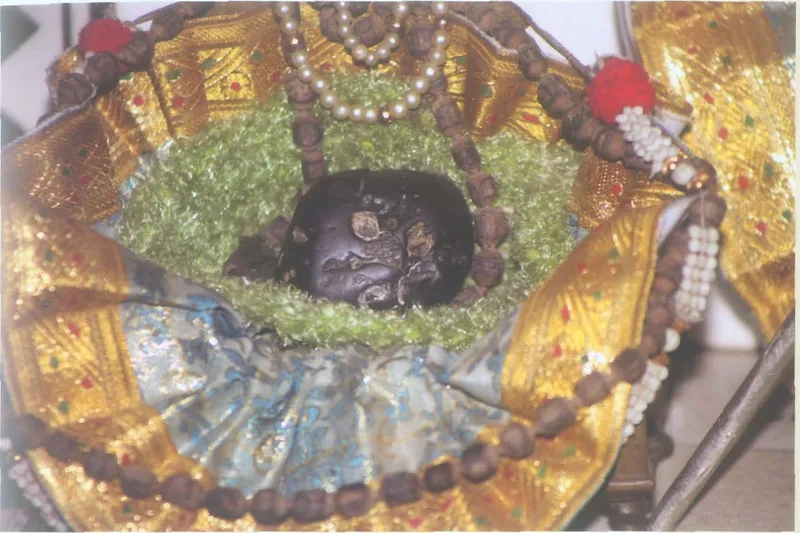
The same book records a local tradition that her father-in-law tried to kill her with a cobra hidden in her basket of flowers for worship, and that when she took hold of it, it became a śālagrāma-śilā, a sacred stone form of the Lord. According to the book, that śilā is on the altar of this temple; the story is not certain.[3]
Her stay and her sitting place
According to Vṛndāvana, the Playground of God (2010), Śrī Mīrābai secretly left her home for Vṛndāvana and settled where the temple stands today. The Color Guide to Vṛndāvana (2000) calls the temple the place where she used to live and do her bhajana.[1 +1] The 2010 book also describes a small room to the right of the altar which, according to the local tradition it records, was her sitting place: Mīrābai's sitting place. It is the only source for the room, so this is not certain.[2 +1]
Śrīla Prabhupāda
Śrīla Prabhupāda spoke of Śrī Mīrābai several times, always about her devotion and never about this temple.
Śrīla Prabhupāda spoke of Śrī Mīrābai several times, always about her devotion and never about this temple. He said that she was a devotee from childhood: her father gave her a small Kṛṣṇa doll to play with, and she came to love Kṛṣṇa as her husband; she was a king's daughter and was married to another prince.[5 +2] In his books he names her once (a general passage):[5]
General teaching (does not name the place)“Children who appear in such families fortunately generally imitate such worship of the Deities, even in the way of childhood play. … The celebrated Mīrā Bāī was a staunch devotee of Lord Kṛṣṇa as the great lifter of Govardhana Hill.”
Śrīla Prabhupāda, Śrīmad-Bhāgavatam, Canto 2, 3.15, purport · vedabase.io
In 1969 he said that Mīrābai appreciated Lord Caitanya as Kṛṣṇa and wrote many poems about Him, though she did not meet Him. These are the words that Vṛndāvana, the Playground of God prints on this temple's page without a reference.[4 +1]
General teaching (does not name the place)She appreciated that Lord Caitanya is Kṛṣṇa, and she has written one poetry, song, that "Now You have left aside Your flute, and You have taken the sannyāsī rod." In that way she has written nice poetry. "And where is Your hair and peacock feather? Now You are bald-headed." In this way. So Mīrā appreciated.
Śrīla Prabhupāda, Room Conversation with Allen Ginsberg, Columbus, 13 May 1969 · vedabase.io
Songs
Śrīla Prabhupāda said that Mīrābai's songs are very popular in India, mostly written in Hindi and some of them interpolated, and …
Śrīla Prabhupāda said that Mīrābai's songs are very popular in India, mostly written in Hindi and some of them interpolated, and in 1970 he wrote that he had no objection to their being sung, though the Hare Kṛṣṇa mantra is understood by all.[1 +2] A Bengali song that the song book credits to Mīrā tells of the princess who left her royal life: people call her mad, the Rāṇā calls her a disgrace to the family, and she calls only on Giridhārī.[10]
Visiting today
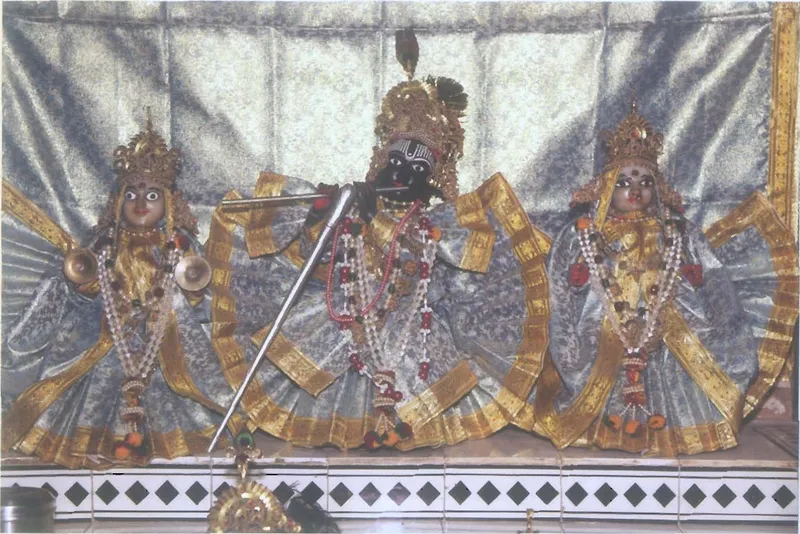
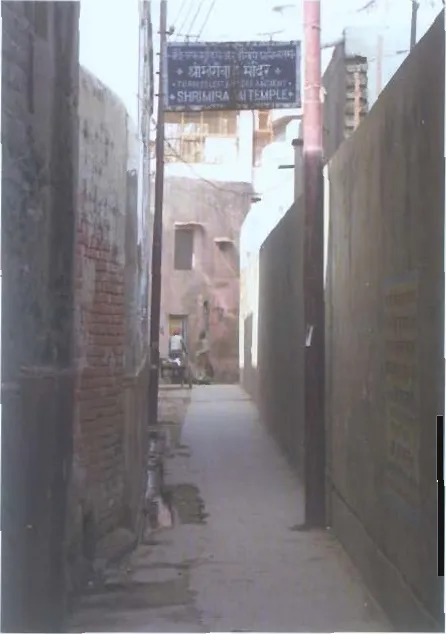
Vṛndāvana, the Playground of God (2010) gives the way: walk past the Rādhā-Dāmodara Mandira to the road to Śṛṅgāravaṭa, turn right opposite it, and the temple is on the right just before the end of that road. Its photograph shows a narrow paved lane and a signboard at the entrance.[3 +1] On the altar, the book says, are the Deities of Rādhā-Manohara, with a Deity of Śrī Mīrābai playing karatālas (hand cymbals) on the viewer's left, and a śālagrāma-śilā. Who installed the Deities, and when, is not recorded.[2 +2]
Location
| Where it is | walk past Rādhā-Dāmodara to the road to Śṛṇgāra Vaṭa, turn right opposite it; on the right just before the end[18] |
|---|
Places at Mīrābai Mandira
1 places
Nearby places
Rādhā-Dāmodara Mandira (Vṛndāvana) · Śṛṅgāravaṭa (Vṛndāvana)
Pictures
2 pictures
History
Prabhudayāl Mītal (1966) describes a small temple called Mīrābai's temple in the Govinda-bāga quarter, near the Śāhajī temple. He reports that an inquiry showed that it was built at the beginning of the twentieth century, without giving a year or naming the era he counts by, and that the person who prompted its building was another Mīrā, not the Mīrābai of the songs. He names no document, so this may not be the last word.[6]
Where the sources differ
Whether Śrī Mīrābai met Śrīla Rūpa Gosvāmī or Śrīla Jīva Gosvāmī in Vṛndāvana is a tradition told in Vṛndāvana, not established …
Whether Śrī Mīrābai met Śrīla Rūpa Gosvāmī or Śrīla Jīva Gosvāmī in Vṛndāvana is a tradition told in Vṛndāvana, not established history. The Bhaktamāla books tell of such a meeting: the Hindi Bhaktamāla (1904) names Śrīla Jīva Gosvāmī, the Bengali Bhaktamāla of Kṛṣṇadāsa Bābājī (1905) Śrīla Rūpa Gosvāmī.[11 +2]
Śrīla Prabhupāda spoke of the meeting in 1969, saying that she saw Śrīla Rūpa Gosvāmī, "a contemporary", and told the story in a lecture of 1972, beginning "At least, the story is like". His later words qualify these earlier references. On a morning walk in Bombay on 17 December 1975 he said:[7 +3]
General teaching (does not name the place)“One thing is, we don't find any authoritative scripture that Mīrābai ever met Rūpa Gosvāmī, but they say like that in Vṛndāvana. … Why Jīva Gosvāmi should not see woman? That is also doubtful.”
Śrīla Prabhupāda, Morning Walk, Bombay, 17 December 1975 · vedabase.io
In December 1976 he said again that Śrīla Rūpa Gosvāmī "had no reason to refuse seeing a woman". So the meeting is given here only as something said in Vṛndāvana. The accounts below follow the order of their dates.[7 +3]
Accounts differ Did Śrī Mīrābai meet Śrīla Rūpa Gosvāmī (or Śrīla Jīva Gosvāmī) in Vṛndāvana, and was she at first refused because she was a woman?
- Śrīla Prabhupāda, room conversation, 13 May 1969 (page: 'Colombus')'She saw Rūpa Gosvāmī, a contemporary.'
- Śrīla Prabhupāda, lecture, Ahmedabad, 8 December 1972Tells the story that Mīrābai went to see Śrīla Rūpa Gosvāmī at his bhajana in Vṛndāvana, was told he did not see women, and answered that in Vṛndāvana only Kṛṣṇa is puruṣa; introduced with 'At least, the story is like'.
- Śrīla Prabhupāda, morning walk, Bombay, 17 December 1975No authoritative scripture shows that Mīrābai ever met Śrīla Rūpa Gosvāmī, 'but they say like that in Vṛndāvana'; since husbands and wives came to Śrīla Rūpa Gosvāmī to settle their quarrels, 'how it is possible that he did not see any woman?'; the version naming Śrīla Jīva Gosvāmī (given by Girirāja, after Dr. Patel spoke of 'one Gosvāmī') is 'also doubtful'.
- Śrīla Prabhupāda, room conversation, Bombay, 26 December 1976He does not know who Mīrā's guru was; Śrīla Rūpa Gosvāmī had no reason to refuse seeing a woman.
Whose disciple Śrī Mīrābai was: Śrīla Prabhupāda said that he did not know of any guru of hers, while a later Hindi editor reports a view that she may have been a disciple of one Mathurādāsa.[8 +3]
Accounts differ Whose disciple Śrī Mīrābai was.
- Śrīla Prabhupāda, room conversation, Bombay, 26 December 1976Asked whether Śrīla Jīva Gosvāmī was her guru: 'No. I do not know who is the guru of Mīrābhāi.' … 'But I do not hear anyone as her guru.'
- Editor of the Hindi edition of the Vraja-bhakti-vilāsa, introduction, printed p. 5Editorial summary: reports the view of the author of the Nārāyaṇa-bhaṭṭa-caritāmṛta that Śrī Mīrā, known from the Bhaktamāla, was a disciple of Mathurādāsa jī, one of Śrīla Nārāyaṇa Bhaṭṭa's chief disciples, and adds that this needs serious investigation.
- The Bhaktamāla: Nābhā dāsa's chappaya 115, Priyādāsa's kavittas 471-480, Rūpakalā's Hindi prose (the Hindi Bhaktamāla (1904), printed pp. 1032-1046:) and Kṛṣṇadāsa Bābājī's Bengali (the Bengali Bhaktamāla of Kṛṣṇadāsa Bābājī (1905))Names no guru of Mīrā in any layer; tells only of a meeting in Vṛndāvana with Śrīla Jīva Gosvāmī (Priyādāsa, Rūpakalā) or Śrīla Rūpa Gosvāmī (the Bengali), not described as an initiation.
Where she was born: the Hindi Bhaktamāla (1904) says Meṛtā; the 2010 guidebook names another place.[13 +1]
Accounts differ Where Śrī Mīrābai was born.
- Vṛndāvana, the Playground of God (2010), on the Mīrābai temple's pagesBorn around 1500 in 'Chaukari' in Rajasthan, as a princess.
- The Bhaktamāla: Priyādāsa's kavitta 471 and Rūpakalā's prose (the Hindi Bhaktamāla (1904)), Kṛṣṇadāsa Bābājī's Bengali (the Bengali Bhaktamāla of Kṛṣṇadāsa Bābājī (1905))Born at Meṛtā (Rūpakalā: in Jodhpur state, daughter of Rāv Ratnasen, sister of Jayamal; the Bengali: in the village of Meṛtā); no year.
References
18 references
- The Color Guide to Vṛndāvana (2000), Written and Photographed by Rājaśekhara dāsa Brahmacārī, PDF p. 101
- Vṛndāvana, the Playground of God (2010), Bhakti Caitanya Svāmī, PDF p. 168
- Vṛndāvana, the Playground of God (2010), Bhakti Caitanya Svāmī, PDF p. 169
- Vṛndāvana, the Playground of God (2010), Bhakti Caitanya Svāmī, PDF p. 170
- Śrīla Prabhupāda, Śrīmad-Bhāgavatam, Canto 2, 3.15, purport · vedabase.io
- Prabhudayāl Mītal, part 1 ('ब्रज-संस्कृति की भूमिका'), 'Braj-yātrā', Vṛndāvana: 'Mīrābāī kā mandir', printed pp. 138–139
- Śrīla Prabhupāda, Room Conversation with Allen Ginsberg, Columbus, 13 May 1969 · vedabase.io
- Śrīla Prabhupāda, Room Conversation, Bombay, 26 December 1976 · vedabase.io
- Śrīla Prabhupāda, Letter to Ksirodakasayi, letter 70-01-29, 29 January 1970 · vedabase.io
- Āmi Pathe Pathe Ghuri Bhikhāriṇī ('Rāj-Rāṇī Mīrā') (Mīrā Bhāi (as the song book's heading 'By Mīrā Bhāi' credits it; the page's author field is empty; the duplicate page credits 'Mira Bhai')) · song book
- Śrī Bhaktamāla: Nābhā dāsa's verses, Priyādāsa's kavitta 479 (item 594 of the edition), middle line, printed p. 1043
- Śrī Bhaktamāla: Nābhā dāsa's verses, Rūpakalā's prose commentary on Priyādāsa's kavitta 479, printed p. 1044
- Kṛṣṇadāsa, chapter 'Caritra Śrī Mīrābāi', printed p. 269, left column, the chapter heading and the chapter's first two lines (below the end of the previous chapter), and right column, lines 23-26
- Śrīla Prabhupāda, Lecture, Ahmedabad, 8 December 1972 · vedabase.io
- Śrīla Prabhupāda, Morning Walk, Bombay, 17 December 1975 · vedabase.io
- Vraja-bhakti-vilāsa, Introduction, section 'śiṣya-paramparā va vaṁśaja' (disciples and descendants of Nārāyaṇa Bhaṭṭa), printed p. 5, 1st ed., publ. Bābā Kṛṣṇadāsa, Kusuma-sarovara, Saṁvat 2008
- Śrī Bhaktamāla: Nābhā dāsa's verses, Priyādāsa's kavitta 471 (item 586 of the edition) and the first sentence of Rūpakalā's prose commentary on it, printed p. 1034
- Vṛndāvana, the Playground of God (2010), Bhakti Caitanya Svāmī, p. 168