Rādhā-Dāmodara Mandira (Vṛndāvana)
राधा-दामोदर मन्दिर (वृन्दावन) Hindi name proposed
Also called Śrī Rādhā-Dāmodara temple, Rādhā Damodhara
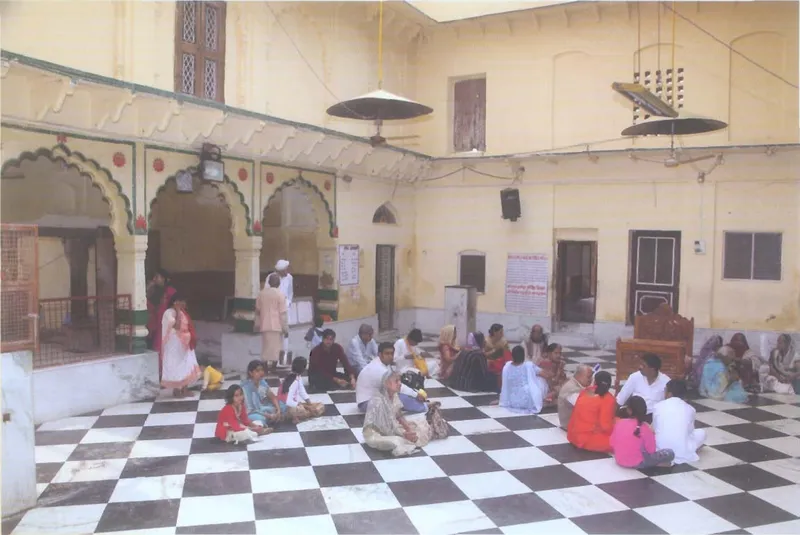
- What it is
- The Rādhā-Dāmodara Mandira is one of the seven old temples of the Gauḍīya Vaiṣṇavas in Vṛndāvana, in the Sevā-kuñja quarter.
- Visiting
- The guidebooks describe, beside Rādhā-Dāmodara, the Deities Rādhā-Vṛndāvana-candra, whom they name as Śrīla Kṛṣṇadāsa Kavirāja Gosvāmī's; Rādhā-Mādhava, named as Śrīla Jayadeva Gosvāmī's; and …
- Places here
- Kṛṣṇadāsa Kavirāja Gosvāmī Samādhi (Rādhā-Dāmodara), Rūpa Gosvāmī's bhajana-kuṭī (Rādhā-Dāmodara), Rūpa Gosvāmī Samādhi (Rādhā-Dāmodara), Bhūgarbha Gosvāmī's samādhi (Rādhā-Dāmodara), Grantha-ghar +8 more
In short
The Rādhā-Dāmodara Mandira is one of the seven old temples of the Gauḍīya Vaiṣṇavas in Vṛndāvana, in the Sevā-kuñja quarter. Śrīla Jīva Gosvāmī established it for his Deity, Śrī Rādhā-Dāmodara, whom, according to the Sādhana-dīpikā and the Bhakti-ratnākara, Śrīla Rūpa Gosvāmī made and gave to him.[1 +8] Śrīla Prabhupāda writes that the Gosvāmīs held their discourses at this spot and that the actual tombs of Śrīla Rūpa Gosvāmī and Śrīla Jīva Gosvāmī are here.[1 +9] He himself lived in two rooms of the temple until he left for America in 1965.[2 +1]
Key facts
| Kind | temple |
|---|---|
| Region · area | Vṛndāvana · Sevā-kuñja |
| Ācāryas | Śrīla Jīva Gosvāmī, Śrīla Rūpa Gosvāmī, Śrīla Raghunātha Bhaṭṭa Gosvāmī, Śrī Gopāla Bhaṭṭa Gosvāmī, Śrīla Kṛṣṇadāsa Kavirāja Gosvāmī |
Divine pastimes
The name Dāmodara
The Deity's name recalls a pastime of Kṛṣṇa's childhood. Śrīmad-Bhāgavatam (10.9–10.10) tells how mother Yaśodā tried to bind Him to a wooden mortar with a rope; every rope was two fingers too short until Kṛṣṇa, seeing her tired, agreed to be bound. Dragging the mortar tied to His belly, He pulled down the twin arjuna trees, and there the Bhāgavatam itself calls Him Dāmodara.[19 +7]
bālena niṣkarṣayatānvag ulūkhalaṁ tad dāmodareṇa tarasotkalitāṅghri-bandhau
niṣpetatuḥ parama-vikramitātivepa- skandha-pravāla-viṭapau kṛta-caṇḍa-śabdau ||
By dragging behind Him with great force the wooden mortar tied to His belly, the boy Kṛṣṇa uprooted the two trees. By the great strength of the Supreme Person, the two trees, with their trunks, leaves and branches, trembled severely and fell to the ground with a great crash.
Translation: Śrīla A.C. Bhaktivedanta Swami PrabhupādaIn his purport Śrīla Prabhupāda calls this the dāmodara-līlā and explains the name: dāma means rope and udara the belly.[20 +5] The Bhāgavatam draws the lesson itself: the Lord who controls the whole universe comes under the control of His devotees, and even Brahmā and Śiva did not receive such mercy as mother Yaśodā.[23 +3]
General teaching (does not name the place)“This is the pastime of Kṛṣṇa known as dāmodara-līlā. Therefore another of Kṛṣṇa’s names is Dāmodara. As stated in the Hari-vaṁśa: sa ca tenaiva nāmnā tu kṛṣṇo vai dāma-bandhanāt goṣṭhe dāmodara iti gopībhiḥ parigīyate”
Śrīla Prabhupāda, Śrīmad-Bhāgavatam, 10.10.27, purport · vedabase.io
The Bhāgavatam sets the pastime in Nanda's house in Gokula, before the cowherds moved to Vṛndāvana; no source sets it at this temple, whose Deity bears its name.[19 +4] Śrīla Jīva Gosvāmī says that the day was probably Dīpāvalī, because the worship of the Dāmodara pastime is enjoined in the month of Kārttika, and Śrīla Prabhupāda gives the same day, following Śrīla Viśvanātha Cakravartī Ṭhākura.[37 +1] The Caitanya-caritāmṛta distinguishes Rādhā-Dāmodara, the son of Nanda Mahārāja in Vṛndāvana, from the Viṣṇu form Dāmodara who presides over Kārttika.[39]
The Gosvāmīs and ācāryas
The Sādhana-dīpikā of Śrīla Rādhā-kṛṣṇa Gosvāmī says that the Deity Rādhā-Dāmodara was made by Śrīla Rūpa Gosvāmī and given by …
Śrīla Rūpa Gosvāmī and Śrīla Jīva Gosvāmī
The Sādhana-dīpikā of Śrīla Rādhā-kṛṣṇa Gosvāmī says that the Deity Rādhā-Dāmodara was made by Śrīla Rūpa Gosvāmī and given by him to Śrīla Jīva Gosvāmī (summarised here, not translated), and the Bhakti-ratnākara quotes the verse.[7 +3]
According to the Bhakti-ratnākara, Śrīla Rūpa Gosvāmī made the Deity on an order received in a dream, and Rādhā-Dāmodara became the treasure of Śrīla Jīva Gosvāmī's life. The Deity showed him His pastimes: He sometimes asked him for food, and Śrīla Jīva Gosvāmī watched Him eat; one day, smiling, He played His flute and called him to come and see Him.[1 +5] Read more: Śrī Rādhā-Dāmodara, the Deity of Śrīla Jīva Gosvāmī →
Śrīla Jīva Gosvāmī lived where Rādhā-Dāmodara were worshipped. The Bhakti-ratnākara tells how he lodged Śrīla Śrīnivāsa Ācārya there, gave him darśana of the Deity in the morning, and took him to Śrīla Rūpa Gosvāmī's samādhi (tomb) "at that very place".[1 +7] On a walk through the temple in 1972 Śrīla Prabhupāda said that when Śrīla Jīva Gosvāmī built it, Śrīla Rūpa Gosvāmī lived here with him, his nephew and disciple.[11] In The Nectar of Devotion he writes that Śrīla Rūpa Gosvāmī's headquarters were here and that two tomb-like structures commemorate him, his place of bhajana (worship), the bhajana-kuṭī, and the tomb of his body.[1 +5]
The Gosvāmīs' meetings
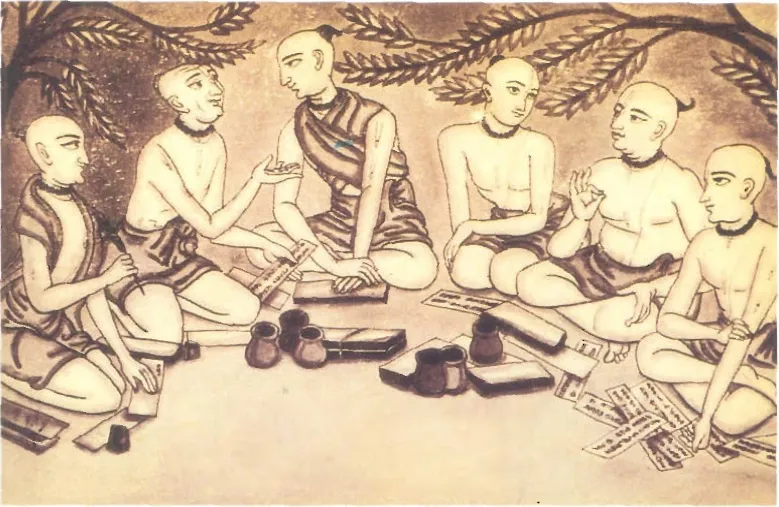
Śrīla Prabhupāda writes that the Gosvāmīs' foremost duty was to hold learned discourses among themselves at this spot, and in talks of 1972 and 1973 he said that all six used to sit here and read Śrīmad-Bhāgavatam.[1 +5] The sources name different Gosvāmīs as the reader (see below).
Names this place“the foremost duty discharged by them was to hold learned discourses amongst themselves at Sevākuñja, Vṛndāvana (the spot where Śrī Rādhā-Dāmodara Temple was established by Śrīla Jīva Gosvāmī and where the actual samādhi tombs of Śrīla Rūpa Gosvāmī and Śrīla Jīva Gosvāmī are laid).”
Śrīla Prabhupāda, Śrīmad-Bhāgavatam, 2.2.5, purport · vedabase.io
The samādhis of Śrīla Jīva Gosvāmī and Śrīla Kṛṣṇadāsa Kavirāja Gosvāmī
The samādhis (tombs) of Śrīla Jīva Gosvāmī and of Śrīla Kṛṣṇadāsa Kavirāja Gosvāmī stand together at this temple, which Śrīla Jīva Gosvāmī founded.[2 +4] The guidebook Śrī Vraja-maṇḍala Parikramā (2007) describes the two in one entry, behind the main temple.[14 +3] Each tomb has its own page: Śrīla Jīva Gosvāmī's samādhi and the tomb known as Kṛṣṇadāsa's. The sources differ on whose the second tomb is, on what it holds, and on the year of Śrīla Jīva Gosvāmī's departure.
Śrīla Prabhupāda writes that this temple at Sevā-kuñja is the spot where the actual samādhi tombs of Śrīla Rūpa Gosvāmī and Śrīla Jīva Gosvāmī are laid (quoted above).[1 +5] The guidebooks add that Śrīla Jīva Gosvāmī's body was placed here near his beloved Deities, Śrī Śrī Rādhā-Dāmodara.[2 +6] On a walk at the temple in 1972 Śrīla Prabhupāda pointed out Śrīla Kṛṣṇadāsa Kavirāja Gosvāmī's tomb, though in a purport he records that some take it for the tomb of Śrī Kṛṣṇadāsa Brahmacārī.[56 +5] He also writes that Śrīla Kṛṣṇadāsa Kavirāja Gosvāmī compiled the Caitanya-caritāmṛta while Śrīla Jīva Gosvāmī was still present.[2]
No source older than the twentieth century describing the two tombs has been found. The Bengali Vṛndāvana-kathā (1920) puts Śrīla Jīva Gosvāmī's tomb inside a house in the courtyard on the south side of the temple, and the tombs of Śrīla Kṛṣṇadāsa Kavirāja Gosvāmī and of Śrīla Bhūgarbha Gosvāmī (his samādhi) in the small house beside it. The caption of its photograph adds that the samādhis of other mahāntas (senior Vaiṣṇavas) stand in front (summarised here, not translated).[70 +1] The same book reports that Śrīla Jīva Gosvāmī's disappearance festival is held every year on the third day of the bright fortnight of Pauṣa.[75]
The historian A. W. Entwistle (1987) reports a testament of 1606 in which Śrīla Jīva Gosvāmī provided for the future custody of the temples, Deities and manuscripts; it was witnessed by a Kṛṣṇadāsa Kavirāja and other Gauḍīya devotees. The original has not been independently examined.[43] The year of Śrīla Jīva Gosvāmī's departure is given as 1598 or 1608 (see below).
The Color Guide to Vṛndāvana (2000) shows the two samādhis side by side under one veranda: Śrīla Jīva Gosvāmī's on the left, with a signboard naming his samādhi mandira, and Śrīla Kṛṣṇadāsa Kavirāja Gosvāmī's on the right.[69] Other guidebooks place them within the temple compound or behind the main temple; they probably describe the same spot.[14 +3]
Other samādhis and holy spots of the compound
- Śrīla Jīva Gosvāmī's samādhi: Śrīla Prabhupāda places his actual tomb here, beside Śrīla Rūpa Gosvāmī's.[1 +9]
- Śrīla Kṛṣṇadāsa Kavirāja Gosvāmī's samādhi: Śrīla Prabhupāda pointed out his tomb in 1972. According to the local tradition recorded in Śrī Vraja-maṇḍala Parikramā (2007), he wrote most of the Caitanya-caritāmṛta in his bhajana-kuṭī here, which is not certain; the work's own closing verse says only that it was completed in Vṛndāvana.[11 +7]
- Śrīla Bhūgarbha Gosvāmī's samādhi: four guidebooks and a Bengali book of 1920 report it in the compound.[13 +5]
- Śrīla Bhaktisiddhānta Sarasvatī Ṭhākura's puṣpa-samādhi, a memorial holding flowers rather than the body.[65 +1]
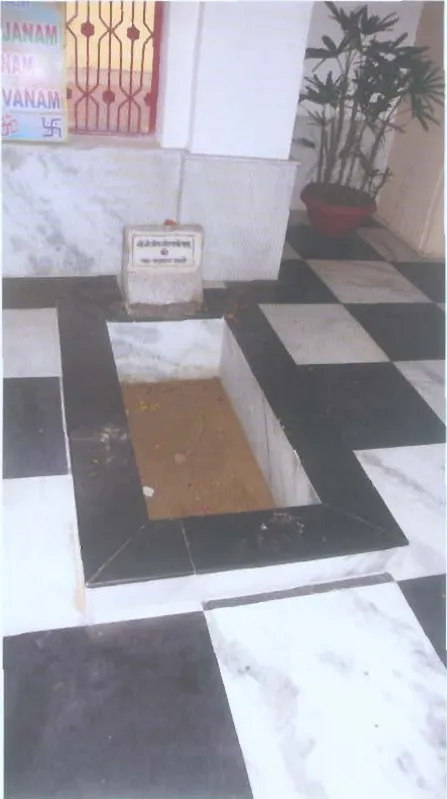
- The Samādhi-pīṭha: The Color Guide to Vṛndāvana (2000) prints a photograph, captioned (the reading is uncertain) "Samadhi Pitha at Rādhā-Dāmodara", of a walled enclosure crowded with small samādhis, and its plan marks a grid of small tombs with Śrīla Bhaktisiddhānta Sarasvatī Ṭhākura's among them; it does not say whose the others are. A photograph caption of 1920 probably shows the same kind of tombs: it speaks of the samādhis of other mahāntas in front of the tomb houses of Śrīla Jīva Gosvāmī and Śrīla Kṛṣṇadāsa Kavirāja Gosvāmī.[65 +2] Śrīla Prabhupāda's biography says that while he lived here he regularly visited the chief samādhis, those of Śrīla Jīva Gosvāmī, Śrīla Bhaktisiddhānta Sarasvatī Ṭhākura and Śrīla Kṛṣṇadāsa Kavirāja Gosvāmī.[65 +2]
- Śrīla Jīva Gosvāmī's foot-washing place: according to the local tradition recorded in a photograph caption in Vṛndāvana, the Playground of God (2010), a small sunken basin next to Śrīla Rūpa Gosvāmī's samādhi is his foot-washing place; no source tells its story or its age, so this is not certain.[82]
- The Grantha-ghar, a room to the left of the altar where, according to the local tradition recorded in The Color Guide to Vṛndāvana (2000), a library for the Gosvāmīs' books was kept; this is not certain.[56 +4]
- Śrīla Sanātana Gosvāmī's govardhana-śilā: the Bengali Vṛndāvana-kathā (1920) says that after Śrīla Sanātana Gosvāmī's departure Śrīla Jīva Gosvāmī kept the stone in this temple and worshipped it. Whether the original stone is here today, the sources differ (see below).[54]
Śrīla Prabhupāda
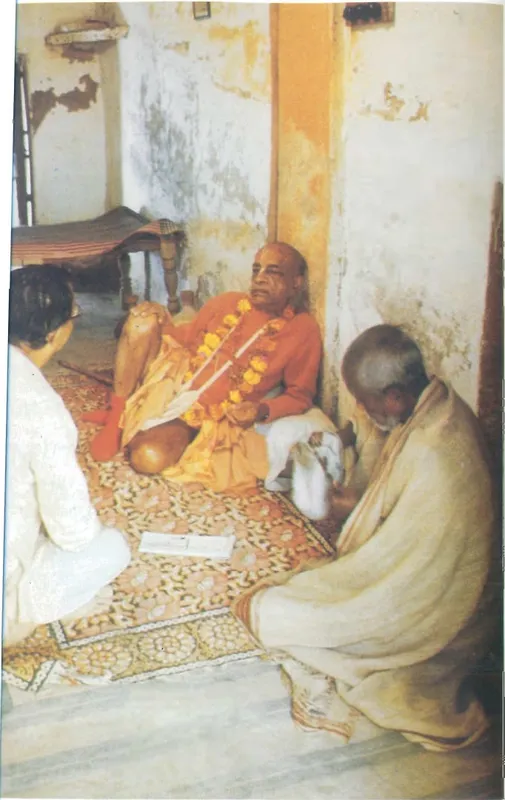
Śrīla Prabhupāda lived at the Rādhā-Dāmodara temple before he went to America in 1965.
His rooms at the temple
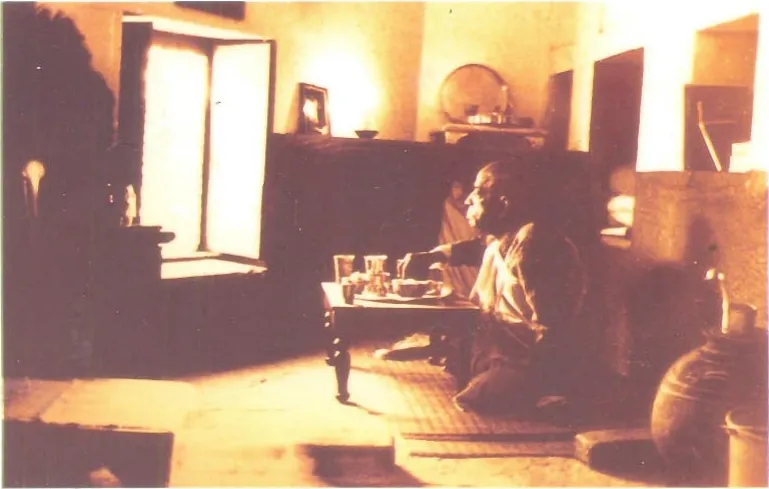
Śrīla Prabhupāda lived at the Rādhā-Dāmodara temple before he went to America in 1965. In 1973 he recalled why he came:[2 +6]
Names this placeThen these Rādhā-Damodara temple men, they call me, that "Why don’t you come, live here? We give you two rooms. You just repair and live here. Whatever you like, you can do." So I thought, "It is Jīva Gosvāmī's place"; otherwise living in a very big palace, Keśī Ghat, for seven years.
Śrīla Prabhupāda, Room Conversation with Yadurabara About Early Life, London, 12 August 1973 · vedabase.io
He gave the year in which he moved in differently at different times, and his own words and the guidebooks also differ on where he lived before (see below).[2 +1] The rooms have their own page, Śrīla Prabhupāda's rooms. Read more: Śrīla Prabhupāda at the Rādhā-Dāmodara temple →
Plans for Śrīla Jīva Gosvāmī's place
From 1966 to 1973 he tried to develop the temple: he planned an institute, the "Rupanuga Para Vidya Pitha", on its land, paid a deposit for leasehold land around it, offered the sevāits to arrange the worship and daily prasādam for at least fifty devotees, and from 1972 paid the sevāit two hundred rupees a month.[49 +4] In 1973 he gave his reason:[88]
Names this place“I want to see Rādhā-Dāmodara dressed nicely. … We want to make it unique in Vṛndāvana. Because it is Jīva Gosvāmī's place. That is my... Because Rūpa Gosvāmī and Jīva Gosvāmī sat there.”
Śrīla Prabhupāda, Room Conversation about Rādhā-Dāmodara Property, Delhi, 1 November 1973 · vedabase.io
In the Kārttika month of 1972 he stayed at the temple for the Kārttika vow and spoke every morning and evening at the samādhi place in its courtyard on the Bhakti-rasāmṛta-sindhu.[87 +3] In the same year, while the new temple at Ramaṇa-reti was being planned, he had a saṅkīrtana party walk there every day from the Rādhā-Dāmodara temple.[92]
Names this place“Now we are in Vrindaban, and the programme for speaking daily morning and evening in the courtyard samadhi-place at Radha-Damodara temple is very much being appreciated by the devotees.”
Śrīla Prabhupāda, Letter to Mukunda, letter 72-11-02, 2 November 1972 · vedabase.io
The guidebooks report that Śrīla Prabhupāda called this temple, or the corner by Śrīla Rūpa Gosvāmī's samādhi, the centre of the spiritual world; the saying has not been found in his own books, talks or letters.[13 +3]
Songs
In a Bengali song of his own Śrīla Prabhupāda names the lovely place called Sevā-kuñja, where Śrī Rādhā-Dāmodara reside, and …
In a Bengali song of his own Śrīla Prabhupāda names the lovely place called Sevā-kuñja, where Śrī Rādhā-Dāmodara reside, and takes shelter at Their feet.[96]
The kīrtana Jaya Rādhā-Mādhava hails Rādhā-Dāmodara as the treasure of Śrīla Jīva Gosvāmī's life, as the Bhakti-ratnākara calls Them.[8 +2]
Visiting today
The altar
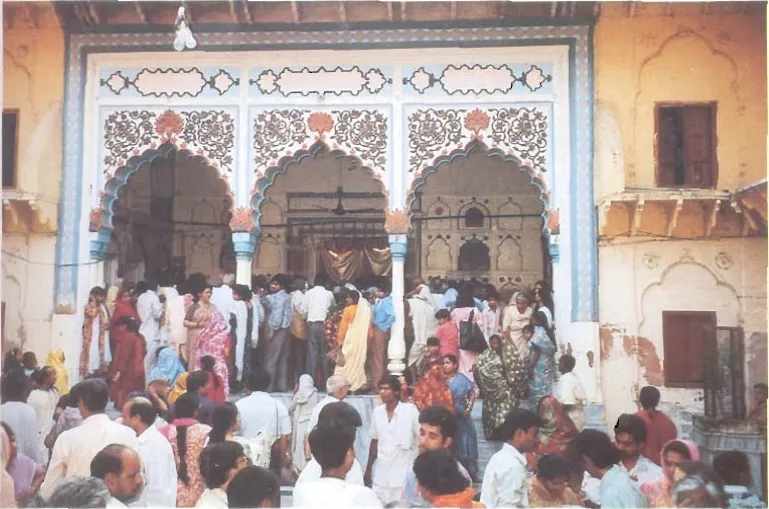
The guidebooks describe, beside Rādhā-Dāmodara, the Deities Rādhā-Vṛndāvana-candra, whom they name as Śrīla Kṛṣṇadāsa Kavirāja Gosvāmī's; Rādhā-Mādhava, named as Śrīla Jayadeva Gosvāmī's; and Rādhā-Chalacikana of Śrīla Bhūgarbha Gosvāmī. Vṛndāvana, the Playground of God (2010) adds Lalitā beside Rādhā-Dāmodara and calls the Vṛndāvana-candra and Mādhava Deities pratibhū forms.[12 +6] Who installed Vṛndāvana-candra is disputed (see below).
Around the temple
According to Śrī Vraja-maṇḍala Parikramā (2007), the walled Sevā-kuñja garden lies just south-west of the temple, Śṛṅgāravaṭa stands near it on the bank of the Yamunā, and the Rādhā-Śyāmasundara temple is close by. The original Deity is in the Rādhā-Dāmodara temple of Jaipur, and the gosāins of this temple also own the small Rādhā-Dāmodara temple at Rādhā-kuṇḍa.[12 +5]
The darśana times printed in 2000 (in summer maṅgala-ārati at 4:30 a.m., darśana 6:30 a.m. to 12:30 p.m. and 5 to 9:30 p.m.) may well have changed; ask at the temple.[69 +1]
Location
| Where it is | map key 8[115] |
|---|
Places at Rādhā-Dāmodara Mandira (Vṛndāvana)
13 places
- ↳Kṛṣṇadāsa Kavirāja Gosvāmī Samādhi (Rādhā-Dāmodara)samādhi›
- ↳Rūpa Gosvāmī's bhajana-kuṭī (Rādhā-Dāmodara)bhajana-kuṭīra›
- ↳Rūpa Gosvāmī Samādhi (Rādhā-Dāmodara)samādhi›
- ↳Bhūgarbha Gosvāmī's samādhi (Rādhā-Dāmodara)samādhi›
- ↳Grantha-gharlibrary room›
- ↳Jīva Gosvāmī's foot-washing place›
- ↳Jīva Gosvāmī's samādhi (Rādhā-Dāmodara)samādhi›
- ↳Puṣpa-samādhi of King Birhambirpuṣpa-samādhi›
- ↳Samādhi-pīṭha (Rādhā-Dāmodara)samādhi enclosure›
- ↳Samādhis of Jīva Gosvāmī and Kṛṣṇadāsa Kavirāja Gosvāmī (Rādhā-Dāmodara)samādhi (pair)›
- ↳Sanātana Gosvāmī's govardhana-śilā (Rādhā-Dāmodara)śilā›
- ↳Bhaktisiddhānta Sarasvatī Gosvāmī Puṣpa-samādhi (Rādhā-Dāmodara)puṣpa-samādhi›
- ↳Prabhupāda's rooms (Rādhā-Dāmodara)bhajana-kuṭīra›
Nearby places
Sevā-kuñja · Rādhā-Śyāmasundara Mandira (Vṛndāvana)
Pictures
5 pictures
History
When the worship began
The sources give different years for the installation of the Deity and the founding of the temple. The historian A. W. Entwistle (1987) dates the founding to about 1542 and reports a document in the City Palace of Jaipur that gives 1547; Prabhudayāl Mītal (1966) gives the tenth day of the bright fortnight of Māgha, Saṁvat 1599, for the beginning of the Deity's service.[40 +2] Entwistle also reports a document of 1588 by which Śrīla Jīva Gosvāmī bought from one Alikhan Chaudhari the plot on which he built a temple for Rādhā-Dāmodara. Both documents are known here only from Entwistle's report; the originals have not been independently examined.[43] The guidebooks give other years, and the sources differ:
Accounts differ Year of the Deity's installation and of the temple's founding.
- Śrī Vraja-maṇḍala Parikramā (2007), citing Sevā-prākaṭyainstalled in saṁvat 1599 (1543 AD), Māgha, Śuklā-daśamī
- Vṛndāvana, the Playground of God (2010)Śrīla Rūpa's gift of Dāmodara to Jīva 'is generally understood to have occurred in 1542'; Jīva 'established this temple in 1558'
- The Color Guide to Vṛndāvana (2000)Deity first worshipped in 1542; land acquired in 1558 when the Deity was installed on the siṁhāsana
- Vṛndāvana-Dhāma Ki Jaya! (c. 1986)Śrīla Rūpa Gosvāmī installed the Deity of Lord Dāmodara in A.D. 1542
The Deity's journeys
The Bengali Vṛndāvana-kathā (1920) says that probably in 1670, when temples and images were being destroyed under Aurangzeb, all the Deities of the Gauḍīya line, Rādhā-Dāmodara among them, were taken from Vṛndāvana to Jaipur, and that His pratibhū, a representative image, is now worshipped here.[44 +1] Entwistle, following A. K. Roy, reports that the Deity went first to Kāmā, reached Jaipur in 1760, came back to Vṛndāvana in 1796 and returned to Jaipur in 1821.[46 +1] The sources differ on the dates and on whether the Deity now in Vṛndāvana is the original:
Accounts differ When the original Rādhā-Dāmodara Deity was taken to Jaipur, and by which way.
- Vṛndāvana, the Playground of God (2010)Taken to Jaipur by Mahārāja Jai Singh in 1670; brought back around 1796; may have returned to Jaipur around 1821.
- The Color Guide to Vṛndāvana (2000)Moved to Jaipur in 1670, at the time of Aurangzeb's attack.
- Entwistle (1987), p. 185 and p. 219, note 471, citing A. K. RoyWith the Deities of Govinda-deva, Gopīnātha and Rādhā-vinoda first taken to Kāmā under the protection of the rulers of Amber; moved to Jaipur in 1760; brought back to Vṛndāvana in 1796; returned to Jaipur in 1821.
- Vṛndāvana-kathā (1920), p. 218Probably at this time (1670 CE) all the Gauḍīya Deities, Rādhā-Dāmodara among them, were taken from Vṛndāvana to Jaipur under the shelter of Rāmasiṁha, eldest son of Mirzā Rājā Jaisiṁha I.
Accounts differ Whether the Rādhā-Dāmodara Deity now in Vṛndāvana is the original, and where the original is.
- Śrī Vraja-maṇḍala Parikramā (2007)the original Śrī Rādhā-Dāmodara are now in Jaipura and Their pratibhū-vigrahas are in Vṛndāvana
- Vṛndāvana, the Playground of God (2010)taken to Jaipur in 1670, returned around 1796; some say the original stayed in Vṛndāvana from then on, others that He went back to Jaipur around 1821; the book does not decide
- The Color Guide to Vṛndāvana (2000)the original Deity was moved to Jaipur in 1670; some researchers believe the present Deity is the pratibhū-mūrti, others that it is the original
- Vṛndāvana-Dhāma Ki Jaya! (c. 1986)The original Deities have all been moved to Jaipur; those here are pratibhū-mūrtis
The temple and its keepers
Śrīla Prabhupāda said in 1970 that Śrīla Jīva Gosvāmī, being a brahmacārī (a celibate monk) without sons, entrusted the management of the temple to a householder devotee, whose descendants still manage it; from 1966 to 1972 he wrote to these Gosvāmīs, the sevāits (servants in charge) of the temple.[48 +4]
Names this place“later on when Jīva Gosvāmī established the Rādhā-Damodara temple in Vṛndāvana, but he had no sons because he was brahmacārī, so some of his gṛhastha devotee was entrusted with the management of the Rādhā-Damodara temple, and they are still going on by their descendants.”
Śrīla Prabhupāda, Vaiṣṇava Calendar Description, Calcutta, 2 September 1970 · vedabase.io
On the 1972 walk he said that the temple's well is the original one and that the room where the Gosvāmīs dined is not less than four hundred and fifty years old.[11] The Vṛndāvana-kathā (1920) called the temple hall modern, built like a Bengal ṭhākura-dālāna (a hall for the Deity), with no notable carving.[53]
The manuscripts
The same book had heard that the Gosvāmīs' manuscripts in their own hands were kept in a room of this temple; it reports that in 1916 the temple's Gosvāmī could not say where they had gone during a long lawsuit, and that a family quarrel had left parts of the temple near collapse.[54 +1] The guidebooks identify a document kept at the temple as Śrīla Jīva Gosvāmī's last will; The Color Guide to Vṛndāvana (2000) dates his departure by it to 1608 rather than 1598.[56 +2] The local tradition recorded in The Color Guide to Vṛndāvana (2000), that Emperor Akbar paid for a library here, is not certain: no document confirms it. It is told on the page of the Grantha-ghar.[56 +4]
Where the sources differ
Who recited Śrīmad-Bhāgavatam in the Gosvāmīs' gatherings here: the sources name Śrīla Raghunātha Bhaṭṭa Gosvāmī or Śrī Gopāla …
Who recited Śrīmad-Bhāgavatam in the Gosvāmīs' gatherings here: the sources name Śrīla Raghunātha Bhaṭṭa Gosvāmī or Śrī Gopāla Bhaṭṭa Gosvāmī.[10 +3]
Accounts differ Who recited Śrīmad-Bhāgavatam in the Gosvāmīs' gatherings at this place.
- Śrī Vraja-maṇḍala Parikramā (2007)Śrīla Raghunātha Bhaṭṭa would elucidate on Śrīmad-Bhāgavatam in his melodious voice
- CC Antya 13.126 and 13.128Śrīla Raghunātha Bhaṭṭa recited Śrīmad-Bhāgavatam in Śrīla Rūpa Gosvāmī's assembly, in a voice sweet as a cuckoo's (no place named)
- Śrīla Prabhupāda, lecture, Bombay, 8 January 1973at the Rādhā-Dāmodara temple, by Śrīla Rūpa Gosvāmī's tomb, Śrī Gopāla Bhaṭṭa Gosvāmī was reading, the other Gosvāmīs heard, and Śrīla Jīva Gosvāmī was writing comment
Where Śrīla Rūpa Gosvāmī composed the Bhakti-rasāmṛta-sindhu: one guidebook says it was here, which is not certain, and the book itself names Gokula.[12 +4]
Accounts differ Where Śrīla Rūpa Gosvāmī composed the Bhakti-rasāmṛta-sindhu.
- Śrī Vraja-maṇḍala Parikramā (2007)Śrīla Rūpa Gosvāmī compiled Śrī Bhakti-rasāmṛta-sindhu, Ujjvala-nīlamaṇi and other sacred texts at this place (Rādhā-Dāmodara, in his small hut behind the temple in Sevā-kuñja)
- Bhakti-rasāmṛta-sindhu, closing verse (Śrīla Rūpa Gosvāmī)composed by the insignificant Rūpa residing at Gokula (gokulam adhiṣṭhitena)
- Śrīla Prabhupāda, The Nectar of Devotion, Concluding Words (1969)Rūpa finished Śrī Bhakti-rasāmṛta-sindhu in Gokula Vṛndāvana; he lived in different parts of Vṛndāvana and his headquarters were in the temple of Rādhā-Dāmodara
The wording of these accounts is our summary of the sources, not a published translation.
How the temple stands to Sevā-kuñja: the sources describe it in different ways.[1 +5]
Accounts differ The temple's relation to Sevā-kuñja.
- Śrī Vraja-maṇḍala Parikramā (2007), temple entryThis temple is situated within the area of Sevā-kuñja
- Śrī Vraja-maṇḍala Parikramā (2007), Sevā-kuñja entrySevā-kuñja lies just near the temple of Śrī Rādhā-Dāmodara, to the south-west
- The Color Guide to Vṛndāvana (2000); the undated parikramā notes VṛndāvanaFormerly this spot was in the middle of Sevā-kuñja
- the undated parikramā notes VṛndāvanaThis temple is in the middle of Seva kuja; Seva Kunja is not just the area within walls but the whole area for about a mile in each direction
Who installed the Rādhā-Vṛndāvana-candra Deities: the guidebooks name Śrīla Kṛṣṇadāsa Kavirāja Gosvāmī, and the Vṛndāvana-kathā (1920) says that no one knew.[13 +5]
Accounts differ Who installed the Rādhā-Vṛndāvana-candra Deities now on the altar of the Rādhā-Dāmodara temple.
- Vṛndāvana, the Playground of God (2010); The Color Guide to Vṛndāvana (2000); Vṛndāvana-Dhāma Ki Jaya! (c. 1986); the undated parikramā notes VṛndāvanaRādhā-Vṛndāvana-candra of (originally worshipped by) Śrīla Kṛṣṇadāsa Kavirāja Gosvāmī; Vṛndāvana, the Playground of God (2010) and Vṛndāvana-Dhāma Ki Jaya! (c. 1986) add that those in Vṛndāvana are pratibhū forms
- Śrīla Prabhupāda-līlāmṛta 1.10 (biography)the four-foot-high form of Vṛndāvana-candra, the black marble Kṛṣṇa Deity Śrīla Kṛṣṇadāsa Kavirāja had worshiped hundreds of years ago
- Śrī Vraja-maṇḍala Parikramā (2007)Śrī Vṛndāvana-candra is on the altar (no former worshipper named)
- Vṛndāvana-kathā (1920), pp. 77 and 84a pair of Deities named Vṛndāvana-candra is installed on the same seat as the Rādhā-Dāmodara pratibhū; no one knows who installed the Vṛndāvana-candra Ṭhākura in this temple, or how long ago
Whether Śrīla Sanātana Gosvāmī's original govardhana-śilā is still here, and what one circumambulates, and how many times, for the result of the Govardhana parikramā: the guidebooks say different things, and which is right is not certain; their accounts are set side by side on the page of Śrīla Sanātana Gosvāmī's govardhana-śilā.[14 +5]
Whose tomb stands beside Śrīla Rūpa Gosvāmī's: the guidebooks name Śrīla Bhūgarbha Gosvāmī, and a remark of Śrīla Prabhupāda in 1972 may name another; the accounts are set side by side on the page of Śrīla Bhūgarbha Gosvāmī's samādhi.[11 +3]
The year in which Śrīla Prabhupāda moved into the temple, and where he lived before.[2 +10]
Accounts differ The year Śrīla Prabhupāda moved into the Rādhā-Dāmodara temple.
- Vṛndāvana, the Playground of God (2010)He stayed here from 1959 ... until leaving for the United States in 1965; moved in shortly after taking sannyāsa on September 17th, 1959
- The Color Guide to Vṛndāvana (2000); the undated parikramā notes Vṛndāvana1959 (July) moved to Rādhā Dāmodara temple; 'It was in 1959 that Śrīla Prabhupāda first moved into the Rādhā Dāmodara temple'
- Śrīla Prabhupāda, letter of 16 August 1972In 1961 I moved to Radha Damodara temple and I am still living there
- Śrīla Prabhupāda, CC Ādi 10.85 purportwe had the opportunity to live from 1962 until 1965
Accounts differ Where Śrīla Prabhupāda lived just before moving to the Rādhā-Dāmodara temple.
- Śrīla Prabhupāda, letter to Gosainji, 17 May 1968When you invited me from Kesi Ghat to the shelter Radha-Damodara Jeu
- Śrīla Prabhupāda, conversations of 1973, 1974 and 1976he lived seven years at Keśī-ghāṭa (in a house he took there), then came to Rādhā-Dāmodara
- Vṛndāvana, the Playground of God (2010); The Color Guide to Vṛndāvana (2000); the undated parikramā notes Vṛndāvanabefore staying here he lived at the Vaṁśī Gopāla temple (from 1956 to 1959, The Color Guide to Vṛndāvana (2000))
- Śrīla Prabhupāda-līlāmṛta 1.10 (biography)changed his Vṛndāvana residence from Vaṁśī-gopālajī temple to Rādhā-Dāmodara temple (July 1962)
Whose tomb "Kṛṣṇadāsa's tomb" is, and whether it holds Śrīla Kṛṣṇadāsa Kavirāja Gosvāmī's body or ashes from Rādhā-kuṇḍa: the sources are set side by side on the page of the tomb known as Kṛṣṇadāsa's.[56 +5]
Accounts differ When Śrīla Jīva Gosvāmī left this world
- the undated parikramā notes Vṛndāvana chronology1608
- The Color Guide to Vṛndāvana (2000), entry 33B and chronology1598 ('In the year 1598, Śrīla Jīva Gosvāmī entered samādhi')
- The Color Guide to Vṛndāvana (2000), entry 33A-B continuation and later chronology'It is believed … 1598, but according to a document kept at Rādhā Damodhara and considered to be his last will and testament, his disappearance was in the year 1608'; chronology: 1608
- Vṛndāvana-kathā (1920), printed p. 84, reporting the temple record 'Sevāprākaṭya o Iṣṭalābher din nirṇaya'born Saṁvat 1580 (1523 AD), died Saṁvat 1665 (1608 AD), aged 84
More on this place
Śrī Rādhā-Dāmodara, the Deity of Śrīla Jīva Gosvāmī · Śrīla Prabhupāda at the Rādhā-Dāmodara temple
References
115 references
- Śrīla Prabhupāda, Śrīmad-Bhāgavatam, 2.2.5, purport · vedabase.io
- Śrīla Prabhupāda, Śrī Caitanya-caritāmṛta, Ādi-līlā 10.85, purport · vedabase.io
- Śrīla Prabhupāda, Śrī Caitanya-caritāmṛta, Ādi-līlā 12.82, purport · vedabase.io
- Śrīla Prabhupāda, Room Conversation with Professor Olivier Lacombe, Paris, 14 June 1974 · vedabase.io
- Śrīla Prabhupāda, Morning Walk with Professor Durckheim, Germany, 21 June 1974 · vedabase.io
- Vṛndāvana, the Playground of God (2010), Bhakti Caitanya Svāmī, PDF p. 12
- Śrīla Rādhā-kṛṣṇa Gosvāmī, Sādhana-dīpikā, eighth kakṣā (the text's chapter '(8) aṣṭa-kakṣā'), in its salutations to the Gosvāmīs; index segment labelled '(8) yāṅhāra prasāde haya abhīṣṭa-pūraṇa after v.9.29 (part 2/3)'
- Śrīla Narahari Cakravartī, Bhakti-ratnākara, Fourth Wave, 1912 ed. p. 139, 2nd ed., 1912
- Śrīla Narahari Cakravartī, Bhakti-ratnākara, Fourth Wave, 1912 ed. p. 138, 2nd ed., 1912
- Śrīla Prabhupāda, The Nectar of Devotion lecture, Bombay, 8 January 1973 · vedabase.io
- Śrīla Prabhupāda, Morning Walk, Vṛndāvana, 15 October 1972 · vedabase.io
- Śrī Vraja-maṇḍala Parikramā (2007), PDF p. 330
- The Color Guide to Vṛndāvana (2000), Written and Photographed by Rājaśekhara dāsa Brahmacārī, PDF p. 77
- Vṛndāvana-Dhāma Ki Jaya! (c. 1986), by Dhruva Mahārāja dāsa, PDF p. 67
- Śrīla Prabhupāda, The Nectar of Devotion, Concluding Words, 30 June 1969 · vedabase.io
- Śrī Vraja-maṇḍala Parikramā (2007), PDF p. 331
- Śrī Vraja-maṇḍala Parikramā (2007), PDF p. 345
- Śrīla Prabhupāda, Room Conversation, Vṛndāvana, 3 October 1976 · vedabase.io
- Śrīmad-Bhāgavatam 10.9.1–2, GRETIL
- Śrīmad-Bhāgavatam 10.9.14, GRETIL
Show all 115 references
- Śrīmad-Bhāgavatam 10.9.18, GRETIL
- Śrīmad-Bhāgavatam 10.10.27, Bhagavata Vidya Pith edition, ed. Bhagavata Rishi and Krishna Shankar Shastri, 1996
- Śrīla Prabhupāda, Kṛṣṇa, the Supreme Personality of Godhead (Kṛṣṇa book), Chapter 9, 'Mother Yaśodā Binds Lord Kṛṣṇa' · vedabase.io
- ŚB 10.9.15, Śrīla Prabhupāda's translation · vedabase.io
- Śrīla Prabhupāda, The Nectar of Devotion, Chapter 4 · vedabase.io
- Vṛndāvana-Dhāma Ki Jaya! (c. 1986), by Dhruva Mahārāja dāsa, PDF p. 66
- Śrīmad-Bhāgavatam 10.10.27, Bhagavata Vidya Pith edition, ed. Bhagavata Rishi and Krishna Shankar Shastri, 1996
- Śrīla Sanātana Gosvāmī: commentary on ŚB 10.9.13–14, Bhagavata Vidya Pith edition, ed. Bhagavata Rishi and Krishna Shankar Shastri, 1996
- Śrīla Viśvanātha Cakravartī Ṭhākura: commentary on ŚB 10.10.27, Bhagavata Vidya Pith edition, ed. Bhagavata Rishi and Krishna Shankar Shastri, 1996
- Śrīla Prabhupāda, Śrīmad-Bhāgavatam, 10.10.27, purport · vedabase.io
- Śrīmad-Bhāgavatam 10.9.19, GRETIL
- Śrīmad-Bhāgavatam 10.9.20, GRETIL
- Śrīmad-Bhāgavatam 10.9.21, GRETIL
- Śrīmad-Bhāgavatam 10.11.26, GRETIL
- Śrīla Prabhupāda, Kṛṣṇa, the Supreme Personality of Godhead (Kṛṣṇa book), Chapter 11, 'Killing the Demons Vatsāsura and Bakāsura' · vedabase.io
- ŚB 10.11.23, Śrīla Prabhupāda's translation: Upananda says that 'in order to do good to th · vedabase.io
- Śrīla Jīva Gosvāmī: commentary on ŚB 10.9.1, Bhagavata Vidya Pith edition, ed. Bhagavata Rishi and Krishna Shankar Shastri, 1996
- Śrīla Prabhupāda, Śrīmad-Bhāgavatam, 10.9.1–2, purport · vedabase.io
- Śrī Caitanya-caritāmṛta, Madhya-līlā 20.201, online edition · vedabase.io
- A. W. Entwistle, ch. 8 §66.13 'Radhadamodar', printed p. 406, Egbert Forsten, Groningen, 1987
- A. W. Entwistle, ch. 5 §7 'The Six Goswamis and other contemporary Gaudiya devotees', note 64, printed p. 148, Egbert Forsten, Groningen, 1987
- Prabhudayāl Mītal, part 1 ('ब्रज-संस्कृति की भूमिका'), 'Braj-yātrā', Vṛndāvana: 'Śrī Rādhādāmodara-jī', printed p. 137
- A. W. Entwistle, ch. 5 §15 'Some Gaudiya devotees of the late sixteenth century', printed p. 166, Egbert Forsten, Groningen, 1987
- Vṛndāvana-kathā, chapter 19 (ūnaviṁśa pariccheda), printed p. 218
- Vṛndāvana-kathā, ch. 5 (পঞ্চম পরিচ্ছেদ) 'রাধা-দামোদরজী', printed p. 77
- A. W. Entwistle, ch. 5 §25 'The exodus of deities from Braj', printed p. 185, Egbert Forsten, Groningen, 1987
- A. W. Entwistle, ch. 5 §36 'The Gaudiya Sampraday in modern times', note 471, printed p. 219, Egbert Forsten, Groningen, 1987
- Śrīla Prabhupāda, Vaiṣṇava Calendar Description, Calcutta, 2 September 1970 · vedabase.io
- Śrīla Prabhupāda, Letter to Gosainji, letter 68-05-17, 17 May 1968 · vedabase.io
- Śrīla Prabhupāda, Letter to Gauracandra Goswami and others, letter 71-12-22, 22 December 1971 · vedabase.io
- Śrīla Prabhupāda, Letter to Manager of Punjab National Bank, letter 72-03-12, 12 March 1972 · vedabase.io
- Śrīla Prabhupāda, Letter to Nripen Babu, letter 66-12-15, 15 December 1966 · vedabase.io
- Vṛndāvana-kathā, ch. 5, 'রাধা-দামোদরজী', printed p. 81
- Vṛndāvana-kathā, ch. 5, 'রাধা-দামোদরজী', printed p. 82
- Vṛndāvana-kathā, ch. 5, 'রাধা-দামোদরজী', printed p. 84
- The Color Guide to Vṛndāvana (2000), Written and Photographed by Rājaśekhara dāsa Brahmacārī, PDF p. 72
- Vṛndāvana, the Playground of God (2010), Bhakti Caitanya Svāmī, PDF p. 57
- Vṛndāvana, the Playground of God (2010), Bhakti Caitanya Svāmī, PDF p. 58
- The Color Guide to Vṛndāvana (2000), Written and Photographed by Rājaśekhara dāsa Brahmacārī, PDF p. 24
- the undated parikramā notes Vṛndāvana, ¶9
- Śrīla Prabhupāda-līlāmṛta 1.10 · vedabase.io
- Room conversation, Vṛndāvana, 6 July 1977: a disciple · vedabase.io
- Vṛndāvana, the Playground of God (2010), Bhakti Caitanya Svāmī, PDF p. 52
- Vṛndāvana, the Playground of God (2010), Bhakti Caitanya Svāmī, PDF p. 53
- The Color Guide to Vṛndāvana (2000), Written and Photographed by Rājaśekhara dāsa Brahmacārī, PDF p. 165
- Vṛndāvana, the Playground of God (2010), Bhakti Caitanya Svāmī, PDF p. 54
- the undated parikramā notes Vṛndāvana, ¶112
- the undated parikramā notes Vṛndāvana, ¶158
- The Color Guide to Vṛndāvana (2000), Written and Photographed by Rājaśekhara dāsa Brahmacārī, PDF p. 80
- Pulinbihārī Datta, ch. 5 (pañcama pariccheda), 'রাধা-দামোদরজী', printed p. 82
- Śrīla Prabhupāda, Śrī Caitanya-caritāmṛta, Ādi-līlā 12.85, purport · vedabase.io
- Śrīla Prabhupāda, Morning Walk, Vṛndāvana, 15 October 1972 · vedabase.io
- the undated parikramā notes Vṛndāvana, ¶162
- Vṛndāvana-kathā, ch. 5, caption of the photograph printed after p. 82
- Pulinbihārī Datta, end of ch. 5, printed p. 84
- Śrī Vraja-maṇḍala Parikramā (2007), PDF p. 92
- Śrīla Kṛṣṇadāsa Kavirāja Gosvāmī, Śrī Caitanya-caritāmṛta, Antya-līlā 20.157, online edition · vedabase.io
- The Colour Guide to Rādhā-kuṇḍa (1999), Rājaśekhara dāsa Brahmacārī, PDF p. 125
- The Color Guide to Vṛndāvana (2000), Written and Photographed by Rājaśekhara dāsa Brahmacārī, PDF p. 84
- Satsvarūpa dāsa Gosvāmī, Śrīla Prabhupāda-līlāmṛta, vol. 1, ch. 10 · vedabase.io
- The Color Guide to Vṛndāvana (2000), Written and Photographed by Rājaśekhara dāsa Brahmacārī, PDF p. 73
- Vṛndāvana, the Playground of God (2010), Bhakti Caitanya Svāmī, PDF p. 60
- Śrīla Prabhupāda, Lecture in Hindi (English translation), Vṛndāvana, 13 February 1974 · vedabase.io
- The Color Guide to Vṛndāvana (2000), Written and Photographed by Rājaśekhara dāsa Brahmacārī, PDF p. 91
- the undated parikramā notes Vṛndāvana, ¶177
- Śrīla Prabhupāda, Room Conversation with Yadurabara About Early Life, London, 12 August 1973 · vedabase.io
- Śrīla Prabhupāda, Letter to Tejiyas, Gurudasa, letter 72-08-16, 16 August 1972 · vedabase.io
- Śrīla Prabhupāda, Room Conversation about Rādhā-Dāmodara Property, Delhi, 1 November 1973 · vedabase.io
- Śrīla Prabhupāda, Letter to Mukunda, letter 72-11-02, 2 November 1972 · vedabase.io
- The Color Guide to Vṛndāvana (2000), Written and Photographed by Rājaśekhara dāsa Brahmacārī, PDF p. 27
- Bhakti: The Art of Eternal Love, introduction · vedabase.io
- Śrīla Prabhupāda, Letter to Acyutananda, letter dated 5 August 1972, London · vedabase.io
- the undated parikramā notes Vṛndāvana, ¶138
- Vṛndāvana, the Playground of God (2010), Bhakti Caitanya Svāmī, PDF p. 63
- Śrīla Prabhupāda-līlāmṛta 2.37, memory of Yamunā-devī dāsī · vedabase.io
- Śrī Guru Vandana Kori (Maṅgalācaraṇa of Gītār-gān) (A.C. Bhaktivedanta Swami Prabhupāda (as the song book credits it)) · song book
- Jaya Rādhā-Mādhava Rādhā-Mādhava Rādhe (no author credited in the song book) · song book
- the undated parikramā notes Vṛndāvana, ¶140
- Śrī Vraja-maṇḍala Parikramā (2007), PDF p. 303
- Śrī Vraja-maṇḍala Parikramā (2007), PDF p. 346
- Śrī Vraja-maṇḍala Parikramā (2007), PDF p. 333
- Śrī Vraja-maṇḍala Parikramā (2007), PDF p. 121
- Vṛndāvana, the Playground of God (2010), Bhakti Caitanya Svāmī, PDF p. 55
- the undated parikramā notes Vṛndāvana, ¶143
- Śrī Caitanya-caritāmṛta, Antya-līlā 13.126, online edition · vedabase.io
- Śrī Caitanya-caritāmṛta, Antya-līlā 13.128, online edition · vedabase.io
- Śrī Vraja-maṇḍala Parikramā (2007), PDF p. 322
- Śrīla Rūpa Gosvāmī, Bhakti-rasāmṛta-sindhu, closing verse after 4.9, GRETIL
- the undated parikramā notes Vṛndāvana, ¶142
- The Color Guide to Vṛndāvana (2000), Written and Photographed by Rājaśekhara dāsa Brahmacārī, PDF p. 109
- Vṛndāvana, the Playground of God (2010), Bhakti Caitanya Svāmī, PDF p. 61
- Vṛndāvana, the Playground of God (2010), Bhakti Caitanya Svāmī, PDF p. 62
- Śrīla Prabhupāda, Morning Walk, Māyāpur, 5 March 1974 · vedabase.io
- The Color Guide to Vṛndāvana (2000), Written and Photographed by Rājaśekhara dāsa Brahmacārī, PDF p. 117
- Śrī Vraja-maṇḍala Parikramā (2007), p. 634-635