Jāvaṭa parikramā
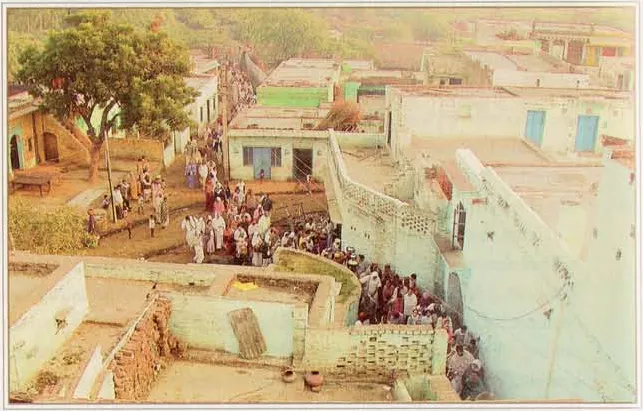
The places of Jāvaṭa (Yāvaṭa), the village of Jaṭilā’s house, in the order of the guidebook Śrī Vraja-maṇḍala Parikramā, from Jaṭilā’s house past Rādhikā’s pathway and the kuṇḍas to Pārala-Gaṅgā.[1]
On this page
Walking guide
Only 1 of the 17 stops has a position in our own map data (not from Google), so the guide can lead you to that stop only.
Your position stays on your phone; we do not store it.
About this route
| Order | As printed in the guidebook’s chapter on Jāvaṭa: the headings of its entries (17 places). The book does not call this a walking order and gives no parikramā path for Jāvaṭa, so this is the book’s order, not a checked walking route. |
|---|
Map of the stops
The interactive map uses Google Maps. It loads only when you open it. Each pin carries the number of its stop.
1 of 17 stops shown; the others have no position yet.
- confirmed position
- position not yet confirmed (preview only)
The stations
The Google Maps links open Google’s own result for each place.
- 1
Jaṭilā's house
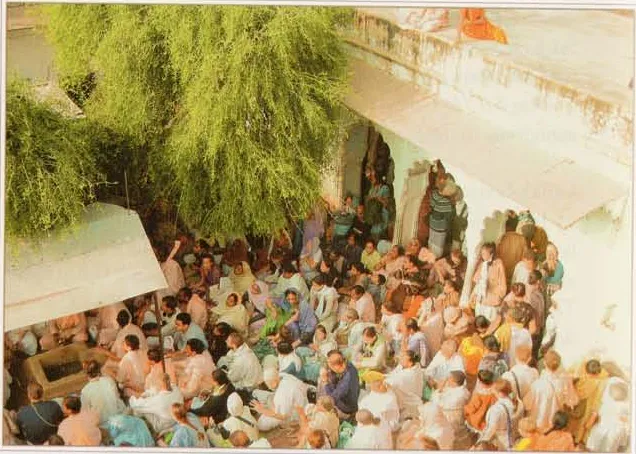
Jaṭilā's house, called Jaṭilā kī Havelī, stands on a high hillock in the western part of Jāvaṭa, with Deities of Jaṭilā, her daughter Kuṭilā and her son Abhimanyu, and a temple of Śrī Rādhā-Kāntajī.
Source details
printed: “Jaṭilā's house (Jaṭilā kī Havelī)”
- 2
Vatsakhora
Vatsakhora is the name that the guidebook Śrī Vraja-maṇḍala Parikramā (2007) gives to the cowshed of Abhimanyu at Jāvaṭa; the book says that it is known by this name even today.
Source details
printed: “The cowshed (Vatsakhora)”
- 3
Beriyā
Beriyā, "the place of the ber (jujube) tree", is a spot in the village of Jāvaṭa.
Source details
printed: “Beriyā”
- 4
Pānihārī-kuṇḍa
Śrī Vraja-maṇḍala Parikramā (2007) alone describes a Pānihārī-kuṇḍa north of Beriyā at Jāvaṭa, where the gopīs fetched water and Kṛṣṇa sometimes met them.
Source details
printed: “Pānihārī-kuṇḍa”
- 5
Mukharā's pathway
Mukharā's pathway is a path at the village of Jāvaṭa.
Source details
printed: “Mukharā's pathway”
- 6
Kuṭilā dūṣaṇa-sthāna
Kuṭilā dūṣaṇa-sthāna is a place in the village of Jāvaṭa.
Source details
printed: “Kuṭilā dūṣaṇa-sthāna”
- 7
Rādhikā gamana-patha
Rādhikā gamana-patha, "the path by which Rādhikā goes", is a path at Jāvaṭa.
Source details
printed: “Rādhikā's pathway (Rādhikā gamana-patha)”
- 8
Pīvana-kuṇḍa
Pīvana-kuṇḍa is a pond in the middle of Kadamba-kānana, the kadamba grove at Jāvaṭa.
Source details
printed: “Pīvana-kuṇḍa”
- 9
Kṛṣṇa-kuṇḍa
Kṛṣṇa-kuṇḍa is a pond in the south of Jāvaṭa, surrounded by banyan trees.
Source details
printed: “Kṛṣṇa-kuṇḍa”
- 10
- 11
Place where a boon was given
Śrī Vraja-maṇḍala Parikramā (2007) places near Nārada-kuṇḍa at Jāvaṭa the giving of Durvāsā Ṛṣi's boon to Rādhā, by which what She cooks becomes like nectar, citing the Padma Purāṇa.
Source details
printed: “The place where a boon was given (situated near Nārada-kuṇḍa)”
- 12
Gocāraṇa-patha
The Gocāraṇa-patha, "the path of cow-herding", is a path at the village of Jāvaṭa (Yāvaṭa).
Source details
printed: “The path to go cow herding (Gocāraṇa-patha)”
- 13
Kiśorī-kuṇḍa
Kiśorī-kuṇḍa, the pond of Kiśorī (Śrī Rādhā), lies with a temple of Kiśorījī in the eastern part of Jāvaṭa, according to the guidebook Śrī Vraja-maṇḍala Parikramā (2007), which also calls it Rādhā-kuṇḍa.
Source details
printed: “Kiśorī-kuṇḍa, or Rādhā-kuṇḍa”
- 14
Rāsa-maṇḍala
The Rāsa-maṇḍala of Jāvaṭa is a circle for the rāsa dance, Kṛṣṇa's dance with the gopīs, in that village.
Source details
printed: “Rāsa-maṇḍala”
- 15
Padmāvatī vivāha-sthala
The place of Padmāvatī's wedding at Jāvaṭa is named in Nārāyaṇa Bhaṭṭa's Vraja-bhakti-vilāsa (5.24): there the sakhīs, overwhelmed, embraced Kṛṣṇa and tied the knot, and the wedding of the sakhī Padmāvatī was celebrated with songs; pilgrims honour Nanda's son together with Padmāvatī with a prayer.
Source details
printed: “The place of Padmāvatī's wedding (Padmāvatī vivāha-sthala)”
- 16
Cīra-kuṇḍa
Cīra-kuṇḍa is a pond at Jāvaṭa that Śrī Vraja-maṇḍala Parikramā (2007) lists, together with Hiṇḍolā-sthāna, among the 'very attractive places situated near Kiśorī-kuṇḍa', without a pastime or an explanation of its name.
Source details
printed: “Cīra-kuṇḍa and Hiṇḍolā-sthāna (the place of the swing)”
- 17
Pārala-Gaṅgā
On the walking guideŚrī Vraja-maṇḍala Parikramā (2007) alone describes Pārala-Gaṅgā, a pond in the north-west of Jāvaṭa where Śrīmatī Rādhikā manifested a stream of the Gaṅgā, 'said to be' endowed with transcendental power.
Source details
printed: “Pārala-Gaṅgā”
References
- Śrī Vraja-maṇḍala Parikramā (2007), the headed entries of the chapter “Jāvaṭa”, pp. 408–415